| 0 | G 33825 | BADGER 1 | Cannabis sativa L. | Wisconsin, United States | NE9 |  | | 2023 | DEVELOPED | NEAR 2020 | | 43.09814456, -89.53324282 | | | Cultivar | Donor notes: The female parent comes from seed supplied by Erdman Family Farms, WI (Tim Erdman) in March, 2019, and donated to the UW-Madison. The seed originated from Colorado and was called “Electra/Chardonnay Hybrid” (ECH).
The male parent comes from seed supplied from Honey Gold Processing in CO in May, 2019. The genotype was called “Cherry Wine Hybrid” or sometimes “3W1” or “3WS”. Honey Gold Processing doesn’t sell seed anymore, but here was a description from their old website (now taken down):
Badger 1 was grown outside in 2020 by Erdman Family Farms and was found to be a good producer of cannabinoids with high CBD/THC ratios and grew well in the field. Total THC reported 0.25%.
A leaf sample from a female Badger 1 plant grown in the greenhouse was taken and genomic DNA was made from it. This DNA was sent to Phylos (April 2020) for sequencing using their platform and it was recorded in their “Galaxy”. A genotype report can be found here: https://phylos.bio/sims/variety/PGTH-412983/uw-madisonwcic/badger
I also have genome sequence files for this if needed. DNA was also sent to Medicinal Genomics (July 2020) for sequencing using their “StrainSeek” platform and to be recorded in their Kannapedia. A report can be seen here: https://www.kannapedia.net/strains/rsp11614. I also have sequencing files if needed.
Badger 1, Badger 3, Badger 5A, Badger 5B, Badger 5C, Badger 5D, Badger 5M, Badger 5P, and Badger 5R, were all grown in the 2023 field trial done by Shelby Ellison lab at the UW-Madison.
Badger 1 Hemp Seed. 150g, ~10,000 seeds. Feminized. 11/16/23. > 90% Germ. Accession was (or attempted to be) included in the 2024 USDA-ARS Hemp Germplasm Laboratory and HudsonAlpha genome sequencing and phenotyping trial in PGRU Wellington Zone 01 [curator notes 2024:] Highly susceptible to powdery mildew. Feminized. In a very preliminary screening of several plants in 2024, plants seemed likely susceptible to septoria. | 2159109 | G 33825 |
| 1 | G 33827 | BADGER 3 | Cannabis sativa L. | Wisconsin, United States | NE9 |  | | 2023 | DEVELOPED | NEAR 2021 | | 43.09814456, -89.53324282 | | | Cultivar | Donor notes: 32 seeds from Badger 2 (G 33826) were sowed and two main phenotypes were seen, one having fairly wide leaves and the other having fairly narrow leaves. One female from each pheno was masculinized and allowed to pollinate the remaining plants (each pheno, wide and narrow leaf, was kept separate from the other. The narrow leaf cross did not work well due to the masculinized female not having pollen, so this experiment was tossed. The wide leaf group did well and produced about 1 pound of 100% feminized seed from 12 plants. This line was named “Badger 3”. Badger 3 DNA was sent to Genewiz for whole genome sequencing (45x Illumina short reads). I have files for this if needed.
Badger 3 was grown in field tests, done by the Shelby Ellison lab, in 2021, and 2023. These field tests looked at several phenotypic qualities as well as potency data. Here is a link to 2021 results: https://www.emergingcropswi.org/hemp.html.
Badger 1, Badger 3, Badger 5A, Badger 5B, Badger 5C, Badger 5D, Badger 5M, Badger 5P, and Badger 5R, were all grown in the 2023 field trial done by Shelby Ellison lab at the UW-Madison.
Badger 3 Hemp Seed. 149g, ~10,000 seeds. Feminized. 11/16/2023. >90% Germ. Accession was (or attempted to be) included in the 2024 USDA-ARS Hemp Germplasm Laboratory and HudsonAlpha genome sequencing and phenotyping trial in PGRU Wellington Zone 01 [curator notes 2024:] Highly susceptible to powdery mildew. Feminized. | 2159111 | G 33827 |
| 2 | G 33828 | BADGER 5A | Cannabis sativa L. | Wisconsin, United States | NE9 |  | | 2023 | DEVELOPED | NEAR 2021 | | 43.09814456, -89.53324282 | | | Cultivar | Donor notes: 600 females from the Badger 3 (G 33827) line were then used for a seed increase project done by Wiscanna in the summer of 2022 in their indoor grow facility. Five Cherry Wine Hybrid female plants (these were one of the original parent lines used to create Badger 1) were used for STS/masculinization to pollinate the 600 Badger 3 females for the feminized seed production. The 600 Badger 3 plants were separated into 4 main phenotype groups, per Wiscanna and seeds from these were given names of Badger 5A, Badger 5B, Badger 5C, Badger 5D. Badger 5A: Christmas tree shape; Lower Branches reach out wide and the plant narrows towards the top; Ave. height of 3-4'; Strong branches. Large dense colas. Heavily seeded with a large dark seed; Shortest flowering period. Badger 1, Badger 3, Badger 5A, Badger 5B, Badger 5C, Badger 5D, Badger 5M, Badger 5P, and Badger 5R, were all grown in the 2023 field trial done by Shelby Ellison lab at the UW-Madison. Badger 5A Hemp Seeds. 160g, ~10,000 Seeds. Feminized. 11/16/23. >90% Germ. Accession was (or attempted to be) included in the 2024 USDA-ARS Hemp Germplasm Laboratory and HudsonAlpha genome sequencing and phenotyping trial in PGRU Wellington Zone 01 [curator notes 2024:] Highly susceptible to powdery mildew. Feminized. | 2159112 | G 33828 |
| 3 | G 33615 | 'Hohenthürmer Gleichzeitig Reifender' | Cannabis sativa L. | Germany | NE9 |  | | 2023 | COLLECTED | PRE 2003 | ---- | | | | Uncertain improvement status | IPK-Gatersleben acquisition 2023-05-11. Accompanying Passport: ACCID = 263604 ; NICODE = DEU ; PUID = 10.25642/IPK/GBIS/263604 ; INSTCODE = DEU146; ACCENUMBER = CAN 43; COLLNUMBER = ---- ; COLLCODE = ---- ; Stated Subtaxa = subsp. sativa; ACQDATE = 2003----; ORIGCTY = DEU ; COLLSITE = ---- ; Curator Interpretation: ; Verbatim LAT/LON: ----,---- ; COLLDATE = ----; OTHERNUM: ---- ; DUPLSITE: ---- ; DONORDESCR: Bundessortenamt, Prüfstelle Nossen, Germany ; ACCURL: https://gbis.ipk-gatersleben.de/gbis2i/faces/pages/detail.jsf?akzessionId=263604 Accession was (or attempted to be) included in the 2024 USDA-ARS Hemp Germplasm Laboratory and HudsonAlpha genome sequencing and phenotyping trial in PGRU Wellington Zone 01 [curator notes 2024:] Very long trunk length at 100 days. | 2142483 | G 33615 |
| 4 | G 33686 | Balkh (‘Purple bud’) | Cannabis sativa L. | Balkh, Afghanistan | NE9 |  | Not Available | 2023 | COLLECTED | 12/2018 | | | | | Landrace | Donation on 20230822 contained 1 seed packet.
Donor narrative: Name: “Purple bud, Balkh” . Collector: Lucas Strazzeri. Collected December 2018. Location: Seeds collected in fields in the outskirts of Balkh. Balkh, Afghanistan. Many plants with mature seeds. Average height: 2 meters; heavily branched, Modern hybrids not present in area. [Donor describes this accession as a charas landrace, see:] REMARKS
| 2158378 | G 33686 |
| 5 | G 33714 | Humla Jungli | Cannabis sativa L. | Karnali, Nepal | NE9 |  | Not Available | 2023 | COLLECTED | PRE 2023 | Collected in Humla District of Far-Western Nepal, approximately 3 hours walk east of Yalbang on the main track to Simikot. | 30.04000000, 81.66000000 | | Uncultivated cannabis plants grow profusely along some stretches of this route, particularly on the disturbed land below tracks and roads as they follow the mountainside above the Karnali River. Notably, growing in conjunction with these plants was a form of Datura with vivid blue flowers. | Landrace | Donation on 20230822 contained 1 seed packet. Top Name: ‘Humla Jungli’ Latitude: 30.04° N Longitude: 81.66° E Date of collection: 4th November 2021 Collector: Angus Pretty.
Verbal Donor Narrative: Collected in Humla District of Far-Western Nepal, approximately 3 hours walk east of Yalbang on the main track to Simikot. Uncultivated cannabis plants grow profusely along some stretches of this route, particularly on the disturbed land below tracks and roads as they follow the mountainside above the Karnali River. Notably, growing in conjunction with these plants was a form of Datura with vivid blue flowers. In contrast to the cultivated large-seeded, large-leaved Himalayan cannabis domesticates with which I’m familiar from neighbouring mountain regions such as Kumaon and Jumla, these roadside cannabis plants in Humla exhibited ‘weedy’ morphology such as small leaf area and small seeds. Their architecture appeared comparatively somewhat less ordered too – e.g. a tendency to relatively irregular branching. Within the crop–weed complex in which cannabis occurs in the Indian and Nepali Himalaya, these stands are certainly well toward the weedier end of the spectrum. Seeds of these ruderal plants were obtained en route to Yalbang at a roadside guesthouse, below which were abundant stands. Collecting seeds myself proved unnecessary when I noticed seeds laid out on sacking around the building, drying under the sun. In the Himalaya, sun-drying is the method by which cannabis seeds are prepared for storage. In addition to utilizing these seeds for food, the ethnically ‘Lama’ (i.e., Tibetan) proprietor of this guesthouse was also hand-rubbing nearby stands to produce small amounts of charas (‘hashish’ or ‘cannabis resin’). It’s highly probable that stems were also utilized by this household, but if so, I saw no indication of how. This context is atypical for the Nepali Himalaya in that uncultivated ‘wild’ cannabis was being utilized for production of food and charas. Contrary to ‘myths’ that abide among western cannabis aficionados, in the Nepali and Indian Himalaya the vast majority of cannabis products (seed, fibre, drugs) are produced from cultivated crops of what are emphatically domesticates. In Kumaon and Nepal, the seeds sold in bazaars for culinary use are the large seeds from these domesticates. Similarly, despite legends that have taken root in popular culture, ‘jungli’ charas - i.e. charas harvested from ‘wild’ cannabis - makes for only a tiny fraction of the annual charas harvest in the Himalaya and sells at a fraction of the price of that from cultivated fields. For further details see the very thorough and accurate Victorian British account of the charas economy of the Kumaon Himalaya in the Indian Hemp Drugs Commission. Also atypical was that this household is Buddhist, whereas among communities in the Himalaya the production and consumption of cannabis products is considered to be a marker of villages that are Hindu, usually from the ‘Khas’ / ‘Pahari’ ethnicity. Despite Nepali charas selling to western markets under the underground brand ‘Nepalese Temple Balls’ during the Hippie Trail era, there is certainly no tradition of Buddhist gompas (monasteries / hermitages) being involved in the production of cannabis – or any evidence that I know of that this ever occurred. The location of the collection site just before Yalbang is significant in that it marks the point at which the landscape transitions toward the arid terrain of the high, desert-like regions on the frontier of Tibet and within Tibet itself. In so far as there is any cultivation of cannabis within Humla District, this occurs at lower altitudes, the collection site being on or beyond the periphery of this zone. Further toward Yalbang, I found wild-growing cannabis along the banks and dry bed of a tributary of the Karnali, the plants present in large numbers but thoroughly stunted and desiccated. A few poor-quality photos are attached showing dry brown plants of less than 30cm height. Culturally, the significance of the route along which this accession was collected is that this is the pilgrimage trail to Mount Kailash, a peak of great importance in the sacred geography of Hinduism and Tantric Buddhism. In the Tantric Buddhist cosmos, Kailash is the mountain abode of Chakrasamvara and his consort Vajravahari, and among Hindus of Shiva and Parvati. The immediate relevance of this for this accession is that this route has been travelled for several centuries by renunciants (‘sadhus’) from particular Shaiva orders with a well-earned reputation for heavy, habitual cannabis use, notably Giris and Naths. There’s a high likelihood that cannabis products produced in other regions of South Asia will have travelled with them, including forms that can contain seeds (e.g. bhang, pati, or ganja) all of which are produced on the Terai immediately south of the Himalaya. Equally relevant is that ‘tonic’ use of cannabis is commonplace among South Asian labourers – e.g., smoking of cheap, low-grade ganja to ease the discomfort of hard labour on a poor diet. Encountering tonic cannabis use among workers involved in recent road construction in Humla would be unsurprising. In other words, any assumption that the apparent isolation of these cannabis populations can be equated with reproductive isolation is best questioned. . [Donor describes this accession as a Himalayan multipurpose landrace, see:] REMARKS
Accession was (or attempted to be) included in the 2024 USDA-ARS Hemp Germplasm Laboratory and HudsonAlpha genome sequencing and phenotyping trial in PGRU Wellington Zone 01 [curator notes 2024:] Very late flowering. Among the tallest accession evaluated in 2024 NY trials when evaluated at 100 days after sowing. Very high MCDH (2024) at 100 days. | 2158406 | G 33714 |
| 6 | G 33592 | 'Carmagnola' | Cannabis sativa L. | Italy | NE9 |  | | 2023 | DEVELOPED | PRE 1911 | | | | | Cultivar | From Crop Research Institue (Czechia); Seed acquired from Výzkumný ústav rostlinné výroby v.v.i. (Crop Research Institute) Drnovská 507. 161 06 Praha 6 – Ruzyně. Czech Republic. 2023-05-03. Phytosantary No EU CZ 294910. Gene bank CRI Prague [Date : 25.3.2023. Req. No.: 2023/GB0064]. Acc 05X1500025 Accession was (or attempted to be) included in the 2024 USDA-ARS Hemp Germplasm Laboratory and HudsonAlpha genome sequencing and phenotyping trial in PGRU Wellington Zone 01 [curator notes 2024:] Potential powdery mildew resistance in very preliminary screening of several plants in 2024. | 2142000 | G 33592 |
| 7 | G 33591 | 'USO 31' | Cannabis sativa L. | Ukraine | NE9 |  | | 2023 | DEVELOPED | NEAR 1987 | | | | | Cultivar | From Crop Research Institue (Czechia); Seed acquired from Výzkumný ústav rostlinné výroby v.v.i. (Crop Research Institute) Drnovská 507. 161 06 Praha 6 – Ruzyně. Czech Republic. 2023-05-03. Phytosantary No EU CZ 294910. Gene bank CRI Prague [Date : 25.3.2023. Req. No.: 2023/GB0064]. Acc 05X1500007. Accession was (or attempted to be) included in the 2024 USDA-ARS Hemp Germplasm Laboratory and HudsonAlpha genome sequencing and phenotyping trial in PGRU Wellington Zone 01 [curator notes 2024:] Half of inds called monoecious in 2024. Very long trunk length at 100 days. Very low kite circularity at 100 days. | 2141997 | G 33591 |
| 8 | G 33569 | G 33569 | Cannabis sativa L. | France | |  | Historic | 2023 | DEVELOPED | PRE 2025 | | | | | Cultivar | Seed acquired from Corbett Miteff of KonopiUS for USDA-ARS PGRU Evaluation. Commercial accession, not for distribution in NPGS, evaluation only. Accession was (or attempted to be) included in the 2024 USDA-ARS Hemp Germplasm Laboratory and HudsonAlpha genome sequencing and phenotyping trial in PGRU Wellington Zone 01 [curator notes 2024:] Very long trunk length at 100 days. Very low kite circularity at 100 days. | 2141896 | G 33569 |
| 9 | G 33535 | '#4' | Cannabis sativa L. | United States | NE9 |  | | 2023 | DEVELOPED | PRE 2023 | | | | | Cultivar | Chemotype 2 and 3. Dioecious. Received by Cornell University 4/17/2018. Acquired from Plant Science Lab (Buffalo). Cornell suspects that this is a high CBD line. Accession was (or attempted to be) included in the 2024 USDA-ARS Hemp Germplasm Laboratory and HudsonAlpha genome sequencing and phenotyping trial in PGRU Wellington Zone 01 [curator notes 2024:] Look into difference between male and female flowering date. Likely susceptible to powdery mildew. | 2141761 | G 33535 |
| 10 | G 33536 | Lithuanian | Cannabis sativa L. | Lithuania | NE9 |  | | 2023 | DEVELOPED | PRE 2023 | | | | | Cultivar | Passport for this accession is ambiguous. Donator is not sure which cultivar it is or if it is unique. Unknown chemotype(s) at donation. Individuals are a mix of monoecious and dioecious. Received by Cornell University 4/26/2019 from Endobotanicals, who received this material from Lithuania. Accession was (or attempted to be) included in the 2024 USDA-ARS Hemp Germplasm Laboratory and HudsonAlpha genome sequencing and phenotyping trial in PGRU Wellington Zone 01 [curator notes 2024:] Male skew 7/9 individuals in 2024. Very early flowering in 2024 trial. Very low kite circularity at 100 days. | 2141762 | G 33536 |
| 11 | G 33537 | 'RN 17' | Cannabis sativa L. | United States | NE9 |  | Not Available | 2023 | DEVELOPED | PRE 2023 | | | | | Cultivar | Chemotypes 2 and 3, dioecious. Recorded TSW = 15.9. Received from Paul Smith (Denver Co.) on 2/18/2019. This line of cultivars are called ‘Relief Now’ or RN. These materials were trialed by Cornell University in 2019, see publication (https://onlinelibrary.wiley.com/doi/full/10.1111/gcbb.12793). Accession was (or attempted to be) included in the 2024 USDA-ARS Hemp Germplasm Laboratory and HudsonAlpha genome sequencing and phenotyping trial in PGRU Wellington Zone 01. | 2141763 | G 33537 |
| 12 | G 33538 | 'RN 16' | Cannabis sativa L. | United States | NE9 |  | Not Available | 2023 | DEVELOPED | PRE 2023 | | | | | Cultivar | Chemotypes 2 and 3, dioecious. Recorded TSW = 22.1. Received from Paul Smith (Denver Co.) on 2/18/2019. This line of cultivars are called ‘Relief Now’ or RN. These materials were trialed by Cornell University in 2019, see publication (https://onlinelibrary.wiley.com/doi/full/10.1111/gcbb.12793). Accession was (or attempted to be) included in the 2024 USDA-ARS Hemp Germplasm Laboratory and HudsonAlpha genome sequencing and phenotyping trial in PGRU Wellington Zone 01. | 2141764 | G 33538 |
| 13 | G 33540 | 'RN 13A' | Cannabis sativa L. | United States | NE9 |  | Not Available | 2023 | DEVELOPED | PRE 2023 | | | | | Cultivar | Chemotypes 2 and 3, dioecious. Recorded TSW = 13.6. Received from Paul Smith (Denver Co.) on 2/18/2019. This line of cultivars are called ‘Relief Now’ or RN. These materials were trialed by Cornell University in 2019, see publication (https://onlinelibrary.wiley.com/doi/full/10.1111/gcbb.12793).
Accession was (or attempted to be) included in the 2024 USDA-ARS Hemp Germplasm Laboratory and HudsonAlpha genome sequencing and phenotyping trial in PGRU Wellington Zone 01 [curator notes 2024:] Some inds with purple flowers. Potential powdery mildew resistance in very preliminary screening of several plants in 2024. | 2141766 | G 33540 |
| 14 | G 33545 | 'PUMA' | Cannabis sativa L. | China | NE9 |  | Not Available | 2023 | DEVELOPED | PRE 2023 | | | | | Cultivar | Cornell University has observed chemotype 1, 2, and 3 individuals within this population. Dioecious. Fiber/grain cultivar of Chinese origin. Received by Cornell University 3/19/2019 from CN Kenaf & Hemp Seed. Donator narrative: “Imported directly from China, shipped within plastic pellets. Generally, have largish seeds. All segregating for chemotype. Some selection was made.” Accession was (or attempted to be) included in the 2024 USDA-ARS Hemp Germplasm Laboratory and HudsonAlpha genome sequencing and phenotyping trial in PGRU Wellington Zone 01 [curator notes 2024:] “East Asian” fiber phenotype. Low septoria in very preliminary screening of several plants in 2024. | 2141771 | G 33545 |
| 15 | G 33547 | 'YUMA' | Cannabis sativa L. | China | NE9 |  | Not Available | 2023 | DEVELOPED | PRE 2023 | | | | | Cultivar | Cornell University has observed chemotype 1, 2, and 3 individuals within this population. Dioecious. Fiber/grain cultivar of Chinese origin. Received by Cornell University 3/19/2019 from China CN Kenaf. Donor narrative: “Imported directly from China, shipped as plastic pellets. Generally, have largish seeds.” Accession was (or attempted to be) included in the 2024 USDA-ARS Hemp Germplasm Laboratory and HudsonAlpha genome sequencing and phenotyping trial in PGRU Wellington Zone 01 [curator notes 2024:] Exceptionally late flowering. Some inds with very purple stems. “East Asian” fiber phenotype. Low septoria in very preliminary screening of several plants in 2024. | 2141773 | G 33547 |
| 16 | G 33548 | 'HAN-NE' | Cannabis sativa L. | China | NE9 |  | Not Available | 2023 | DEVELOPED | PRE 2023 | | | | | Cultivar | Cornell University has observed chemotype 1, 2, and 3 individuals within this population. Dioecious. Fiber/grain cultivar of Chinese origin. Received by Cornell University 3/19/2019 from China CN Kenaf. Donor narrative: “Imported directly from China, shipped as plastic pellets. Generally, have largish seeds.” Accession was (or attempted to be) included in the 2024 USDA-ARS Hemp Germplasm Laboratory and HudsonAlpha genome sequencing and phenotyping trial in PGRU Wellington Zone 01 [curator notes 2024:] “East Asian” fiber phenotype. Likely susceptible to powdery mildew. Low septoria in very preliminary screening of several plants in 2024. Very long trunk length at 100 days. | 2141774 | G 33548 |
| 17 | G 33549 | 'HAN-FN-H' | Cannabis sativa L. | China | NE9 | 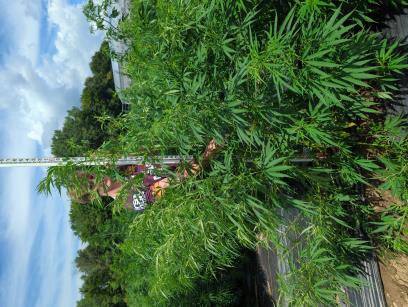 | Not Available | 2023 | DEVELOPED | PRE 2023 | | | | | Cultivar | Cornell University has observed chemotype 1, 2, and 3 individuals within this population. Dioecious. Fiber/grain cultivar of Chinese origin. Received by Cornell University 3/19/2019 from China CN Kenaf. Donor narrative: “Imported directly from China, shipped as plastic pellets. Generally, have largish seeds.” Accession was (or attempted to be) included in the 2024 USDA-ARS Hemp Germplasm Laboratory and HudsonAlpha genome sequencing and phenotyping trial in PGRU Wellington Zone 01 [curator notes 2024:] “East Asian” fiber phenotype. Very long trunk length at 100 days. | 2141775 | G 33549 |
| 18 | G 33550 | 'HAN-NW' | Cannabis sativa L. | China | NE9 |  | Not Available | 2023 | DEVELOPED | PRE 2023 | | | | | Cultivar | Cornell University has observed chemotype 1, 2, and 3 individuals within this population. Dioecious. Fiber/grain cultivar of Chinese origin. Received by Cornell University 3/19/2019 from China CN Kenaf. Donor narrative: “Imported directly from China, shipped as plastic pellets. Generally, have largish seeds.” Cornell observed high varin concentrations in some individuals. Accession was (or attempted to be) included in the 2024 USDA-ARS Hemp Germplasm Laboratory and HudsonAlpha genome sequencing and phenotyping trial in PGRU Wellington Zone 01 [curator notes 2024:] “East Asian” fiber phenotype. Likely susceptible to powdery mildew. Low septoria in very preliminary screening of several plants in 2024. Very long trunk length at 100 days. | 2141776 | G 33550 |
| 19 | G 33551 | 'HAN-FH-Q' | Cannabis sativa L. | China | NE9 |  | Not Available | 2023 | DEVELOPED | PRE 2023 | | | | | Cultivar | Cornell University has observed chemotype 1, 2, and 3 individuals within this population. Dioecious. Fiber/grain cultivar of Chinese origin. Received by Cornell University 3/19/2019 from China CN Kenaf. Donor narrative: “Imported directly from China, shipped as plastic pellets. Generally, have largish seeds.” Cornell observed high varin concentrations in some individuals. Accession was (or attempted to be) included in the 2024 USDA-ARS Hemp Germplasm Laboratory and HudsonAlpha genome sequencing and phenotyping trial in PGRU Wellington Zone 01 [curator notes 2024:] “East Asian” fiber phenotype. Potential powdery mildew resistance in very preliminary screening of several plants in 2024. Low septoria in very preliminary screening of several plants in 2024. Very high MCDH (2024) at 100 days. | 2141777 | G 33551 |
| 20 | G 33552 | 'HAN COLD' | Cannabis sativa L. | China | NE9 |  | Not Available | 2023 | DEVELOPED | PRE 2023 | | | | | Cultivar | Cornell University has observed chemotype 1, 2, and 3 individuals within this population. Dioecious. Fiber/grain cultivar of Chinese origin. Received by Cornell University 3/19/2019 from China CN Kenaf. Donor narrative: “Imported directly from China, shipped as plastic pellets. Generally, have largish seeds.” Accession was (or attempted to be) included in the 2024 USDA-ARS Hemp Germplasm Laboratory and HudsonAlpha genome sequencing and phenotyping trial in PGRU Wellington Zone 01 [curator notes 2024:] Exceptionally late flowering. “East Asian” fiber phenotype. Potential powdery mildew resistance in very preliminary screening of several plants in 2024. Low septoria in very preliminary screening of several plants in 2024. | 2141778 | G 33552 |
| 21 | G 33553 | 'BAMA' | Cannabis sativa L. | China | NE9 |  | Not Available | 2023 | DEVELOPED | PRE 2023 | | | | | Cultivar | Cornell University has observed chemotype 1, 2, and 3 individuals within this population. Dioecious. Fiber/grain cultivar of Chinese origin. Received by Cornell University 3/19/2019 from China CN Kenaf. Donor narrative: “Imported directly from China, shipped as plastic pellets. Seg for chemotype. Generally, have largish seeds.” Accession was (or attempted to be) included in the 2024 USDA-ARS Hemp Germplasm Laboratory and HudsonAlpha genome sequencing and phenotyping trial in PGRU Wellington Zone 01 [curator notes 2024:] “East Asian” fiber phenotype. Low septoria in very preliminary screening of several plants in 2024. Among the tallest accession evaluated in 2024 NY trials when evaluated at 100 days after sowing. Very large MCD. Very large stem diameter 100 days after sowing in 2024. | 2141779 | G 33553 |
| 22 | G 33554 | 'RNF' | Cannabis sativa L. | United States | NE9 |  | | 2023 | DEVELOPED | PRE 2023 | | | | | Cultivar | Cornell University evaluated these materials as chemotype 3. Dioecious. Seed generated in Fall 2018 GH cross at Cornell AgriTech (RNF x RNF). Accessioned by Cornell University 4/22/2019. Donor narrative: “Fall of 2018-- set of GH crosses, seed scale ups with some selection. Five different greenhouses in Barton. Selected males and females; intercrossed” Accession was (or attempted to be) included in the 2024 USDA-ARS Hemp Germplasm Laboratory and HudsonAlpha genome sequencing and phenotyping trial in PGRU Wellington Zone 01 [curator notes 2024:] Likely susceptible to powdery mildew. | 2141780 | G 33554 |
| 23 | G 33555 | 'Cherry x #5' | Cannabis sativa L. | United States | NE9 |  | | 2023 | DEVELOPED | PRE 2023 | | | | | Cultivar | Cornell University evaluated these materials as chemotype 3. Dioecious. Seed generated in Fall 2018 GH cross at Cornell AgriTech (GVA-H-19-1046 Female x GVA-H-19-1042 Male). Accessioned by Cornell University 4/22/2019. Donor narrative: “put some #5 in the house with cherry.” Accession was (or attempted to be) included in the 2024 USDA-ARS Hemp Germplasm Laboratory and HudsonAlpha genome sequencing and phenotyping trial in PGRU Wellington Zone 01 [curator notes 2024:] Chemical, but not feminized. Potential powdery mildew resistance in very preliminary screening of several plants in 2024. | 2141781 | G 33555 |
| 24 | G 33557 | 'RNF x RNF-STS' | Cannabis sativa L. | United States | NE9 |  | | 2023 | DEVELOPED | PRE 2023 | | | | | Cultivar | Feminized seed generated from cross RNF x RNF-STS [ silver thiosulfate ]. Donor narrative: “Feminized seed bulk of 10 RNF female genotypes, some higher CBCA; Made a selection of females from RNF, then STS’ed some. Highish levels of CBCA”. Cornell accessioned seed 1/20/2012. Cross between GVA-H-19-1039 x GVA-H-19-1039. Accession was (or attempted to be) included in the 2024 USDA-ARS Hemp Germplasm Laboratory and HudsonAlpha genome sequencing and phenotyping trial in PGRU Wellington Zone 01 [curator notes 2024:] Most individuals have purple inflorescences. Probably feminized. Appears morphologically as chemical cultivar. | 2141783 | G 33557 |
| 25 | G 33559 | 'Hempress' | Cannabis sativa L. | United States | NE9 |  | | 2023 | DEVELOPED | PRE 2023 | | | | | Cultivar | Donated from Point3 Pharma. Donor note: “No IP restrictions, no COA, no guarantees!” Received by Cornell University 2/12/2021 from Marla Maines. Accession was (or attempted to be) included in the 2024 USDA-ARS Hemp Germplasm Laboratory and HudsonAlpha genome sequencing and phenotyping trial in PGRU Wellington Zone 01 [curator notes 2024:] Feminized. Appears morphologically as chemical cultivar. Segregating for day-neutrality. Likely susceptible to powdery mildew. | 2141785 | G 33559 |
| 26 | G 33563 | 'First Class 'CBG' S1' | Cannabis sativa L. | United States | NE9 |  | | 2023 | DEVELOPED | PRE 2023 | | | | | Cultivar | Cornell University has observed chemotype 3 individuals within this population. Mixture of feminized and monoecious individuals. Generated between a cross [GVA-H-20-1120 x GVA-H-20-1120]. Donor narrative: “Putative CBG cultivar evaluated in 2020, [CU] received a set of plants [with seeds]. Some individuals started exhibited monoecy.. [CU] observed a remarkable growth rate, up to 0.5-1.0 meter growth per week. They took some cuttings and selfed it. They did not observe a Y chromosome, despite monecious behavior. Accession was (or attempted to be) included in the 2024 USDA-ARS Hemp Germplasm Laboratory and HudsonAlpha genome sequencing and phenotyping trial in PGRU Wellington Zone 01 [curator notes 2024:] Feminized. Appears morphologically as chemical cultivar. | 2141789 | G 33563 |
| 27 | G 33533 | HPS | Cannabis sativa L. | United States | NE9 | | Not Available | 2023 | DEVELOPED | PRE 2025 | | | | | Cultivar | Donated by Stephen Baluch of Oregon State University from excess seed lots held in the OSU collection on 03/08/2023. Accession was (or attempted to be) included in the 2024 USDA-ARS Hemp Germplasm Laboratory and HudsonAlpha genome sequencing and phenotyping trial in PGRU Wellington Zone 01. | 2141631 | G 33533 |
| 28 | G 33534 | 20LCMP-1 | Cannabis sativa L. | United States | NE9 |  | | 2023 | DEVELOPED | PRE 2025 | | | | | Cultivar | This accession has been sequenced: Bioproject: https://www.ncbi.nlm.nih.gov/bioproject/PRJNA870966/ https://www.ncbi.nlm.nih.gov/datasets/genome/GCA_025232715.1/Seq submitted by Phylos Bioscience, Inc., Sep 16, 2022. Genome assembly of C. sativa cultivar Abacus V2 (Csat_AbacusV2, CsaAba2) was conducted in order to provide a high quality reference genome for cannabis research. PacBio Sequel long read sequence data (83x coverage) from 30-40kb high molecular weight DNA were assembled using Falcon and Falcon-unzip and then polished using 234x Illumina 2x250bp short reads. Hi-C data were then used to order and orient contigs into 10 pseudomolecules. Donor (Alisha Holloway) notes: Plant name = ABACUS, Plant ID 20LCMP-1; plant height 68 and 114 cm. Not compact spacing. Apically dominate; Cola color = green purple; Leafiness = “leaves on”; Flower score = “appealing”; biomass = 2.06 kg); Fragrance = “Berry”; Flower count = 19. Additional seeds donated by Stephen Baluch of Oregon State University from excess seed lots held in the OSU collection on 03/08/2023. Accession was (or attempted to be) included in the 2024 USDA-ARS Hemp Germplasm Laboratory and HudsonAlpha genome sequencing and phenotyping trial in PGRU Wellington Zone 01 [curator notes 2024:] Feminized | 2141632 | G 33534 |
| 29 | G 33531 | Dongma | Cannabis sativa L. | China | NE9 |  | Not Available | 2023 | COLLECTED | PRE 2023 | | | | | Cultivar | Donated by David Suchoff at NC State University; received 2023-02-21. East Asian fiber cultivar. Accession was (or attempted to be) included in the 2024 USDA-ARS Hemp Germplasm Laboratory and HudsonAlpha genome sequencing and phenotyping trial in PGRU Wellington Zone 01 [curator notes 2024:] Potential powdery mildew resistance in very preliminary screening of several plants in 2024. Low septoria in very preliminary screening of several plants in 2024. Very large stem diameter 100 days after sowing in 2024. | 2141477 | G 33531 |
| 30 | G 33532 | Zhongma | Cannabis sativa L. | China | NE9 |  | Not Available | 2023 | COLLECTED | PRE 2023 | | | | | Cultivar | Donated by David Suchoff at NC State University; received 2023-02-21. East Asian fiber cultivar. Accession was (or attempted to be) included in the 2024 USDA-ARS Hemp Germplasm Laboratory and HudsonAlpha genome sequencing and phenotyping trial in PGRU Wellington Zone 01 [curator notes 2024:] East Asian fiber phenotype, although smaller. | 2141478 | G 33532 |
| 31 | G 33526 | 7/6-19_SGS | Cannabis sativa L. | Oregon, United States | NE9 |  | | 2023 | DEVELOPED | PRE 2025 | | | | | Breeding material | Donated by Stephen Baluch 2023-02-15, 5 were new to NPGS. Received at PGRU 2023-02-20. Miscellaneous seed lots stored in OSU collection. Likely not kept under ideal conditions. Some materials from this donation are commercial and will not be displayed or distributed. Accession was (or attempted to be) included in the 2024 USDA-ARS Hemp Germplasm Laboratory and HudsonAlpha genome sequencing and phenotyping trial in PGRU Wellington Zone 01 [curator notes 2024:] Low septoria in very preliminary screening of several plants in 2024. | 2141470 | G 33526 |
| 32 | G 33527 | 6-3/19 | Cannabis sativa L. | Oregon, United States | NE9 |  | Not Available | 2023 | DEVELOPED | PRE 2025 | | | | | Breeding material | Donated by Stephen Baluch 2023-02-15, 5 were new to NPGS. Received at PGRU 2023-02-20. Miscellaneous seed lots stored in OSU collection. Likely not kept under ideal conditions. Some materials from this donation are commercial and will not be displayed or distributed. Accession was (or attempted to be) included in the 2024 USDA-ARS Hemp Germplasm Laboratory and HudsonAlpha genome sequencing and phenotyping trial in PGRU Wellington Zone 01. | 2141471 | G 33527 |
| 33 | G 33528 | 3-1/4 | Cannabis sativa L. | Oregon, United States | NE9 |  | Not Available | 2023 | DEVELOPED | PRE 2025 | | | | | Breeding material | Donated by Stephen Baluch 2023-02-15, 5 were new to NPGS. Received at PGRU 2023-02-20. Miscellaneous seed lots stored in OSU collection. Likely not kept under ideal conditions. Some materials from this donation are commercial and will not be displayed or distributed. Accession was (or attempted to be) included in the 2024 USDA-ARS Hemp Germplasm Laboratory and HudsonAlpha genome sequencing and phenotyping trial in PGRU Wellington Zone 01 [curator notes 2024:] Some inds with purple flower and leaves. | 2141472 | G 33528 |
| 34 | G 33529 | Jin Ma | Cannabis sativa L. | China | NE9 |  | Not Available | 2023 | COLLECTED | PRE 2023 | | | | | Cultivar | Donated by Stephen Baluch 2023-02-15, 5 were new to NPGS. Received at PGRU 2023-02-20. Miscellaneous seed lots stored in OSU collection. Likely not kept under ideal conditions. Some materials from this donation are commercial and will not be displayed or distributed. Accession was (or attempted to be) included in the 2024 USDA-ARS Hemp Germplasm Laboratory and HudsonAlpha genome sequencing and phenotyping trial in PGRU Wellington Zone 01 [curator notes 2024:] Low septoria in very preliminary screening of several plants in 2024. | 2141473 | G 33529 |
| 35 | G 33530 | 6/3_1/18 | Cannabis sativa L. | Oregon, United States | NE9 |  | Not Available | 2023 | DEVELOPED | PRE 2025 | | | | | Breeding material | Donated by Stephen Baluch 2023-02-15, 5 were new to NPGS. Received at PGRU 2023-02-20. Miscellaneous seed lots stored in OSU collection. Likely not kept under ideal conditions. Some materials from this donation are commercial and will not be displayed or distributed. Accession was (or attempted to be) included in the 2024 USDA-ARS Hemp Germplasm Laboratory and HudsonAlpha genome sequencing and phenotyping trial in PGRU Wellington Zone 01. | 2141474 | G 33530 |
| 36 | G 33497 | 19-01 | Cannabis sativa L. | Illinois, United States | NE9 |  | | 2022 | COLLECTED | NEAR 2019 | Nearest town is Kilbourne, Illinois in Mason County. | 40.14840000, -90.02150000 | 149 | North side of road; Edge of production field near ultilty boxes | Wild material | Wild, feral populations donated by Win Phippen at Western Illinois University from collection efforts in 2019 and 2020. Accession was (or attempted to be) included in the 2024 USDA-ARS Hemp Germplasm Laboratory and HudsonAlpha genome sequencing and phenotyping trial in PGRU Wellington Zone 01 [curator notes 2024:] Typical US Midwest feral phenotype. Among the tallest accession evaluated in 2024 NY trials when evaluated at 100 days after sowing. Very large stem diameter 100 days after sowing in 2024. | 2140671 | G 33497 |
| 37 | G 33501 | 19-05 | Cannabis sativa L. | Illinois, United States | NE9 |  | | 2022 | COLLECTED | NEAR 2019 | Nearest town is Mason City, Illinois in Mason County. | 40.16330000, -89.73490000 | 173 | eastside of road; ditch near creek | Wild material | Wild, feral populations donated by Win Phippen at Western Illinois University from collection efforts in 2019 and 2020. Accession was (or attempted to be) included in the 2024 USDA-ARS Hemp Germplasm Laboratory and HudsonAlpha genome sequencing and phenotyping trial in PGRU Wellington Zone 01 [curator notes 2024:] Typical US Midwest feral phenotype. | 2140675 | G 33501 |
| 38 | G 33507 | Andrews | Cannabis sativa L. | Illinois, United States | NE9 |  | | 2022 | COLLECTED | NEAR 2019 | Nearest town is Sheffield, Illinois in Bureau County. | 41.43700000, -89.74860000 | 197 | Private Farm; original Hemp Farm,original homestead | Wild material | Wild, feral populations donated by Win Phippen at Western Illinois University from collection efforts in 2019 and 2020. Accession was (or attempted to be) included in the 2024 USDA-ARS Hemp Germplasm Laboratory and HudsonAlpha genome sequencing and phenotyping trial in PGRU Wellington Zone 01 [curator notes 2024:] Typical US Midwest feral phenotype. Potential powdery mildew resistance in very preliminary screening of several plants in 2024. Among the tallest accession evaluated in 2024 NY trials when evaluated at 100 days after sowing. | 2140681 | G 33507 |
| 39 | G 33519 | 19-26 | Cannabis sativa L. | Illinois, United States | NE9 |  | Not Available | 2022 | COLLECTED | NEAR 2019 | Nearest town is Roseville, Illinois in Warren County. | 40.66740000, -90.75510000 | 241 | fence row; full sun fence row, organic farm | Wild material | Wild, feral populations donated by Win Phippen at Western Illinois University from collection efforts in 2019 and 2020. Accession was (or attempted to be) included in the 2024 USDA-ARS Hemp Germplasm Laboratory and HudsonAlpha genome sequencing and phenotyping trial in PGRU Wellington Zone 01 [curator notes 2024:] Typical US Midwest feral phenotype. Among the tallest accession evaluated in 2024 NY trials when evaluated at 100 days after sowing. | 2140693 | G 33519 |
| 40 | G 33522 | BULK | Cannabis sativa L. | Illinois, United States | NE9 |  | Not Available | 2022 | COLLECTED | NEAR 2019 | Nearest town is , Illinois in County. | | | Greenhouse; Bulked seed leftover from proccessing | Wild material | Wild, feral populations donated by Win Phippen at Western Illinois University from collection efforts in 2019 and 2020. | 2140696 | G 33522 |
| 41 | G 33472 | 'HT Seed-04B' | Cannabis sativa L. | China | NE9 |  | Not Available | 2022 | DEVELOPED | PRE 2025 | | | | | Landrace | Purchased from hemptraders.com as large (1 lb 22UO01) and small (1 oz 22UO02) packets. The large package says "SEED-04B" the small package says: "Order #: SEED-04B SAMPLE. Chinese Hemp Fiber Planting Seed". These two inventories (22UO01 and 22OU02) can likely be combined, but I (zjs) would like to compare in a field trial first. Accession was (or attempted to be) included in the 2024 USDA-ARS Hemp Germplasm Laboratory and HudsonAlpha genome sequencing and phenotyping trial in PGRU Wellington Zone 01 [curator notes 2024:] Exceptionally late flowering.. [S1313-p2]: purple stem [S2361-p3]: very purple stem [S3364-p3]: purple stem . Low septoria in very preliminary screening of several plants in 2024. Very large stem diameter 100 days after sowing in 2024. | 2139718 | G 33472 |
| 42 | G 33468 | AS/CS/2022/078/209 | Cannabis sativa L. | Iowa, United States | NE9 |  | Not Available | 2022 | COLLECTED | 10/04/2022 | Approximately seven miles northwest of Cedar Falls. Collected primarily along Mark Road and Westbrook Street. | 42.52788900, -92.59438000 | 299 | Edges of agricultural fields. | Wild material | Feral germplasm from northeastern Iowa (Grundy Co., 1 sample; Butler Co., 11 samples; and Black Hawk Co., 13 samples) representing seed harvested from individual mother plants. Plant height in nature ranged from 161 to 336 cm. Peak fruiting occurred the first week of October (2022). Out of 24 mother plants sampled, specimen #23 was extremely unique with near 3 x larger seeds; strong aromatics; very leafy inflorescences; and very oily/sticky leaves even after substantial drying. Specimens #6 and #22 had rather purplish foliage. Accession was (or attempted to be) included in the 2024 USDA-ARS Hemp Germplasm Laboratory and HudsonAlpha genome sequencing and phenotyping trial in PGRU Wellington Zone 01. [Note 20241130 zjs]: This accession contains 24 inventories collected by Carstens. This was the only accession where distinct inventories were evaluated in 2024. Therefore, notes are captured at the inventory level, rather than accession level (see inventory dataview for details, or request from curator).
During routine regeneration of parental inventory G 33468 22UO03 SD (25HEMP518) we obsevered 4/83 individuals as monoecious, which not common in US Feral germplasm. | 2139690 | G 33468 |
| 43 | G 33422 | 'Neo' | Cannabis sativa L. | United States | NE9 |  | | 2022 | DEVELOPED | PRE 2025 | ---- | | | | Uncertain improvement status | Donation from Jerry Whiting, 2022-09-19. The contributor provided the following narrative: "Harle-Tsu x Nebraska Hemp for Victory, Justin (breeder), Kyle Craig (seed crop); CBD flower + fiber" Accession was (or attempted to be) included in the 2024 USDA-ARS Hemp Germplasm Laboratory and HudsonAlpha genome sequencing and phenotyping trial in PGRU Wellington Zone 01 [curator notes 2024:] One dramatic “droopy” or weeping individual [S1091-p3]; plant grew along the ground. Likely susceptible to powdery mildew. In a very preliminary screening of several plants in 2024, plants seemed likely susceptible to septoria. | 2139474 | G 33422 |
| 44 | G 33389 | 1:1 THCV x Syrian | Cannabis sativa L. | Uncertain | NE9 |  | Not Available | 2022 | DONATED | PRE 2022 | | | | | Landrace | Some are autoflower; wildly divergent phenotypes; likely segregating for many traits. Collector requested seed from rapid flowering individuals Accession was (or attempted to be) included in the 2024 USDA-ARS Hemp Germplasm Laboratory and HudsonAlpha genome sequencing and phenotyping trial in PGRU Wellington Zone 01 [curator notes 2024:] [S1159-p2: XY CSP-2, female phenotype mismatch]. [S2017-p3]: “droopy boi” or weeping phenotype; plant grew along ground. Feminized. Known monoecy pheno in some inds. | 2138282 | G 33389 |
| 45 | G 33398 | SEED-03C | Cannabis sativa L. | Uncertain | NE9 |  | | 2022 | DONATED | PRE 2022 | | | | | Cultivar | Order #: Seed-03C SAMPLE. Hemp Nut. Industrial Hemp: THC less than 0.3%. Weight 1 oz. www.hemptraders.com. 562-330-3334. Selection from 'Chin Ma'-- extra large plants, extra large seed, likely from fiber variety; likely good for fiber, silage, and oil. Accession was (or attempted to be) included in the 2024 USDA-ARS Hemp Germplasm Laboratory and HudsonAlpha genome sequencing and phenotyping trial in PGRU Wellington Zone 01 [curator notes 2024:] Exceptionally late flowering, was not able to complete flowering evaluation by mid November in NY 2024 trials. Potential powdery mildew resistance in very preliminary screening of several plants in 2024. Low septoria in very preliminary screening of several plants in 2024. | 2138291 | G 33398 |
| 46 | G 33384 | Iowa Tribe Feral | Cannabis sativa L. | Kansas, United States | NE9 |  | | 2022 | DONATED | PRE 2022 | | | | | Wild material | Iowa Tribe of of KS and NE. Wild hemp sample, received Nov 2021 Accession was (or attempted to be) included in the 2024 USDA-ARS Hemp Germplasm Laboratory and HudsonAlpha genome sequencing and phenotyping trial in PGRU Wellington Zone 01 [curator notes 2024:] Likely susceptible to powdery mildew. Among the tallest accession evaluated in 2024 NY trials when evaluated at 100 days after sowing. | 2138073 | G 33384 |
| 47 | G 33376 | | Cannabis sativa L. | France | |  | Historic | 2022 | DEVELOPED | PRE 2025 | | | | | Cultivar | Seed acquired from Corbett Miteff of KonopiUS for USDA-ARS PGRU Evaluation. Commercial accession, not for distribution in NPGS, evaluation only. Evaluated in 2022 USDA-PGRU field trials. Fiber type with mod uniformity. Accession was evaluated by USDA-ARS PGRU in summer 2022 in Cornell RN010 and shown to be < 0.3 % total THC. Accession was (or attempted to be) included in the 2024 USDA-ARS Hemp Germplasm Laboratory and HudsonAlpha genome sequencing and phenotyping trial in PGRU Wellington Zone 01 [curator notes 2024:] Only monoecious and female called in 2024. Potential powdery mildew resistance in very preliminary screening of several plants in 2024. Among the tallest accession evaluated in 2024 NY trials when evaluated at 100 days after sowing. Very long trunk length at 100 days. | 2137996 | G 33376 |
| 48 | G 33378 | | Cannabis sativa L. | France | |  | Historic | 2022 | DEVELOPED | PRE 2025 | | | | | Cultivar | Seed acquired from Corbett Miteff of KonopiUS for USDA-ARS PGRU Evaluation. Commercial accession, not for distribution in NPGS, evaluation only. Evaluated in 2022 USDA-PGRU field trials. Fiber type, high uniformity. One appears stunted. Accession was evaluated by USDA-ARS PGRU in summer 2022 in Cornell RN010 and shown to be < 0.3 % total THC. Accession was (or attempted to be) included in the 2024 USDA-ARS Hemp Germplasm Laboratory and HudsonAlpha genome sequencing and phenotyping trial in PGRU Wellington Zone 01 [curator notes 2024:] Seven of 9 called monoecious in 2024. Among the tallest accession evaluated in 2024 NY trials when evaluated at 100 days after sowing. Very long trunk length at 100 days. | 2137998 | G 33378 |
| 49 | G 33380 | | Cannabis sativa L. | France | |  | Historic | 2022 | DEVELOPED | PRE 2025 | | | | | Cultivar | Seed acquired from Corbett Miteff of KonopiUS for USDA-ARS PGRU Evaluation. Commercial accession, not for distribution in NPGS, evaluation only. Evaluated in 2022 USDA-PGRU field trials. Fiber phenotype with very high uniformity. Heavy lodging. Accession was evaluated by USDA-ARS PGRU in summer 2022 in Cornell RN010 and shown to be < 0.3 % total THC. Accession was (or attempted to be) included in the 2024 USDA-ARS Hemp Germplasm Laboratory and HudsonAlpha genome sequencing and phenotyping trial in PGRU Wellington Zone 01 [curator notes 2024:] Mix of M, F, O in 2024. Very long trunk length at 100 days. | 2138000 | G 33380 |
| 50 | G 33337 | 'Tisza' | Cannabis sativa L. | Hungary | NE9 |  | | 2022 | DONATED | PRE 2022 | | | | | Cultivar | Evaluated in 2022 USDA-PGRU field trials. Fiber type with broad leaves. Mod high uniformity. Accession was (or attempted to be) included in the 2024 USDA-ARS Hemp Germplasm Laboratory and HudsonAlpha genome sequencing and phenotyping trial in PGRU Wellington Zone 01. | 2137526 | G 33337 |
| 51 | G 33338 | 'Red Kross IV' | Cannabis sativa L. | United States | NE9 |  | | 2022 | DONATED | PRE 2022 | | | | | Cultivar | Evaluated in 2022 USDA-PGRU field trials. Chemical type. High uniformity. Accession was evaluated by USDA-ARS PGRU in summer 2022 in Cornell RN010 and shown to be < 0.3 % total THC. Donor narrative for G 33338 23UO indicates: "BaOx'/'Finola'" hybrid. Accession was (or attempted to be) included in the 2024 USDA-ARS Hemp Germplasm Laboratory and HudsonAlpha genome sequencing and phenotyping trial in PGRU Wellington Zone 01 [curator notes 2024:] Some inds with purple flower and leaves. Seems like a feminized pop, but one male found. | 2137527 | G 33338 |
| 52 | G 33341 | 'Tiborszállázi' | Cannabis sativa L. | Szabolcs-Szatmár-Bereg, Hungary | NE9 |  | Not Available | 2022 | DEVELOPED | PRE 1950 | | | | | Cultivar | Bulk selection in late 1940s Hungary. Fully assembled, haplotype resolved (Hifiasm) genome is available, included in SALK Pangeome by Todd Michael (see: https://resources.michael.salk.edu/resources/cannabis_genomes/index.html). Evaluated in 2022 USDA-PGRU field trials. Fiber type. Moderately high uniformity. Accession was (or attempted to be) included in the 2024 USDA-ARS Hemp Germplasm Laboratory and HudsonAlpha genome sequencing and phenotyping trial in PGRU Wellington Zone 01 [curator notes 2024:] Potential powdery mildew resistance in very preliminary screening of several plants in 2024. Very long trunk length at 100 days. Very low kite circularity at 100 days. | 2137530 | G 33341 |
| 53 | G 33342 | 'Original Cherry' | Cannabis sativa L. | United States | NE9 |  | Not Available | 2022 | DONATED | PRE 2022 | | | | | Cultivar | Evaluated in 2022 USDA-PGRU field trials. Chemical type. Moderately low uniformity. Some individuals with leaf curl. Accession was (or attempted to be) included in the 2024 USDA-ARS Hemp Germplasm Laboratory and HudsonAlpha genome sequencing and phenotyping trial in PGRU Wellington Zone 01 [curator notes 2024:] Not feminized as expected. Chemical. | 2137531 | G 33342 |
| 54 | G 33344 | 'Blue Kross' | Cannabis sativa L. | United States | NE9 |  | | 2022 | DONATED | PRE 2022 | | | | | Cultivar | Evaluated in 2022 USDA-PGRU field trials. Chemical type. Moderate uniformity. Accession was evaluated by USDA-ARS PGRU in summer 2022 in Cornell RN010 and shown to be < 0.3 % total THC. Accession was (or attempted to be) included in the 2024 USDA-ARS Hemp Germplasm Laboratory and HudsonAlpha genome sequencing and phenotyping trial in PGRU Wellington Zone 01 [curator notes 2024:] Feminized. Appears morphologically as chemical cultivar. | 2137533 | G 33344 |
| 55 | G 33348 | 'C4' | Cannabis sativa L. | Uncertain | NE9 |  | | 2022 | DONATED | PRE 2022 | | | | | Cultivar | Evaluated in 2022 USDA-PGRU field trials. Chemical phenotype. high uniformity. Multiple individuals with leaf curl. Accession was evaluated by USDA-ARS PGRU in summer 2022 in Cornell RN010 and shown to be < 0.3 % total THC. Accession was (or attempted to be) included in the 2024 USDA-ARS Hemp Germplasm Laboratory and HudsonAlpha genome sequencing and phenotyping trial in PGRU Wellington Zone 01 [curator notes 2024:] Broadly appears similar to other chemical cultivars. | 2137537 | G 33348 |
| 56 | G 33349 | 'Carmagnola' | Cannabis sativa L. | Italy | NE9 |  | | 2022 | DONATED | PRE 2022 | | | | | Cultivar | Evaluated in 2022 USDA-PGRU field trials. Fiber type with moderate uniformity. Some lodging. Accession was evaluated by USDA-ARS PGRU in summer 2022 in Cornell RN010 and shown to be < 0.3 % total THC. Accession was (or attempted to be) included in the 2024 USDA-ARS Hemp Germplasm Laboratory and HudsonAlpha genome sequencing and phenotyping trial in PGRU Wellington Zone 01 [curator notes 2024:] Male skew 7/9 individuals in 2024. Potential powdery mildew resistance in very preliminary screening of several plants in 2024. Among the tallest accession evaluated in 2024 NY trials when evaluated at 100 days after sowing. Very long trunk length at 100 days. Very low kite circularity at 100 days. | 2137538 | G 33349 |
| 57 | G 33350 | 'Landrace' | Cannabis sativa L. | Uncertain | NE9 |  | | 2022 | DONATED | PRE 2022 | | | | | Landrace | Evaluated in 2022 USDA-PGRU field trials. All day-length insensitive. Males extremely early. Moderately low uniformity. Abnormal leaf shape. Preliminary cannabinoid analysis indicated non-compliant total THC levels (e.g., 1.63 % total THC), although more screening should be completed as this was not a replicated evaluation (Do not distribute 2022-09-27). Accession was evaluated by USDA-ARS PGRU in summer 2022 in Cornell RN010 and shown to be < 0.3 % total THC. Accession was (or attempted to be) included in the 2024 USDA-ARS Hemp Germplasm Laboratory and HudsonAlpha genome sequencing and phenotyping trial in PGRU Wellington Zone 01 [curator notes 2024:] Some individuals with single or triple leaflet leaves. Very early flowering in 2024 trial. | 2137539 | G 33350 |
| 58 | G 33351 | 'Missouri Landrace #2' | Cannabis sativa L. | Missouri, United States | NE9 |  | | 2022 | DONATED | PRE 2022 | | 38.86100000, -94.49700000 | | | Landrace | Evaluated in 2022 USDA-PGRU field trials. Typical feral with fiber phenotype. Low uniformity. Some individuals with loss of apical dominance, or very wide, flat branching. Accession was evaluated by USDA-ARS PGRU in summer 2022 in Cornell RN010 and shown to be < 0.3 % total THC. Accession was (or attempted to be) included in the 2024 USDA-ARS Hemp Germplasm Laboratory and HudsonAlpha genome sequencing and phenotyping trial in PGRU Wellington Zone 01 [curator notes 2024:] Low septoria in very preliminary screening of several plants in 2024. Among the tallest accession evaluated in 2024 NY trials when evaluated at 100 days after sowing. | 2137540 | G 33351 |
| 59 | G 33369 | YunMa | Cannabis sativa L. | China | NE9 |  | | 2022 | DONATED | PRE 2022 | | | | | Cultivar | Fully assembled, haplotype resolved (Hifiasm) genome is available, included in SALK Pangenome by Todd Michael Lab (see: https://resources.michael.salk.edu/resources/cannabis_genomes/index.html). IND Hemp. Evaluated in 2022 USDA-PGRU field trials. Putative fiber type with very broad leaves. Long internodes. Moderately high uniformity. Accession was (or attempted to be) included in the 2024 USDA-ARS Hemp Germplasm Laboratory and HudsonAlpha genome sequencing and phenotyping trial in PGRU Wellington Zone 01 [curator notes 2024:] Potential powdery mildew resistance in very preliminary screening of several plants in 2024. Low septoria in very preliminary screening of several plants in 2024. | 2137558 | G 33369 |
| 60 | G 33242 | 'Illinois ' | Cannabis sativa L. | United States | NE9 |  | Not Available | 2022 | DONATED | PRE 2020 | | | | | Wild material | From donor Edgar Winters in conversation with zjs 2022-10-24: " Likely landrace, likely used for oil. Very small seeds. Grown for cooking [back in the day]… Likely from used from 1942-1945 (M. Rinz in Wisconsin)." Maybe Finola? No plants reached maturity in 2022 field trials. Accession was (or attempted to be) included in the 2024 USDA-ARS Hemp Germplasm Laboratory and HudsonAlpha genome sequencing and phenotyping trial in PGRU Wellington Zone 01 [curator notes 2024:] Typical US feral. | 2137305 | G 33242 |
| 61 | G 33243 | '18AB092101' | Cannabis sativa L. | Wisconsin, United States | NE9 |  | Not Available | 2022 | COLLECTED | | | 42.67007000, -88.93377000 | | | Wild material | WI Feral; S. Henke Rd. 0.7 mi N of Hwy 14. . ROW, W side of rd, Evaluated in 2022 USDA-PGRU field trials. Typical feral with fiber phenotype. High uniformity. in 2022 field trial. Accession was (or attempted to be) included in the 2024 USDA-ARS Hemp Germplasm Laboratory and HudsonAlpha genome sequencing and phenotyping trial in PGRU Wellington Zone 01 [curator notes 2024:] Some individuals with purple flowers and leaves. Typical US Midwest feral phenotype. Likely susceptible to powdery mildew. | 2137306 | G 33243 |
| 62 | G 33245 | '18AB092702' | Cannabis sativa L. | Wisconsin, United States | NE9 |  | | 2022 | COLLECTED | | | 43.67579000, -89.31449000 | | | Wild material | WI Feral; 17th Rd. 0.1 mi S of 15th Rd. ROW and woods, 100s. In 2022 field trial, Evaluated in 2022 USDA-PGRU field trials. Typical feral phenotype, similar to fiber. Moderately high uniformity. Accession was evaluated by USDA-ARS PGRU in summer 2022 in Cornell RN010 and shown to be < 0.3 % total THC. Accession was (or attempted to be) included in the 2024 USDA-ARS Hemp Germplasm Laboratory and HudsonAlpha genome sequencing and phenotyping trial in PGRU Wellington Zone 01 [curator notes 2024:] Typical US Midwest feral phenotype. Seven of nine called female in 2024. Likely susceptible to powdery mildew. Very large MCD. | 2137308 | G 33245 |
| 63 | G 33246 | '18AB092801' | Cannabis sativa L. | Wisconsin, United States | NE9 |  | | 2022 | COLLECTED | | | 42.85280000, -88.56038000 | | | Wild material | WI Feral; Little Prarie Rd. 0.4 mi E of Tower Rd. Kettle Moraine State Forest. Evaluated in 2022 USDA-PGRU field trials. Bushy feral. Short basal internodes. High uniformity. Some individuals with prostrate basal leaves. Growth facing west Accession was evaluated by USDA-ARS PGRU in summer 2022 in Cornell RN010 and shown to be < 0.3 % total THC. Accession was (or attempted to be) included in the 2024 USDA-ARS Hemp Germplasm Laboratory and HudsonAlpha genome sequencing and phenotyping trial in PGRU Wellington Zone 01 [curator notes 2024:] Typical US Midwest feral phenotype. Likely susceptible to powdery mildew. | 2137309 | G 33246 |
| 64 | G 33247 | '18AB100501' | Cannabis sativa L. | Wisconsin, United States | NE9 |  | Not Available | 2022 | COLLECTED | | | 43.56355000, -89.30573000 | | | Wild material | WI Feral; N7814 Hwy 22, Marcellon. ROW in front of house. Evaluated in 2022 USDA-PGRU field trials. In 2022 field trials, typical feral with fiber phenotype. More upright than other feral. Moderately high uniformity. Accession was (or attempted to be) included in the 2024 USDA-ARS Hemp Germplasm Laboratory and HudsonAlpha genome sequencing and phenotyping trial in PGRU Wellington Zone 01 [curator notes 2024:] Typical US Midwest feral phenotype. Seven of nine called female in 2024. Likely susceptible to powdery mildew. | 2137310 | G 33247 |
| 65 | G 33249 | 'Bish Feral' | Cannabis sativa L. | United States | NE9 |  | Not Available | 2022 | DONATED | PRE 2022 | | | | | Wild material | Feral. Lanky, small seeds, feathery foliage. Looks feral! Evaluated in 2022 USDA-PGRU field trials. Typical feral fiber phenotype. Moderately high uniformity. Some individuals with basal senescence disease? One plant killed by lodging. Accession was (or attempted to be) included in the 2024 USDA-ARS Hemp Germplasm Laboratory and HudsonAlpha genome sequencing and phenotyping trial in PGRU Wellington Zone 01 [curator notes 2024:] Fairly typical US Feral phenotype. Low septoria in very preliminary screening of several plants in 2024. Among the tallest accession evaluated in 2024 NY trials when evaluated at 100 days after sowing. | 2137312 | G 33249 |
| 66 | G 33253 | 'Dakota Sandhills (D)' | Cannabis sativa L. | North Dakota, United States | NE9 |  | Not Available | 2022 | COLLECTED | | | 46.51084300, -97.25841400 | | | Wild material | Tall and thick. Very high seed production. Bushy. Evaluated in 2022 USDA-PGRU field trials. More upright than other Dakota Sandhill pops. High uniformity. Accession was (or attempted to be) included in the 2024 USDA-ARS Hemp Germplasm Laboratory and HudsonAlpha genome sequencing and phenotyping trial in PGRU Wellington Zone 01 [curator notes 2024:] Dakota Sandhill populations appear distinct from other US Midwest feral populations; specifically smaller leaves with very narrow and shorter leaflets. To my eyes, they have a more “silvery” look. Branching angle tends to be perpendicular. See attached images. Six of 7 were called males in 2024. | 2137316 | G 33253 |
| 67 | G 33256 | 'Dakota Sandhills (G)' | Cannabis sativa L. | North Dakota, United States | NE9 |  | | 2022 | COLLECTED | | | 46.51084300, -97.25841400 | | | Wild material | The Woodsman. Large, bushy, and extremely thick. Strong stem, like a tree. Extremely high seed production. Evaluated in 2022 USDA-PGRU field trials. Typical Dakota Sandhill phenotype, very short basal internodes. Moderate high uniformity. Accession was (or attempted to be) included in the 2024 USDA-ARS Hemp Germplasm Laboratory and HudsonAlpha genome sequencing and phenotyping trial in PGRU Wellington Zone 01 [curator notes 2024:] Dakota Sandhill populations appear distinct from other US Midwest feral populations; specifically smaller leaves with very narrow and shorter leaflets. To my eyes, they have a more “silvery” look. Branching angle tends to be perpendicular. See attached images. | 2137319 | G 33256 |
| 68 | G 33270 | 'Falkowski CBD Mix' | Cannabis sativa L. | United States | NE9 |  | | 2022 | DONATED | PRE 2022 | | | | | Uncertain improvement status | 2019 cultivars: Lifter, Suver Haze, Special Sauce, Berry Blossom, PRP. David Falkowski. Open Minded Organics. Open pollinated. Pooled multiple females. 4 Envelopes. Evaluated in 2022 USDA-PGRU field trials. Chemical type. Low uniformity, 1/10 day-length insensitive. Some individuals with severe leaf curl. Accession was evaluated by USDA-ARS PGRU in summer 2022 in Cornell RN010 and shown to be < 0.3 % total THC. Accession was (or attempted to be) included in the 2024 USDA-ARS Hemp Germplasm Laboratory and HudsonAlpha genome sequencing and phenotyping trial in PGRU Wellington Zone 01 [curator notes 2024:] Significant segregation for architecture and other traits, likely heterogeneous seed lot (as indicated by top name). Likely susceptible to powdery mildew. | 2137333 | G 33270 |
| 69 | G 33274 | 'WI-M-H-19-00103' | Cannabis sativa L. | Wisconsin, United States | NE9 |  | | 2022 | COLLECTED | | | 42.68160000, -90.11700000 | | | Wild material | Darlington, WI. Collected from: 47 females. Seymour Township. Evaluated in 2022 USDA-PGRU field trials. Typical feral with fiber phenotype. Very short basal internodes. Accession was evaluated by USDA-ARS PGRU in summer 2022 in Cornell RN010 and shown to be < 0.3 % total THC. Accession was (or attempted to be) included in the 2024 USDA-ARS Hemp Germplasm Laboratory and HudsonAlpha genome sequencing and phenotyping trial in PGRU Wellington Zone 01 [curator notes 2024:] Fairly typical US Feral phenotype. Likely susceptible to powdery mildew. | 2137337 | G 33274 |
| 70 | G 33294 | 'BaOx' | Cannabis sativa L. | United States | NE9 |  | | 2022 | DONATED | PRE 2022 | | | | | Cultivar | Fully assembled, haplotype resolved (Hifiasm) genome is available, included in SALK Pangenome by Todd Michael Lab (see: https://resources.michael.salk.edu/resources/cannabis_genomes/index.html). Dioecious. Cultivar misspelled on original shipped label, should be 'BaOx'. Evaluated in 2022 USDA-PGRU field trials. Appears fiber phenotype. Moderately low uniformity. Accession was evaluated by USDA-ARS PGRU in summer 2022 in Cornell RN010 and shown to be < 0.3 % total THC. Accession was (or attempted to be) included in the 2024 USDA-ARS Hemp Germplasm Laboratory and HudsonAlpha genome sequencing and phenotyping trial in PGRU Wellington Zone 01 [curator notes 2024:] Unclear usage class, possible hybridization of fiber and chemical germplasm. | 2137357 | G 33294 |
| 71 | G 33295 | 'Wild Bourbon' | Cannabis sativa L. | United States | NE9 |  | | 2022 | DONATED | PRE 2022 | | | | | Cultivar | Dioecious. Evaluated in 2022 USDA-PGRU field trials. Chemical type. Very low uniformity, with 2/10 day-length insensitive. Some early senescence. Some individuals with leaf curl. Accession was evaluated by USDA-ARS PGRU in summer 2022 in Cornell RN010 and shown to be < 0.3 % total THC. Accession was (or attempted to be) included in the 2024 USDA-ARS Hemp Germplasm Laboratory and HudsonAlpha genome sequencing and phenotyping trial in PGRU Wellington Zone 01 [curator notes 2024:] Segregating for day-neutrality; overall significant segregation across many traits. Very low kite circularity at 100 days. | 2137358 | G 33295 |
| 72 | G 33296 | 'Carolina Dream' | Cannabis sativa L. | United States | NE9 |  | | 2022 | DONATED | PRE 2022 | | | | | Cultivar | Dioecious. Evaluated in 2022 USDA-PGRU field trials. Chemical type. Moderately low uniformity. Some individuals dead or severely stunted. Accession was evaluated by USDA-ARS PGRU in summer 2022 in Cornell RN010 and shown to be < 0.3 % total THC. Accession was (or attempted to be) included in the 2024 USDA-ARS Hemp Germplasm Laboratory and HudsonAlpha genome sequencing and phenotyping trial in PGRU Wellington Zone 01 [curator notes 2024:] Appears chemical, likely CBD. Seven of 8 inds were called female in 2024, sloppy feminization? Likely susceptible to powdery mildew. | 2137359 | G 33296 |
| 73 | G 33297 | 'Golden Redwood' | Cannabis sativa L. | United States | NE9 |  | | 2022 | DONATED | PRE 2022 | | | | | Cultivar | Fully assembled, haplotype resolved (Hifiasm) genome is available, included in SALK Pangenome by Todd Michael Lab (see: https://resources.michael.salk.edu/resources/cannabis_genomes/index.html). Dioecious. Evaluated in 2022 USDA-PGRU field trials. Likely Chemical. Low uniformity. Early male flowering. Moderately low uniformity. Accession was evaluated by USDA-ARS PGRU in Summer 2022 in Cornell RN010 and shown to be < 0.3 % total THC. Accession was (or attempted to be) included in the 2024 USDA-ARS Hemp Germplasm Laboratory and HudsonAlpha genome sequencing and phenotyping trial in PGRU Wellington Zone 01 [curator notes 2024:] Appears chemical, likely CBD. Likely susceptible to powdery mildew. | 2137360 | G 33297 |
| 74 | G 33299 | 'Nebraska Feral-B' | Cannabis sativa L. | Nebraska, United States | NE9 |  | Not Available | 2022 | DONATED | PRE 2020 | | | | | Wild material | From donor Edgar Winters in conversation with zjs 2022-10-24: " Confusingly named 'Nebraska Feral'. Collected in southern Illinois near Carbondale. EW is not sure why they're called Nebraska. " Accession was (or attempted to be) included in the 2024 USDA-ARS Hemp Germplasm Laboratory and HudsonAlpha genome sequencing and phenotyping trial in PGRU Wellington Zone 01 [curator notes 2024:] Appears typical US feral morphology
Further conversations 20260804, donor indicated that he received the Illinois seed from the locals, they found it and called it ditch weed. The Nebraska Feral seed we received from a young lady that was working there and she collected it during a seminar. They never germinated the seeds but passed onto institutes with hemp breeding programs. Donor indicates that seeds were collected literally from ditches. | 2137362 | G 33299 |
| 75 | G 33301 | 'Nebraska Feral-D' | Cannabis sativa L. | Nebraska, United States | NE9 |  | Not Available | 2022 | DONATED | PRE 2020 | | | | | Wild material | From donor Edgar Winters in conversation with zjs 2022-10-24: " Confusingly named 'Nebraska Feral'. Collected in southern Illinois near Carbondale. EW is not sure why they're called Nebraska. " Accession was (or attempted to be) included in the 2024 USDA-ARS Hemp Germplasm Laboratory and HudsonAlpha genome sequencing and phenotyping trial in PGRU Wellington Zone 01 [curator notes 2024:] Appears typical US feral morphology. Male skew 7/9 individuals in 2024.
Further conversations 20260804, donor indicated that he received the Illinois seed from the locals, they found it and called it ditch weed. The Nebraska Feral seed we received from a young lady that was working there and she collected it during a seminar. They never germinated the seeds but passed onto institutes with hemp breeding programs. Donor indicates that seeds were collected literally from ditches. | 2137364 | G 33301 |
| 76 | G 33312 | 'A2R4' | Cannabis sativa L. | United States | NE9 |  | | 2022 | DONATED | PRE 2020 | | | | | Uncertain improvement status | From donor Edgar Winters in conversation with zjs 2022-10-24: " Very good cultivar (that is now also called 'A1') as a industrial grade seed stock originally from Colorado. There is 'Sterling Gold' in its background. Edgar estimatates 7% CBD + and it's a high fiber producer. He's been developing it since 2015". Evaluated in 2022 USDA-PGRU field trials. Fiber phenotype, moderately high uniformity. Accession was evaluated by USDA-ARS PGRU in summer 2022 in Cornell RN010 and shown to be < 0.3 % total THC. Accession was (or attempted to be) included in the 2024 USDA-ARS Hemp Germplasm Laboratory and HudsonAlpha genome sequencing and phenotyping trial in PGRU Wellington Zone 01 [curator notes 2024:] Some monoecy observed [S3438-p2]-- dense, axial staminate (almost spherical cluster) flowers tightly clustered around stem. | 2137375 | G 33312 |
| 77 | G 33313 | 'Wild Horse' | Cannabis sativa L. | United States | NE9 |  | | 2022 | DONATED | PRE 2020 | | | | | Uncertain improvement status | From donor Edgar Winters in conversation with zjs 2022-10-24: " Wild Horse is a high CBD type from Colorado. Likely 'Cannatonic' x 'Stirling Gold' in its background." Evaluated in 2022 USDA-PGRU field trials. Unclear usage class. High uniformity. Accession was evaluated by USDA-ARS PGRU in summer 2022 in Cornell RN010 and shown to be < 0.3 % total THC. Accession was (or attempted to be) included in the 2024 USDA-ARS Hemp Germplasm Laboratory and HudsonAlpha genome sequencing and phenotyping trial in PGRU Wellington Zone 01. | 2137376 | G 33313 |
| 78 | G 33314 | 'AC/DC' | Cannabis sativa L. | United States | NE9 |  | | 2022 | DONATED | PRE 2020 | | | | | Landrace | From donor Edgar Winters in conversation with zjs 2022-10-24: " AC/DC was shown to be high CBD when evaluated in 2014 by EW, with very large inflorescences." Accession was (or attempted to be) included in the 2024 USDA-ARS Hemp Germplasm Laboratory and HudsonAlpha genome sequencing and phenotyping trial in PGRU Wellington Zone 01 [curator notes 2024:] Many individuals segregating for purple phenotypes (leaf and flower). Very large stem diameter 100 days after sowing in 2024. | 2137377 | G 33314 |
| 79 | G 33315 | 'Otto II' | Cannabis sativa L. | United States | NE9 |  | | 2022 | DONATED | PRE 2020 | | | | | Landrace | Accession was (or attempted to be) included in the 2024 USDA-ARS Hemp Germplasm Laboratory and HudsonAlpha genome sequencing and phenotyping trial in PGRU Wellington Zone 01 [curator notes 2024:] Some inds with purple flower and stem. Potential powdery mildew resistance in very preliminary screening of several plants in 2024. | 2137378 | G 33315 |
| 80 | G 33236 | 'FL 58' | Cannabis sativa L. | United States | | | Historic | 2022 | DONATED | | | | | | Clone | Clonal material donated by Cornell University. Cornell acc: GVA-H-20-1153, FL 58, Approved by CJ Schwartz, High-CBD type; aka 'FL58'; hemp powdery mildew resistance., Evaluated in 2022 USDA-PGRU field trials. Unk pedigree.No plants reached maturity. | 2137274 | G 33236 |
| 81 | G 33214 | 'Zaki' | Cannabis sativa L. | United States | NE9 |  | | 2021 | COLLECTED | 2016 | | | | | Wild material | Feral, unimproved breeding material. Non-feminized, apppears dioecious. Evaluated in 2022 USDA-PGRU field trials. Feral, with typical fiber phenotype. Moderately high uniformity. Accession was (or attempted to be) included in the 2024 USDA-ARS Hemp Germplasm Laboratory and HudsonAlpha genome sequencing and phenotyping trial in PGRU Wellington Zone 01 [curator notes 2024:] Broadly appears similar to US Midwest feral germplasm. Did not observe any yellow-stem individuals in 2024. All 7 individuals were called as female in 2024, although I don’t believe that this inventory was feminized. | 2123309 | G 33214 |
| 82 | G 33215 | PI-22-15 | Cannabis sativa L. | Colorado, United States | NE9 |  | Not Available | 2021 | COLLECTED | 2015 | | | 1300 | | Uncertain improvement status | Unselected segregating population, unimproved breeding material. Non-feminized, appears dioecious. Evaluated in 2022 USDA-PGRU field trials. Broad leaves. Unclear usage type. Two individuals of 10 severely stunted (viral?). Some individuals dead. Accession was (or attempted to be) included in the 2024 USDA-ARS Hemp Germplasm Laboratory and HudsonAlpha genome sequencing and phenotyping trial in PGRU Wellington Zone 01 [curator notes 2024:] Some individuals with purple leaves. Very interesting accession with potential for including in grain breeding program. Likely susceptible to powdery mildew. | 2123310 | G 33215 |
| 83 | G 33216 | PI-32-15 | Cannabis sativa L. | Colorado, United States | NE9 |  | Not Available | 2021 | COLLECTED | 2015 | | | 1300 | | Uncertain improvement status | Unselected segregating population, unimproved breeding material. Non-feminized, appears dioecious. Evaluated in 2022 USDA-PGRU field trials. Likely Chemical. Abundant variegation. High uniformity. Some individuals with odd branching pattern Accession was (or attempted to be) included in the 2024 USDA-ARS Hemp Germplasm Laboratory and HudsonAlpha genome sequencing and phenotyping trial in PGRU Wellington Zone 01 [curator notes 2024:] Promising accession for inclusion in grain breeding program. | 2123311 | G 33216 |
| 84 | G 33239 | Iowa Feral #06 | Cannabis sativa L. | Iowa, United States | NE9 |  | Not Available | 2021 | COLLECTED | 10/01/2021 | Boone and Story County line just west, northwest and southwest of Ames | 41.99377800, -93.70149000 | | Roadside and fenceline areas. Normally associated with distrubance. | Wild material | Feral germplasm originating from central Iowa representing seed harvested from a single mother plant. Peak fruiting occurred the first week in October (2021). Over total THC threshold (>0.3). Accession was (or attempted to be) included in the 2024 USDA-ARS Hemp Germplasm Laboratory and HudsonAlpha genome sequencing and phenotyping trial in PGRU Wellington Zone 01 [curator notes 2024:] Accession morphology typical US feral phenotype. Likely highly susceptible to powdery mildew. Low septoria in very preliminary screening of several plants in 2024. | 2137300 | G 33239 |
| 85 | G 33240 | Iowa Feral #17 | Cannabis sativa L. | Iowa, United States | NE9 |  | Not Available | 2021 | COLLECTED | 10/01/2021 | Boone and Story County line just west, northwest and southwest of Ames | 42.03060300, -93.77897600 | | Roadside and fenceline areas. Normally associated with distrubance. | Wild material | Feral germplasm originating from central Iowa representing seed harvested from a single mother plant. Peak fruiting occurred the first week in October (2021). Plant height: 245cm. Plant diameter: 41cm. Over total THC threshold (>0.3). Evaluated in 2022 USDA-PGRU field trials. Feral, typical fiber phenotype. Mod high uniformity. Accession was (or attempted to be) included in the 2024 USDA-ARS Hemp Germplasm Laboratory and HudsonAlpha genome sequencing and phenotyping trial in PGRU Wellington Zone 01 [curator notes 2024:] Phenotype similar to other feral accessions. Low septoria in very preliminary screening of several plants in 2024. | 2137301 | G 33240 |
| 86 | G 33241 | Iowa Feral #20 | Cannabis sativa L. | Iowa, United States | NE9 |  | Not Available | 2021 | COLLECTED | 10/01/2021 | Boone and Story County line just west, northwest and southwest of Ames | 41.97953400, -93.70799900 | | Roadside and fenceline areas. Normally associated with distrubance. | Wild material | Feral germplasm originating from central Iowa representing seed harvested from a single mother plant. Peak fruiting occurred the first week in October (2021). Plant height: 182cm. Plant diameter: 17cm. Over total THC threshold (>0.3). Evaluated in 2022 USDA-PGRU field trials. Feral, typical fiber phenotype. increasingly long internodes. quite uniformity. Accession was (or attempted to be) included in the 2024 USDA-ARS Hemp Germplasm Laboratory and HudsonAlpha genome sequencing and phenotyping trial in PGRU Wellington Zone 01 [curator notes 2024:] Accession morphology typical US feral phenotype. Male skew 7/9 individuals in 2024. Among the tallest accession evaluated in 2024 NY trials when evaluated at 100 days after sowing. | 2137302 | G 33241 |
| 87 | G 33322 | Iowa Feral #09 | Cannabis sativa L. | Iowa, United States | NE9 |  | | 2021 | COLLECTED | 10/01/2021 | Boone and Story County line just west, northwest and southwest of Ames | 42.03238000, -93.73766000 | | Roadside and fenceline areas. Normally associated with distrubance. | Wild material | Feral germplasm originating from central Iowa representing seed harvested from a single mother plant. Peak fruiting occurred the first week in October (2021). Plant height: 178cm. Plant diameter: 25cm. Very sparsley branched specimen. Evaluated in 2022 USDA-PGRU field trials. Feral with fiber phenotype. Moderate uniformity. Accession was (or attempted to be) included in the 2024 USDA-ARS Hemp Germplasm Laboratory and HudsonAlpha genome sequencing and phenotyping trial in PGRU Wellington Zone 01 [curator notes 2024:] Accession morphology typical US feral phenotype. Potential powdery mildew resistance in very preliminary screening of several plants in 2024. | 2137388 | G 33322 |
| 88 | G 33324 | Iowa Feral #11 | Cannabis sativa L. | Iowa, United States | NE9 |  | | 2021 | COLLECTED | 10/01/2021 | Boone and Story County line just west, northwest and southwest of Ames | 42.05100700, -93.71789000 | | Roadside and fenceline areas. Normally associated with distrubance. | Wild material | Feral germplasm originating from central Iowa representing seed harvested from a single mother plant. Peak fruiting occurred the first week in October (2021). Plant height 210 cm. Plant diameter: 33cm. Very wide, spreading specimen. Evaluated in 2022 USDA-PGRU field trials. Feral with fiber phenotype. Moderate uniformity. Accession was (or attempted to be) included in the 2024 USDA-ARS Hemp Germplasm Laboratory and HudsonAlpha genome sequencing and phenotyping trial in PGRU Wellington Zone 01 [curator notes 2024:] Accession morphology typical US feral phenotype. | 2137390 | G 33324 |
| 89 | G 33326 | Iowa Feral #13 | Cannabis sativa L. | Iowa, United States | NE9 |  | | 2021 | COLLECTED | 10/01/2021 | Boone and Story County line just west, northwest and southwest of Ames | 42.07101400, -93.70837000 | | Roadside and fenceline areas. Normally associated with distrubance. | Wild material | Feral germplasm originating from central Iowa representing seed harvested from a single mother plant. Peak fruiting occurred the first week in October (2021). Plant height: 173cm. Plant diameter: 22cm. Slight purplish tinge to undersides of leaves and some petioles. Rather leafy with nice dark green coloration. Accession was (or attempted to be) included in the 2024 USDA-ARS Hemp Germplasm Laboratory and HudsonAlpha genome sequencing and phenotyping trial in PGRU Wellington Zone 01 [curator notes 2024:] Accession morphology typical US feral phenotype. | 2137392 | G 33326 |
| 90 | G 33332 | Iowa Feral #22 | Cannabis sativa L. | Iowa, United States | NE9 |  | Not Available | 2021 | COLLECTED | 10/01/2021 | Boone and Story County line just west, northwest and southwest of Ames | 41.97935100, -93.69549500 | | Roadside and fenceline areas. Normally associated with distrubance. | Wild material | Fully assembled, haplotype resolved (Hifiasm) genome is available, included in SALK Pangenome by Todd Michael Lab (see: https://resources.michael.salk.edu/resources/cannabis_genomes/index.html). Feral germplasm originating from central Iowa representing seed harvested from a single mother plant. Peak fruiting occurred the first week in October (2021). Plant height: 240cm. Plant diameter: 27cm. Evaluated in 2022 USDA-PGRU field trials. Feral, with fiber phenotype. Accession was (or attempted to be) included in the 2024 USDA-ARS Hemp Germplasm Laboratory and HudsonAlpha genome sequencing and phenotyping trial in PGRU Wellington Zone 01 [curator notes 2024:] Potential off-type from other Midwest feral? S1470-p3 appeared morphologically more typical to chemical type (potential more recent feralization event from type 1 or 2 germplasm? Look into difference between male and female flowering date. Likely susceptible to powdery mildew. Among the tallest accession evaluated in 2024 NY trials when evaluated at 100 days after sowing. | 2137398 | G 33332 |
| 91 | G 33199 | New York Feral | Cannabis sativa L. | New York, United States | NE9 |  | | 2021 | COLLECTED | 09/05/2017 | | 42.96000000, -74.57000000 | 191 | Collected on private land with permission of owner. Location described as hemp farm in colonial times to produce rope in local factory. Anecdotally, owner described that hemp plants grew after removal of a historic stone fence. | Wild material | New York Feral Collection (GVA-H-17-1006), Evaluated in 2022 USDA-PGRU field trials. Typical feral with fiber phenotype. Higher branching angle vs other fiber accessions. Moderately high uniformity. Accession was (or attempted to be) included in the 2024 USDA-ARS Hemp Germplasm Laboratory and HudsonAlpha genome sequencing and phenotyping trial in PGRU Wellington Zone 01 [curator notes 2024:] Phenotype mostly typical of other US feral populations. Feral hemp germplasm collected via USDA-NIFA SAC 2021-38624-35738 and USDA-ARS 58-5090-2-03. GBS data: BioProject: PRJNA1206134 | 2120527 | G 33199 |
| 92 | G 33200 | '#5' | Cannabis sativa L. | United States | NE9 |  | | 2021 | DONATED | PRE 2021 | | | | | Cultivar | Donation from Point3 Farma. Accession was (or attempted to be) included in the 2024 USDA-ARS Hemp Germplasm Laboratory and HudsonAlpha genome sequencing and phenotyping trial in PGRU Wellington Zone 01 [curator notes 2024:] Feminized. Appears morphologically as a CBD cultivar. Some individuals with purple inflorescences. | 2120528 | G 33200 |
| 93 | G 33202 | 'Cherry' | Cannabis sativa L. | United States | NE9 |  | | 2021 | DONATED | PRE 2021 | | | | | Cultivar | Donation from Point3 Farma. Evaluated in 2022 USDA-PGRU field trials. Chemical type. High uniformity. Some leaf curl. High Japanese beetle pressure. Accession was evaluated by USDA-ARS PGRU in summer 2022 in Cornell RN010 and shown to be < 0.3 % total THC. Accession was (or attempted to be) included in the 2024 USDA-ARS Hemp Germplasm Laboratory and HudsonAlpha genome sequencing and phenotyping trial in PGRU Wellington Zone 01 [curator notes 2024:] Potential powdery mildew resistance in very preliminary screening of several plants in 2024. | 2120530 | G 33202 |
| 94 | G 33203 | 'Cherry Wine' | Cannabis sativa L. | United States | NE9 |  | Not Available | 2021 | DONATED | PRE 2021 | | | | | Cultivar | Over total THC threshold (> 0.3). Donation from Point3 Farma. Some male/monoecious individuals in 2021 field trial. Evaluated in 2022 USDA-PGRU field trials. Chemical type. High uniformity. One plant appears stunted with mild leaf curl. One individual dead. Accession was (or attempted to be) included in the 2024 USDA-ARS Hemp Germplasm Laboratory and HudsonAlpha genome sequencing and phenotyping trial in PGRU Wellington Zone 01 [curator notes 2024:] Likely susceptible to powdery mildew. | 2120531 | G 33203 |
| 95 | G 33204 | 'Cherry Wine S1' | Cannabis sativa L. | United States | NE9 |  | | 2021 | DONATED | PRE 2021 | | | | | Cultivar | Donation from Point3 Farma.Under total THC threshold. Evaluated in 2022 USDA-PGRU field trials. Chemical type. High uniformity. Small plants. Some individuals with leaf curl and stunted. Accession was evaluated by USDA-ARS PGRU in summer 2022 in Cornell RN010 and shown to be < 0.3 % total THC. Accession was (or attempted to be) included in the 2024 USDA-ARS Hemp Germplasm Laboratory and HudsonAlpha genome sequencing and phenotyping trial in PGRU Wellington Zone 01 [curator notes 2024:] Feminized. | 2120532 | G 33204 |
| 96 | G 33206 | 'Hempress' | Cannabis sativa L. | United States | NE9 |  | | 2021 | DONATED | PRE 2021 | | | | | Cultivar | Donation from Point3 Farma, potentially equivalent to Hempress 3. Evaluated in 2022 USDA-PGRU field trials. Chemical type. Medium high uniformity. Three out of 10 day-length insensitive. Broad leaves. Accession was (or attempted to be) included in the 2024 USDA-ARS Hemp Germplasm Laboratory and HudsonAlpha genome sequencing and phenotyping trial in PGRU Wellington Zone 01 [curator notes 2024:] Feminized. Appears morphologically as a chemical cultivar. In a very preliminary screening of several plants in 2024, plants seemed likely susceptible to septoria. | 2120534 | G 33206 |
| 97 | G 33207 | 'Hempress' | Cannabis sativa L. | United States | NE9 |  | | 2021 | DONATED | PRE 2021 | | | | | Cultivar | Donation from Point3 Farma, potentially equivalent to Hempress 2. One of 10 day-length insensitive. Evaluated in 2022 USDA-PGRU field trials. Chemical type. Moderate uniformity. Some with leaf curl. High Japanese beetles. Accession was (or attempted to be) included in the 2024 USDA-ARS Hemp Germplasm Laboratory and HudsonAlpha genome sequencing and phenotyping trial in PGRU Wellington Zone 01 [curator notes 2024:] Feminized. Appears morphologically as chemical cultivar. Segregating for day-neutrality. In a very preliminary screening of several plants in 2024, plants seemed likely susceptible to septoria. | 2120535 | G 33207 |
| 98 | G 33208 | 'Magic Bullet 5' | Cannabis sativa L. | United States | NE9 |  | | 2021 | DONATED | PRE 2021 | | | | | Cultivar | Donation from Point3 Farma, appears to be feminized in 2021 field trials. At total THC threshold. Evaluated in 2022 USDA-PGRU field trials. Broad leaves, high uniformity. Unclear if fiber or chemical, likely chem. Accession was (or attempted to be) included in the 2024 USDA-ARS Hemp Germplasm Laboratory and HudsonAlpha genome sequencing and phenotyping trial in PGRU Wellington Zone 01 [curator notes 2024:] Feminized. Appears morphologically as chemical cultivar. | 2120536 | G 33208 |
| 99 | G 33209 | 'Spectrum' | Cannabis sativa L. | United States | NE9 |  | Not Available | 2021 | DONATED | PRE 2021 | | | | | Cultivar | Donation from Point3 Farma. Evaluated in 2022 USDA-PGRU field trials. Chemical type. One of ten stunted, otherwise moderately high uniformity. One plant with leaf curl. Accession was (or attempted to be) included in the 2024 USDA-ARS Hemp Germplasm Laboratory and HudsonAlpha genome sequencing and phenotyping trial in PGRU Wellington Zone 01 [curator notes 2024:] Feminized. Appears morphologically as chemical cultivar. | 2120537 | G 33209 |