| 0 | G 34051 | Kansas Feral | Cannabis sativa L. | Kansas, United States | NE9 | | Not Available | 2025 | COLLECTED | PRE 2025 | | | | | Wild material | Donation on 20250502 containing one seed vial. | 2191660 | G 34051 |
| 1 | G 33949 | UC Feral Synth One | Cannabis sativa L. | | NE9 |  | | 2025 | | | | | | | Genetic material | Developed during Brummer SAC project [ See https://portal.nifa.usda.gov/web/crisprojectpages/1027227-development-and-characterization-of-diverse-hemp-germplasm-for-submission-to-the-npgs.html ]. Hemp (Cannabis sativa L.) has been cultivated on the North American continent since the 17th century for ropes, sails, and clothing. Its cultivation waned due to competition from cotton and, later, the appearance of synthetic fibers. In the 20th century, it was first restricted (1937 Marihuana Tax Act), then encouraged during World War II (“Hemp for Victory”), and later prohibited under the 1970 Controlled Substances Act, with various efforts to eradicate it from the landscape—achieving mixed success. Currently, feral hemp populations remain across multiple states. These surviving and locally adapted populations could be of crucial importance to the future of the national hemp industry. They preserve genetic diversity adapted to cold climates, short seasons, and low-fertility soils in marginal conditions, with presumably good resilience against pests and diseases. This historic germplasm holds pre-breeding potential for all types of Cannabis production. In recent years, relaxation of regulations and growing interest in hemp have prompted the need to preserve these resources at the USDA NPGS, and hundreds of collected wild seeds have entered germplasm collections. These small seed lots are of varying quality and seed increases must be done to produce seeds available for distribution to NPGS customers. However, because hemp is wind-pollinated and day-length-sensitive, and usually dioecious, seed increases must be done under isolation, which is difficult due to their abundant production of pollen and the small size of pollen making exclusion difficult. As an alternative to distributing many individual accessions, in this project, we aimed to create a large random mating population derived from 92 representative feral synthetic accessions from Illinois, Iowa, Nebraska, North Dakota, Wisconsin, and New York. An approximately equal number of seedlings (males and females) from each entry were intercrossed for three generations. In each cycle, we collected seeds from every female plant and monitored maternal lineages. In the final round, we grow the plants to generate a larger volume of seeds, which we mixed in a balanced fashion to maintain diversity. The resulting seed lot was submitted to the USDA NPGS and is accessible to breeders and scientists as UC Feral Synth One (G 33949). In the 2025 season, we are evaluating this population in three different states—Geneva, NY; Madison, WI; and Davis, CA—to assess diversity, general agronomic performance, and potential disease and insect resistances. | 2172669 | G 33949 |
| 2 | G 33909 | MN-24-NL-01 | Cannabis sativa L. | Minnesota, United States | NE9 | | Not Available | 2024 | COLLECTED | 10/05/2024 | | 43.63072200, -91.83269400 | 273 | "Collected on west side of South Fork Root River [MN], downstream of confluence with Wisel Creek. Only three individuals observed, all with female flowers. Larger population observed in Sept 2023." | Wild material | Two females bulked. Collector notes: "Collected on west side of South Fork Root River [MN], downstream of confluence with Wisel Creek. Only three individuals observed, all with female flowers. Larger population observed in Sept 2023." | 2169839 | G 33909 |
| 3 | G 33910 | IA-24-NL-01 | Cannabis sativa L. | Iowa, United States | NE9 | | Not Available | 2024 | COLLECTED | 10/07/2024 | | 41.65275000, -93.68141700 | 244 | "Floodplain on north side of Beaver Creek, upstream of confluence with Des Moines River [IA]. Disturbed soils adjacent to an overpass. Only three individuals observed, all with female flowers (one seedless). Larger population observed in Sept 2023." | Wild material | Two females bulked. Collector note: "Floodplain on north side of Beaver Creek, upstream of confluence with Des Moines River [IA]. Disturbed soils adjacent to an overpass. Only three individuals observed, all with female flowers (one seedless). Larger population observed in Sept 2023." | 2169840 | G 33910 |
| 4 | G 33963 | WI-22-AB-01 | Cannabis sativa L. | Wisconsin, United States | NE9 | | Not Available | 2024 | COLLECTED | NEAR 09/2022 | | 43.07506680, -89.64694990 | | Growing by the roadside on a hill | Wild material | Feral hemp germplasm collected via USDA-NIFA SAC 2021-38624-35738 and USDA-ARS 58-5090-2-03. Bulk of indivduals from population WI-22-AB-01. GBS data: BioProject: PRJNA1206134 | 2191155 | G 33963 |
| 5 | G 33773 | IN-22-MB-01 | Cannabis sativa L. | Indiana, United States | NE9 |  | Not Available | 2023 | COLLECTED | NEAR 09/2022 | | 41.25288900, -86.76756800 | | Field margin next to tree wind break, good drainage and flat area | Wild material | Donated by S. Ellison for inclusion in feral synthetic population 20230913. Population IN-22-MB-01 - bulk of 20 females. Feral hemp germplasm collected via USDA-NIFA SAC 2021-38624-35738 and USDA-ARS 58-5090-2-03. Accession was (or attempted to be) included in the 2024 USDA-ARS Hemp Germplasm Laboratory and HudsonAlpha genome sequencing and phenotyping trial in PGRU Wellington Zone 01 [curator notes 2024:] Tallest accession evaluated (of ~500) in 2024 NY trials, with average height of all plants over 3 m at 100 days after sowing. This feral accession seems different than most US Midwest feral~ very tall and somewhat resembles East Asian fiber and grain types. Potential powdery mildew resistance in very preliminary screening of several plants in 2024. Low septoria in very preliminary screening of several plants in 2024. GBS data: BioProject: PRJNA1206134 | 2158603 | G 33773 |
| 6 | G 33497 | 19-01 | Cannabis sativa L. | Illinois, United States | NE9 |  | | 2022 | COLLECTED | NEAR 2019 | Nearest town is Kilbourne, Illinois in Mason County. | 40.14840000, -90.02150000 | 149 | North side of road; Edge of production field near ultilty boxes | Wild material | Wild, feral populations donated by Win Phippen at Western Illinois University from collection efforts in 2019 and 2020. Accession was (or attempted to be) included in the 2024 USDA-ARS Hemp Germplasm Laboratory and HudsonAlpha genome sequencing and phenotyping trial in PGRU Wellington Zone 01 [curator notes 2024:] Typical US Midwest feral phenotype. Among the tallest accession evaluated in 2024 NY trials when evaluated at 100 days after sowing. Very large stem diameter 100 days after sowing in 2024. | 2140671 | G 33497 |
| 7 | G 33498 | Mudbud | Cannabis sativa L. | Illinois, United States | NE9 |  | Not Available | 2022 | COLLECTED | 11/01/2019 | Nearest town is Bath, Illinois in Mason County. | 40.14852380, -90.11820000 | 146 | North side of road; Near old barn | Wild material | Wild, feral populations donated by Win Phippen at Western Illinois University from collection efforts in 2019 and 2020. Accession was (or attempted to be) included in the 2024 USDA-ARS Hemp Germplasm Laboratory and HudsonAlpha genome sequencing and phenotyping trial in PGRU Wellington Zone 01 [curator notes 2024:] Typical US Midwest feral phenotype. Likely susceptible to powdery mildew. Low septoria in very preliminary screening of several plants in 2024. Among the tallest accession evaluated in 2024 NY trials when evaluated at 100 days after sowing. Very low kite circularity at 100 days. | 2140672 | G 33498 |
| 8 | G 33499 | 19-03 | Cannabis sativa L. | Illinois, United States | NE9 |  | Not Available | 2022 | COLLECTED | NEAR 2019 | Nearest town is Virginia, Illinois in Cass County. | 40.01780000, -90.24140000 | 146 | North side of road; next to ultility pole | Wild material | Wild, feral populations donated by Win Phippen at Western Illinois University from collection efforts in 2019 and 2020. Accession was (or attempted to be) included in the 2024 USDA-ARS Hemp Germplasm Laboratory and HudsonAlpha genome sequencing and phenotyping trial in PGRU Wellington Zone 01 [curator notes 2024:] Typical US Midwest feral phenotype. Among the tallest accession evaluated in 2024 NY trials when evaluated at 100 days after sowing. | 2140673 | G 33499 |
| 9 | G 33500 | Llama Rama | Cannabis sativa L. | Illinois, United States | NE9 |  | Not Available | 2022 | COLLECTED | 11/01/2019 | Nearest town is Cantrail, Illinois in Sagamon County. | 39.87250000, -89.72380000 | 182 | Private farm; old homestead near barn | Wild material | Wild, feral populations donated by Win Phippen at Western Illinois University from collection efforts in 2019 and 2020. Accession was (or attempted to be) included in the 2024 USDA-ARS Hemp Germplasm Laboratory and HudsonAlpha genome sequencing and phenotyping trial in PGRU Wellington Zone 01 [curator notes 2024:] Typical US Midwest feral phenotype. Among the tallest accession evaluated in 2024 NY trials when evaluated at 100 days after sowing. | 2140674 | G 33500 |
| 10 | G 33501 | 19-05 | Cannabis sativa L. | Illinois, United States | NE9 |  | | 2022 | COLLECTED | NEAR 2019 | Nearest town is Mason City, Illinois in Mason County. | 40.16330000, -89.73490000 | 173 | eastside of road; ditch near creek | Wild material | Wild, feral populations donated by Win Phippen at Western Illinois University from collection efforts in 2019 and 2020. Accession was (or attempted to be) included in the 2024 USDA-ARS Hemp Germplasm Laboratory and HudsonAlpha genome sequencing and phenotyping trial in PGRU Wellington Zone 01 [curator notes 2024:] Typical US Midwest feral phenotype. | 2140675 | G 33501 |
| 11 | G 33502 | 19-06 | Cannabis sativa L. | Illinois, United States | NE9 | | Not Available | 2022 | COLLECTED | NEAR 2019 | Nearest town is San Jose, Illinois in Mason County. | 40.26870000, -89.64030000 | 174 | Southside of road; Edge of production field near ultiltypole | Wild material | Wild, feral populations donated by Win Phippen at Western Illinois University from collection efforts in 2019 and 2020. | 2140676 | G 33502 |
| 12 | G 33503 | 19-08 | Cannabis sativa L. | Illinois, United States | NE9 |  | Not Available | 2022 | COLLECTED | NEAR 2019 | Nearest town is El Paso, Illinois in Woodford County. | 40.67090000, -89.06060000 | 224 | Private farm; fence row | Wild material | Wild, feral populations donated by Win Phippen at Western Illinois University from collection efforts in 2019 and 2020. Accession was (or attempted to be) included in the 2024 USDA-ARS Hemp Germplasm Laboratory and HudsonAlpha genome sequencing and phenotyping trial in PGRU Wellington Zone 01 [curator notes 2024:] Typical US Midwest feral phenotype. Likely susceptible to powdery mildew. Among the tallest accession evaluated in 2024 NY trials when evaluated at 100 days after sowing. Very large MCD. | 2140677 | G 33503 |
| 13 | G 33504 | 19-09 | Cannabis sativa L. | Illinois, United States | NE9 |  | Not Available | 2022 | COLLECTED | NEAR 2019 | Nearest town is Belvidere, Illinois in Boone County. | 42.26580000, -88.88500000 | 225 | Private farm; edge of woods, heavy shade | Wild material | Wild, feral populations donated by Win Phippen at Western Illinois University from collection efforts in 2019 and 2020. Accession was (or attempted to be) included in the 2024 USDA-ARS Hemp Germplasm Laboratory and HudsonAlpha genome sequencing and phenotyping trial in PGRU Wellington Zone 01 [curator notes 2024:] Typical US Midwest feral phenotype. Potential powdery mildew resistance in very preliminary screening of several plants in 2024. | 2140678 | G 33504 |
| 14 | G 33505 | Stefanelli | Cannabis sativa L. | Illinois, United States | NE9 |  | Not Available | 2022 | COLLECTED | NEAR 2019 | Nearest town is Amboy, Illinois in Lee County. | 41.68760000, -89.40590000 | 212 | Private farm; Dike of green river, shaded | Wild material | Wild, feral populations donated by Win Phippen at Western Illinois University from collection efforts in 2019 and 2020. Accession was (or attempted to be) included in the 2024 USDA-ARS Hemp Germplasm Laboratory and HudsonAlpha genome sequencing and phenotyping trial in PGRU Wellington Zone 01 [curator notes 2024:] Typical US Midwest feral phenotype. Among the tallest accession evaluated in 2024 NY trials when evaluated at 100 days after sowing. | 2140679 | G 33505 |
| 15 | G 33506 | Joyce | Cannabis sativa L. | Illinois, United States | NE9 |  | Not Available | 2022 | COLLECTED | NEAR 2019 | Nearest town is Sheffield, Illinois in Bureau County. | 41.43120000, -89.75680000 | 198 | Private Farm; original Hemp Farm, edge of prod field, shaded | Wild material | Wild, feral populations donated by Win Phippen at Western Illinois University from collection efforts in 2019 and 2020. Accession was (or attempted to be) included in the 2024 USDA-ARS Hemp Germplasm Laboratory and HudsonAlpha genome sequencing and phenotyping trial in PGRU Wellington Zone 01 [curator notes 2024:] Typical US Midwest feral phenotype. 6 of 7 inds were called female in 2024. Likely susceptible to powdery mildew. | 2140680 | G 33506 |
| 16 | G 33507 | Andrews | Cannabis sativa L. | Illinois, United States | NE9 |  | | 2022 | COLLECTED | NEAR 2019 | Nearest town is Sheffield, Illinois in Bureau County. | 41.43700000, -89.74860000 | 197 | Private Farm; original Hemp Farm,original homestead | Wild material | Wild, feral populations donated by Win Phippen at Western Illinois University from collection efforts in 2019 and 2020. Accession was (or attempted to be) included in the 2024 USDA-ARS Hemp Germplasm Laboratory and HudsonAlpha genome sequencing and phenotyping trial in PGRU Wellington Zone 01 [curator notes 2024:] Typical US Midwest feral phenotype. Potential powdery mildew resistance in very preliminary screening of several plants in 2024. Among the tallest accession evaluated in 2024 NY trials when evaluated at 100 days after sowing. | 2140681 | G 33507 |
| 17 | G 33508 | Happ Hollow | Cannabis sativa L. | Illinois, United States | NE9 |  | Not Available | 2022 | COLLECTED | NEAR 2019 | Nearest town is Sheffield, Illinois in Bureau County. | 41.34900000, -89.79750000 | 216 | Private Farm; old quarry, strip mine | Wild material | Wild, feral populations donated by Win Phippen at Western Illinois University from collection efforts in 2019 and 2020. Accession was (or attempted to be) included in the 2024 USDA-ARS Hemp Germplasm Laboratory and HudsonAlpha genome sequencing and phenotyping trial in PGRU Wellington Zone 01 [curator notes 2024:] Typical US Midwest feral phenotype. Look into difference between male and female flowering date. Low septoria in very preliminary screening of several plants in 2024. | 2140682 | G 33508 |
| 18 | G 33509 | 19-14/15 | Cannabis sativa L. | Illinois, United States | NE9 |  | Not Available | 2022 | COLLECTED | NEAR 2019 | Nearest town is Erie, Illinois in Whiteside County. | 41.68550000, -90.08780000 | 178 | Southside of road; near utililitypole nea soybean prod field | Wild material | Wild, feral populations donated by Win Phippen at Western Illinois University from collection efforts in 2019 and 2020. Accession was (or attempted to be) included in the 2024 USDA-ARS Hemp Germplasm Laboratory and HudsonAlpha genome sequencing and phenotyping trial in PGRU Wellington Zone 01 [curator notes 2024:] Typical US Midwest feral phenotype. Low septoria in very preliminary screening of several plants in 2024. Among the tallest accession evaluated in 2024 NY trials when evaluated at 100 days after sowing. | 2140683 | G 33509 |
| 19 | G 33510 | 19-16 | Cannabis sativa L. | Illinois, United States | NE9 | | Not Available | 2022 | COLLECTED | NEAR 2019 | Nearest town is Erie, Illinois in Whiteside County. | 41.68900000, -90.74200000 | 181 | west wide of road; along tree line, very aromatic | Wild material | Wild, feral populations donated by Win Phippen at Western Illinois University from collection efforts in 2019 and 2020. Accession was (or attempted to be) included in the 2024 USDA-ARS Hemp Germplasm Laboratory and HudsonAlpha genome sequencing and phenotyping trial in PGRU Wellington Zone 01 [curator notes 2024:] Typical US Midwest feral phenotype. | 2140684 | G 33510 |
| 20 | G 33511 | 19-17 | Cannabis sativa L. | Illinois, United States | NE9 |  | Not Available | 2022 | COLLECTED | NEAR 2019 | Nearest town is Erie, Illinois in Whiteside County. | 41.68170000, -90.07070000 | 182 | southsde of road; Horse pasture fence line, partial shade | Wild material | Wild, feral populations donated by Win Phippen at Western Illinois University from collection efforts in 2019 and 2020. Accession was (or attempted to be) included in the 2024 USDA-ARS Hemp Germplasm Laboratory and HudsonAlpha genome sequencing and phenotyping trial in PGRU Wellington Zone 01 [curator notes 2024:] Typical US Midwest feral phenotype. 5 of 6 called as female in 2024. Look into difference between male and female flowering date. Likely highly susceptible to powdery mildew. | 2140685 | G 33511 |
| 21 | G 33512 | 19-18 | Cannabis sativa L. | Illinois, United States | NE9 |  | Not Available | 2022 | COLLECTED | NEAR 2019 | Nearest town is Erie, Illinois in Whiteside County. | 41.60590000, -90.09000000 | 203 | treeline, fence row; edge of production field | Wild material | Wild, feral populations donated by Win Phippen at Western Illinois University from collection efforts in 2019 and 2020. Accession was (or attempted to be) included in the 2024 USDA-ARS Hemp Germplasm Laboratory and HudsonAlpha genome sequencing and phenotyping trial in PGRU Wellington Zone 01 [curator notes 2024:] Typical US Midwest feral phenotype. Potential powdery mildew resistance in very preliminary screening of several plants in 2024. Low septoria in very preliminary screening of several plants in 2024. Among the tallest accession evaluated in 2024 NY trials when evaluated at 100 days after sowing. | 2140686 | G 33512 |
| 22 | G 33513 | 19-19 | Cannabis sativa L. | Illinois, United States | NE9 |  | Not Available | 2022 | COLLECTED | NEAR 2019 | Nearest town is Geneseo, Illinois in Henry County. | 41.53530000, -90.07970000 | 184 | edge of water canal; very sandy soil | Wild material | Wild, feral populations donated by Win Phippen at Western Illinois University from collection efforts in 2019 and 2020. Accession was (or attempted to be) included in the 2024 USDA-ARS Hemp Germplasm Laboratory and HudsonAlpha genome sequencing and phenotyping trial in PGRU Wellington Zone 01 [curator notes 2024:] Typical US Midwest feral phenotype. Among the tallest accession evaluated in 2024 NY trials when evaluated at 100 days after sowing. | 2140687 | G 33513 |
| 23 | G 33514 | 19-20 | Cannabis sativa L. | Illinois, United States | NE9 |  | Not Available | 2022 | COLLECTED | NEAR 2019 | Nearest town is Atkinson, Illinois in Henry County. | 41.47860000, -90.01080000 | 182 | west edge of field; Full sun next to prod field | Wild material | Wild, feral populations donated by Win Phippen at Western Illinois University from collection efforts in 2019 and 2020. Accession was (or attempted to be) included in the 2024 USDA-ARS Hemp Germplasm Laboratory and HudsonAlpha genome sequencing and phenotyping trial in PGRU Wellington Zone 01 [curator notes 2024:] Typical US Midwest feral phenotype. Potential powdery mildew resistance in very preliminary screening of several plants in 2024. Very large MCD. | 2140688 | G 33514 |
| 24 | G 33515 | Knox County High | Cannabis sativa L. | Illinois, United States | NE9 |  | Not Available | 2022 | COLLECTED | 11/02/2019 | Nearest town is Galesburg, Illinois in Knox County. | 40.96270000, -90.27840000 | 239 | fence row; Former Hemp Production field, full sun | Wild material | Wild, feral populations donated by Win Phippen at Western Illinois University from collection efforts in 2019 and 2020. Accession was (or attempted to be) included in the 2024 USDA-ARS Hemp Germplasm Laboratory and HudsonAlpha genome sequencing and phenotyping trial in PGRU Wellington Zone 01 [curator notes 2024:] [S2286-p2] (XX CSP2), but phenotypically male. Typical US Midwest feral phenotype. | 2140689 | G 33515 |
| 25 | G 33516 | 19-23 | Cannabis sativa L. | Illinois, United States | NE9 |  | Not Available | 2022 | COLLECTED | NEAR 2019 | Nearest town is Oquawka, Illinois in Henderson County. | 40.94070000, -90.90490000 | 179 | old homestead; partial shade edge of road | Wild material | Wild, feral populations donated by Win Phippen at Western Illinois University from collection efforts in 2019 and 2020. Accession was (or attempted to be) included in the 2024 USDA-ARS Hemp Germplasm Laboratory and HudsonAlpha genome sequencing and phenotyping trial in PGRU Wellington Zone 01 [curator notes 2024:] Typical US Midwest feral phenotype. Likely susceptible to powdery mildew. Among the tallest accession evaluated in 2024 NY trials when evaluated at 100 days after sowing. | 2140690 | G 33516 |
| 26 | G 33517 | 19-24 | Cannabis sativa L. | Illinois, United States | NE9 |  | Not Available | 2022 | COLLECTED | NEAR 2019 | Nearest town is Gladstone, Illinois in Henderson County. | 40.83410000, -90.97020000 | 176 | fence row; full sun edge of pasture in culvert, very aromatic | Wild material | Wild, feral populations donated by Win Phippen at Western Illinois University from collection efforts in 2019 and 2020. Accession was (or attempted to be) included in the 2024 USDA-ARS Hemp Germplasm Laboratory and HudsonAlpha genome sequencing and phenotyping trial in PGRU Wellington Zone 01 [curator notes 2024:] Typical US Midwest feral phenotype. Among the tallest accession evaluated in 2024 NY trials when evaluated at 100 days after sowing. | 2140691 | G 33517 |
| 27 | G 33518 | 19-25 | Cannabis sativa L. | Illinois, United States | NE9 |  | Not Available | 2022 | COLLECTED | NEAR 2019 | Nearest town is Carman, Illinois in Henderson County. | 40.73510000, -90.98840000 | 192 | North side of road; fencerow of corn field, full sun | Wild material | Wild, feral populations donated by Win Phippen at Western Illinois University from collection efforts in 2019 and 2020. Accession was (or attempted to be) included in the 2024 USDA-ARS Hemp Germplasm Laboratory and HudsonAlpha genome sequencing and phenotyping trial in PGRU Wellington Zone 01 [curator notes 2024:] Typical US Midwest feral phenotype. Some inds with purple flower and leaves. [S1395-p2: XX by CSP2 but phenotypically male]. Likely highly susceptible to powdery mildew. | 2140692 | G 33518 |
| 28 | G 33519 | 19-26 | Cannabis sativa L. | Illinois, United States | NE9 |  | Not Available | 2022 | COLLECTED | NEAR 2019 | Nearest town is Roseville, Illinois in Warren County. | 40.66740000, -90.75510000 | 241 | fence row; full sun fence row, organic farm | Wild material | Wild, feral populations donated by Win Phippen at Western Illinois University from collection efforts in 2019 and 2020. Accession was (or attempted to be) included in the 2024 USDA-ARS Hemp Germplasm Laboratory and HudsonAlpha genome sequencing and phenotyping trial in PGRU Wellington Zone 01 [curator notes 2024:] Typical US Midwest feral phenotype. Among the tallest accession evaluated in 2024 NY trials when evaluated at 100 days after sowing. | 2140693 | G 33519 |
| 29 | G 33520 | 19-27 | Cannabis sativa L. | Illinois, United States | NE9 |  | Not Available | 2022 | COLLECTED | NEAR 2019 | Nearest town is Goodhope, Illinois in McDonough County. | 40.60470000, -90.65610000 | 226 | Edge of production field; partial shade. Old farm stead | Wild material | Wild, feral populations donated by Win Phippen at Western Illinois University from collection efforts in 2019 and 2020. Accession was (or attempted to be) included in the 2024 USDA-ARS Hemp Germplasm Laboratory and HudsonAlpha genome sequencing and phenotyping trial in PGRU Wellington Zone 01 [curator notes 2024:] Typical US Midwest feral phenotype. | 2140694 | G 33520 |
| 30 | G 33521 | Mckinstry road hemp | Cannabis sativa L. | Illinois, United States | NE9 |  | Not Available | 2022 | COLLECTED | 09/01/2020 | Nearest town is Woodstock, Illinois in Boone County. | 42.33737920, -88.55528160 | 260 | pasture; Silt loam, Oak savannah cattle pasture | Wild material | Wild, feral populations donated by Win Phippen at Western Illinois University from collection efforts in 2019 and 2020. Accession was (or attempted to be) included in the 2024 USDA-ARS Hemp Germplasm Laboratory and HudsonAlpha genome sequencing and phenotyping trial in PGRU Wellington Zone 01 [curator notes 2024:] Typical US Midwest feral phenotype. Some inds with purple flower and leaf. Likely susceptible to powdery mildew. | 2140695 | G 33521 |
| 31 | G 33522 | BULK | Cannabis sativa L. | Illinois, United States | NE9 |  | Not Available | 2022 | COLLECTED | NEAR 2019 | Nearest town is , Illinois in County. | | | Greenhouse; Bulked seed leftover from proccessing | Wild material | Wild, feral populations donated by Win Phippen at Western Illinois University from collection efforts in 2019 and 2020. | 2140696 | G 33522 |
| 32 | G 33523 | 19-04 | Cannabis sativa L. | Illinois, United States | NE9 |  | Not Available | 2022 | COLLECTED | NEAR 2019 | Nearest town is Cantrail, Illinois in Sagamon County. | 39.87250000, -89.72380000 | 182 | Private farm; old homestead near barn | Wild material | Wild, feral populations donated by Win Phippen at Western Illinois University from collection efforts in 2019 and 2020. Accession was (or attempted to be) included in the 2024 USDA-ARS Hemp Germplasm Laboratory and HudsonAlpha genome sequencing and phenotyping trial in PGRU Wellington Zone 01 [curator notes 2024:] Typical US Midwest feral phenotype. Low septoria in very preliminary screening of several plants in 2024. Among the tallest accession evaluated in 2024 NY trials when evaluated at 100 days after sowing. | 2140697 | G 33523 |
| 33 | G 33384 | Iowa Tribe Feral | Cannabis sativa L. | Kansas, United States | NE9 |  | | 2022 | DONATED | PRE 2022 | | | | | Wild material | Iowa Tribe of of KS and NE. Wild hemp sample, received Nov 2021 Accession was (or attempted to be) included in the 2024 USDA-ARS Hemp Germplasm Laboratory and HudsonAlpha genome sequencing and phenotyping trial in PGRU Wellington Zone 01 [curator notes 2024:] Likely susceptible to powdery mildew. Among the tallest accession evaluated in 2024 NY trials when evaluated at 100 days after sowing. | 2138073 | G 33384 |
| 34 | G 33353 | WI-M-H-20-00101 | Cannabis sativa L. | Wisconsin, United States | NE9 |  | Not Available | 2022 | COLLECTED | 10/07/2020 | | 42.53852940, -89.18427790 | | Home garden on farm | Wild material | Accession was (or attempted to be) included in the 2024 USDA-ARS Hemp Germplasm Laboratory and HudsonAlpha genome sequencing and phenotyping trial in PGRU Wellington Zone 01 [curator notes 2024:] Fairly typical US Feral phenotype. 8 of 9 inds are female in 2024. Low septoria in very preliminary screening of several plants in 2024. | 2137542 | G 33353 |
| 35 | G 33354 | WI-M-H-20-00102 | Cannabis sativa L. | Wisconsin, United States | NE9 |  | Not Available | 2022 | COLLECTED | 2020 | | 42.76918000, -89.72545000 | | By corn field | Wild material | Accession was (or attempted to be) included in the 2024 USDA-ARS Hemp Germplasm Laboratory and HudsonAlpha genome sequencing and phenotyping trial in PGRU Wellington Zone 01 [curator notes 2024:] Fairly typical US Feral phenotype. Potential powdery mildew resistance in very preliminary screening of several plants in 2024. Among the tallest accession evaluated in 2024 NY trials when evaluated at 100 days after sowing. | 2137543 | G 33354 |
| 36 | G 33355 | WI-M-H-20-00103 | Cannabis sativa L. | Wisconsin, United States | NE9 |  | Not Available | 2022 | COLLECTED | 10/07/2020 | | 42.81343770, -88.95579490 | | Horse trail | Wild material | Accession was (or attempted to be) included in the 2024 USDA-ARS Hemp Germplasm Laboratory and HudsonAlpha genome sequencing and phenotyping trial in PGRU Wellington Zone 01 [curator notes 2024:] Fairly typical US Feral phenotype. Look into difference between male and female flowering date. | 2137544 | G 33355 |
| 37 | G 33356 | WI-M-H-20-00106 | Cannabis sativa L. | Wisconsin, United States | NE9 |  | Not Available | 2022 | COLLECTED | 2020 | | 42.98381000, -89.60648000 | | Farley Center | Wild material | Accession was (or attempted to be) included in the 2024 USDA-ARS Hemp Germplasm Laboratory and HudsonAlpha genome sequencing and phenotyping trial in PGRU Wellington Zone 01 [curator notes 2024:] Fairly typical US Feral phenotype. | 2137545 | G 33356 |
| 38 | G 33357 | WI-M-H-20-00107 | Cannabis sativa L. | Wisconsin, United States | NE9 |  | Not Available | 2022 | COLLECTED | 2020 | | 43.01841410, -90.54146760 | | Along stream | Wild material | Accession was (or attempted to be) included in the 2024 USDA-ARS Hemp Germplasm Laboratory and HudsonAlpha genome sequencing and phenotyping trial in PGRU Wellington Zone 01 [curator notes 2024:] Fairly typical US Feral phenotype. Some individuals with pink to purple stems. | 2137546 | G 33357 |
| 39 | G 33358 | WI-M-H-20-00108 | Cannabis sativa L. | Wisconsin, United States | NE9 |  | Not Available | 2022 | COLLECTED | 2020 | | 43.07126670, -90.46631510 | | Highland, cow farm | Wild material | Accession was (or attempted to be) included in the 2024 USDA-ARS Hemp Germplasm Laboratory and HudsonAlpha genome sequencing and phenotyping trial in PGRU Wellington Zone 01 [curator notes 2024:] Fairly typical US Feral phenotype. Among the tallest accession evaluated in 2024 NY trials when evaluated at 100 days after sowing. | 2137547 | G 33358 |
| 40 | G 33359 | WI-M-H-20-00109 | Cannabis sativa L. | Wisconsin, United States | NE9 |  | Not Available | 2022 | COLLECTED | 2020 | | 43.07380970, -89.66553930 | | Observatory road, Cross Plains, Near corn & cows | Wild material | Accession was (or attempted to be) included in the 2024 USDA-ARS Hemp Germplasm Laboratory and HudsonAlpha genome sequencing and phenotyping trial in PGRU Wellington Zone 01 [curator notes 2024:] Fairly typical US Feral phenotype. | 2137548 | G 33359 |
| 41 | G 33360 | WI-M-H-21-00100 | Cannabis sativa L. | Wisconsin, United States | NE9 |  | Not Available | 2022 | COLLECTED | 10/01/2021 | | 42.79186900, -89.04331700 | | Compost and yard waste | Wild material | Accession was (or attempted to be) included in the 2024 USDA-ARS Hemp Germplasm Laboratory and HudsonAlpha genome sequencing and phenotyping trial in PGRU Wellington Zone 01 [curator notes 2024:] Fairly typical US Feral phenotype. | 2137549 | G 33360 |
| 42 | G 33361 | WI-M-H-21-00101 | Cannabis sativa L. | Wisconsin, United States | NE9 |  | Not Available | 2022 | COLLECTED | 10/01/2021 | | 42.73370440, -89.17158230 | | Between rye field and corn field | Wild material | Accession was (or attempted to be) included in the 2024 USDA-ARS Hemp Germplasm Laboratory and HudsonAlpha genome sequencing and phenotyping trial in PGRU Wellington Zone 01 [curator notes 2024:] Fairly typical US Feral phenotype. Some inds with purple stem. Among the tallest accession evaluated in 2024 NY trials when evaluated at 100 days after sowing. | 2137550 | G 33361 |
| 43 | G 33362 | WI-M-H-21-00103 | Cannabis sativa L. | Wisconsin, United States | NE9 |  | Not Available | 2022 | COLLECTED | 10/01/2021 | | 42.55375600, -90.34486600 | | P. Williams fishing spot | Wild material | Accession was (or attempted to be) included in the 2024 USDA-ARS Hemp Germplasm Laboratory and HudsonAlpha genome sequencing and phenotyping trial in PGRU Wellington Zone 01 [curator notes 2024:] Fairly typical US Feral phenotype. 7 of 8 called male in 2024. Look into difference between male and female flowering date. | 2137551 | G 33362 |
| 44 | G 33363 | WI-M-H-21-00104 | Cannabis sativa L. | Wisconsin, United States | NE9 |  | Not Available | 2022 | COLLECTED | 10/01/2021 | | 42.51322000, -90.39193500 | | P. Williams fishing spot | Wild material | Accession was (or attempted to be) included in the 2024 USDA-ARS Hemp Germplasm Laboratory and HudsonAlpha genome sequencing and phenotyping trial in PGRU Wellington Zone 01 [curator notes 2024:] Fairly typical US Feral phenotype. Look into difference between male and female flowering date. Likely susceptible to powdery mildew. Low septoria in very preliminary screening of several plants in 2024. | 2137552 | G 33363 |
| 45 | G 33242 | 'Illinois ' | Cannabis sativa L. | United States | NE9 |  | Not Available | 2022 | DONATED | PRE 2020 | | | | | Wild material | From donor Edgar Winters in conversation with zjs 2022-10-24: " Likely landrace, likely used for oil. Very small seeds. Grown for cooking [back in the day]… Likely from used from 1942-1945 (M. Rinz in Wisconsin)." Maybe Finola? No plants reached maturity in 2022 field trials. Accession was (or attempted to be) included in the 2024 USDA-ARS Hemp Germplasm Laboratory and HudsonAlpha genome sequencing and phenotyping trial in PGRU Wellington Zone 01 [curator notes 2024:] Typical US feral. | 2137305 | G 33242 |
| 46 | G 33243 | '18AB092101' | Cannabis sativa L. | Wisconsin, United States | NE9 |  | Not Available | 2022 | COLLECTED | | | 42.67007000, -88.93377000 | | | Wild material | WI Feral; S. Henke Rd. 0.7 mi N of Hwy 14. . ROW, W side of rd, Evaluated in 2022 USDA-PGRU field trials. Typical feral with fiber phenotype. High uniformity. in 2022 field trial. Accession was (or attempted to be) included in the 2024 USDA-ARS Hemp Germplasm Laboratory and HudsonAlpha genome sequencing and phenotyping trial in PGRU Wellington Zone 01 [curator notes 2024:] Some individuals with purple flowers and leaves. Typical US Midwest feral phenotype. Likely susceptible to powdery mildew. | 2137306 | G 33243 |
| 47 | G 33244 | '18AB092701' | Cannabis sativa L. | Wisconsin, United States | NE9 |  | Not Available | 2022 | COLLECTED | | | 43.69777000, -89.25227000 | | | Wild material | WI Feral; W1806 Grand Ave, Buffalo. ROW in front of house. Accession was (or attempted to be) included in the 2024 USDA-ARS Hemp Germplasm Laboratory and HudsonAlpha genome sequencing and phenotyping trial in PGRU Wellington Zone 01 [curator notes 2024:] Typical US Midwest feral phenotype. Likely susceptible to powdery mildew. | 2137307 | G 33244 |
| 48 | G 33245 | '18AB092702' | Cannabis sativa L. | Wisconsin, United States | NE9 |  | | 2022 | COLLECTED | | | 43.67579000, -89.31449000 | | | Wild material | WI Feral; 17th Rd. 0.1 mi S of 15th Rd. ROW and woods, 100s. In 2022 field trial, Evaluated in 2022 USDA-PGRU field trials. Typical feral phenotype, similar to fiber. Moderately high uniformity. Accession was evaluated by USDA-ARS PGRU in summer 2022 in Cornell RN010 and shown to be < 0.3 % total THC. Accession was (or attempted to be) included in the 2024 USDA-ARS Hemp Germplasm Laboratory and HudsonAlpha genome sequencing and phenotyping trial in PGRU Wellington Zone 01 [curator notes 2024:] Typical US Midwest feral phenotype. Seven of nine called female in 2024. Likely susceptible to powdery mildew. Very large MCD. | 2137308 | G 33245 |
| 49 | G 33246 | '18AB092801' | Cannabis sativa L. | Wisconsin, United States | NE9 |  | | 2022 | COLLECTED | | | 42.85280000, -88.56038000 | | | Wild material | WI Feral; Little Prarie Rd. 0.4 mi E of Tower Rd. Kettle Moraine State Forest. Evaluated in 2022 USDA-PGRU field trials. Bushy feral. Short basal internodes. High uniformity. Some individuals with prostrate basal leaves. Growth facing west Accession was evaluated by USDA-ARS PGRU in summer 2022 in Cornell RN010 and shown to be < 0.3 % total THC. Accession was (or attempted to be) included in the 2024 USDA-ARS Hemp Germplasm Laboratory and HudsonAlpha genome sequencing and phenotyping trial in PGRU Wellington Zone 01 [curator notes 2024:] Typical US Midwest feral phenotype. Likely susceptible to powdery mildew. | 2137309 | G 33246 |
| 50 | G 33247 | '18AB100501' | Cannabis sativa L. | Wisconsin, United States | NE9 |  | Not Available | 2022 | COLLECTED | | | 43.56355000, -89.30573000 | | | Wild material | WI Feral; N7814 Hwy 22, Marcellon. ROW in front of house. Evaluated in 2022 USDA-PGRU field trials. In 2022 field trials, typical feral with fiber phenotype. More upright than other feral. Moderately high uniformity. Accession was (or attempted to be) included in the 2024 USDA-ARS Hemp Germplasm Laboratory and HudsonAlpha genome sequencing and phenotyping trial in PGRU Wellington Zone 01 [curator notes 2024:] Typical US Midwest feral phenotype. Seven of nine called female in 2024. Likely susceptible to powdery mildew. | 2137310 | G 33247 |
| 51 | G 33248 | '18AB101101' | Cannabis sativa L. | Wisconsin, United States | NE9 |  | Not Available | 2022 | COLLECTED | | | 42.95376000, -89.87348000 | | | Wild material | Fully assembled, haplotype resolved (Hifiasm) genome is available, included in SALK Pangenome by Todd Michael Lab (see: https://resources.michael.salk.edu/resources/cannabis_genomes/index.html). WI Feral; Iowa. Evaluated in 2022 USDA-PGRU field trials. Fiber phenotype, Similar to Boone Co. accessions. Apical meristem snapped in one individual. Accession was evaluated by USDA-ARS PGRU in summer 2022 in Cornell RN010 and shown to be < 0.3 % total THC. Accession was (or attempted to be) included in the 2024 USDA-ARS Hemp Germplasm Laboratory and HudsonAlpha genome sequencing and phenotyping trial in PGRU Wellington Zone 01 [curator notes 2024:] Typical US Midwest feral phenotype. Look into difference between male and female flowering date. Likely susceptible to powdery mildew. | 2137311 | G 33248 |
| 52 | G 33249 | 'Bish Feral' | Cannabis sativa L. | United States | NE9 |  | Not Available | 2022 | DONATED | PRE 2022 | | | | | Wild material | Feral. Lanky, small seeds, feathery foliage. Looks feral! Evaluated in 2022 USDA-PGRU field trials. Typical feral fiber phenotype. Moderately high uniformity. Some individuals with basal senescence disease? One plant killed by lodging. Accession was (or attempted to be) included in the 2024 USDA-ARS Hemp Germplasm Laboratory and HudsonAlpha genome sequencing and phenotyping trial in PGRU Wellington Zone 01 [curator notes 2024:] Fairly typical US Feral phenotype. Low septoria in very preliminary screening of several plants in 2024. Among the tallest accession evaluated in 2024 NY trials when evaluated at 100 days after sowing. | 2137312 | G 33249 |
| 53 | G 33250 | 'Dakota Sandhills (A)' | Cannabis sativa L. | North Dakota, United States | NE9 |  | Not Available | 2022 | COLLECTED | | | 46.51084300, -97.25841400 | | | Wild material | Dankest of the Purp. Purple. Large. High seed producer. Very stinky and sticky. Accession was (or attempted to be) included in the 2024 USDA-ARS Hemp Germplasm Laboratory and HudsonAlpha genome sequencing and phenotyping trial in PGRU Wellington Zone 01 [curator notes 2024:] Dakota Sandhill populations appear distinct from other US Midwest feral populations; specifically smaller leaves with very narrow and shorter leaflets. To my eyes, they have a more “silvery” look. Branching angle tends to be perpendicular. See attached images. | 2137313 | G 33250 |
| 54 | G 33251 | 'Dakota Sandhills (B)' | Cannabis sativa L. | North Dakota, United States | NE9 |  | Not Available | 2022 | COLLECTED | | | 46.51084300, -97.25841400 | | | Wild material | Short. Average seed production. Accession was (or attempted to be) included in the 2024 USDA-ARS Hemp Germplasm Laboratory and HudsonAlpha genome sequencing and phenotyping trial in PGRU Wellington Zone 01 [curator notes 2024:] Dakota Sandhill populations appear distinct from other US Midwest feral populations; specifically smaller leaves with very narrow and shorter leaflets. To my eyes, they have a more “silvery” look. Branching angle tends to be perpendicular. See attached images. Potential powdery mildew resistance in very preliminary screening of several plants in 2024. | 2137314 | G 33251 |
| 55 | G 33252 | 'Dakota Sandhills (C)' | Cannabis sativa L. | North Dakota, United States | NE9 |  | Not Available | 2022 | COLLECTED | | | 46.51084300, -97.25841400 | | | Wild material | Basic B!tch. Chartreuse foliage. Accession was (or attempted to be) included in the 2024 USDA-ARS Hemp Germplasm Laboratory and HudsonAlpha genome sequencing and phenotyping trial in PGRU Wellington Zone 01 [curator notes 2024:] Dakota Sandhill populations appear distinct from other US Midwest feral populations; specifically smaller leaves with very narrow and shorter leaflets. To my eyes, they have a more “silvery” look. Branching angle tends to be perpendicular. See attached images. Potential powdery mildew resistance in very preliminary screening of several plants in 2024. | 2137315 | G 33252 |
| 56 | G 33253 | 'Dakota Sandhills (D)' | Cannabis sativa L. | North Dakota, United States | NE9 |  | Not Available | 2022 | COLLECTED | | | 46.51084300, -97.25841400 | | | Wild material | Tall and thick. Very high seed production. Bushy. Evaluated in 2022 USDA-PGRU field trials. More upright than other Dakota Sandhill pops. High uniformity. Accession was (or attempted to be) included in the 2024 USDA-ARS Hemp Germplasm Laboratory and HudsonAlpha genome sequencing and phenotyping trial in PGRU Wellington Zone 01 [curator notes 2024:] Dakota Sandhill populations appear distinct from other US Midwest feral populations; specifically smaller leaves with very narrow and shorter leaflets. To my eyes, they have a more “silvery” look. Branching angle tends to be perpendicular. See attached images. Six of 7 were called males in 2024. | 2137316 | G 33253 |
| 57 | G 33254 | 'Dakota Sandhills (E)' | Cannabis sativa L. | North Dakota, United States | NE9 |  | Not Available | 2022 | COLLECTED | | | 46.51084300, -97.25841400 | | | Wild material | Tall. Single stem. Very top heavy. Accession was (or attempted to be) included in the 2024 USDA-ARS Hemp Germplasm Laboratory and HudsonAlpha genome sequencing and phenotyping trial in PGRU Wellington Zone 01 [curator notes 2024:] Dakota Sandhill populations appear distinct from other US Midwest feral populations; specifically smaller leaves with very narrow and shorter leaflets. To my eyes, they have a more “silvery” look. Branching angle tends to be perpendicular. See attached images. | 2137317 | G 33254 |
| 58 | G 33255 | 'Dakota Sandhills (F)' | Cannabis sativa L. | North Dakota, United States | NE9 |  | Not Available | 2022 | COLLECTED | | | 46.51084300, -97.25841400 | | | Wild material | Compact. Productive seed distribution. Upright. Accession was (or attempted to be) included in the 2024 USDA-ARS Hemp Germplasm Laboratory and HudsonAlpha genome sequencing and phenotyping trial in PGRU Wellington Zone 01 [curator notes 2024:] Dakota Sandhill populations appear distinct from other US Midwest feral populations; specifically smaller leaves with very narrow and shorter leaflets. To my eyes, they have a more “silvery” look. Branching angle tends to be perpendicular. See attached images. Seven of nine called female in 2024. Low septoria in very preliminary screening of several plants in 2024. | 2137318 | G 33255 |
| 59 | G 33256 | 'Dakota Sandhills (G)' | Cannabis sativa L. | North Dakota, United States | NE9 |  | | 2022 | COLLECTED | | | 46.51084300, -97.25841400 | | | Wild material | The Woodsman. Large, bushy, and extremely thick. Strong stem, like a tree. Extremely high seed production. Evaluated in 2022 USDA-PGRU field trials. Typical Dakota Sandhill phenotype, very short basal internodes. Moderate high uniformity. Accession was (or attempted to be) included in the 2024 USDA-ARS Hemp Germplasm Laboratory and HudsonAlpha genome sequencing and phenotyping trial in PGRU Wellington Zone 01 [curator notes 2024:] Dakota Sandhill populations appear distinct from other US Midwest feral populations; specifically smaller leaves with very narrow and shorter leaflets. To my eyes, they have a more “silvery” look. Branching angle tends to be perpendicular. See attached images. | 2137319 | G 33256 |
| 60 | G 33257 | 'Dakota Sandhills (H)' | Cannabis sativa L. | North Dakota, United States | NE9 |  | | 2022 | COLLECTED | | | 46.51084300, -97.25841400 | | | Wild material | The Perfect One. Tall (~7 ft. x ~4 ft.). Christmas tree shape. Even seed distribution throughout. Evaluated in 2022 USDA-PGRU field trials. Different leaf morphology from other feral, typical Dakota Sandhill phenotype. Extremely short basal internodes. Accession was evaluated by USDA-ARS PGRU in summer 2022 in Cornell RN010 and shown to be < 0.3 % total THC. Accession was (or attempted to be) included in the 2024 USDA-ARS Hemp Germplasm Laboratory and HudsonAlpha genome sequencing and phenotyping trial in PGRU Wellington Zone 01 [curator notes 2024:] Dakota Sandhill populations appear distinct from other US Midwest feral populations; specifically smaller leaves with very narrow and shorter leaflets. To my eyes, they have a more “silvery” look. Branching angle tends to be perpendicular. See attached images. One ind killed by mice. Potential powdery mildew resistance in very preliminary screening of several plants in 2024. | 2137320 | G 33257 |
| 61 | G 33258 | 'Dakota Sandhills (I)' | Cannabis sativa L. | North Dakota, United States | NE9 |  | Not Available | 2022 | COLLECTED | | | 46.51084300, -97.25841400 | | | Wild material | The Leaner. Such high seed production, the plant was leaning over! Evaluated in 2022 USDA-PGRU field trials. Different leaf morphology than other ferals, similar to other Dakota sandhill accessions. Extremely short basal internodes. Accession was evaluated by USDA-ARS PGRU in summer 2022 in Cornell RN010 and shown to be < 0.3 % total THC. Accession was (or attempted to be) included in the 2024 USDA-ARS Hemp Germplasm Laboratory and HudsonAlpha genome sequencing and phenotyping trial in PGRU Wellington Zone 01 [curator notes 2024:] Dakota Sandhill populations appear distinct from other US Midwest feral populations; specifically smaller leaves with very narrow and shorter leaflets. To my eyes, they have a more “silvery” look. Branching angle tends to be perpendicular. See attached images. Potential powdery mildew resistance in very preliminary screening of several plants in 2024. Low septoria in very preliminary screening of several plants in 2024.
| 2137321 | G 33258 |
| 62 | G 33259 | 'Dakota Sandhills (J)' | Cannabis sativa L. | North Dakota, United States | NE9 |  | Not Available | 2022 | COLLECTED | | | 46.51084300, -97.25841400 | | | Wild material | Tall (~7 ft.). Single stem. Thin seed load. Purple foliage. Accession was (or attempted to be) included in the 2024 USDA-ARS Hemp Germplasm Laboratory and HudsonAlpha genome sequencing and phenotyping trial in PGRU Wellington Zone 01 [curator notes 2024:] Dakota Sandhill populations appear distinct from other US Midwest feral populations; specifically smaller leaves with very narrow and shorter leaflets. To my eyes, they have a more “silvery” look. Branching angle tends to be perpendicular. See attached images.Exceptionally purple individual [S1326-p1] whole plant deep purple. | 2137322 | G 33259 |
| 63 | G 33260 | 'Dakota Sandhills (L)' | Cannabis sativa L. | North Dakota, United States | NE9 |  | | 2022 | COLLECTED | | | 46.51084300, -97.25841400 | | | Wild material | Multi-stem. Bushy. Very dark buds. Purple foliage. Evaluated in 2022 USDA-PGRU field trials. Typical Dakota Sandhill phenotype. Some very wide individuals. Very short basal internodes. Accession was evaluated by USDA-ARS PGRU in summer 2022 in Cornell RN010 and shown to be < 0.3 % total THC. Accession was (or attempted to be) included in the 2024 USDA-ARS Hemp Germplasm Laboratory and HudsonAlpha genome sequencing and phenotyping trial in PGRU Wellington Zone 01 [curator notes 2024:] Exceptionally purple individual [S1414-p2] whole plant deep purple. Dakota Sandhill populations appear distinct from other US Midwest feral populations; specifically smaller leaves with very narrow and shorter leaflets. To my eyes, they have a more “silvery” look. Branching angle tends to be perpendicular. See attached images. Low septoria in very preliminary screening of several plants in 2024. | 2137323 | G 33260 |
| 64 | G 33261 | 'Dakota Sandhills (M)' | Cannabis sativa L. | North Dakota, United States | NE9 |  | Not Available | 2022 | COLLECTED | | | 46.51084300, -97.25841400 | | | Wild material | Tall (>7 ft.). Single stem. Average seed production. Evaluated in 2022 USDA-PGRU field trials. Typical leaf phenotype of Dakota Sandhill pops. Very short basal internodes. Accession was (or attempted to be) included in the 2024 USDA-ARS Hemp Germplasm Laboratory and HudsonAlpha genome sequencing and phenotyping trial in PGRU Wellington Zone 01 [curator notes 2024:] Dakota Sandhill populations appear distinct from other US Midwest feral populations; specifically smaller leaves with very narrow and shorter leaflets. To my eyes, they have a more “silvery” look. Branching angle tends to be perpendicular. See attached images. Seven of 8 inds were called female in 2024. | 2137324 | G 33261 |
| 65 | G 33262 | 'Dakota Sandhills (Z)' | Cannabis sativa L. | North Dakota, United States | NE9 |  | Not Available | 2022 | COLLECTED | | | 46.51084300, -97.25841400 | | | Wild material | Big. Highly productive seed distribution. Accession was (or attempted to be) included in the 2024 USDA-ARS Hemp Germplasm Laboratory and HudsonAlpha genome sequencing and phenotyping trial in PGRU Wellington Zone 01 [curator notes 2024:] Some inds with purple stems. Dakota Sandhill populations appear distinct from other US Midwest feral populations; specifically smaller leaves with very narrow and shorter leaflets. To my eyes, they have a more “silvery” look. Branching angle tends to be perpendicular. See attached images. Likely susceptible to powdery mildew. | 2137325 | G 33262 |
| 66 | G 33263 | 'Missouri Feral (Sample 1)' | Cannabis sativa L. | Missouri, United States | NE9 | 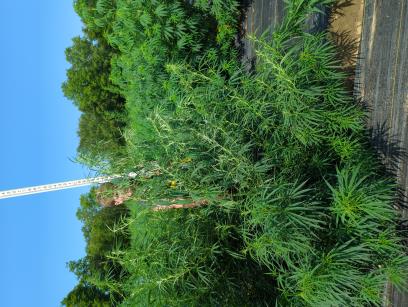 | Not Available | 2022 | COLLECTED | | | 40.22760000, -94.55990000 | | | Wild material | Found in cattle pasture around junk pile. 6 feet tall. Accession was (or attempted to be) included in the 2024 USDA-ARS Hemp Germplasm Laboratory and HudsonAlpha genome sequencing and phenotyping trial in PGRU Wellington Zone 01 [curator notes 2024:] Some inds with purple leaves and flower. Fairly typical US Midwest feral phenotype. Likely susceptible to powdery mildew. Low septoria in very preliminary screening of several plants in 2024. Among the tallest accession evaluated in 2024 NY trials when evaluated at 100 days after sowing. Very large MCD. | 2137326 | G 33263 |
| 67 | G 33264 | 'Missouri Feral (Sample 2)' | Cannabis sativa L. | Missouri, United States | NE9 |  | Not Available | 2022 | COLLECTED | | | 40.40930000, -95.46350000 | | | Wild material | Found in roadside fence row. 7-7.5 feet tall. Accession was (or attempted to be) included in the 2024 USDA-ARS Hemp Germplasm Laboratory and HudsonAlpha genome sequencing and phenotyping trial in PGRU Wellington Zone 01 [curator notes 2024:] Fairly typical US Feral phenotype. 8 of 9 plants are female in 2024. Among the tallest accession evaluated in 2024 NY trials when evaluated at 100 days after sowing. | 2137327 | G 33264 |
| 68 | G 33265 | 'Missouri Feral (Sample 3)' | Cannabis sativa L. | Missouri, United States | NE9 |  | Not Available | 2022 | COLLECTED | | | 40.36530000, -95.44470000 | | | Wild material | Found in road ditch. 7 feet tall. Accession was (or attempted to be) included in the 2024 USDA-ARS Hemp Germplasm Laboratory and HudsonAlpha genome sequencing and phenotyping trial in PGRU Wellington Zone 01 [curator notes 2024:] Fairly typical US Feral phenotype. Potential powdery mildew resistance in very preliminary screening of several plants in 2024. | 2137328 | G 33265 |
| 69 | G 33266 | 'Missouri Feral (Sample 4)' | Cannabis sativa L. | Missouri, United States | NE9 |  | Not Available | 2022 | COLLECTED | | | 40.36670000, -94.58820000 | | | Wild material | Found in cattle lot/pasture. 9-10 feet tall. Exceptionally large stems. Accession was (or attempted to be) included in the 2024 USDA-ARS Hemp Germplasm Laboratory and HudsonAlpha genome sequencing and phenotyping trial in PGRU Wellington Zone 01 [curator notes 2024:] Fairly typical US Feral phenotype. | 2137329 | G 33266 |
| 70 | G 33271 | 'WI-M-H-19-00100' | Cannabis sativa L. | Wisconsin, United States | NE9 |  | | 2022 | COLLECTED | | | 42.94378500, -89.46471000 | | | Wild material | Fitchburg, WI. Collected from: 50 females. Barn by Chicken Coop.Evaluated in 2022 USDA-PGRU field trials. Feral, with typical fiber phenotype. Moderately high uniformity. Accession was evaluated by USDA-ARS PGRU in summer 2022 in Cornell RN010 and shown to be < 0.3 % total THC. Accession was (or attempted to be) included in the 2024 USDA-ARS Hemp Germplasm Laboratory and HudsonAlpha genome sequencing and phenotyping trial in PGRU Wellington Zone 01 [curator notes 2024:] Potential early monoecy (early emerging male flowers [S1342-p2]). Fairly typical US feral phenotype. | 2137334 | G 33271 |
| 71 | G 33272 | 'WI-M-H-19-00101' | Cannabis sativa L. | Wisconsin, United States | NE9 |  | | 2022 | COLLECTED | | | 42.56730000, -90.37790000 | | | Wild material | Benton, WI. Collected from: 1 females. Evaluated in 2022 USDA-PGRU field trials. Typical feral with fiber phenotype. High uniformity. Some lodging. Some lateral dominance. Accession was evaluated by USDA-ARS PGRU in summer 2022 in Cornell RN010 and shown to be < 0.3 % total THC. Accession was (or attempted to be) included in the 2024 USDA-ARS Hemp Germplasm Laboratory and HudsonAlpha genome sequencing and phenotyping trial in PGRU Wellington Zone 01 [curator notes 2024:] Fairly typical US Feral phenotype. | 2137335 | G 33272 |
| 72 | G 33273 | 'WI-M-H-19-00102' | Cannabis sativa L. | Wisconsin, United States | NE9 |  | | 2022 | COLLECTED | | | 43.61461820, -89.28293390 | | | Wild material | Belle Fountain, WI. Collected from: 23 females. Cow Pasture. Evaluated in 2022 USDA-PGRU field trials. Typical feral with fiber phenotype. High uniformity. Accession was (or attempted to be) included in the 2024 USDA-ARS Hemp Germplasm Laboratory and HudsonAlpha genome sequencing and phenotyping trial in PGRU Wellington Zone 01 [curator notes 2024:] Fairly typical US Feral phenotype. Likely susceptible to powdery mildew. Low septoria in very preliminary screening of several plants in 2024. | 2137336 | G 33273 |
| 73 | G 33274 | 'WI-M-H-19-00103' | Cannabis sativa L. | Wisconsin, United States | NE9 |  | | 2022 | COLLECTED | | | 42.68160000, -90.11700000 | | | Wild material | Darlington, WI. Collected from: 47 females. Seymour Township. Evaluated in 2022 USDA-PGRU field trials. Typical feral with fiber phenotype. Very short basal internodes. Accession was evaluated by USDA-ARS PGRU in summer 2022 in Cornell RN010 and shown to be < 0.3 % total THC. Accession was (or attempted to be) included in the 2024 USDA-ARS Hemp Germplasm Laboratory and HudsonAlpha genome sequencing and phenotyping trial in PGRU Wellington Zone 01 [curator notes 2024:] Fairly typical US Feral phenotype. Likely susceptible to powdery mildew. | 2137337 | G 33274 |
| 74 | G 33275 | 'WI-M-H-19-00104' | Cannabis sativa L. | Wisconsin, United States | NE9 |  | Not Available | 2022 | COLLECTED | | | 42.60670000, -90.43000000 | | | Wild material | Cuba City, WI. Collected from: 11 females. Cow Pasture. Accession was (or attempted to be) included in the 2024 USDA-ARS Hemp Germplasm Laboratory and HudsonAlpha genome sequencing and phenotyping trial in PGRU Wellington Zone 01 [curator notes 2024:] One ind with partially yellow stem phenotype. Fairly typical US feral phenotype. Look into difference between male and female flowering date. Low septoria in very preliminary screening of several plants in 2024. | 2137338 | G 33275 |
| 75 | G 33276 | 'WI-M-H-19-00105' | Cannabis sativa L. | Wisconsin, United States | NE9 |  | | 2022 | COLLECTED | | | 42.84228300, -89.44255080 | | | Wild material | Brooklyn, WI. Collected from: 50 females. Wooded Area off Road. Evaluated in 2022 USDA-PGRU field trials. Feral, with fiber type phenotype. Mod high uniformity. Several dead individuals. Accession was evaluated by USDA-ARS PGRU in summer 2022 in Cornell RN010 and shown to be < 0.3 % total THC. Accession was (or attempted to be) included in the 2024 USDA-ARS Hemp Germplasm Laboratory and HudsonAlpha genome sequencing and phenotyping trial in PGRU Wellington Zone 01 [curator notes 2024:] Fairly typical US Feral phenotype. Potential powdery mildew resistance in very preliminary screening of several plants in 2024. | 2137339 | G 33276 |
| 76 | G 33277 | 'WI-M-H-19-00106' | Cannabis sativa L. | Wisconsin, United States | NE9 |  | Not Available | 2022 | COLLECTED | | | 42.69149420, -89.90580320 | | | Wild material | Argly, WI. Collected from: 8 females. Farmer's Property, Near Barn. Accession was (or attempted to be) included in the 2024 USDA-ARS Hemp Germplasm Laboratory and HudsonAlpha genome sequencing and phenotyping trial in PGRU Wellington Zone 01 [curator notes 2024:] Fairly typical US Feral phenotype. Likely susceptible to powdery mildew. | 2137340 | G 33277 |
| 77 | G 33278 | 'WI-M-H-19-00107' | Cannabis sativa L. | Wisconsin, United States | NE9 |  | | 2022 | COLLECTED | | | 42.64899630, -88.95034530 | | | Wild material | Janesville, WI. Collected from: 8 females. Next to Soybean Field. Evaluated in 2022 USDA-PGRU field trials. Feral with fiber phenotype. Moderate uniformity. Some with purple petioles. Accession was (or attempted to be) included in the 2024 USDA-ARS Hemp Germplasm Laboratory and HudsonAlpha genome sequencing and phenotyping trial in PGRU Wellington Zone 01 [curator notes 2024:] Fairly typical US Feral phenotype. Low septoria in very preliminary screening of several plants in 2024. | 2137341 | G 33278 |
| 78 | G 33279 | 'WI-M-H-19-00108' | Cannabis sativa L. | Wisconsin, United States | NE9 |  | Not Available | 2022 | COLLECTED | | | 42.60332750, -88.99198800 | | | Wild material | Janesville, WI. Collected from: 14 females. Next to Corn Field. Accession was (or attempted to be) included in the 2024 USDA-ARS Hemp Germplasm Laboratory and HudsonAlpha genome sequencing and phenotyping trial in PGRU Wellington Zone 01 [curator notes 2024:] Fairly typical US Feral phenotype. | 2137342 | G 33279 |
| 79 | G 33280 | 'WI-M-H-19-00109' | Cannabis sativa L. | Wisconsin, United States | NE9 |  | | 2022 | COLLECTED | | | 43.34751000, -89.42256870 | | | Wild material | Arlington, WI. Collected from: 22 females. Near Corn Field. Evaluated in 2022 USDA-PGRU field trials. Typical feral fiber phenotype. Moderately high uniformity. Accession was evaluated by USDA-ARS PGRU in summer 2022 in Cornell RN010 and shown to be < 0.3 % total THC. Accession was (or attempted to be) included in the 2024 USDA-ARS Hemp Germplasm Laboratory and HudsonAlpha genome sequencing and phenotyping trial in PGRU Wellington Zone 01 [curator notes 2024:] Fairly typical US Feral phenotype. Likely susceptible to powdery mildew. | 2137343 | G 33280 |
| 80 | G 33281 | 'WI-M-H-19-00110' | Cannabis sativa L. | Wisconsin, United States | NE9 |  | Not Available | 2022 | COLLECTED | | | 42.65371000, -90.69624000 | | | Wild material | Potosi, WI. Collected from: 14 females. Roadside and Pasture. Accession was (or attempted to be) included in the 2024 USDA-ARS Hemp Germplasm Laboratory and HudsonAlpha genome sequencing and phenotyping trial in PGRU Wellington Zone 01 [curator notes 2024:] Fairly typical US Feral phenotype. Likely susceptible to powdery mildew. | 2137344 | G 33281 |
| 81 | G 33282 | 'WI-M-H-19-00111' | Cannabis sativa L. | Wisconsin, United States | NE9 |  | | 2022 | COLLECTED | | | 42.76267000, -90.61337000 | | | Wild material | Ellenboro, WI. Collected from: 9 females. Plaete River Bank. Accession was (or attempted to be) included in the 2024 USDA-ARS Hemp Germplasm Laboratory and HudsonAlpha genome sequencing and phenotyping trial in PGRU Wellington Zone 01 [curator notes 2024:] Fairly typical US Feral phenotype. Seven of nine called female in 2024. Look into difference between male and female flowering date. Likely susceptible to powdery mildew. Low septoria in very preliminary screening of several plants in 2024. Among the tallest accession evaluated in 2024 NY trials when evaluated at 100 days after sowing. | 2137345 | G 33282 |
| 82 | G 33283 | 'WI-M-H-19-00112' | Cannabis sativa L. | Wisconsin, United States | NE9 |  | | 2022 | COLLECTED | | | 45.02124600, -92.59830600 | | | Wild material | Roberts, WI. Collected from: 10 females. Farmer's Property. Evaluated in 2022 USDA-PGRU field trials. Typical feral with fiber phenotype. High uniformity. Accession was evaluated by USDA-ARS PGRU in summer 2022 in Cornell RN010 and shown to be < 0.3 % total THC. Accession was (or attempted to be) included in the 2024 USDA-ARS Hemp Germplasm Laboratory and HudsonAlpha genome sequencing and phenotyping trial in PGRU Wellington Zone 01 [curator notes 2024:] Fairly typical US Feral phenotype. | 2137346 | G 33283 |
| 83 | G 33284 | 'WI-M-H-19-00113' | Cannabis sativa L. | Wisconsin, United States | NE9 |  | Not Available | 2022 | COLLECTED | | | 42.92138200, -89.87905200 | | | Wild material | Hollandale, WI. Collected from: 5 females. Farmer's Property. Accession was (or attempted to be) included in the 2024 USDA-ARS Hemp Germplasm Laboratory and HudsonAlpha genome sequencing and phenotyping trial in PGRU Wellington Zone 01 [curator notes 2024:] Some inds with purple flower. Fairly typical US feral phenotype. Seven of nine called female in 2024. Potential powdery mildew resistance in very preliminary screening of several plants in 2024. | 2137347 | G 33284 |
| 84 | G 33298 | 'Nebraska Feral-A' | Cannabis sativa L. | Nebraska, United States | NE9 |  | Not Available | 2022 | DONATED | PRE 2020 | | | | | Wild material | From donor Edgar Winters in conversation with zjs 2022-10-24: " Confusingly named 'Nebraska Feral'. Collected in southern Illinois near Carbondale. EW is not sure why they're called Nebraska. " Evaluated in 2022 USDA-PGRU field trials. Feral, with typical fiber phenotype. High uniformity. Seems similar to Boone Co Feral. Some individuals with variegation. Accession was (or attempted to be) included in the 2024 USDA-ARS Hemp Germplasm Laboratory and HudsonAlpha genome sequencing and phenotyping trial in PGRU Wellington Zone 01 [curator notes 2024:] Appears typical US feral morphology. Likely susceptible to powdery mildew.
Further conversations 20260804, donor indicated that he received the Illinois seed from the locals, they found it and called it ditch weed. The Nebraska Feral seed we received from a young lady that was working there and she collected it during a seminar. They never germinated the seeds but passed onto institutes with hemp breeding programs. Donor indicates that seeds were collected literally from ditches. | 2137361 | G 33298 |
| 85 | G 33299 | 'Nebraska Feral-B' | Cannabis sativa L. | Nebraska, United States | NE9 |  | Not Available | 2022 | DONATED | PRE 2020 | | | | | Wild material | From donor Edgar Winters in conversation with zjs 2022-10-24: " Confusingly named 'Nebraska Feral'. Collected in southern Illinois near Carbondale. EW is not sure why they're called Nebraska. " Accession was (or attempted to be) included in the 2024 USDA-ARS Hemp Germplasm Laboratory and HudsonAlpha genome sequencing and phenotyping trial in PGRU Wellington Zone 01 [curator notes 2024:] Appears typical US feral morphology
Further conversations 20260804, donor indicated that he received the Illinois seed from the locals, they found it and called it ditch weed. The Nebraska Feral seed we received from a young lady that was working there and she collected it during a seminar. They never germinated the seeds but passed onto institutes with hemp breeding programs. Donor indicates that seeds were collected literally from ditches. | 2137362 | G 33299 |
| 86 | G 33300 | 'Nebraska Feral-C' | Cannabis sativa L. | Nebraska, United States | NE9 |  | | 2022 | DONATED | PRE 2020 | | | | | Wild material | From donor Edgar Winters in conversation with zjs 2022-10-24: " Confusingly named 'Nebraska Feral'. Collected in southern Illinois near Carbondale. EW is not sure why they're called Nebraska. " Accession was (or attempted to be) included in the 2024 USDA-ARS Hemp Germplasm Laboratory and HudsonAlpha genome sequencing and phenotyping trial in PGRU Wellington Zone 01 [curator notes 2024:] Appears typical US feral morphology. Likely susceptible to powdery mildew. Among the tallest accession evaluated in 2024 NY trials when evaluated at 100 days after sowing.
Further conversations 20260804, donor indicated that he received the Illinois seed from the locals, they found it and called it ditch weed. The Nebraska Feral seed we received from a young lady that was working there and she collected it during a seminar. They never germinated the seeds but passed onto institutes with hemp breeding programs. Donor indicates that seeds were collected literally from ditches. | 2137363 | G 33300 |
| 87 | G 33301 | 'Nebraska Feral-D' | Cannabis sativa L. | Nebraska, United States | NE9 |  | Not Available | 2022 | DONATED | PRE 2020 | | | | | Wild material | From donor Edgar Winters in conversation with zjs 2022-10-24: " Confusingly named 'Nebraska Feral'. Collected in southern Illinois near Carbondale. EW is not sure why they're called Nebraska. " Accession was (or attempted to be) included in the 2024 USDA-ARS Hemp Germplasm Laboratory and HudsonAlpha genome sequencing and phenotyping trial in PGRU Wellington Zone 01 [curator notes 2024:] Appears typical US feral morphology. Male skew 7/9 individuals in 2024.
Further conversations 20260804, donor indicated that he received the Illinois seed from the locals, they found it and called it ditch weed. The Nebraska Feral seed we received from a young lady that was working there and she collected it during a seminar. They never germinated the seeds but passed onto institutes with hemp breeding programs. Donor indicates that seeds were collected literally from ditches. | 2137364 | G 33301 |
| 88 | G 33302 | 'Nebraska Feral-E' | Cannabis sativa L. | Nebraska, United States | NE9 | 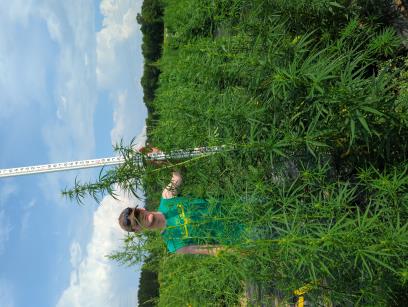 | Not Available | 2022 | DONATED | PRE 2020 | | | | | Wild material | From donor Edgar Winters in conversation with zjs 2022-10-24: " Confusingly named 'Nebraska Feral'. Collected in southern Illinois near Carbondale. EW is not sure why they're called Nebraska. " Accession was (or attempted to be) included in the 2024 USDA-ARS Hemp Germplasm Laboratory and HudsonAlpha genome sequencing and phenotyping trial in PGRU Wellington Zone 01 [curator notes 2024:] Appears typical US feral morphology. Likely susceptible to powdery mildew.
Further conversations 20260804, donor indicated that he received the Illinois seed from the locals, they found it and called it ditch weed. The Nebraska Feral seed we received from a young lady that was working there and she collected it during a seminar. They never germinated the seeds but passed onto institutes with hemp breeding programs. Donor indicates that seeds were collected literally from ditches. | 2137365 | G 33302 |
| 89 | G 33303 | 'Nebraska Feral-F' | Cannabis sativa L. | Nebraska, United States | NE9 |  | Not Available | 2022 | DONATED | PRE 2020 | | | | | Wild material | From donor Edgar Winters in conversation with zjs 2022-10-24: " Confusingly named 'Nebraska Feral'. Collected in southern Illinois near Carbondale. EW is not sure why they're called Nebraska. " Accession was (or attempted to be) included in the 2024 USDA-ARS Hemp Germplasm Laboratory and HudsonAlpha genome sequencing and phenotyping trial in PGRU Wellington Zone 01 [curator notes 2024:] Appears typical US feral morphology
Further conversations 20260804, donor indicated that he received the Illinois seed from the locals, they found it and called it ditch weed. The Nebraska Feral seed we received from a young lady that was working there and she collected it during a seminar. They never germinated the seeds but passed onto institutes with hemp breeding programs. Donor indicates that seeds were collected literally from ditches. | 2137366 | G 33303 |
| 90 | G 33304 | 'Nebraska Feral-G' | Cannabis sativa L. | Nebraska, United States | NE9 |  | Not Available | 2022 | DONATED | PRE 2020 | | | | | Wild material | From donor Edgar Winters in conversation with zjs 2022-10-24: " Confusingly named 'Nebraska Feral'. Collected in southern Illinois near Carbondale. EW is not sure why they're called Nebraska. " Accession was (or attempted to be) included in the 2024 USDA-ARS Hemp Germplasm Laboratory and HudsonAlpha genome sequencing and phenotyping trial in PGRU Wellington Zone 01 [curator notes 2024:] Appears typical US feral morphology. Likely susceptible to powdery mildew.
Further conversations 20260804, donor indicated that he received the Illinois seed from the locals, they found it and called it ditch weed. The Nebraska Feral seed we received from a young lady that was working there and she collected it during a seminar. They never germinated the seeds but passed onto institutes with hemp breeding programs. Donor indicates that seeds were collected literally from ditches. | 2137367 | G 33304 |
| 91 | G 33305 | 'Nebraska Feral-H' | Cannabis sativa L. | Nebraska, United States | NE9 | 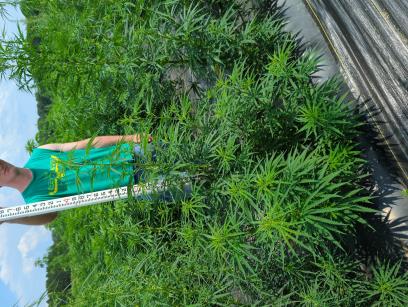 | Not Available | 2022 | DONATED | PRE 2020 | | | | | Wild material | From donor Edgar Winters in conversation with zjs 2022-10-24: " Confusingly named 'Nebraska Feral'. Collected in southern Illinois near Carbondale. EW is not sure why they're called Nebraska. " Accession was (or attempted to be) included in the 2024 USDA-ARS Hemp Germplasm Laboratory and HudsonAlpha genome sequencing and phenotyping trial in PGRU Wellington Zone 01 [curator notes 2024:] Appears typical US feral morphology. Likely highly susceptible to powdery mildew.
Further conversations 20260804, donor indicated that he received the Illinois seed from the locals, they found it and called it ditch weed. The Nebraska Feral seed we received from a young lady that was working there and she collected it during a seminar. They never germinated the seeds but passed onto institutes with hemp breeding programs. Donor indicates that seeds were collected literally from ditches. | 2137368 | G 33305 |
| 92 | G 33306 | 'Nebraska Feral-I' | Cannabis sativa L. | Nebraska, United States | NE9 |  | Not Available | 2022 | DONATED | PRE 2020 | | | | | Wild material | From donor Edgar Winters in conversation with zjs 2022-10-24: " Confusingly named 'Nebraska Feral'. Collected in southern Illinois near Carbondale. EW is not sure why they're called Nebraska. " Accession was (or attempted to be) included in the 2024 USDA-ARS Hemp Germplasm Laboratory and HudsonAlpha genome sequencing and phenotyping trial in PGRU Wellington Zone 01 [curator notes 2024:] Appears typical US feral morphology. Male skew 7/9 individuals in 2024.
Further conversations 20260804, donor indicated that he received the Illinois seed from the locals, they found it and called it ditch weed. The Nebraska Feral seed we received from a young lady that was working there and she collected it during a seminar. They never germinated the seeds but passed onto institutes with hemp breeding programs. Donor indicates that seeds were collected literally from ditches. | 2137369 | G 33306 |
| 93 | G 33307 | 'Nebraska Feral-J' | Cannabis sativa L. | Nebraska, United States | NE9 |  | Not Available | 2022 | DONATED | PRE 2020 | | | | | Wild material | From donor Edgar Winters in conversation with zjs 2022-10-24: " Confusingly named 'Nebraska Feral'. Collected in southern Illinois near Carbondale. EW is not sure why they're called Nebraska. " Accession was (or attempted to be) included in the 2024 USDA-ARS Hemp Germplasm Laboratory and HudsonAlpha genome sequencing and phenotyping trial in PGRU Wellington Zone 01 [curator notes 2024:] Appears typical US feral morphology
Further conversations 20260804, donor indicated that he received the Illinois seed from the locals, they found it and called it ditch weed. The Nebraska Feral seed we received from a young lady that was working there and she collected it during a seminar. They never germinated the seeds but passed onto institutes with hemp breeding programs. Donor indicates that seeds were collected literally from ditches. | 2137370 | G 33307 |
| 94 | G 33308 | 'Nebraska Feral-K' | Cannabis sativa L. | Nebraska, United States | NE9 |  | Not Available | 2022 | DONATED | PRE 2020 | | | | | Wild material | From donor Edgar Winters in conversation with zjs 2022-10-24: " Confusingly named 'Nebraska Feral'. Collected in southern Illinois near Carbondale. EW is not sure why they're called Nebraska. " Accession was (or attempted to be) included in the 2024 USDA-ARS Hemp Germplasm Laboratory and HudsonAlpha genome sequencing and phenotyping trial in PGRU Wellington Zone 01 [curator notes 2024:] Appears typical US feral morphology. Potential powdery mildew resistance in very preliminary screening of several plants in 2024.
Further conversations 20260804, donor indicated that he received the Illinois seed from the locals, they found it and called it ditch weed. The Nebraska Feral seed we received from a young lady that was working there and she collected it during a seminar. They never germinated the seeds but passed onto institutes with hemp breeding programs. Donor indicates that seeds were collected literally from ditches. | 2137371 | G 33308 |
| 95 | G 33309 | 'Nebraska Feral-L' | Cannabis sativa L. | Nebraska, United States | NE9 |  | Not Available | 2022 | DONATED | PRE 2020 | | | | | Wild material | From donor Edgar Winters in conversation with zjs 2022-10-24: " Confusingly named 'Nebraska Feral'. Collected in southern Illinois near Carbondale. EW is not sure why they're called Nebraska. " Accession was (or attempted to be) included in the 2024 USDA-ARS Hemp Germplasm Laboratory and HudsonAlpha genome sequencing and phenotyping trial in PGRU Wellington Zone 01 [curator notes 2024:] Appears typical US feral morphology. Likely susceptible to powdery mildew.
Further conversations 20260804, donor indicated that he received the Illinois seed from the locals, they found it and called it ditch weed. The Nebraska Feral seed we received from a young lady that was working there and she collected it during a seminar. They never germinated the seeds but passed onto institutes with hemp breeding programs. Donor indicates that seeds were collected literally from ditches. | 2137372 | G 33309 |
| 96 | G 33310 | 'Nebraska Feral-M' | Cannabis sativa L. | Nebraska, United States | NE9 |  | Not Available | 2022 | DONATED | PRE 2020 | | | | | Wild material | From donor Edgar Winters in conversation with zjs 2022-10-24: " Confusingly named 'Nebraska Feral'. Collected in southern Illinois near Carbondale. EW is not sure why they're called Nebraska. " Accession was (or attempted to be) included in the 2024 USDA-ARS Hemp Germplasm Laboratory and HudsonAlpha genome sequencing and phenotyping trial in PGRU Wellington Zone 01 [curator notes 2024:] Appears typical US feral morphology
Further conversations 20260804, donor indicated that he received the Illinois seed from the locals, they found it and called it ditch weed. The Nebraska Feral seed we received from a young lady that was working there and she collected it during a seminar. They never germinated the seeds but passed onto institutes with hemp breeding programs. Donor indicates that seeds were collected literally from ditches. | 2137373 | G 33310 |
| 97 | G 33311 | 'Nebraska Feral-N' | Cannabis sativa L. | Nebraska, United States | NE9 |  | Not Available | 2022 | DONATED | PRE 2020 | | | | | Wild material | From donor Edgar Winters in conversation with zjs 2022-10-24: " Confusingly named 'Nebraska Feral'. Collected in southern Illinois near Carbondale. EW is not sure why they're called Nebraska. " Accession was (or attempted to be) included in the 2024 USDA-ARS Hemp Germplasm Laboratory and HudsonAlpha genome sequencing and phenotyping trial in PGRU Wellington Zone 01 [curator notes 2024:] Appears typical US feral morphology, although one individual was described as “freakishly nice” from a fiber perspective (e.g., tall, low branching, clean stem).
Further conversations 20260804, donor indicated that he received the Illinois seed from the locals, they found it and called it ditch weed. The Nebraska Feral seed we received from a young lady that was working there and she collected it during a seminar. They never germinated the seeds but passed onto institutes with hemp breeding programs. Donor indicates that seeds were collected literally from ditches. | 2137374 | G 33311 |
| 98 | G 33214 | 'Zaki' | Cannabis sativa L. | United States | NE9 |  | | 2021 | COLLECTED | 2016 | | | | | Wild material | Feral, unimproved breeding material. Non-feminized, apppears dioecious. Evaluated in 2022 USDA-PGRU field trials. Feral, with typical fiber phenotype. Moderately high uniformity. Accession was (or attempted to be) included in the 2024 USDA-ARS Hemp Germplasm Laboratory and HudsonAlpha genome sequencing and phenotyping trial in PGRU Wellington Zone 01 [curator notes 2024:] Broadly appears similar to US Midwest feral germplasm. Did not observe any yellow-stem individuals in 2024. All 7 individuals were called as female in 2024, although I don’t believe that this inventory was feminized. | 2123309 | G 33214 |
| 99 | G 33213 | Iowa Feral #01 | Cannabis sativa L. | Iowa, United States | NE9 |  | Not Available | 2021 | COLLECTED | 09/29/2021 | Boone and Story County line just west, northwest and southwest of Ames | 42.04876300, -93.71819400 | | Roadside and fenceline areas. Normally associated with distrubance. | Wild material | Feral germplasm originating from central Iowa representing seed harvested from a single mother plant. Peak fruiting occurred the first week in October (2021). Plant height: 175cm. Plant diameter: 20cm. Accession was (or attempted to be) included in the 2024 USDA-ARS Hemp Germplasm Laboratory and HudsonAlpha genome sequencing and phenotyping trial in PGRU Wellington Zone 01 [curator notes 2024:] Observed one monoecious individual [S1145-p3]; plant appeared normally female, although there were several staminate flowers on the whole plant. Low septoria in very preliminary screening of several plants in 2024. | 2121086 | G 33213 |
| 100 | G 33238 | Iowa Feral #19 | Cannabis sativa L. | Iowa, United States | NE9 |  | Not Available | 2021 | COLLECTED | 10/01/2021 | Boone and Story County line just west, northwest and southwest of Ames | 41.97942800, -93.71131900 | | Roadside and fenceline areas. Normally associated with distrubance. | Wild material | Feral germplasm originating from central Iowa representing seed harvested from a single mother plant. Peak fruiting occurred the first week in October (2021). Plant height: 158cm. Plant diameter: 13cm. Over total THC threshold (>0.3). Accession was (or attempted to be) included in the 2024 USDA-ARS Hemp Germplasm Laboratory and HudsonAlpha genome sequencing and phenotyping trial in PGRU Wellington Zone 01 [curator notes 2024:] Accession morphology typical US feral phenotype. Likely susceptible to powdery mildew. Low septoria in very preliminary screening of several plants in 2024. | 2137299 | G 33238 |
| 101 | G 33239 | Iowa Feral #06 | Cannabis sativa L. | Iowa, United States | NE9 |  | Not Available | 2021 | COLLECTED | 10/01/2021 | Boone and Story County line just west, northwest and southwest of Ames | 41.99377800, -93.70149000 | | Roadside and fenceline areas. Normally associated with distrubance. | Wild material | Feral germplasm originating from central Iowa representing seed harvested from a single mother plant. Peak fruiting occurred the first week in October (2021). Over total THC threshold (>0.3). Accession was (or attempted to be) included in the 2024 USDA-ARS Hemp Germplasm Laboratory and HudsonAlpha genome sequencing and phenotyping trial in PGRU Wellington Zone 01 [curator notes 2024:] Accession morphology typical US feral phenotype. Likely highly susceptible to powdery mildew. Low septoria in very preliminary screening of several plants in 2024. | 2137300 | G 33239 |
| 102 | G 33240 | Iowa Feral #17 | Cannabis sativa L. | Iowa, United States | NE9 |  | Not Available | 2021 | COLLECTED | 10/01/2021 | Boone and Story County line just west, northwest and southwest of Ames | 42.03060300, -93.77897600 | | Roadside and fenceline areas. Normally associated with distrubance. | Wild material | Feral germplasm originating from central Iowa representing seed harvested from a single mother plant. Peak fruiting occurred the first week in October (2021). Plant height: 245cm. Plant diameter: 41cm. Over total THC threshold (>0.3). Evaluated in 2022 USDA-PGRU field trials. Feral, typical fiber phenotype. Mod high uniformity. Accession was (or attempted to be) included in the 2024 USDA-ARS Hemp Germplasm Laboratory and HudsonAlpha genome sequencing and phenotyping trial in PGRU Wellington Zone 01 [curator notes 2024:] Phenotype similar to other feral accessions. Low septoria in very preliminary screening of several plants in 2024. | 2137301 | G 33240 |
| 103 | G 33241 | Iowa Feral #20 | Cannabis sativa L. | Iowa, United States | NE9 |  | Not Available | 2021 | COLLECTED | 10/01/2021 | Boone and Story County line just west, northwest and southwest of Ames | 41.97953400, -93.70799900 | | Roadside and fenceline areas. Normally associated with distrubance. | Wild material | Feral germplasm originating from central Iowa representing seed harvested from a single mother plant. Peak fruiting occurred the first week in October (2021). Plant height: 182cm. Plant diameter: 17cm. Over total THC threshold (>0.3). Evaluated in 2022 USDA-PGRU field trials. Feral, typical fiber phenotype. increasingly long internodes. quite uniformity. Accession was (or attempted to be) included in the 2024 USDA-ARS Hemp Germplasm Laboratory and HudsonAlpha genome sequencing and phenotyping trial in PGRU Wellington Zone 01 [curator notes 2024:] Accession morphology typical US feral phenotype. Male skew 7/9 individuals in 2024. Among the tallest accession evaluated in 2024 NY trials when evaluated at 100 days after sowing. | 2137302 | G 33241 |
| 104 | G 33316 | Iowa Feral #02 | Cannabis sativa L. | Iowa, United States | NE9 |  | Not Available | 2021 | COLLECTED | 10/01/2021 | Boone and Story County line just west, northwest and southwest of Ames | 41.99853400, -93.66519800 | | Roadside and fenceline areas. Normally associated with distrubance. | Wild material | Feral germplasm originating from central Iowa representing seed harvested from a single mother plant. Peak fruiting occurred the first week in October (2021). Plant height: 350cm. Plant diameter: 30cm. Accession was (or attempted to be) included in the 2024 USDA-ARS Hemp Germplasm Laboratory and HudsonAlpha genome sequencing and phenotyping trial in PGRU Wellington Zone 01 [curator notes 2024:] Observed one XX (by CSP-2 PACE) but phenotypically male individual [S2418-p1]. See image. | 2137382 | G 33316 |
| 105 | G 33317 | Iowa Feral #03 | Cannabis sativa L. | Iowa, United States | NE9 |  | Not Available | 2021 | COLLECTED | 10/01/2021 | Boone and Story County line just west, northwest and southwest of Ames | 41.99758600, -93.67064100 | | Roadside and fenceline areas. Normally associated with distrubance. | Wild material | Feral germplasm originating from central Iowa representing seed harvested from a single mother plant. Peak fruiting occurred the first week in October (2021). Plant height: 290cm. Plant diameter: 30cm. Accession was (or attempted to be) included in the 2024 USDA-ARS Hemp Germplasm Laboratory and HudsonAlpha genome sequencing and phenotyping trial in PGRU Wellington Zone 01 [curator notes 2024:] Observed one XY (by CSP-2 PACE) but phenotypically female individual [S2499-p1]. See image. Low septoria in very preliminary screening of several plants in 2024. | 2137383 | G 33317 |
| 106 | G 33318 | Iowa Feral #04 | Cannabis sativa L. | Iowa, United States | NE9 |  | Not Available | 2021 | COLLECTED | 10/01/2021 | Boone and Story County line just west, northwest and southwest of Ames | 41.99398800, -93.68952700 | | Roadside and fenceline areas. Normally associated with distrubance. | Wild material | Feral germplasm originating from central Iowa representing seed harvested from a single mother plant. Peak fruiting occurred the first week in October (2021). Plant height: 220cm. Plant diameter: 19cm. Accession was (or attempted to be) included in the 2024 USDA-ARS Hemp Germplasm Laboratory and HudsonAlpha genome sequencing and phenotyping trial in PGRU Wellington Zone 01 [curator notes 2024:] Accession morphology typical US feral phenotype. Likely susceptible to powdery mildew. Low septoria in very preliminary screening of several plants in 2024. Among the tallest accession evaluated in 2024 NY trials when evaluated at 100 days after sowing. | 2137384 | G 33318 |
| 107 | G 33319 | Iowa Feral #05 | Cannabis sativa L. | Iowa, United States | NE9 |  | | 2021 | COLLECTED | 10/01/2021 | Boone and Story County line just west, northwest and southwest of Ames | 41.99396900, -93.69335000 | | Roadside and fenceline areas. Normally associated with distrubance. | Wild material | Feral germplasm originating from central Iowa representing seed harvested from a single mother plant. Peak fruiting occurred the first week in October (2021). Plant height: 242cm. Plant diameter: 32cm. Very strong smell, heavily branched with low seed production. Evaluated in 2022 USDA-PGRU field trials. Typical feral with fiber phenotype. High uniformity. Accession was (or attempted to be) included in the 2024 USDA-ARS Hemp Germplasm Laboratory and HudsonAlpha genome sequencing and phenotyping trial in PGRU Wellington Zone 01 [curator notes 2024:] Accession morphology typical US feral phenotype. Likely susceptible to powdery mildew. Low septoria in very preliminary screening of several plants in 2024. | 2137385 | G 33319 |
| 108 | G 33320 | Iowa Feral #07 | Cannabis sativa L. | Iowa, United States | NE9 |  | Not Available | 2021 | COLLECTED | 10/01/2021 | Boone and Story County line just west, northwest and southwest of Ames | 41.99386600, -93.70823000 | | Roadside and fenceline areas. Normally associated with distrubance. | Wild material | Feral germplasm originating from central Iowa representing seed harvested from a single mother plant. Peak fruiting occurred the first week in October (2021). Plant height: 145cm. Plant diameter: 25cm. Evaluated in 2022 USDA-PGRU field trials. Typical Boone Co feral with fiber phenotype. Med low uniformity. Accession was (or attempted to be) included in the 2024 USDA-ARS Hemp Germplasm Laboratory and HudsonAlpha genome sequencing and phenotyping trial in PGRU Wellington Zone 01 [curator notes 2024:] Accession morphology typical US feral phenotype. | 2137386 | G 33320 |
| 109 | G 33321 | Iowa Feral #08 | Cannabis sativa L. | Iowa, United States | NE9 |  | Not Available | 2021 | COLLECTED | 10/01/2021 | Boone and Story County line just west, northwest and southwest of Ames | 42.03110900, -93.73761800 | | Roadside and fenceline areas. Normally associated with distrubance. | Wild material | Feral germplasm originating from central Iowa representing seed harvested from a single mother plant. Peak fruiting occurred the first week in October (2021). Plant height: 185cm. Plant diameter: 18cm. Evaluated in 2022 USDA-PGRU field trials. Typical feral with fiber phenotype. Accession was (or attempted to be) included in the 2024 USDA-ARS Hemp Germplasm Laboratory and HudsonAlpha genome sequencing and phenotyping trial in PGRU Wellington Zone 01 [curator notes 2024:] Accession morphology typical US feral phenotype. | 2137387 | G 33321 |
| 110 | G 33322 | Iowa Feral #09 | Cannabis sativa L. | Iowa, United States | NE9 |  | | 2021 | COLLECTED | 10/01/2021 | Boone and Story County line just west, northwest and southwest of Ames | 42.03238000, -93.73766000 | | Roadside and fenceline areas. Normally associated with distrubance. | Wild material | Feral germplasm originating from central Iowa representing seed harvested from a single mother plant. Peak fruiting occurred the first week in October (2021). Plant height: 178cm. Plant diameter: 25cm. Very sparsley branched specimen. Evaluated in 2022 USDA-PGRU field trials. Feral with fiber phenotype. Moderate uniformity. Accession was (or attempted to be) included in the 2024 USDA-ARS Hemp Germplasm Laboratory and HudsonAlpha genome sequencing and phenotyping trial in PGRU Wellington Zone 01 [curator notes 2024:] Accession morphology typical US feral phenotype. Potential powdery mildew resistance in very preliminary screening of several plants in 2024. | 2137388 | G 33322 |
| 111 | G 33323 | Iowa Feral #10 | Cannabis sativa L. | Iowa, United States | NE9 |  | | 2021 | COLLECTED | 10/01/2021 | Boone and Story County line just west, northwest and southwest of Ames | 42.05178100, -93.71796600 | | Roadside and fenceline areas. Normally associated with distrubance. | Wild material | Feral germplasm originating from central Iowa representing seed harvested from a single mother plant. Peak fruiting occurred the first week in October (2021). Plant height: 200cm. Plant diameter: 28cm. Evaluated in 2022 USDA-PGRU field trials. Feral with fiber phenotype. High uniformity. Accession was (or attempted to be) included in the 2024 USDA-ARS Hemp Germplasm Laboratory and HudsonAlpha genome sequencing and phenotyping trial in PGRU Wellington Zone 01 [curator notes 2024:] Accession morphology typical US feral phenotype. All 7 individuals were called male-- no females found. | 2137389 | G 33323 |
| 112 | G 33324 | Iowa Feral #11 | Cannabis sativa L. | Iowa, United States | NE9 |  | | 2021 | COLLECTED | 10/01/2021 | Boone and Story County line just west, northwest and southwest of Ames | 42.05100700, -93.71789000 | | Roadside and fenceline areas. Normally associated with distrubance. | Wild material | Feral germplasm originating from central Iowa representing seed harvested from a single mother plant. Peak fruiting occurred the first week in October (2021). Plant height 210 cm. Plant diameter: 33cm. Very wide, spreading specimen. Evaluated in 2022 USDA-PGRU field trials. Feral with fiber phenotype. Moderate uniformity. Accession was (or attempted to be) included in the 2024 USDA-ARS Hemp Germplasm Laboratory and HudsonAlpha genome sequencing and phenotyping trial in PGRU Wellington Zone 01 [curator notes 2024:] Accession morphology typical US feral phenotype. | 2137390 | G 33324 |
| 113 | G 33325 | Iowa Feral #12 | Cannabis sativa L. | Iowa, United States | NE9 |  | Not Available | 2021 | COLLECTED | 10/01/2021 | Boone and Story County line just west, northwest and southwest of Ames | 42.05997200, -93.71820500 | | Roadside and fenceline areas. Normally associated with distrubance. | Wild material | Feral germplasm originating from central Iowa representing seed harvested from a single mother plant. Peak fruiting occurred the first week in October (2021). Plant height: 235cm. Plant diameter: 28cm. Accession was (or attempted to be) included in the 2024 USDA-ARS Hemp Germplasm Laboratory and HudsonAlpha genome sequencing and phenotyping trial in PGRU Wellington Zone 01 [curator notes 2024:] Accession morphology typical US feral phenotype. | 2137391 | G 33325 |
| 114 | G 33326 | Iowa Feral #13 | Cannabis sativa L. | Iowa, United States | NE9 |  | | 2021 | COLLECTED | 10/01/2021 | Boone and Story County line just west, northwest and southwest of Ames | 42.07101400, -93.70837000 | | Roadside and fenceline areas. Normally associated with distrubance. | Wild material | Feral germplasm originating from central Iowa representing seed harvested from a single mother plant. Peak fruiting occurred the first week in October (2021). Plant height: 173cm. Plant diameter: 22cm. Slight purplish tinge to undersides of leaves and some petioles. Rather leafy with nice dark green coloration. Accession was (or attempted to be) included in the 2024 USDA-ARS Hemp Germplasm Laboratory and HudsonAlpha genome sequencing and phenotyping trial in PGRU Wellington Zone 01 [curator notes 2024:] Accession morphology typical US feral phenotype. | 2137392 | G 33326 |
| 115 | G 33327 | Iowa Feral #14 | Cannabis sativa L. | Iowa, United States | NE9 |  | Not Available | 2021 | COLLECTED | 10/01/2021 | Boone and Story County line just west, northwest and southwest of Ames | 42.07632600, -93.71811200 | | Roadside and fenceline areas. Normally associated with distrubance. | Wild material | Feral germplasm originating from central Iowa representing seed harvested from a single mother plant. Peak fruiting occurred the first week in October (2021). Plant height: 228cm. Plant diameter: 14cm. Accession was (or attempted to be) included in the 2024 USDA-ARS Hemp Germplasm Laboratory and HudsonAlpha genome sequencing and phenotyping trial in PGRU Wellington Zone 01 [curator notes 2024:] Observed one XY (by CSP-2 PACE) but phenotypically female individual [S2278-p2]. See image. Access ion morphology typical US feral phenotype. Look into difference between male and female flowering date. Among the tallest accession evaluated in 2024 NY trials when evaluated at 100 days after sowing. Very large MCD. | 2137393 | G 33327 |
| 116 | G 33328 | Iowa Feral #15 | Cannabis sativa L. | Iowa, United States | NE9 |  | Not Available | 2021 | COLLECTED | 10/01/2021 | Boone and Story County line just west, northwest and southwest of Ames | 42.04196600, -93.75699000 | | Roadside and fenceline areas. Normally associated with distrubance. | Wild material | Feral germplasm originating from central Iowa representing seed harvested from a single mother plant. Peak fruiting occurred the first week in October (2021). Plant height: 208cm. Plant diameter: 16cm. Evaluated in 2022 USDA-PGRU field trials. Typical feral, with fiber phenotype. High uniformity. Accession was (or attempted to be) included in the 2024 USDA-ARS Hemp Germplasm Laboratory and HudsonAlpha genome sequencing and phenotyping trial in PGRU Wellington Zone 01 [curator notes 2024:] Accession morphology typical US feral phenotype. | 2137394 | G 33328 |
| 117 | G 33329 | Iowa Feral #16 | Cannabis sativa L. | Iowa, United States | NE9 |  | | 2021 | COLLECTED | 10/01/2021 | Boone and Story County line just west, northwest and southwest of Ames | 42.04202100, -93.75672700 | | Roadside and fenceline areas. Normally associated with distrubance. | Wild material | Feral germplasm originating from central Iowa representing seed harvested from a single mother plant. Peak fruiting occurred the first week in October (2021). Plant height: 227cm. Plant diameter: 19cm. Evaluated in 2022 USDA-PGRU field trials. Typical feral with fiber phenotype. Accession was (or attempted to be) included in the 2024 USDA-ARS Hemp Germplasm Laboratory and HudsonAlpha genome sequencing and phenotyping trial in PGRU Wellington Zone 01 [curator notes 2024:] Accession morphology typical US feral phenotype. Likely susceptible to powdery mildew. Low septoria in very preliminary screening of several plants in 2024. | 2137395 | G 33329 |
| 118 | G 33330 | Iowa Feral #18 | Cannabis sativa L. | Iowa, United States | NE9 |  | | 2021 | COLLECTED | 10/01/2021 | Boone and Story County line just west, northwest and southwest of Ames | 42.00456800, -93.77641900 | | Roadside and fenceline areas. Normally associated with distrubance. | Wild material | Feral germplasm originating from central Iowa representing seed harvested from a single mother plant. Peak fruiting occurred the first week in October (2021). Plant height: 323cm. Plant diameter: 47cm. Evaluated in 2022 USDA-PGRU field trials. Typical feral with fiber phenotype. One plant dead due to unknown cause. Lower uniformity than other Boone Co. feral. . Accession was (or attempted to be) included in the 2024 USDA-ARS Hemp Germplasm Laboratory and HudsonAlpha genome sequencing and phenotyping trial in PGRU Wellington Zone 01 [curator notes 2024:] One individual killed by mice. Accession morphology typical US feral phenotype. Seven of nine called female in 2024. Among the tallest accession evaluated in 2024 NY trials when evaluated at 100 days after sowing. | 2137396 | G 33330 |
| 119 | G 33331 | Iowa Feral #21 | Cannabis sativa L. | Iowa, United States | NE9 |  | | 2021 | COLLECTED | 10/01/2021 | Boone and Story County line just west, northwest and southwest of Ames | 41.97931200, -93.69726200 | | Roadside and fenceline areas. Normally associated with distrubance. | Wild material | Feral germplasm originating from central Iowa representing seed harvested from a single mother plant. Peak fruiting occurred the first week in October (2021). Evaluated in 2022 USDA-PGRU field trials. Typical feral with fiber phenotype. Mod high uniformity. Accession was (or attempted to be) included in the 2024 USDA-ARS Hemp Germplasm Laboratory and HudsonAlpha genome sequencing and phenotyping trial in PGRU Wellington Zone 01 [curator notes 2024:] Accession morphology typical US feral phenotype. Low septoria in very preliminary screening of several plants in 2024. | 2137397 | G 33331 |
| 120 | G 33332 | Iowa Feral #22 | Cannabis sativa L. | Iowa, United States | NE9 |  | Not Available | 2021 | COLLECTED | 10/01/2021 | Boone and Story County line just west, northwest and southwest of Ames | 41.97935100, -93.69549500 | | Roadside and fenceline areas. Normally associated with distrubance. | Wild material | Fully assembled, haplotype resolved (Hifiasm) genome is available, included in SALK Pangenome by Todd Michael Lab (see: https://resources.michael.salk.edu/resources/cannabis_genomes/index.html). Feral germplasm originating from central Iowa representing seed harvested from a single mother plant. Peak fruiting occurred the first week in October (2021). Plant height: 240cm. Plant diameter: 27cm. Evaluated in 2022 USDA-PGRU field trials. Feral, with fiber phenotype. Accession was (or attempted to be) included in the 2024 USDA-ARS Hemp Germplasm Laboratory and HudsonAlpha genome sequencing and phenotyping trial in PGRU Wellington Zone 01 [curator notes 2024:] Potential off-type from other Midwest feral? S1470-p3 appeared morphologically more typical to chemical type (potential more recent feralization event from type 1 or 2 germplasm? Look into difference between male and female flowering date. Likely susceptible to powdery mildew. Among the tallest accession evaluated in 2024 NY trials when evaluated at 100 days after sowing. | 2137398 | G 33332 |
| 121 | G 33333 | Iowa Feral #23 | Cannabis sativa L. | Iowa, United States | NE9 |  | Not Available | 2021 | COLLECTED | 10/01/2021 | Boone and Story County line just west, northwest and southwest of Ames | 41.97929000, -93.69356500 | | Roadside and fenceline areas. Normally associated with distrubance. | Wild material | Feral germplasm originating from central Iowa representing seed harvested from a single mother plant. Peak fruiting occurred the first week in October (2021). Plant height: 221cm. Plant diameter: 36cm. Slight purplish tinge to undersides of leaves and some petioles. Rather leafy with nice dark green coloration.Evaluated in 2022 USDA-PGRU field trials. Feral with fiber phenotype. Relatively low apical dominance. Accession was (or attempted to be) included in the 2024 USDA-ARS Hemp Germplasm Laboratory and HudsonAlpha genome sequencing and phenotyping trial in PGRU Wellington Zone 01 [curator notes 2024:] Accession morphology typical US feral phenotype. Low septoria in very preliminary screening of several plants in 2024. Very large MCD. | 2137399 | G 33333 |
| 122 | G 33334 | Iowa Feral #24 | Cannabis sativa L. | Iowa, United States | NE9 |  | | 2021 | COLLECTED | 10/01/2021 | Boone and Story County line just west, northwest and southwest of Ames | 41.97930900, -93.68672700 | | Roadside and fenceline areas. Normally associated with distrubance. | Wild material | Feral germplasm originating from central Iowa representing seed harvested from a single mother plant. Peak fruiting occurred the first week in October (2021). Plant height: 151cm. Plant diameter: 30cm. Evaluated in 2022 USDA-PGRU field trials. Typical feral with fiber phenotype. Moderate uniformity. Accession was (or attempted to be) included in the 2024 USDA-ARS Hemp Germplasm Laboratory and HudsonAlpha genome sequencing and phenotyping trial in PGRU Wellington Zone 01 [curator notes 2024:] Accession morphology typical US feral phenotype. Among the tallest accession evaluated in 2024 NY trials when evaluated at 100 days after sowing. | 2137400 | G 33334 |
| 123 | G 33335 | Iowa Feral #25 | Cannabis sativa L. | Iowa, United States | NE9 |  | Not Available | 2021 | COLLECTED | 10/01/2021 | Boone and Story County line just west, northwest and southwest of Ames | 41.99408000, -93.65704200 | | Roadside and fenceline areas. Normally associated with distrubance. | Wild material | Feral germplasm originating from central Iowa representing seed harvested from a single mother plant. Peak fruiting occurred the first week in October (2021). Plant height: 200cm. Plant diameter: 28cm. Evaluated in 2022 USDA-PGRU field trials. Feral with fiber phenotype. High uniformity. Increasingly long internodes. Accession was (or attempted to be) included in the 2024 USDA-ARS Hemp Germplasm Laboratory and HudsonAlpha genome sequencing and phenotyping trial in PGRU Wellington Zone 01 [curator notes 2024:] Accession morphology typical US feral phenotype. Six of 7 were called males in 2024. Low septoria in very preliminary screening of several plants in 2024. | 2137401 | G 33335 |
| 124 | G 33199 | New York Feral | Cannabis sativa L. | New York, United States | NE9 |  | | 2021 | COLLECTED | 09/05/2017 | | 42.96000000, -74.57000000 | 191 | Collected on private land with permission of owner. Location described as hemp farm in colonial times to produce rope in local factory. Anecdotally, owner described that hemp plants grew after removal of a historic stone fence. | Wild material | New York Feral Collection (GVA-H-17-1006), Evaluated in 2022 USDA-PGRU field trials. Typical feral with fiber phenotype. Higher branching angle vs other fiber accessions. Moderately high uniformity. Accession was (or attempted to be) included in the 2024 USDA-ARS Hemp Germplasm Laboratory and HudsonAlpha genome sequencing and phenotyping trial in PGRU Wellington Zone 01 [curator notes 2024:] Phenotype mostly typical of other US feral populations. Feral hemp germplasm collected via USDA-NIFA SAC 2021-38624-35738 and USDA-ARS 58-5090-2-03. GBS data: BioProject: PRJNA1206134 | 2120527 | G 33199 |