| 0 | PI 303528 | V-63-227 | Polanisia dodecandra (L.) DC. subsp. trachysperma (Torr. & A. Gray) H. H. Iltis | Colorado, United States | | | Historic | 1964 | COLLECTED | | | | | | | | 1680842 | PI 303528 |
| 1 | W6 62988 | FWS0300-81 | Polanisia dodecandra (L.) DC. | Ohio, United States | W6 |  | Not Available | 2025 | | | | | | | Wild material | | 2196164 | W6 62988 |
| 2 | OPGC 8773 | NM930-528 | Polanisia dodecandra (L.) DC. | New Mexico, United States | OPGC | | | 2023 | | | | | | | Wild material | Palmately dissected leaves, 1 to 3 inch long upright seedpods, ranging from green to purple and split open when ready. Flowers have white petals and red anthers and stamens. | 2142153 | OPGC 8773 |
| 3 | OPGC 7525 | AZ930-401 | Polanisia dodecandra (L.) DC. | Arizona, United States | OPGC |  | | 2019 | | | | | | | Wild material | | 2096871 | OPGC 7525 |
| 4 | OPGC 7541 | WY050-186 | Polanisia dodecandra (L.) DC. subsp. trachysperma (Torr. & A. Gray) H. H. Iltis | Wyoming, United States | OPGC |  | | 2019 | | | | | | | Wild material | | 2096986 | OPGC 7541 |
| 5 | OPGC 7520 | NM030-100 | Polanisia dodecandra (L.) DC. | New Mexico, United States | OPGC |  | | 2019 | | | | | | | Wild material | | 2094631 | OPGC 7520 |
| 6 | OPGC 7309 | AZ930-361 | Polanisia dodecandra (L.) DC. | Arizona, United States | OPGC |  | | 2018 | | | | | | | Wild material | | 1970377 | OPGC 7309 |
| 7 | OPGC 7235 | NM930-373 | Polanisia dodecandra (L.) DC. | New Mexico, United States | OPGC |  | | 2018 | | | | | | | Wild material | | 1966105 | OPGC 7235 |
| 8 | OPGC 7219 | NM018-110 | Polanisia dodecandra (L.) DC. | New Mexico, United States | OPGC |  | | 2018 | | | | | | | Wild material | | 1964899 | OPGC 7219 |
| 9 | OPGC 7218 | UT080-218 | Polanisia dodecandra (L.) DC. | Utah, United States | OPGC |  | | 2018 | | | | | | | Wild material | | 1964576 | OPGC 7218 |
| 10 | OPGC 7185 | NM018-34 | Polanisia dodecandra (L.) DC. | New Mexico, United States | OPGC |  | | 2017 | | | | | | | Wild material | | 1949027 | OPGC 7185 |
| 11 | OPGC 7186 | NM018-39 | Polanisia dodecandra (L.) DC. | New Mexico, United States | OPGC |  | | 2017 | | | | | | | Wild material | | 1949028 | OPGC 7186 |
| 12 | OPGC 7148 | WY930-74 | Polanisia dodecandra (L.) DC. | Colorado, United States | OPGC | | | 2015 | | | | | | | Wild material | | 1930510 | OPGC 7148 |
| 13 | OPGC 7120 | WY932C-75 | Polanisia dodecandra (L.) DC. subsp. trachysperma (Torr. & A. Gray) H. H. Iltis | United States | OPGC |  | | 2014 | | | | | | | Wild material | | 1922058 | OPGC 7120 |
| 14 | OPGC 7116 | NM930-187 | Polanisia dodecandra (L.) DC. subsp. trachysperma (Torr. & A. Gray) H. H. Iltis | United States | OPGC | 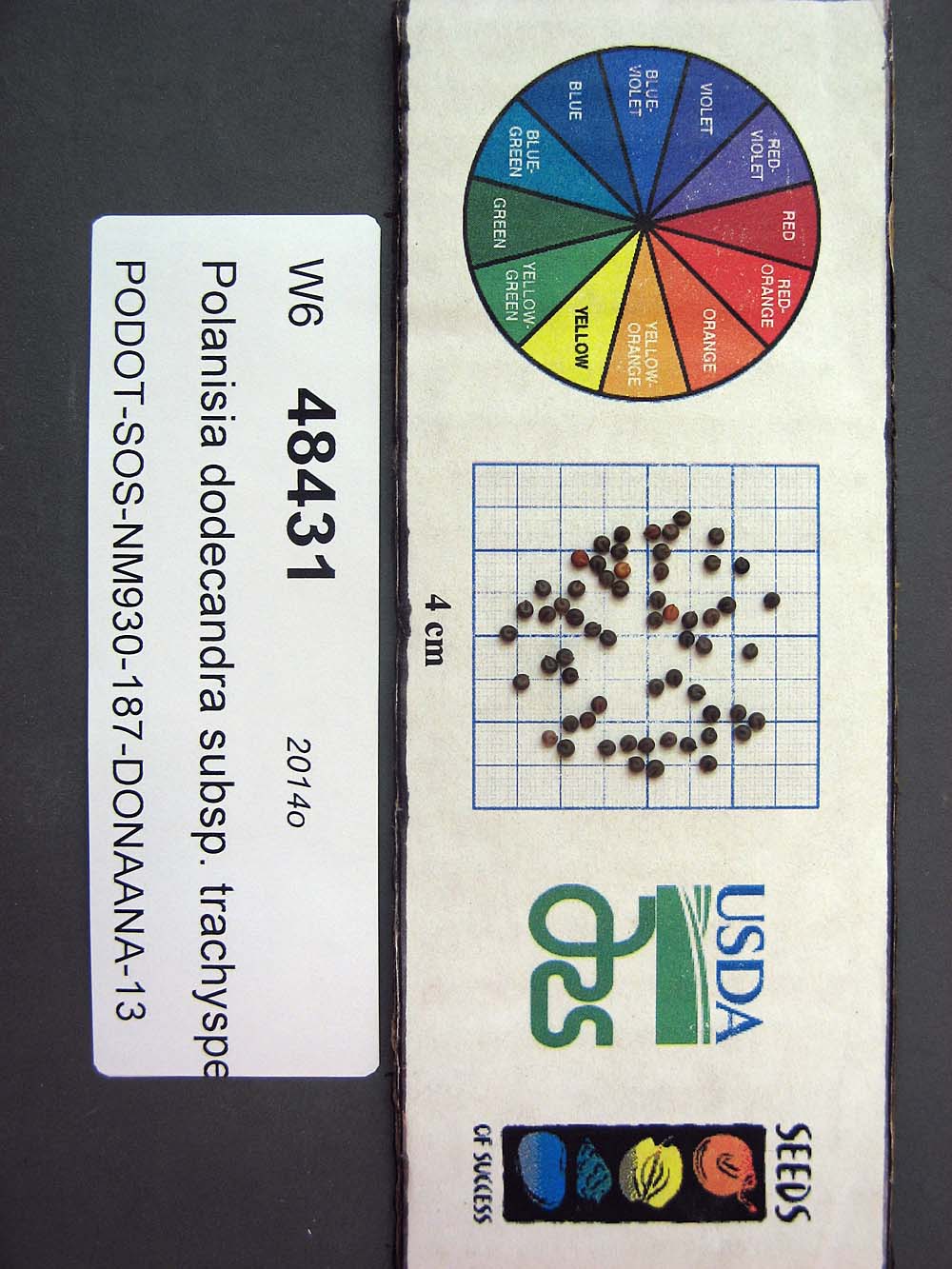 | | 2014 | | | | | | | Wild material | | 1921632 | OPGC 7116 |
| 15 | OPGC 7101 | WY932C-58 | Polanisia dodecandra (L.) DC. subsp. trachysperma (Torr. & A. Gray) H. H. Iltis | Wyoming, United States | OPGC | 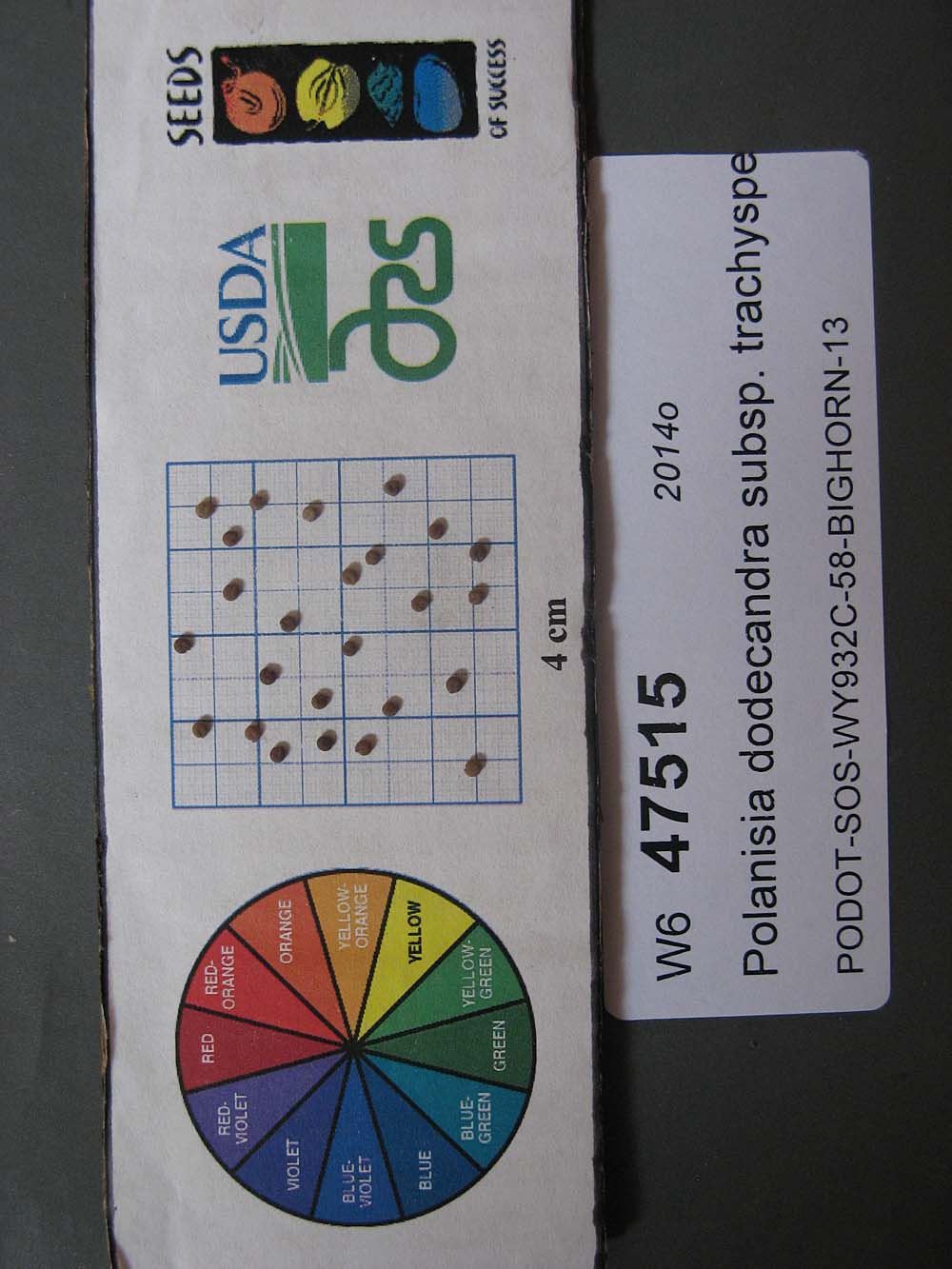 | | 2014 | | | | | | | Wild material | | 1918419 | OPGC 7101 |
| 16 | OPGC 7067 | LBJWC-MLE-22 | Polanisia erosa (Nutt.) H. H. Iltis subsp. erosa | Texas, United States | OPGC |  | Not Available | 2012 | DONATED | 2012 | | | | | Wild material | | 1902527 | OPGC 7067 |
| 17 | OPGC 7066 | NM930-164 | Polanisia dodecandra (L.) DC. subsp. trachysperma (Torr. & A. Gray) H. H. Iltis | New Mexico, United States | OPGC | 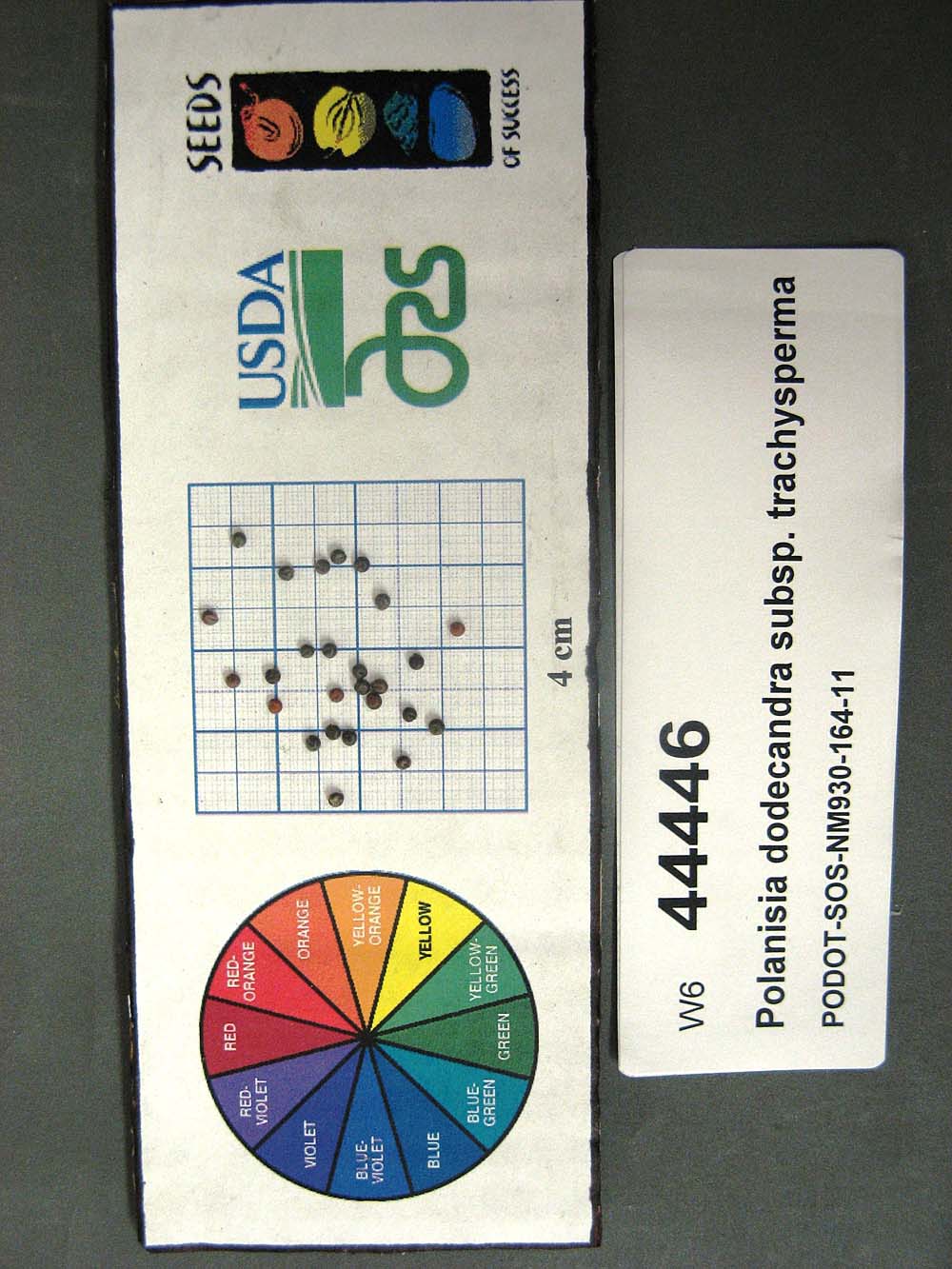 | | 2012 | | | | | | | Wild material | | 1901238 | OPGC 7066 |
| 18 | OPGC 7046 | MSB180090 | Polanisia dodecandra (L.) DC. | Texas, United States | OPGC | 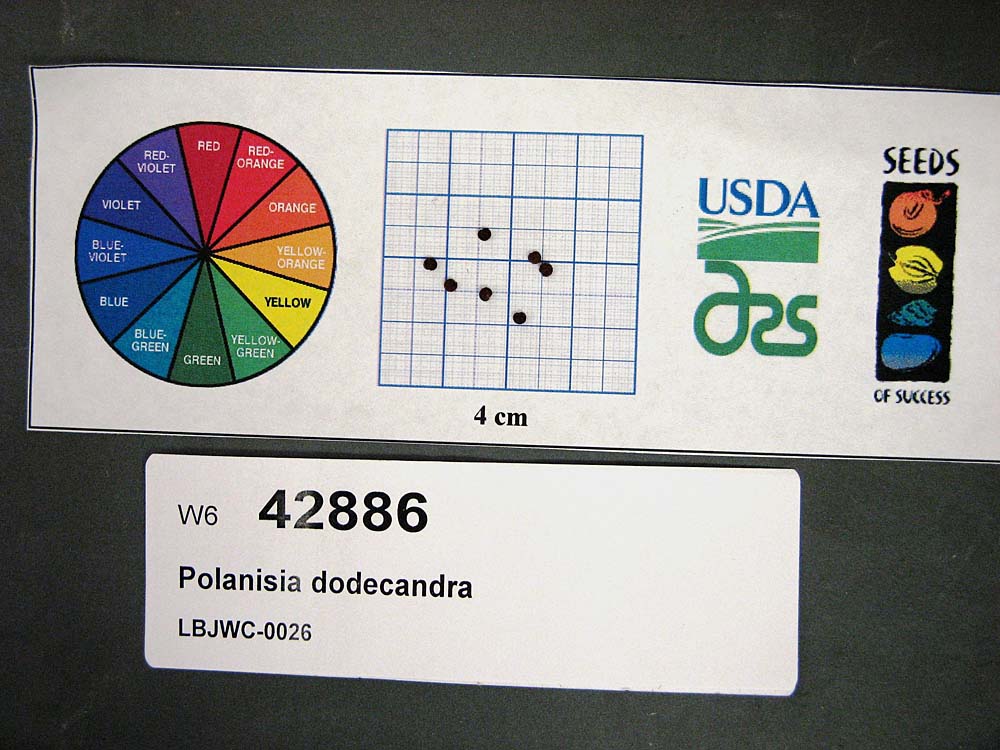 | | 2011 | | | | | | | Wild material | | 1895344 | OPGC 7046 |
| 19 | NSL 461941 | Zapata Germplasm Rio Grande Clammyweed | Polanisia dodecandra (L.) DC. subsp. riograndensis H. H. Iltis | Texas, United States | NLGRP | | Not Available | 2009 | DEVELOPED | | | | | | Breeding material | Native annual forb, endemic to southern Texas. Found in sandy, gravelly, sometimes linestone or alluvial silty soil, near riverbanks, coastal dunes, open areas in coastal live oak forests, bottoms of washouts, in semi-desert Opuntia-Mesquite scrub and shrub thickets, roadsides, chaparral pastures, fallow fields, or other disturbed areas on both sides of the lower Rio Grande River and adacent areas of south Texas. Flowers from March through November. Sparsely branched or unbranched annual (rarely perennial) 2-6 cm. tall, glandular-viscid; leaflets 3, leaves rounded or oblanceolate, 2-4 cm long, 5-20 mm wide, petals 5-16 mm long. Petals pink or rose 6-17 mm long , longest stamens 12-17 mm long, style 3-5 (-8) mm long; bracts ovate to often nearly orbicular; raceme often dense and flat-topped; capsules narrow (3-) 4-7.5 cm long, (3-) 4-5 (-7) mm wide, sparsely glandular; seeds prominently roughly tuberculate-rugose. Cleaned seed has an average of 154,000 seeds per pound. Seed identified by the pronouncedly ruguose-verruose (covered with blisters and ridges) nature. Largely an insect pollinated species. Insect abundance and diversity exceptionally high in clammyweed stands in comparison to other native herbaceous plants. Recommended for upland wildlife plantings and in range seeding mixes. Seed eaten by game birds such as bobwhite quail, scaled quail, mourning doves, white-wing doves, and Rio Grande wild turkeys, and many non-game species of birds and mammals. An important nectar plant for many species of butterflies and provides habitat to many other insects. Quick to establish on disturbed soils, grows quickly and provides a favorable environment for other slow to germinate native species. Is often the first planted species to emerge and flower. Readily re-seeds itself with moderate soil disturbance. Often found in dense stands of non-native grasses and may be useful in efforts to diversify these stands for wildlife. | 1810196 | NSL 461941 |
| 20 | NSL 454614 | LBJWC-1121 | Polanisia uniglandulosa (Cav.) DC. | Texas, United States | OPGC | | | 2008 | | | | | | | Wild material | | 1752413 | NSL 454614 |
| 21 | OPGC 6991 | AZ-93005-46 | Polanisia dodecandra (L.) DC. | Alaska, United States | OPGC | 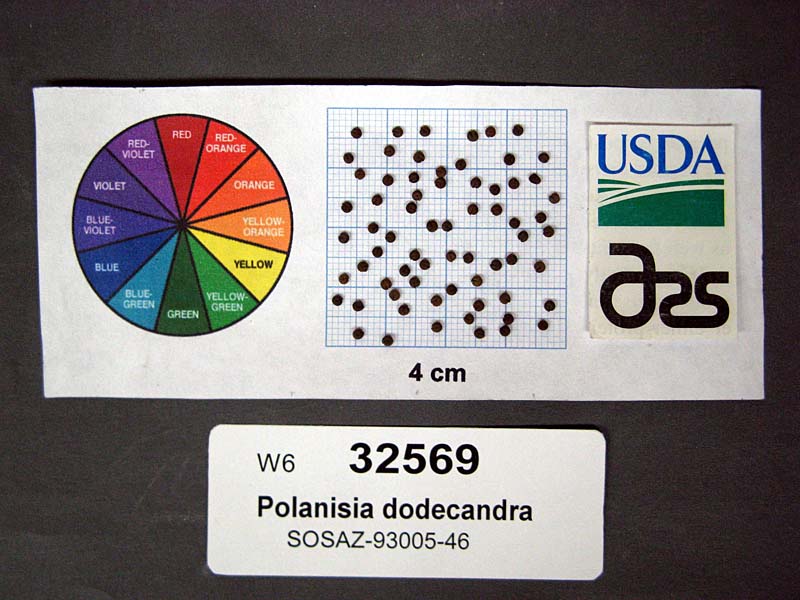 | | 2007 | | | | | | | Wild material | | 1740318 | OPGC 6991 |