| 0 | PI 675142 | ccc-021 | Actaea racemosa L. | West Virginia, United States | NC7 | | | 2009 | | | | | | | Wild material | Plants 5-8 feet in height; 3 ternately divided leaves; primary leaflet pinnately compound, odd, opposite; terminal pinnule 3x4 inch palmate with deep sinus; opposite pinnules 2x3 inch palmate with 4 sinus/4 lobes; rounded base; acuminate apex; margin doubly serrate/twice incised; venation palmate/textured beneath; dark brown above; brown below; glabrous hair; blue black petiole; ripe green to brown ovules of fruit; 8 brown/black crescent-shaped seeds within each tiny dried black orb, hanging in two rows on upper stalk. | 1829509 | PI 675142 |
| 1 | PI 675143 | ccc-024 | Actaea racemosa L. | New Jersey, United States | NC7 | | | 2009 | | | | | | | Wild material | Plants 1.5 feet in height; 3 ternately divided leaves; primary leaflet pinnately compound, odd, opposite; terminal pinnule 3x4 inch palmate with deep sinus; opposite pinnules 2x3 inch palmate with 4 sinus/4 lobes; rounded base; acuminate apex; margin doubly serrate/twice incised; venation palmate/textured beneath; pale green above; light green below; fair luster; glabrous hair; blue black petiole. | 1829510 | PI 675143 |
| 2 | PI 664882 | 9 | Prunella vulgaris L. | Iowa, United States | NC7 | | | 2006 | COLLECTED | 09/22/2006 | 300 yards south of Carl Fritz Henning Shelter House, 300 yards northeast of Lost Lake parking lot, Lower Ledges Road, Ledges State Park, NW 1/4 of NE 1/4 of SW 1/4 of Section 21, T83N, R26W, Worth Township, Boone County. | 41.98555556, -93.88833333 | 329 | Cleared woods for powerline right-of-way. Moist-wet mostly clay soil. Plants scattered over entire hilltops. Site approximately 250 yards by 30 feet. | Wild material | Plants 16-18 inches tall. | 1712928 | PI 664882 |
| 3 | Ames 35920 | AS/FN/2022/069/200 | Fraxinus nigra Marshall | Wisconsin, United States | NC7 |  | | 2022 | COLLECTED | 09/28/2022 | Chippewa County Forest Area approximately 4.0 miles south-southeast of intersection of County Highway M and State Highway 40, T32N R8W SE 1/4 Sec. 32. | 45.21053100, -91.38084600 | 348 | Northern hardwood forest in moraine lakes ecosystem. | Wild material | | 2139683 | Ames 35920 |
| 4 | Ames 35750 | Ames 35750 | Blephilia ciliata (L.) Benth. | Iowa, United States | NC7 | 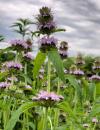 | | 2021 | COLLECTED | 09/27/2021 | Located approximately 3 miles south, southeast of Fairfield, T71N R9W SW1/4 Sec. 7 | 40.96338000, -91.94686900 | 223 | Woodland openings/edges, disturbed areas | Wild material | | 2122068 | Ames 35750 |
| 5 | WLP 2027 | MARSB-994 | Viburnum acerifolium L. | New York, United States | NA | | | 2019 | COLLECTED | 09/11/2019 | Lewis County; Diana; Bonaparte Caves State Forest. | 44.16386000, -75.35677000 | | Forest [clearing?] in full sun; growing in moist, well-drained clay/loam soil. | | Seed harvested from 20+ individuals in a population of 50+. Common. Seed 90 percent healthy; seed maturation middle, late. | 2109176 | WLP 2027 |
| 6 | WLP 2517 | Falling Waters State Park | Hydrangea quercifolia W. Bartram | Florida, United States | NA |  | | 2019 | COLLECTED | 11/07/2018 | Falling Waters State Park, Washington County. Approximately 4 miles south of Chipley. | 30.72491900, -85.53055000 | | Edges of limestone sinkholes next to waterfall. | Wild material | These were the largest Hydrangea quercifolia observed out of 75 populations throughout the species' native range. Measurements of sampled specimens taken in nature: Height 97 and 192 (or more) in., width 133 and 192 (or more) in., for NA 86178.01 and 86178.02, respectively. | 2106227 | WLP 2517 |
| 7 | WLP 224 | OWE-029 | Tsuga heterophylla (Raf.) Sarg. | Oregon, United States | NA | | | 2019 | COLLECTED | 09/04/2018 | Clackamas County; ; Mount Hood National Forest: Clackamas River Trail #715, east of Fish Creek Campground on Fish Creek Road. | 45.16386000, -122.14081000 | 325 | Mesic forest, mix of conifer and deciduous; open [full sun]. | | 200 seeds collected from one individual. Species common, with uniform distribution. | 2109060 | WLP 224 |
| 8 | Ames 32965 | JDC/BA/2015/051/708 | Betula alleghaniensis Britton | Iowa, United States | NC7 | | | 2015 | COLLECTED | 09/15/2015 | Yellow River State Forest, T97N R4W northern edge of SW 1/4 NW 1/4 Sec. 36 | 43.17782100, -91.26584600 | 227 | North-facing algific talus slope (45-60 degrees) adjacent to Paint Creek. Moist deciduous woods. Growing in association with Fraxinus nigra, Staphylea trifolia, Carpinus caroliniana, Quercus rubra, Acer saccharum, Cornus alternifolia, Amelanchier arborea, Ostrya virginiana, Viburnum opulus var. americanum, Cornus rugosa, Cornus alternifolia, Zanthoxylum americanum, Viburnum rafinesqueanum, Cypripedium pubescens, Ribes sp.,Corylus sp., Juniperus virginiana, Dirca palustris, Ulmus thomasii, Prunella vulgaris, Diervilla lonicera, Quercus macrocarpa, Carya cordiformis, Taxus canadensis, Tilia americana, Adiantum pedatum, and Aconitum noveboracense. | Wild material | | 1927435 | Ames 32965 |
| 9 | Ames 32966 | JDC/VA/2015/052/709 | Viburnum opulus L. var. americanum Aiton | Iowa, United States | NC7 |  | | 2015 | COLLECTED | 09/15/2015 | Yellow River State Forest, T97N R4W northern edge of SW ¼ NW ¼ Sec. 36. | 43.17778200, -91.26642800 | 239 | North-facing algific talus slope (45-60 degrees) adjacent to Paint Creek. Moist deciduous woods. | Wild material | Formerly known as Viburnum trilobum, American highbush cranberry (V. opulus var. americanum) is a North American native shrub that is utilized as an important ornamental and conservation plant that is also harvested as a minor fruit crop (jams/jellies). In nature, this variety is generally found in moist habitats typically along stream banks and swamps where ample moisture is readily available. The native range of V. opulus var. americana is concentrated in the northeastern United States and into Canada (Little, E. L. Jr. 1977). Attractive ornamental characteristics includes showy lacecap flowers in spring and bright red fruits and foliage in the fall. Fruits are tart with a hint of sweetness. The European highbush cranberry (V. opulus var. opulus) is nearly identical to American highbush cranberry other than small glands (<1 mm) on the petiole making the exact determination very challenging resulting in common misidentifications. A major difference between the American and European highbush cranberries is that the European variety produces unpalatable fruit. Recent research has shown that American and European highbush cranberries are genetically distinct and that plants of hybrid origin are uncommon (Tork et al. 2025). Vigorous early spring growth and good tolerance to late spring frosts. Genetic analysis from Tork et al. 2025 confirmed that genetics of this accession represents American highbush Cranberry (Viburnum opulus var. americanum). This accession represents genetics from northeast Iowa and thus the extreme western edge of the species native range. | 1927436 | Ames 32966 |
| 10 | W6 49515 | CBG-2446 | Carex sprengelii Dewey ex Spreng. | Illinois, United States | W6 |  | | 2015 | | | | | | | Wild material | | 1925995 | W6 49515 |