| 0 | PI 700349 | DB 2021001 | Chenopodiastrum simplex (Torr.) S. Fuentes et al. | Iowa, United States | NC7 | 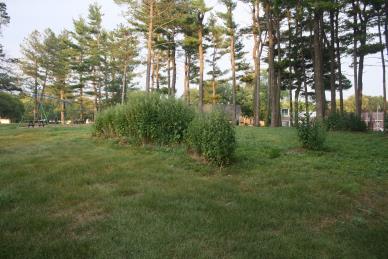 | | 2021 | COLLECTED | 09/04/2021 | Collected in the NW part of the Beloit School grounds near tall pine trees. Additional location information is available upon request. | 42.03648800, -93.62738500 | 306 | A dense stand of silver maple saplings was destroyed and the rooots mechanically removed, creating disturbed waste ground where these plants emerged. | Wild material | The plants are up to 2 m tall. They fresh foliage has a strong fragrence, like a freshly mown lawn. The stems are five sided and winged. The leaf blades have a distinctive shape with apiculate acute lobes, one terminal and about eight lateral. The seeds are large, 2 mm wide with edges that are flatened into a flange that is thinner than the central part of the seed. | 2125367 | PI 700349 |
| 1 | PI 700343 | DB 2019004 | Chenopodium album L. var. missouriense (Aellen) Bassett & Crompton | Oklahoma, United States | NC7 | 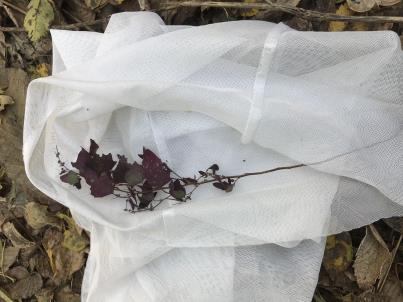 | | 2019 | COLLECTED | 11/09/2019 | Love County, OK, on the north, Oklahoma side, of the Red River, almost under the Interstate 35 highway bridge by an all terrain vehicle trail. | 33.72851500, -97.15851500 | 204 | In red alluvial soil. | Wild material | Collected as one unusual dark purple plant with purple stem, foliage, and infloresence. The seeds are 1.3 mm wide, glossy and black. The pericarp is adherent and yellow-brown. | 2097810 | PI 700343 |
| 2 | PI 710511 | CBG-9428 | Apocynum cannabinum L. | Illinois, United States | S9 |  | | 2019 | | | | | | | Wild material | | 2092802 | PI 710511 |
| 3 | PI 560085 | MPW-WWR 213 | Cuphea viscosissima Jacq. | Kentucky, United States | NC7 | | | 1989 | COLLECTED | 09/11/1989 | Sand-gravel mixed; with Ambrosia trifida & artemisiifolia, Toxicodendron and Aster sp. on forest edge 1 mi E Miss. Riv on Laketon Rd., just E of Back Slough, Arlington quad. Laketon city, in Carlisle Cty. | 36.86666667, -89.10000000 | 92 | | Wild material | Population of 8 small plants. | 1455057 | PI 560085 |
| 4 | PI 560091 | MPW-WWR 223 | Cuphea viscosissima Jacq. | Virginia, United States | NC7 | | | 1989 | COLLECTED | 09/17/1989 | In ditch at base of igneous rock with Scirpus, Ambrosia Trifida, Bidens bipinnata, and Perilla Int VA56 & Co 687, 50 m N, on E side of 687, ditch along rock face, Massies Mill quad. Nash city, in Nelson Cty. | 37.85000000, -79.05000000 | 348 | | Wild material | Population of 15 plants. | 1455063 | PI 560091 |
| 5 | PI 560104 | MPW-WWR 239 | Cuphea viscosissima Jacq. | Kentucky, United States | NC7 | | | 1989 | COLLECTED | 09/20/1989 | In weedy area under power line in beige clay with Ambrosia trifida, A. artemisiifolia, Aster pilosus, Setaria & Monarda fistulosa .4 mi W of int Harmony Rd & KY 227 on Harmony Rd, New Columbus quad. Harmony city, in Owen Cty. | 38.38333333, -84.71666667 | 245 | | Wild material | Population of 15 plants. | 1455076 | PI 560104 |
| 6 | PI 560110 | MPW-WWR 247 | Cuphea viscosissima Jacq. | Indiana, United States | NC7 | | | 1989 | COLLECTED | 09/22/1989 | In clay loam with Eupatorium rugosum and coelestinum, Setaria, Melilotus, Ambrosia trifida and Rubus occidentalis 8 mi S Salem IN 135 & .8 mi E on Co. to New Pekin, T1N R4E NW 1/4 of NW 1/4 Sec 28, Palmyra quad. In Washington Cty. | 38.50000000, -86.08333333 | 239 | | Wild material | Population of over 200 plants. | 1455082 | PI 560110 |
| 7 | Ames 36193 | Mounds SP | Monarda sp. | Indiana, United States | NC7 |  | | 2023 | COLLECTED | 09/17/2023 | Mounds State Park located approximately 3.15 miles east of Anderson, T19N R8E NE 1/4 Sec. 16. | 40.10142600, -85.62065300 | 258 | Floodplain. | Wild material | This taxa is currently undescribed and according to Campbell and Medley in The atlas of vascular plants in Kentucky (Accessed 06 September 2019) was provisionally named Monarda serotina by R.T. Simmers. Described as a broad-leaved form of M. fistulosa, generally intermediate between M. fistulosa and M. clinopodia, with probable hybrid origin. Typcial habitat is mesic woods and edges on lowlands. In contrast to M. fistulosa, this taxon has longer petioles (usually 2-3 cm versus 0.5-2.0 cm), lower leaf surfaces with scattered spreading hairs, and corollas are paler pink at tips to almost white with peak flowering occurring prior to M. fistulosa by approximately 1-2 weeks. Leaves are rather rugose, where upper leaf tissue between veins is visibly raised. This accession represents genetics from central Indiana (Mounds State Park). Plants at the collection site in nature peaked flower 8 July (2023). Plants in nature generally reaching 1.0-1.3 meters in height with about 10 percent having stacked heads. Majority of plants unbranched. | 2159165 | Ames 36193 |
| 8 | OPGC 8825 | CBG- 10822 | Ratibida pinnata (Vent.) Barnhart | Illinois, United States | OPGC | | | 2023 | | | | | | | Wild material | | 2142276 | OPGC 8825 |
| 9 | OPGC 8826 | CBG- 10824 | Rudbeckia subtomentosa Pursh | Illinois, United States | OPGC | | | 2023 | | | | | | | Wild material | | 2142278 | OPGC 8826 |
| 10 | W6 61344 | CBG- 10756 | Perideridia americana (Nutt. ex DC.) Rchb. ex Steud. | Illinois, United States | W6 |  | | 2023 | | | | | | | Wild material | | 2142226 | W6 61344 |
| 11 | W6 61417 | CBG- 10852 | Verbesina alternifolia (L.) Britton ex Kearney | Illinois, United States | W6 |  | | 2023 | | | | | | | Wild material | | 2142299 | W6 61417 |
| 12 | W6 61418 | CBG- 10853 | Agastache scrophulariifolia (Willd.) Kuntze | Illinois, United States | W6 |  | | 2023 | | | | | | | Wild material | | 2142300 | W6 61418 |
| 13 | NA 88506 | RJL2022TX-001 | Itea virginica L. | Texas, United States | NA | | | 2022 | COLLECTED | 10/31/2022 | Plants growing at Shangri La Botanical Gardens and Nature Center, Orange, TX along Adams Bayou, accessed via internal service roads. Plant is infrequent at this site. | 30.10322000, -93.76271700 | 1 | Plants are growing in shade to part-shade of a Taxodium distichum-Nyssa aquatica dominated forested swampland associated with Adams Bayou in a wet low-lying area that is frequently inundated.
Soils: The underlying geology of this area is of Quaternary to Late Pleistocene origin and comprised of the Beaumont Formation. This formation is yellowish- to brownish-gray, locally reddish orange with very fine to fine quartz sand, silt, and minor fine gravel, intermixed and interbedded. It also includes stream channel, point-bar, cravasse-splay, and natural levee ridge deposits, and clayey fill in abandoned channels. Channel fill is dark brown to brownish-gray with laminated clay and silt that is organic-rich. Includes marine delta-front sand, lagoonal clay, and near-shore marine sand beneath and landward of bays along the coast. Depth of this unconsolidated outwash ranges from 3-100 meters thick.
Source: USGS Texas Geologic Map Data (https://mrdata.usgs.gov/geology/state/sgmc-unit.php?unit=TXQbs%3B0)
The primary soil types in the collection area are classified as Cowmarsh series. The Cowmarsh series consists of very deep, very poorly drained soils that formed in mucky silty clayey alluvial deposits of Holocene age. These depressional soils are oxbows and relict channels of rivers where flooding and ponding is frequent. Slope ranges from 0 to 1 percent but mainly less than 1 percent. very poorly drained. Runoff is negligible. Frequently flooded for very long periods from February through May and surface remains saturated for very long periods once flood waters have receded.
Source: NRCS Web Soil Survey (https://websoilsurvey.sc.egov.usda.gov/App/WebSoilSurvey.aspx) | Wild material | | 2139813 | NA 88506 |
| 14 | NA 88507 | RJL2022TX-002 | Fraxinus caroliniana Mill. | Texas, United States | NA | | | 2022 | COLLECTED | 10/31/2022 | Plants growing at Shangri La Botanical Gardens and Nature Center, Orange, TX along Adams Bayou, accessed via internal service roads. Plant is relatively common along Adams Bayou but scattered. | 30.09989400, -93.75239700 | 1 | Plants are growing in part-shade to sun of a Taxodium distichum-Nyssa aquatica dominated forested swampland associated with Adams Bayou in a wet low-lying area that is frequently inundated. While found as an occasional understory element, it is more common on the edge of the swampland forest where there are high light conditions.
Soils: The underlying geology of this area is of Quaternary to Late Pleistocene origin and comprised of the Beaumont Formation. This formation is yellowish- to brownish-gray, locally reddish orange with very fine to fine quartz sand, silt, and minor fine gravel, intermixed and interbedded. It also includes stream channel, point-bar, cravasse-splay, and natural levee ridge deposits, and clayey fill in abandoned channels. Channel fill is dark brown to brownish-gray with laminated clay and silt that is organic-rich. Includes marine delta-front sand, lagoonal clay, and near-shore marine sand beneath and landward of bays along the coast. Depth of this unconsolidated outwash ranges from 3-100 meters thick.
Source: USGS Texas Geologic Map Data (https://mrdata.usgs.gov/geology/state/sgmc-unit.php?unit=TXQbs%3B0)
The primary soil types in the collection area are classified as Cowmarsh series. The Cowmarsh series consists of very deep, very poorly drained soils that formed in mucky silty clayey alluvial deposits of Holocene age. These depressional soils are oxbows and relict channels of rivers where flooding and ponding is frequent. Slope ranges from 0 to 1 percent but mainly less than 1 percent. very poorly drained. Runoff is negligible. Frequently flooded for very long periods from February through May and surface remains saturated for very long periods once flood waters have receded.
Source: NRCS Web Soil Survey (https://websoilsurvey.sc.egov.usda.gov/App/WebSoilSurvey.aspx) | Wild material | | 2139814 | NA 88507 |
| 15 | NA 88508 | RJL2022TX-003 | Morella cerifera (L.) Small | Texas, United States | NA | | | 2022 | COLLECTED | 10/31/2022 | Plants growing at Shangri La Botanical Gardens and Nature Center Orange, TX along Adams Bayou, accessed via internal service roads. Plant is relatively common along Adams Bayou but scattered in the understory. | 30.10035500, -93.75288700 | 1 | Plants are growing in part-shade to shade of a Taxodium distichum-Nyssa aquatica dominated forested swampland associated with Adams Bayou in a wet low-lying area that is frequently inundated.
Soils: The underlying geology of this area is of Quaternary to Late Pleistocene origin and comprised of the Beaumont Formation. This formation is yellowish- to brownish-gray, locally reddish orange with very fine to fine quartz sand, silt, and minor fine gravel, intermixed and interbedded. It also includes stream channel, point-bar, cravasse-splay, and natural levee ridge deposits, and clayey fill in abandoned channels. Channel fill is dark brown to brownish-gray with laminated clay and silt that is organic-rich. Includes marine delta-front sand, lagoonal clay, and near-shore marine sand beneath and landward of bays along the coast. Depth of this unconsolidated outwash ranges from 3-100 meters thick.
Source: USGS Texas Geologic Map Data (https://mrdata.usgs.gov/geology/state/sgmc-unit.php?unit=TXQbs%3B0)
The primary soil types in the collection area are classified as Cowmarsh series. The Cowmarsh series consists of very deep, very poorly drained soils that formed in mucky silty clayey alluvial deposits of Holocene age. These depressional soils are oxbows and relict channels of rivers where flooding and ponding is frequent. Slope ranges from 0 to 1 percent but mainly less than 1 percent. very poorly drained. Runoff is negligible. Frequently flooded for very long periods from February through May and surface remains saturated for very long periods once flood waters have receded.
Source: NRCS Web Soil Survey (https://websoilsurvey.sc.egov.usda.gov/App/WebSoilSurvey.aspx) | Wild material | | 2139815 | NA 88508 |
| 16 | W6 60746 | CO932-394 | Ericameria nauseosa (Pall. ex Pursh) G. L. Nesom & G. I. Baird | Colorado, United States | W6 | | | 2022 | | | | | | | Wild material | Shrubby habit, no ray flowers, yellow disc flowers 4 per head, linear alternate leaves, tomentose white stems. | 2139043 | W6 60746 |
| 17 | Ames 35943 | AS/MC/2022/011/142 | Monarda citriodora Cerv. ex Lag. | Texas, United States | NC7 |  | | 2022 | COLLECTED | 08/06/2022 | Between Fulshear and Simonton on north side of FM 1093 Rd | 29.68260700, -95.95589700 | 34 | Prairie-like area, recently distrubed from tree/shrub clearing for pipeline. | Wild material | This population may potentially represent genetics of unknown origin (planted). The presence of Ratibida amplexicaulis with the entire, strongly clasping stem leaves common to roadside plantings suggests this may be a planting/restoration. The site was heavily dominated by Ratibida and Monarda. Most commercially available lines of Monarda citriodora are typically noted for their dark purple forms. The genetics of this accession contain flowers that are essentially pure white flowers with greenish sepals. | 2140533 | Ames 35943 |
| 18 | OPGC 7581 | Kalsow Prairie | Liatris aspera Michx. | Iowa, United States | OPGC | | | 2022 | COLLECTED | 09/20/2021 | Kalsow Prairie located approximately 2.0 miles north of Manson, T90N R32W NE 1/4 Sec. 36. | 42.56715800, -94.56087500 | 289 | Diverse remnant prairie with mesic black soil. | Wild material | | 2133090 | OPGC 7581 |
| 19 | OPGC 7584 | Kalsow Prairie | Liatris pycnostachya Michx. | Iowa, United States | OPGC | | | 2022 | COLLECTED | 09/20/2021 | Kalsow Prairie located approximately 2.0 miles north of Manson, T90N R32W NE 1/4 Sec. 36. | 42.56715800, -94.56087500 | 289 | Diverse remnant upland prairie with mesic black soil. | Wild material | | 2133093 | OPGC 7584 |
| 20 | G 33319 | Iowa Feral #05 | Cannabis sativa L. | Iowa, United States | NE9 |  | | 2021 | COLLECTED | 10/01/2021 | Boone and Story County line just west, northwest and southwest of Ames | 41.99396900, -93.69335000 | | Roadside and fenceline areas. Normally associated with distrubance. | Wild material | Feral germplasm originating from central Iowa representing seed harvested from a single mother plant. Peak fruiting occurred the first week in October (2021). Plant height: 242cm. Plant diameter: 32cm. Very strong smell, heavily branched with low seed production. Evaluated in 2022 USDA-PGRU field trials. Typical feral with fiber phenotype. High uniformity. Accession was (or attempted to be) included in the 2024 USDA-ARS Hemp Germplasm Laboratory and HudsonAlpha genome sequencing and phenotyping trial in PGRU Wellington Zone 01 [curator notes 2024:] Accession morphology typical US feral phenotype. Likely susceptible to powdery mildew. Low septoria in very preliminary screening of several plants in 2024. | 2137385 | G 33319 |
| 21 | G 33322 | Iowa Feral #09 | Cannabis sativa L. | Iowa, United States | NE9 |  | | 2021 | COLLECTED | 10/01/2021 | Boone and Story County line just west, northwest and southwest of Ames | 42.03238000, -93.73766000 | | Roadside and fenceline areas. Normally associated with distrubance. | Wild material | Feral germplasm originating from central Iowa representing seed harvested from a single mother plant. Peak fruiting occurred the first week in October (2021). Plant height: 178cm. Plant diameter: 25cm. Very sparsley branched specimen. Evaluated in 2022 USDA-PGRU field trials. Feral with fiber phenotype. Moderate uniformity. Accession was (or attempted to be) included in the 2024 USDA-ARS Hemp Germplasm Laboratory and HudsonAlpha genome sequencing and phenotyping trial in PGRU Wellington Zone 01 [curator notes 2024:] Accession morphology typical US feral phenotype. Potential powdery mildew resistance in very preliminary screening of several plants in 2024. | 2137388 | G 33322 |
| 22 | G 33323 | Iowa Feral #10 | Cannabis sativa L. | Iowa, United States | NE9 |  | | 2021 | COLLECTED | 10/01/2021 | Boone and Story County line just west, northwest and southwest of Ames | 42.05178100, -93.71796600 | | Roadside and fenceline areas. Normally associated with distrubance. | Wild material | Feral germplasm originating from central Iowa representing seed harvested from a single mother plant. Peak fruiting occurred the first week in October (2021). Plant height: 200cm. Plant diameter: 28cm. Evaluated in 2022 USDA-PGRU field trials. Feral with fiber phenotype. High uniformity. Accession was (or attempted to be) included in the 2024 USDA-ARS Hemp Germplasm Laboratory and HudsonAlpha genome sequencing and phenotyping trial in PGRU Wellington Zone 01 [curator notes 2024:] Accession morphology typical US feral phenotype. All 7 individuals were called male-- no females found. | 2137389 | G 33323 |
| 23 | G 33324 | Iowa Feral #11 | Cannabis sativa L. | Iowa, United States | NE9 |  | | 2021 | COLLECTED | 10/01/2021 | Boone and Story County line just west, northwest and southwest of Ames | 42.05100700, -93.71789000 | | Roadside and fenceline areas. Normally associated with distrubance. | Wild material | Feral germplasm originating from central Iowa representing seed harvested from a single mother plant. Peak fruiting occurred the first week in October (2021). Plant height 210 cm. Plant diameter: 33cm. Very wide, spreading specimen. Evaluated in 2022 USDA-PGRU field trials. Feral with fiber phenotype. Moderate uniformity. Accession was (or attempted to be) included in the 2024 USDA-ARS Hemp Germplasm Laboratory and HudsonAlpha genome sequencing and phenotyping trial in PGRU Wellington Zone 01 [curator notes 2024:] Accession morphology typical US feral phenotype. | 2137390 | G 33324 |
| 24 | G 33326 | Iowa Feral #13 | Cannabis sativa L. | Iowa, United States | NE9 |  | | 2021 | COLLECTED | 10/01/2021 | Boone and Story County line just west, northwest and southwest of Ames | 42.07101400, -93.70837000 | | Roadside and fenceline areas. Normally associated with distrubance. | Wild material | Feral germplasm originating from central Iowa representing seed harvested from a single mother plant. Peak fruiting occurred the first week in October (2021). Plant height: 173cm. Plant diameter: 22cm. Slight purplish tinge to undersides of leaves and some petioles. Rather leafy with nice dark green coloration. Accession was (or attempted to be) included in the 2024 USDA-ARS Hemp Germplasm Laboratory and HudsonAlpha genome sequencing and phenotyping trial in PGRU Wellington Zone 01 [curator notes 2024:] Accession morphology typical US feral phenotype. | 2137392 | G 33326 |
| 25 | G 33329 | Iowa Feral #16 | Cannabis sativa L. | Iowa, United States | NE9 |  | | 2021 | COLLECTED | 10/01/2021 | Boone and Story County line just west, northwest and southwest of Ames | 42.04202100, -93.75672700 | | Roadside and fenceline areas. Normally associated with distrubance. | Wild material | Feral germplasm originating from central Iowa representing seed harvested from a single mother plant. Peak fruiting occurred the first week in October (2021). Plant height: 227cm. Plant diameter: 19cm. Evaluated in 2022 USDA-PGRU field trials. Typical feral with fiber phenotype. Accession was (or attempted to be) included in the 2024 USDA-ARS Hemp Germplasm Laboratory and HudsonAlpha genome sequencing and phenotyping trial in PGRU Wellington Zone 01 [curator notes 2024:] Accession morphology typical US feral phenotype. Likely susceptible to powdery mildew. Low septoria in very preliminary screening of several plants in 2024. | 2137395 | G 33329 |
| 26 | G 33330 | Iowa Feral #18 | Cannabis sativa L. | Iowa, United States | NE9 |  | | 2021 | COLLECTED | 10/01/2021 | Boone and Story County line just west, northwest and southwest of Ames | 42.00456800, -93.77641900 | | Roadside and fenceline areas. Normally associated with distrubance. | Wild material | Feral germplasm originating from central Iowa representing seed harvested from a single mother plant. Peak fruiting occurred the first week in October (2021). Plant height: 323cm. Plant diameter: 47cm. Evaluated in 2022 USDA-PGRU field trials. Typical feral with fiber phenotype. One plant dead due to unknown cause. Lower uniformity than other Boone Co. feral. . Accession was (or attempted to be) included in the 2024 USDA-ARS Hemp Germplasm Laboratory and HudsonAlpha genome sequencing and phenotyping trial in PGRU Wellington Zone 01 [curator notes 2024:] One individual killed by mice. Accession morphology typical US feral phenotype. Seven of nine called female in 2024. Among the tallest accession evaluated in 2024 NY trials when evaluated at 100 days after sowing. | 2137396 | G 33330 |
| 27 | G 33331 | Iowa Feral #21 | Cannabis sativa L. | Iowa, United States | NE9 |  | | 2021 | COLLECTED | 10/01/2021 | Boone and Story County line just west, northwest and southwest of Ames | 41.97931200, -93.69726200 | | Roadside and fenceline areas. Normally associated with distrubance. | Wild material | Feral germplasm originating from central Iowa representing seed harvested from a single mother plant. Peak fruiting occurred the first week in October (2021). Evaluated in 2022 USDA-PGRU field trials. Typical feral with fiber phenotype. Mod high uniformity. Accession was (or attempted to be) included in the 2024 USDA-ARS Hemp Germplasm Laboratory and HudsonAlpha genome sequencing and phenotyping trial in PGRU Wellington Zone 01 [curator notes 2024:] Accession morphology typical US feral phenotype. Low septoria in very preliminary screening of several plants in 2024. | 2137397 | G 33331 |
| 28 | G 33334 | Iowa Feral #24 | Cannabis sativa L. | Iowa, United States | NE9 |  | | 2021 | COLLECTED | 10/01/2021 | Boone and Story County line just west, northwest and southwest of Ames | 41.97930900, -93.68672700 | | Roadside and fenceline areas. Normally associated with distrubance. | Wild material | Feral germplasm originating from central Iowa representing seed harvested from a single mother plant. Peak fruiting occurred the first week in October (2021). Plant height: 151cm. Plant diameter: 30cm. Evaluated in 2022 USDA-PGRU field trials. Typical feral with fiber phenotype. Moderate uniformity. Accession was (or attempted to be) included in the 2024 USDA-ARS Hemp Germplasm Laboratory and HudsonAlpha genome sequencing and phenotyping trial in PGRU Wellington Zone 01 [curator notes 2024:] Accession morphology typical US feral phenotype. Among the tallest accession evaluated in 2024 NY trials when evaluated at 100 days after sowing. | 2137400 | G 33334 |
| 29 | W6 58380 | CO932-379 | Pascopyrum smithii (Rydb.) Barkworth & D. R. Dewey | Colorado, United States | W6 | | | 2020 | | | | | | | Wild material | Blue glaucous leaves and stems, rhizomatous, inflorescence a narrow spike. | 2109943 | W6 58380 |
| 30 | Ames 35216 | Potato Creek SP | Monarda sp. | Indiana, United States | NC7 |  | | 2019 | COLLECTED | 09/02/2019 | Potato Creek State Park located approximately 2.6 miles northeast of North Liberty, T36N R1E extreme eastern edge of NW 1/4 SW 1/4 Sec. 23. | 41.55439400, -86.38375900 | 222 | Degraded floodplain, along sides of elevated road bed. | Wild material | This taxa is currently undescribed and according to Campbell and Medley in The atlas of vascular plants in Kentucky (Accessed 06 September 2019) was provisionally named Monarda serotina by R.T. Simmers. Described as a broad-leaved form of M. fistulosa, generally intermediate between M. fistulosa and M. clinopodia, with probable hybrid origin. Typcial habitat is mesic woods and edges on lowlands. In contrast to M. fistulosa, this taxon has longer petioles (usually 2-3 cm versus 0.5-2.0 cm), lower leaf surfaces with scattered spreading hairs, and corollas are paler pink at tips to almost white with peak flowering occurring prior to M. fistulosa by approximately 1-2 weeks. Leaves are rather rugose, where upper leaf tissue between veins is visibly raised. This accession represents genetics from northern Indiana (Potato Creek State Park). Plants at the collection site in nature peaked flowering near 8 July 2019 where flower colors were more lavender in sun but pale in shade (Namestnik, S., personal communication, 15 July 2020). Peak fruiting occurs mid-August. Average height of plants sampled in nature estimated at 4.5' in height. | 2097752 | Ames 35216 |
| 31 | OPGC 7477 | CBG-9136 | Solidago rigida L. | Nebraska, United States | OPGC |  | | 2019 | | | | | | | Wild material | | 2092774 | OPGC 7477 |
| 32 | OPGC 7479 | CBG-9189 | Ratibida pinnata (Vent.) Barnhart | Nebraska, United States | OPGC |  | | 2019 | | | | | | | Wild material | | 2092776 | OPGC 7479 |
| 33 | OPGC 7192 | CBG-6585 | Ranunculus abortivus L. | Wisconsin, United States | OPGC |  | | 2017 | | | | | | | Wild material | | 1954852 | OPGC 7192 |
| 34 | OPGC 5076 | APS/PP/2017/012/271 | Phlox pilosa L. subsp. fulgida (Wherry) Wherry | Iowa, United States | OPGC | | | 2017 | COLLECTED | 06/22/2017 | Along Raccoon River Valley Bike Trail (railroad right-of-way) 0.25 miles northwest of 260th street approximately 2 miles southeast of Dallas Center, T79N R27W SW 1/4 NW 1/4 SE 1/4 and SW 1/4 SE 1/4 Sec. 12. | 41.66157000, -93.93892000 | 287 | Abondoned railroad right-of-way remnant. Growing in association with Bromus inermis, Ambrosia trifida, Pycnanthemum virginiana, Zizia aurea, Melilotus officinalis, Equisetum arvense, Asclepias syriaca, Spartina pectinata, Fragaria virginiana, Poa pratensis, and Pastinaca sativia. | Wild material | Flower color for population is essentially 1% white flowers with purple centers and the rest with all purple flowers. | 1950052 | OPGC 5076 |
| 35 | Ames 33865 | JDC/MP/2016/032/747 | Monarda punctata L. | Iowa, United States | NC7 |  | | 2016 | COLLECTED | 11/01/2016 | Near 283rd Avenue and US higway 67 intersection approximatley 5.5 miles south of Low Moor, T80N R5E SE 1/4 NE 1/4 Sec. 22 Scott County. | 41.72287000, -90.35919000 | 175 | Roadside/pasture. | Wild material | | 1943207 | Ames 33865 |
| 36 | OPGC 4242 | JDC/LS/2015/055/712 | Lobelia siphilitica L. | Iowa, United States | OPGC | | | 2015 | COLLECTED | 10/02/2015 | Approximatley 4.25 miles northwest of Ames, T84N R25W SE 1/4 SE 1/4 SE 1/4 Sec. 25. | 42.04909700, -93.70113000 | | Roadside, rather wet. Shallow areas with standing water. Growing in association with Ambrosia trifida, Bromus inermis, Chamaecrista fasciculata, Juniperus virginiana, Prunella vulgaris, Carex molesta, Sorghastrum nutans, Cannabis sativa, Solidago, and Monarda fistulosa. | Wild material | Abundant occurrence. Peak bloom occurred first week in September (2015). Peak harvest first week in October (2015). Plants ranging from 1-2.5' in height. | 1927776 | OPGC 4242 |
| 37 | Ames 32957 | JDC/BP/2015/044/701 | Betula pumila L. | Iowa, United States | NC7 |  | | 2015 | COLLECTED | 09/04/2015 | Private property approximately 1.5 miles northwest of Lawler. T96N R11W SW 1/4 SW 1/4 Sec. 32 Chickasaw County. | 43.08335400, -92.17787800 | 349 | High-quality remnant wetland/fen. Growing in Plams muck soils in association with Salix spp., Cornus racemosa, Oncolea sensibilis, Spiraea alba, Gentiana spp., Carex spp., Populus tremuloides, and Ambrosia trifida. Noted four specimens likely B. x sandbergii that were approximately 30-35' in height. | Wild material | B. pumila could be considered a dominant species in portions of this site. Female catkins were both green and brown at time of harvest. Specimens average approximately 275 cm in height. Little to no fall color. Approximately 75% of leaves were already dropped. | 1927399 | Ames 32957 |
| 38 | NA 88308 | MSB210535 | Cocculus carolinus (L.) DC. | Texas, United States | NA |  | | 2011 | | | | | | | Wild material | | 1895239 | NA 88308 |
| 39 | Ames 10332 | MPW207 | Torilis arvensis (Huds.) Link | Oklahoma, United States | NC7 | | | 1989 | COLLECTED | 07/31/1989 | Scrubby edge along road with Vitis, Celtis laevigata, and Ambrosia trifida. | 36.23333333, -95.86666667 | 179 | | Wild material | Collection site Mohawk Park, Tulsa, Tulsa Co., Oklahoma. | 1052355 | Ames 10332 |