| 0 | PI 699712 | OSU 1609.066 | Corylus avellana L. | Romania | COR | | | 2021 | COLLECTED | PRE 2021 | | | | | Wild material | Shawn Mehlenbacher (OSU) selection from OP seed lot from Romania | 2132817 | PI 699712 |
| 1 | PI 690306 | OSU 1529.011 | Corylus avellana L. | Georgia | COR | | | 2019 | DONATED | 2009 | | | | | Wild material | Rooted layer received from S. Mehlenbacher in April, 2019. Mehlenbacher had received from Pisetta in Republic of Georgia. No EFB cankers observed in Mehlenbacher breeder collection suggesting possible resistance. Incompatibility S-alleles: 22 31 | 2091614 | PI 690306 |
| 2 | PI 688903 | 'Verde' | Corylus avellana L. | Chile | COR | | | 2018 | DEVELOPED | | | | | | Cultivar | Received as self-rooted tree. | 1957878 | PI 688903 |
| 3 | PI 688904 | 'Anakliuri' | Corylus avellana L. | Georgia | COR | | | 2018 | DEVELOPED | | | | | | Cultivar | Received as self-rooted tree. | 1957879 | PI 688904 |
| 4 | PI 688905 | 'Ashrafi' | Corylus avellana L. | Azerbaijan | COR | | | 2018 | DEVELOPED | | | | | | Cultivar | Received as self-rooted tree. | 1957880 | PI 688905 |
| 5 | PI 688906 | 'Ata Baba' | Corylus avellana L. | Georgia | COR | | | 2018 | DEVELOPED | | | | | | Cultivar | Received as self-rooted tree. | 1957881 | PI 688906 |
| 6 | PI 688907 | 'Barli' | Corylus avellana L. | Azerbaijan | COR | | | 2018 | DEVELOPED | | | | | | Cultivar | Received as self-rooted tree. | 1957882 | PI 688907 |
| 7 | PI 688910 | 'Elbari' | Corylus avellana L. | Azerbaijan | COR | | | 2018 | DEVELOPED | | | | | | Cultivar | Received as self-rooted tree. | 1957885 | PI 688910 |
| 8 | PI 688911 | 'Firavan' | Corylus avellana L. | Azerbaijan | COR | | | 2018 | DEVELOPED | | | | | | Cultivar | Received as self-rooted tree. | 1957886 | PI 688911 |
| 9 | PI 688912 | 'Gahk Faresh' | Corylus avellana L. | Azerbaijan | COR | | | 2018 | DEVELOPED | | | | | | Cultivar | Received as self-rooted tree. | 1957887 | PI 688912 |
| 10 | PI 688914 | 'Ganja' | Corylus avellana L. | Azerbaijan | COR | | | 2018 | DEVELOPED | | | | | | Cultivar | Received as self-rooted tree. | 1957889 | PI 688914 |
| 11 | PI 688915 | 'Gizil Findik' | Corylus avellana L. | Azerbaijan | COR | | | 2018 | DEVELOPED | | | | | | Cultivar | Received as self-rooted tree. | 1957890 | PI 688915 |
| 12 | PI 688917 | 'Gulshishvela' | Corylus avellana L. | Georgia | COR | | | 2018 | DEVELOPED | | | | | | Cultivar | Received as self-rooted tree. | 1957892 | PI 688917 |
| 13 | PI 688919 | 'Qabala' | Corylus avellana L. | Azerbaijan | COR | | | 2018 | DEVELOPED | | | | | | Cultivar | Received as self-rooted tree. | 1957894 | PI 688919 |
| 14 | PI 688922 | 'Tala' | Corylus avellana L. | Azerbaijan | COR | | | 2018 | DEVELOPED | | | | | | Cultivar | Received as self-rooted tree. | 1957897 | PI 688922 |
| 15 | PI 688924 | 'Uzum Sakar' | Corylus avellana L. | Azerbaijan | COR | | | 2018 | DONATED | | | | | | Cultivar | Received as self-rooted tree. | 1957899 | PI 688924 |
| 16 | PI 688927 | Moscow N02 Redleaf | Corylus avellana L. | Russian Federation | COR | | | 2018 | DEVELOPED | | | | | | Cultivar | Received as self-rooted tree.EFB Resistant | 1957902 | PI 688927 |
| 17 | PI 688928 | Moscow N06 | Corylus avellana L. | Russian Federation | COR | | | 2018 | DEVELOPED | | | | | | Cultivar | Received as self-rooted tree. | 1957903 | PI 688928 |
| 18 | PI 688929 | Moscow N08 Redleaf | Corylus avellana L. | Russian Federation | COR | | | 2018 | DEVELOPED | | | | | | Cultivar | Received as self-rooted tree. | 1957904 | PI 688929 |
| 19 | PI 688931 | Moscow N12 Redleaf | Corylus avellana L. | Russian Federation | COR | | | 2018 | DEVELOPED | | | | | | Cultivar | Received as self-rooted tree. | 1957906 | PI 688931 |
| 20 | PI 688932 | Moscow N23 | Corylus avellana L. | Russian Federation | COR | | | 2018 | DEVELOPED | | | | | | Cultivar | Received as self-rooted tree. EFB Resistant | 1957907 | PI 688932 |
| 21 | PI 688933 | Moscow N26 | Corylus avellana L. | Russian Federation | COR | | | 2018 | DEVELOPED | | | | | | Cultivar | Received as grafted tree. EFB Resistant | 1957908 | PI 688933 |
| 22 | PI 688935 | Moscow N33 | Corylus avellana L. | Russian Federation | COR | | | 2018 | DEVELOPED | | | | | | Cultivar | Received as self-rooted tree. | 1957910 | PI 688935 |
| 23 | PI 688937 | Moscow N35 Redleaf | Corylus avellana L. | Russian Federation | COR | | | 2018 | DEVELOPED | | | | | | Cultivar | Received as self-rooted tree. | 1957912 | PI 688937 |
| 24 | PI 688938 | Moscow N36 | Corylus avellana L. | Russian Federation | COR | | | 2018 | DEVELOPED | | | | | | Cultivar | Received as self-rooted tree. | 1957913 | PI 688938 |
| 25 | PI 688048 | C. avellana ALB-2015-013 Boge | Corylus avellana L. | Shkodër, Albania | COR | | | 2016 | COLLECTED | 09/14/2015 | Boge - below the houses of the village | 42.38614000, 19.63450000 | 877 | | Wild material | | 1940888 | PI 688048 |
| 26 | PI 688052 | C. pontica GEO-14-74 Ghulelebi | Corylus avellana L. | Georgia | COR | | | 2014 | COLLECTED | 09/2014 | Ghulelebi village in Tianeti District. | 41.93819000, 44.93142000 | 1060 | | Wild material | | 1921325 | PI 688052 |
| 27 | PI 688056 | 'Crvenje' | Corylus avellana L. | Serbia | COR | | | 2014 | DEVELOPED | | | | | | Cultivar | Highly resistant to Eastern Filbert Blight | 1917815 | PI 688056 |
| 28 | PI 688057 | 'Menoia' | Corylus avellana L. | Italy | COR | | | 2014 | DEVELOPED | | | | | | Cultivar | | 1917814 | PI 688057 |
| 29 | PI 688058 | 'Reka 2' | Corylus avellana L. | Serbia | COR | | | 2014 | DEVELOPED | | | | | | Cultivar | | 1917813 | PI 688058 |
| 30 | PI 688059 | ALB-2013-044 | Corylus avellana L. | Gjirokastër, Albania | COR | | | 2014 | COLLECTED | 10/05/2013 | Collected near town of Belerat. | 40.20630000, 20.20310000 | 975 | Associated vegetation: Oriental hornbeam, maple, oak, walnut, field maple, rowan. | Wild material | | 1914873 | PI 688059 |
| 31 | PI 686862 | 'Alli' | Corylus avellana L. | Estonia | COR | | | 2013 | DEVELOPED | | | | | | Cultivar | | 1908308 | PI 686862 |
| 32 | PI 686864 | 'Catalan' | Corylus avellana L. | Poland | COR | | | 2013 | DEVELOPED | | | | | | Cultivar | | 1908310 | PI 686864 |
| 33 | PI 686866 | 'Ducalovici' | Corylus avellana L. | Serbia | COR | | | 2013 | DEVELOPED | | | | | | Cultivar | | 1908312 | PI 686866 |
| 34 | PI 686867 | 'Gauna' | Corylus avellana L. | Argentina | COR | | | 2013 | DEVELOPED | | | | | | Cultivar | | 1908313 | PI 686867 |
| 35 | PI 686872 | 'Veletan' | Corylus avellana L. | Ukraine | COR | | | 2013 | DEVELOPED | | | | | | Cultivar | | 1908319 | PI 686872 |
| 36 | PI 688061 | ALB-2012-039 | Corylus avellana L. | Albania | COR | | | 2012 | COLLECTED | 2012 | | | | | Wild material | | 1905982 | PI 688061 |
| 37 | PI 688062 | ALB-2012-027 | Corylus avellana L. | Albania | COR | | | 2012 | COLLECTED | 2012 | | | | | Wild material | | 1905981 | PI 688062 |
| 38 | PI 688063 | ALB-2012-025 | Corylus avellana L. | Albania | COR | | | 2012 | COLLECTED | 2012 | | | | | Wild material | | 1905980 | PI 688063 |
| 39 | PI 665923 | Sochi Redleaf | Corylus avellana L. | Oregon, United States | COR | | | 2012 | DEVELOPED | 2011 | | | | | Cultivar | | 1901295 | PI 665923 |
| 40 | PI 665924 | OSU 1200.070 | Corylus avellana L. | Iran | COR | | | 2012 | COLLECTED | 2003 | River valley south of Tonekabon | 36.72900000, 50.84300000 | | | Wild material | Accession split into separate PI numbers. 01/08/2022 | 1901297 | PI 665924 |
| 41 | PI 665925 | OSU 1217.005 | Corylus avellana L. | Georgia | COR | | | 2012 | COLLECTED | 2003 | near Abasha | 42.42400000, 42.39300000 | | | Wild material | Split accession to cover different seedlings selected by OSU Hazelnut Breeding program | 1901298 | PI 665925 |
| 42 | PI 688065 | C. avellana Alushka-Simferopol-5 | Corylus avellana L. | Krym, Ukraine | COR | | | 2012 | COLLECTED | 2002 | Nuts from vendor 5 along highway from Alushka to Simferopol. | 44.89000000, 33.93000000 | | | Wild material | | 1901296 | PI 688065 |
| 43 | PI 699590 | OSU 1217.034 | Corylus avellana L. | Iran | COR | | | 2012 | COLLECTED | 2003 | | 36.72900000, 50.84300000 | | | Wild material | Accession split into separate PI numbers. 01/08/2022 | 2125443 | PI 699590 |
| 44 | PI 699592 | OSU 1225,046 | Corylus avellana L. | Georgia | COR | | | 2012 | COLLECTED | 2003 | | 42.42400000, 42.39300000 | | | Wild material | Split accession to cover different seedlings | 2125445 | PI 699592 |
| 45 | PI 699593 | OSU 1225.067 | Corylus avellana L. | Georgia | COR | | | 2012 | COLLECTED | 2003 | | 42.42400000, 42.39300000 | | | Wild material | | 2125446 | PI 699593 |
| 46 | PI 665897 | OSU 1120.034 | Corylus avellana L. | Georgia | COR | | | 2012 | COLLECTED | 2001 | | | | | Breeding material | | 1902219 | PI 665897 |
| 47 | PI 665918 | C. avellana ALB-2011-014 | Corylus avellana L. | Pogradec, Albania | COR | | | 2011 | COLLECTED | 09/14/2011 | From fruit market just beyond the lake while traveling up the mountain after Perrenjas. | 40.86241000, 20.69537000 | 840 | Market sample said to have been collected in nature nearby. | Wild material | | 1891847 | PI 665918 |
| 48 | PI 665919 | C. avellana ALB-2011-030 | Corylus avellana L. | Albania | COR | | | 2011 | COLLECTED | 09/15/2011 | | 40.23797000, 20.64339000 | 869 | From riparian area along Barmash River. | Wild material | | 1891855 | PI 665919 |
| 49 | PI 665920 | C. avellana ALB-2011-049 | Corylus avellana L. | Albania | COR | | | 2011 | COLLECTED | 09/17/2011 | | 42.29936000, 19.54058000 | 490 | | Wild material | | 1891861 | PI 665920 |
| 50 | PI 665921 | C. avellana ALB-2011-056 | Corylus avellana L. | Albania | COR | | | 2011 | COLLECTED | 09/18/2011 | Gimaj Village | 42.32649000, 19.77298000 | 510 | decidous woods by guest house of Maria and Prela | Wild material | | 1891893 | PI 665921 |
| 51 | PI 665903 | C. avellana Homskij-1 | Corylus avellana L. | Russian Federation | COR | | | 2011 | COLLECTED | | | | | | Wild material | | 1874105 | PI 665903 |
| 52 | PI 665904 | C. avellana Homskij-2 | Corylus avellana L. | Russian Federation | COR | | | 2011 | COLLECTED | | | | | | Wild material | | 1874106 | PI 665904 |
| 53 | PI 665905 | C. avellana Homskij-3 | Corylus avellana L. | Russian Federation | COR | | | 2011 | COLLECTED | | | | | | Wild material | | 1874107 | PI 665905 |
| 54 | PI 665906 | OSU 1168.009 | Corylus avellana L. | Russian Federation | COR | | | 2011 | COLLECTED | | | | | | Wild material | Transfer of OSU selection number to a new PI number KH 2022 | 1874109 | PI 665906 |
| 55 | PI 665907 | C. avellana Krasnodar-4 | Corylus avellana L. | Russian Federation | COR | | | 2011 | COLLECTED | 2002 | | 45.05030000, 38.98000000 | | | Wild material | | 1874110 | PI 665907 |
| 56 | PI 665908 | C. avellana Maikop | Corylus avellana L. | Russian Federation | COR | | | 2011 | COLLECTED | 2002 | Nuts collected from trees at Maikop VIR station | 44.60980000, 39.97580000 | | | Wild material | | 1874111 | PI 665908 |
| 57 | PI 665909 | C. avellana Sochi Institute | Corylus avellana L. | Russian Federation | COR | | | 2011 | COLLECTED | 2002 | Nuts from trees growing at theVIR station in Sochi. | 43.57400000, 39.75290000 | | | Wild material | | 1874112 | PI 665909 |
| 58 | PI 665910 | C. avellana Sochi-2 | Corylus avellana L. | Russian Federation | COR | | | 2011 | COLLECTED | 2002 | Nuts obtained from vendor 2 at Sochi farmers market. | 43.58500000, 39.71950000 | | | Wild material | | 1874113 | PI 665910 |
| 59 | PI 665911 | C. avellana Sochi-3 | Corylus avellana L. | Russian Federation | COR | | | 2011 | COLLECTED | 2002 | Nuts obtained from vendor 3 at Sochi farmers market. | 43.58500000, 39.71950000 | | | Wild material | | 1874114 | PI 665911 |
| 60 | PI 665912 | OSU 1184.096 | Corylus avellana L. | Russian Federation | COR | | | 2011 | COLLECTED | 2002 | Nuts from vendor 4 at Sochi farmers market. | 43.58500000, 39.71950000 | | | Wild material | | 1874115 | PI 665912 |
| 61 | PI 665913 | OSU 1169.021 | Corylus avellana L. | Krym, Ukraine | COR | | | 2011 | COLLECTED | 2002 | Nuts from vendor 1 along highway from Alushka to Simferopol. | 44.72700000, 34.32100000 | | | Wild material | | 1874116 | PI 665913 |
| 62 | PI 665914 | C. avellana Alushka-Simferopol-1 | Corylus avellana L. | Krym, Ukraine | COR | | | 2011 | COLLECTED | 2002 | Nuts from vendor 1 along highway from Alushka to Simferopol. | 44.72700000, 34.32100000 | | | Wild material | | 1874151 | PI 665914 |
| 63 | PI 665915 | OSU 1169.072 | Corylus avellana L. | Krym, Ukraine | COR | | | 2011 | COLLECTED | 2002 | Nuts from vendor 2 along highway from Alushka to Simferopol. | 44.77500000, 34.27500000 | | | Wild material | | 1874152 | PI 665915 |
| 64 | PI 665917 | C. avellana Nikita Botanic Garden | Corylus avellana L. | Krym, Ukraine | COR | | | 2011 | COLLECTED | 2002 | Nuts from trees growing at Nikita Botanical Garden. | 44.51700000, 34.20200000 | | | Wild material | | 1874162 | PI 665917 |
| 65 | PI 699573 | OSU 1187.112 | Corylus avellana L. | Russian Federation | COR | | | 2011 | COLLECTED | PRE 2011 | Kholmsk, Russia Market - collected from wild nearby | 47.06574000, 142.05843500 | 58 | | Wild material | Transfer of OSU selection number to a new PI number KH 2022 | 2125425 | PI 699573 |
| 66 | PI 699574 | OSU 1168.013 | Corylus avellana L. | Russian Federation | COR | | | 2011 | COLLECTED | PRE 2011 | Kholmsk market | 47.06574000, 142.05843500 | 52 | | Wild material | Transfer of OSU selection number to a new PI number KH 2022
Seeds were purchased at a market but were gathered in the wild for sale at the market.
Kholmsk, known until 1946 as Maoka, is a port town and the administrative center of Kholmsky District of Sakhalin Oblast, Russia.
It is located on the southwest coast of the Sakhalin Island, on coast of the gulf of Nevelsky in the Strait of Tartary of the Sea of Japan, 83 kilometers west of Yuzhno-Sakhalinsk. | 2125426 | PI 699574 |
| 67 | PI 686870 | 'Trbusani' | Corylus avellana L. | Serbia | COR | | | 2011 | DEVELOPED | | | | | | Cultivar | | 1908316 | PI 686870 |
| 68 | PI 690307 | OSU 1565.090 | Corylus avellana L. | K'akheti, Georgia | COR | | | 2010 | COLLECTED | 2019 | Lagodekhi District, kakheti | 41.82630000, 46.26949000 | 460 | | Breeding material | Seedling inventory CCOR 956.003 evaluated as OSU 1565.090 did not exhibit symptoms of EFG and has S-alleles: 4 20. | 1850733 | PI 690307 |
| 69 | PI 665886 | OSU 1091.140 | Corylus avellana L. | Azerbaijan | COR |  | | 2010 | COLLECTED | 2001 | | | | | Wild material | | 1901776 | PI 665886 |
| 70 | PI 665887 | OSU 1092.032 | Corylus avellana L. | Azerbaijan | COR | | | 2010 | COLLECTED | 2001 | | | | | Wild material | | 1901777 | PI 665887 |
| 71 | PI 665888 | OSU 1092.073 | Corylus avellana L. | Azerbaijan | COR |  | | 2010 | COLLECTED | 2001 | market in Xacmaz | 41.04900000, 47.59600000 | | | Wild material | | 1901778 | PI 665888 |
| 72 | PI 665889 | Ata Baba #1 | Corylus avellana L. | Azerbaijan | COR | | | 2010 | COLLECTED | 2001 | | | | | Breeding material | | 1901779 | PI 665889 |
| 73 | PI 665890 | OSU 1120.052 | Corylus avellana L. | Azerbaijan | COR | | | 2010 | COLLECTED | 2001 | | | | | Breeding material | | 1901780 | PI 665890 |
| 74 | PI 665891 | OSU 1121.036 | Corylus avellana L. | Azerbaijan | COR |  | | 2010 | COLLECTED | 2001 | | | | | Wild material | | 1901781 | PI 665891 |
| 75 | PI 665892 | Kakheti | Corylus avellana L. | Georgia | COR |  | | 2010 | COLLECTED | 2001 | | | | | Wild material | | 1901783 | PI 665892 |
| 76 | PI 665893 | Oblate | Corylus avellana L. | Georgia | COR | | | 2010 | COLLECTED | 2001 | | | | | Breeding material | | 1901784 | PI 665893 |
| 77 | PI 665894 | Georgia Small Round #2 | Corylus avellana L. | Georgia | COR | | | 2010 | COLLECTED | 2001 | | | | | Breeding material | | 1901785 | PI 665894 |
| 78 | PI 665895 | OSU 1090.112 - Khachapura Dark Shell #1 | Corylus avellana L. | Georgia | COR | | | 2010 | COLLECTED | 2001 | | | | | Breeding material | | 1901786 | PI 665895 |
| 79 | PI 665896 | OSU 1120.025 - Large Round #1 | Corylus avellana L. | Georgia | COR | | | 2010 | COLLECTED | 2001 | | | | | Breeding material | | 1902218 | PI 665896 |
| 80 | PI 665898 | OSU 1133.036 - Large Round #2 | Corylus avellana L. | Georgia | COR | | | 2010 | COLLECTED | 2001 | | | | | Breeding material | | 1902221 | PI 665898 |
| 81 | PI 665899 | OSU 1116.059 | Corylus avellana L. | Azerbaijan | COR | | | 2010 | COLLECTED | 2001 | market in Xacmaz | 41.04900000, 47.59600000 | | | Wild material | | 1901782 | PI 665899 |
| 82 | PI 665900 | Georgia Kakheti OSU 1120.020 | Corylus avellana L. | Georgia | COR | | | 2010 | COLLECTED | 2001 | | | | | Breeding material | | 1902217 | PI 665900 |
| 83 | PI 665901 | OSU 1133.009 | Corylus avellana L. | Georgia | COR | | | 2010 | COLLECTED | 2001 | | | | | Breeding material | | 1902220 | PI 665901 |
| 84 | PI 665874 | 'G-17' | Corylus avellana L. | England, United Kingdom | COR | | | 2009 | DONATED | 03/17/2009 | | | | | Breeding material | | 1801663 | PI 665874 |
| 85 | PI 665882 | 'Emoa-35' | Corylus avellana L. | Netherlands | COR | | | 2009 | DONATED | 03/17/2009 | | | | | Breeding material | | 1808137 | PI 665882 |
| 86 | PI 665876 | AZN-64 | Corylus avellana L. | California, United States | COR | | | 2008 | DONATED | 11/06/2008 | | | | | Breeding material | Seed collected from Corylus avellana cultivar at the Parzivan Experimant Station in Zakatala, Azerbaijan (40d 47.782' N, 48d 19.141' E) | 1808131 | PI 665876 |
| 87 | PI 665877 | AZN-65 | Corylus avellana L. | Azerbaijan | COR | | | 2008 | COLLECTED | 2008 | | | | | Breeding material | Seed collected from Corylus avellana cultivar at the Parzivan Experimant Station in Zakatala, Azerbaijan (40d 47.782' N, 48d 19.141' E) | 1808132 | PI 665877 |
| 88 | PI 665878 | Ata Baba O.P. AZN-66 | Corylus avellana L. | Zaqatala, Azerbaijan | COR | | | 2008 | COLLECTED | 2008 | | | | | Breeding material | Seed collected from Corylus avellana cultivar at the Parzivan Experimant Station in Zakatala, Azerbaijan (40d 47.782' N, 48d 19.141' E) | 1808133 | PI 665878 |
| 89 | PI 665879 | AZN-67 | Corylus avellana L. | California, United States | COR | | | 2008 | DONATED | 11/06/2008 | | | | | Breeding material | Seed collected from Corylus avellana cultivar at the Parzivan Experimant Station in Zakatala, Azerbaijan (40d 47.782' N, 48d 19.141' E) | 1808134 | PI 665879 |
| 90 | PI 665880 | AZN-68 | Corylus avellana L. | California, United States | COR | | | 2008 | DONATED | 11/06/2008 | | | | | Breeding material | Seed collected from Corylus avellana cultivar at the Parzivan Experimant Station in Zakatala, Azerbaijan (40d 47.782' N, 48d 19.141' E) | 1808135 | PI 665880 |
| 91 | PI 665881 | Ganja O.P.AZN-69 | Corylus avellana L. | Zaqatala, Azerbaijan | COR | | | 2008 | COLLECTED | 2008 | | | | | Breeding material | Seed collected from Corylus avellana cultivar at the Parzivan Experimant Station in Zakatala, Azerbaijan (40d 47.782' N, 48d 19.141' E) | 1808136 | PI 665881 |
| 92 | PI 657905 | 'Yamhill' | Corylus avellana L. | Oregon, United States | COR | | | 2008 | DONATED | 09/03/2008 | | | | | Cultivar | | 1784435 | PI 657905 |
| 93 | PI 658548 | OSU 848.081 | Corylus avellana L. | Oregon, United States | COR | | | 2008 | DONATED | 09/03/2008 | | | | | Breeding material | | 1791357 | PI 658548 |
| 94 | PI 654986 | C. avellana Vandam #18 | Corylus avellana L. | Nagorno-Karabakh, Azerbaijan | COR | | | 2007 | COLLECTED | 09/30/2007 | Qabala, Vandam. | 40.94472000, 47.94111000 | 2329 | | Wild material | | 1743481 | PI 654986 |
| 95 | PI 654987 | C. avellana Nidj #21 | Corylus avellana L. | Nagorno-Karabakh, Azerbaijan | COR | | | 2007 | COLLECTED | 09/30/2007 | Qabala, Nadj, from farmer Najim. | 40.94500000, 47.66917000 | 1555 | | Wild material | | 1743482 | PI 654987 |
| 96 | PI 654988 | C. avellana Oroban #34 | Corylus avellana L. | Nagorno-Karabakh, Azerbaijan | COR | | | 2007 | COLLECTED | 10/01/2007 | Shaki, Oroban, Bulagdara | 41.15306000, 47.33583000 | 2791 | | Wild material | | 1743483 | PI 654988 |
| 97 | PI 665873 | C. avellana GE-2006-106 | Corylus avellana L. | Georgia | COR |  | | 2006 | COLLECTED | 09/23/2006 | Kakheti, near site of old Nekresi village. | 41.98642000, 45.76513000 | 487 | At forest edge near stream. | Wild material | | 1715492 | PI 665873 |
| 98 | PI 654983 | 'Santiam' | Corylus avellana L. | Oregon, United States | COR |  | | 2006 | DEVELOPED | 2005 | | | | | Cultivar | and#8216;Santiamand#8217; (OSU 509.064) was developed and evaluated at Oregon State University, Corvallis, Oregon, and it was released in February 2005. This cultivar has complete resistance to eastern filbert blight (EFB) caused by Anisogramma anomala (Peck) E. Mand#252;ller. Resistance is conferred by a single dominant gene from and#8216;Gasaway.and#8217; Compared to and#8216;Barcelona,and#8217; and#8216;Santiamand#8217; is a smaller tree and has higher yield efficiency, higher percent kernel, and smaller nuts. Nuts mature and fall free of the husk about 2 weeks before and#8216;Barcelona.and#8217; -- R.L McCluskey, S.A. Mehlenbacher, D.C. Smith, and A.N. Azarenko. 2005.(website active December 2007) http://extension.oregonstate.edu/catalog/html/em/em8890-e/ | 1699813 | PI 654983 |
| 99 | PI 654984 | 'Sacajawea' | Corylus avellana L. | Oregon, United States | COR |  | | 2006 | DONATED | 04/10/2006 | | | | | Cultivar | Hazelnut cultivar released by S. Mehlenbacher from Oregon State University with quantitative resistance to Eastern Filbert Blight (EFB). Sacajawea is the result of a cross of OSU 43.091 x Sant Pere made in 1990 by Shawn A. Mehlenbacher and David C. Smith. 'Sant Pere', a minor cultivar from Tarragona (Spain) with very early nut maturity, was described by Tasias-Valls (1975). We believe that OSU 43.091 resulted from self-pollination of Montebello, which is partially self-compatible (Mehlenbacher and Smith, 1991). Alternatively, the pollen parent of OSU 43.091 might be an unknown cultivar or OSU selection. `Montebello', a Sicilian cultivar, was described by Manzo and Tamponi (1982) and is grown under many synonyms, including Nocchione, Nostrale, Comune di Sicilia, Siciliana, and `Santa Maria del Gesu. Hybrid seeds from the cross OSU 43.091 x Sant Pere were harvested in Aug. 1990, stratified, and the resulting seedlings grown in the greenhouse during the summer of 1991. In Oct. 1991, 135 seedlings from this cross were planted in the field. The location designation OSU 540.130 for Sacajawea indicates the row and tree within the row of the original seedling. A few nuts were first observed on the original seedling in Sept. 1994 but were not harvested. Nuts were harvested and evaluated in each of the next 4 years. The selected tree was propagated by tieoff layerage of the suckers in the summer of 1997. The resulting rooted layers were lined out in a nursery row in 1998 and used to plant a replicated yield trial in the spring of 1999 at the Smith Horticulture Research Farm in Corvallis. Four trees of each genotype were planted in a randomized complete block design with a single tree of each genotype in each block. Oregon's leading cultivar, `Barcelona', and the recently released `Lewis and `Clark were included as checks. Nuts were harvested and evaluated annually for 5 years (2001 to 2005). The name was chosen to honor the Shoshone woman who accompanied Meriwether Lewis and William Clark and their Corps of Discovery to the Oregon Territory. They spent the winter of 1805 to 1806 near Astoria, OR. Sacajawea is a new hazelnut (Corylus avellana L.) cultivar for the kernel market. It combines a high level of quantitative resistance to eastern filbert blight caused by the fungus Anisogramma anomala (Peck) E. Muller with excellent kernel quality and acceptable nut yields. Compared with Oregon's leading cultivar, Barcelona, Sacajawea has slightly smaller trees, slightly higher nut yield efficiency, earlier nut maturity, higher percentage of kernel (the ratio of kernel to nut weight), and better pellicle removal ratings. The excellent kernel quality is comparable to the best Italian cultivars. | 1699814 | PI 654984 |
| 100 | PI 660748 | GE-2004-169 - Kartli | Corylus avellana L. | Georgia | COR |  | | 2005 | COLLECTED | 11/19/2004 | Kartli (Samtskhe-Javakheti) province, between villages Tsikhis-Jvari and Sakire. | 41.72580000, 43.30502000 | 1605 | | Wild material | | 1677067 | PI 660748 |
| 101 | PI 657907 | OSU 880.081 | Corylus avellana L. | Oregon, United States | COR | | | 2005 | DONATED | 02/17/2009 | | | | | Breeding material | | 1800355 | PI 657907 |
| 102 | PI 657911 | OSU 871.033 | Corylus avellana L. | Oregon, United States | COR | | | 2005 | DONATED | 02/17/2009 | | | | | Breeding material | | 1800359 | PI 657911 |
| 103 | PI 641151 | GE-2004-049 | Corylus avellana L. | Georgia | COR |  | | 2004 | COLLECTED | 09/26/2004 | Tush-Pshav-Kevsureti (Mtskheta-Mtianeti) province, Aregri River valley north of Barisakho. | 42.51862000, 44.93260000 | 1412 | | Wild material | | 1665917 | PI 641151 |
| 104 | PI 641153 | GE-2004-055 | Corylus avellana L. | Georgia | COR |  | | 2004 | COLLECTED | 09/28/2004 | Mtiuleti (Mtskheta-Mtianeti) province. | 42.44163000, 44.48330000 | 1700 | | Wild material | | 1665919 | PI 641153 |
| 105 | PI 641154 | GE-2004-074 | Corylus avellana L. | Georgia | COR |  | | 2004 | COLLECTED | 10/01/2004 | Kartli (Samtskhe-Javakheti) province, near Satere. | 41.73190000, 43.30841000 | 1587 | | Wild material | | 1665920 | PI 641154 |
| 106 | PI 637909 | 'Purple Aveline' | Corylus avellana L. | Oregon, United States | COR |  | | 2003 | DONATED | 05/23/2003 | | | | | Cultivar | see PI 22483: From Nevada City, Cal. Purchased from Mrs. Felix Gillet, Barren Hill Nurseries. Received at the Plant Introduction Garden, Chico, Cal., March 18, 1908. | 1646451 | PI 637909 |
| 107 | PI 637911 | H 535-8 (INRA) | Corylus avellana L. | France | COR |  | | 2003 | DEVELOPED | | | | | | Breeding material | | 1646453 | PI 637911 |
| 108 | PI 637912 | H 179-27 (INRA) | Corylus avellana L. | France | COR |  | | 2003 | DEVELOPED | | | | | | Breeding material | | 1646454 | PI 637912 |
| 109 | PI 637913 | H 179-34 (INRA) | Corylus avellana L. | France | COR |  | | 2003 | DEVELOPED | | | | | | Breeding material | | 1646455 | PI 637913 |
| 110 | PI 637914 | H 545-4 (INRA) | Corylus avellana L. | France | COR |  | | 2003 | DEVELOPED | | | | | | Breeding material | | 1646456 | PI 637914 |
| 111 | PI 637916 | H 427-42 (INRA) | Corylus avellana L. | France | COR |  | | 2003 | DEVELOPED | | | | | | Breeding material | | 1646458 | PI 637916 |
| 112 | PI 637918 | H 537-20 (INRA) | Corylus avellana L. | France | COR |  | | 2003 | DEVELOPED | | | | | | Breeding material | | 1646460 | PI 637918 |
| 113 | PI 637919 | H 227-24 (INRA) | Corylus avellana L. | France | COR |  | | 2003 | DEVELOPED | | | | | | Breeding material | | 1646461 | PI 637919 |
| 114 | PI 637921 | H 179-35 (INRA) | Corylus avellana L. | France | COR |  | | 2003 | DEVELOPED | | | | | | Breeding material | | 1646463 | PI 637921 |
| 115 | PI 637890 | C. avellana ARM-02-009 Kapan Armenia | Corylus avellana L. | Armenia | COR |  | | 2002 | COLLECTED | 09/01/2002 | | | | | Wild material | | 1640906 | PI 637890 |
| 116 | PI 637892 | Vodka Man - Wild | Corylus avellana L. | Armenia | COR |  | | 2002 | COLLECTED | 09/02/2002 | | | | | Wild material | | 1640911 | PI 637892 |
| 117 | PI 637893 | Shnogh | Corylus avellana L. | Armenia | COR |  | | 2002 | COLLECTED | 09/12/2002 | | | | | Wild material | | 1640913 | PI 637893 |
| 118 | PI 665872 | OSU 02143 | Corylus avellana L. | Armenia | COR | | | 2002 | COLLECTED | 09/02/2002 | | | | | Wild material | | 1640910 | PI 665872 |
| 119 | PI 634203 | OSU 681.078 | Corylus avellana L. | Moskva, Russian Federation | COR |  | | 2002 | COLLECTED | | | | | | Breeding material | | 1636826 | PI 634203 |
| 120 | PI 637882 | 'Gamma' | Corylus avellana L. | Oregon, United States | COR |  | | 2002 | DEVELOPED | 01/22/2002 | | | | | Cultivar | 'Gamma' (OSU589.028) Hazelnut Pollinizer Cultivar Flowering characteristics
- Incompatibility alleles: S2S10 (only S10 expressed in the pollen)
- Time of pollen shed: Midseason (about the same time as 'Daviana')
- Catkin density: Many catkins
- Duration of pollen shed: Short Nut characteristics (Figure 2)
- Size: Slightly larger than 'Casina'
- Blanching: Poor removal of pellicle
- Maturity: Few days before 'Barcelona' Pest tolerance
- Eastern filbert blight: Complete resistance from 'Gasaway'
- Kernel mold: Very low
- Big bud mite: Intermediate (similar to 'Casina') Important note: This cultivar should not be used as the only pollinizer in a planting. It is a suitable pollinizer for 'Lewis' and 'Barcelona', blooms too early for 'Clark', and is incompatible with 'Casina'. The seedling tree growth was vigorous. | 1636822 | PI 637882 |
| 121 | PI 637883 | 'Delta' | Corylus avellana L. | Oregon, United States | COR |  | | 2002 | DEVELOPED | 01/22/2002 | | | | | Cultivar | | 1636823 | PI 637883 |
| 122 | PI 637884 | 'Epsilon' | Corylus avellana L. | Oregon, United States | COR |  | | 2002 | DEVELOPED | 01/22/2002 | | | | | Cultivar | | 1636824 | PI 637884 |
| 123 | PI 637885 | 'Zeta' | Corylus avellana L. | Oregon, United States | COR |  | | 2002 | DEVELOPED | 01/22/2002 | | | | | Cultivar | | 1636825 | PI 637885 |
| 124 | PI 641130 | VR 11-27 | Corylus avellana L. | Oregon, United States | COR |  | | 2002 | DONATED | 04/04/2002 | | | | | Breeding material | | 1636820 | PI 641130 |
| 125 | PI 641131 | VR 20-11 | Corylus avellana L. | Oregon, United States | COR |  | | 2002 | DONATED | 04/04/2002 | | | | | Breeding material | | 1636821 | PI 641131 |
| 126 | PI 641132 | OSU 681.043 | Corylus avellana L. | Turkey | COR |  | | 2002 | COLLECTED | | | | | | Breeding material | | 1636857 | PI 641132 |
| 127 | PI 641133 | OSU 681.048 Akcakoca | Corylus avellana L. | Turkey | COR |  | | 2002 | COLLECTED | | | | | | Breeding material | | 1636858 | PI 641133 |
| 128 | PI 641134 | OSU 681.074 | Corylus avellana L. | Turkey | COR |  | | 2002 | DONATED | | | | | | Breeding material | | 1636859 | PI 641134 |
| 129 | PI 641135 | OSU 686.058 Akcakoca | Corylus avellana L. | Turkey | COR |  | | 2002 | COLLECTED | | | | | | Breeding material | | 1636860 | PI 641135 |
| 130 | PI 641136 | OSU 686.124 Giresun-Ordu | Corylus avellana L. | Turkey | COR |  | | 2002 | COLLECTED | | | | | | Breeding material | | 1636861 | PI 641136 |
| 131 | PI 641138 | OSU 687.023 | Corylus avellana L. | Turkey | COR |  | | 2002 | COLLECTED | | | | | | Breeding material | | 1636863 | PI 641138 |
| 132 | PI 641140 | OSU 687.077 | Corylus avellana L. | Turkey | COR |  | | 2002 | DONATED | | | | | | Breeding material | | 1636865 | PI 641140 |
| 133 | PI 641142 | OSU 693.073 | Corylus avellana L. | Turkey | COR |  | | 2002 | COLLECTED | | | | | | Breeding material | | 1636868 | PI 641142 |
| 134 | PI 641144 | OSU 693.121 | Corylus avellana L. | Turkey | COR | | | 2002 | DONATED | | | | | | Breeding material | | 1636871 | PI 641144 |
| 135 | PI 641145 | OSU 702.004 East Black Sea | Corylus avellana L. | Turkey | COR |  | | 2002 | COLLECTED | | | | | | Breeding material | | 1636872 | PI 641145 |
| 136 | PI 641146 | OSU 702.031 East Black Sea | Corylus avellana L. | Turkey | COR |  | | 2002 | COLLECTED | | | | | | Breeding material | | 1636873 | PI 641146 |
| 137 | PI 641147 | OSU 702.037 | Corylus avellana L. | Turkey | COR |  | | 2002 | COLLECTED | | | | | | Breeding material | | 1636874 | PI 641147 |
| 138 | PI 641148 | OSU 702.041 East Black Sea | Corylus avellana L. | Turkey | COR |  | | 2002 | COLLECTED | | | | | | Breeding material | | 1636875 | PI 641148 |
| 139 | PI 637867 | C. avellana Alvare Arboretum | Corylus avellana L. | | COR |  | | 2001 | DONATED | 04/10/2001 | | | | | Wild material | | 1613693 | PI 637867 |
| 140 | PI 634201 | OSU 440.007 | Corylus avellana L. | Oregon, United States | COR |  | | 2001 | DONATED | 03/30/2001 | | | | | Cultivar | | 1616880 | PI 634201 |
| 141 | PI 637862 | 'Yamhill' | Corylus avellana L. | Oregon, United States | COR |  | | 2001 | DONATED | 03/30/2001 | | | | | Cultivar | Hazelnut released by S. Mehlenbacher from Oregon State University with Gassaway resistance to Eastern Filbert Blight (EFB). A high yielding cultivar for the kernel market. A cross of OSU 296.082 x VR 8-32 made in 1990. OSU 296.082 is a seedling from a cross of OSU 17.068 (= Barcelona x Tombul Ghiaghli) x Willamette, and VR 8-32 is from a cross of the Sicilian cultivar Montebello x Gassaway. Compared to Barcelona, Yamhill is a smaller tree with higher nut yields per tree and a much higher yield efficiency. Nuts of Yamhill are smaller (2.3 g) than those of Barcelona (3.8 g) and have a higher percent kernel (49% vs 43%). Nuts fall free of the husk at maturity and can be mechanically harvested about 10 days earlier than Barcelona. The kernels fill the nuts well even with a heavy crop. Raw kernels are attractive, having little fiber on their light brown pellicles. Blanching ratings are equal to Barcelona, indicating that about half ot the pellicle is removed by dry heat. Kernel quality is suitable for many end uses, and it competitive with kernels imported from Turkey. 'Yamhill' has complete resistance to eastern filbert blight conferred by a dominant allele from 'Gasaway', and has incompatibility alleles S8 and S26. 'Yamhill' was released as a public cultivar and may be propagated without restriction. The Oregon Agricultural Experiment Station announces the release of a new hazelnut (Corylus avellana L.) cultivar 'Yamhill' for the kernel market with high nut yields, early-maturing nuts, high percent kernel, very good kernel quality, resistance to bud mite (primarily Phytoptus avellanae Nal.), and complete resistance to eastern filbert blight caused by Anisogramma anomala (Peck) E. Muller. 'Yamhill' (OSU 542.102) resulted from a cross of OSU 296.082 x VR 8-32 made in 1990. OSU 296.082 is a seedling from a cross of OSU 17.068 (= 'Barcelona' x 'Tombul Ghiaghli') x 'Willamette', and VR 8-32 is from a cross of the Sicilian cultivar 'Montebello' and the obsolete pollinizer 'Gasaway'. Compared to the standard 'Barcelona', 'Yamhill' has smaller trees, higher nut yields per tree, and much higher nut yield efficiency. Nuts of 'Yamhill' are smaller (2.3 g) than those of 'Barcelona' (3.8 g) and have a higher percent kernel (49% vs. 43%). The nuts fall free of the husk at maturity and can be mechanically harvested 10 to 15 days earlier than 'Barcelona'. The kernels fill the nuts well even with a heavy crop. Raw kernels are attractive, having little fiber on their light brown pellicles. Blanching ratings are equal to 'Barcelona', indicating that about half of the pellicle is removed by dry heat. Kernel quality is suitable for many end uses, and is competitive with kernels imported from Turkey. The frequency of blanks, poorly filled nuts, and doubles is less than for 'Barcelona'. 'Yamhill' has a low frequency of moldy kernels, which was especially striking in 2005 when mold was a problem on 'Lewis' and many other genotypes. 'Yamhill' has complete resistance to eastern filbert blight, conferred by a dominant allele from 'Gasaway'. 'Yamhill' has incompatibility alleles S8 and S26. Both alleles are expressed in the stigmas, but only S8 is expressed in the pollen. Pollen shed and female receptivity occur early in the season, about with 'Barcelona'. Pollinizers that shed pollen in early midseason are recommended. We recommend one-third each of 'Gamma' (S2 S10) and 'Santiam' (S3 S15) which shed pollen early in the season and have a short shedding time. For the remaining third, a mixture of later-shedding types is recommended, of which several are suitable: 'Delta' (S1 S15), 'Epsilon' (S1 S4), 'Zeta' (S1 S1) and OSU 703.007 (S1 S3). All four have complete resistance to eastern filbert blight. | 1616882 | PI 637862 |
| 142 | PI 637868 | Berriedale Tree 1 | Corylus avellana L. | Scotland, United Kingdom | COR |  | | 2001 | COLLECTED | 2001 | Orkney Islands, Hoy, north of Rackwick in the Berriedale wood. British Ordnance Survey location HY202014. | 58.89261000, -3.38641000 | 65 | | Wild material | One of three known wild hazelnut trees in the north part of the Orkney island of Hoy. Cuttings were collected in March, 2001 with the permission of the Scottish Natural Heritage under section 28(5) of the wildlife and countryside act in a collaboration with Erica Benson at the University of Abertay in Dundee, Scotland in an effort to propagate these trees for conservation and re-introduction. PI 637868 and PI 637869 are from the Berriedale wood north of Rackwick, and PI 637870 is nea The Bu Ruins at the northeast end of the island. -- Correspondence from E.E. Benson to B.M. Reed at NCGR Corvallis, March, 2001. | 1613694 | PI 637868 |
| 143 | PI 637870 | The Bu (Tree1) | Corylus avellana L. | Scotland, United Kingdom | COR | | | 2001 | COLLECTED | 2001 | Orkney Islands, Hoy, southwest of and near to Bu. British Ordnance Survey location HY234046. | 58.92191000, -3.33201000 | 45 | | Wild material | One of three known wild hazelnut trees in the north part of the Orkney island of Hoy. Cuttings were collected in March, 2001 with the permission of the Scottish Natural Heritage under section 28(5) of the wildlife and countryside act in a collaboration with Erica Benson at the University of Abertay in Dundee, Scotland in an effort to propagate these trees for conservation and re-introduction. PI 637868 and PI 637869 are from the Berriedale wood north of Rackwick, and PI 637870 is nea The Bu Ruins at the northeast end of the island. -- Correspondence from E.E. Benson to B.M. Reed at NCGR Corvallis, March, 2001. | 1613696 | PI 637870 |
| 144 | PI 637863 | 'Grosse Kugelnuss' | Corylus avellana L. | Germany | COR |  | | 2001 | DEVELOPED | | | | | | Cultivar | see PI 76369 received from Berlin in 1928: Grosse Kugelnuss | 1613690 | PI 637863 |
| 145 | PI 637864 | 'Kurzhullige Zellernuss' | Corylus avellana L. | England, United Kingdom | COR |  | | 2001 | DONATED | 02/27/2001 | | | | | Cultivar | see PI 557095 origin: United Kingdom, historical origin: Germany. cultivar: Kurzhullige Zellernuss. remarks: Upright and compact, fair cropper, husk is exceptionally short, nuts very small and in clusters. Perennial. Cultivar. Cutting. | 1613691 | PI 637864 |
| 146 | PI 637865 | 'Minna's Zellernuss' | Corylus avellana L. | Germany | COR | | | 2001 | DEVELOPED | | | | | | Cultivar | See also: PI 263741, PI 557096, PI 113685 and PI 86259. | 1613692 | PI 637865 |
| 147 | PI 637871 | 'Vistula' | Corylus avellana L. | Poland | COR |  | | 2001 | COLLECTED | | | | | | Cultivar | | 1616883 | PI 637871 |
| 148 | PI 637872 | 'Tapparona di Mezzanego' | Corylus avellana L. | Liguria, Italy | COR |  | | 2001 | COLLECTED | | | | | | Cultivar | Received as Tapparona di Mezzanego. This clone of cultivar Tapparona came from the village of Mezzanego, in Liguria reqion of Italy. | 1616884 | PI 637872 |
| 149 | PI 637873 | 'Pruhovany' | Corylus avellana L. | Oregon, United States | COR |  | | 2001 | DONATED | 02/2001 | | | | | Cultivar | | 1616885 | PI 637873 |
| 150 | PI 637874 | 'Rimsky' | Corylus avellana L. | Oregon, United States | COR |  | | 2001 | DONATED | 02/2001 | | | | | Cultivar | | 1616886 | PI 637874 |
| 151 | PI 637875 | 'Obrovsky Novy' | Corylus avellana L. | Slovakia | COR |  | | 2001 | COLLECTED | | | | | | Cultivar | | 1616887 | PI 637875 |
| 152 | PI 637877 | 'Hempelov Zellsky' | Corylus avellana L. | Slovakia | COR |  | | 2001 | COLLECTED | 2001 | | | | | Cultivar | | 1616889 | PI 637877 |
| 153 | PI 617280 | OSU 99037 | Corylus avellana L. | Oregon, United States | COR | | | 2000 | DONATED | 12/13/2000 | | | | | Breeding material | | 1607106 | PI 617280 |
| 154 | PI 617268 | 'Clark' | Corylus avellana L. | Oregon, United States | COR |  | | 2000 | DEVELOPED | 01/1999 | | | | | Cultivar | Release of 'Clark' Hazelnut. The Oregon Agricultural Experiment Station announces the release of a new hazelnut (Corylus avellana L.) cultivar. 'Clark' has smaller trees, higher yield efficiency, higher percent kernel, and kernels that are more easily blanched than the standard 'Barcelona'. The nuts fall free of the husk at maturity and can be mechanically harvested about 8 days earlier than 'Barcelona'. 'Clark', tested as OSU 276.142, resulted from a cross of 'Tombul Ghiaghli' from Greece with'Willamette' made in 1982. Light roasting and rubbing removes most of the pellicle of 'Clark' kernels, making them suitable for sale on the blanched kernel market. 'Clark' has a higher frequency of moldy kernels than 'Barcelona' but fewer than 'Willamette'. 'Clark' has a high level of quantitative resistance to eastern filbert blight caused by Anisogramma anomala (Peck) E. Muller, as determined by measuring the cankers which developed after exposure of potted trees under structures topped with diseased wood. Although not immune to eastern filbert blight, growers should be able to manage orchards of 'Clark' in the presence of the disease. Resistance to big bud mite (primarily Phyloplus avellanae Nal.) is also good. 'Clark' has incompatibility alleles S3 and S8. Both alleles are expressed in the stigmas and pollen. Female anthesis is very late, even later than 'Ennis'. Therefore, very late-shedding pollinizers are needed. 'Hall's Giant' is recommended for the earliest females to emerge.Very late-shedding OSU selections are recommended as pollinizers for the peak of female anthesis. 'Clark' is being released as a public variety and may be propagated without restriction. A list of nurseries propagating trees of 'Clark' may be obtained from the industry web site (www.oregonhazelnuts.org) or S. A. Mehlenbacher, Dept. of Horticulture, 4017 Agricultural and Life Sciences Bldg., Corvallis, OR 97331-7304. | 1598257 | PI 617268 |
| 155 | PI 617269 | OSU 556.27 | Corylus avellana L. | İstanbul, Turkey | COR |  | | 2000 | COLLECTED | 1990 | | | | | Breeding material | | 1598258 | PI 617269 |
| 156 | PI 617271 | OSU 622.30 | Corylus avellana L. | Turkey | COR |  | | 2000 | DEVELOPED | | | | | | Breeding material | | 1598260 | PI 617271 |
| 157 | PI 617279 | L. Smith Pioneer Hazelnut | Corylus avellana L. | Oregon, United States | COR |  | | 2000 | COLLECTED | 03/08/2000 | Scottsburg, Oregon | 43.65417000, -123.81556000 | 14 | | Cultivar | | 1603149 | PI 617279 |
| 158 | PI 617266 | OSU 408.040 | Corylus avellana L. | | COR |  | | 1999 | DEVELOPED | 07/28/1999 | | | | | Breeding material | | 1583729 | PI 617266 |
| 159 | PI 617267 | Fryer Pioneer Hazelnut | Corylus avellana L. | Oregon, United States | COR |  | | 1999 | COLLECTED | 06/04/1999 | Fryer Homestead in Scottsburg, Oregon | 43.66667000, -123.80000000 | 10 | Umqua river valley at tidewaters upper reach. | Cultivar | Layer taken from one of the oldest cultivated hazelnut in Oregon. | 1587251 | PI 617267 |
| 160 | PI 617211 | OSU 244.001 | Corylus avellana L. | | COR |  | | 1997 | DEVELOPED | 04/19/1999 | | | | | Cultivar | | 1544655 | PI 617211 |
| 161 | PI 617209 | C. avellana - Schuberg | Corylus avellana L. | Gotlands län, Sweden | COR |  | | 1996 | COLLECTED | 09/19/1996 | Southeastern Gotland, close to and 2 km along coast south of the stream Naarsaan, 20 km south of Ljugarn. | 57.33333000, 18.66667000 | 10 | Coastal deep sandyloam high in calcium over chalc rock. Former pasture for cattle, sheep and horse. Associated with Quercus robur, Betula pendula, Fraxinus exelsior and Ulmus carpinifolia. | Wild material | Plants were removed from the wild and placed in the garden of Hakan Schuberg's parents. The seeds were collected from the plants in the garden. | 1541930 | PI 617209 |
| 162 | PI 617207 | C. avellana - Albania 55 | Corylus avellana L. | Albania | COR |  | | 1996 | COLLECTED | 08/26/1996 | Approx. 1 km further along road returning to Gjirokaster from the Pastures of Cajup. | 40.20277778, 20.15833333 | 1260 | Growing along a west facing rocky hillside. | Wild material | Tree 4m tall, 3-4m wide. Numerous. | 1533587 | PI 617207 |
| 163 | PI 617208 | C. avellana - Albania 80 | Corylus avellana L. | Albania | COR |  | | 1996 | COLLECTED | 08/28/1996 | Korce, market. | 40.61972000, 20.78222000 | 320 | Collected in surrounding mountains presumably from wild populations. | Wild material | | 1533594 | PI 617208 |
| 164 | PI 688069 | 'Tskhensis dzudzu' | Corylus avellana L. | Georgia | COR | | | 1995 | DEVELOPED | | | | | | Cultivar | Tskhenisdzudzu - This is a popular local hazelnut variety that originated in Georgia. The bush is vigorous, spreading, thick; the root sprouts are not numerous. the flowering begins at the end of December and lasts from 45-55 days; The nuts grow in threesomes, foursomes, fivesomes and sixsomes and ripen in the middle of July. The nuts of this variety are oblong, slightly flattened, with a protruding pubescent apex and with lateral furrows; reddish-brown in colour; a nut of this variety normally measures 2.2 x 1.5 x 1.1 cm and weighs from 2.1 to 2.3 g, 370-410 of them making 1 kilogram. The kernel makes 53.0% of nut weight and contains 69% of oil. This variety is considered fairly productive, one bush normally yielding crop of up to 4.3 kg, which accounts for 1.2-1.3 tonne per hectare. -- from a book at the Institute of Horticulture, Viticulture and Wine Making, photocopied by M.M. Thompson during her visit in March, 2002. Handwritten note on translation: Tskhenis dzudzu has long nuts. | 1517474 | PI 688069 |
| 165 | PI 617192 | 'Cosford' | Corylus avellana L. | England, United Kingdom | COR |  | | 1993 | DEVELOPED | | | | | | Cultivar | | 1007275 | PI 617192 |
| 166 | PI 617194 | 'Tonda Romana 41' | Corylus avellana L. | Italy | COR |  | | 1993 | DEVELOPED | | | | | | Cultivar | | 1007287 | PI 617194 |
| 167 | PI 617195 | 'Tonda Francescana' | Corylus avellana L. | Italy | COR |  | | 1993 | DEVELOPED | | | | | | Breeding material | Hazelnut for the blanched kernel market. Origin: Università di Perugia, Italy by A. Tombesi and D. Farinelli. Tonda Gentile Romana x Tonda di Giffoni; crossed 1982; selected 1988; tested as F6P200; introduced in 2012. | 1007295 | PI 617195 |
| 168 | PI 617189 | 'Grande' | Corylus avellana L. | Spain | COR |  | | 1992 | DEVELOPED | | | | | | Cultivar | | 1007190 | PI 617189 |
| 169 | PI 617190 | 'Amandi' | Corylus avellana L. | Spain | COR |  | | 1992 | DEVELOPED | | | | | | Cultivar | | 1007204 | PI 617190 |
| 170 | PI 654964 | 'Pinyolenc' | Corylus avellana L. | Spain | COR |  | | 1992 | DEVELOPED | | | | | | Cultivar | | 1007213 | PI 654964 |
| 171 | PI 617184 | Jemtegaard 76 | Corylus avellana L. | Oregon, United States | COR |  | | 1992 | DEVELOPED | | | | | | Cultivar | | 1007145 | PI 617184 |
| 172 | PI 617183 | 'Purple Fortrin' | Corylus avellana L. | Washington, United States | COR |  | | 1992 | DEVELOPED | | | | | | Cultivar | Developed by Michael Dolan, Burnt Ridge Nursery, Onalaska, Washington. Probably not desirable for commercial nut productin, but has colorful foliage and ornamental qualities. Susceptible to big bud mite. | 1007126 | PI 617183 |
| 173 | PI 617175 | 'Skorospelka' | Corylus avellana L. | Georgia | COR | | | 1992 | DEVELOPED | | | | | | Cultivar | Early flowering, protogynous, and cold-tender in Maykop | 1007023 | PI 617175 |
| 174 | PI 617176 | C. maxima | Corylus avellana L. | Russian Federation | COR |  | | 1992 | DEVELOPED | | | | | | Cultivar | The leading cultivar in the USSR, often used as a parent in breeding. Was a standard cv as early as 1949 | 1007035 | PI 617176 |
| 175 | PI 617177 | 'Kudryavchik' | Corylus avellana L. | Russian Federation | COR |  | | 1992 | DEVELOPED | | | | | | Cultivar | Early maturing, high yielding, and reistant to insects. Considered one of the two best cultivars in Sochi. | 1007051 | PI 617177 |
| 176 | PI 617178 | 'Pioneer' | Corylus avellana L. | Ukraine | COR |  | | 1992 | DEVELOPED | | | | | | Cultivar | Recommended for the Black Sea coast | 1007064 | PI 617178 |
| 177 | PI 617171 | Vilcea-22 | Corylus avellana L. | Romania | COR |  | | 1992 | DEVELOPED | | | | | | Breeding material | | 1006989 | PI 617171 |
| 178 | PI 617172 | 'Cozia' | Corylus avellana L. | Romania | COR |  | | 1992 | DEVELOPED | | | | | | Cultivar | | 1007005 | PI 617172 |
| 179 | PI 557233 | 'Romai' | Corylus avellana L. | Italy | COR |  | | 1991 | DEVELOPED | | | | | | Cultivar | No additional information provided upon receipt | 1452205 | PI 557233 |
| 180 | PI 557234 | 'Willamette' | Corylus avellana L. | Oregon, United States | COR |  | | 1991 | DEVELOPED | 1990 | | | | | Cultivar | This cultivar originated in Corvallis, Oregon by Shawn A. Mehlenbacher and Maxine M. Thompson of Oregon State University in 1978 from the cross Montabello x Compton (Barcelona x Daviana hybrid). The cultivar was selected in 1979 and tested as OSU 43-58. It was introduced in 1990. The nuts of Willamette are medium and dark brown. They are attractive but not acceptable for in-shell sales because the presence of fiber of the pellicle imparts a bitter taste to the nuts. The nuts yield 50% more marketable kernels than Barcelona (which is the leading cultivar in Oregon), however, Willamette kernels are smaller and are thinner-shelled. They also mature one week later than the Barcelona. The kernels blanch easily and are of excellent quality for use in pastries and confections. The husk is 50% longer than the nut but not entirely free-husking. The trees are vigorous, productive, susceptible to eastern filbert blight, and intermediately susceptible to big bud mites. | 1452206 | PI 557234 |
| 181 | PI 557425 | OSU 54-1/D | Corylus avellana L. | Turkey | COR |  | | 1991 | DEVELOPED | | | | | | Breeding material | No additional information provided upon receipt | 1452397 | PI 557425 |
| 182 | PI 557426 | OSU 193.055 | Corylus avellana L. | Oregon, United States | COR |  | | 1991 | DEVELOPED | | | | | | Breeding material | No additional information provided upon receipt | 1452398 | PI 557426 |
| 183 | PI 557427 | Henneman #3 | Corylus avellana L. | Oregon, United States | COR |  | | 1991 | DEVELOPED | | | | | | Breeding material | No additional information provided upon receipt | 1452399 | PI 557427 |
| 184 | PI 557428 | OSU 54-42 | Corylus avellana L. | Turkey | COR |  | | 1991 | DEVELOPED | | | | | | Breeding material | No additional information provided upon receipt | 1452400 | PI 557428 |
| 185 | PI 557223 | 'Comun' | Corylus avellana L. | Portugal | COR |  | | 1991 | DEVELOPED | | | | | | Cultivar | | 1452195 | PI 557223 |
| 186 | PI 557224 | 'da Viega' | Corylus avellana L. | Portugal | COR |  | | 1991 | DEVELOPED | | | | | | Cultivar | | 1452196 | PI 557224 |
| 187 | PI 557227 | Daria (104E) | Corylus avellana L. | Italy | COR |  | | 1991 | DEVELOPED | | | | | | Breeding material | Nuts 48-54% kernel, kernels hard, little fiber, very good pellicle removal, shell medium-thick | 1452199 | PI 557227 |
| 188 | PI 557229 | Payrone x Gentile di Viterbo Sel. G/1 | Corylus avellana L. | Italy | COR |  | | 1991 | DEVELOPED | | | | | | Breeding material | Nuts 50-55% kernel, kernels medium soft, high fiber, good pellicle removal, shell medium-thick | 1452201 | PI 557229 |
| 189 | PI 557231 | TGDL x Cosford sel. 3L | Corylus avellana L. | Italy | COR | 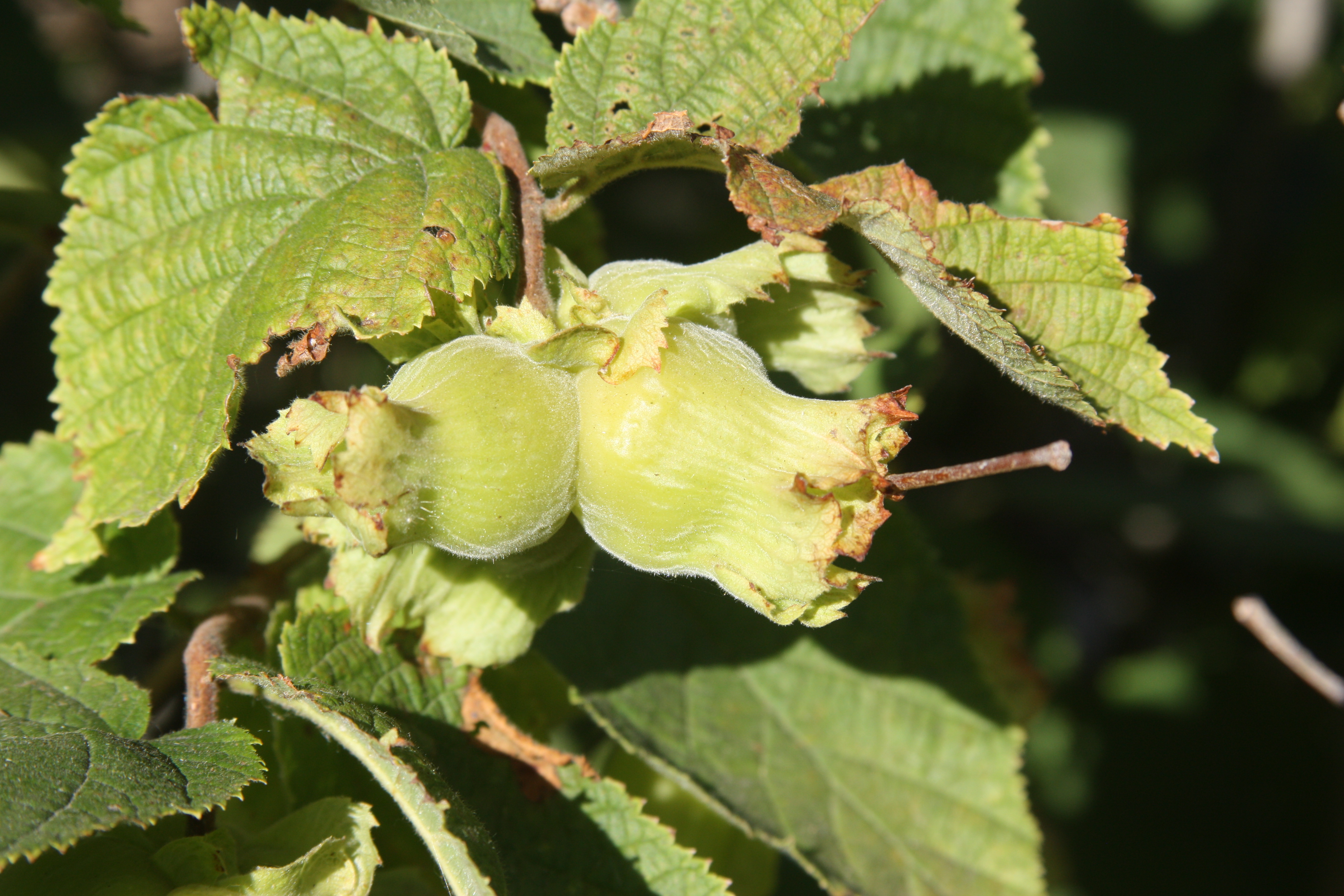 | | 1991 | DEVELOPED | | | | | | Breeding material | Nuts 52-56% kernel, kernels medium soft, medium fiber, good pellicle removal, shell medium-thick | 1452203 | PI 557231 |
| 190 | PI 557235 | 'Ceret' | Corylus avellana L. | Spain | COR |  | | 1991 | DEVELOPED | | | | | | Cultivar | | 1452207 | PI 557235 |
| 191 | PI 557236 | 'Espinaredo' | Corylus avellana L. | Spain | COR |  | | 1991 | DEVELOPED | | | | | | Cultivar | Originated in Northern Spain, in the same area as the cultivar Casina | 1452208 | PI 557236 |
| 192 | PI 557238 | 'Fructo Albo' | Corylus avellana L. | France | COR |  | | 1991 | DEVELOPED | | | | | | Cultivar | | 1452210 | PI 557238 |
| 193 | PI 557239 | 'Bella di Giubilino' | Corylus avellana L. | Italy | COR |  | | 1991 | DEVELOPED | | | | | | Cultivar | | 1452211 | PI 557239 |
| 194 | PI 557241 | 'Bard' | Corylus avellana L. | England, United Kingdom | COR |  | | 1991 | DEVELOPED | | | | | | Cultivar | | 1452213 | PI 557241 |
| 195 | PI 557422 | 'Ata Baba' | Corylus avellana L. | Azerbaijan | COR |  | | 1991 | DEVELOPED | | | | | | Cultivar | Ata-Baba - This variety of filbert is of popular selection. The bush is vigorous, with coppice shoots; the nuts grow in threesomes and foursomes. The involucre is 1.5 length of a nut, which it tightly envelopes and holds securely; its brim is, however, cut longitudinally, which allows a ripe nut to be readily removed. Ata-Baba flowering period commences at the end of December and lasts from 45-55 days. The flowering periods of male and female blossoms coincide during 30-35 days. The nut ripen in the middle of the season and the crop is picked from aug. 15 to aug. 25. A five year old bush will normally yield a crop of 2.4 kg, which makes from 450-500 kg per hectare. The nuts are glabrous, attractive, light-brown with darker colour stripes running from the apex to the base; the shape is rounded, with a protruding apex and convex base, often angular. an average size nut measures 2.0 x 1.9 x 1.8 cm and weighs 2.3 g, there being about 420 nuts to a kilogram. The shell is smooth and of medium thickness. the kernel contains 65.5 % oil. -- from a book at the Institute of Horticulture, Viticulture and Wine Making, photocopied by M.M. Thompson during her visit in March, 2002. Handwritten note on translation: The most important cultivar in Azerbaijan, selected more than 200 years ago. | 1452394 | PI 557422 |
| 196 | PI 557423 | 'Anglais' | Corylus avellana L. | Uncertain | COR |  | | 1991 | DEVELOPED | | | | | | Cultivar | | 1452395 | PI 557423 |
| 197 | PI 557424 | 'Corabel' | Corylus avellana L. | France | COR |  | | 1991 | DEVELOPED | 1988 | | | | | Cultivar | From Brooks and Olmo: Orig. in Pont-de-la-Maye, near Bordeaux, France, by Eric Germain, INRA. Introd. in 1988. Barcelona (Fertile de Coutard) o.p.; pollen parent appears to be Daviana. Cross made in 1969; selected in 1975; tested as GlFC9. Nut: very large (4.2 g); color light brown, attractive; kernel well-filled, 46% by weight, blanches readily. Tree: vigorous, late-leafing, few suckers. Moderately susceptible to big bud mites. Developed for in-shell market. | 1452396 | PI 557424 |
| 198 | PI 557210 | 'Istrska okrogloplodna leska' | Corylus avellana L. | Serbia | COR |  | | 1990 | DEVELOPED | | | | | | Cultivar | | 1452182 | PI 557210 |
| 199 | PI 557213 | 'Avellana Speciale' | Corylus avellana L. | Italy | COR | 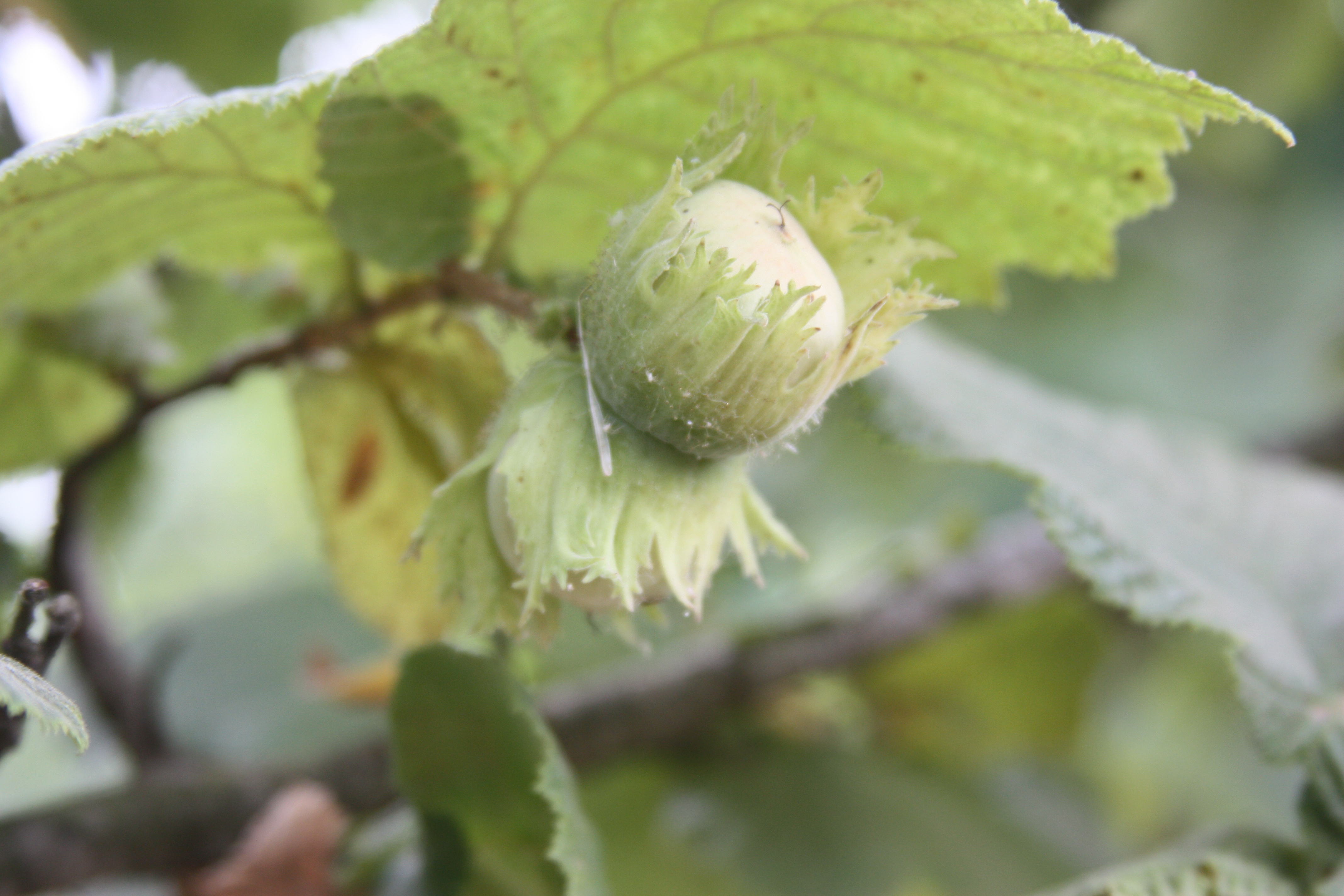 | | 1990 | DEVELOPED | | | | | | Cultivar | | 1452185 | PI 557213 |
| 200 | PI 557214 | 'Bearn' | Corylus avellana L. | Italy | COR | 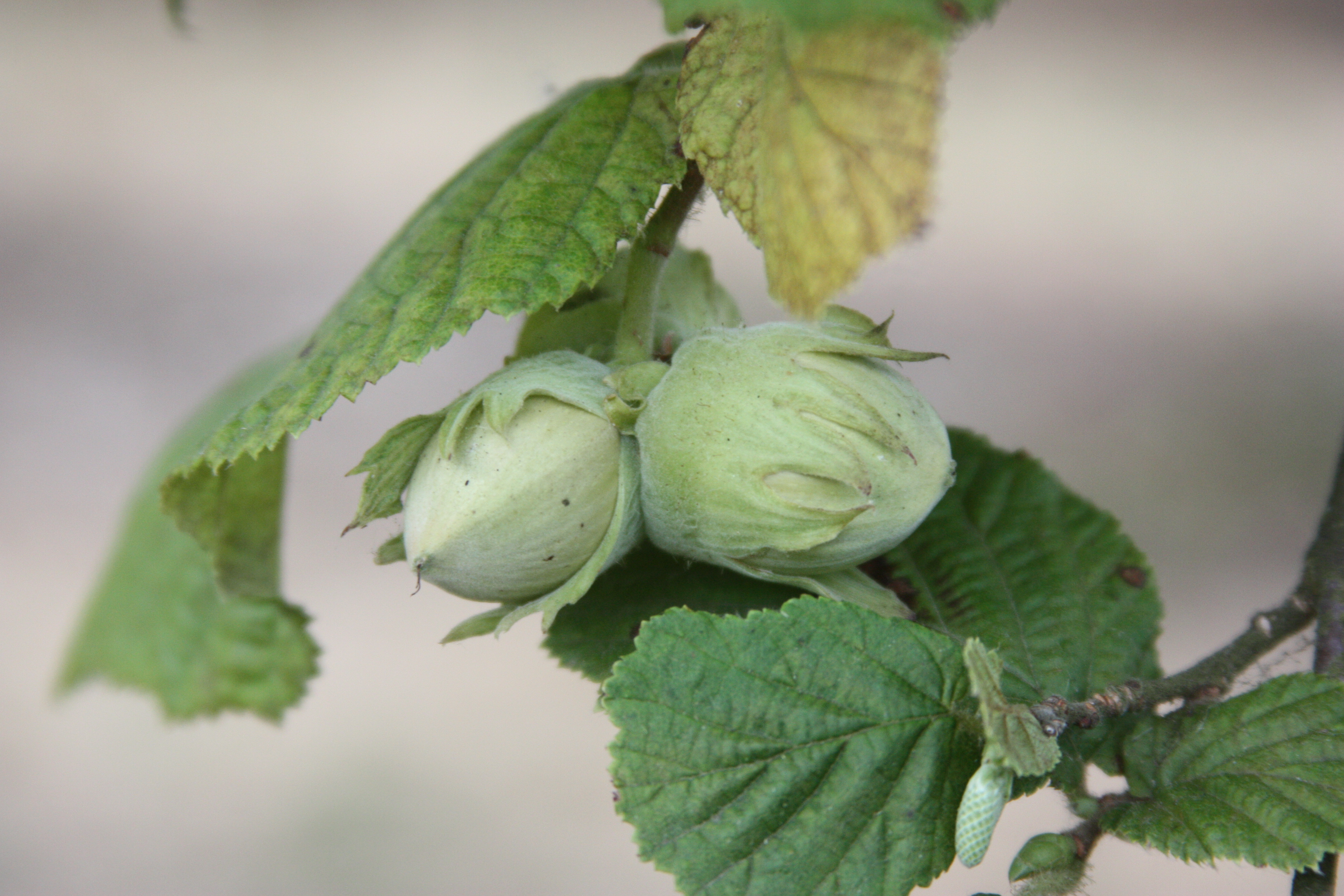 | | 1990 | DEVELOPED | | | | | | Cultivar | | 1452186 | PI 557214 |
| 201 | PI 557216 | 'Napoletanedda' | Corylus avellana L. | Italy | COR | 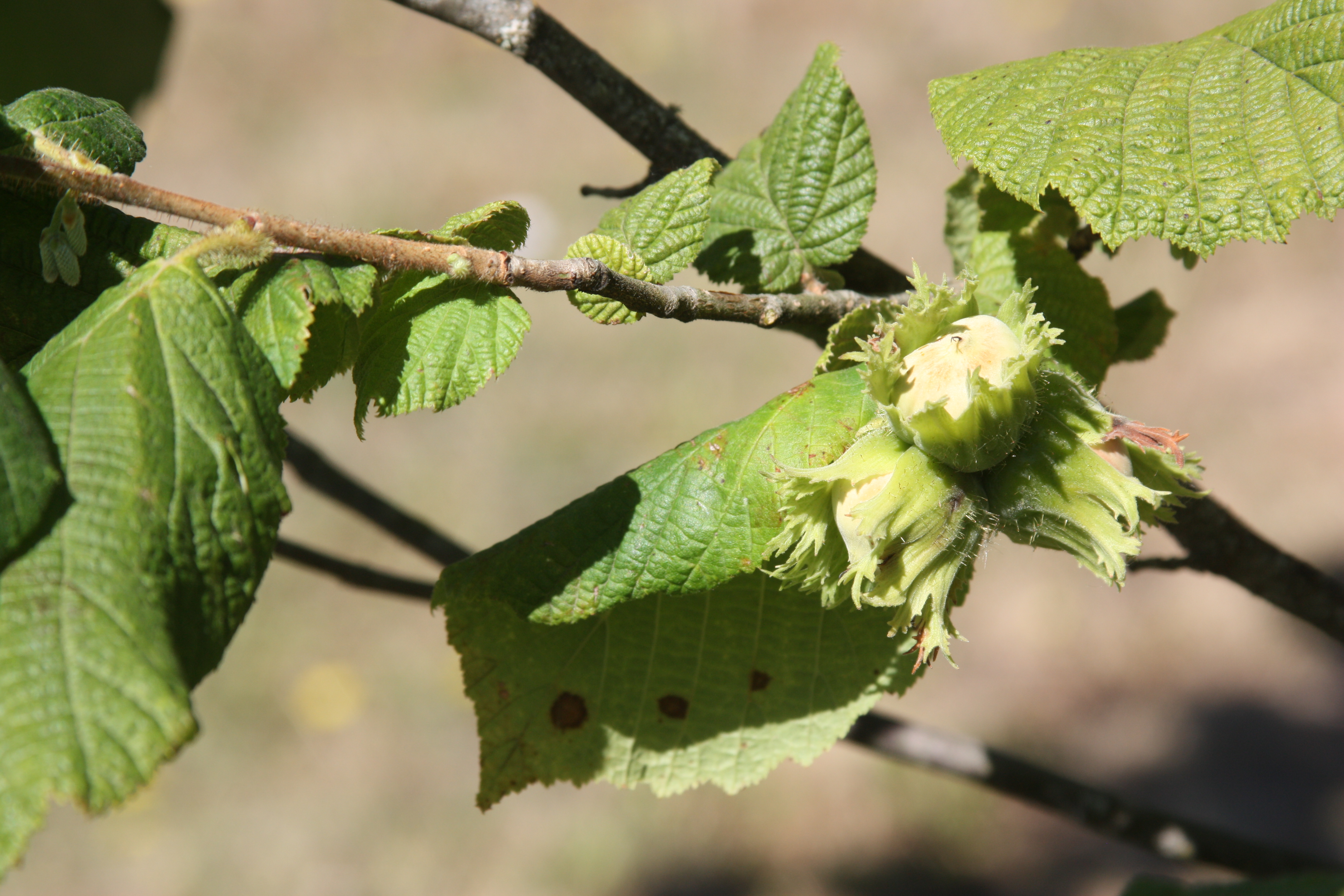 | | 1990 | DEVELOPED | | | | | | Cultivar | | 1452188 | PI 557216 |
| 202 | PI 557200 | 'Tomasina' | Corylus avellana L. | Spain | COR |  | | 1990 | DEVELOPED | | | | | | Cultivar | | 1452172 | PI 557200 |
| 203 | PI 557201 | 'Ratllada' | Corylus avellana L. | Spain | COR |  | | 1990 | DEVELOPED | | | | | | Cultivar | | 1452173 | PI 557201 |
| 204 | PI 557202 | 'Grifoll' | Corylus avellana L. | Spain | COR |  | | 1990 | DEVELOPED | | | | | | Cultivar | Second largest cultivated variety in Spain | 1452174 | PI 557202 |
| 205 | PI 557203 | 'Martorella' | Corylus avellana L. | Spain | COR |  | | 1990 | DEVELOPED | | | | | | Cultivar | | 1452175 | PI 557203 |
| 206 | PI 557206 | 'Belle di Giubilino' | Corylus avellana L. | Italy | COR |  | | 1990 | DEVELOPED | | | | | | Cultivar | | 1452178 | PI 557206 |
| 207 | PI 557421 | C. avellana from Burmistrov | Corylus avellana L. | Russian Federation | COR |  | | 1990 | COLLECTED | | | | | | Breeding material | No additional information provided upon receipt | 1452393 | PI 557421 |
| 208 | PI 557195 | 'Atlas' | Corylus avellana L. | Denmark | COR |  | | 1989 | DEVELOPED | | | | | | Cultivar | | 1452167 | PI 557195 |
| 209 | PI 557196 | 'Heynick's Zellernuss' | Corylus avellana L. | Germany | COR | 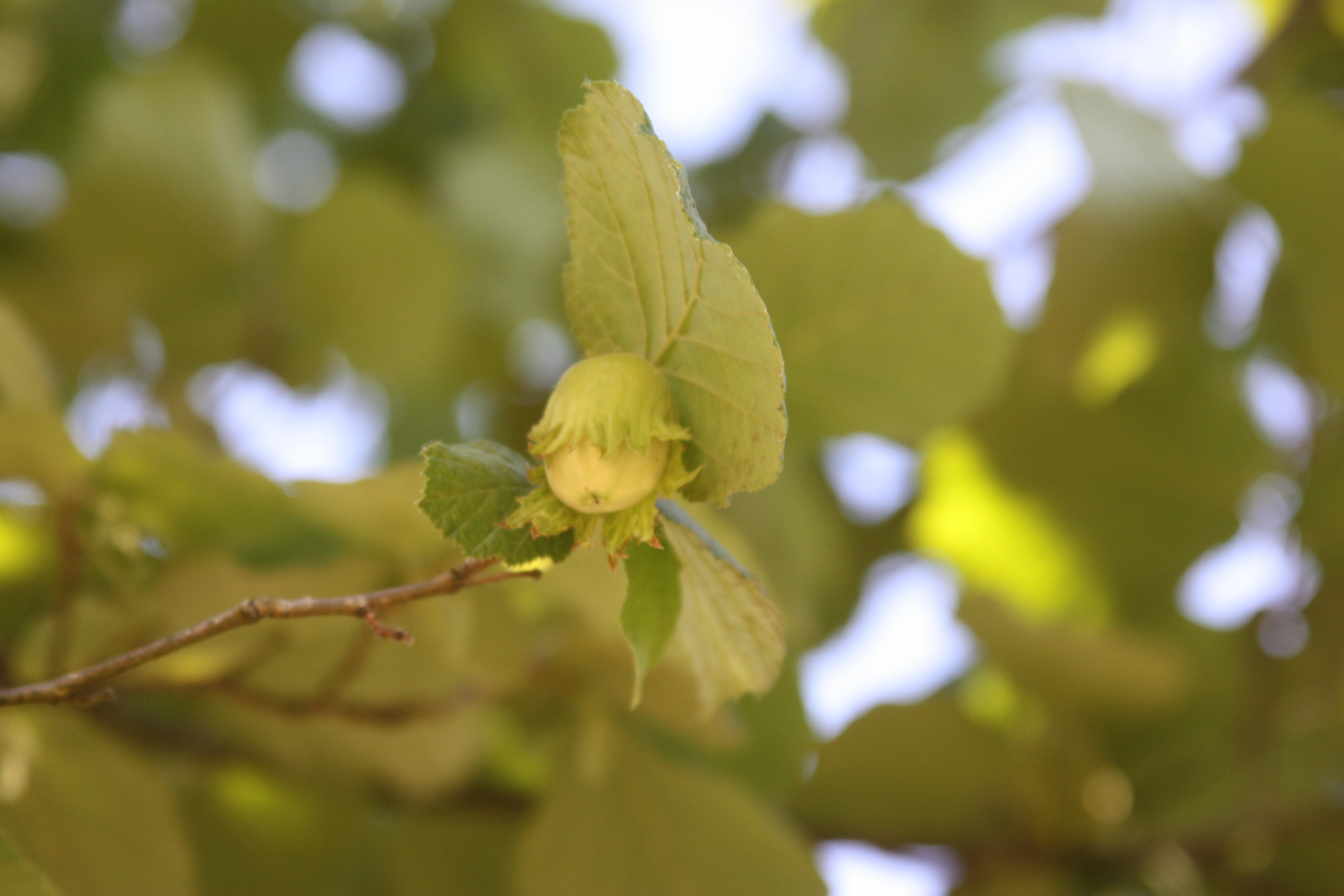 | | 1989 | DEVELOPED | | | | | | Cultivar | | 1452168 | PI 557196 |
| 210 | PI 557197 | 'Korthaset Zellernuss' | Corylus avellana L. | Denmark | COR | 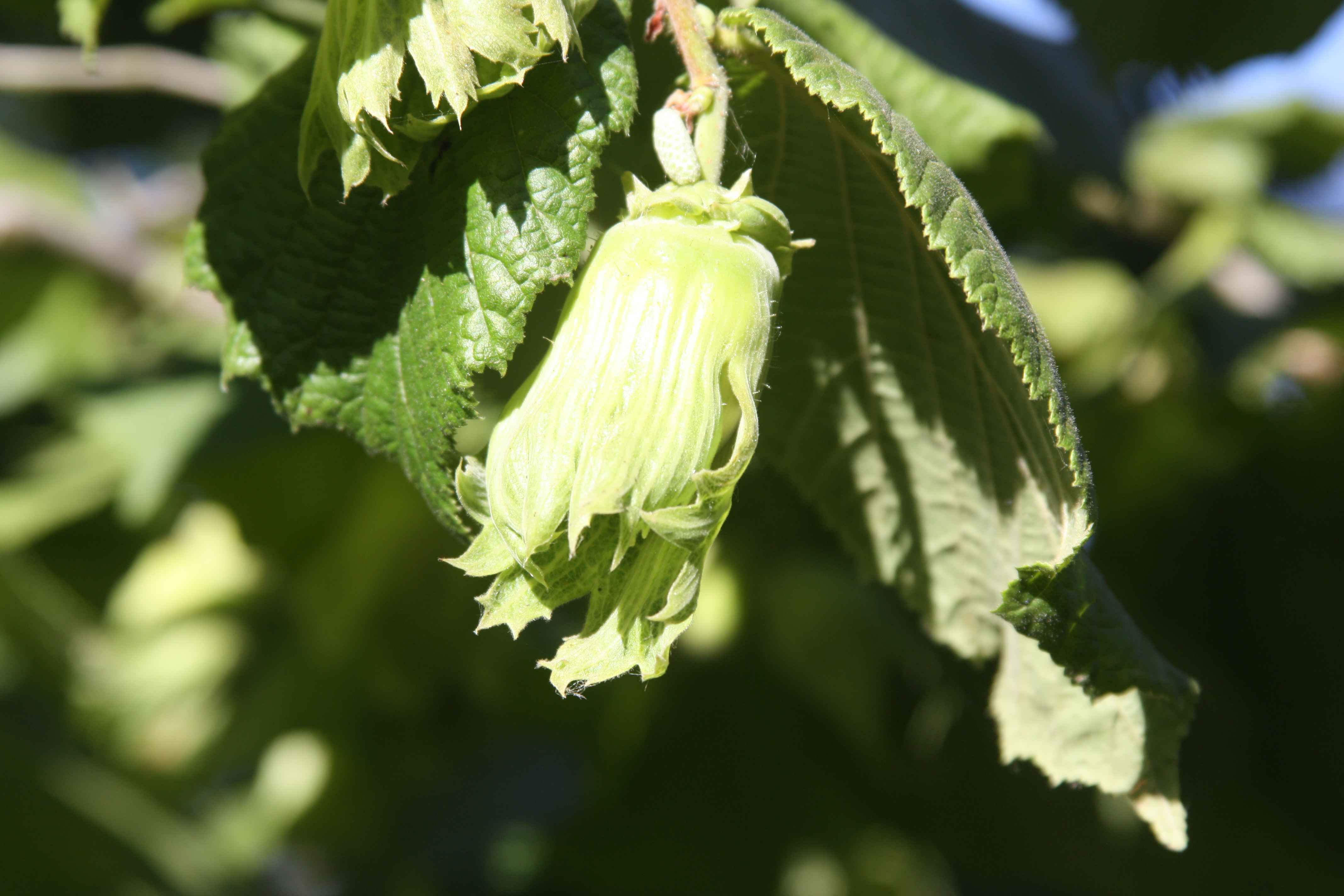 | | 1989 | DEVELOPED | | | | | | Cultivar | | 1452169 | PI 557197 |
| 211 | PI 557199 | 'Riekchen's Zellernuss' | Corylus avellana L. | Germany | COR |  | | 1989 | DEVELOPED | | | | | | Cultivar | | 1452171 | PI 557199 |
| 212 | PI 323961 | OSU 26.072 | Corylus avellana L. | Oregon, United States | COR | | | 1989 | DEVELOPED | | | | | | Breeding material | From northern range of species in Russia | 1240619 | PI 323961 |
| 213 | PI 557194 | 'Aveline d'Angleterre' | Corylus avellana L. | England, United Kingdom | COR | | | 1989 | DEVELOPED | | | | | | Cultivar | | 1452166 | PI 557194 |
| 214 | PI 557174 | 'Mansa' | Corylus avellana L. | Italy | COR | 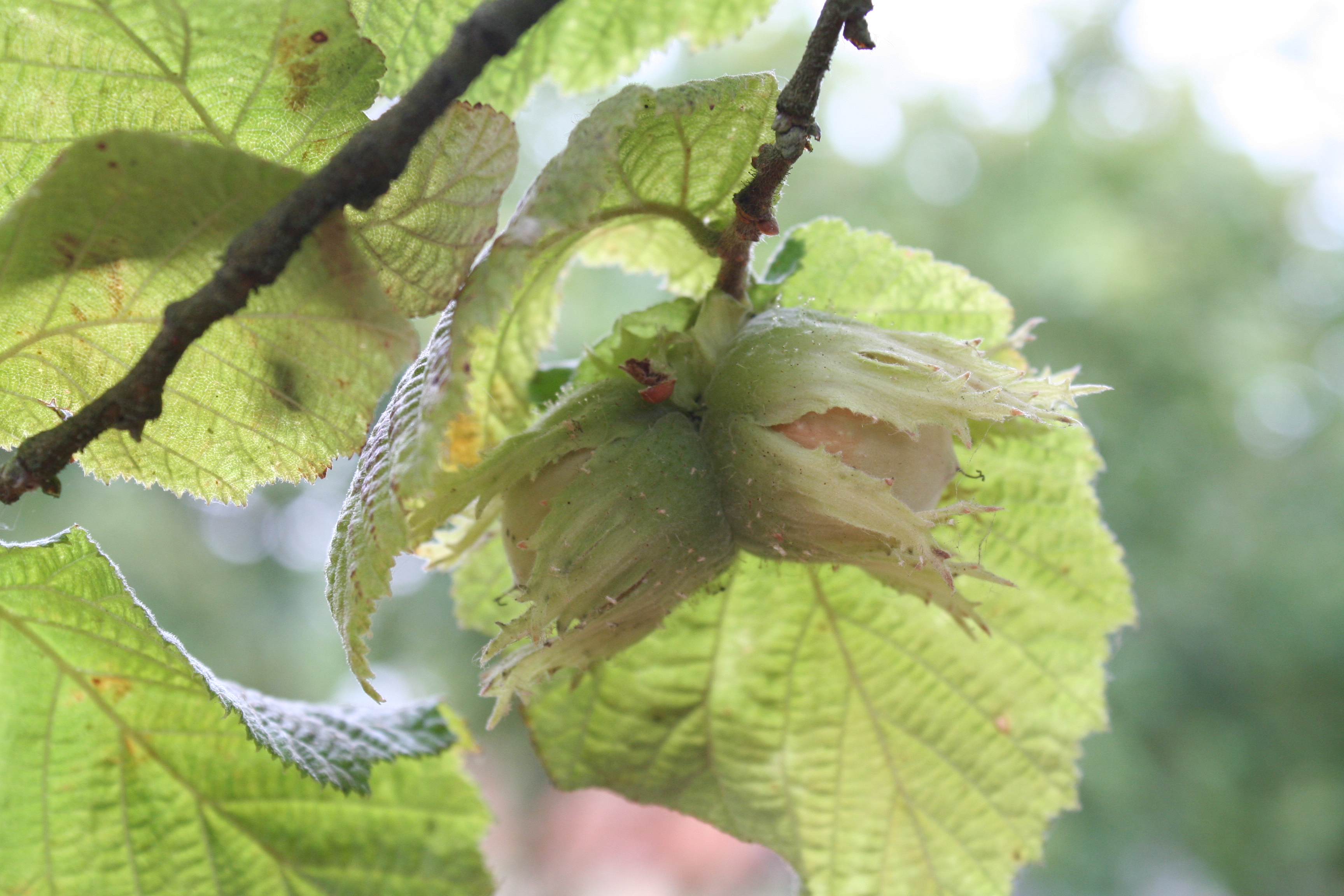 | | 1989 | DEVELOPED | | | | | | Cultivar | | 1452146 | PI 557174 |
| 215 | PI 557176 | 'Apolda' | Corylus avellana L. | Italy | COR | 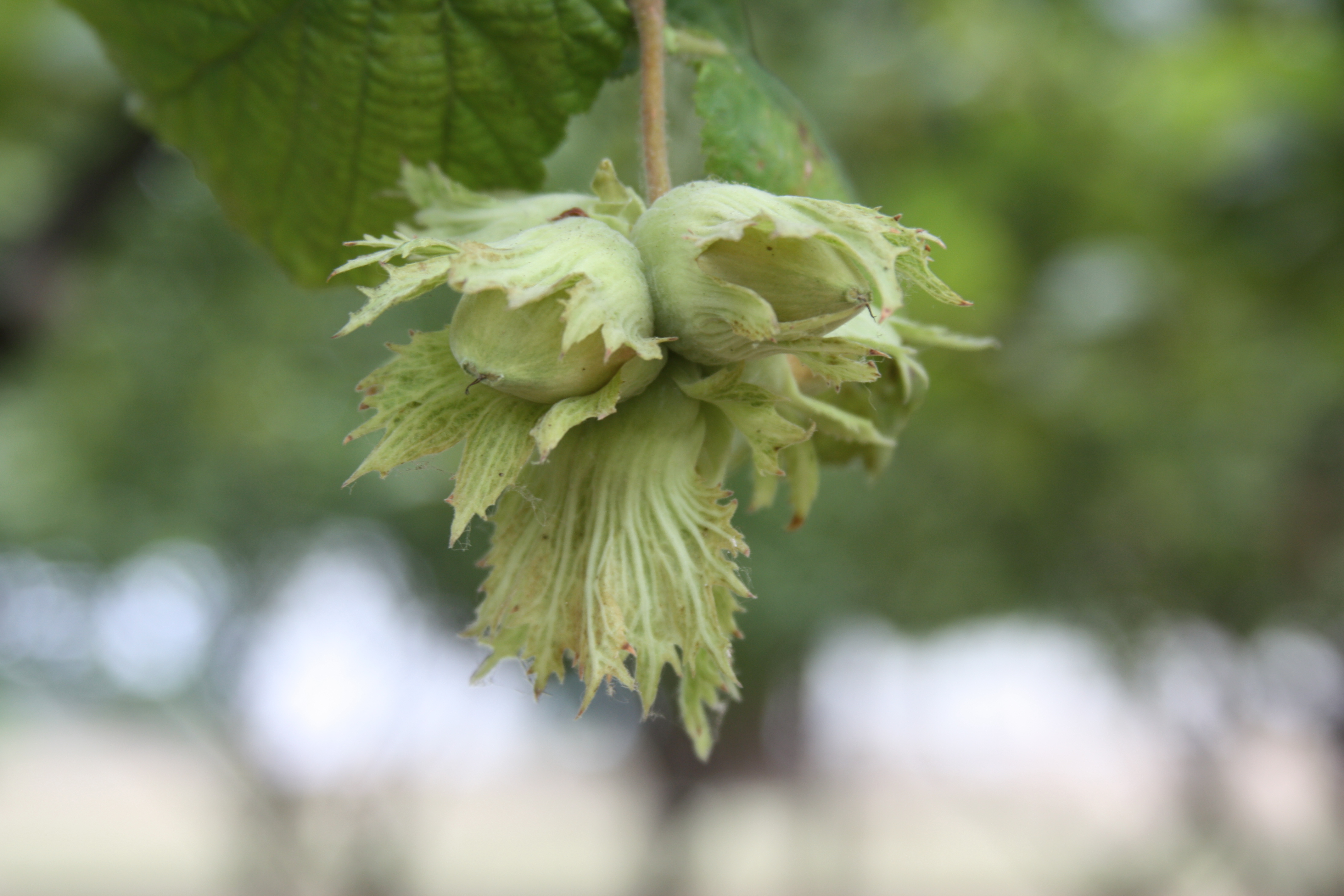 | | 1989 | DEVELOPED | | | | | | Cultivar | Late, pollinates Cosford, Gunslebert, Merveille de Bollwille | 1452148 | PI 557176 |
| 216 | PI 557177 | 'Barbarella' | Corylus avellana L. | Italy | COR | 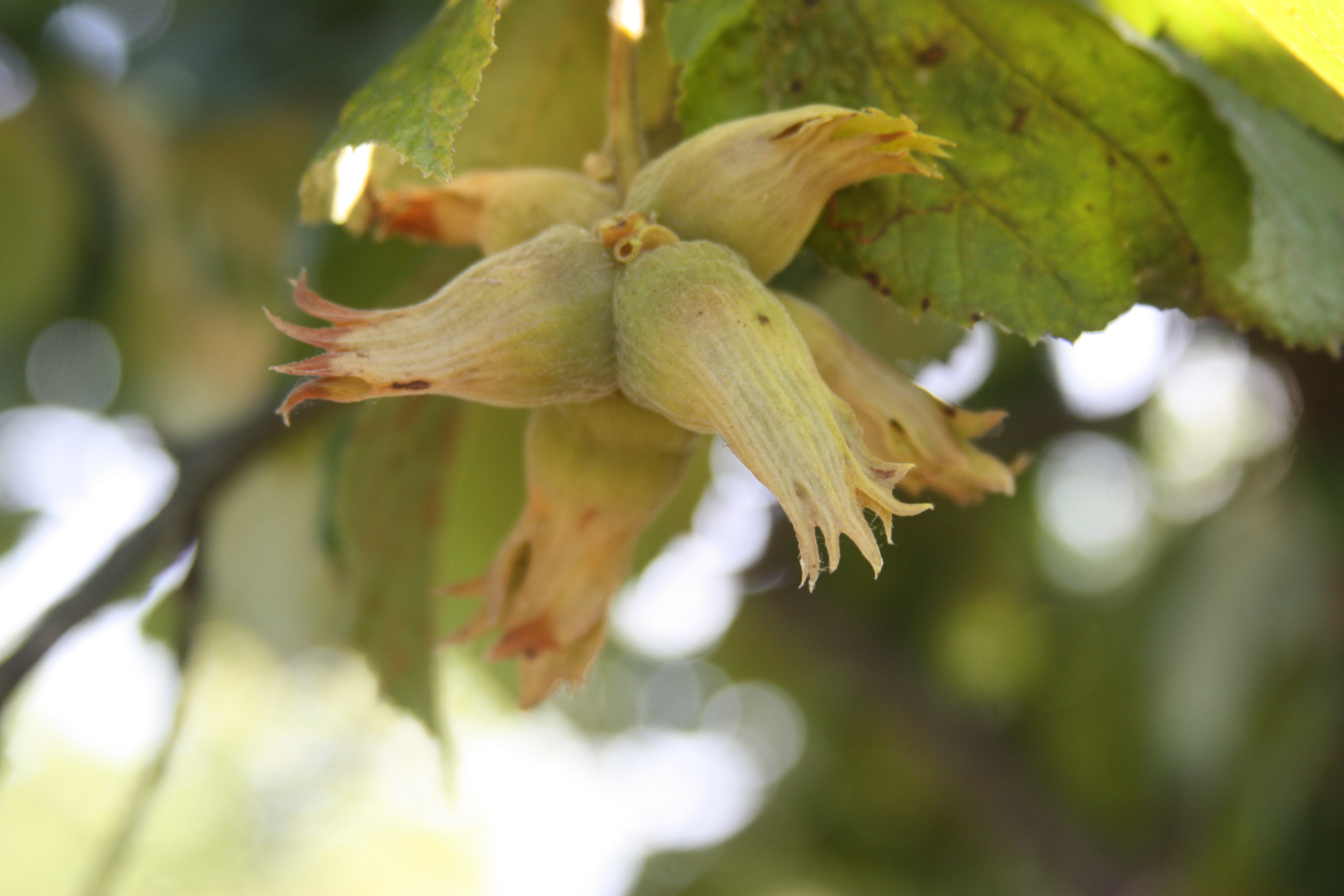 | | 1989 | DEVELOPED | | | | | | Cultivar | | 1452149 | PI 557177 |
| 217 | PI 557178 | 'Comen' | Corylus avellana L. | Italy | COR | 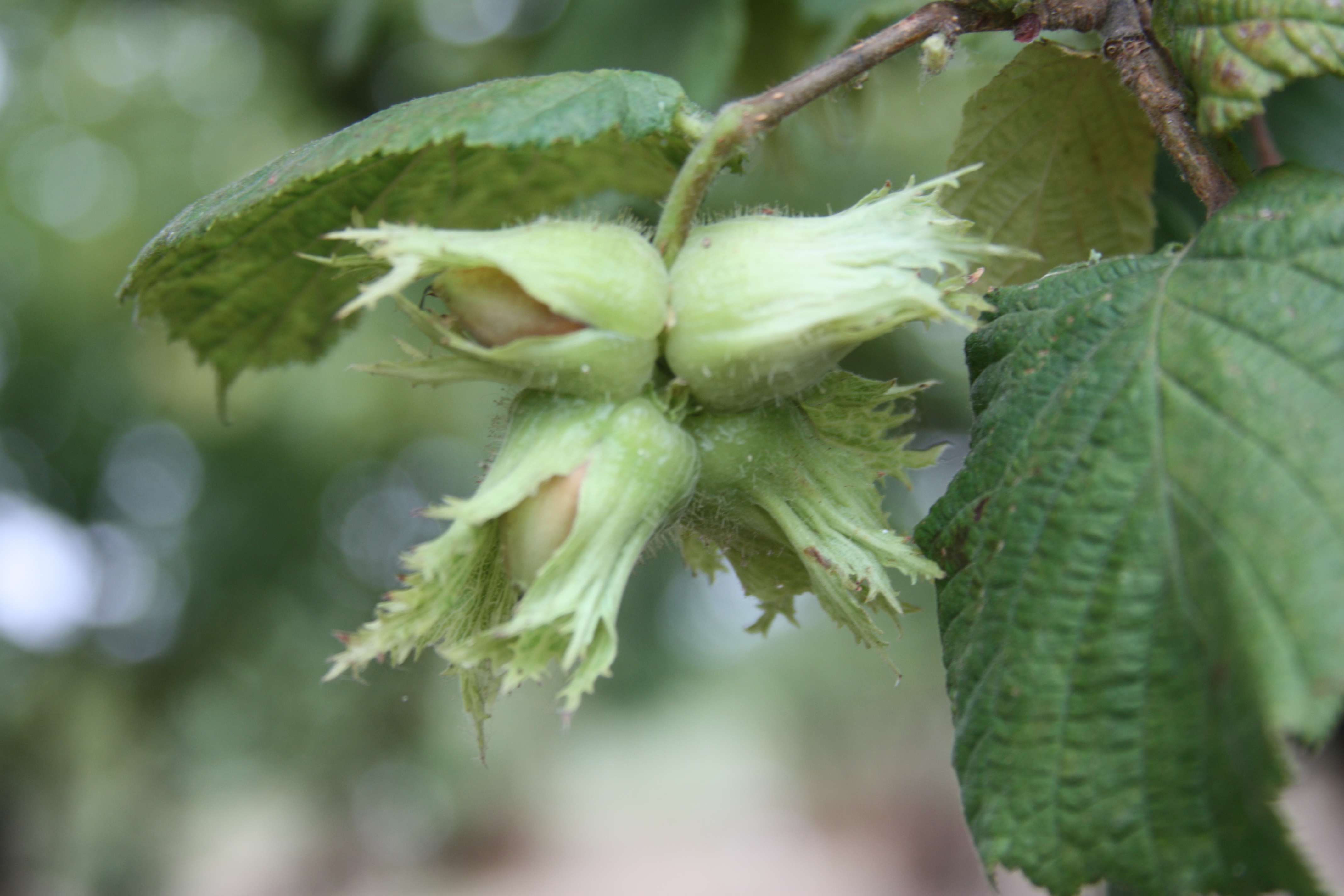 | | 1989 | DEVELOPED | | | | | | Cultivar | Medium-early, medium vigor, good productivity, pollinates Royal, Tonda Romana, Riccia di Talanico | 1452150 | PI 557178 |
| 218 | PI 557179 | 'Nocciolino Sangrato' | Corylus avellana L. | Italy | COR |  | | 1989 | DEVELOPED | | | | | | Cultivar | | 1452151 | PI 557179 |
| 219 | PI 557180 | 'Noccione' | Corylus avellana L. | Italy | COR | 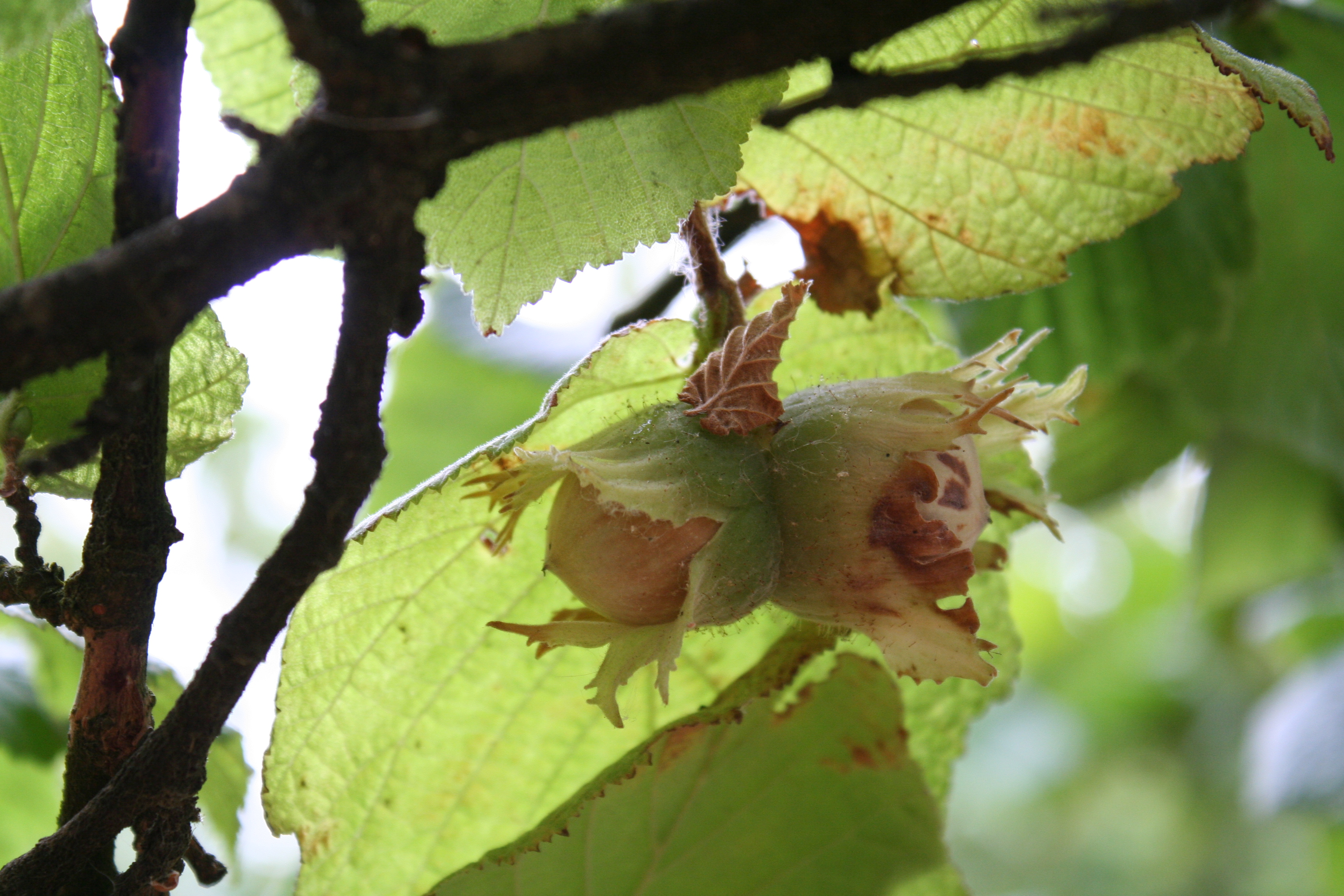 | | 1989 | DEVELOPED | | | | | | Cultivar | | 1452152 | PI 557180 |
| 220 | PI 557183 | 'Iannusa Racinante' | Corylus avellana L. | Italy | COR |  | | 1989 | DEVELOPED | | | | | | Cultivar | | 1452155 | PI 557183 |
| 221 | PI 557184 | 'Comun Aleva' | Corylus avellana L. | Italy | COR |  | | 1989 | DEVELOPED | | | | | | Cultivar | | 1452156 | PI 557184 |
| 222 | PI 557186 | 'Locale di Piazza Armerina' | Corylus avellana L. | Italy | COR | 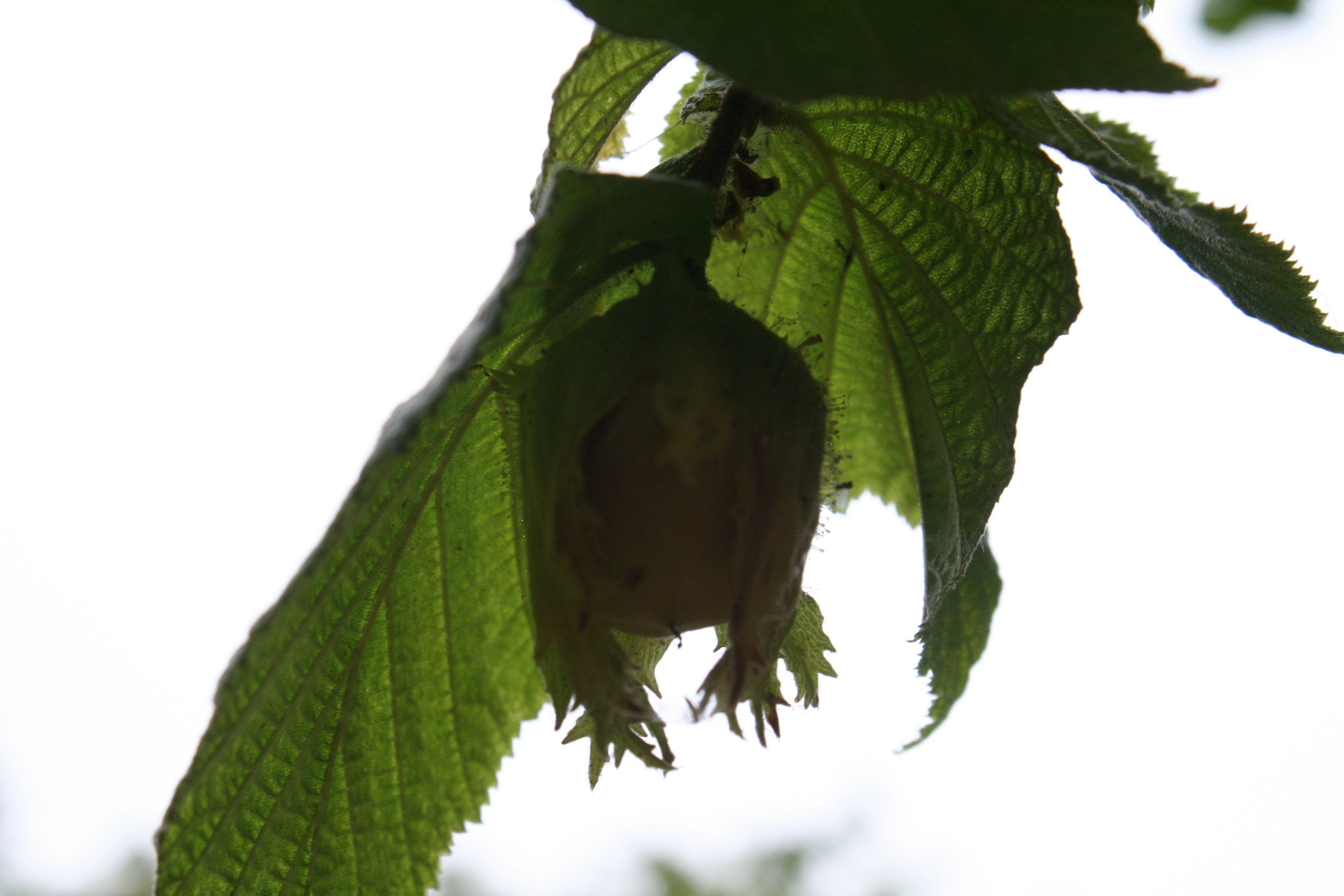 | | 1989 | DEVELOPED | | | | | | Cultivar | | 1452158 | PI 557186 |
| 223 | PI 557187 | 'Pallagrossa' | Corylus avellana L. | Italy | COR |  | | 1989 | DEVELOPED | | | | | | Cultivar | Late ripening | 1452159 | PI 557187 |
| 224 | PI 557188 | 'Napoletana' | Corylus avellana L. | Italy | COR | 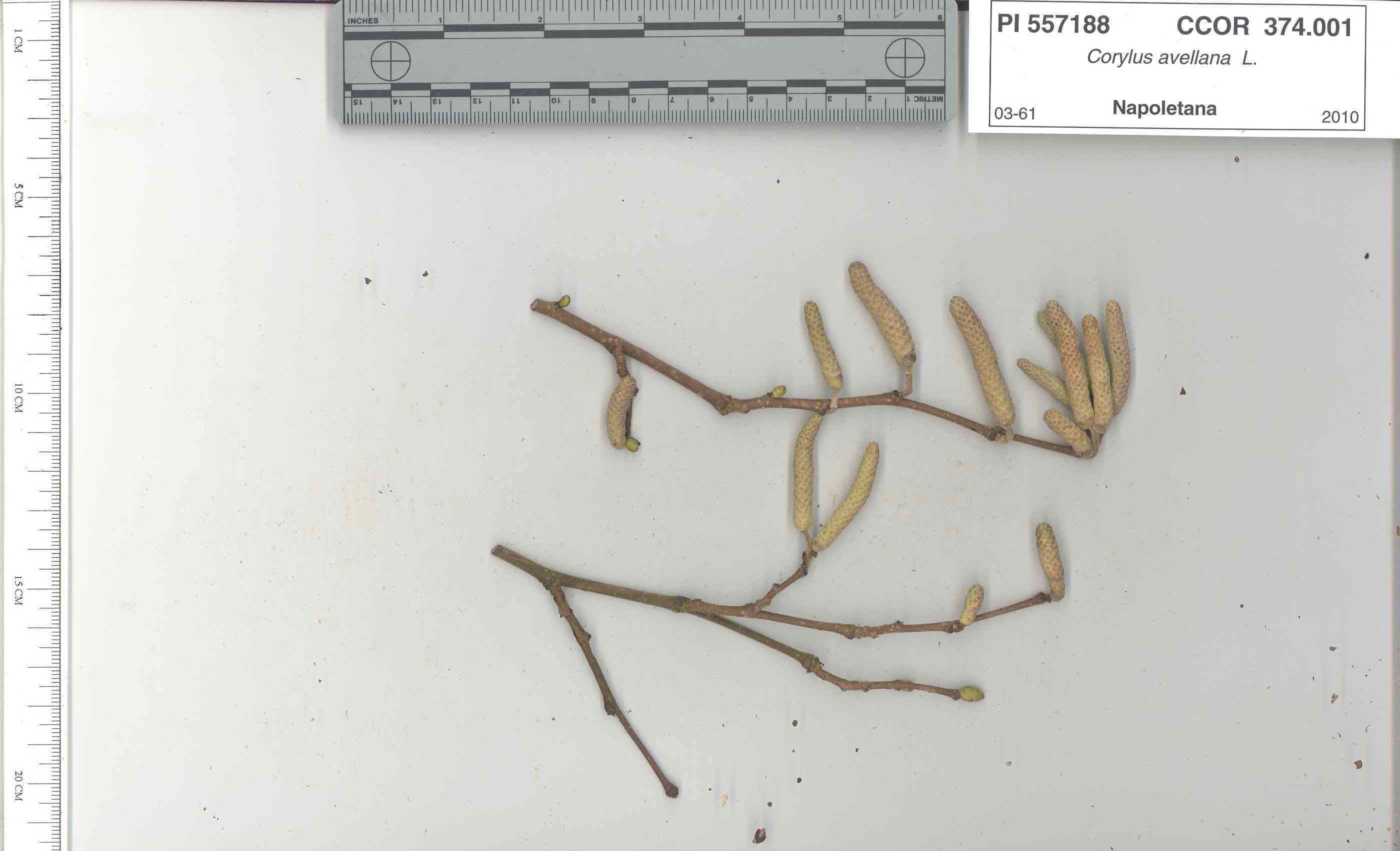 | | 1989 | DEVELOPED | | | | | | Cultivar | | 1452160 | PI 557188 |
| 225 | PI 557189 | 'Carrello' | Corylus avellana L. | Sicilia, Italy | COR | 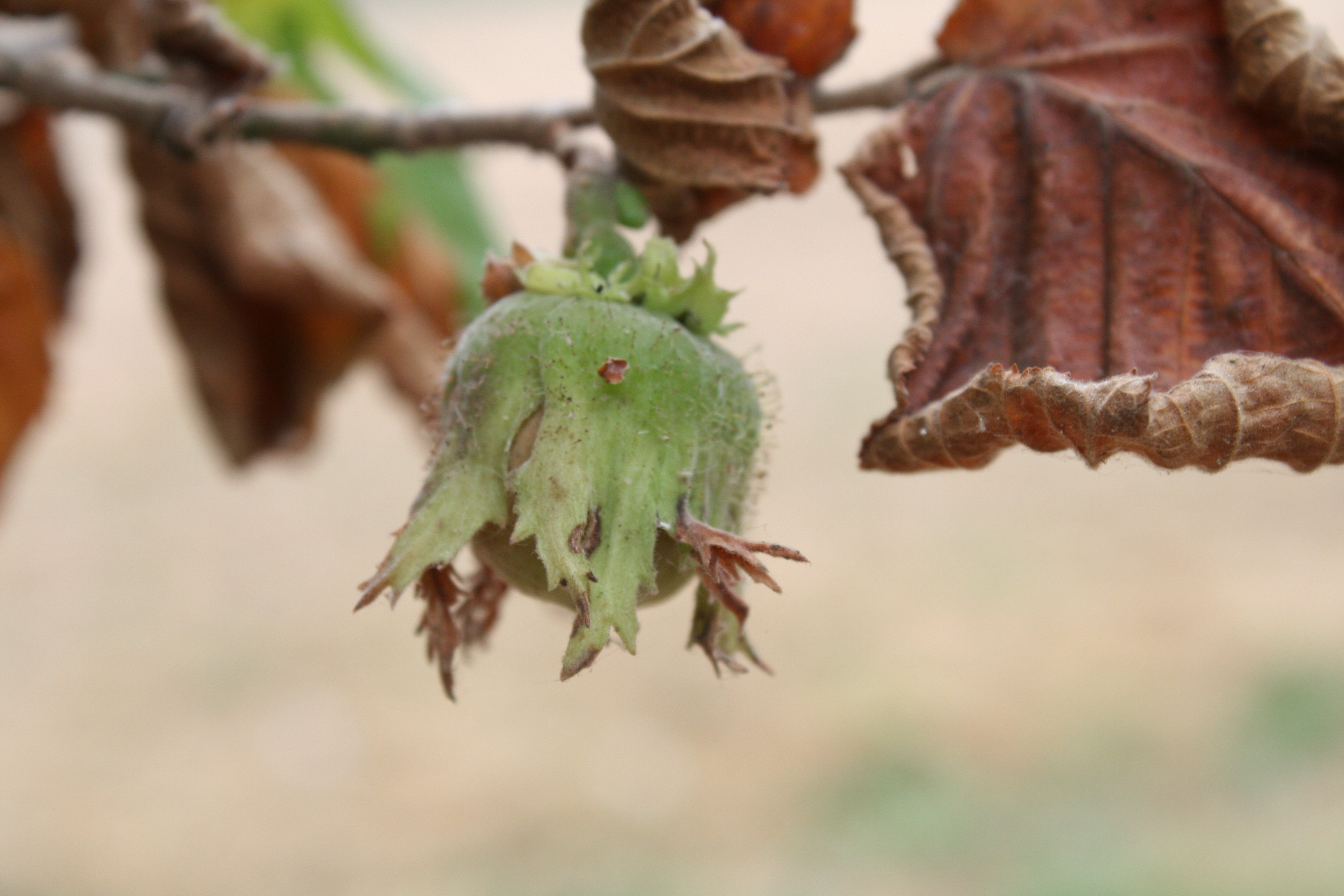 | | 1989 | DEVELOPED | | | | | | Cultivar | Late, productive | 1452161 | PI 557189 |
| 226 | PI 557190 | 'Dowton' | Corylus avellana L. | England, United Kingdom | COR | 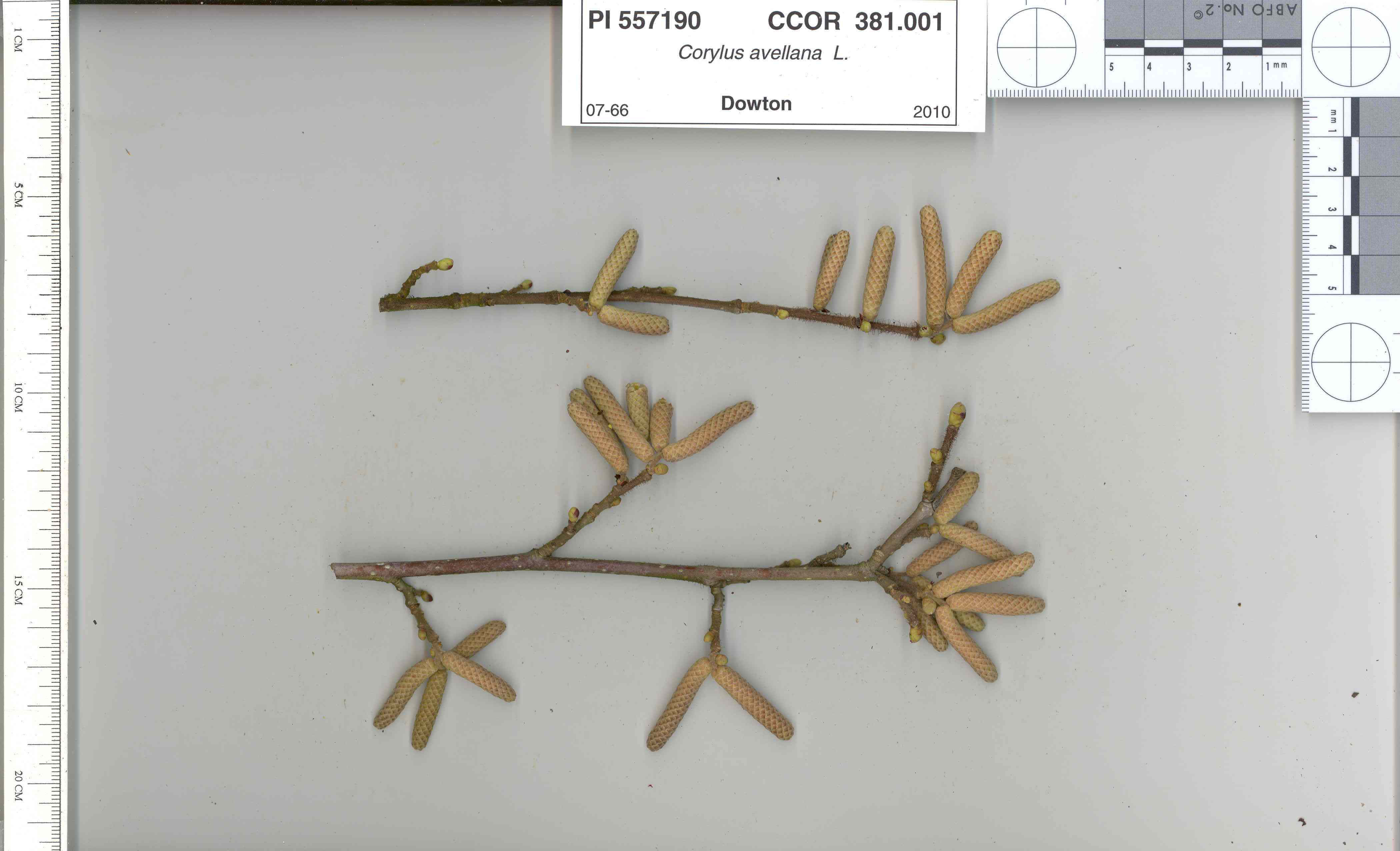 | | 1989 | DEVELOPED | | | | | | Cultivar | | 1452162 | PI 557190 |
| 227 | PI 557191 | 'Gunslebener Zellernuss' | Corylus avellana L. | Germany | COR |  | | 1989 | DEVELOPED | 1757 | | | | | Cultivar | | 1452163 | PI 557191 |
| 228 | PI 557192 | H.317-5 | Corylus avellana L. | France | COR |  | | 1989 | DEVELOPED | | | | | | Breeding material | | 1452164 | PI 557192 |
| 229 | PI 557193 | 'Nociara' | Corylus avellana L. | Italy | COR | 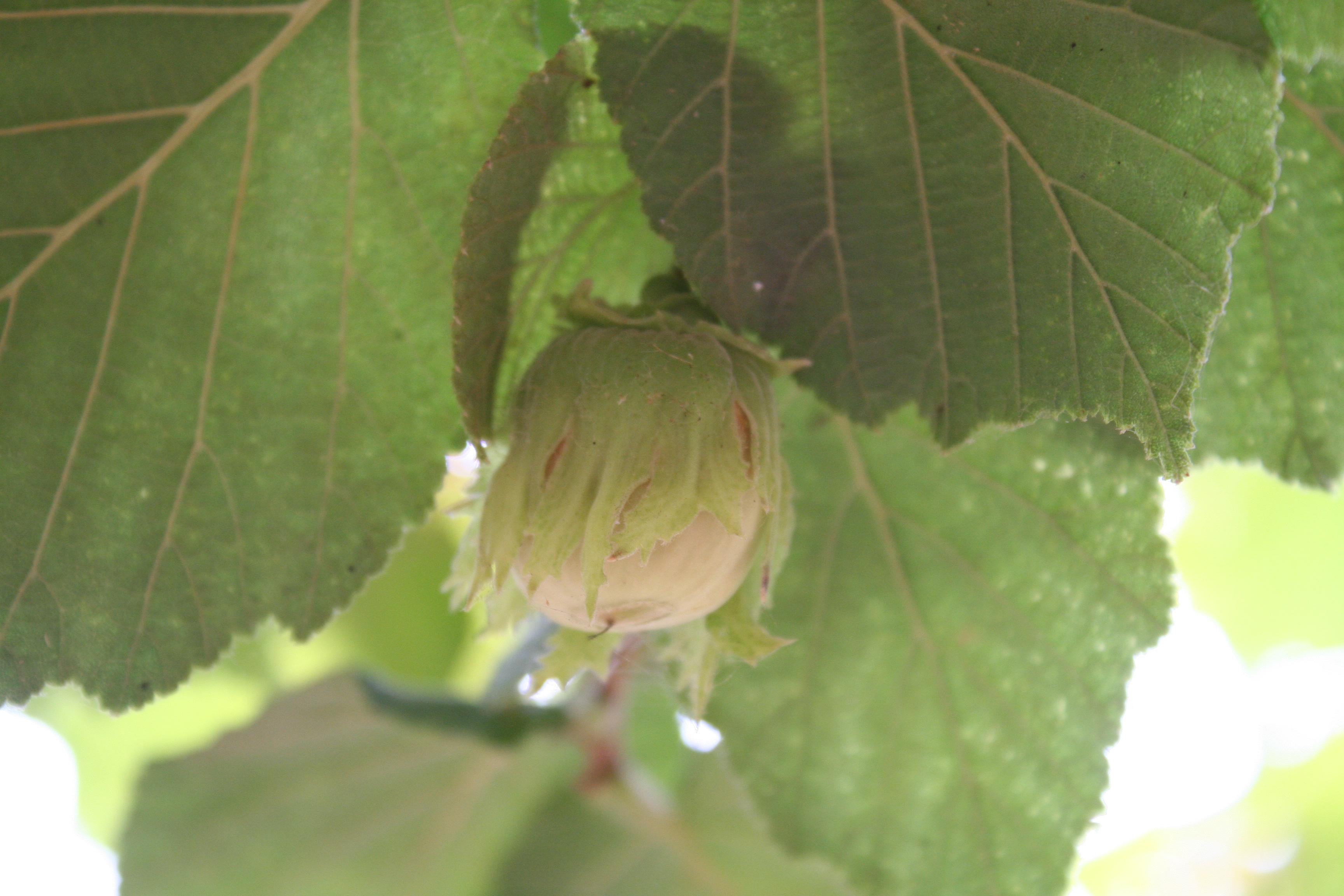 | | 1989 | DEVELOPED | | | | | | Cultivar | | 1452165 | PI 557193 |
| 230 | PI 557401 | C. maxima di San Benedetto | Corylus avellana L. | Italy | COR |  | | 1989 | COLLECTED | | | | | | Breeding material | | 1452373 | PI 557401 |
| 231 | PI 557417 | Ordhu 293 | Corylus avellana L. | Turkey | COR |  | | 1989 | COLLECTED | | | | | | Breeding material | | 1452389 | PI 557417 |
| 232 | PI 557169 | 'Jeeve's Samling' | Corylus avellana L. | England, United Kingdom | COR | 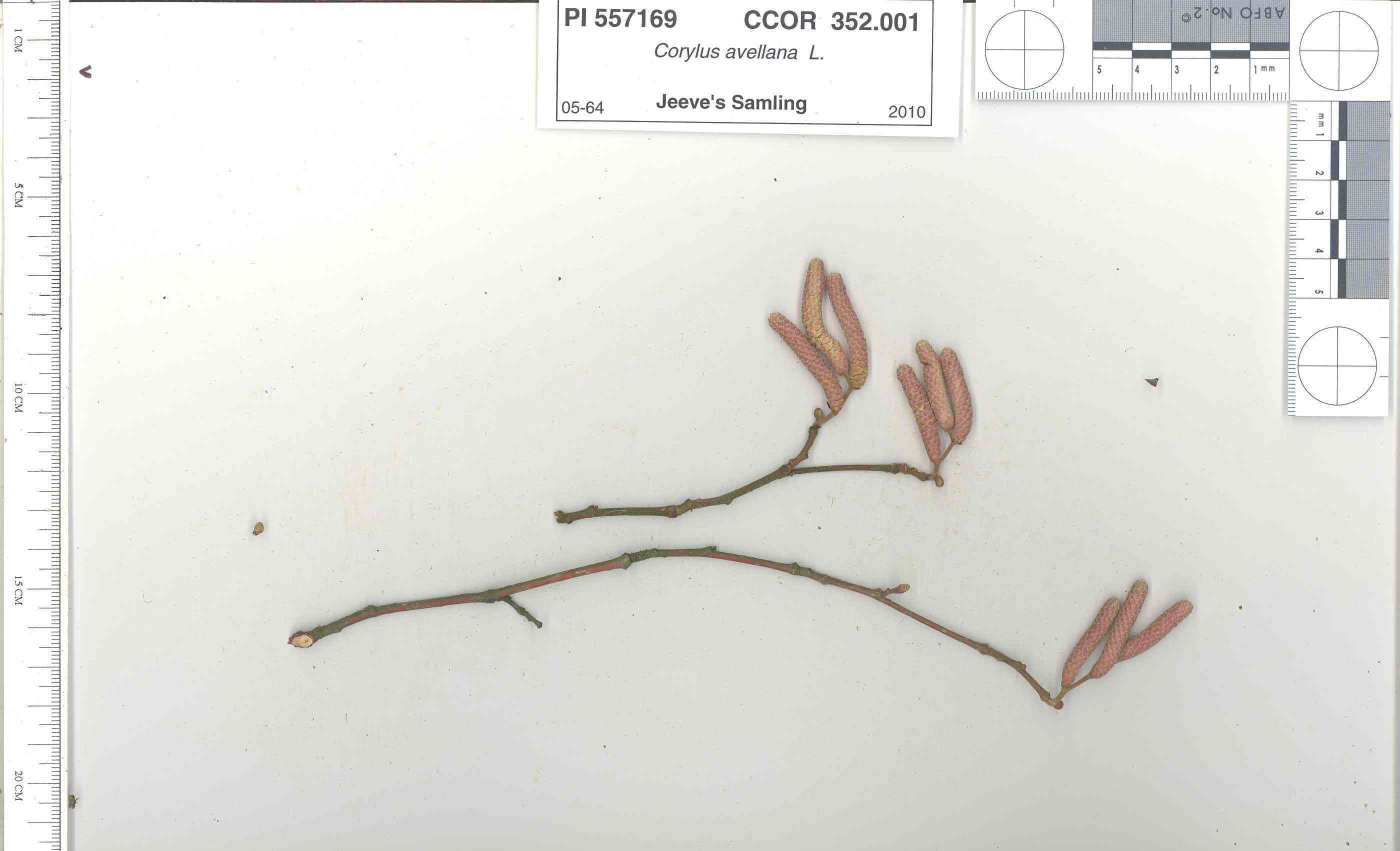 | | 1989 | DEVELOPED | | | | | | Cultivar | | 1452141 | PI 557169 |
| 233 | PI 557170 | 'Kunzemuller Zellernuss' | Corylus avellana L. | Germany | COR |  | | 1989 | DEVELOPED | | | | | | Cultivar | | 1452142 | PI 557170 |
| 234 | PI 557171 | 'Romische Nuss' | Corylus avellana L. | Norway | COR |  | | 1989 | DONATED | 02/21/1989 | | | | | Cultivar | | 1452143 | PI 557171 |
| 235 | PI 557145 | 'Dowton Long' | Corylus avellana L. | England, United Kingdom | COR | 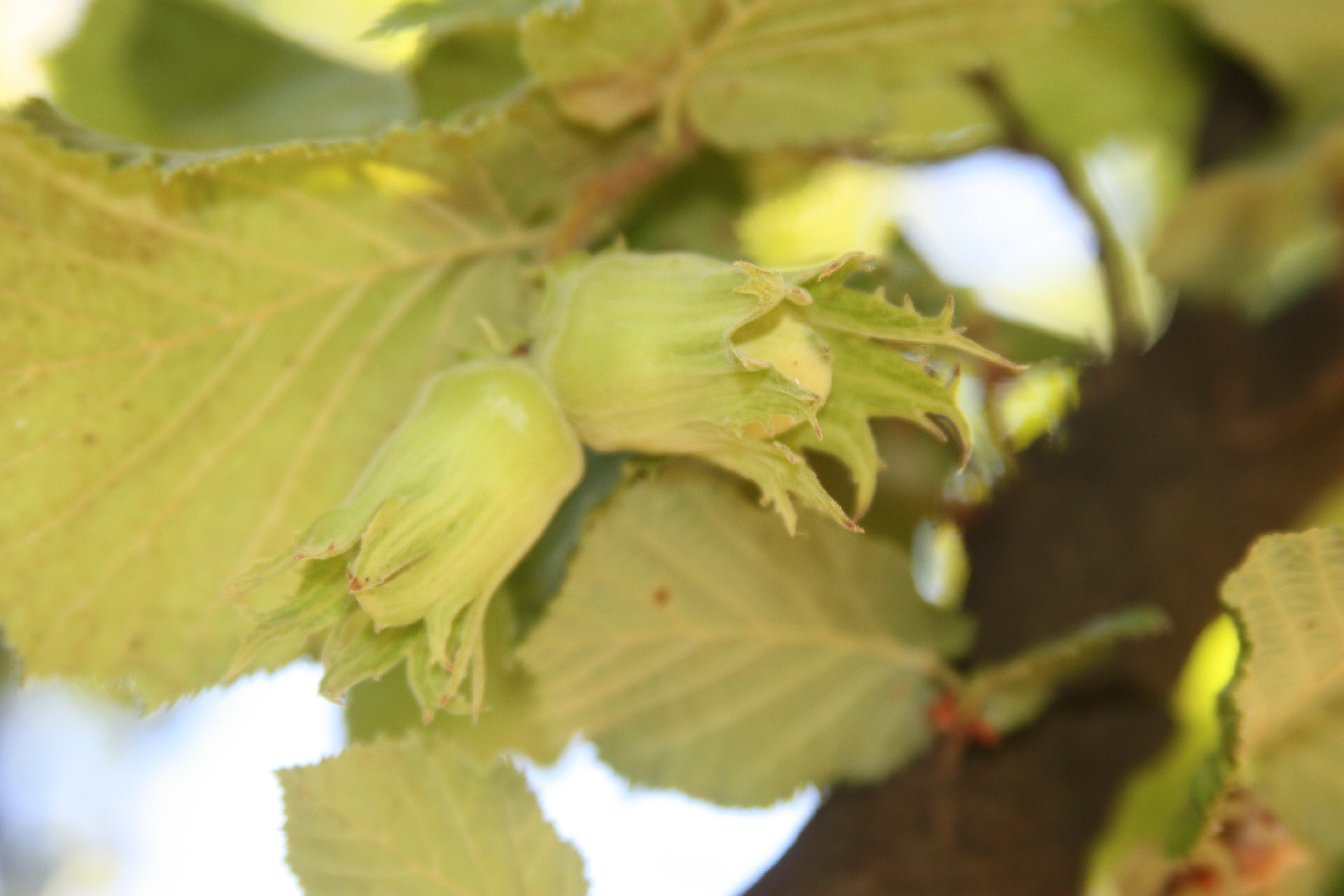 | | 1989 | DEVELOPED | | | | | | Cultivar | Vigorous, spreading. Nut is small and golden brown with some banding, pubescent | 1452117 | PI 557145 |
| 236 | PI 557148 | 'Gubener Barcelloner' | Corylus avellana L. | Germany | COR | 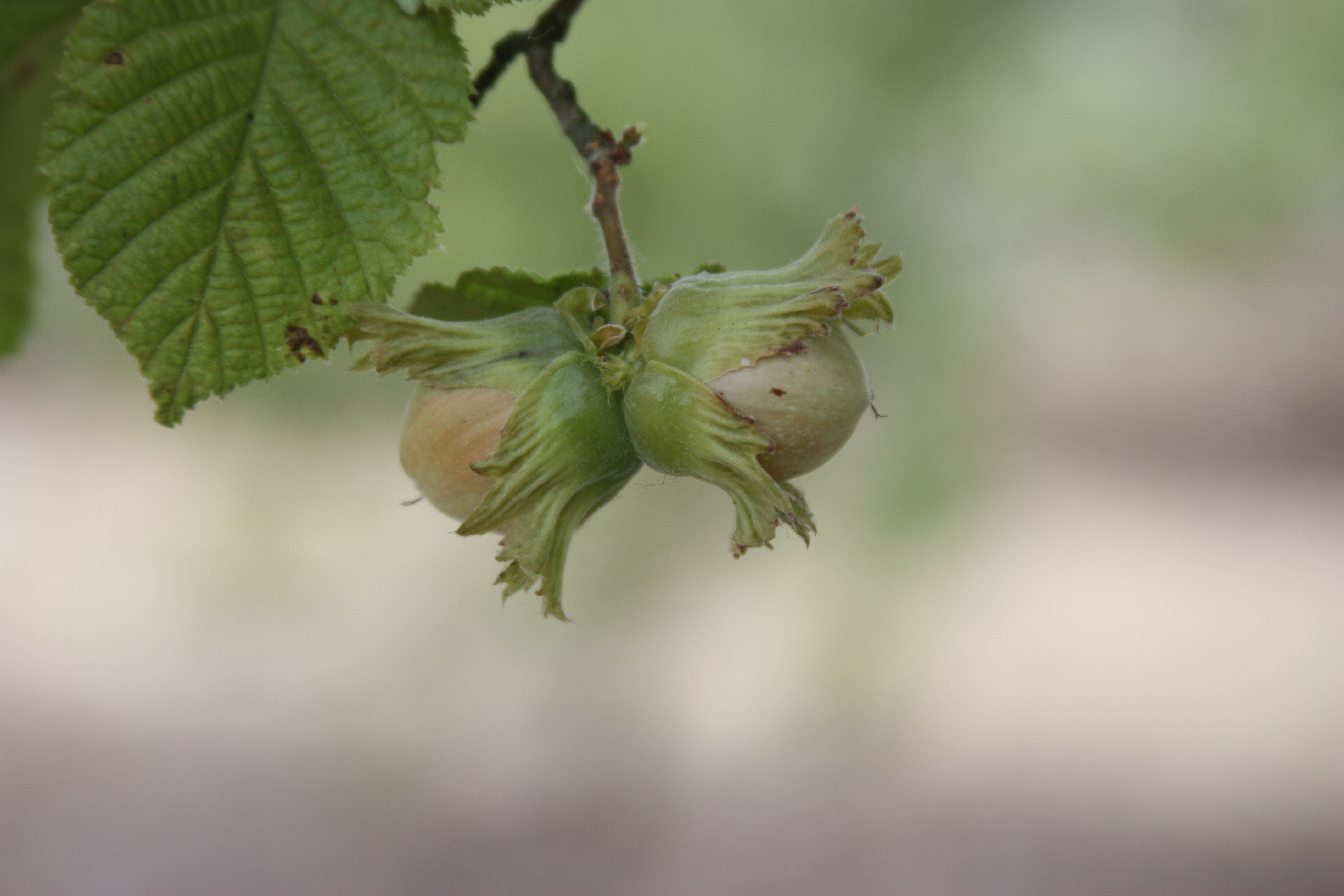 | | 1989 | DEVELOPED | | | | | | Cultivar | Samll, almost spherical nuts, golden with dark brown bands, shell average thickness | 1452120 | PI 557148 |
| 237 | PI 557149 | 'The Shah' | Corylus avellana L. | England, United Kingdom | COR |  | | 1989 | DEVELOPED | | | | | | Cultivar | Rather poor cropper, nuts downy, oblong and broad, shell medium to thick, kernel has fair flavor | 1452121 | PI 557149 |
| 238 | PI 557151 | 'Sickler's Zellernuss' | Corylus avellana L. | Germany | COR | 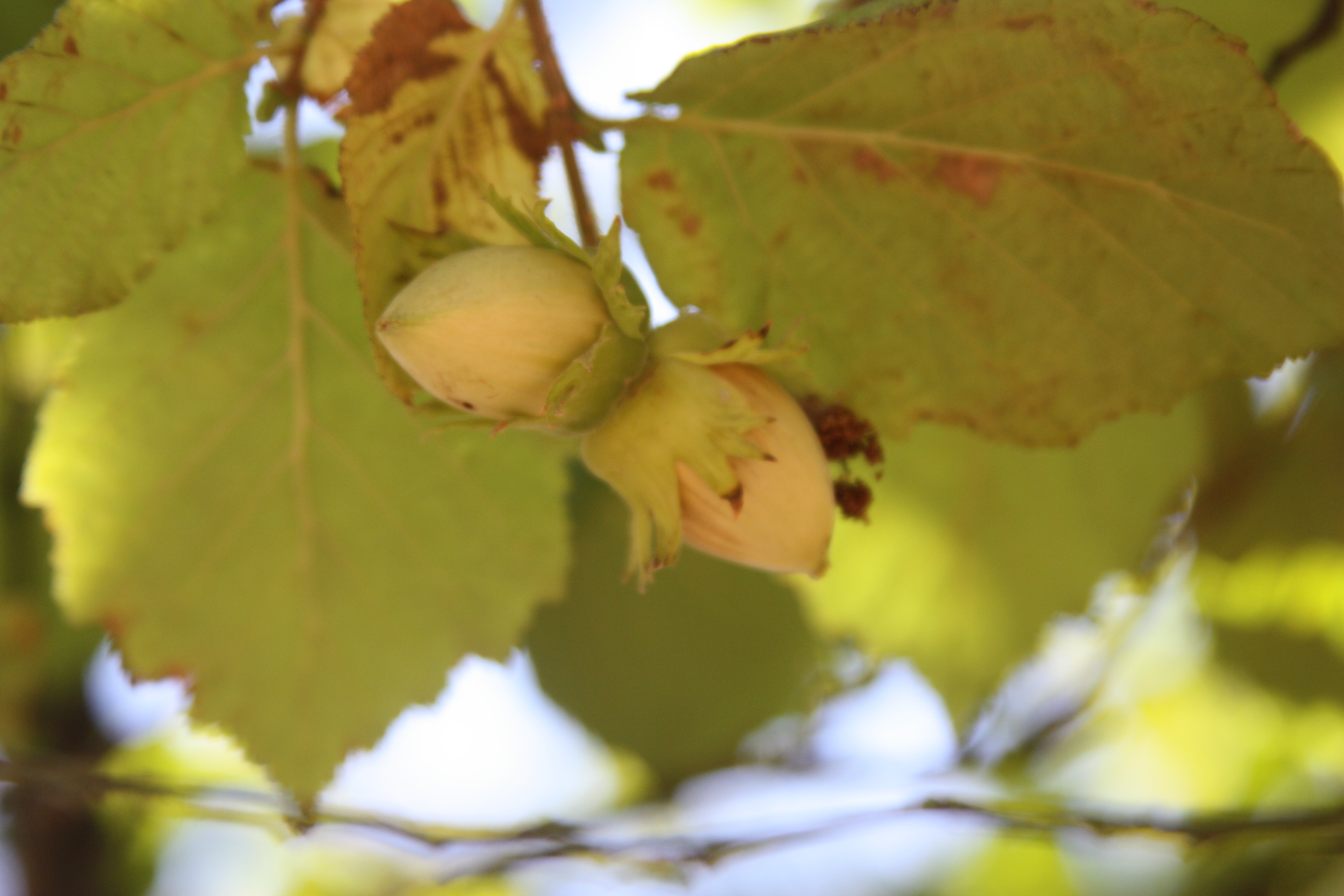 | | 1989 | DEVELOPED | | | | | | Cultivar | Low cropper, nuts slightly tapering, oblong, light yellow and dull, thin-shelled. Kernels have good flavor | 1452123 | PI 557151 |
| 239 | PI 557153 | 'Lange Landsberger' | Corylus avellana L. | Germany | COR |  | | 1989 | DEVELOPED | | | | | | Cultivar | Medium growth, leggy and wide-spreading, nut small to medium sized, golden brown with light brown bands, thick shell | 1452125 | PI 557153 |
| 240 | PI 557154 | 'Prolific Closehead' | Corylus avellana L. | England, United Kingdom | COR | 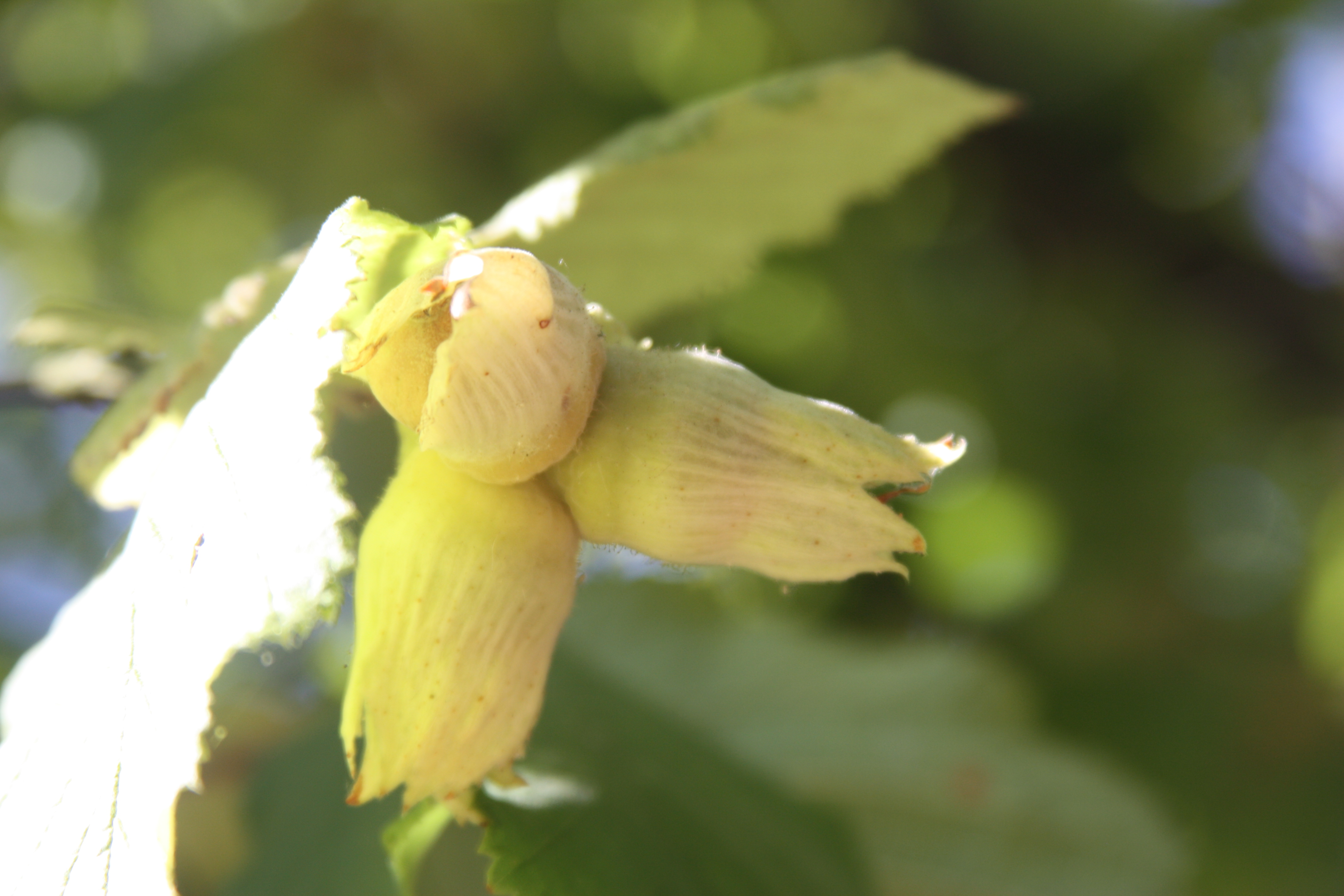 | | 1989 | DEVELOPED | | | | | | Cultivar | Growth dwarf, leaf very flat, nuts thin-shelled, light brown, very good flavor | 1452126 | PI 557154 |
| 241 | PI 557158 | 'Barr's Zellernuss' | Corylus avellana L. | England, United Kingdom | COR | 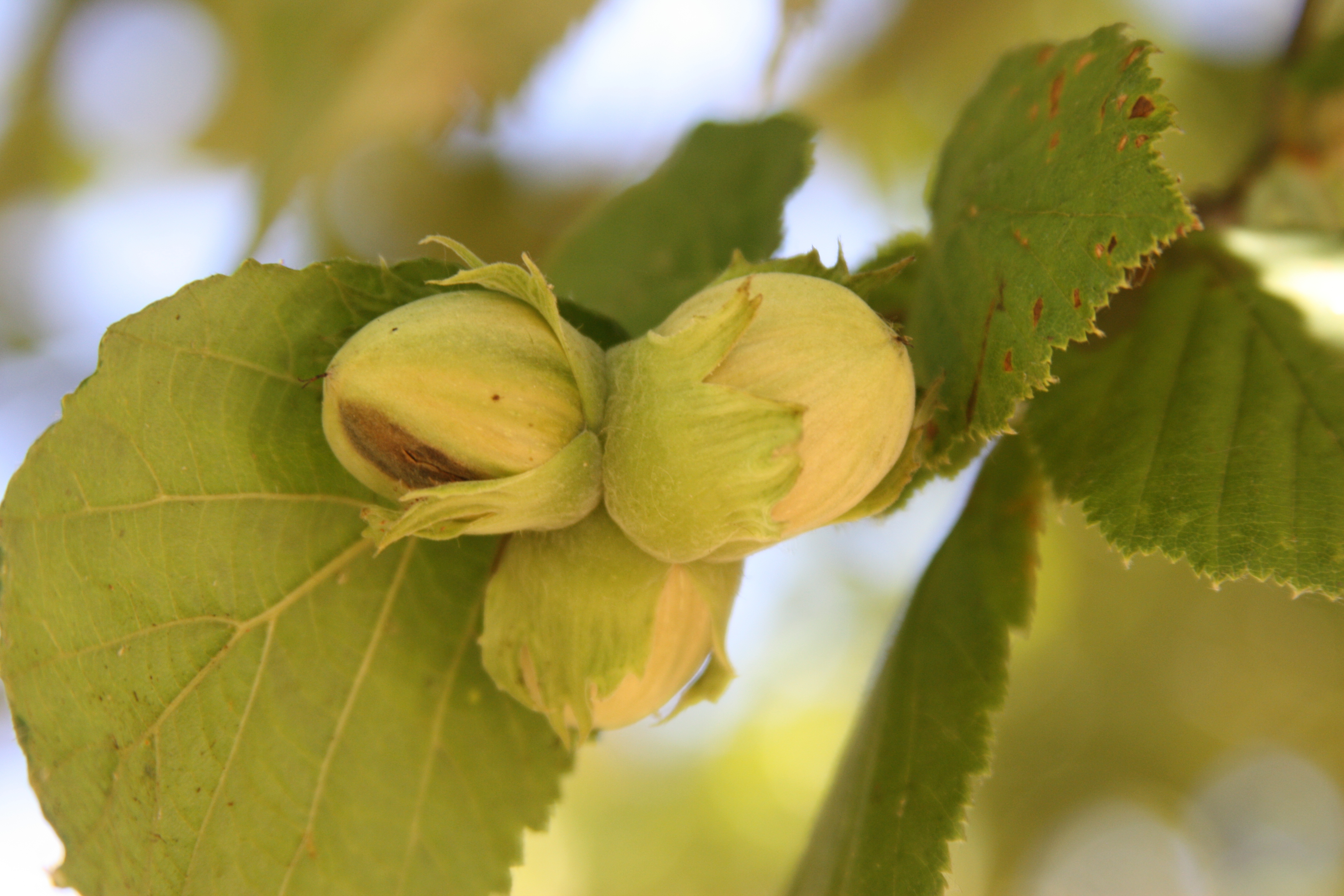 | | 1989 | DEVELOPED | | | | | | Cultivar | Nut thick shelled, small, light brown, banded. Kernel soft with average flavor | 1452130 | PI 557158 |
| 242 | PI 557159 | 'Pearson's Prolific' | Corylus avellana L. | England, United Kingdom | COR | 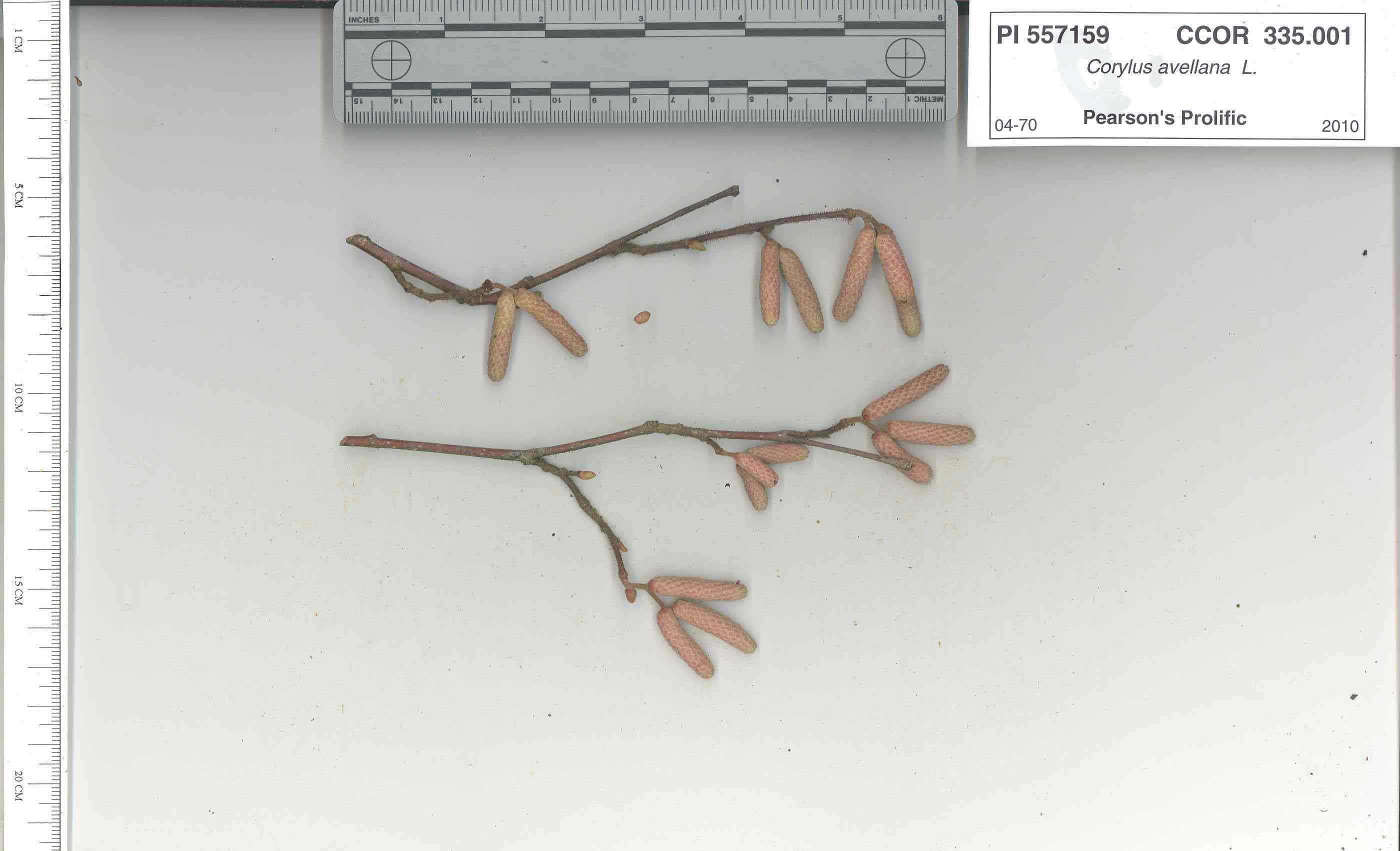 | | 1989 | DEVELOPED | | | | | | Cultivar | Vigorous, early, fair cropper, nuts large and plump, downy with a thick shell. Kernel with good flavor | 1452131 | PI 557159 |
| 243 | PI 557160 | 'Webb's Prize Cob' | Corylus avellana L. | England, United Kingdom | COR |  | | 1989 | DEVELOPED | | | | | | Cultivar | Ripens in mid-September, nuts are long | 1452132 | PI 557160 |
| 244 | PI 557162 | 'Garibaldi' | Corylus avellana L. | England, United Kingdom | COR |  | | 1989 | DEVELOPED | | | | | | Cultivar | Old cultivar, one of the hardiest known, nuts oblong and very tapering, very thin-shelled | 1452134 | PI 557162 |
| 245 | PI 557163 | 'Pinyolenc' | Corylus avellana L. | Spain | COR | 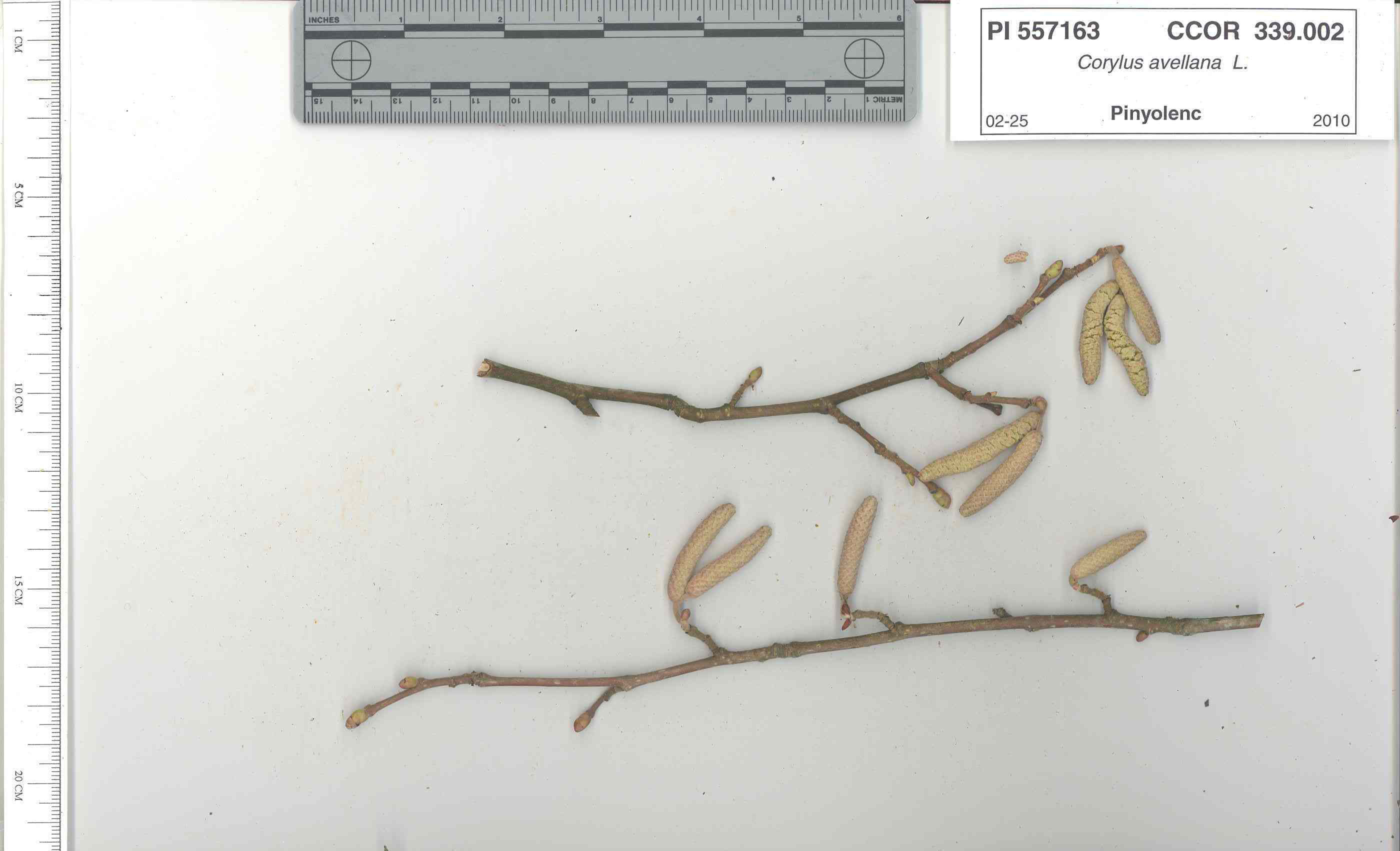 | | 1989 | DEVELOPED | | | | | | Cultivar | | 1452135 | PI 557163 |
| 246 | PI 557165 | 'Garrofi' | Corylus avellana L. | Spain | COR |  | | 1989 | DEVELOPED | | | | | | Cultivar | | 1452137 | PI 557165 |
| 247 | PI 557166 | 'Simon' | Corylus avellana L. | Spain | COR |  | | 1989 | DEVELOPED | | | | | | Cultivar | | 1452138 | PI 557166 |
| 248 | PI 557167 | 'Ratoli' | Corylus avellana L. | Spain | COR |  | | 1989 | DEVELOPED | | | | | | Cultivar | | 1452139 | PI 557167 |
| 249 | PI 557144 | 'Wanliss Pride' | Corylus avellana L. | New South Wales, Australia | COR |  | | 1988 | DEVELOPED | | | | | | Cultivar | Large, round, shiny nut | 1452116 | PI 557144 |
| 250 | PI 557114 | 'Bergeri' | Corylus avellana L. | Italy | COR |  | | 1988 | DEVELOPED | 1864 | | | | | Cultivar | Nut medium to large, long to conical, light brown with dark stripes in grooves | 1452086 | PI 557114 |
| 251 | PI 557115 | 'Ghirara' | Corylus avellana L. | Sicilia, Italy | COR |  | | 1988 | DEVELOPED | | | | | | Cultivar | Tree of good vigor, nuts midseason | 1452087 | PI 557115 |
| 252 | PI 557116 | 'Jean's' | Corylus avellana L. | Italy | COR | 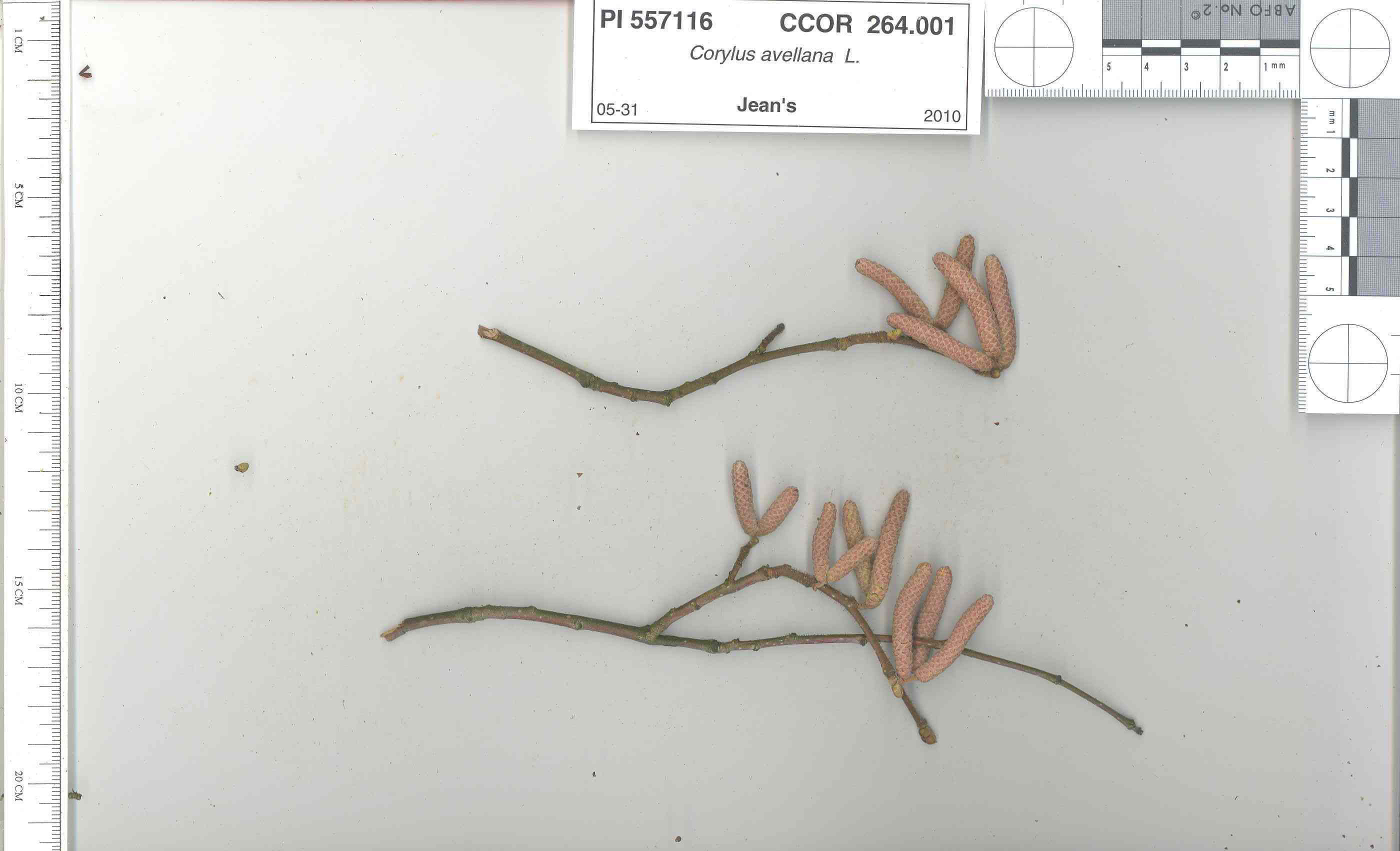 | | 1988 | DEVELOPED | | | | | | Cultivar | Origin of this cultivar is obscure | 1452088 | PI 557116 |
| 253 | PI 557117 | 'San Giovanni' | Corylus avellana L. | Italy | COR |  | | 1988 | DEVELOPED | | | | | | Cultivar | San Giovanni is vigorous and productive; but, it is not hardy. It exhibits premature budding, grows well in hilly soils, less high soils, and in the soils which are almost at sea level. The cultivar is widespread in the Naples and Salerno areas and in the well sheltered and exposed areas of Avellino. It is noted as having good yield on shelling (about 47-48%). Due to premature ripening tendency of the nuts, they are generally intended for tables and exported as dried fruit in shell. The nuts are rated as having low quality, being short and oval. | 1452089 | PI 557117 |
| 254 | PI 557118 | 'Tonda Rossa' | Corylus avellana L. | Italy | COR |  | | 1988 | DEVELOPED | | | | | | Cultivar | Low yielding, late to mature, no longer widely grown in Italy | 1452090 | PI 557118 |
| 255 | PI 557120 | 'Sant Pere' | Corylus avellana L. | Spain | COR |  | | 1988 | DEVELOPED | | | | | | Cultivar | | 1452092 | PI 557120 |
| 256 | PI 557129 | 'Restiello' | Corylus avellana L. | Spain | COR | 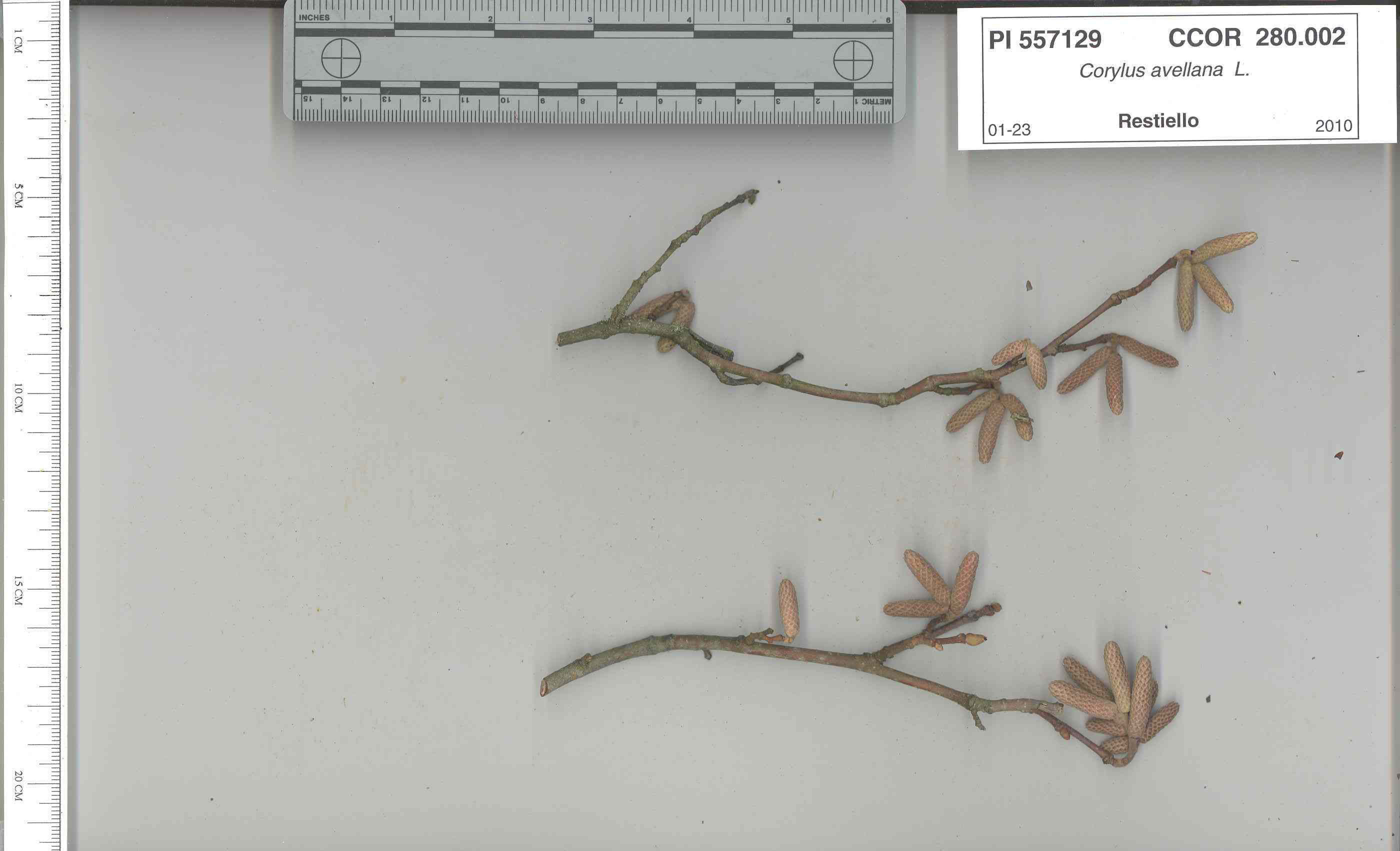 | | 1988 | DEVELOPED | | | | | | Cultivar | | 1452101 | PI 557129 |
| 257 | PI 557122 | C. avellana B-3 | Corylus avellana L. | North Macedonia | COR |  | | 1988 | COLLECTED | | Pelagonia Region | | | | Breeding material | | 1452094 | PI 557122 |
| 258 | PI 557125 | C. avellana B-4 | Corylus avellana L. | North Macedonia | COR | 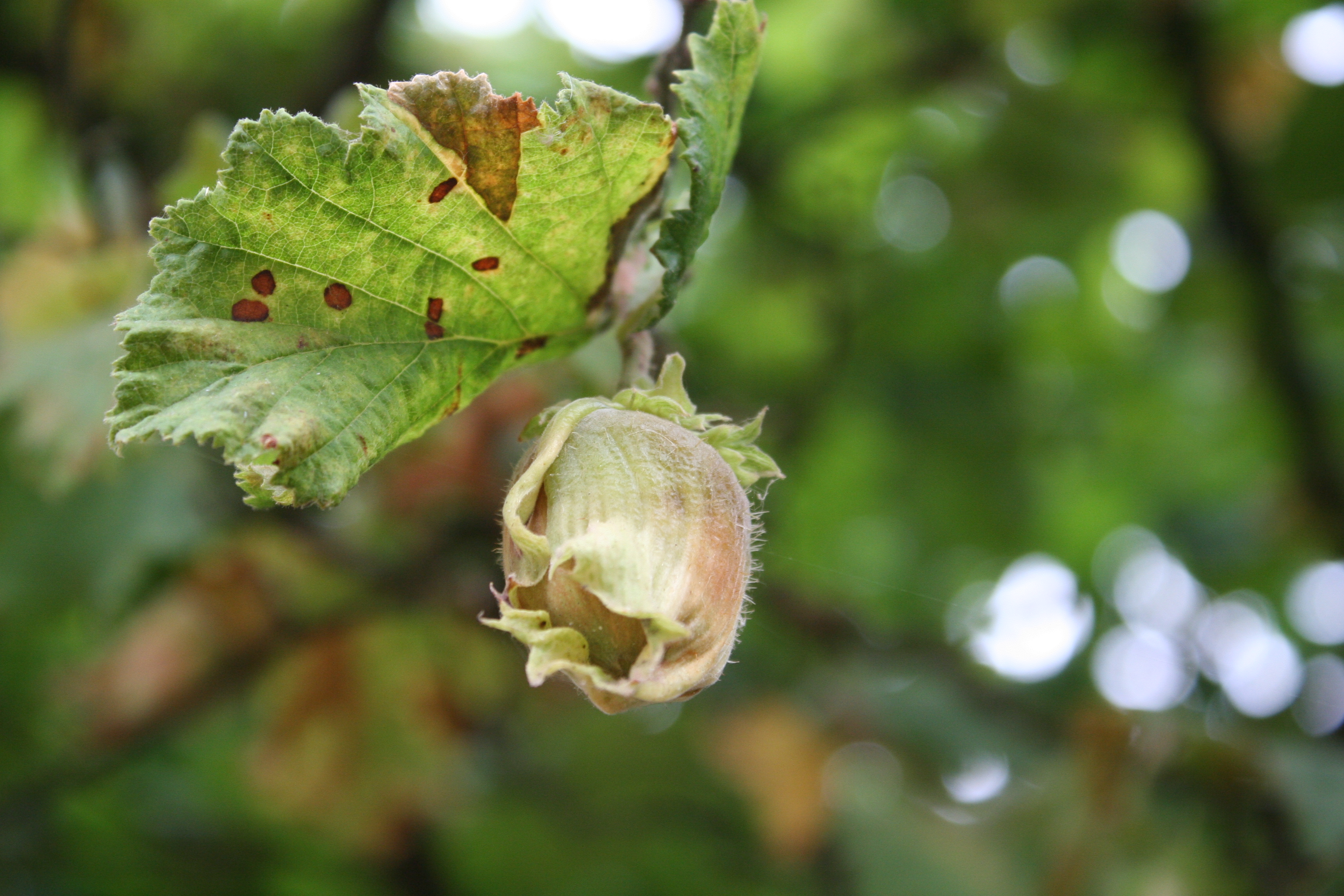 | | 1988 | COLLECTED | | Pelagonia Region | | | | Breeding material | | 1452097 | PI 557125 |
| 259 | PI 557104 | 'Negret Primerenc' | Corylus avellana L. | Spain | COR | 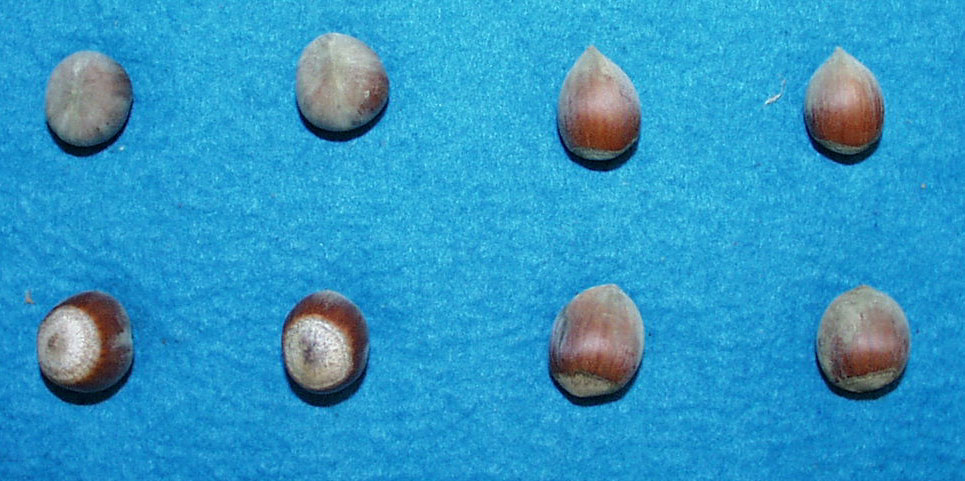 | | 1988 | DEVELOPED | | | | | | Cultivar | | 1452076 | PI 557104 |
| 260 | PI 557107 | 'Culpla' | Corylus avellana L. | Spain | COR | 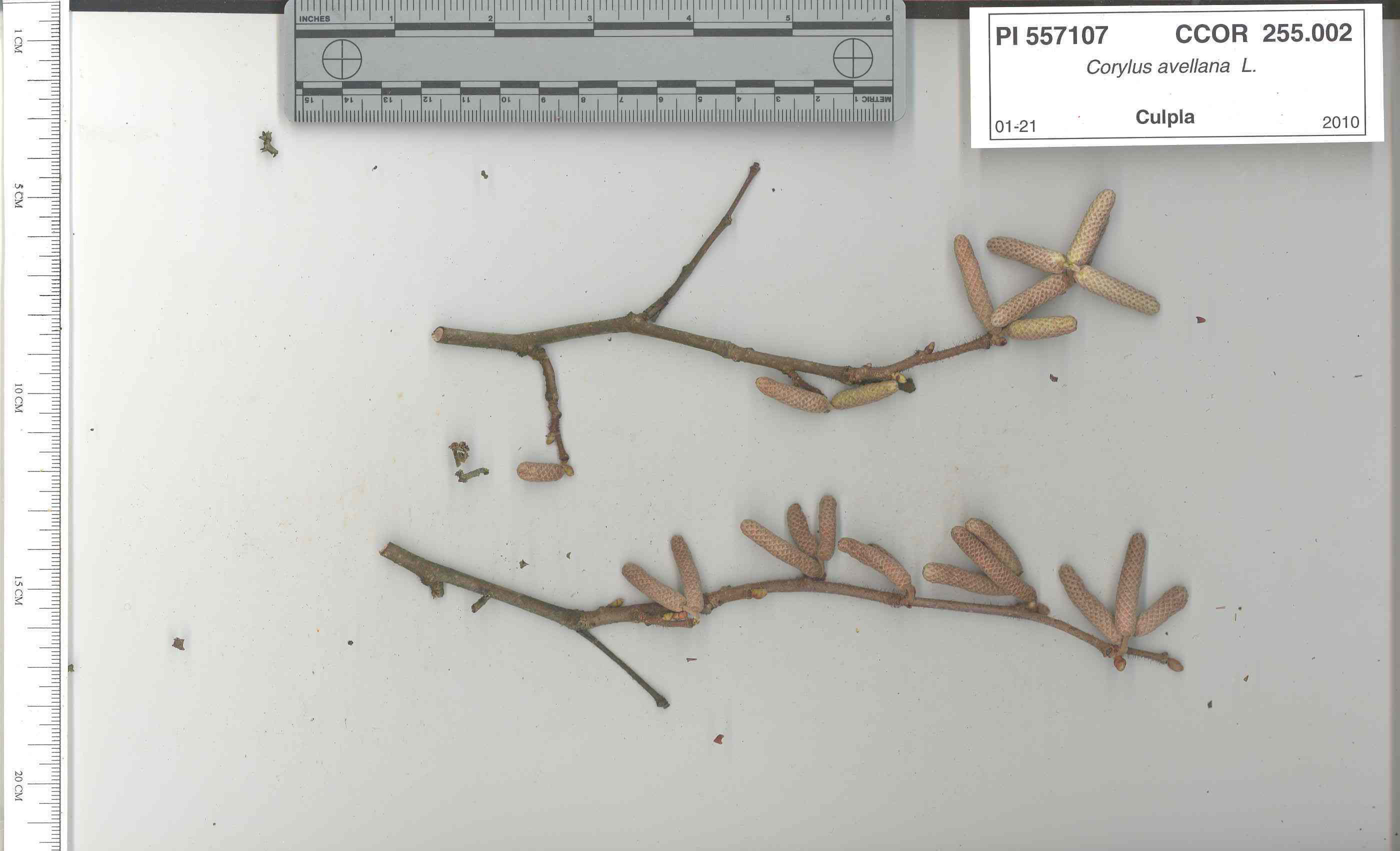 | | 1988 | DEVELOPED | | | | | | Cultivar | Originated in Marsa, cultivated from Priorat to Vandellos | 1452079 | PI 557107 |
| 261 | PI 557108 | 'Artellet' | Corylus avellana L. | Spain | COR |  | | 1988 | DEVELOPED | | | | | | Cultivar | Early, excellent producer | 1452080 | PI 557108 |
| 262 | PI 557109 | 'Closca Molla' | Corylus avellana L. | Spain | COR |  | | 1988 | DEVELOPED | | | | | | Cultivar | | 1452081 | PI 557109 |
| 263 | PI 557110 | 'Trenet' | Corylus avellana L. | Spain | COR |  | | 1988 | DEVELOPED | | | | | | Cultivar | | 1452082 | PI 557110 |
| 264 | PI 557112 | 'Ros' | Corylus avellana L. | Spain | COR | 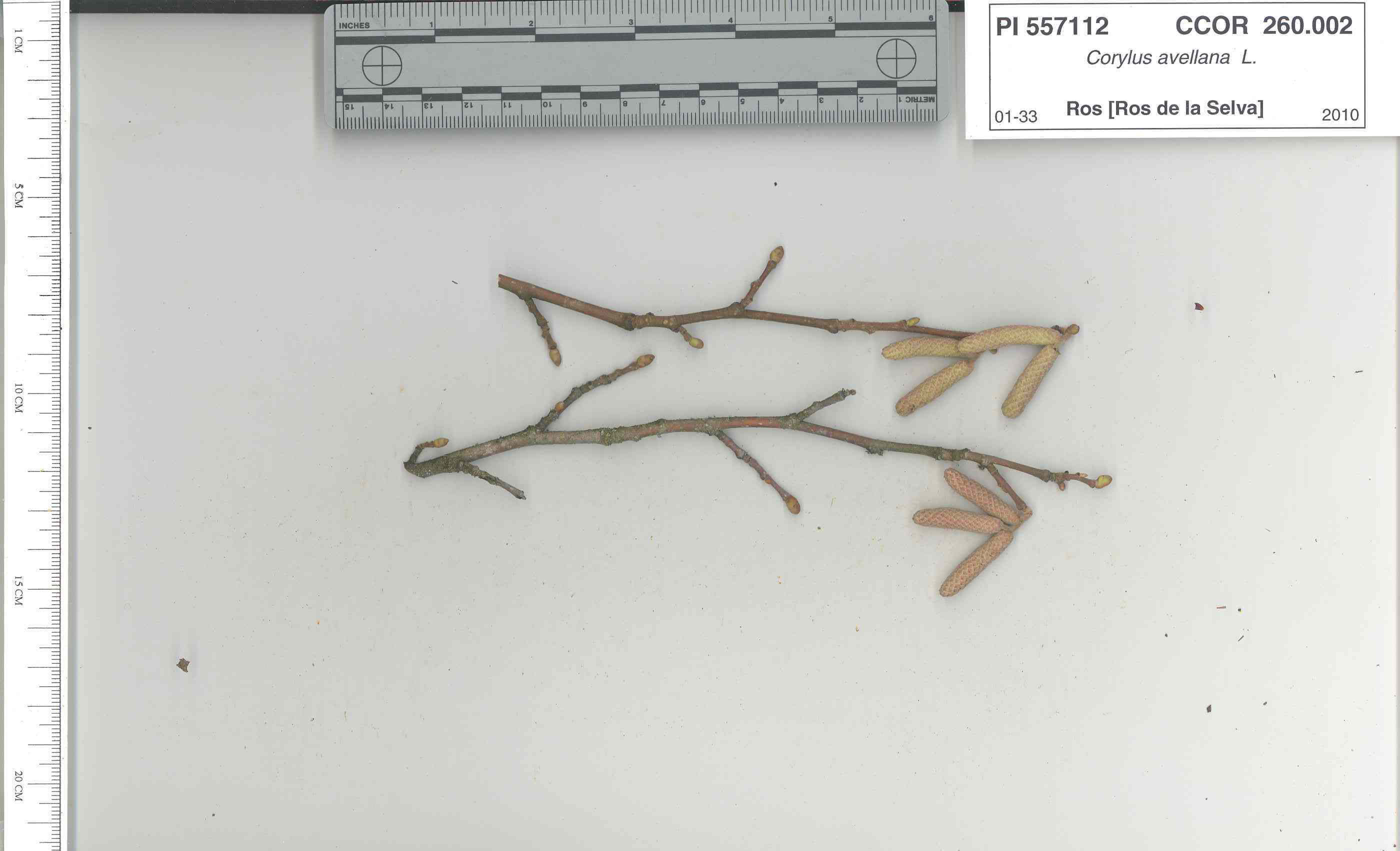 | | 1988 | DEVELOPED | | | | | | Cultivar | | 1452084 | PI 557112 |
| 265 | PI 557113 | 'Rosset' | Corylus avellana L. | Spain | COR | 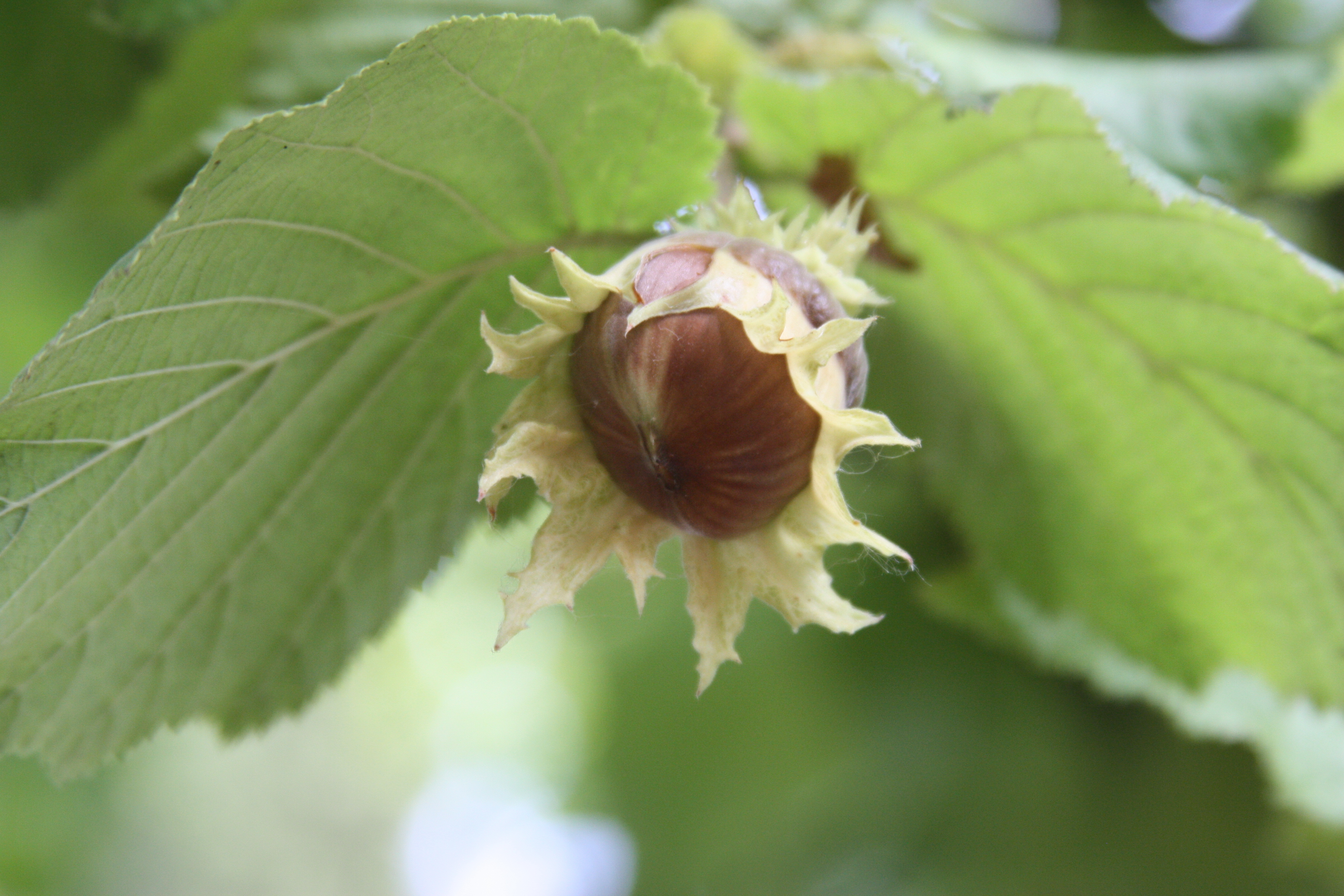 | | 1988 | DEVELOPED | | | | | | Cultivar | | 1452085 | PI 557113 |
| 266 | PI 557131 | 'Brixley's New' | Corylus avellana L. | England, United Kingdom | COR |  | | 1988 | DEVELOPED | | | | | | Cultivar | | 1452103 | PI 557131 |
| 267 | PI 557135 | 'Freehusker' | Corylus avellana L. | California, United States | COR |  | | 1988 | DEVELOPED | | | | | | Cultivar | From Brooks and Olmo: Self Husker (synonym=Freehusker).-Originated in Newberg, Oregon, by A.B. Scherf. Introduced in 1940. Chance seedling; discovered in late 1930s. Nut: falls free from husk; shell very thin; resembles Du Chilly. Tree: moderately vigorous, upright grower; bears annually, produces one to two nuts per cluster. Now obsolete. | 1452107 | PI 557135 |
| 268 | PI 557136 | 'Lyons' | Corylus avellana L. | California, United States | COR |  | | 1988 | DEVELOPED | | | | | | Cultivar | | 1452108 | PI 557136 |
| 269 | PI 557137 | Macrocarpa | Corylus avellana L. | Germany | COR | 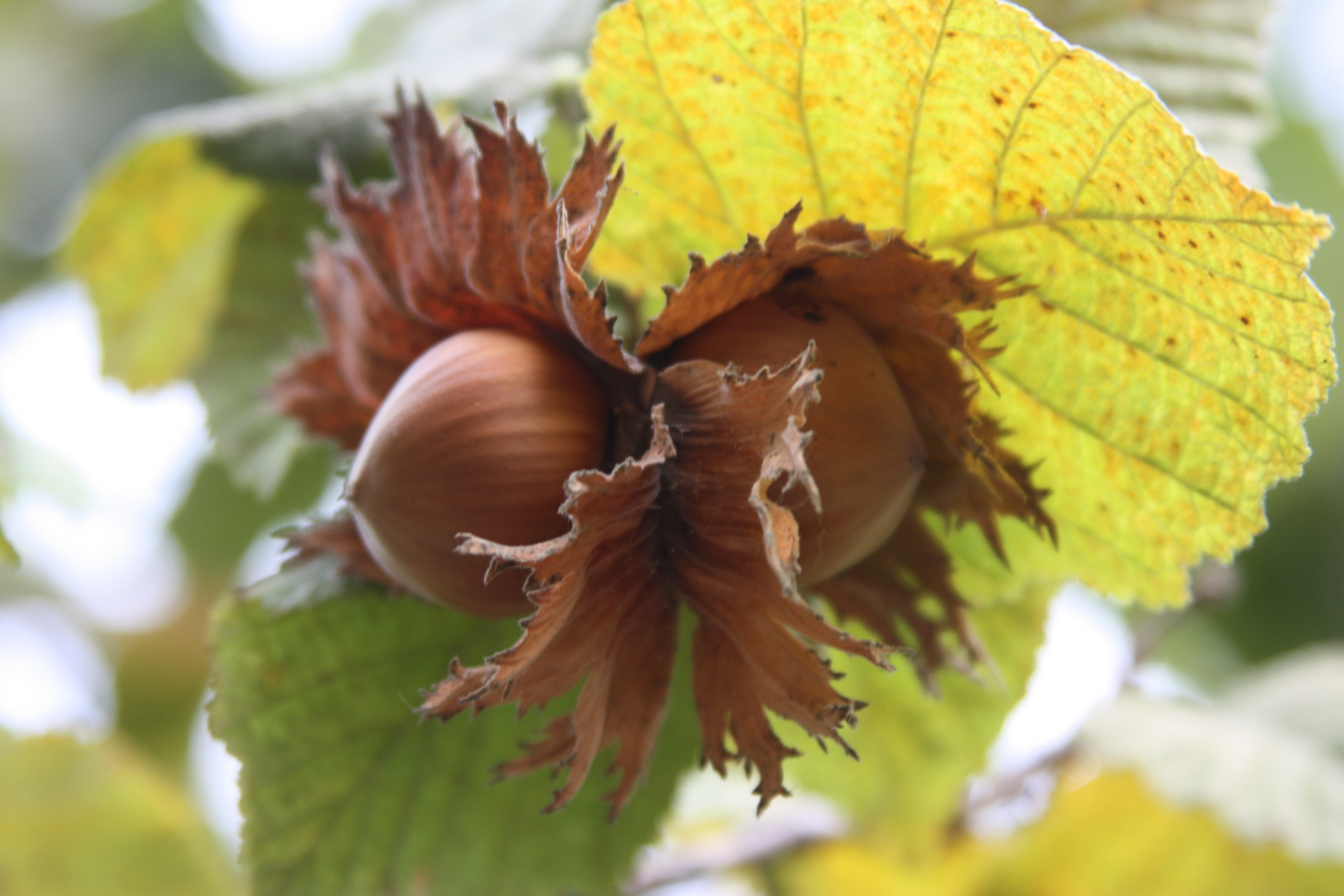 | | 1988 | DEVELOPED | | | | | | Cultivar | | 1452109 | PI 557137 |
| 270 | PI 557138 | 'Nixon' | Corylus avellana L. | California, United States | COR | 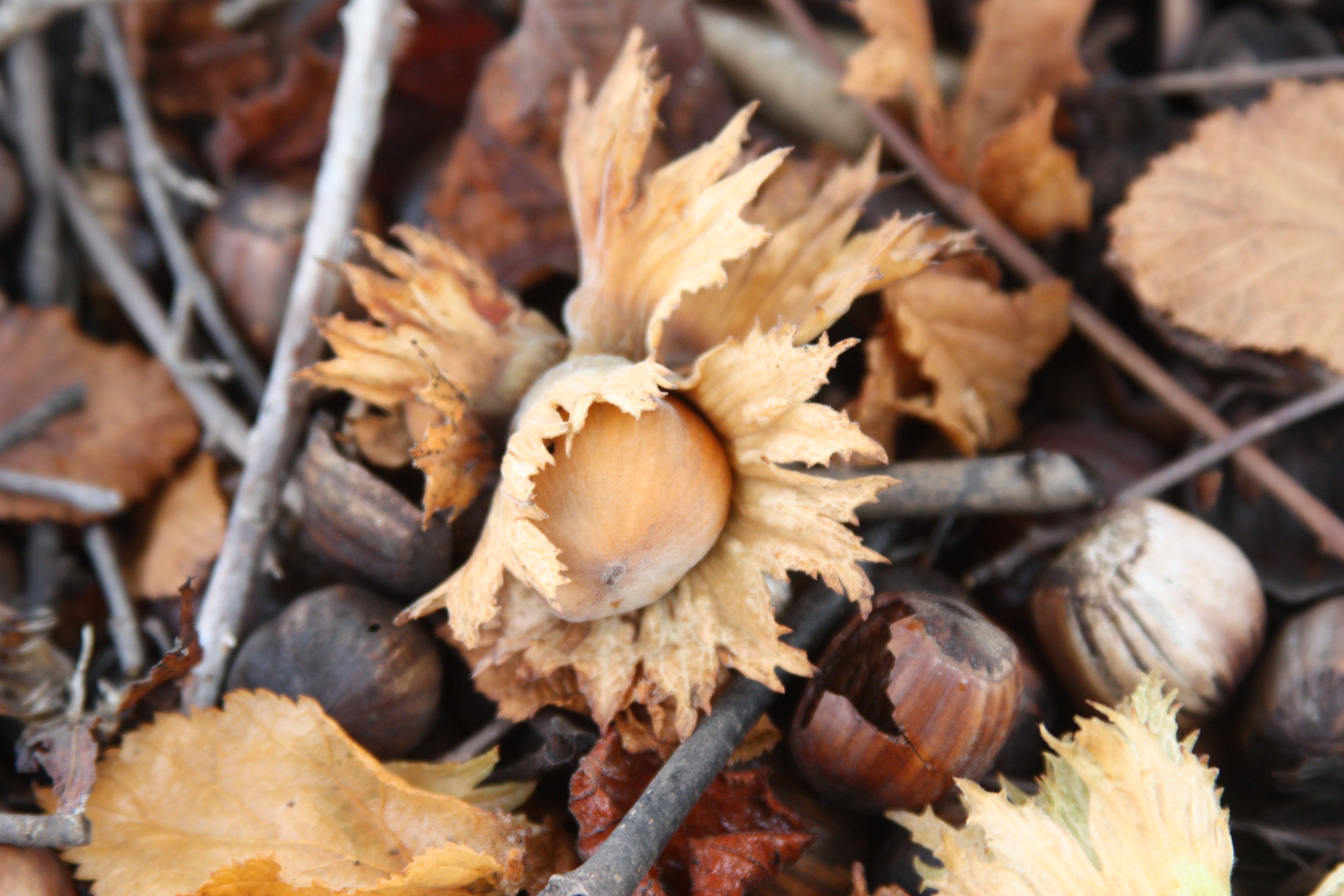 | | 1988 | DEVELOPED | | | | | | Cultivar | | 1452110 | PI 557138 |
| 271 | PI 557139 | 'Noce Lunga' | Corylus avellana L. | Italy | COR |  | | 1988 | DEVELOPED | 1905 | | | | | Cultivar | Moderately vigorous, open spreading. Light producer | 1452111 | PI 557139 |
| 272 | PI 557140 | 'Nottingham' | Corylus avellana L. | England, United Kingdom | COR |  | | 1988 | DEVELOPED | | | | | | Cultivar | Nottingham is an old cultivar that is becoming quite popular in the Pacific Northwest as a pollinizer for Barcelona. Its nut is typically Aveline in appearance, but, it differs from the other members of the group because its tree is taller and more vigorous. Also, Nottingham nuts are generally found in clusters of six to eight. These nuts are pointed at each end and broader at the shoulder than at the base. The husk is approximately one-third longer than the nut. It is pubescent and very granular. Nottingham tree is vigorous, upright, and moderately productive. Catkins are produced in abundance and they are found to be moderately hardy. | 1452112 | PI 557140 |
| 273 | PI 557100 | 'Ugbrooke' | Corylus avellana L. | New Zealand | COR |  | | 1988 | DEVELOPED | | | | | | Cultivar | | 1452072 | PI 557100 |
| 274 | PI 557099 | 'Du Chilly' | Corylus avellana L. | France | COR |  | | 1988 | DEVELOPED | | | | | | Cultivar | Grown extensively in Oregon and Washington as a standard cultivar and as a pollinizer for Barcelona. Its popularity stems from the nature of the tree, which is vigorous, productive, large, and handsome. The thin-shelled and high quality characteristics of the nut also contribute to the cultivar's popularity. The tree is late blooming, an ideal feature for planting with Barcelona for pollinating the late flowers. The nuts are large, long, and flattened. About half the nuts drop freely from the husk, while the remainder must be husked by hand. The shell of Du Chilly is medium thick and slightly rough. The husk is one-third to three-fourths times longer than the nut. From Brooks and Olmo: (synonym=Kentish Cob).-Orig. in Kent, England. Introd. to the U.S. by Felix Gillet in 1870s, trees first offered for sale in 1887. Nut: medium-large (3.4 g), long, brown; 48% kernel by weight, pellicle not removed by dry heat; husk longer than nut, 60% freehusking; matures after Barcelona. Tree: low vigor, semi-erect, productive. Susceptible to eastern filbert blight, moderately resistant to big bud mites. Incompatibility alleles S10 S14. | 1452071 | PI 557099 |
| 275 | PI 557084 | 'Blumberger Zellernuss' | Corylus avellana L. | Germany | COR |  | | 1987 | DEVELOPED | | | | | | Cultivar | Very vigorous, poor cropper, nut pointed and small, dull yellow in color, kernel very oily and firm | 1452056 | PI 557084 |
| 276 | PI 557085 | 'Gustav's Zellernuss' | Corylus avellana L. | Germany | COR |  | | 1987 | DEVELOPED | | | | | | Cultivar | Tree very vigorous and upright, poor, early crop, nuts small, dull, shell medium thick | 1452057 | PI 557085 |
| 277 | PI 557086 | 'Louisen's Zellernuss' | Corylus avellana L. | Germany | COR | 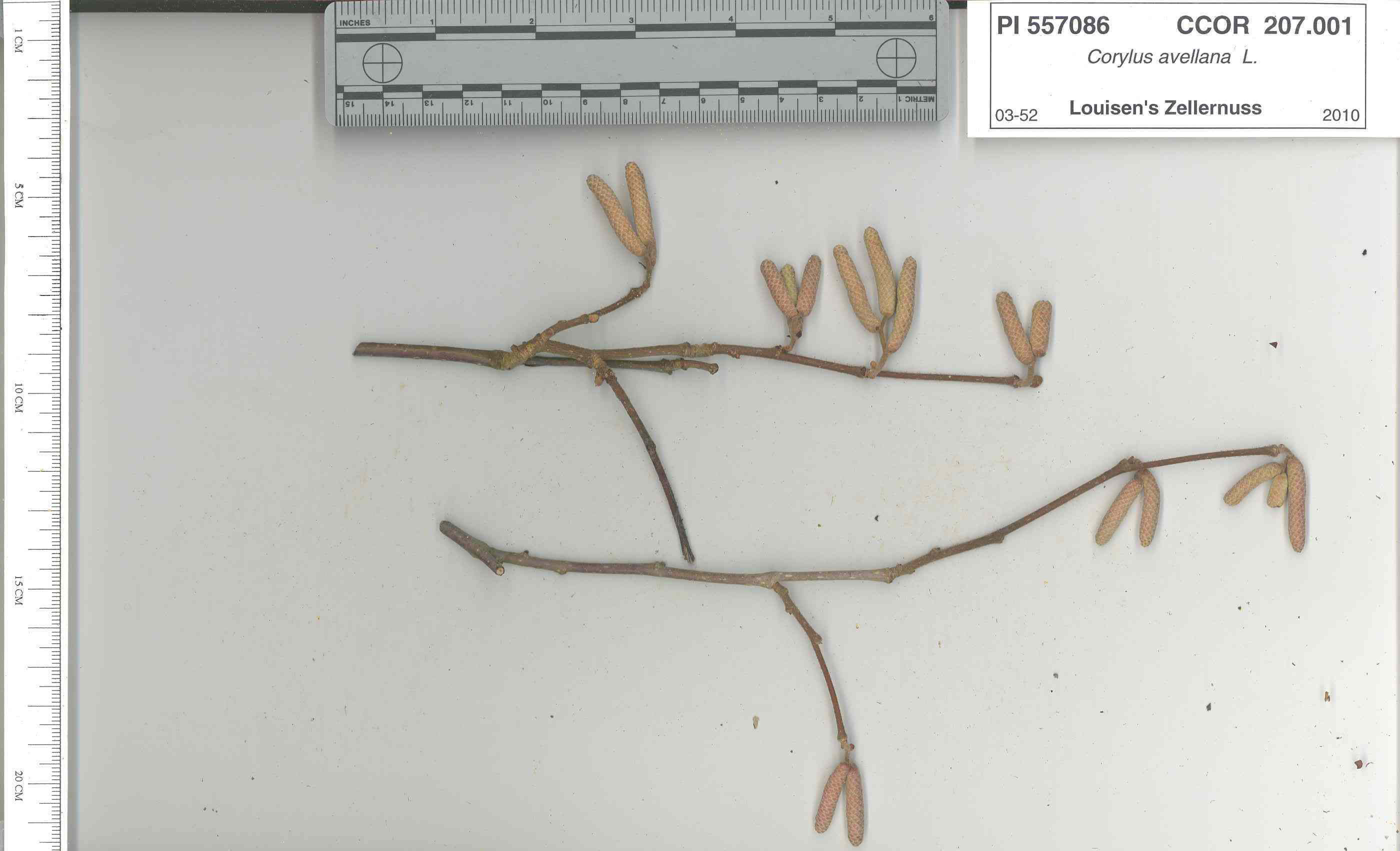 | | 1987 | DEVELOPED | NEAR 1877 | | | | | Cultivar | Medium cropper, nut round and thick-shelled. Replaced 1/93 | 1452058 | PI 557086 |
| 278 | PI 557087 | 'Truchsess' Zellernuss' | Corylus avellana L. | Germany | COR |  | | 1987 | DEVELOPED | | | | | | Cultivar | Long nut, thick shell, late maturing | 1452059 | PI 557087 |
| 279 | PI 557088 | 'White Aveline' | Corylus avellana L. | France | COR |  | | 1987 | DEVELOPED | | | | | | Cultivar | White Aveline is one of the oldest hazelnuts and has been grown for several centuries. It is the C. tubulosa alba of the botanists. It is an excellent pollinizer and the catkins are abundant and hardy. Because the nuts are small and the tree is moderately vigorous, the cultivar 's commercial value is doubtful. However, the cultivar is good for home gardening due to the thin shell and high quality of the nut. The husk is pubescent and granular. It is twice as long as the nut, and often split down one side. The nuts, often found in clusters of one to seven, usually three to four, are bluntly pointed, slightly grooved, dull brown, with occasional fainted stripe of darker brown. The base of the nut is bluntly pointed to rounded. The shell is a trifle thicker than some of the other cultivars but the nuts are only medium in size. The kernel is long, regular, with a curved suture running from the base to the apex. White Aveline is rated as having excellent flavor and a great producer. In addition, the nut keep well in the husk. | 1452060 | PI 557088 |
| 280 | PI 557089 | 'Burchardt's Zellernuss' | Corylus avellana L. | Germany | COR |  | | 1987 | DEVELOPED | | | | | | Cultivar | Early, medium to poor crop, lots of suckers, kernel tough with poor flavor | 1452061 | PI 557089 |
| 281 | PI 557091 | 'Ludolph's Zellernuss' | Corylus avellana L. | Germany | COR |  | | 1987 | DEVELOPED | | | | | | Cultivar | Nut has very broad base, sharply tapering, with a thick shell. Kernel bland-flavored | 1452063 | PI 557091 |
| 282 | PI 557092 | 'Cannon Ball' | Corylus avellana L. | England, United Kingdom | COR | 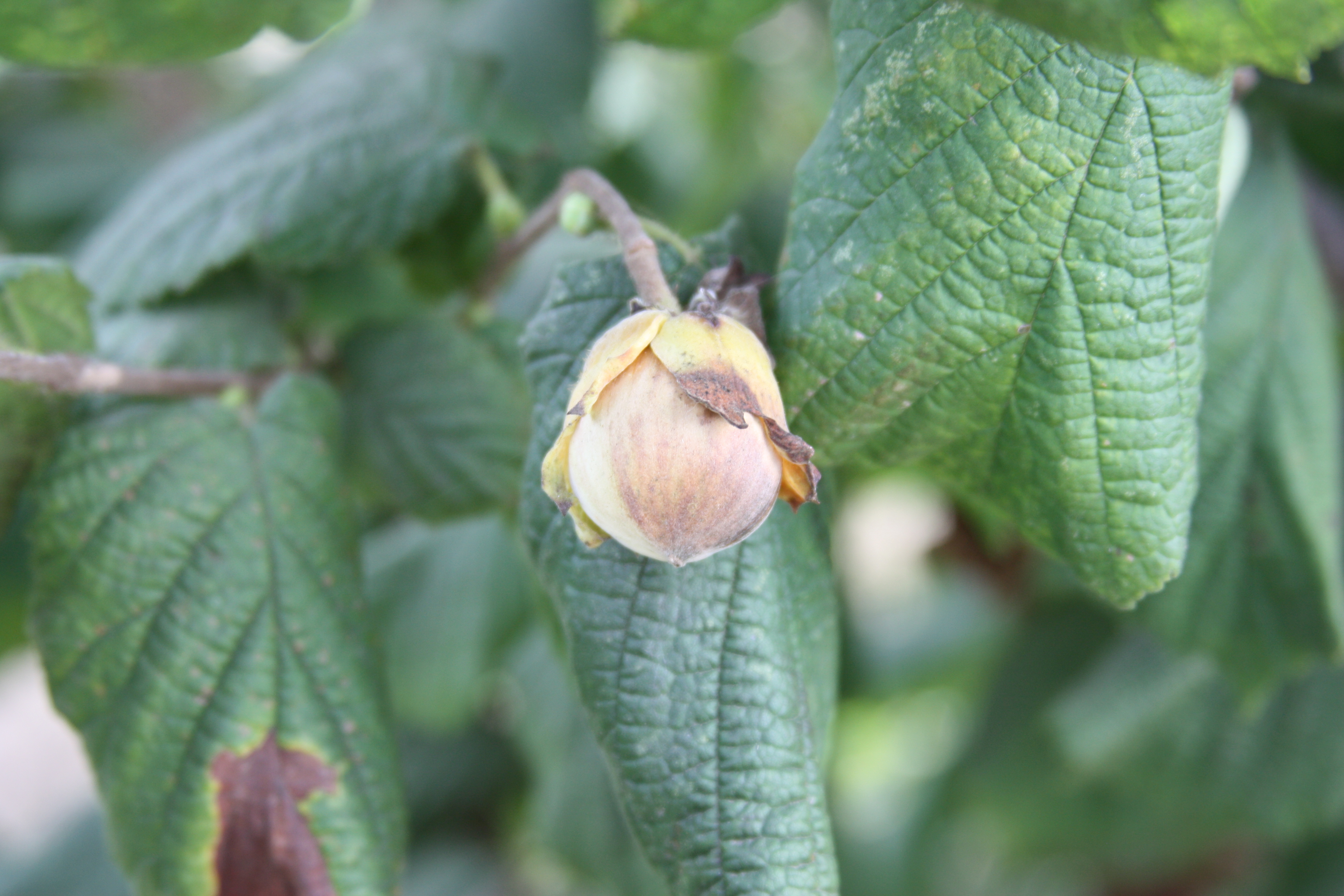 | | 1987 | DEVELOPED | | | | | | Cultivar | Ripens very late, end of September to the beginning of October | 1452064 | PI 557092 |
| 283 | PI 557093 | 'Mogulnuss' | Corylus avellana L. | England, United Kingdom | COR | 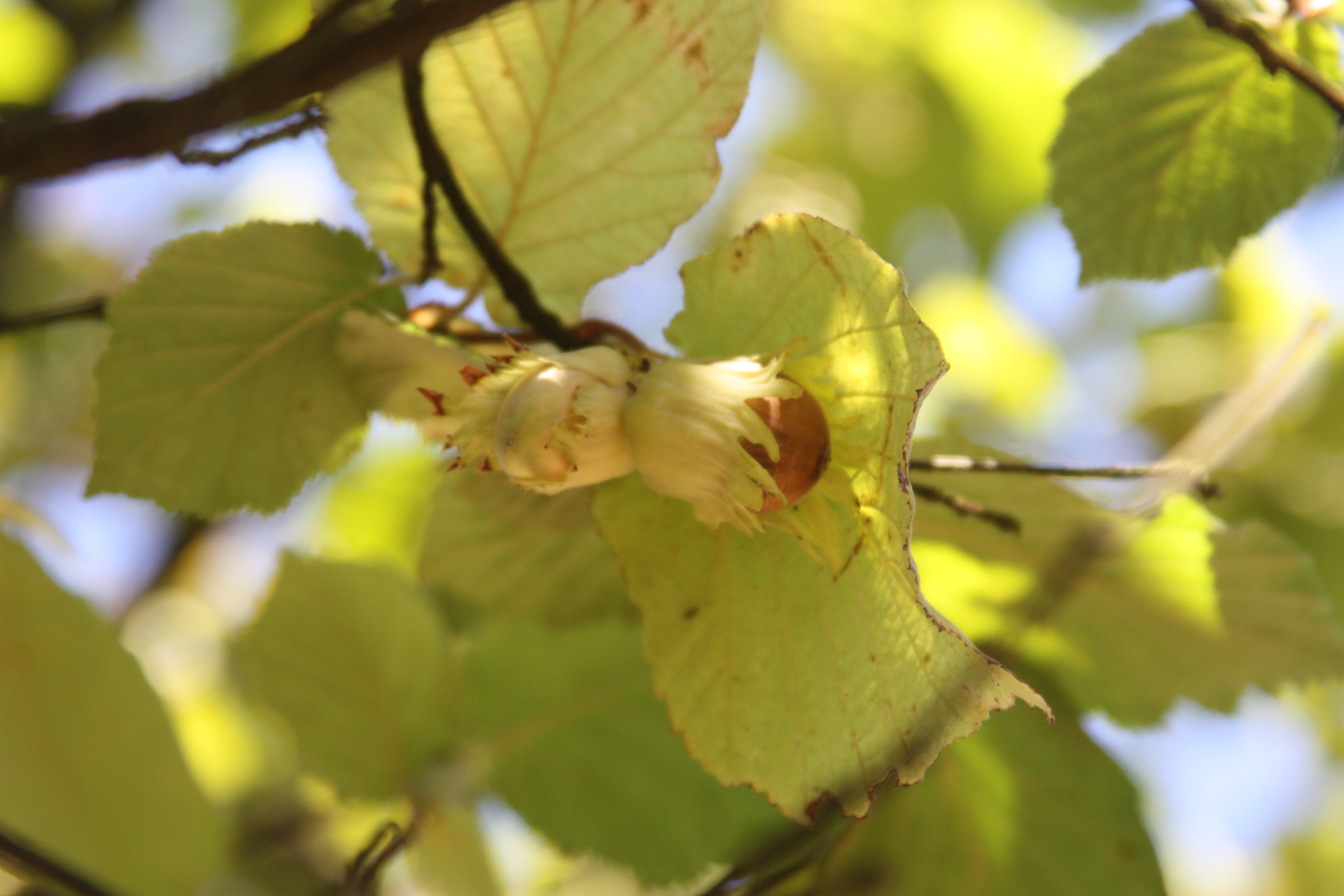 | | 1987 | DEVELOPED | | | | | | Cultivar | Tree compact and vigorous, early cropper, nuts rather long and nearly enclosed, kernels with good flavor | 1452065 | PI 557093 |
| 284 | PI 557094 | 'Buttner's Zellernuss' | Corylus avellana L. | Germany | COR |  | | 1987 | DEVELOPED | | | | | | Cultivar | Fairly good cropper, spreading to moderate growth, nut round, downy, with light banding | 1452066 | PI 557094 |
| 285 | PI 557097 | 'Frizzled Filbert' | Corylus avellana L. | England, United Kingdom | COR |  | | 1987 | DEVELOPED | | | | | | Cultivar | Nut small, thin and brown, no banding, ridged surface, nut has poor flavor and woody texture | 1452069 | PI 557097 |
| 286 | PI 557098 | 'Red Filbert' | Corylus avellana L. | England, United Kingdom | COR | 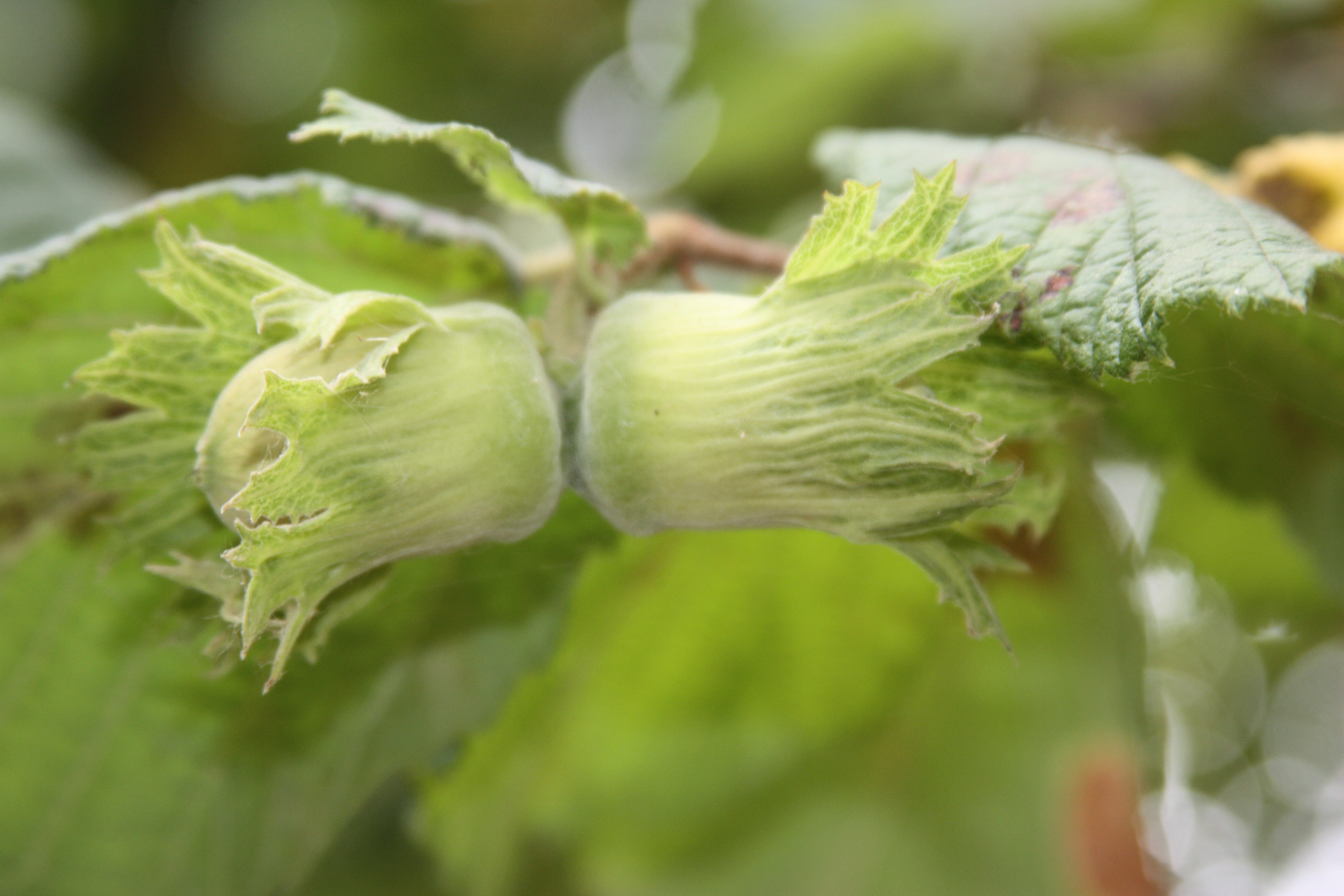 | | 1987 | DEVELOPED | | | | | | Cultivar | Upright, compact growth, nut large, brown with dark brown bands, shell medium thickness | 1452070 | PI 557098 |
| 287 | PI 557080 | Ala-Kieri, Finland | Corylus avellana L. | Finland | COR |  | | 1986 | COLLECTED | 02/05/1986 | Ala Kieri, Lappa, South-Western Finland | 61.08333000, 21.75000000 | | | Wild material | | 1452052 | PI 557080 |
| 288 | PI 557079 | Arneson Rootstock | Corylus avellana L. | Oregon, United States | COR |  | | 1985 | DEVELOPED | | | | | | Breeding material | | 1452051 | PI 557079 |
| 289 | PI 557078 | 'Cutleaf' | Corylus avellana L. | England, United Kingdom | COR |  | | 1984 | COLLECTED | | | | | | Breeding material | Ornamental filbert | 1452050 | PI 557078 |
| 290 | PI 271105 | 'Imperial de Trebizonde' | Corylus avellana L. | Turkey | COR |  | | 1983 | DEVELOPED | | | | | | Cultivar | Tree medium sized, growth irregular and scraggly, productive. Nuts large, oval at base tapering sharply to a point | 1203944 | PI 271105 |
| 291 | PI 557051 | 'Imperatrice Eugenie' | Corylus avellana L. | England, United Kingdom | COR |  | | 1983 | DEVELOPED | | | | | | Cultivar | Excellent as a pollenizer for Barcelona in Oregon | 1452023 | PI 557051 |
| 292 | PI 557052 | 'Royal' | Corylus avellana L. | Oregon, United States | COR |  | | 1983 | DEVELOPED | | | | | | Cultivar | From Brooks and Olmo: Originated in Stayton, Oregon, by E. Roy. Introduced in 1934 by H.L. Pearcy Nursery, Salem, Oregon. Barcelona x Daviana; discovered in 1930. Nut: larger than either parent; shell thin; kernel large; color and markings similar toDaviana; ripens about same time as Barcelona. Tree: early production; sheds pollen medium to early. Susceptible to big bud mite and eastern filbert blight. Incompatibility alleles S1 S3. | 1452024 | PI 557052 |
| 293 | PI 557054 | Romisondo 101 | Corylus avellana L. | Italy | COR |  | | 1983 | DEVELOPED | | | | | | Cultivar | | 1452026 | PI 557054 |
| 294 | PI 557055 | 'Ribet' | Corylus avellana L. | Spain | COR |  | | 1983 | DEVELOPED | | | | | | Cultivar | | 1452027 | PI 557055 |
| 295 | PI 557060 | OSU 54-39 | Corylus avellana L. | Turkey | COR |  | | 1983 | DEVELOPED | | Giresun Hazelnut Research Institute | 40.91500000, 38.38900000 | 80 | | Breeding material | From Giresun, Turkey | 1452032 | PI 557060 |
| 296 | PI 557061 | OSU 54-41 | Corylus avellana L. | Turkey | COR |  | | 1983 | DEVELOPED | | Giresun Hazelnut Research Institute | 40.91500000, 38.38900000 | 80 | | Breeding material | | 1452033 | PI 557061 |
| 297 | PI 557062 | OSU 54-42 | Corylus avellana L. | Turkey | COR | 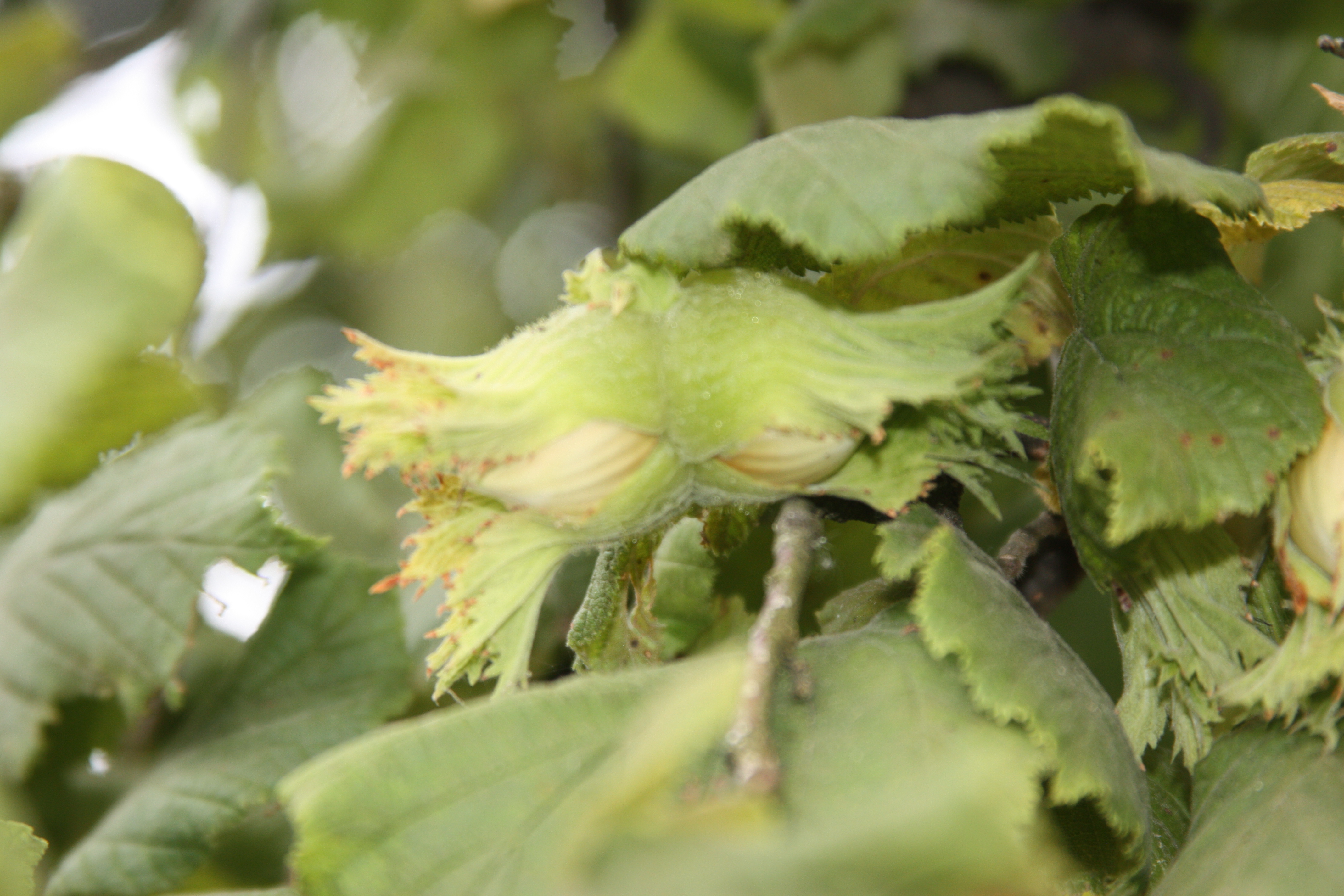 | | 1983 | DEVELOPED | | Giresun Hazelnut Research Institute | 40.91500000, 38.38900000 | 80 | | Breeding material | | 1452034 | PI 557062 |
| 298 | PI 557068 | OSU 54-60 | Corylus avellana L. | Turkey | COR |  | | 1983 | DEVELOPED | | Giresun Hazelnut Research Institute | 40.91500000, 38.38900000 | 80 | | Breeding material | | 1452040 | PI 557068 |
| 299 | PI 557069 | OSU 54-80 | Corylus avellana L. | Turkey | COR |  | | 1983 | DEVELOPED | | Giresun Hazelnut Research Institute | 40.91500000, 38.38900000 | 80 | | Breeding material | | 1452041 | PI 557069 |
| 300 | PI 557070 | OSU 54-81 | Corylus avellana L. | Turkey | COR |  | | 1983 | DEVELOPED | | Giresun Hazelnut Research Institute | 40.91500000, 38.38900000 | 80 | | Breeding material | | 1452042 | PI 557070 |
| 301 | PI 557071 | 'Fitzgerald' | Corylus avellana L. | Washington, United States | COR |  | | 1983 | DEVELOPED | | | | | | Cultivar | The parentage of this cultivar is unknown. It originated in Washougal, Washington, by Mr. D. Fitzgerald in 1936. The nut is round and very large. It is uniform in size and shape. Its base is flattened to concave and wide; its apex is rounded and grooved on the sides; and, it is tan to light brown and striped. The kernel has been described as rough, plump, angular, and pointed. It composes about 39% of the nut. It has a sweet flavor and is moderately oily. Many growers do not consider it attractive in appearance because of the adherence of the pellicle. | 1452043 | PI 557071 |
| 302 | PI 557072 | 'Tonda Gentile delle Langhe' | Corylus avellana L. | Italy | COR | 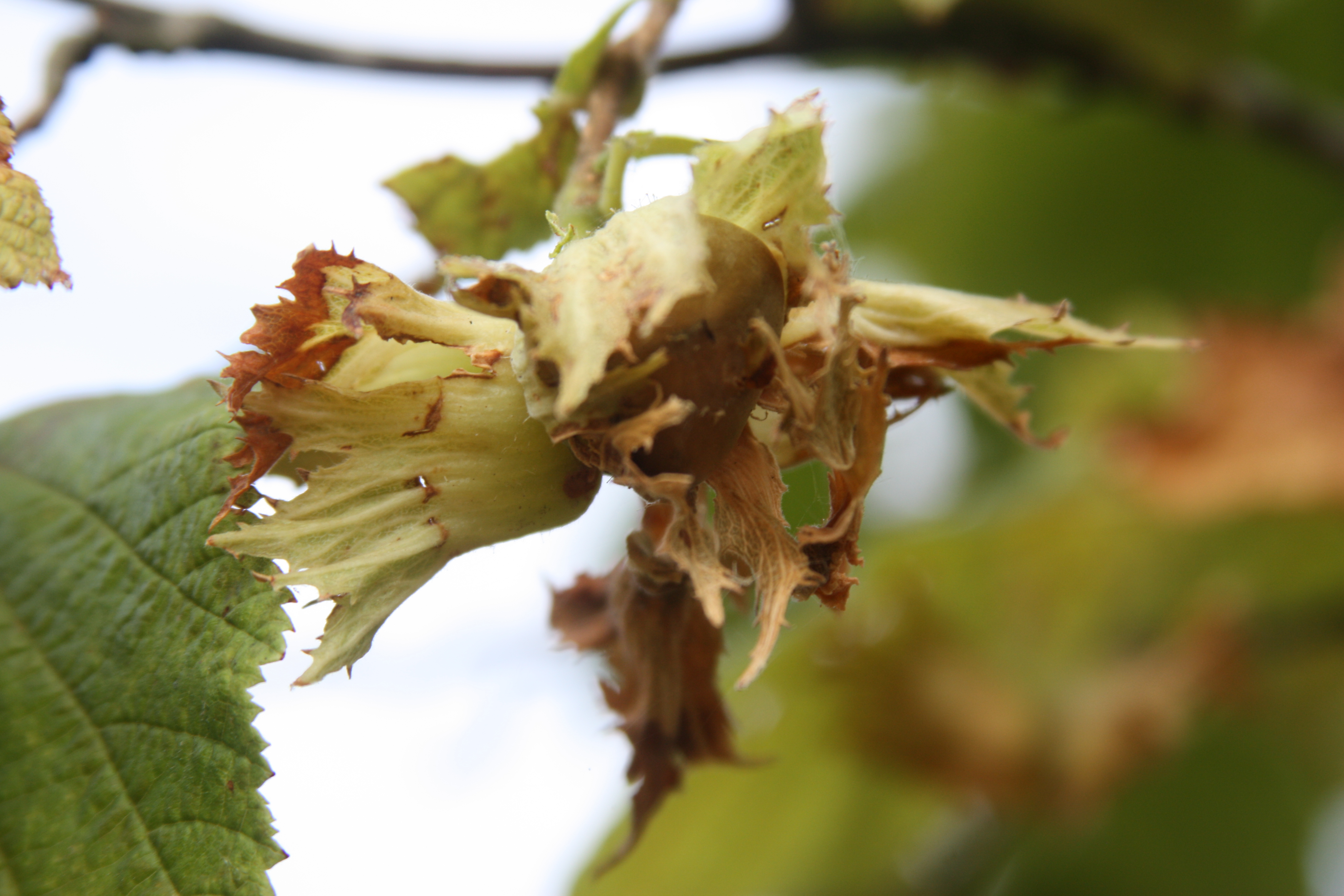 | | 1983 | DEVELOPED | | | | | | Cultivar | | 1452044 | PI 557072 |
| 303 | PI 557074 | 'Tonda Gentile delle Langhe' | Corylus avellana L. | Italy | COR |  | | 1983 | DEVELOPED | | | | | | Cultivar | | 1452046 | PI 557074 |
| 304 | PI 270338 | 'Morell' | Corylus avellana L. | Spain | COR |  | | 1981 | DEVELOPED | | | | | | Cultivar | | 1203374 | PI 270338 |
| 305 | PI 270339 | 'Ribet' | Corylus avellana L. | Spain | COR |  | | 1981 | DEVELOPED | | | | | | Cultivar | | 1203375 | PI 270339 |
| 306 | PI 271278 | 'Neue Riesennuss' | Corylus avellana L. | Germany | COR |  | | 1981 | DEVELOPED | | | | | | Cultivar | Early cropper, long nuts. | 1204107 | PI 271278 |
| 307 | PI 296204 | 'Camponica' | Corylus avellana L. | Italy | COR |  | | 1981 | DEVELOPED | | | | | | Cultivar | This cultivar resulted from a cross between C. avellana and C. maxima. Originally there were two different cultivars introduced under this name. The medium sized nut is striped, round, with Barcelona shape, and contains a cavity of medium size. It has the flavor of Barcelona. The nuts are used for direct consumption as well as for the industrial manufacturing of sweets with base of chocolate and hazelnuts. The cultivar is widely spread in area of promiscuous culture because it adapts to a more vast range of climatic surroundings and prospers well even in soil tending toward clay, but not excessively compact. It has good producing characteristics. The nuts are borne on the plant scattered and singly and up to 30 kilogram of dry nuts per plant are produced when they mature in the second half of August. | 1224230 | PI 296204 |
| 308 | PI 296207 | 'Tonda di Giffoni' | Corylus avellana L. | Italy | COR |  | | 1981 | DEVELOPED | | | | | | Cultivar | This cultivar originated from the commune of Giffoni Valle Piana (in the province of Salero). It is also cultivated of the provinces of Avellino, Naples, Caserta, and even in the province of Catanzaro. In Campania it prevails over other cultivars in the new plantations and shows a good adaptation to flat lands, as well as to mid-hilly lands. The valuable characteristics if its fruit assure Tonda Di Giffoni the first place among the cultivars of Campania for the utilization by the sweet producin industry. It is possible to distinguish by its round shape and the right dimensions of the hazelnuts, and for the easy shelling. The yield on the shelling is approximately 46- 48%. | 1224232 | PI 296207 |
| 309 | PI 304632 | 'Palaz' | Corylus avellana L. | Turkey | COR | 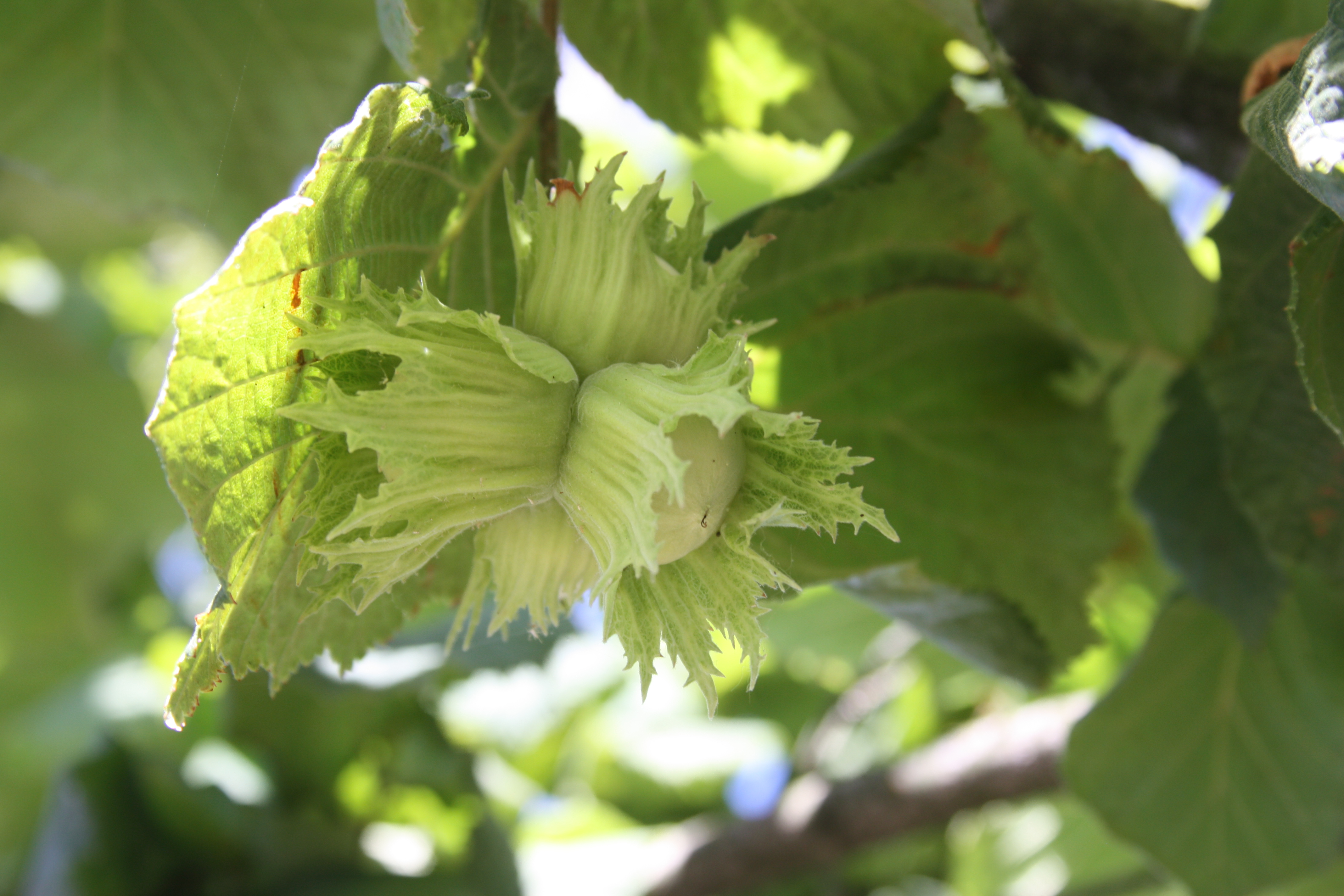 | | 1981 | DEVELOPED | | | | | | Cultivar | Cuttings received from School of Agriculture and Forestry, University of Thessaloniki, Greece by Q.B. Zielinski at Oregon State University in 1966. Grafted in at Wilsonville. -- from Maxine Thompson record notebook. | 1228650 | PI 304632 |
| 310 | PI 304633 | 'Sivri Ghiaghli' | Corylus avellana L. | Turkey | COR |  | | 1981 | DEVELOPED | | | | | | Cultivar | Cuttings received from School of Agriculture and Forestry, University of Thessaloniki, Greece by Q.B. Zielinski at Oregon State University in 1966. Grafted in at Wilsonville. -- from Maxine Thompson record notebook. | 1228651 | PI 304633 |
| 311 | PI 557027 | 'Hall's Giant' | Corylus avellana L. | Germany | COR |  | | 1981 | DEVELOPED | | | | | | Cultivar | Hall's Giant originated in 1788 with C. G. Bultner at Halle, Germany. This cultivar is still highly esteemed in Germany despite the fact that the tree is unproductive, lacking in vigor, and the catkins are subject to winter injury. It is spreading and dense, however. In addition, the husk remains green and fleshy. The nut is very even, broad at the base and bright golden with thick shell. The kernel is plump, white, oily, crisp with quite a good flavor. From Brooks and Olmo: (synonyms: Giant de Halle, Hallesche Riesen, Wunder aus Bollwiller). Originated in Germany or Alsace. Introduced to the U.S. by Felix Gillet about 1890. Nut: large (4.0 g), round-pointed, brown; shell thick; matures after Barcelona; 38% kernel by weight, pellicle removed by dry heat; husk longer than nut, 80% free-husking. Tree: vigorous, erect, not productive. Moderately resistant to eastern filbert blight, highly resistant to big bud mites. Recommended as late pollinizer, compatible with most cultivars. Incompatibility alleles S5 S15. | 1451999 | PI 557027 |
| 312 | PI 557028 | 'Montebello' | Corylus avellana L. | Italy | COR |  | | 1981 | DEVELOPED | | | | | | Cultivar | Moderately vigorous and productive, medium sized nuts, greyish-brown with distinct stripes | 1452000 | PI 557028 |
| 313 | PI 557029 | 'Gem' | Corylus avellana L. | Washington, United States | COR |  | | 1981 | DEVELOPED | | | | | | Cultivar | Gem originated in Washougal, Washington, by Dell M. Fitzgerald and was introduced in 1937 as Fitzgerald 18. Ten years later it was reintroduced under the name it holds today. Gem was selected in 1931 from a cross between the Barcelona and the Daviana. The cross resulted in the production of a large nut that resembles the Daviana. The kernel is also of superior quality, averaging about 40.8% of the nut. Gem tree is vigorous, upright, and able to hold catkins and shed the pollen over a longperiod of time. | 1452001 | PI 557029 |
| 314 | PI 557030 | 'Kruse' | Corylus avellana L. | Oregon, United States | COR |  | | 1981 | DEVELOPED | | | | | | Cultivar | Kruse was introduced by Homer A. Kruse, a pioneer filbert grower from the Wilsonville or Sherwood area. Kruse's first trees were planted in 1905. These were seedling trees from which he selected this cultivar in 1917. In contrast to what many may think, Mr. Kruse did not give the cultivar the name it holds today. Instead, the cultivar was named by C.A. Reed, a USDA horticulturist from Washington, DC. The Kruse tree is fairly vigorous, productive, producing large nuts of Barcelona type with very pronounced stripes. Its kernel quality is rated as good and the percent kernel ranges from 40.6 to 41.8%. One poor feature of Kruse is that it has a high proportion of split tips. This cracking along the shell in turn causes decay and or decomposition resulting in black tipped kernels. | 1452002 | PI 557030 |
| 315 | PI 557032 | 'Fitzgerald 20' | Corylus avellana L. | Washington, United States | COR |  | | 1981 | DEVELOPED | | | | | | Cultivar | The parentage of this cultivar is unknown. It originated in Washougal, Washington, by Mr. Fitzgerald in 1936. The nut is round and very large. It is uniform in size and shape. Its base is flattened to concave and wide; its apex is rounded and groovedon the sides; and, it is tan to light brown and striped. The kernel has been described as rough, plump, angular, and pointed. It composes about 39% of the nut. It has a sweet flavor and is moderately oily. Many growers do not consider it attractive in appearance because of the adherence of the pellicle. | 1452004 | PI 557032 |
| 316 | PI 557034 | 'Italian Red' | Corylus avellana L. | Germany | COR |  | | 1981 | DEVELOPED | | | | | | Cultivar | Italian Red was introduced from Germany by Mr. Vollertsen in 1840. The cultivar appears to be very promising. The tree is tall, vigorous, moderately hardy, upright and moderately productive. The catkins are numerous. The husk equals the nut in length, finely pubescent, and is slightly glandular. The large and attractive nuts occur in clusters of one to four, usually two or three. They are large with moderately thick shell, long, tapering gradually to a sharp point. They are medium brown, fairly striped with darker brown, with the upper one-third faintly pubescent, and the base nearly flat. The kernel is medium in size, fairly regular, with medium amount of pellicle. | 1452006 | PI 557034 |
| 317 | PI 557035 | 'Tonda Gentile delle Langhe' | Corylus avellana L. | Italy | COR |  | | 1981 | DEVELOPED | | | | | | Cultivar | | 1452007 | PI 557035 |
| 318 | PI 557036 | OSU 14-19 | Corylus avellana L. | Oregon, United States | COR |  | | 1981 | DEVELOPED | | | | | | Breeding material | | 1452008 | PI 557036 |
| 319 | PI 557037 | 'Barcelona' | Corylus avellana L. | Spain | COR |  | | 1981 | DEVELOPED | | | | | | Cultivar | From Brooks and Olmo: [synonyms: Castanyera (eastern Spain), Fertile de Coutard (France), Grande (northern Spain)].-Old cultivar widely distributed in western Europe; Introd. to the U.S. by Felix Gillet about 1885; trees first offered for sale in 1895. Barcelona has been the standard for the U.S. industry for the past century. Nut: large (3.2 g), brown; 43% kernel by weight, kernel fibrous, pellicle half removed by dry heat; husk 50% longer than nut, free-husking. Tree: very vigorous, more productive than most European cultivars. Highly resistant to big bud mites, intermediate response to eastern filbert blight. Incompatibility alleles S1 S2. Female inflorescences emerge early; midseason pollinizers recommended. This cultivar was introduced in 1885 by Felix Gillette as Grosse Blanche de Angleterre. It was later renamed as Barcelona after Gillette claimed it to be identical with the Barcelona of Spain. Barcelona is the commercial cultivar of the Pacific Northwest. The tree is large, spreading, and vigorous. The nut is medium to large, oval to triangular in cross-section outline, with fairly flat base. It occurs in clusters of one to eight nuts.The shell is medium thick. It is described as rich brown with darker striping lost in pubescence on the upper one-third of the shell. The husk, one-third longer than the nut, opens and sheds the nut freely. | 1452009 | PI 557037 |
| 320 | PI 557038 | 'Nonpareil' | Corylus avellana L. | Washington, United States | COR |  | | 1981 | DEVELOPED | | | | | | Cultivar | From Brooks and Olmo: Originated in Washougal, Wash., by D. Fitzgerald, Fitzgerald Nursery. Introduced in 1938. Parentage unknown. Nut: very large; base flattened and wide; apex rounded and grooved; shape long, oval, round in cross-section and grooved; surface color medium tan, distinctly striped; shell is checked or scarred, color uniform with a darker-colored base; kernel light type, skin round, medium striped, plump, pointed and angular; kernel flavor sweet, oily, quality good, but kernel has a large hollow center; 37% kernel. Tree: bears moderately well; blooms midseason, sheds pollen over a very long period. Incompatibility alleles S1 S3. | 1452010 | PI 557038 |
| 321 | PI 557039 | 'Cosford' | Corylus avellana L. | England, United Kingdom | COR |  | | 1981 | DEVELOPED | | | | | | Cultivar | Description:
Cosford was introduced in 1816 from Ipswich, England. It was probably named after the 'hundred' of Cosford, Suffolk.
This cultivar appears promising as a pollinizer for the Barcelona cultivar because of its early blooming habit and its numerous hardy catkins. Its tree is vigorous, upright, dense, and light producing. Its husk is three-fourths of the nut, very long, thin toothed, and split on the curve down the two sides. Cosford nuts readily shed. They appear long for the cob, and downy only at the tip; elliptical, edge raised, and large. The base is shiny, large, and white. The kernel is a little loose, oblong tapering rather watery in flavor and fairly juicy.
| 1452011 | PI 557039 |
| 322 | PI 557040 | 'Daviana' | Corylus avellana L. | England, United Kingdom | COR |  | | 1981 | DEVELOPED | | | | | | Cultivar | Although Daviana was introduced by Felix Gillette, it was raised by Richard Webb and was named as a compliment to Sir Humphrey Davy. It is considered an excellent cultivar in many places. It has more than once proven to be good pollinizer for Barcelona and Du Chilly, and is the most common pollinizer for Barcelona in the Pacific Northwest. The tree is described as being vigorous, upright, close growing, and a good cropper. Subject to bud mite. Nut is a little late, rounded, and laterally flattened. It is light yellow. The shell is medium thick. The kernel is loose, laterally dented or round, and very white inside. It has a fairly good flavor. From Brooks and Olmo: Orig. in England. Introd. to the U.S. by Felix Gillet in 1870s; trees firstoffered for sale in 1888. Nut: medium-large (2.9 g), long, light brown, striped; 56% kernel by weight, pellicle not removed by dry heat; husk longer than nut, mostly freehusking; matures one week before Barcelona. Tree: vigorous, erect, not productive. Highly susceptible to eastern filbert blight and big bud mites. Widely planted as pollinizer for Barcelona, now obsolete. Incompatibility alleles S3 S11. | 1452012 | PI 557040 |
| 323 | PI 557042 | 'Gasaway' | Corylus avellana L. | Oregon, United States | COR |  | | 1981 | DEVELOPED | | | | | | Cultivar | From Brooks and Olmo: Orig. in Battle Ground, Washington, by Richard Gasaway. Introduced in 1926 by Carroll D. Bush Nurseries, Barton, Oregon. Nut: small (1.5 g), long, light gray, pubescent; matures after Ennis; 47% kernel by weight, kernel fibrous, pellicle not removed by dry heat; husk half as long as nut, free-husking. Immune to eastern filbert blight, resistant to big bud mite. Sets many catkins, which shed pollen late in the season. Incompatibility alleles S3 S26. | 1452014 | PI 557042 |
| 324 | PI 557045 | 'Ennis' | Corylus avellana L. | Washington, United States | COR |  | | 1981 | DEVELOPED | 12/01/1980 | | | | | Cultivar | This cultivar was introduced around 1940. It was selected primarily for its large nut size and yielding capacity. Greater than 50% of its nuts fall in the two largest grades, giant and jumbo. The kernel percentage ranges from 45-49. They are generally plump and have a less wrinkled appearance than kernels of most other large-sized nuts. They also have cleaner and smoother appearance than that of the Barcelonas. The nuts have acceptable flavor that is further enhanced by roasting. Most ofthe nuts develop from small flower clusters occurring on catkin peduncles. They also develop from larger flower clusters occurring on a one-year shoot. Overall, Ennis is not an effective pollinizer. Its catkins are small. They open late and release ahigh proportion of non-viable pollen. They are also incompatible with Barcelona; but, they are reported as being compatible with Butler, Daviana, Hall's Giant, Jemtegaard #5, Royal, Fitzgerald 20, and Nonpareil. | 1452017 | PI 557045 |
| 325 | PI 557046 | 'Segorbe' | Corylus avellana L. | France | COR |  | | 1981 | DEVELOPED | | | | | | Cultivar | Nuts thick-shelled, medium light brown with some banding, kernels blanche, with good flavor | 1452018 | PI 557046 |
| 326 | PI 557048 | 'Pendula' | Corylus avellana L. | England, United Kingdom | COR |  | | 1981 | DEVELOPED | | | | | | Cultivar | | 1452020 | PI 557048 |
| 327 | PI 557049 | 'Contorta' | Corylus avellana L. | England, United Kingdom | COR |  | | 1981 | DEVELOPED | 1850 | | | | | Cultivar | | 1452021 | PI 557049 |
| 328 | PI 641155 | 'Yoder No.5' | Corylus hybr. | Ohio, United States | COR |  | | 2005 | DEVELOPED | | | | | | Breeding material | | 1672287 | PI 641155 |
| 329 | PI 637853 | Nearoka | Corylus hybr. | British Columbia, Canada | COR |  | | 2001 | DEVELOPED | | | | | | Cultivar | | 1612416 | PI 637853 |
| 330 | PI 617265 | Medium Long 18-32 EFB-resistant | Corylus hybr. | Oregon, United States | COR |  | | 1999 | DONATED | 07/26/1999 | | | | | Breeding material | | 1583728 | PI 617265 |
| 331 | PI 617239 | 'Tapparona' | Corylus hybr. | Oregon, United States | COR |  | | 1998 | DONATED | 05/06/1998 | | | | | Cultivar | Tapparona originated in the Liguria reqion of Italy. This clone of cultivar Tapparona was received from the Z. Piskornik collection in Poland. It had been collected in the village of Colombano Cortenoli in Italy. | 1558074 | PI 617239 |
| 332 | PI 557023 | C. americana x C. avellana | Corylus hybr. | Oregon, United States | COR |  | | 1991 | DEVELOPED | | | | | | Breeding material | May be either F2 cross with other hybrids or natural back- cross to C. americana. Resistance to Eastern Filbert Blight | 1451995 | PI 557023 |
| 333 | PI 557398 | BR-3-2 | Corylus hybr. | Maryland, United States | COR |  | | 1990 | COLLECTED | | | | | | Breeding material | | 1452370 | PI 557398 |
| 334 | PI 557396 | 'Turktrazel Gellatly No. 15' | Corylus hybr. | British Columbia, Canada | COR |  | | 1989 | DEVELOPED | | | | | | Breeding material | Non-suckering rootstock selection | 1452368 | PI 557396 |
| 335 | PI 557397 | 'Zeroka' | Corylus hybr. | British Columbia, Canada | COR | 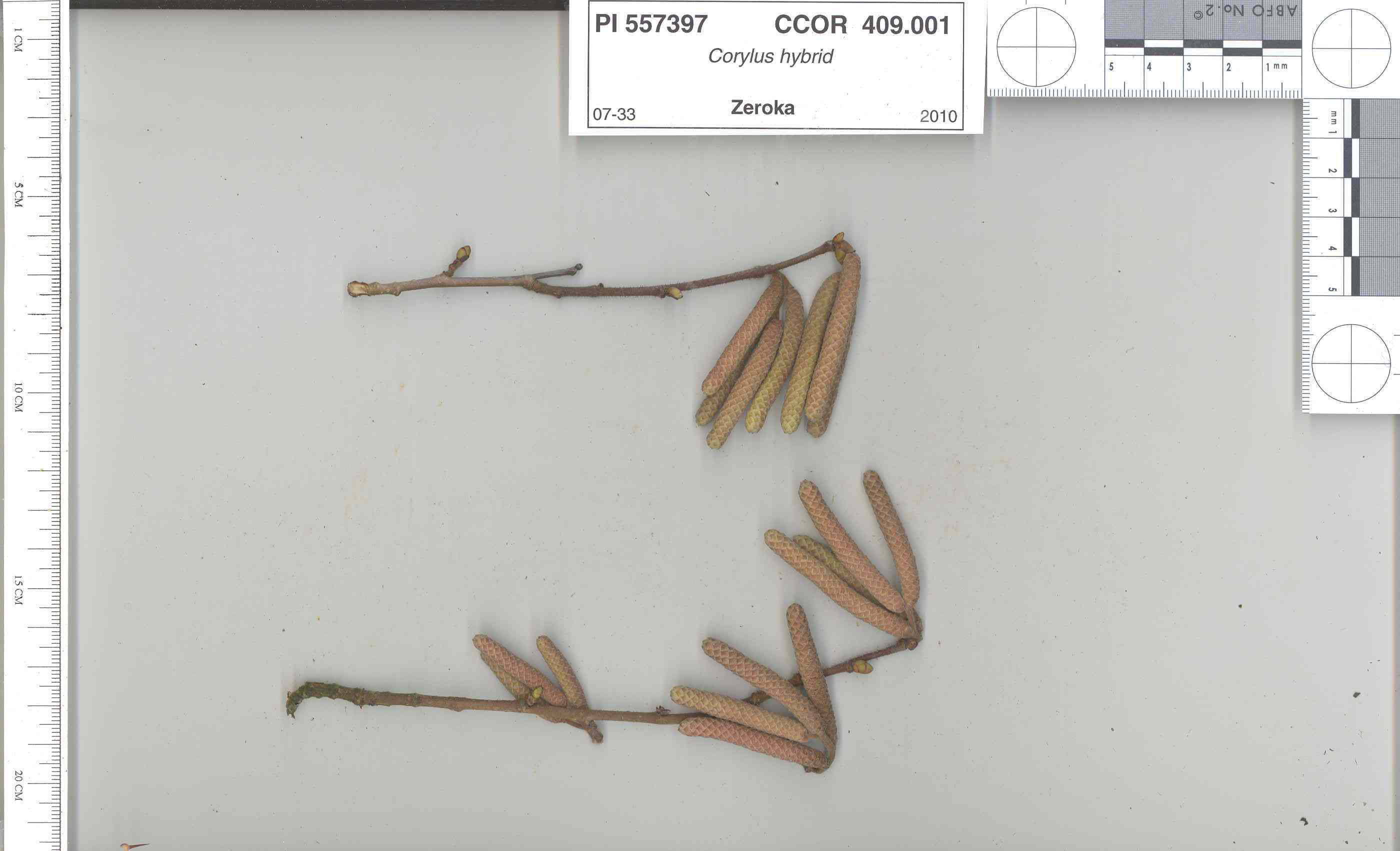 | | 1989 | DEVELOPED | | | | | | Cultivar | | 1452369 | PI 557397 |
| 336 | PI 557387 | 'Chinoka' | Corylus hybr. | British Columbia, Canada | COR |  | | 1986 | DEVELOPED | | | | | | Cultivar | Potential non-suckering rootstock selection | 1452359 | PI 557387 |
| 337 | PI 557388 | 'Turktrazel Gellatly No. 2' | Corylus hybr. | British Columbia, Canada | COR | 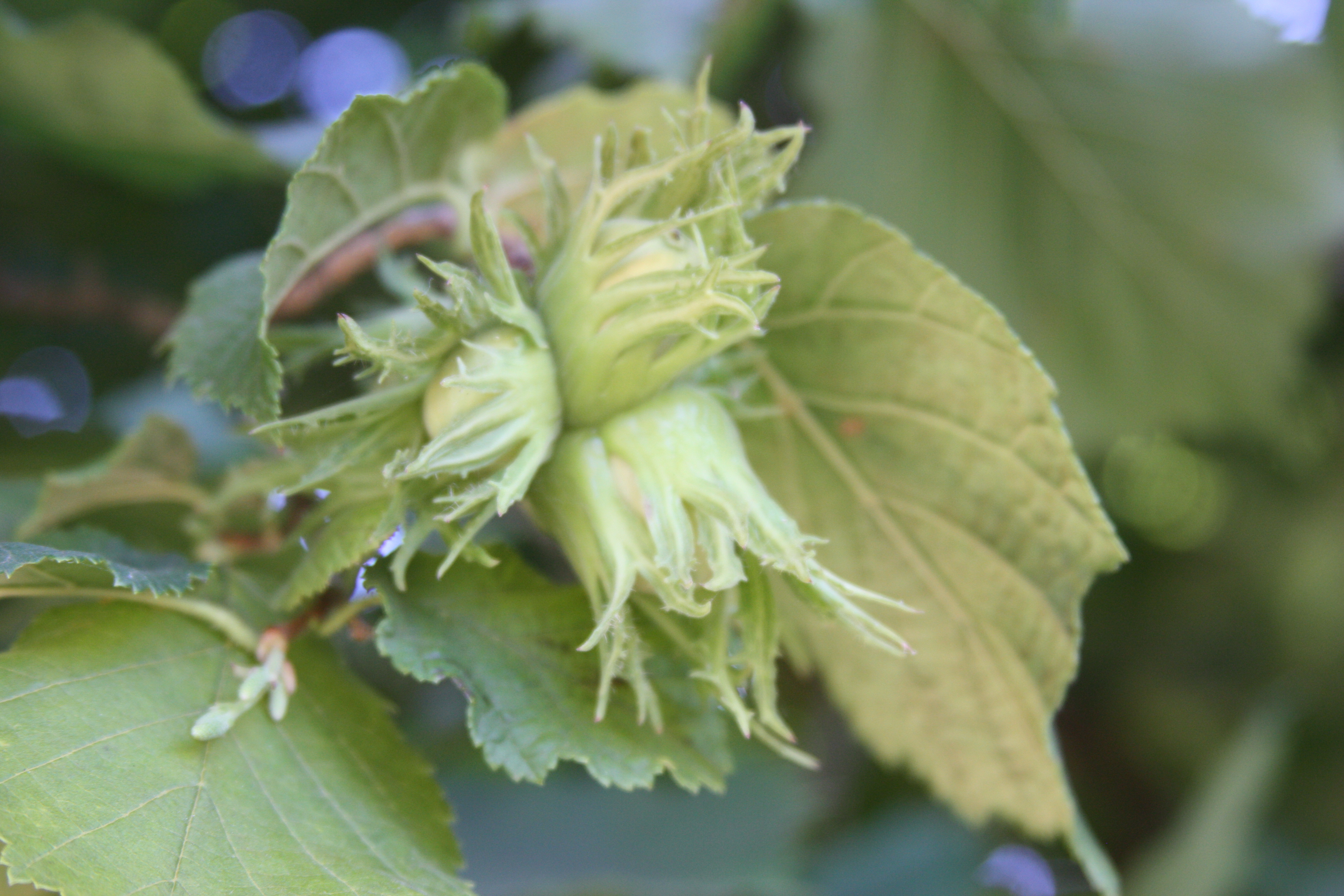 | | 1986 | DEVELOPED | | | | | | Breeding material | Potential non-suckering rootstock selection | 1452360 | PI 557388 |
| 338 | PI 557389 | 'Erioka' | Corylus hybr. | British Columbia, Canada | COR |  | | 1986 | DEVELOPED | 1970 | | | | | Cultivar | Potential non-suckering rootstock selection | 1452361 | PI 557389 |
| 339 | PI 557390 | 'Ruby' | Corylus hybr. | Oregon, United States | COR |  | | 1986 | DEVELOPED | 1982 | | | | | Cultivar | Non-suckering, upright habit, red foliage | 1452362 | PI 557390 |
| 340 | PI 557381 | NY 588 | Corylus hybr. | New York, United States | COR |  | | 1986 | DEVELOPED | | | | | | Breeding material | | 1452353 | PI 557381 |
| 341 | PI 557383 | NY 1464 | Corylus hybr. | New York, United States | COR |  | | 1986 | DEVELOPED | | | | | | Breeding material | | 1452355 | PI 557383 |
| 342 | PI 557384 | NY 529 | Corylus hybr. | New York, United States | COR |  | | 1986 | DEVELOPED | | | | | | Breeding material | | 1452356 | PI 557384 |
| 343 | PI 557385 | NY 1329 | Corylus hybr. | New York, United States | COR |  | | 1986 | DEVELOPED | | | | | | Breeding material | | 1452357 | PI 557385 |
| 344 | PI 557386 | NY 1408 | Corylus hybr. | New York, United States | COR |  | | 1986 | DEVELOPED | | | | | | Breeding material | | 1452358 | PI 557386 |
| 345 | PI 557357 | 'Eastoka' | Corylus hybr. | British Columbia, Canada | COR |  | | 1984 | DEVELOPED | 1966 | | | | | Cultivar | Description:
Eastoka is a result of a cross of Corylus colurna and a large-fruited Corylus avellana cultivar. This cultivar has many strong points. It is a very attractive tree. The tree is an annual heavy cropper of fair-sized nuts. It is also a heavy producer of catkins annually, making it a good pollinator. The kernel is free from bran. Furthermore, the tree is hardy and vigorous and can be easily grafted onto the Turkish tree hazel using scions fresh-cut in May or earlier or fall-cut scions from storage.
Although it has many desirable traits, Eastoka is not a 'perfect' cultivar. It does possess a few weak points: The nuts do not fall from the husk. The bunches of five to six nuts fall as a cluster and mostly remain in the husk. The nuts would remain there until well dried or scrubbed out.
| 1452329 | PI 557357 |
| 346 | PI 557361 | USOR 2-73 | Corylus hybr. | Oregon, United States | COR | | | 1984 | DEVELOPED | 1973 | | | | | Breeding material | | 1452333 | PI 557361 |
| 347 | PI 557362 | 'Freeoka' | Corylus hybr. | British Columbia, Canada | COR |  | | 1984 | DEVELOPED | 1966 | | | | | Cultivar | | 1452334 | PI 557362 |
| 348 | PI 557366 | USOR 2-67 | Corylus hybr. | Oregon, United States | COR |  | | 1984 | DEVELOPED | 1967 | | | | | Breeding material | | 1452338 | PI 557366 |
| 349 | PI 557368 | USOR 20-71 | Corylus hybr. | Oregon, United States | COR |  | | 1984 | DEVELOPED | 1971 | | | | | Breeding material | | 1452340 | PI 557368 |
| 350 | PI 557369 | Dundee | Corylus hybr. | Oregon, United States | COR |  | | 1984 | DEVELOPED | 1971 | | | | | Breeding material | Originated in Corvallis, Oregon, by Harry B. Lagerstedt, USDA-ARS. Selected in 1971 as USOR 15-71, it appears to be C. colurna x C. avellana hybrid. Introduced in 1993. Dundee is named in honor of a location in the Willamette Valley, long known to be central to filbert tree propagation and nut production. The rootstock has survived almost 20 years of culling from an original pool of 150, which were originated from planting and evaluating nearly 25,000 seedlings during the early years of the project. It consistently rank at the top for nut production, an unusual trait because yields generally vary from year to year. Dundee forms smooth union when topworked with the Ennis cultivar. It has light colored, silvery bark that is quite smooth. It has excellent vigor as observed from trees in nursery to trees nearly 20 years old. Propagation is by tie-off layerage with girdling; propagation by semi-hardwood cuttings or simple layerage is less successful. Highly susceptible to eastern filbert blight (Anisogramma anomala). | 1452341 | PI 557369 |
| 351 | PI 557372 | Newburg | Corylus hybr. | Oregon, United States | COR |  | | 1984 | DEVELOPED | 1971 | | | | | Breeding material | From Brooks and Olmo: Originated in Corvallis, Oregon, by Harry B. Lagerstedt, USDA-ARS. Introduced in 1993. Corylus colurna o.p.; appears to be C. colurna x C. avellana hybrid. Selected in 1971; tested as USOR 7-71. Ennis trees grafted to Newberg are vigorous, productive, and produce very few suckers; the rootstock slightly overgrows the scion. Newberg bark is intermediate in appearance between C. colurna and C. avellana. Propagation is by tie-off layerage with girdling; propagation by semi-hardwood cuttings or simple layerage is less successful. Highly susceptible to eastern filbert blight. | 1452344 | PI 557372 |
| 352 | PI 557373 | 'Turktrazel Gellatly No. 5' | Corylus hybr. | British Columbia, Canada | COR |  | | 1984 | DEVELOPED | 1970 | | | | | Breeding material | | 1452345 | PI 557373 |
| 353 | PI 557374 | USOR 13-71 | Corylus hybr. | Oregon, United States | COR |  | | 1984 | DEVELOPED | 1971 | | | | | Breeding material | | 1452346 | PI 557374 |
| 354 | PI 557375 | USOR 2-72 | Corylus hybr. | Oregon, United States | COR | | | 1984 | DEVELOPED | 1972 | | | | | Breeding material | | 1452347 | PI 557375 |
| 355 | PI 557377 | USOR 1-71 | Corylus hybr. | Oregon, United States | COR |  | | 1984 | DEVELOPED | 1971 | | | | | Breeding material | | 1452349 | PI 557377 |
| 356 | PI 557343 | BR-3-1 | Corylus hybr. | Maryland, United States | COR | | | 1984 | COLLECTED | | | | | | Breeding material | | 1452315 | PI 557343 |
| 357 | PI 557344 | BR-3-3 | Corylus hybr. | Maryland, United States | COR |  | | 1984 | COLLECTED | | | | | | Breeding material | | 1452316 | PI 557344 |
| 358 | PI 557345 | BR-3-4 | Corylus hybr. | Maryland, United States | COR |  | | 1984 | COLLECTED | | | | | | Breeding material | | 1452317 | PI 557345 |
| 359 | PI 557346 | BR-3-5 | Corylus hybr. | Maryland, United States | COR |  | | 1984 | COLLECTED | | | | | | Breeding material | | 1452318 | PI 557346 |
| 360 | PI 557347 | BR-3-6 | Corylus hybr. | Maryland, United States | COR |  | | 1984 | COLLECTED | | | | | | Breeding material | | 1452319 | PI 557347 |
| 361 | PI 557348 | BR-4-1 | Corylus hybr. | Maryland, United States | COR |  | | 1984 | COLLECTED | | | | | | Breeding material | | 1452320 | PI 557348 |
| 362 | PI 557355 | USOR 6-73 | Corylus hybr. | Oregon, United States | COR | | | 1984 | DEVELOPED | 1973 | | | | | Breeding material | | 1452327 | PI 557355 |
| 363 | PI 557019 | 'Winkler' | Corylus americana Marshall | Iowa, United States | COR |  | | 1982 | DEVELOPED | | | | | | Cultivar | Winkler is the largest nut of any American hazel yet found. It was selected from the wild about 1910 by Wendell Williams of Danville, Iowa. It was later introduced in 1927 by the Snyder Bros. from Center Point, Iowa. Many growers noted that this cultivar should be tried by those interested in the native hazel. Winkler is a prolific bearer of large nuts. It is hardy, at least at temperatures as low as -30 F. It is popular in the east because it is highly resistant to eastern filbert blight. Because of its traits, Winkler has been widely used as a parent in a breeding process with Corylus avellana. | 1451991 | PI 557019 |
| 364 | PI 557337 | NY 104 | Corylus hybr. | New York, United States | COR |  | | 1982 | DEVELOPED | | | | | | Breeding material | | 1452309 | PI 557337 |
| 365 | PI 557338 | NY 110 | Corylus hybr. | New York, United States | COR |  | | 1982 | DEVELOPED | | | | | | Breeding material | | 1452310 | PI 557338 |
| 366 | PI 557339 | NY F-45 | Corylus hybr. | New York, United States | COR |  | | 1982 | DEVELOPED | | | | | | Breeding material | | 1452311 | PI 557339 |
| 367 | PI 557340 | NY 200 | Corylus hybr. | New York, United States | COR |  | | 1982 | DEVELOPED | | | | | | Breeding material | | 1452312 | PI 557340 |
| 368 | PI 557341 | NY 616 | Corylus hybr. | New York, United States | COR |  | | 1982 | DEVELOPED | | | | | | Breeding material | One of the best of the New York selections, according to Ernie Grimo, Grimo Nut Nursery, Ontario, Canada, from nursery website, 12/2003. | 1452313 | PI 557341 |
| 369 | PI 557333 | 'Laroka' | Corylus hybr. | British Columbia, Canada | COR | | | 1981 | DEVELOPED | | | | | | Cultivar | Laroka is named for Dr. Larry Moore. It is a cross of Corylus colurna and large-fruited Corylus avellana cultivar. This cultivar is considered a strong grower with very large dark green leaves. It is a most attractive tree, with improved nut size fora tree hazel. To date, it is a shy producer of catkins, it sets a fair crop in clusters up to five or six nuts, which fall free of the husk when mature, and which growers consider a great help at harvest. The kernels are clean and free on loose bran. | 1452305 | PI 557333 |
| 370 | PI 557429 | C. x colurnoides | Corylus ×colurnoides C. K. Schneid. | Unknown | COR |  | | 1981 | COLLECTED | | Asia | | | | Wild material | Colurnoid filbert is the local name of this hybrid. This hybrid is a non-suckering, winter-hardy, vigorous growing tree with free-falling, early bearing, large nut size. The nuts can be eaten raw or used in breads, cakes, puddings, nut milks, etc. | 1452401 | PI 557429 |
| 371 | PI 557430 | C. x vilmorinii | Corylus ×vilmorinii Rehder | Uncertain | COR |  | | 1981 | COLLECTED | | | | | | Wild material | | 1452402 | PI 557430 |
| 372 | PI 685601 | R10-65-276 | Agrostis capillaris L. | Krasnodar, Russian Federation | W6 | | | 2011 | COLLECTED | 08/11/2010 | Above Laura River, near zoo and campsite at Krasna Polyana | 43.70000000, 40.26800000 | 561 | River flood plain, campsite, disturbed area. Riparian area with slight E-facing slope, gravelly soil on shale bench: seed collected from >100 plants | Wild material | | 1883355 | PI 685601 |
| 373 | PI 693857 | R10-65-277 | Agrostis stolonifera L. | Krasnodar, Russian Federation | W6 | | | 2011 | COLLECTED | 08/11/2010 | Above Laura River, near zoo and campsite at Krasna Polyana | 43.70000000, 40.26800000 | 561 | River flood plain, campsite, disturbed area. Riparian area with slight E-facing slope, gravelly soil on shale bench: seed collected from >100 plants | Wild material | | 1883356 | PI 693857 |
| 374 | PI 693858 | R10-65-278 | Festuca gigantea (L.) Vill. | Krasnodar, Russian Federation | W6 | | | 2011 | COLLECTED | 08/11/2010 | Above Laura River, near zoo and campsite at Krasna Polyana | 43.70000000, 40.26800000 | 561 | River flood plain, campsite, disturbed area. Riparian area with slight E-facing slope, gravelly soil on shale bench: seed collected from >100 plants | Wild material | | 1883357 | PI 693858 |
| 375 | PI 693859 | R10-65-279 | Brachypodium sylvaticum (Huds.) P. Beauv. | Krasnodar, Russian Federation | W6 | | | 2011 | COLLECTED | 08/11/2010 | Above Laura River, near zoo and campsite at Krasna Polyana | 43.70000000, 40.26800000 | 561 | River flood plain, campsite, disturbed area. Riparian area with slight E-facing slope, gravelly soil on shale bench: seed collected from >100 plants | Wild material | | 1883358 | PI 693859 |
| 376 | PI 604766 | D165 | Trifolium pratense L. | Krasnodar, Russian Federation | W6 | | | 1996 | COLLECTED | 09/20/1995 | Krasnodarskiy kray, nearest village is Temnolesskaya. | | | Now logged. Slope 6-10%. 1/4 shade. Moist, mid slope. Vegetation closed, primary deciduous forest, scrub with scattered trees. | Wild material | Dominant tree species Carpinus betulus, Quercus robur, Castanea vulgaris. Dominant shrub species Rosa sp., Corylus avellana, Salix caprea. Dominant herb/grass species Calamogrostis sp., Doricnium graecum, Trifolium medium. Population distribution uniform, abundance rare. Growth habit spreading. Extensive regional climate data available in spreadsheet format or image maps in raster format suitable for GIS analysis. Contact Dr. Stephanie L. Greene (sgreene@ars-grin.gov). | 1531075 | PI 604766 |
| 377 | PI 611055 | VIR 305 | Dactylis glomerata L. | Russian Federation | W6 | | | 1996 | COLLECTED | 09/20/1995 | Krasnodarskiy kray. Nearest village Temnolesskaya. | 44.26472222, 40.08750000 | 900 | Area logged. Slope 6-10%. 1/4 shade. Moist, mid-slope. pH 5.3. Vegetation closed, deciduous forest primary, closed scrub with scattered trees. | Wild material | Dominant tree species Carpinus betulus, Quercus robur, Castanea vulgaris. Dominant shrub species Rosa sp., Corylus avellana, Salix caprea. Dominant herb/grass species Calamagrostis sp., Dorycnium graecum, Trifolium medium. Population distribution uniform, abundance rare. Growth habit erect. Extensive regional climate data available in spreadsheet format or image maps in raster format suitable for GIS analysis. Contact Dr. Stephanie L. Greene (sgreene@ars-grin.gov). | 1517984 | PI 611055 |
| 378 | PI 634061 | 304 | Trifolium medium L. | Krasnodar, Russian Federation | W6 | | | 1996 | COLLECTED | 09/20/1995 | Krasnodarskiy kray, nearest village is Temnolesskaya. | | | Now logged. Slope 6-10%. 1/4 shade. Moist, mid slope. Vegetation closed, primary deciduous forest, scrub with scattered trees. | Wild material | Dominant tree species Carpinus betulus, Quercus robur, Castanea vulgaris. Dominant shrub species Rosa sp., Corylus avellana, Salix caprea. Dominant herb/grass species Calamogrostis sp., Doricnium graecum, Trifolium medium. Population distribution patchy, abundance occasional. Growth habit prostrate. Extensive regional climate data available in spreadsheet format or image maps in raster format suitable for GIS analysis. Contact Dr. Stephanie L. Greene (sgreene@ars-grin.gov). | 1531028 | PI 634061 |
| 379 | WLP 1424 | ME2015-002 | Ostrya carpinifolia Scop. | Samtskhe-Javakheti, Georgia | NA | | | 2015 | COLLECTED | 08/17/2015 | Borjomi (municipality/district): west of the village of Rveli. | 41.87363000, 43.40531000 | 840 | Deciduous woodland. Slope: 0 to 8 percent. Aspect: Southeast. | Wild material | | 1940412 | WLP 1424 |
| 380 | WLP 1684 | ME2015-008 | Rhododendron caucasicum Pall. | Ajaria, Georgia | NA | | | 2015 | COLLECTED | 09/16/2015 | Autonomous Republic of Adjara: Shuakhevi (municipality/district): northern slope of Mt. Tbeti, southeast of the village of Gogadzeebi. | 41.54005000, 42.18398000 | 2211 | Subalpine forest combined with Rhododendron scrub. Slope: 15 to 20 percent. Aspect: Northwest. | Wild material | | 1940363 | WLP 1684 |
| 381 | Ames 31208 | ALB-2011-020 | Cornus mas L. | Korçë, Albania | NC7 |  | | 2011 | COLLECTED | 09/14/2011 | Northern side of Gjançi Reservoir between Gjanç and Ujëbardhë, Korçë approximately 1 km from ALB-2011-019 (Ames 31207). | 40.52942000, 20.64710000 | 1079 | | Wild material | | 1891852 | Ames 31208 |
| 382 | W6 41839 | R10-65-275 | Trifolium repens L. | Krasnodar, Russian Federation | W6 | | | 2011 | COLLECTED | 08/11/2010 | Above Laura River, near zoo and campsite at Krasna Polyana | 43.70000000, 40.26800000 | 561 | River flood plain, campsite, disturbed area. Riparian area with slight E-facing slope, gravelly soil on shale bench: seed collected from >100 plants | Wild material | | 1883354 | W6 41839 |
| 383 | Ames 29125 | JM200709111 | Hypericum androsaemum L. | Ajaria, Georgia | NC7 |  | | 2007 | COLLECTED | 09/10/2007 | Chakuistskali River Valley Gorge, Mtrila National Forest, Ajara Region. | 41.70333333, 41.80777778 | 40 | Colchic forest. Wet rock face beside road and above river. | Wild material | | 1744161 | Ames 29125 |
| 384 | Ames 29142 | JM200709112 | Hypericum perforatum L. | Ajaria, Georgia | NC7 |  | | 2007 | COLLECTED | 09/10/2007 | Chakuistskali River Valley Gorge, Mtrila National Forest, Ajara Region. | 41.70333333, 41.80777778 | 40 | Colchic forest. Wet rock face beside road and above river. | Wild material | | 1744178 | Ames 29142 |
| 385 | Ames 29149 | JM200709113 | Hypericum ×inodorum Mill. | Ajaria, Georgia | NC7 |  | | 2007 | COLLECTED | 09/10/2007 | Chakuistskali River Valley Gorge, Mtrila National Forest, Ajara Region. | 41.70333333, 41.80777778 | 40 | Colchic forest. Wet rock face beside road and above river. | Wild material | | 1744185 | Ames 29149 |