| 0 | PI 664829 | Central Iowa Eco-zone Germplasm | Echinacea pallida (Nutt.) Nutt. | Iowa, United States | NC7 |  | | 2007 | COLLECTED | PRE 2001 | Numerous samples originally acquired from native prairie remnants within the central section of three tiers of counties located in Iowa. | | | | Wild material | Perennial native prairie wildflower which grows 2 to 3 feet tall. Leaves are mostly basal; elongate-oval, blades 7 inches by 0.75 inch with leaf stalks from 6 inches for basal leaves to 0.75 inch for stem leaves; parallel veins in the blades; bulb-based hairs above and below. There is a single head at the top of a stalk having stiff hairs and a few small leaves. Heads are pale to deep rose-purple, drooping rays, 1.5 inches long, dark purple disk flowers on a conical base, disk about 1 inch tall and 1 inch in diameter; flowering from May to July; rays often last until August. Fruits (seeds) are 0.125 inch long, squarish and pointed at one end; no plume; fruiting begins in late June; often fruits persist in the head through the winter. This accession represents the Central Iowa Eco-zone Germplasm. | 1720503 | PI 664829 |
| 1 | PI 649037 | 26 | Echinacea pallida (Nutt.) Nutt. | Missouri, United States | NC7 |  | | 2004 | COLLECTED | 10/19/2004 | Roadside along Interstate 44, Laclede County. | 37.74935000, -92.58160000 | | Prairie remnant. Limestone glade. Bluff top. 1-5 degrees of slope. | Wild material | 0.5-0.75 meter tall. | 1668181 | PI 649037 |
| 2 | PI 649038 | 32 | Echinacea pallida (Nutt.) Nutt. | Missouri, United States | NC7 |  | | 2004 | COLLECTED | 10/20/2004 | Woods Prairie Preserve (Ozark Regional Land Trust) located approximately 4.85 miles west of Mt. Vernon off Farm Road 2125, T28N R26W NE 1/4 SW 1/4 Sec. 36, Lawrence County. | 37.09245000, -93.73056600 | 394 | 5-10 degrees of slope with a northern aspect. | Wild material | | 1668182 | PI 649038 |
| 3 | PI 664828 | 38 | Echinacea pallida (Nutt.) Nutt. | Iowa, United States | NC7 | | | 2003 | COLLECTED | 09/24/2003 | Starr's Cave State Preserve located just northwest of Burlington, T70N R2W E edge of NW 1/4 of NW 1/4 of Sec. 19, West Burlington Quad, Des Moines County | 40.85222222, -91.13666667 | 186 | Small, thin soil hill prairie. Sunny. 20% slope with a southern aspect. Stony soil | Wild material | Perennial herb to 2.5 feet tall. | 1649670 | PI 664828 |
| 4 | PI 649035 | EP2-73 | Echinacea pallida (Nutt.) Nutt. | Iowa, United States | NC7 | | | 2003 | COLLECTED | 09/19/2001 | Breen Prairie, SE 1/4 of SE 1/4 of Section 4, T86N, R3W, Jones County. | 42.28205500, -91.19729600 | | | Wild material | | 1642577 | PI 649035 |
| 5 | PI 649036 | EP2-74 | Echinacea pallida (Nutt.) Nutt. | Iowa, United States | NC7 |  | | 2003 | COLLECTED | 09/19/2001 | Manikowski State Preserve just south of Preston, T83N R5E NE 1/4 of NE 1/4 of Sec. 28. | 41.97357100, -90.37493500 | 223 | | Wild material | | 1642578 | PI 649036 |
| 6 | PI 664826 | EPP0823 | Echinacea pallida (Nutt.) Nutt. | Missouri, United States | NC7 |  | | 2001 | COLLECTED | | South of Lincoln, off Highway 65, Benton County. | 38.39083333, -93.33472222 | | Roadside ditch, flat, full sun. Black loamy/rocky soil. | Wild material | Donor suggested introgressants by analysis and hybrids, yet clearly 2 species in the wild. However, no obvious hybrids noted during growout, only Echinacea pallida. | 1617412 | PI 664826 |
| 7 | PI 664827 | EPA013 | Echinacea pallida (Nutt.) Nutt. | Missouri, United States | NC7 | | | 2001 | COLLECTED | | 4 miles east of Rodgersville on north side, Webster County. | 37.11694444, -93.05583333 | | | Wild material | | 1617413 | PI 664827 |
| 8 | PI 633662 | Index Seminum 11 | Echinacea pallida (Nutt.) Nutt. | Ontario, Canada | NC7 | | | 1999 | COLLECTED | 1998 | Dunwich Township, Elgin County. | 42.65000000, -81.53333333 | 220 | Prairie. | Wild material | | 1577511 | PI 633662 |
| 9 | PI 631323 | NU 63404 | Echinacea pallida (Nutt.) Nutt. | Illinois, United States | NC7 |  | | 1998 | COLLECTED | PRE 01/1998 | Putnam. | 41.18500000, -89.39638889 | | | Wild material | | 1555006 | PI 631323 |
| 10 | PI 633661 | NU 62755 | Echinacea pallida (Nutt.) Nutt. | Illinois, United States | NC7 |  | | 1998 | COLLECTED | PRE 01/1998 | Peoria. | 40.74500000, -89.60916667 | | | Wild material | | 1555005 | PI 633661 |
| 11 | PI 649034 | NU 63463 | Echinacea pallida (Nutt.) Nutt. | Illinois, United States | NC7 |  | | 1998 | COLLECTED | PRE 01/1998 | County line near Prairie. | | | | Wild material | | 1555172 | PI 649034 |
| 12 | PI 631322 | 073 | Echinacea pallida (Nutt.) Nutt. | Louisiana, United States | NC7 |  | | 1997 | COLLECTED | 09/1996 | Near Leesville. Please contact curator for specific site location. | 31.18566500, -93.25219800 | | | Wild material | Purple flowers. | 1549464 | PI 631322 |
| 13 | PI 631282 | 2 | Echinacea pallida (Nutt.) Nutt. | Iowa, United States | NC7 |  | | 1997 | COLLECTED | 09/29/1997 | Near Manson, Calhoun County. Please contact curator for specific site location. | 42.51666667, -94.61666667 | 375 | Degraded prairie. Nearly full sun on flat ground. Clarion loam soil with fair drainage and no stoniness. | Wild material | Plants were occasional and 60-100 cm tall. | 1548162 | PI 631282 |
| 14 | PI 631290 | 15 | Echinacea pallida (Nutt.) Nutt. | Iowa, United States | NC7 |  | | 1997 | COLLECTED | 09/30/1997 | Near Auburn, Sac County. Please contact curator for specific site location. | 42.25000000, -94.95000000 | 390 | Tallgrass prairie. Full sun on almost flat ground. Canisteo silty clay loam soil with fair drainage and no stoniness. | Wild material | Plants were occasional and 70-95 cm tall. | 1548174 | PI 631290 |
| 15 | PI 631291 | 16 | Echinacea pallida (Nutt.) Nutt. | Iowa, United States | NC7 |  | | 1997 | COLLECTED | 09/30/1997 | Near Lohrville, Calhoun County. Please contact curator for specific site location. | 42.25000000, -94.53333333 | 345 | Roadside ditch. Full sun with ~10% slope and a slightly northern aspect. Clarion loam soil with good drainage and no stoniness. | Wild material | Plants were uncommon and 70-84 cm tall. | 1548175 | PI 631291 |
| 16 | PI 631293 | 037 | Echinacea pallida (Nutt.) Nutt. | Arkansas, United States | NC7 |  | | 1997 | COLLECTED | 08/18/1997 | Near Calico Rock, Stone County. Please contact curator for specific site location. | 36.08333333, -92.16666667 | 325 | Steeply sloping cedar grade. Full exposure, ~45 degrees of slope with a southern aspect. Calcareous, well drained, and very rocky soil. | Wild material | Plants were up to ~2.5 feet tall, occasional, and unbranched with pale pink flowers. | 1548361 | PI 631293 |
| 17 | PI 631295 | 039 | Echinacea pallida (Nutt.) Nutt. | Arkansas, United States | NC7 |  | | 1997 | COLLECTED | 08/18/1997 | Near Mountain View, Stone County. Please contact curator for specific site location. | 36.05000000, -92.11666667 | 320 | Limestone glade. Full exposure, ~30 degrees of slope with a southern aspect. Calcareous, well drained soil with high stoniness. | Wild material | Plants were up to ~2.5 feet tall, occasional, and unbranched with very pale pink flowers. | 1548363 | PI 631295 |
| 18 | PI 631296 | 040 | Echinacea pallida (Nutt.) Nutt. | Missouri, United States | NC7 |  | | 1997 | COLLECTED | 08/19/1997 | Near Branson, Taney County. Please contact curator for specific site location. | 36.66666667, -93.30000000 | 480 | Grassy clearings between cedars on hillside. Full to nearly full sun, ~10 degrees of slope with a southern aspect. Dolomite, well drained soil with high stoniness. | Wild material | Plants were up to ~2 feet high, occasional, and mostly unbranched with very pale pink flowers. | 1548364 | PI 631296 |
| 19 | PI 631297 | 043 | Echinacea pallida (Nutt.) Nutt. | Missouri, United States | NC7 |  | | 1997 | COLLECTED | 08/19/1997 | Near Urbana, Dallas County. Please contact curator for specific site location. | 37.86666667, -93.18333333 | 420 | Roadside adjacent to hay field. Full exposure, ~10 degrees of slope with an eastern aspect. Red clay, rocky soil with good drainage. | Wild material | Plants were up to ~3 feet tall, frequent, and unbranched with pale pink flowers and no lodging. This site was harvested by another collector earlier this year. 30-40% of the cones remained. All of the tallest and most robust plants had been harvested; believe the largest cones were taken. Therefore, this accession may be biased towards smaller cone size and shorter plants. | 1548367 | PI 631297 |
| 20 | PI 631298 | CBG-3238 | Echinacea pallida (Nutt.) Nutt. | Kansas, United States | NC7 |  | | 1997 | COLLECTED | 08/23/1997 | Ivan Boyd Prairie Preserve just east of Baldwin City | 38.76741000, -95.12922000 | 321 | Native prairie remnant. Full exposure on a gentle slope. | Wild material | Plants were up to ~3 feet tall, abundant, stout, and seldom branched in a vigorous population with pale pink flowers. | 1548368 | PI 631298 |
| 21 | PI 631300 | 046 | Echinacea pallida (Nutt.) Nutt. | Missouri, United States | NC7 |  | | 1997 | COLLECTED | 08/25/1997 | Near Camdenton, Camden County. Please contact curator for specific site location. | 37.96666667, -92.76666667 | 260 | Savanna. Nearly full exposure, ~20 degrees of slope with a southern aspect. Dolomite and chert, calcareous, dry, well drained soil with high stoniness. | Wild material | Plants were 2.5 to 3 feet tall, frequent, and seldom branched with pale pink flowers. | 1548370 | PI 631300 |
| 22 | PI 631302 | 048 | Echinacea pallida (Nutt.) Nutt. | Missouri, United States | NC7 |  | | 1997 | COLLECTED | 08/25/1997 | Near Sleeper, Laclede County. Please contact curator for specific site location. | 37.75000000, -92.56666667 | 390 | Roadside prairie remnant/disturbed area. Full exposure, ~15 degrees of slope with a southern aspect. Calcareous, dry soil with good drainage and high stoniness. | Wild material | Plants were tall, occasional, and sometimes branched with pale pink flowers. Population had the "mixed pollen color" character (ie. most plants had white pollen, some had light yellow pollen). Part of site mowed, part of site previously harvested of seed: more of a "clear cut" than a random/scientific collection (probable collection for profit). | 1548372 | PI 631302 |
| 23 | PI 631303 | 049 | Echinacea pallida (Nutt.) Nutt. | Missouri, United States | NC7 |  | | 1997 | COLLECTED | 08/25/1997 | Near Jerome, around the Phelps/Pulaski County line. Please contact curator for specific site location. | 37.86666667, -92.01666667 | 400 | Steep, rocky roadbank. Full exposure, 45 degrees of slope with a southern aspect. Thin, dry, calcareous, well drained, and very rocky soil. | Wild material | Plants were up to ~3 feet tall and occasional with lodging, some branching, and pale pink flowers. Very small population of 15-20 plants. Mixed pollen color (light yellow and white). Some prior harvesting of seed at this site earlier in the season. | 1548373 | PI 631303 |
| 24 | PI 631309 | 055 | Echinacea pallida (Nutt.) Nutt. | Tennessee, United States | NC7 |  | | 1997 | COLLECTED | 08/28/1997 | Railroad tracks crossing Rifle Range Road near Arnold Air Force Base approximately 8.15 miles south, southwest of Manchester, Coffee County. | 35.35941900, -86.12833000 | 400 | Disturbed area around railroad track right-of-way and prairie remnant. Full exposure, level to ~20 degrees of slope with a southern aspect. Shallow, dry, chalky, well drained, and very rocky soil. | Wild material | Plants were up to 2.5 feet tall, occasional, and mostly unbranched with light magenta flowers. This may be the only known E. pallida site in Tennessee. Possibly introduced via the railroad right-of-way. | 1548379 | PI 631309 |
| 25 | PI 631315 | 064 | Echinacea pallida (Nutt.) Nutt. | North Carolina, United States | NC7 |  | | 1997 | COLLECTED | 09/03/1997 | Near Butner, Granville County. Please contact curator for specific site location. | 36.15000000, -78.76666667 | 107 | Roadside. Partial exposure with a southern aspect. | Wild material | Plants were rare. A very small population of 2-3 plants. | 1548388 | PI 631315 |
| 26 | PI 633659 | 1 | Echinacea pallida (Nutt.) Nutt. | Iowa, United States | NC7 |  | | 1997 | COLLECTED | 09/28/1997 | Near Fort Dodge, Webster County. Please contact curator for specific site location. | 42.48333333, -94.23333333 | 335 | Goat prairie. Mostly sunny exposure with a fairly steep (~30%) slope and a western aspect. Well drained, fairly stony, Storden loam soil. | Wild material | Plants were frequent and ~90 cm tall. | 1548161 | PI 633659 |
| 27 | PI 633660 | 042 | Echinacea pallida (Nutt.) Nutt. | Missouri, United States | NC7 |  | | 1997 | COLLECTED | 08/19/1997 | Near Aurora. Please contact curator for specific site location. | 36.98333333, -93.73333333 | 411 | Roadside. Full exposure, gentle slope with a southern aspect. Sandy clay, stony soil with good drainage. | Wild material | Plants were up to ~3 feet tall, abundant, and sometimes branched near base with pink flowers. ~90% of the plants at this site were previously harvested for the roots; above ground parts were left behind. | 1548366 | PI 633660 |
| 28 | PI 631274 | 027 | Echinacea pallida (Nutt.) Nutt. | Oklahoma, United States | NC7 |  | | 1997 | COLLECTED | 08/13/1997 | Near Bristow, Creek County. Please contact curator for specific site location. | 35.83333333, -96.40000000 | 250 | Roadside. Full exposure with 20 degrees of slope and a northwest aspect. Well drained soil. | Wild material | Plants were up to ~2.5 feet tall, in occasional abundance, and seldom branched with light pink flowers. | 1547339 | PI 631274 |
| 29 | PI 631275 | 028 | Echinacea pallida (Nutt.) Nutt. | Oklahoma, United States | NC7 |  | | 1997 | COLLECTED | 08/13/1997 | Near Bartlesville, Osage County. Please contact curator for specific site location. | 36.75000000, -96.18333333 | 330 | Black Jack oak savannah. Full exposure on flat ground. Soil had fair drainage. | Wild material | Plants were growing in occasional abundance, had stems to ~2 feet high, occasional branching, and pinkish purple flowers. | 1547340 | PI 631275 |
| 30 | PI 631276 | 029 | Echinacea pallida (Nutt.) Nutt. | Oklahoma, United States | NC7 |  | | 1997 | COLLECTED | 08/13/1997 | Near Pawhuska, Osage County. Please contact curator for specific site location. | 36.75000000, -96.31666667 | 335 | Tallgrass prairie at edge of road. Full exposure on level ground. | Wild material | Plants were up to 2.5 feet tall, in occasional abundance, and seldom branched. | 1547341 | PI 631276 |
| 31 | PI 631277 | 030 | Echinacea pallida (Nutt.) Nutt. | Oklahoma, United States | NC7 |  | | 1997 | COLLECTED | 08/14/1997 | Near Lenapah, Nowata County. Please contact curator for specific site location. | 36.85000000, -95.61666667 | 360 | Roadside adjacent to pasture. Full exposure with a gentle slope. | Wild material | Plants were growing in occasional abundance with large cones. | 1547342 | PI 631277 |
| 32 | PI 631278 | 031 | Echinacea pallida (Nutt.) Nutt. | Oklahoma, United States | NC7 |  | | 1997 | COLLECTED | 08/14/1997 | Near Centralia, Craig County. Please contact curator for specific site location. | 36.88333333, -95.33333333 | 380 | Roadside adjacent to pasture. Full exposure on level ground. | Wild material | Plants were tall, in occasional abundance, and occasionally branched with very large cones. | 1547343 | PI 631278 |
| 33 | PI 631279 | 032 | Echinacea pallida (Nutt.) Nutt. | Kansas, United States | NC7 |  | | 1997 | COLLECTED | 08/14/1997 | Near Baxter Springs, Cherokee County. Please contact curator for specific site location. | 37.01666667, -94.70000000 | 400 | Steep roadbank. Full exposure with 25 degrees of slope and a western aspect. Red clay soil with fair drainage and a rocky surface. | Wild material | Plants were growing in frequent abundance with light pink flowers and white and very light yellow pollen. | 1547344 | PI 631279 |
| 34 | PI 631280 | 033 | Echinacea pallida (Nutt.) Nutt. | Arkansas, United States | NC7 |  | | 1997 | COLLECTED | 08/15/1997 | Near Arkadelphia, Clark County. Please contact curator for specific site location. | 34.08333333, -93.16666667 | 220 | Blackland prairie remnant. Full exposure on nearly level ground. Calcareous soil with low stoniness, poor drainage, and a high holding capacity. | Wild material | Plants were up to ~2 feet high, relatively abundant, and seldom branched with light purple flowers and small cones. | 1547345 | PI 631280 |
| 35 | PI 631281 | 034 | Echinacea pallida (Nutt.) Nutt. | Arkansas, United States | NC7 |  | | 1997 | COLLECTED | 08/16/1997 | Near Carlisle, Lonoke County. Please contact curator for specific site location. | 34.78333333, -91.68333333 | 170 | Lowland prairie remnant. Full exposure on level ground. Calcareous, hard packed soil with fair drainage and no stones. | Wild material | Plants were up to 3 feet tall and in frequent abundance with large cones, frequent branching at base, and no lodging despite height. | 1547346 | PI 631281 |
| 36 | PI 633658 | 035 | Echinacea pallida (Nutt.) Nutt. | Arkansas, United States | NC7 |  | | 1997 | COLLECTED | 08/17/1997 | Near Harrison, Boone County. Please contact curator for specific site location. | 36.23333333, -93.13333333 | 430 | Osage tallgrass prairie remnant. Full exposure with a gentle slope and an eastern aspect. Cherty, well drained soil. | Wild material | Plants were up to ~2 feet tall, relatively abundant, and seldom branched with light pink flowers. | 1547347 | PI 633658 |
| 37 | PI 631256 | 002 | Echinacea pallida (Nutt.) Nutt. | Missouri, United States | NC7 |  | | 1997 | COLLECTED | 08/03/1997 | Near Sedalia, Pettis County. Please contact curator for specific site location. | 38.55000000, -93.26666667 | 380 | Open prairie. Full sun with a nearly flat slope. Fine, sandy, hard packed soil with high stoniness and fair drainage. | Wild material | Plants were 2-3 feet tall, unbranched, and in frequent abundance with no lodging. | 1547193 | PI 631256 |
| 38 | PI 631259 | 012 | Echinacea pallida (Nutt.) Nutt. | Oklahoma, United States | NC7 |  | | 1997 | COLLECTED | 08/10/1997 | Near Fort Towson, Choctaw County. Please contact curator for specific site location. | 34.00000000, -95.28333333 | 250 | Along fence at edge of stand of trees. Nearly full sun on level ground with an east and west aspect. Clay soil with very high stoniness and fair to poor drainage. | Wild material | Plants were growing in rare abundance with pure white flowers and severe lodging. | 1547203 | PI 631259 |
| 39 | PI 631254 | Ames 23680 | Echinacea pallida (Nutt.) Nutt. | Iowa, United States | NC7 |  | | 1997 | COLLECTED | 11/22/1996 | Just east of Interstate 35, SW 1/4 of Section 3, T81N, R23W, Polk County. | 41.85000000, -93.51666667 | 259 | Coneflower remnant (along railroad right of way, but on private land). | Wild material | | 1540082 | PI 631254 |
| 40 | PI 631253 | Ames 23368 | Echinacea pallida (Nutt.) Nutt. | Iowa, United States | NC7 |  | | 1996 | COLLECTED | PRE 11/19/1996 | W 1/2 of SE 1/4 of Section 25, T83N, R23W, Story County. | 41.96666667, -93.46666667 | 289 | Prairie remnant. | Wild material | | 1533983 | PI 631253 |
| 41 | PI 597603 | Ames 14444 | Echinacea pallida (Nutt.) Nutt. | Oklahoma, United States | NC7 | | | 1991 | COLLECTED | | Stephens County. MLRA:84 | 34.51994900, -97.87213700 | | | Wild material | | 1067421 | PI 597603 |
| 42 | PI 597604 | Ames 14445 | Echinacea pallida (Nutt.) Nutt. | Kansas, United States | NC7 |  | | 1991 | COLLECTED | | Johnson County. MLRA:112 | 38.84527700, -94.85208000 | | | Wild material | | 1067424 | PI 597604 |
| 43 | W6 62099 | CBG-10928 | Echinacea pallida (Nutt.) Nutt. | | W6 |  | | 2024 | | | | | | | | | 2168897 | W6 62099 |
| 44 | W6 59182 | CBG-10473 | Echinacea pallida (Nutt.) Nutt. | Illinois, United States | W6 | | | 2021 | | | | | | | Wild material | | 2120103 | W6 59182 |
| 45 | W6 59203 | CBG-10500 | Echinacea pallida (Nutt.) Nutt. | Arkansas, United States | W6 | | | 2021 | | | | | | | Wild material | | 2120122 | W6 59203 |
| 46 | Ames 35559 | Ringgold Prairie | Echinacea pallida (Nutt.) Nutt. | Iowa, United States | NC7 |  | | 2020 | COLLECTED | 08/05/2020 | Ringgold Wildlife Management Area located approximately 13 miles east of Redding, Ringgold County | 40.60150000, -94.13390000 | 350 | Degraded, dry hill prairies. | Wild material | Plants sampled in nature measuring less than one meter in height. | 2107722 | Ames 35559 |
| 47 | Ames 35560 | Hawthorn Prairie | Echinacea pallida (Nutt.) Nutt. | Iowa, United States | NC7 |  | | 2020 | COLLECTED | 08/14/2020 | Hawthorn Lake Wildlife Management Area, located one mile south of Barnes City on the northeast side of Hawthorn Lake, Mahaska County | 41.48270000, -92.45230000 | 260 | Remnant prairie. | Wild material | Plants sampled in nature measuring approximately 2-3 feet in height. | 2107723 | Ames 35560 |
| 48 | Ames 35546 | Beat Prairie | Echinacea pallida (Nutt.) Nutt. | Iowa, United States | NC7 |  | | 2020 | COLLECTED | 08/14/2020 | Beat Prairie located approximately 3.25 miles northwest of Knoxville, T76N R20W SW 1/4 SW 1/4 NW 1/4 and also NW 1/4 NW 1/4 SW 1/4 Sec. 26, Marion County | 41.35610200, -93.13748600 | 255 | Tallgrass prairie remnant. | Wild material | | 2106725 | Ames 35546 |
| 49 | Ames 34342 | Sheeder | Echinacea pallida (Nutt.) Nutt. | Iowa, United States | NC7 |  | | 2018 | COLLECTED | 09/06/2018 | Sheeder Prairie State Preserve located approximately 4.45 miles west, northwest of Guthrie Center, T80N R32W SW 1/4 SW 1/4 Sec. 33 | 41.68949600, -94.58847900 | 366 | High-quality native prairie remnant. | Wild material | | 1967544 | Ames 34342 |
| 50 | Ames 34149 | MOOZ17-055 | Echinacea pallida (Nutt.) Nutt. | Missouri, United States | NC7 | | | 2017 | COLLECTED | 10/14/2017 | Drury-Mincey Conservation Area located approximately 8.7 miles southeast of Branson off Gunnisson Road on Bear Mountain Trail, Taney County | 36.54460000, -93.11460000 | 347 | Glade with slight southwest facing-aspect | Wild material | | 1954950 | Ames 34149 |
| 51 | Ames 32809 | JDC/EP/2014/129/632 | Echinacea pallida (Nutt.) Nutt. | Iowa, United States | NC7 | | | 2014 | COLLECTED | 10/21/2014 | Located approximately 0.75 miles east of Blairsburg, T89N, R24W NE 1/4 of Sec. 36, Hamilton County | 42.48238900, -93.63018100 | 376 | Roadside, remnant prairie. Very diverse flora present | Wild material | | 1921819 | Ames 32809 |
| 52 | NSL 439918 | Northern Iowa Eco-zone Germplasm | Echinacea pallida (Nutt.) Nutt. | Iowa, United States | NC7 | | | 2004 | COLLECTED | PRE 2001 | Numerous samples originally acquired from native prairie remnants within the northern section of three tiers of counties located in Iowa. | | | | Wild material | Perennial native prairie wildflower which grows 2 to 3 feet tall. Leaves are mostly basal; elongate-oval, blades 7 inches by 0.75 inch with leaf stalks from 6 inches for basal leaves to 0.75 inch for stem leaves; parallel veins in the blades; bulb-based hairs above and below. There is a single head at the top of a stalk having stiff hairs and a few small leaves. Heads are pale to deep rose-purple, drooping rays, 1.5 inches long, dark purple disk flowers on a conical base, disk about 1 inch tall and 1 inch in diameter; flowering from May to July; rays often last until August. Fruits (seeds) are 0.125 inch long, squarish and pointed at one end; no plume; fruiting begins in late June; often fruits persist in the head through the winter. This Northern Iowa Eco-zone Germplasm represents materials collected in remnant prairies from the northern one-third of counties in Iowa. Materials were then regenerated by bulking samples at the University of Northern Iowa Tallgrass Prairie Center, Cedar Falls, IA where plots were separated via distance of circa 1,500 feet from other Echinacea plots. Germplasm was regenerated again at the USDA Elsberry Plant Materails Center in Elsberry, MO following the same isolation protocol of 1,500 feet. | 1694825 | NSL 439918 |
| 53 | NSL 439919 | Southern Iowa Eco-zone Germplasm | Echinacea pallida (Nutt.) Nutt. | Iowa, United States | NC7 | | | 2004 | COLLECTED | PRE 2001 | Numerous samples originally acquired from native prairie remnants within the southern section of three tiers of counties located in Iowa. | | | | Wild material | Perennial native prairie wildflower which grows 2 to 3 feet tall. Leaves are mostly basal; elongate-oval, blades 7 inches by 0.75 inch with leaf stalks from 6 inches for basal leaves to 0.75 inch for stem leaves; parallel veins in the blades; bulb-based hairs above and below. There is a single head at the top of a stalk having stiff hairs and a few small leaves. Heads are pale to deep rose-purple, drooping rays, 1.5 inches long, dark purple disk flowers on a conical base, disk about 1 inch tall and 1 inch in diameter; flowering from May to July; rays often last until August. Fruits (seeds) are 0.125 inch long, squarish and pointed at one end; no plume; fruiting begins in late June; often fruits persist in the head through the winter. This Southern Iowa Eco-zone Germplasm represents materials collected in remnant prairies from the southern one-third of counties in Iowa. Materials were regenerated by bulking samples at the University of Northern Iowa Tallgrass Prairie Center, Cedar Falls, IA where plots were separated via distance of circa 1,500 feet from other Echinacea plots. Germplasm was regenerated again at the USDA Elsberry Plant Materails Center in Elsberry, MO following the same isolation protocol of 1,500 feet. | 1694826 | NSL 439919 |
| 54 | PI 633665 | 074 | Echinacea purpurea (L.) Moench | Arkansas, United States | NC7 |  | | 1998 | COLLECTED | 10/05/1998 | Terre Noire, Arkadelphia, Clark County. | 34.08562700, -93.17510700 | 170 | Blackland prairie and savannah under restoration. Partial to full sun on a gentle slope. Sandy, well drained soil with low stoniness. | Wild material | Plants were 2-3 feet tall (shorter than other wild Echinacea purpurea populations), relatively abundant where occurred (but did not occur throughout the site), with frequent branching at upper stem rather than from base. Plants have purple flowers with bright orange palea, providing ornamental potential. | 1567331 | PI 633665 |
| 55 | PI 633666 | 075 | Echinacea purpurea (L.) Moench | Arkansas, United States | NC7 |  | | 1998 | COLLECTED | 10/05/1998 | Terre Noire, Arkadelphia, Clark County. | 34.08549300, -93.17501600 | 170 | Blackland prairie and savannah under restoration. Partial to full sun on a gentle slope. Sandy, well drained soil with low stoniness. | Wild material | Plants were relatively abundant where occurred (but did not occur throughout the site) with purple flowers with bright orange palea. | 1567332 | PI 633666 |
| 56 | PI 631292 | Bush's Yellow Coneflower | Echinacea paradoxa (Norton) Britton var. paradoxa | Arkansas, United States | NC7 |  | | 1997 | COLLECTED | 08/18/1997 | Near Calico Rock, Stone County. Please contact curator for specific site location. | 36.08333333, -92.16666667 | 325 | Steeply sloping cedar grade. Full exposure, ~45 degrees of slope with a southern aspect. Calcareous, well drained, and very rocky soil. | Wild material | Plants were up to ~2.5 feet tall, occasional, and unbranched with yellow flowers. | 1548360 | PI 631292 |
| 57 | PI 631294 | 038 | Echinacea hybr. | Arkansas, United States | NC7 |  | | 1997 | COLLECTED | 08/18/1997 | Near Mountain View, Stone County. Please contact curator for specific site location. | 36.05000000, -92.11666667 | 320 | Limestone glade. Full exposure, ~30 degrees of slope with a southern aspect. Calcareous, well drained soil with high stoniness. | Wild material | Plants were up to ~2 feet tall, occasional, and unbranched with yellow flowers. | 1548362 | PI 631294 |
| 58 | PI 631301 | 047 | Echinacea paradoxa (Norton) Britton var. paradoxa | Missouri, United States | NC7 |  | | 1997 | COLLECTED | 08/25/1997 | Near Camdenton, Camden County. Please contact curator for specific site location. | 37.96666667, -92.76666667 | 260 | Savanna. Nearly full exposure, ~20 degrees of slope with a southern aspect. Dolomite and chert, calcareous, dry, well drained soil with high stoniness. | Wild material | Plants were up to ~2.5 feet tall, frequent, and unbranched with yellow flowers. | 1548371 | PI 631301 |
| 59 | PI 710735 | DALCAN N-22-16 | Dalea candida Willd. | Iowa, United States | NC7 |  | | 2021 | COLLECTED | 09/08/2003 | Private property located in TNSHP 88, RNGE 25, E/W W, SECT 30, Quarter Section NW4NW4SE4 | 42.41228000, -93.81265000 | 312 | West facing hillside, savanna with large oaks on three sides, sandy well-drained, mostly full sun. | Wild material | Seeds were collected for conservations by the Tallgrass Prairie Center, Plant Materials Program, at the University of Northern Iowa, and germinated there from original collector's seed in March 2021. On July 2, 2021, 64 live seedlings were delivered in Ames, Iowa by Laura Fischer Walter and later transplanted into a field at the North Central Regional Plant Introduction Station for seed production. | 2116594 | PI 710735 |
| 60 | PI 710732 | Woodside Prairie | Dalea candida Willd. | Iowa, United States | NC7 |  | | 2020 | COLLECTED | 08/31/2020 | Located 8 miles south and 2 miles west of Fontanelle, Adair County | 41.17130000, -94.60140000 | 380 | High quality, diverse prairie remnant. History of haying once each fall. | Wild material | | 2107718 | PI 710732 |
| 61 | PI 710733 | Ringgold Prairie | Dalea purpurea Vent. | Iowa, United States | NC7 |  | | 2020 | COLLECTED | 08/05/2020 | Ringgold Wildlife Management Area located approximately 13 miles east of Redding, Ringgold County | 40.59150000, -94.14190000 | 350 | Dry hillside prairie. | Wild material | Plants sampled in nature measuring less than one meter in height. At time of collection (5 August 2020), seeds had not quite peaked maturity. | 2107719 | PI 710733 |
| 62 | PI 710734 | JDC/DP/2020/021/942 | Dalea purpurea Vent. | Iowa, United States | NC7 |  | | 2020 | COLLECTED | 09/17/2020 | Located approximately 0.75 miles east of Blairsburg, T89N, R24W NE 1/4 of Sec. 36, Hamilton County | 42.48218800, -93.63088000 | 376 | Roadside, remnant prairie. Canisteo and Nicollette clay loam soils (1-3 percent slopes) with depth to water table about 0-42 inches, slightly acidic and somewhat poorly drained. Very diverse flora present. | Wild material | | 2107727 | PI 710734 |
| 63 | PI 649713 | 6-34 | Drymocallis arguta (Pursh) Rydb. | Missouri, United States | NC7 |  | | 2002 | COLLECTED | 2001 | Woods Prairie Preserve (Ozark Regional Land Trust) located approximately 4.85 miles west of Mt. Vernon off Farm Road 2125, T28N R26W NE 1/4 SW 1/4 Sec. 36, Lawrence County. | 37.09250000, -93.73194444 | 394 | Virgin tallgrass prairie. 5-10% slope with a northern aspect. Prairie soil. | Wild material | | 1635681 | PI 649713 |
| 64 | Ames 36255 | Kothenbeutel Prairie | Delphinium carolinianum Walter subsp. virescens (Nutt.) R. E. Brooks | Iowa, United States | NC7 | 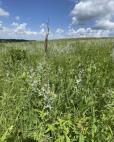 | | 2024 | COLLECTED | 07/08/2024 | Kothenbeutel Prairie Preserve located approximately 4.24 miles east, southeast of Sheffield just north of 240th Street, T93 R19W SW 1/4 SE 1/4 Sec. 7. | 42.87887400, -93.13261500 | 332 | Prairie remnant on south and southwestern aspects of 15-25 degree slopes. | Wild material | Plants in nature measuring approximately 30-38" in height. | 2168178 | Ames 36255 |
| 65 | OPGC 8804 | CBG- 10757 | Minuartia michauxii (Fenzl) Farw. | Illinois, United States | OPGC | | | 2023 | | | | | | | Wild material | | 2142227 | OPGC 8804 |
| 66 | OPGC 8810 | CBG- 10773 | Penstemon pallidus Small | Illinois, United States | OPGC | | | 2023 | | | | | | | Wild material | | 2142241 | OPGC 8810 |
| 67 | OPGC 8811 | CBG- 10775 | Penstemon pallidus Small | Illinois, United States | OPGC | | | 2023 | | | | | | | Wild material | | 2142242 | OPGC 8811 |
| 68 | W6 61393 | CBG- 10818 | Linum sulcatum Riddell | Illinois, United States | W6 |  | | 2023 | | | | | | | Wild material | | 2142275 | W6 61393 |
| 69 | W6 61400 | CBG- 10833 | Ceanothus americanus L. | Arkansas, United States | W6 |  | | 2023 | | | | | | | Wild material | | 2142282 | W6 61400 |
| 70 | Ames 36031 | Brushy Creek (Root Cellar) | Baptisia bracteata Muhl. ex Elliott | Iowa, United States | NC7 |  | | 2023 | COLLECTED | 08/11/2022 | Brushy Creek State Recreation Area located approximately 9.8 miles southwest of Webster City, T88N R27W NE1/4 NE1/4 Sec. 28 | 42.41169000, -93.99375000 | 327 | High quality, biologically diverse prairie remnant with a slight northeast-facing slope. | Wild material | | 2141745 | Ames 36031 |
| 71 | W6 63340 | Anderson Prairie | Amorpha canescens Pursh | Iowa, United States | W6 | | | 2023 | COLLECTED | 09/23/2022 | Anderson Prairie State Preserve located approximately 2.0 miles north of Estherville, T100N R34W NW 1/4 Sec. 36. | 43.43906800, -94.87472300 | 412 | Diverse remnant prairie with rolling hills and mesic soil. | Wild material | | 2141750 | W6 63340 |
| 72 | Ames 35886 | Hook Larson Prairie | Heuchera richardsonii R. Br. | Illinois, United States | NC7 |  | | 2022 | COLLECTED | 06/22/2022 | Nachusa Grasslands (Hook Larson Prairie) located approximately 5.07 miles northwest of Franklin Grove just north of West Stone Barn Road, T22N R10E NE 1/4 SE 1/4 NE 1/4 Sec. 17. | 41.89738600, -89.36123100 | 236 | High-quality prairie remnant with thick vegetation managed with infrequent burning. Various small remnants within immediate area. | Wild material | | 2138219 | Ames 35886 |
| 73 | Ames 35881 | Reichelt Unit | Heuchera richardsonii R. Br. | Iowa, United States | NC7 |  | | 2022 | COLLECTED | 06/30/2022 | Reichelt Unit of Rock Creek State Park on south side of US highway 6 located 7.70 miles west, southwest of Grinnell, T80N R17W SE ¼ SE ¼ Sec. 30. | 41.70311300, -92.86569100 | 274 | Prairie remnant. Hilltop/knoll. | Wild material | Plants in nature measuring approximately six to eight inches in height with flowering stalks reaching up to three feet in height. | 2138180 | Ames 35881 |
| 74 | Ames 35806 | Reichelt Prairie | Salix humilis Marshall var. tristis (Aiton) Griggs | Iowa, United States | NC7 |  | | 2022 | COLLECTED | 05/16/2022 | Reichelt Unit of Rock Creek State Park on south side of US highway 6 approximately 7.70 miles west, southwest of Grinnell, T80N R17W SE ¼ SE ¼ Sec. 30. | 41.70311300, -92.86569100 | 274 | Xeric prairie remnant. Hilltop/knoll. | Wild material | Plants sampled in nature measuring 2.0-4.0 feet in height. Specimens noted during peak flowering and seed dispersal on 21 April and 17 May (2022), respectively. Some plants upright and some rather prostrate. Site was mowed in winter 2020/2021 winter resulting in significant flowering in 2022. In cultivation (central Iowa), plants are extremely short and compact where after two field seasons plants are rather uniform and topping out at a height of 2.5'. Dense suckering immediately surrounding clump/base of plant. Peak fall color (central Iowa) occurring in mid-November. | 2137912 | Ames 35806 |
| 75 | OPGC 7582 | Anderson Prairie | Liatris aspera Michx. | Iowa, United States | OPGC | | | 2022 | COLLECTED | 09/10/2021 | Anderson Prairie located approximately 2.0 miles north of Estherville, T100N R34W NW 1/4 Sec. 36. | 43.43906800, -94.87472300 | 412 | Diverse remnant prairie with rolling hills and mesic soil. | Wild material | | 2133091 | OPGC 7582 |
| 76 | Ames 35736 | Horn Prairie Early Blooming | Monarda fistulosa L. | Illinois, United States | NC7 |  | | 2021 | COLLECTED | 08/27/2021 | Horn Prairie Grove located 3.91 miles east, southeast of Ramsey, T8N R1E SE ¼ SW ¼ Sec. 13 | 39.12960100, -89.03759800 | 166 | Very diverse remnant prairie. | Wild material | Accession represents an “early” flowering variant of Monarda fistulosa. Majority of specimens noted have pubescent stems and leaves; peaking flower on 6 June (2021); and measuring 34-36" in height. Generally found in more open, drier habitats in comparison to the “late” flowering more typical form of Monarda fistulosa. Majority of the “late” variants noted at the same locality (Ames 35737) have glabrous stems and leaves; measuring 4-4.5’ in height; peaking flower approximately five weeks later; and typically found in slightly wetter habitats. | 2120340 | Ames 35736 |
| 77 | Ames 35737 | Horn Prairie Late Blooming | Monarda fistulosa L. | Illinois, United States | NC7 |  | | 2021 | COLLECTED | 08/27/2021 | Horn Prairie Grove located 3.91 miles east, southeast of Ramsey, T8N R1E SE ¼ SW ¼ Sec. 13 | 39.12913900, -89.03924000 | 166 | Very diverse remnant prairie. | Wild material | Accession represents genetics from the typical form of M. fistulosa at the collection site. Majority of the specimens sampled display the typical morphological characters of the species including glabrous stems and leaves; measuring 4-4.5’ in height; peaking flower approximately 10 July (2021); and at the collection site typically, in slightly wetter habitats. Majority of the “early” variants noted at the same locality (Ames 35736) have pubescent stems and leaves; peaking flower on 6 June (2021); measuring 3’ in height or less; and are typically found in more open, drier habitats. | 2120341 | Ames 35737 |
| 78 | NA 88421 | CBG-10737 | Prunus americana Marshall | | NA |  | | 2021 | | | | | | | Wild material | Spatially discreet collection for a clonal species. Counts made approximately every 6 feet. Fruits collected from the plant and the ground. | 2137989 | NA 88421 |
| 79 | Ames 35730 | Root Cellar Remnant | Heuchera richardsonii R. Br. | Iowa, United States | NC7 | _thumbnail.jpg "Click for 2 image(s) for this accession.") | | 2021 | COLLECTED | 07/07/2021 | Brushy Creek State Recreation Area located approximately 9.8 miles southwest of Webster City T88N R27W NE1/4 NE1/4 Sec. 28 | 42.41169000, -93.99375000 | 327 | High quality, biologically diverse prairie remnant with a slight northeast-facing slope | Wild material | | 2120334 | Ames 35730 |
| 80 | Ames 35729 | Woodside Prairie | Ceanothus americanus L. | Iowa, United States | NC7 | | | 2021 | COLLECTED | 08/31/2020 | Woodside Praire located 8.0 miles south and 2.0 miles west of Fontanelle | 41.17130000, -94.60140000 | 380 | Remnant prairie. | Wild material | | 2120333 | Ames 35729 |
| 81 | Ames 35557 | Ringgold Prairie | Drymocallis arguta (Pursh) Rydb. | Iowa, United States | NC7 |  | | 2020 | COLLECTED | 08/05/2020 | Ringgold Wildlife Management Area located approximately 13 miles east of Redding, Ringgold County | 40.60160000, -94.13390000 | 350 | Degraded prairie remnant. | Wild material | | 2107720 | Ames 35557 |
| 82 | Ames 35558 | Woodside Prairie | Drymocallis arguta (Pursh) Rydb. | Iowa, United States | NC7 |  | | 2020 | COLLECTED | 08/31/2020 | Located 8 miles south and 2 miles west of Fontanelle, Adair County | 41.17130000, -94.60140000 | 380 | High quality, diverse prairie remnant. History of haying once each fall. | Wild material | Plants sampled in nature measuring were less than one meter in height. | 2107721 | Ames 35558 |
| 83 | OPGC 7547 | JDC/AT/2020/020/941 | Asclepias tuberosa L. | Iowa, United States | OPGC | | | 2020 | COLLECTED | 09/17/2020 | Located approximately 0.75 miles east of Blairsburg, T89N, R24W NE 1/4 of Sec. 36, Hamilton County | 42.48218800, -93.63088000 | 376 | Roadside, remnant prairie. Canisteo and Nicollette clay loam soils (1-3 percent slopes) with depth to water table about 0-42 inches, slightly acidic and somewhat poorly drained. Very diverse flora present. | Wild material | | 2107726 | OPGC 7547 |
| 84 | OPGC 7548 | Beat Prairie | Baptisia alba (L.) R. Br. | Iowa, United States | OPGC |  | | 2020 | COLLECTED | 08/14/2020 | Beat Prairie located approximately 3.25 miles northwest of Knoxville, T76N R20W SW 1/4 SW 1/4 NW 1/4 Sec. 26, Marion County | 41.35765500, -93.13777000 | 255 | Tallgrass prairie remnant. | Wild material | | 2106722 | OPGC 7548 |
| 85 | OPGC 7556 | JDC/PM/2020/006/927 | Phlox maculata L. | Iowa, United States | OPGC |  | | 2020 | COLLECTED | 07/18/2020 | Located approximately 3.0 miles southwest of Roland and just 330 yards west of 150h Street and 580th Avenue intersection, T85N R23W NE1/4 NE1/4 Sec. 32, Story County | 42.13724800, -93.54455800 | 305 | Roadside restoration. Locallized in wetter soils/drainage. | Wild material | Phlox maculata is rather rare in central Iowa, more common to northeastern parts of the state. This accession sampled in nature had purple-pink flowers on plants measuring circa 2-2.5’ in height with glabrous stems. Panicles measuring approximately 4-5” in length and 2” wide. Peak flowering and fruiting occurred 25 June and 18 July, respectively in central Iowa (2020). | 2106130 | OPGC 7556 |
| 86 | Ames 34346 | 3237 | Monarda fistulosa L. | Missouri, United States | NC7 |  | | 2018 | COLLECTED | 08/16/2018 | Linden’s Prairie located approximately 4.95 miles west of Mt. Vernon near intersection of 2120 and 1080 Roads, T28N R27W SE ¼ SW ¼ Sec. 29; Lawrence County | 37.10418700, -93.90805800 | 360 | In swale through dry-mesic, upland prairie remnant. | Wild material | | 1967548 | Ames 34346 |
| 87 | Ames 34347 | 3240 | Monarda fistulosa L. | Missouri, United States | NC7 |  | | 2018 | COLLECTED | 08/14/2018 | Schwartz Prairie located approximately 4.85 miles southwest of Roscoe near intersection of SW800 and SW 301 Road, T36N R27W SW ¼ SE ¼ Sec. 1 ; St. Clair County | 37.90902900, -93.85101800 | 276 | In dry-mesic, upland prairie remnant. | Wild material | | 1967549 | Ames 34347 |
| 88 | OPGC 5468 | OPGC 5468 | Phlox pilosa L. subsp. fulgida (Wherry) Wherry | Iowa, United States | OPGC | | | 2018 | COLLECTED | 06/28/2018 | Located approximately 1.92 miles east, northeast of Cambridge, T82N R23W NE ¼ NE ¼ NW ¼ Sec. 23, Story County. Locally known as Harker Prairie. | 41.90590000, -93.49310000 | 89 | High-quality, small (5 acre) prairie remnant. Soils classified (USDA Soils Web Survey) as Canisteo clay loam and Webster Clay loam ranging from 0-6 percent slopes, mostly east or northeast facing. | Wild material | Phlox pilosa subsp. pilosa was at peak maturity (abundant seed production) at the time of collection with a few seed capsules already dispersed, a few still green, and majority ready to disperse in the next 1-3 days. Plants typically reaching approximately 1’ in height. | 1964607 | OPGC 5468 |
| 89 | Ames 34199 | JDC/SD/2018/027/840 | Salix discolor Muhl. | Iowa, United States | NC7 |  | | 2018 | COLLECTED | 05/14/2018 | Located 3.00 miles east, southeast of Boone along RR right of way on north side of 210th Street, T84N R26W center of SE 1/4 Sec. 25. | 42.05274100, -93.82228600 | 284 | | Wild material | The native range of Salix discolor is concentrated in the northeastern United States and also throughout southern Canada (Little, E. L. Jr. 1977). Generally adapted/tolerant to wet soils this species is often found in meadows, fens, swamps, and streambanks. Attractive ornamental characteristics includes early spring, showy flowers and yellow foliage in the fall. Salix discolor provides a critical source of pollen at the beginning of the growing season for a plethora of pollinators and also serves as a larval host to many insect species. Salix discolor are commonly used in the cut flower industry for both their showy catkins and colorful, dormant winter stems. This accession represents genetics from central Iowa and the southwestern edge of the species native range. Specimens at the collection site in nature measuring approximately 4-5’ in height with 6’ spread with minimal to sparse branching. Pistillate flowers with yellowish stigmas and catkins at maturity (14 May 2018) measuring 4.5-5.5 cm. Pistillate flowering occurred prior to leaf emergence. Stems with some (minimal) pubescence, orangish-brown in color on previous year’s annual growth and tannish-yellow on older wood. Seeds dark green in color. During a growout via seed executed in 2018 at NCRPIS, a total of 35 genets generated 13 males and 22 females. | 1962796 | Ames 34199 |
| 90 | OPGC 6374 | CBG-7306 | Anemone cylindrica A. Gray | Illinois, United States | OPGC |  | | 2017 | | | | | | | Wild material | | 1954751 | OPGC 6374 |
| 91 | W6 52992 | CBG-7307 | Amorpha canescens Pursh | Illinois, United States | W6 |  | | 2017 | | | | | | | Wild material | | 1954743 | W6 52992 |
| 92 | Ames 34002 | JDC/CA/2017/050/804 | Ceanothus americanus L. | Iowa, United States | NC7 |  | | 2017 | COLLECTED | 08/18/2017 | Locally known as Harker Prairie located approximately 1.92 miles east, northeast of Cambridge, T82N R23W NE ¼ NE ¼ NW ¼ Sec. 23 | 41.90590000, -93.49310000 | 291 | High-quality, small (5 acre) prairie remnant. Soils classified (USDA Soils Web Survey) as Canisteo clay loam and Webster Clay loam ranging from 0-6 percent slopes, mostly east or northeast facing. | Wild material | Ceanothus americanus was at peak maturity (abundant seed production) at the time of collection with a few seed capsules already dispersed, a few still green, and majority ready to disperse in the next 1-3 days. Plants measuring approximately 2’ in height. | 1953754 | Ames 34002 |
| 93 | OPGC 5074 | JDC/PP/2017/017/771 | Phlox pilosa L. subsp. fulgida (Wherry) Wherry | Iowa, United States | OPGC | | | 2017 | COLLECTED | 06/23/2017 | Private property approximately 2.6 miles east, northeast of Polk City, T81N R24W NW ¼ SE ¼ Sec. 32. | 41.78088600, -93.66458200 | 300 | Native remnant, extremely high-quality hay prairie (circa 40 acres) with diverse soil types (classic swell and swale topography) with both pothole marsh and mesic prairie areas that has been in family name since mid 1800’s. Never been plowed. Extremely biologically diverse, seasonally wet prairie. Growing in association with Eryngium yuccafolium, Monarda fistulosa, Asclepias tuberosa (common), Asclepias sullivantii (rare), Asclepias syriaca, Asclepias incarnata, Zizia aurea, Coreopsis palmata, Baptisia bracteata (common), Thalictrum dasycarpum (common), Rosa sp., Carex haydenii, Carex sartwellii, Echinacea pallida, Lithospermum canescens, Cirsium pumilum var. hillii (circa 12 plants noted), Lilium philadelphicum (circa 12 plants noted), Polytaenia nuttallii (rare), Helianthus spp., Comandra umbelata, Silphium laciniatum (common), Iris virginica, Heliopsis helianthoides, Achillea millefolium, Cicuta maculata, Stachys palustris, Hesperostipa spartea, Liatris aspera, Liatris pycnostachya, Pedicularis lanceolata, Hyposix hirsuta, Arnoglossum atriplicifolium, and Ceanothus herbaceous. Species actively blooming on 25 May 2017 included: P. pilosa, C. herbaceous, Z. aurea, C. umbellata, and L. canescens. Species actively bloomin on 23 June 2017 included: A. tuberosa, A. syriaca, A. incarnata, C. palmata, C. maculata, L. philadelphicum, C. pumilum var. hillii, S. palustris, E. pallida, H. helianthoides, and A. millefolium. | Wild material | Flower color for population is all purple. | 1950049 | OPGC 5074 |
| 94 | OPGC 5075 | JDC/PP/2017/022/776 | Phlox pilosa L. subsp. fulgida (Wherry) Wherry | Iowa, United States | OPGC | | | 2017 | COLLECTED | 06/24/2017 | Located approximately 3.52 miles east of Boone, T84N R26W Sec. 25, Sec. 29, and Sec. 30. | 42.05267600, -93.82164600 | 350 | High-quality wet and dry prairie, railroad right-of-way remnant. Biologically diverse. Growing in association with Asclepias incarnata, Asclepia syriaca, Asclepias sullivantii, Coreopsis palmata (rare), Eryngium yuccafolium, Helianthus spp., Echinacea pallida, Liatris pcynostachya, Apocynum cannabinum, Toxicodendron radicans, Carex sartwellii, Cares spp., Salix humilis, Iris virginica, Rosa sp., Astragulus sp., Bromus inermis, Typha latifolia, Pastinaca sativa, Silphium laciniatum, Anemone canadensis, Cicuta maculata, and Schizachyrium scoparium. | Wild material | Flower color for population is dark purple (90%) or white with purple/pink centers (10%). | 1950051 | OPGC 5075 |
| 95 | Ames 33363 | JDC/MB/2016/022/737 | Monarda bradburiana L. C. Beck | Missouri, United States | NC7 | | | 2016 | COLLECTED | 06/28/2016 | Spring Creek Gap Conservation Area approximately 3.54 miles northwest of Vichy, T39N R8W Sec. 4, Maries County. | 38.14201800, -91.81278200 | 209 | Cedar glade remnant. | Wild material | | 1940865 | Ames 33363 |
| 96 | OPGC 4241 | JDC/PP/2015/058/715 | Phlox pilosa L. subsp. fulgida (Wherry) Wherry | Iowa, United States | OPGC |  | | 2015 | COLLECTED | 07/20/2015 | T88N, R27W Sec. 28. Brushy Creek State Recreation Area, Webster County. | 42.41169000, -93.99375000 | 327 | High quality, biologically diverse prairie remnant. Slight northeast-facing slope. Associated with Amorpha canescens, Artemisia ludoviciana, Asclepias tuberosa, Baptisia leucophea, Lithospermum canescens, Astragalus americanus, Corylus americana, Echinacea pallida, Eryngium yuccifolium, Liatris pycnostachya, Potentilla arguta, Liatris aspera, Malus ioensis, Ceanothus americanus, Pycnanthemum virginianum, Silene stellata, Salix, Schizachyrium scoparium, Silphium laciniatum, Dalea purpurea, Dalea candida, Solidago rigida, and Solidago speciosa. | Wild material | | 1927165 | OPGC 4241 |
| 97 | Ames 32810 | JDC/SA/2014/128/631 | Spiraea alba Du Roi | Iowa, United States | NC7 |  | | 2014 | COLLECTED | 10/21/2014 | Located approximately 0.75 miles east of Blairsburg, T89N, R24W NE 1/4 of Sec. 36. | 42.48218800, -93.63088000 | 376 | Roadside, remnant prairie. Canisteo and Nicollette clay loam soils (1-3 percent slopes) with depth to water table about 0-42 inches, slightly acidic and somewhat poorly drained. Very diverse flora present. | Wild material | | 1921820 | Ames 32810 |
| 98 | OPGC 4197 | JDC/PP/2014/029/531 | Phlox pilosa L. subsp. fulgida (Wherry) Wherry | Iowa, United States | OPGC | | | 2014 | COLLECTED | 07/22/2014 | NE 1/4 of Section 36, T89N, R24W, approximately 0.75 mile east of Blairsburg, Hamilton County. | 42.48260000, -93.62550000 | 372 | Prairie remnant along abandoned railroad. Very unique and biologically diverse area, both wetland and upland prairie species nearby. Nicollet Loam (1 to 3 percent slope) depth to water table: about 12-42 inches, 0-18 inches: slightly acid, loam, somewhat poorly drained and Canisteo silty clay loam (0 to 2 percent slope) depth to water table: 0-12 inches; 0-10 inches moderately alkaline, silty clay loam; poorly drained. Associated with Amorpha canescens, Artemisia ludoviciana, Asclepias tuberosa, Coreopsis lanceolata, Dalea purpurea, Desmodium canadense, Echinacea pallida, Europhorbia esula, Liatris pycnostachya, Melilotus officinalis, Pycnanthemum virginianum, Salix humilis, Schizachyrium scoparium, Silphium laciniatum, Solidago, Spiraea alba, and Zizia aurea. | Wild material | | 1919856 | OPGC 4197 |
| 99 | Ames 32385 | Blairsburg RR ROW | Salix humilis Marshall | Iowa, United States | NC7 |  | | 2014 | COLLECTED | 03/11/2014 | Located approximately 0.75 miles east of Blairsburg, T89N, R24W NE ¼ of Sec. 36. | 42.48260000, -93.62550000 | 372 | Very unique and biologically diverse area. Nicollet loam soil (1 to 3% slope), slightly acid loam soil (somewhat poorly drained), Canisteo silty clay loam soil (0 to 2% slope), and moderately alkaline silty clay loam soil (poorly drained). Both wetland and upland prairie species nearby | Wild material | Plants sampled in nature averaged 2.0-4.0 feet in height. Tallest of four specimens was 5 feet in height. Progeny grown from original seed collected in nature (17 May 2019) when grown in cultivation (NCRPIS - Ames, Iowa) showed substantial variation in leaf morphology. Out of 50 seedlings, seven specimens are likely hybrids (Salix x conifera). Growth habit appears to be relatively uniform: small-medium sized plants (e.g. less than 6-8'), multi-branched, wide-spreading shrubs with near horizontal branching occurring near the base. | 1918672 | Ames 32385 |
| 100 | Ames 35549 | Separation from Ames 32385 | Salix ×conifera Wangenh. | Iowa, United States | NC7 |  | | 2014 | COLLECTED | 05/17/2019 | | 42.48260000, -93.62550000 | 372 | Very unique and biologically diverse area. Nicollet loam soil (1 to 3% slope), slightly acid loam soil (somewhat poorly drained), Canisteo silty clay loam soil (0 to 2% slope), and moderately alkaline silty clay loam soil (poorly drained). Both wetland and upland prairie species nearby | Wild material | Originally acquired in nature via intential sampling of Salix humilis (Ames 32385). Specimens sampled averaged 0.9 meters in height. Tallest of four specimens was 1.5 meters in height. Progeny grown from original seed collected in nature (17 May 2019) when grown in cultivation (NCRPIS - Ames, Iowa) showed substantial variation in leaf morphology. Out of 50 seedlings, seven specimens assumed to be hybrids (Salix x conifera) were selected to represent this accession. Growth habit appears to be relatively uniform: short plants (e.g. less than 6-8'), multi-branched shrubs with branching occurring near the base. Stems and petioles pubescent; adaxial and abaxial surfaces of leaves very sparsely pubescent but mid-veins relatively pubescent. Stipules present and persistent. Abaxial surfaces slightly whitish, while adaxial surfaces are slightly glossy and dark green in color. These hybrids are likely sterile; two attempts at controlled pollination failed to produce seed. | 2106732 | Ames 35549 |
| 101 | OPGC 3567 | JDC/PP/2012/008/401 | Phlox pilosa L. subsp. fulgida (Wherry) Wherry | Iowa, United States | OPGC |  | | 2012 | COLLECTED | 07/06/2012 | Population located in Doolittle Prairie state Preserve. Prairie pothole wetland complex. | 42.15066600, -93.58886700 | 303 | Associated with Asclepias tuberosa, Geum aleppicum, Rudbeckia hirta,Silphium laciniatum, Echinacea pallida, Monarda fistulosa. | Wild material | Three color variants noted in equal porportions, including white, white with purple center and purple-pink. | 1903202 | OPGC 3567 |