| 0 | PI 662022 | Ames 27628 | Euonymus atropurpureus Jacq. | Iowa, United States | NC7 | | | 2004 | COLLECTED | 10/09/2004 | Point on southwest side at the top of Rattlesnake Bluff, Van Buren County. | 40.76361111, -91.90361111 | 195 | | Wild material | | 1665916 | PI 662022 |
| 1 | PI 495607 | 2 | Euonymus atropurpureus Jacq. | Iowa, United States | NC7 |  | | 1984 | COLLECTED | 09/21/1984 | Southwest end of lake, Lake Icaria County Recreation Area, 4 miles north of Corning, Section 10, T72N, R34W, Adams County. | 41.04972222, -94.74638889 | 362 | Among rock boulders near shore line. Rare population abundance with irregular distribution. | Wild material | Comments on plants harvested in nature: Perennial woody. Plants approximately 4-6 feet in height. Orangish-red fall color. Pinkish seed pods. In 2014 and 2015, plants growing in cultivation at NCRPIS exhibited a fair amount of powdery mildew with poor quality fall color (peaking typically last week in October), but plants showed above average amounts of vigor. For central and eastern Iowa, PI 662022 would be a more appropriate selection. For potential planting locations west of the Missouri River, PI 495607 may exhibit good ornamental characteristics. | 1390543 | PI 495607 |
| 2 | NA 88652 | KY23-056 | Euonymus atropurpureus Jacq. | Kentucky, United States | NA | | | 2023 | COLLECTED | 09/14/2023 | Floracliff Nature Sanctuary. | 37.90131000, -84.36057000 | 262 | [Downslope from] KY-054 [WLP 3199, Symphoricarpos orbiculatus] and KY-055 [WLP 3200, Ptelea trifolia. ] Elevation: 858 feet. Aspect: West. | Wild material | | 2158745 | NA 88652 |
| 3 | Ames 35242 | APS/EA/2019/046/375 | Euonymus atropurpureus Jacq. | Missouri, United States | NC7 |  | | 2019 | COLLECTED | 11/02/2019 | Mule Shoe Conservation Area along CR 66 approximately 7.5 miles east of Cross Timbers. | 38.01203000, -93.09312000 | 265 | Roadside, deciduous forest. | Wild material | | 2097787 | Ames 35242 |
| 4 | Ames 32820 | APS/EA/2013/041/126 | Euonymus atropurpureus Jacq. | Iowa, United States | NC7 |  | | 2014 | COLLECTED | 10/10/2014 | Midland Trail Road near North Racoon River watershed. Dallas County T80N R27W SW 1/4 NW 1/4 Sec. 30 | 41.71142000, -94.04538000 | 299 | Wooded roadside. | Wild material | | 1921780 | Ames 32820 |
| 5 | Ames 32812 | Ames 32812 | Euonymus atropurpureus Jacq. | Iowa, United States | NC7 |  | | 2014 | COLLECTED | 10/22/2014 | Chichaqua Bottoms Greenbelt, Polk County. | 41.77483000, -93.43145600 | 250 | Bottomland/floodplain forest of Skunk River watershed. | Wild material | One specimen sampled in nature was approximately 20 feet in height. In cultivation at NCRPIS, plants display attractive fall foliage colors ranging from pale pink to deep red. Fruits are ornamentally significant, varying in color from pale to bright pink. | 1921817 | Ames 32812 |
| 6 | Ames 30370 | JDC/EA/2009/113/263 | Euonymus atropurpureus Jacq. | Ohio, United States | NC7 |  | | 2009 | COLLECTED | 10/18/2009 | Along Suck Run Road, between Neel and Clayton, Decatur Quad, Adams County. | 38.75777778, -83.67444444 | 238 | Roadside. Sandy soils. | Wild material | | 1823922 | Ames 30370 |
| 7 | Ames 27325 | 32 | Euonymus atropurpureus Jacq. | Iowa, United States | NC7 |  | | 2003 | COLLECTED | 09/23/2003 | Lindsay Wilderness Area, Bonaparte, SE corner of NE 1/4, Section 9, T68N, R8W, Bonaparte Quad, Van Buren County. | 40.70416667, -91.77611111 | 189 | Ditch near powerline cut. Sunny. ~25% slope with a mostly western aspect | Wild material | Medium sized shrub or small tree. | 1649671 | Ames 27325 |
| 8 | PI 495604 | 8 | Cornus drummondii C. A. Mey. | Iowa, United States | NC7 |  | | 1984 | COLLECTED | 09/21/1984 | Along south end of parking area, Lake of Three Fires State Park, extreme NW corner of Section 7, T68N, R33W, Bedford Quad, Taylor County. | 40.71194444, -94.68583333 | 360 | | Wild material | Perennial woody. Plants in wide thicket to 2 meters tall, heavy fruiting. Very clean foliage with nice white fruits. | 1390540 | PI 495604 |
| 9 | OPGC 8855 | JDC/RM/2024/019/1141 | Rudbeckia missouriensis Engelm. ex C. L. Boynton & Beadle | Missouri, United States | OPGC |  | | 2024 | COLLECTED | 09/28/2024 | Danville Glade Conservation Area located 3.60 miles south, southeast of Danville, T47N R5W SW 1/4 SW 1/4 Sec. 5. | 38.86583400, -91.50779400 | 222 | Remnant glade. | Wild material | | 2169019 | OPGC 8855 |
| 10 | Ames 36251 | JDC/UT/2024/008/1130 | Ulmus thomasii Sarg. | Minnesota, United States | NC7 | 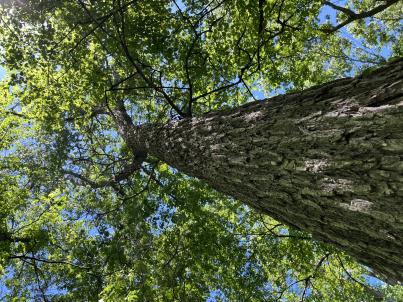 | | 2024 | COLLECTED | 06/05/2024 | Near southeast edge of Kasota Lake approximately 9.0 miles east, southeast of Willmar, T119N R34W SE 1/4 NE 1/4 Sec. 36 and also Robbins Island Park in Wilmar, T119N R35W Sec. 11. | 45.07399600, -94.88484100 | 352 | Deciduous woods | Wild material | Ulmus thomasii (Rock elm) is an underutilized tree species both in conservation and in the urban landscape. Described by Charles Sprague Sargent (first director for the Arnold Arborteum) as "heavy, hard, very strong and tough, closely grained, and susceptible of receiving a beautiful polish". Historically noted for a variety of uses in woodworking including furniture, heavy agricultural implements, timber frame buildings, pianos, hockey sticks, and hand tools. Ulmus thomasii is extremely drought tolerant, adaptable to very calcareous soils, and compared to U. americana or U. rubra has a very conservative growth rate requiring minimal attention in regards to pruning. Rock elm naturally tends to develop into a nice structural specimen in the landscape, unlike other fast growing cultivars in the nursery trade needing frequent attention. Rock elm has very fissured bark and is well known for maintaining a strong central leader resulting in a very attractive, pyramidal form. Despite many literature sources stating that "wings" on the stems are a key identifiying characteristic, this trait is not reliable and many genotypes may completely lack "wings" on the stems. While growth habit and morphology of dormant buds (very pointy) are good traits to help aid in identification, fruits are the best way to confirm identity. Fruits are densly pubescent, often described as "inflated" and generally reach maturity a couple weeks after Ulmus rubra and Ulmus americana. U. thomasii inflorescences are rather distinguishable from other Ulmus in being pendulous. Fruits are extremely prized treats for many birds, where fruits are often "robbed" prior to full maturity. Fruits are also highly prized by many other animals such as mice, squirrels, chipmunks, turkeys, etc. and are generally consumed within hours after fruit abscission. The native range of U. thomasii is concentrated in the northeastern United States and into Canada with disjunct populations documented in northwestern Missouri and northwestern Arkansas (Little, E. L. Jr. 1971). In the 1895 Silva of North America (vol. 7) it was stated that, “The value of the wood of the Rock Elm threatens its extinction and most of the large trees have already been cut.” Today, while rock elm is rather rare, especially in areas near the edges of its range, many states list the species as endangered or threatened warranting preservation efforts. Genetics of this accession would be representative of the species northwestern edge of its native range. Majority of specimens noted did not have characteristic "wings" on the stems and measured approximately 20" DBH or more with a few specimens nearing 30". Heights estimated between 70-90'. Rock elm in this area could be classified as locally abundant. | 2167953 | Ames 36251 |
| 11 | WLP 3492 | St. Francois State Park | Hydrangea arborescens L. | Missouri, United States | NA |  | | 2024 | COLLECTED | 01/19/2024 | St. Francois State Park, 8920 US Highway 67 North, approximately 3.2 miles north-northeast of Bonne Terre. | 37.96381000, -90.53403000 | 202 | Rocky outcrops above Big River and rocky areas on bank of Big River. | Wild material | | 2166135 | WLP 3492 |
| 12 | OPGC 7574 | Ledges State Park | Solidago ulmifolia Muhl. ex Willd. | Iowa, United States | OPGC |  | | 2021 | COLLECTED | 09/15/2021 | Ledges State Park, approximately 4.5 miles south of Boone, T83N R26W Sec. 20 | 41.98266200, -93.89314800 | 287 | Understory of hardwood forest. | Wild material | Plants in nature were generally two to three feet in height, growing in sparsely spreading colonies. This population has a large amount of diversity for flowering time with the first plants in the population beginning to flower on 22 July 2021 and the last plants to flower were still blooming at the end of September. Some plants in the population had a muted red fall foliage color at the end of October 2021. This accession represents genetics from near the northwest edge of the species range of occurence. | 2132828 | OPGC 7574 |
| 13 | OPGC 7575 | Ledges State Park | Solidago flexicaulis L. | Iowa, United States | OPGC |  | | 2021 | COLLECTED | 10/03/2021 | Ledges State Park, approximately 4.5 miles south of Boone, T83N R26W Sec. 21 | 41.98338100, -93.89052800 | 288 | Understory of hardwood forest. | Wild material | Plants in nature ranged in height from approximately one to three feet, growing in sparsely spreading colonies. Peak bloom in 2021 occurred near 15 September. Several specimens had branched inflorescences. | 2132829 | OPGC 7575 |
| 14 | W6 56713 | CBG-9544 | Scrophularia marilandica L. | Kansas, United States | W6 |  | | 2019 | | | | | | | Wild material | | 2092812 | W6 56713 |
| 15 | Ames 32389 | JDC/BN/2014/016/518 | Betula nigra L. | Iowa, United States | NC7 |  | | 2014 | COLLECTED | 06/06/2014 | Clemmons Creek Wildlife Management Area, T75N R8W NE 1/4 Sec. 14. | 41.30388300, -91.74342500 | 208 | Wet, floodplain. | Wild material | | 1919310 | Ames 32389 |
| 16 | Ames 32127 | JDC/FN/2013/053/497 | Fraxinus nigra Marshall | Iowa, United States | NC7 | | | 2013 | COLLECTED | 12/17/2013 | Echo Valley Park, near West Union, Fayette County. | 42.94396000, -91.77611500 | 325 | Floodplain and at base of slopes | Wild material | A few specimens over 70 feet in height. | 1914771 | Ames 32127 |
| 17 | Ames 31990 | APS/GD/2013/013/098 | Gymnocladus dioicus (L.) K. Koch | Missouri, United States | NC7 |  | | 2013 | COLLECTED | 02/22/2013 | Peavine Creek, south of Concordia, SW 1/4 of SE 1/4 of Section 20, SW 1/4 of NW 1/4 of Section 21, and NE 1/4 of NW 1/4 of Section 28, T48N R24W, Lafayette and Johnson Counties. | 38.93429000, -93.57204500 | 205 | Floodplain. | Wild material | | 1907543 | Ames 31990 |
| 18 | Ames 30604 | JDC/FQ/2010/037/307 | Fraxinus quadrangulata Michx. | Missouri, United States | NC7 |  | | 2010 | COLLECTED | 09/14/2010 | Fiddlers Ford Conservation Area, Dade County. | 37.38418300, -93.79576000 | 294 | Rock outcropping. South facing slope (40%). | Wild material | | 1848899 | Ames 30604 |
| 19 | Ames 29974 | JDC/GD/2009/003/153 | Gymnocladus dioicus (L.) K. Koch | Iowa, United States | NC7 |  | | 2009 | COLLECTED | 03/19/2009 | Stone State Park, just northwest of Sioux City, T89N R48W west 1/2 of Sec. 1 and east 1/2 of Sec. 2 Sioux City Quad., extreme northwest corner of Woodbury County. | 42.55805556, -96.46861111 | 390 | Variable-wet bottomland and dry slopes; a few small creeks with running water. Variable exposure. 0-45 degrees of slope with southern and eastern aspects. | Wild material | Plants between 40 and 65 feet in height and 6 to 17 inches DBH. | 1798766 | Ames 29974 |
| 20 | WLP 2487 | JDC-0112006 | Viburnum prunifolium L. | Iowa, United States | NA |  | | 2006 | COLLECTED | 09/12/2006 | Lake of Three Fires State Park, Bedford Quad.T68N R33W extreme NW corner of Sec. 7 | 40.71194444, -94.68583333 | 360 | Moderately shaded deciduous woods. | Wild material | Noted in nature as small understory trees, approximately 15-20 feet in height with clean foliage under moderate to heavy shade. In cultivation, fall color seems to vary from year to year ranging from dark purplish to bright red with peak fall color occurring around the later part of October (central Iowa). Flowers are white with peak flowering occurring in early-mid May. The range of this North American native is noted throughout the eastern and southeastern U.S. This accession represents genetics from the extreme northwestern corner of the species native range. Viburnum prunifolium in Iowa is rather rare and generally restricted and more commonly found in the extreme southeast corner of the state. This disjunct population in Taylor County (southwest Iowa) has been questioned as to whether it is a true native population or a naturalized escape. Additional V. prunifolium elsewhere in southwest Iowa has not been reported/documented. Immediately to the south of Taylor County, V. prunifolium is documented throughout most of Missouri and thus it is suspected that these genetics do represent a true native population. | 1708694 | WLP 2487 |