| 0 | PI 638134 | R. spicatum ssp. palczewskii 27-2002 | Ribes spicatum E. Robson subsp. palczewskii (Jancz.) Malyschev | Russian Federation | COR | | | 2003 | COLLECTED | | | | | | Wild material | | 1644467 | PI 638134 |
| 1 | PI 638110 | 12-2002 | Ribes spicatum E. Robson subsp. palczewskii (Jancz.) Malyschev | Habarovskij kraj, Russian Federation | COR | | | 2002 | COLLECTED | 08/2002 | | | | | Wild material | | 1642323 | PI 638110 |
| 2 | PI 638111 | R. spicatus ssp. palczewsjuu 12-2002 | Ribes spicatum E. Robson subsp. palczewskii (Jancz.) Malyschev | Habarovskij kraj, Russian Federation | COR | | | 2002 | COLLECTED | 08/2002 | | | | | Wild material | | 1642324 | PI 638111 |
| 3 | PI 638112 | R. spicatum ssp. palczewskii 308-2002 | Ribes spicatum E. Robson subsp. palczewskii (Jancz.) Malyschev | Habarovskij kraj, Russian Federation | COR | | | 2002 | COLLECTED | 08/2002 | | | | | Wild material | | 1642325 | PI 638112 |
| 4 | PI 638113 | R. spicatum ssp. palczewskii 30A-2002 | Ribes spicatum E. Robson subsp. palczewskii (Jancz.) Malyschev | Habarovskij kraj, Russian Federation | COR | | | 2002 | COLLECTED | 08/2002 | | | | | Wild material | | 1642326 | PI 638113 |
| 5 | PI 638114 | R. spicatum ssp. palczewskii 45-2002 | Ribes spicatum E. Robson subsp. palczewskii (Jancz.) Malyschev | Amur, Russian Federation | COR | | | 2002 | COLLECTED | 08/2002 | | | | | Wild material | | 1642327 | PI 638114 |
| 6 | PI 638115 | R. spicatum ssp. palczewskii 52C-2002 | Ribes spicatum E. Robson subsp. palczewskii (Jancz.) Malyschev | Amur, Russian Federation | COR | | | 2002 | COLLECTED | 08/2002 | | | | | Wild material | | 1642328 | PI 638115 |
| 7 | PI 638070 | 14-93 | Ribes spicatum E. Robson subsp. palczewskii (Jancz.) Malyschev | Habarovskij kraj, Russian Federation | COR | | | 2002 | COLLECTED | | | | | | Wild material | | 1642283 | PI 638070 |
| 8 | PI 638071 | 1990 FEES | Ribes spicatum E. Robson subsp. palczewskii (Jancz.) Malyschev | Primorye, Russian Federation | COR | | | 2002 | COLLECTED | | | | | | Wild material | | 1642284 | PI 638071 |
| 9 | PI 638047 | R. spicatum ssp. palczewskii HVSC-086 | Ribes spicatum E. Robson subsp. palczewskii (Jancz.) Malyschev | Habarovskij kraj, Russian Federation | COR | | | 2001 | COLLECTED | 08/17/2001 | | | | | Wild material | | 1631170 | PI 638047 |
| 10 | PI 638048 | R. spicatum ssp. palczewskii HVSC-098 | Ribes spicatum E. Robson subsp. palczewskii (Jancz.) Malyschev | Habarovskij kraj, Russian Federation | COR | | | 2001 | COLLECTED | 08/19/2001 | | | | | Wild material | | 1631171 | PI 638048 |
| 11 | PI 653043 | 'Roodneus' | Ribes spicatum E. Robson | Netherlands | COR |  | | 1997 | DEVELOPED | 1990 | | | | | | Fruit: large, uniform size; firm, glossy dark red; sour flavor but sweeter after being left on bush; easy to harvest; relatively resistant to rain damage; long shelf life; late flowering and ripening; adapted to late harvest under protection. Plant: high to very high yield; vigorous and spreading with horizontally growing fruit laterals. Low susceptibility to fall foliar diseases. List 38 Register of New Fruit and Nut Cultivars HortScience 32(5): 790. | 1544392 | PI 653043 |
| 12 | PI 617868 | 'Holland Longbunch' | Ribes spicatum E. Robson | Netherlands | COR |  | | 1996 | DEVELOPED | 1800 | | | | | Cultivar | USDA Sponsored plant collecting expedition, 1996 | 1536501 | PI 617868 |
| 13 | PI 617729 | Jonkheer Van Tets | Ribes spicatum E. Robson | Netherlands | COR |  | | 1993 | DEVELOPED | 1941 | | | | | Cultivar | Jonkheer van Tets.— Early- to mid-ripening red currant. Origin: developed by J. Maarse, in Schellinkhout, The Netherlands. R. spicatum and R. sativum hybrid; cross of Fay’s Prolific and a Scotch selection. Crossed in 1931 and introduced in 1941. Fruit: medium size, 0.86 g, bright red, sweet. Plant: medium vigor; medium length trusses, 9.2 cm; early flowering; leaf spot susceptible; low run-off; American powdery mildew and white pine blister rust resistant. | 1482804 | PI 617729 |
| 14 | PI 556369 | 'Pomona' | Ribes spicatum E. Robson | Ontario, Canada | COR |  | | 1991 | DEVELOPED | 1896 | | | | | Cultivar | Plants moderately large, vigorous, spreading, productive, bunches long, well filled; berries of medium size, bright red, juicy, mildly acid, good, midseason. Small Fruits of New York. p. 292. | 1451341 | PI 556369 |
| 15 | PI 556092 | 'Detvan' | Ribes spicatum E. Robson | Slovakia | COR |  | | 1991 | DEVELOPED | 1985 | | | | | Cultivar | midseason, good fruit quality and yield, healthy growth.
G. Spiegler, 1995.
Fruit: large, attractive, produced on long strigs, early ripening.
Plant: high and consistent yield, vigorous.
Daubeny, 1996. | 1451064 | PI 556092 |
| 16 | PI 556094 | 'Primus' | Ribes spicatum E. Robson | Slovakia | COR | 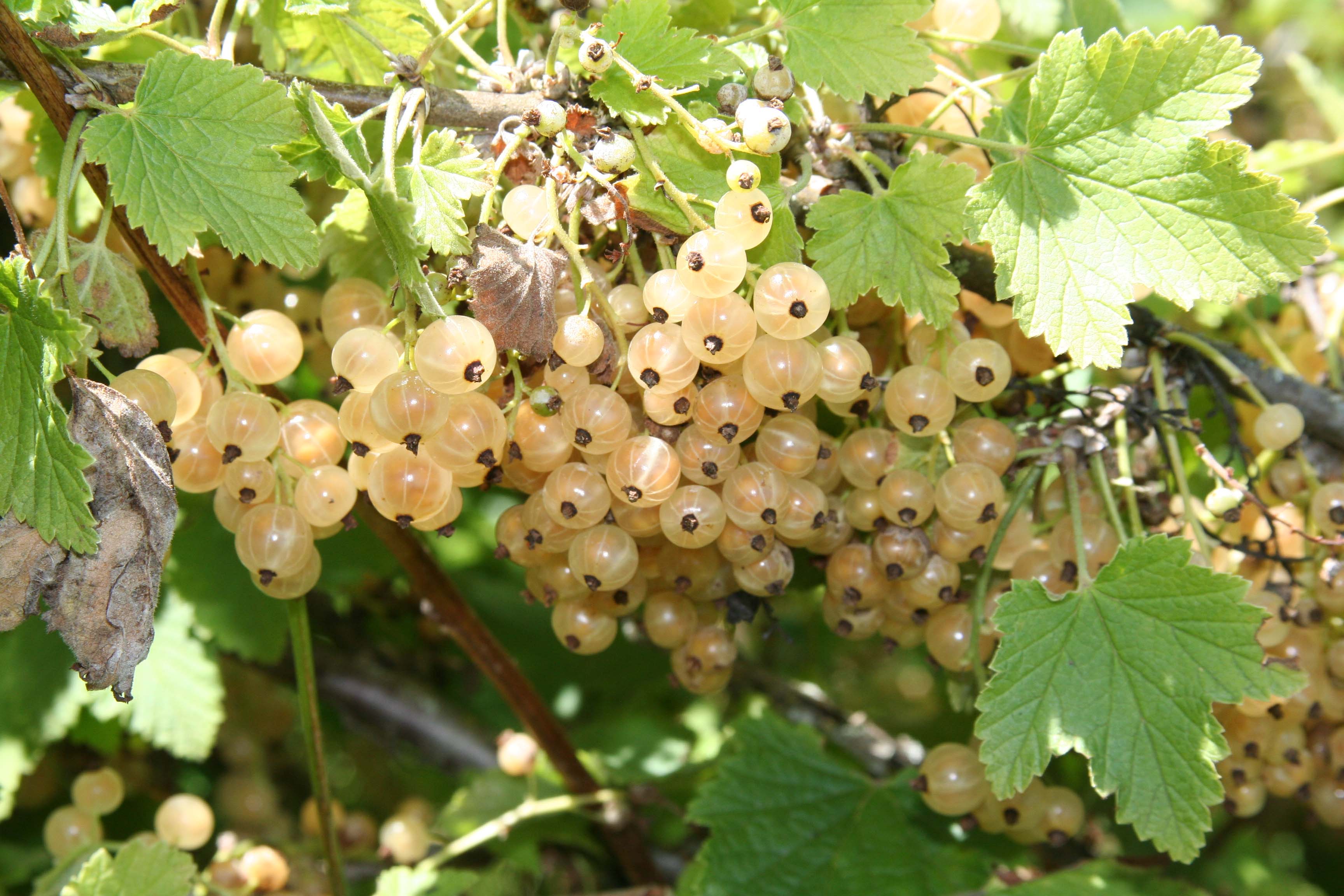 | | 1991 | DEVELOPED | 1977 | | | | | Cultivar | Midseason, suitable for fresh market and processing | 1451066 | PI 556094 |
| 17 | PI 556272 | R. spicatum subsp. palczewskii | Ribes spicatum E. Robson subsp. palczewskii (Jancz.) Malyschev | Russian Federation | COR |  | | 1991 | COLLECTED | 10/16/1990 | | | | | Cultivated material | Mother plant collected in Primorye Territory, Lesozavodsky region, floodplain of the Tamga River | 1451244 | PI 556272 |
| 18 | PI 556273 | R. spicatum subsp. palczewskii | Ribes spicatum E. Robson subsp. palczewskii (Jancz.) Malyschev | Russian Federation | COR | | | 1991 | COLLECTED | 10/16/1990 | | | | | Cultivated material | Mother plant collected in Primorye Territory, Spassky region, floodplain of the Karasevka River | 1451245 | PI 556273 |
| 19 | PI 556366 | R. spicatum Czechoslovakia | Ribes spicatum E. Robson | Slovakia | COR | | | 1990 | COLLECTED | | | | | | Uncertain improvement status | No additional information provided upon receipt | 1451338 | PI 556366 |
| 20 | PI 556321 | 'Chenonceau' | Ribes spicatum E. Robson | France | COR |  | | 1989 | DEVELOPED | 1895 | | | | | Cultivar | A distinct form of Versailles type, having shorter bunches and ripening later. Of little merrit - SFNY. 1925. | 1451293 | PI 556321 |
| 21 | PI 556324 | 'Comet' | Ribes spicatum E. Robson | England, United Kingdom | COR | | | 1989 | DEVELOPED | 1890 | | | | | Cultivar | Thought by some to be identical with Versailles, Fay by others | 1451296 | PI 556324 |
| 22 | PI 556326 | 'Fillbasket' | Ribes spicatum E. Robson | United Kingdom | COR | | | 1989 | DEVELOPED | | | | | | Cultivar | | 1451298 | PI 556326 |
| 23 | PI 556333 | 'Laxton's Perfection' | Ribes spicatum E. Robson | England, United Kingdom | COR | | | 1989 | DEVELOPED | 1900 | | | | | Cultivar | Bush: vigorous, upright growth very stout.
Truss: long to very long fairly free.
Berry: very large, held laxly; good color.
Quality: good.
Season: midseason.
Quite a good cropper but has gone out of favor owing to the production of a p ercentage of blind buds and to a substantial number of the shoots blowing out. Of interest to amateur gardeners because of the very large berries.
Gardner, 1981. | 1451305 | PI 556333 |
| 24 | PI 556336 | 'North Star' | Ribes spicatum E. Robson | Massachusetts, United States | COR | | | 1989 | DEVELOPED | 1865 | | | | | Cultivar | Plants are vigorous, upright, slightly spreading, productive, bunches medium in length.
Fruit variable, large and small, bright scarlet, mildly acid, fair, midseason. - SFNY. 1925.
This cv was purchased and introduced by the Jewell Nursery Company, Lake City, Minnesota. | 1451308 | PI 556336 |
| 25 | PI 556340 | 'Malling Redstart' | Ribes spicatum E. Robson | England, United Kingdom | COR |  | | 1989 | DEVELOPED | 1982 | | | | | Cultivar | | 1451312 | PI 556340 |
| 26 | PI 556341 | 'Rotet' | Ribes spicatum E. Robson | Netherlands | COR | | | 1989 | DEVELOPED | 1974 | | | | | Cultivar | Cropping season: late mid season, mid July 2 to 3 weeks after Jonkheer van Tets. Plant: strong growth erect habit, good basal regeneration. Fruit: Large berries and long trusses, medium to dark red, good fruit quality (flavor), not susceptible to 'run-off' and rain. High picking rate, keeps well on the bush. Yield: very high.Pests and diseases: resistant to mildew and leaf spot.
Value: commercial production, for fresh market and industry (dark juice color, high acidity) and for homegardens due to excellent fruit quality, high yield and resistance. Spiegler, 1995. Rotet.—High-yielding, high-quality, midseason red currant for all-around use. Origin: developed by L.M. Wassenaar at Institute for Horticultural Plant Breeding, The Netherlands. Jonkheer van Tets x Heinemanns Rote Spatlese. Introd. in 1963. Protected by Dutch Plant Breeder’s Rights in 1974. Fruit: large berries on long trusses; medium to dark red; good flavor quality; easy to harvest; keeps well on the bush. Plant: yield high to very high; vigorous; suckers from base; ripens late midseason, usually in mid-July; resistant to American powdery mildew, leaf spot, run-off, and fruit cracking; valuable for commercial processing production because of dark juice color and high acidity, and good for home gardens because of fruit quality, high yield, and disease resistance. | 1451313 | PI 556341 |
| 27 | PI 556343 | 'St. Anna Korfke' | Ribes spicatum E. Robson | Germany | COR |  | | 1989 | DEVELOPED | | | | | | Cultivar | | 1451315 | PI 556343 |
| 28 | PI 556346 | 'Wilson's Long Bunch' | Ribes spicatum E. Robson | England, United Kingdom | COR |  | | 1989 | DEVELOPED | | | | | | Cultivar | Bush: moderately vigorous, semi-erect.
Truss: medium length, rather bunched.
Berry: medium, bright red.
Quality: good.
Season: late.
A very free cropping variety, quite widely grown and valuable on account of its lateness. There are se veral different clones distributed under the same name but the true stock is distinct and can be distinguished by its late ripening habit.
Gardner, 1981. | 1451318 | PI 556346 |
| 29 | PI 556349 | 'Grosse Blanche' | Ribes spicatum E. Robson | France | COR |  | | 1989 | DEVELOPED | | | | | | Cultivar | | 1451321 | PI 556349 |
| 30 | PI 556350 | 'Halle's Long Bunch White' | Ribes spicatum E. Robson | England, United Kingdom | COR | | | 1989 | DEVELOPED | | | | | | Cultivar | | 1451322 | PI 556350 |
| 31 | PI 556353 | 'Swan Lake' | Ribes spicatum E. Robson | United Kingdom | COR | | | 1989 | DEVELOPED | | | | | | Cultivar | | 1451325 | PI 556353 |
| 32 | PI 556359 | 'White Transparent' | Ribes spicatum E. Robson | France | COR |  | | 1989 | DEVELOPED | 1862 | | | | | Cultivar | Resembles White Grape. - SFNY. 1925. | 1451331 | PI 556359 |
| 33 | PI 617689 | 'White Grape' | Ribes spicatum E. Robson | England, United Kingdom | COR |  | | 1989 | DEVELOPED | 1849 | | | | | Cultivar | This cultivar has the largest cluster and berry of all white currants | 1507979 | PI 617689 |
| 34 | PI 691914 | Arabis Mosaic in St. Anna Korfke | Ribes spicatum E. Robson subsp. spicatum | England, United Kingdom | COR | | | 1989 | DONATED | 11/08/1989 | | | | | Cultivar | Virus positive collection | 2097793 | PI 691914 |
| 35 | PI 691916 | Gooseberry veinbanding in White Transparent | Ribes spicatum E. Robson subsp. spicatum | England, United Kingdom | COR | | | 1989 | DONATED | 11/08/1987 | | | | | Cultivar | Virus positive collection | 2097795 | PI 691916 |
| 36 | PI 556319 | R. spicatum 89USSR-48 | Ribes spicatum E. Robson | Russian Federation | COR |  | | 1989 | COLLECTED | 07/15/1989 | Lunch Site | | | | Wild material | No additional information provided upon receipt | 1451291 | PI 556319 |
| 37 | PI 556320 | R. rubrum 89USSR-54 | Ribes spicatum E. Robson | Russian Federation | COR | | | 1989 | COLLECTED | 07/16/1989 | Lunch Site | | | | Wild material | No additional information provided upon receipt | 1451292 | PI 556320 |
| 38 | PI 556316 | 'White Versailles' | Ribes spicatum E. Robson | France | COR |  | | 1989 | DEVELOPED | 1883 | | | | | Cultivar | Plants vigorous, upright, bunches long, berries large, slightly darker than White Grape, juicy, good. - SFNY. 1925. | 1451288 | PI 556316 |
| 39 | PI 556312 | 'Rubina' | Ribes spicatum E. Robson | Sweden | COR |  | | 1988 | DEVELOPED | | | | | | Cultivar | Can handle conditions in Northern Sweden | 1451284 | PI 556312 |
| 40 | PI 556309 | 'Gloire des Sablons' | Ribes spicatum E. Robson | France | COR |  | | 1987 | DEVELOPED | 1857 | | | | | Cultivar | Upright, vigorous. Fruit small, white splashed with red | 1451281 | PI 556309 |
| 41 | PI 556066 | Minn-71 | Ribes spicatum E. Robson | Minnesota, United States | COR |  | | 1987 | DEVELOPED | 1933 | | | | | Breeding material | | 1451038 | PI 556066 |
| 42 | PI 556061 | White Currant 1301 | Ribes spicatum E. Robson | Sweden | COR |  | | 1986 | DEVELOPED | | | | | | Breeding material | | 1451033 | PI 556061 |
| 43 | PI 556057 | NY 37 | Ribes spicatum E. Robson | New York, United States | COR |  | | 1986 | DEVELOPED | | | | | | Breeding material | | 1451029 | PI 556057 |
| 44 | PI 556058 | NY 53 | Ribes spicatum E. Robson | New York, United States | COR |  | | 1986 | DEVELOPED | | | | | | Breeding material | | 1451030 | PI 556058 |
| 45 | PI 556060 | NY 72 | Ribes spicatum E. Robson | New York, United States | COR |  | | 1986 | DEVELOPED | | | | | | Breeding material | | 1451032 | PI 556060 |
| 46 | PI 556053 | 'Rovada' | Ribes spicatum E. Robson | Netherlands | COR |  | | 1986 | DEVELOPED | 1980 | | | | | Cultivar | Season: late, mid-end July in Switzerland, three to four weeks after Jonkheer van Tets. Plant: strong growth, erect habit, good basal regeneration. Fruit: large, very large berries and very long trusses, dark red, good fruit quality, medium susceptible to 'run-off' and rain high picking rate. Yield: very high. Pests and Diseases: resistant to mildew, leafspot. Value: main variety for commercial production in Central Europe due to its excellent fruit quality and yield suited also for home gardens. G. Spiegler, 1995. Rovada: Very high-yielding, late, red currant for commercial production and home gardens. Origin: developed by L.M. Wassenaar at Institute for Horticultural Plant Breeding, Wageningen, The Netherlands. Fay’s Prolific x Heinemann’s Rote Spatlese. Introduction. in 1980. Protected by Dutch Plant Breeder’s Rights. Fruit: large berries, 1.0 g, on long trusses, 22.4 cm; dark red; good fruit quality; easy to harvest. Plant: yield very high; vigorous, erect; suckers from base; ripens late, at the mid- to the end of July; resistant to American powdery mildew, white pine blister rust, leaf spot, and cracking; susceptible to run-off; main variety for commercial production because of excellent fruit quality and yield; also suited to home gardens. | 1451025 | PI 556053 |
| 47 | PI 556052 | 'Rolan' | Ribes spicatum E. Robson | Netherlands | COR |  | | 1986 | DEVELOPED | 1981 | | | | | Cultivar | Mid-season, beginning in the middle of July. Plant: strong growth, erect havit, good basal regeneration, mid-late flowering. Fruit: large berries on long trusses, medium red, good fruit quality, medium susceptible to 'run-off' and rain, high picking rate. Yield: very high. Pests and diseases: resistant to mildew and leafspot. Value: commercial production fresh market and for home gardens. G. Spiegle, 1995. Rolan.—Midseason red currant for fresh commercial production and home gardens. Origin: developed by L.M. Wassenaar at the Institute for Horticultural Plant Breeding in Wageningen, The Netherlands. Jonkheer van Tets x Rosetta. Introd. in 1961. Plant Breeder’s Rights obtained in 1981. Fruit: large, 0.88 g, on long trusses, 14 cm; medium red, good fruit quality, easy to harvest. Plant: yield high to very high; vigorous, erect habit, good basal suckers, mid- to lateflowering, later than Jonkheer van Tets; susceptible to American powdery mildew in the United States but reported resistant in Europe; resistant to leaf spot, and cracking; medium susceptibility to run-off; white pine blister rust resistant. | 1451024 | PI 556052 |
| 48 | PI 556307 | 'Rosa Hollandische' | Ribes spicatum E. Robson | Netherlands | COR |  | | 1986 | DEVELOPED | 1900 | | | | | Cultivar | | 1451279 | PI 556307 |
| 49 | PI 556305 | R. rubrum 4 | Ribes spicatum E. Robson | Poland | COR | | | 1984 | COLLECTED | 07/27/1984 | On bank of pond at roadside near Pard on Hwy T81, Platsk | 52.00000000, 20.00000000 | 100 | | Wild material | This clone may be an escaped cultivar | 1451277 | PI 556305 |
| 50 | PI 556042 | 'Heros' | Ribes spicatum E. Robson | Netherlands | COR |  | | 1984 | DEVELOPED | | | | | | Cultivar | Suscep. to leafspot. Very similar to Laxton's Perfection | 1451014 | PI 556042 |
| 51 | PI 556043 | 'Rondom' | Ribes spicatum E. Robson | Netherlands | COR |  | | 1984 | DEVELOPED | 1946 | | | | | Cultivar | Bush: vigorous and upright with shoots resistant to wind damage. Flowering: midseason to late. Truss: medium with long handle, the berries are tightly packed. Berry: medium, variable, thick skinned. Season: late, hangs well. Has cropped more heavily than Laxton's No. 1 in a recent trial but stocks are mixed and it is important to obtain a true, heavy cropping clone. Gardner, 1981. Rondom.—Late-ripening red currant. Origin: developed by J. Rietsema in Breda, The Netherlands. Selection of R. multiflorum. Introduction in 1934. Plant Breeder’s Rights, 1949. Fruit: medium size, 0.7 g, bright red. Plant: vigorous; upright; productivity very good; midseason blooming; late ripening; medium-long trusses, 9.1 cm.; easily harvested; slightly leaf spot susceptible; American powdery mildew, run-off, and white pine blister rust resistant. | 1451015 | PI 556043 |
| 52 | PI 556044 | 'Perfection' | Ribes spicatum E. Robson | New York, United States | COR |  | | 1984 | DEVELOPED | 1887 | | | | | Cultivar | Plants seldom large, vigorous, upright-spreading, not very dense, healthy, productive, young shoots few.
Flowers early, large, in long, loose, drooping racemes.
Fruit early midseason, easily picked, ships well, clusters long to very long, berri es uniformly large, cling well, roundish or slightly oblate, bright, handsome medium to dark red, skin smooth, thin but tough, flesh juicy, tender, sprightly subacid becoming mild when fully ripe, pleasantly flavored, quality very good. | 1451016 | PI 556044 |
| 53 | PI 556045 | 'Mulka' | Ribes spicatum E. Robson | Germany | COR |  | | 1984 | DEVELOPED | | | | | | Cultivar | Strong-growing, late flowering and ripening, dark red fruits | 1451017 | PI 556045 |
| 54 | PI 556047 | 'Stanza' | Ribes spicatum E. Robson | Netherlands | COR |  | | 1984 | DEVELOPED | 1960 | | | | | Cultivar | Bush: vigorous with stout upright shoots.
Flowering: late.
Truss: short.
Berry: small-medium, dark red, rather acid, of only moderate flavor.
Season: midseason to late. Cropping is said to be good and the variety is of interest for good c olor of juice.
Gardner, 1981. | 1451019 | PI 556047 |
| 55 | PI 556036 | 'London Market' | Ribes spicatum E. Robson | England, United Kingdom | COR |  | | 1984 | DEVELOPED | 1878 | | | | | Cultivar | Plants large, vigorous, upright, holding their foliage, dense, fairly productive, quite resistant to insects and disease in New York. Flowers midseason in loose somewhat erect short racemes. Fruit late midseason, hangs a long time, clusters nea rly long, medium compact, 12-20 berries, berries above medium to medium in size, average round oblate, glossy dark red, skin smooth, thin, tough, transluscent, flesh firm, juicy, sprightly, quality good. | 1451008 | PI 556036 |
| 56 | PI 556039 | 'Wilder' | Ribes spicatum E. Robson | Indiana, United States | COR |  | | 1984 | DEVELOPED | 1877 | | | | | Cultivar | Plants large, vigorous, upright to slightly spreading, dense, productive, young shoots numerous. Flowers early in long loose drooping many-flowered clusters. Fruit late midseason to late, hangs a long time after ripening, berries variable in size, averaging medium to large, roundish oblate, glossy, dark red, skin smooth, thin, tender, translucent, flesh firm, juicy, pleasantly subacid, quality good. Received replacements 02/08/1985 from Stephens. Ref info # 45. President Wilder. Wilder is a red currant of the Versailles type, being a seedling of that sort which it greatly surpasses in vigor, productiveness, and size and appearance of fruit. In the great currant regions of New York, Wilder is now the favorite variety, and in the race for commercial supremacy continues to increase the lead it now holds. The fruits are exceptionally handsome, higher in quality, and hang longer after ripening than those of any other commercial sort. A fault is that the fruits are not always uniform in size. Wilder originated with E. G. Teas, Irvington, Indiana about 1878.Plants large, upright-spreading, vigorous, healthy, productive. Leaves large, nearly flat, milky-green, thick. Flowers early, R. vulgare type. Fruit late clusters long, compact, tips filled rather poorly; fruit. stems long; 8-10 berries; which are large, variable in size, round-oblate, dark red; flesh red, firm, juicy, mild subacid; quality good; seeds large, numerous. Hedrick, U.P. 1922. Cyclopedia of Hardy Fruits. The Macmillan Company, NY. p. 301. President Marshall P. Wilder, of the Amer. Pomological Soc. | 1451011 | PI 556039 |
| 57 | PI 556303 | 'Laxton No. 1' | Ribes spicatum E. Robson | England, United Kingdom | COR |  | | 1984 | DEVELOPED | 1900 | | | | | Cultivar | Plant: vigorous, upright to slightly spreading.
Truss: moderately long, much bunche.
Berry: medium, bright red, seed small
Quality: good
Season: early,
A very heavy cropper.
Gardner, 1976. | 1451275 | PI 556303 |
| 58 | PI 556027 | 'Minn-69' | Ribes spicatum E. Robson | Minnesota, United States | COR |  | | 1981 | DEVELOPED | 1933 | | | | | Breeding material | | 1450999 | PI 556027 |
| 59 | PI 556298 | 'Cherry' | Ribes spicatum E. Robson | Italy | COR |  | | 1981 | DEVELOPED | 1840 | | | | | Cultivar | Plants medium to large, vigorous, upright, when young becomming more spreading with age, flowers early in medium to long drooping rather few flowered racemes; green with red; ring well developed, fleshy distinctly brownish. Fruit early, clusters small, short, loose, 10-13 berries; berries cling well only for a comparatively short time, very large, not uniform, round bright but dark red, skin thin, smooth, tough, translucent, flesh very juicy, firm, acid or mild subacid, pleasant flavor, quality good. --------------------------------------------------- This old variety is one of the most popular currants for home and market in America. Bunches and berries are large, and as they are borne on vigorous plants, the variety becomes one of the most productive of the large-fruited currants. The berries are a beautiful birght red, very large, though not always uniform in size, and well flavored. Defects are that the plants do not sucker freely so that the bushes sometimes have too few stalks; there is a tendency in the canes to 'go blind, ' that is, to lack the terminal shoot; and the short-stemmed bunches are born so close to the wood that the crop is hard to pick. The variety seems to have originated in Italy, thence it came to France about 1840, and from France was introduced into America by W. W. Falk, Flushingm, Long Island in 1846. Plant large vigorous, upright-spreading, dense, productive; suckers few. Leaves cordate, lobes ovate, rugose, pubescent, margin crenate; petiole 2 inches long. Flowers early, R. vulgare type. Fruit early; clusters short, thick, loose, 10-14 berries; stem short, making fruit difficult to pick; berries very large, cling well, round, dark red; skin smooth, tough, transparent; flesh red, medium juicy, firm, mild subacid; quality good; seeds large, rather numerous. Hedrick, U.P. 1922. Cyclopedia of Hardy Fruits. The Macmillan Company, NY. p. 301. -------------------------------------------------------- | 1451270 | PI 556298 |
| 60 | PI 556300 | 'Red Lake' | Ribes spicatum E. Robson | Minnesota, United States | COR |  | | 1981 | DEVELOPED | 1933 | | | | | Cultivar | Fruit clusters long, well filled, berries large, borne on long stems, excellent for jelly, ripens late, equal to the fruit of Perfection.
Plant upright, vigorous, superior to Perfection.
Brooks and Olmo, 1972. | 1451272 | PI 556300 |
| 61 | PI 556277 | 'Weisse Aus Jüterbog' | Ribes petraeum Wulfen | Germany | COR |  | | 1987 | DEVELOPED | | | | | | Cultivar | Hardy. Small clusters of large white berries. Botanically, it is very likely a Ribes x pallidum (petraeum x spicatum) and not a pure petraeum. | 1451249 | PI 556277 |
| 62 | Ames 32096 | BA13009001 | Fraxinus nigra Marshall | Minnesota, United States | NC7 |  | | 2013 | COLLECTED | 09/23/2013 | T144N R38W, Clearwater County. | 47.25711000, -95.49000667 | 543 | Edges of lakes and forest edges. Growing in association with Fraxinus pennsylvanica, Quercus macrocarpa, Ulmus americana, Populus tremuloides, Populus balsamifera, Acer saccharum, Betula papyrifera, Salix sp., Larix laricina, Quercus rubra, Abies balsamea, Picea glauca, Sambucus canadensis, Cornus rugosa, Acer spicatum, Rosa sp., Viburnum opulus var. americanum, Viburnum dentatum, Alnus sp., Cornus canadensis, Corylus sp., Prunus virginiana, Ribes sp., Prunus pensylvanica, Rhamnus alnifolia, Equisetum sp., Carex sp., Rubus sp., Impatiens capensis, Bromus sp., and Thalictrum dasycarpum. | Wild material | D.B.H. ranged between 3 and 6 inches. | 1914713 | Ames 32096 |
| 63 | Ames 31215 | Ames 31215 | Diervilla lonicera Mill. | Wisconsin, United States | NC7 |  | | 2011 | COLLECTED | 2011 | Site 1: Dells above Prairie River, Bloomville Quad. T32N R7E NE 1/4 SW 1/4 Sec. 13 and Site 2: Along east side of Highway 17, Pine Dells Quad. T32N R7E NW 1/4 NW 1/4 Sec. 26 | 45.24472220, -89.57486100 | 434 | Site 1: High spots between granite boulders strewn about a young woodland. Sandy soil with a few inches of humus layer. Site 2: Roadside. Disturbed ground on sandy soil with a slight humus layer. | Wild material | | 1894298 | Ames 31215 |
| 64 | W6 35428 | UT933-56 | Eriocoma nelsonii (Scribn.) Romasch. subsp. nelsonii | Utah, United States | W6 |  | | 2009 | | | | | | | Wild material | Height: 4 feet | 1808253 | W6 35428 |
| 65 | W6 35443 | UT933-71 | Bromus anomalus Rupr. ex E. Fourn. | Utah, United States | W6 |  | | 2009 | | | | | | | Wild material | | 1808268 | W6 35443 |