| 0 | PI 606513 | R. arcticus KHCW 96-10-01 | Rubus arcticus L. subsp. stellatus (Sm.) B. Boivin | Alaska, United States | COR | | | 1996 | COLLECTED | 07/31/1996 | 0.5 mile from Copper River Road on Alaganik Slough Road, about 22 miles from Cordova. Around base of interpretive sign describing Moose habitat. | 60.45056000, -145.28444000 | 18 | In open sun and in shade under alders, ground cover. | Wild material | USDA Plant Exploration Expedition, 1996. Associated plants: Epilobium, Alnus, Salix, Equisetum, Poa Festuca. | 1536685 | PI 606513 |
| 1 | PI 606517 | R. arcticus KHCW 96-16-01 | Rubus arcticus L. subsp. stellatus (Sm.) B. Boivin | Alaska, United States | COR | | | 1996 | COLLECTED | 08/02/1996 | Kalsin Bay, Kodiak Island, adjacent to an old Alaska Plant Materials Center Cooperative trial site. | 57.63361000, -152.32333000 | 0 | Open meadow, scattered willow and alder. | Wild material | USDA Plant Exploration Expedition, 1996. Associated plants: Epilobium, Salix, Polenonium, Lupinus, Solidago, Festuca, Trifolium, Aquifolium fruit present, some plants in flower (deep pink). | 1536688 | PI 606517 |
| 2 | PI 606535 | R. arcticus KHCW 96-30-02 | Rubus arcticus L. subsp. stellatus (Sm.) B. Boivin | Alaska, United States | COR |  | | 1996 | COLLECTED | 08/06/1996 | Cottonwood Creek, Wasilla | 61.58167000, -149.39194000 | 100 | Woody marsh next to Cottonwood Creek. Dark organic soil. | Wild material | USDA Plant Exploration Expedition, 1996 | 1536691 | PI 606535 |
| 3 | PI 618405 | R. arcticus Alaganik KHCW 96-10-01 | Rubus arcticus L. subsp. stellatus (Sm.) B. Boivin | Alaska, United States | COR |  | | 1996 | COLLECTED | 07/31/1996 | 0.5 mile from Copper River Road on Alaganik Slough Road, about 22 miles from Cordova. Around base of interpretive sign describing Moose habitat. | 60.46667000, -145.41667000 | 5 | Ground cover in open sun and in shade under alders. With Epilobium angustifolium, Alnus, Salix alaxensis, Equisetum arvense, Elymus arenarius, Festuca. | Wild material | USDA Plant Exploration Expedition, 1996. Associated plants: Epilobium, Alnus, Salix, Equisetum, Poa Festuca. | 1544661 | PI 618405 |
| 4 | PI 553105 | 'Anna' | Rubus arcticus L. nothosubsp. stellarcticus G. Larss. | Västerbottens län, Sweden | COR | | | 1988 | DEVELOPED | 1980 | | | | | Cultivar | Hybrid raspberries of an American form of arctic raspberry x Swedish form of Arctic raspberryFrom a Swedish parent, R. a. L. ssp. arcticus, the new berry has the typical, exquisite arcticus aroma. An American parent, R. a. L. ssp. stellatus from western Alaska, has given vigour, uniform red colour and flower fragrance. Two promising clones, 'Anna' and 'Linda' have been released. They must be cultivated together, each clone being self-sterile. 'Anna' and 'Linda' can be distinguished mainly through fruit characteristics. Otherwise it is difficult to distinguish clones within the hybrid. Field experiments indicate selected clones to be well adapted in southern as well as northern Sweden. The new arctic raspberry will probably be a speciality item on the market, since its yield is comparatively low, and the berry is firmly attached to the calyx. Attacks of insects and diseases have been rare. Gunny, E. and Larsson, K. 1980. RUBUS ARCTICUS L. SUBSP. X STELLARCTICUS A NEW ARCTUC RASPBERRY. Acta Hort. (ISHS) 112:143-144http://www.actahort.org/books/112/112_18.htm
E. Gunny and K. Larson cultivar release
| 1448077 | PI 553105 |
| 5 | PI 553106 | 'Linda' | Rubus arcticus L. nothosubsp. stellarcticus G. Larss. | Västerbottens län, Sweden | COR |  | | 1988 | DEVELOPED | 1980 | | | | | Cultivar | Hybrid raspberries of an American form of arctic raspberry x Swedish form of Arctic raspberryFrom a Swedish parent, R. a. L. ssp. arcticus, the new berry has the typical, exquisite arcticus aroma. An American parent, R. a. L. ssp. stellatus from western Alaska, has given vigour, uniform red colour and flower fragrance. Two promising clones, 'Anna' and 'Linda' have been released. They must be cultivated together, each clone being self-sterile. 'Anna' and 'Linda' can be distinguished mainly through fruit characteristics. Otherwise it is difficult to distinguish clones within the hybrid. Field experiments indicate selected clones to be well adapted in southern as well as northern Sweden. The new arctic raspberry will probably be a speciality item on the market, since its yield is comparatively low, and the berry is firmly attached to the calyx. Attacks of insects and diseases have been rare. Gunny, E. and Larsson, K. 1980. RUBUS ARCTICUS L. SUBSP. X STELLARCTICUS A NEW ARCTUC RASPBERRY. Acta Hort. (ISHS) 112:143-144http://www.actahort.org/books/112/112_18.htm
E. Gunny and K. Larson cultivar release
| 1448078 | PI 553106 |
| 6 | PI 553104 | R. arcticus nothosubsp. stellarcticus | Rubus arcticus L. nothosubsp. stellarcticus G. Larss. | Unknown | COR | 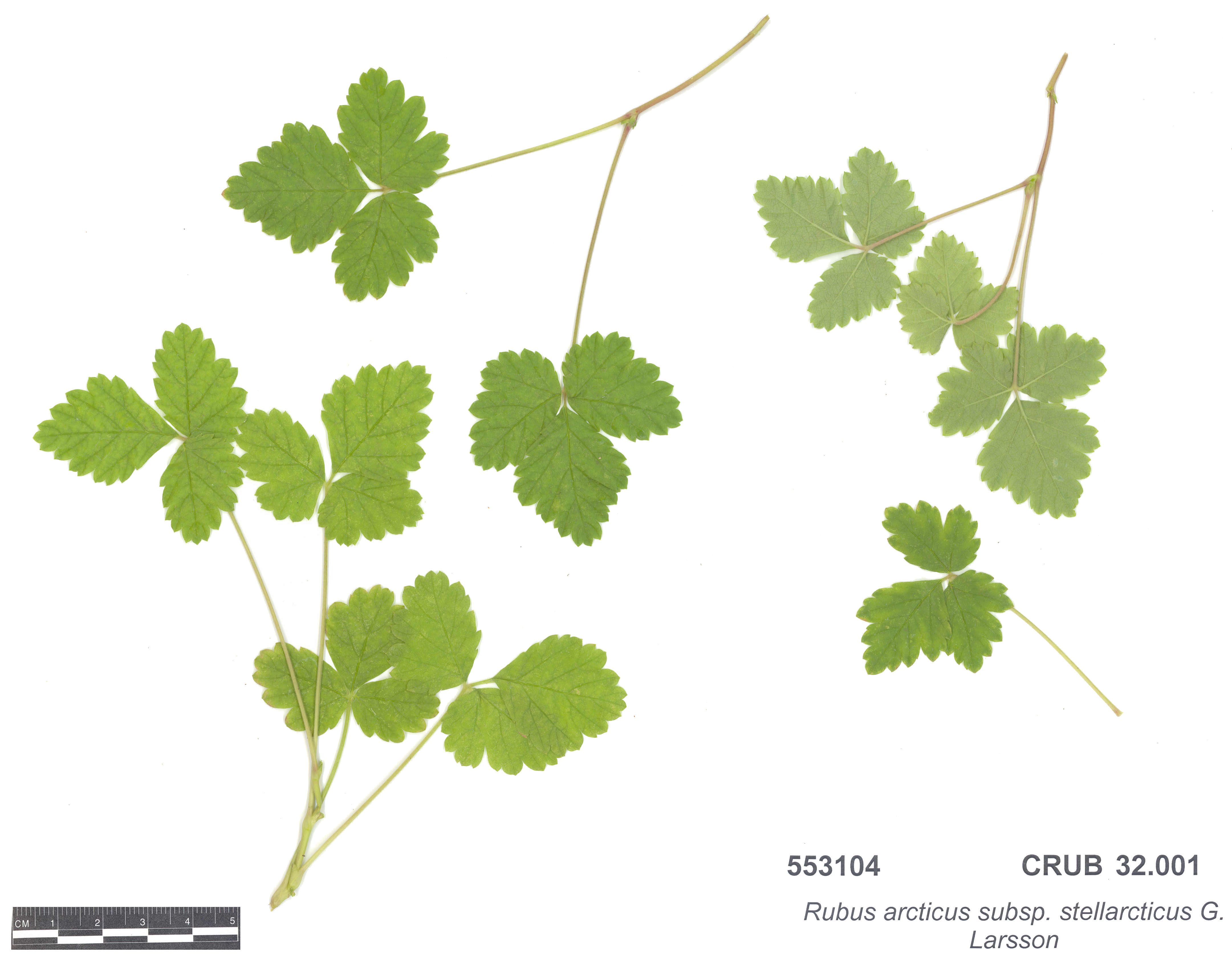 | | 1981 | COLLECTED | | | | | | Breeding material | = Allakerbar
| 1448076 | PI 553104 |