| 0 | PI 687149 sos | R. trivialis LBJWC-0004 | Rubus trivialis Michx. | Texas, United States | COR |  | | 2011 | COLLECTED | 05/11/2002 | | | | | Wild material | | 1895357 | PI 687149 sos |
| 1 | PI 653290 | R. trivialis Ideal Farm | Rubus trivialis Michx. | North Carolina, United States | COR |  | | 2007 | COLLECTED | 06/02/2007 | Ideal Farm in Castle Hayne growing in drainage ditch. | 34.35903000, -77.83560000 | 6 | Non-cultivated edge of farm. Associated Plants: Rubus cuneifolius and Rhus radicans. | Wild material | Kim Hummer, Michael Dossett collection from North Carolina.
| 1730083 | PI 653290 |
| 2 | PI 643962 | R. trivialiis HL-2006-001 | Rubus trivialis Michx. | Florida, United States | COR |  | | 2006 | COLLECTED | 05/22/2006 | 65 miles east of Tallahassee, Florida; rest area pull off on Interstate 10 W. Between Suwannee River and Madison, near Twin Rivers State Forest. Scatered throughout, around perimeter of wooded walking area near parking. | 30.36910000, -83.24517000 | 21 | Sandy soil, under loblolly pine forest. Associated with Vaccinium arboreum, Vaccinium stamineum, Vitis, poison ivy (Rhus). Plants plentiful where light came through wooded area. | Wild material | | 1702609 | PI 643962 |
| 3 | PI 643963 | R. trivialis HL-2006-003 | Rubus trivialis Michx. | Florida, United States | COR |  | | 2006 | COLLECTED | 05/22/2006 | Nearby 16438 Chipola Road in Blountstown, Calhoun county. East side of road from the Paramore Restaurant. | 30.43776000, -85.05820000 | 31 | Sandy soil, forest edge where open, scatered throughout around wooded area. | Wild material | | 1702610 | PI 643963 |
| 4 | PI 643964 | R. trivialis HL-2006-028 | Rubus trivialis Michx. | Florida, United States | COR |  | | 2006 | COLLECTED | 05/24/2006 | Rest area on the east side of the Apalachicola River, along I-10 were the freeway follows Flat Creek. | 30.62652000, -84.89363000 | 60 | | Wild material | | 1702612 | PI 643964 |
| 5 | PI 638281 | R. trivialis DC2004-1A | Rubus trivialis Michx. | Georgia, United States | | | Historic | 2004 | COLLECTED | 05/17/2004 | North of Griffin, east side of U.S. 19/41 at Heads Creek, on south side of Holiday Inn parking lot. | 33.28545000, -84.29128000 | 0 | Southeast temperate forest, open area in creek drainage with Fucus and other Rubus spp. Among the other shurbs and trees there appeared to be an Ash and a Lilac. | Wild material | Douglas Cook collection from Georgia.
| 1656334 | PI 638281 |
| 6 | PI 638231 | R. trivialis | Rubus trivialis Michx. | Louisiana, United States | COR | 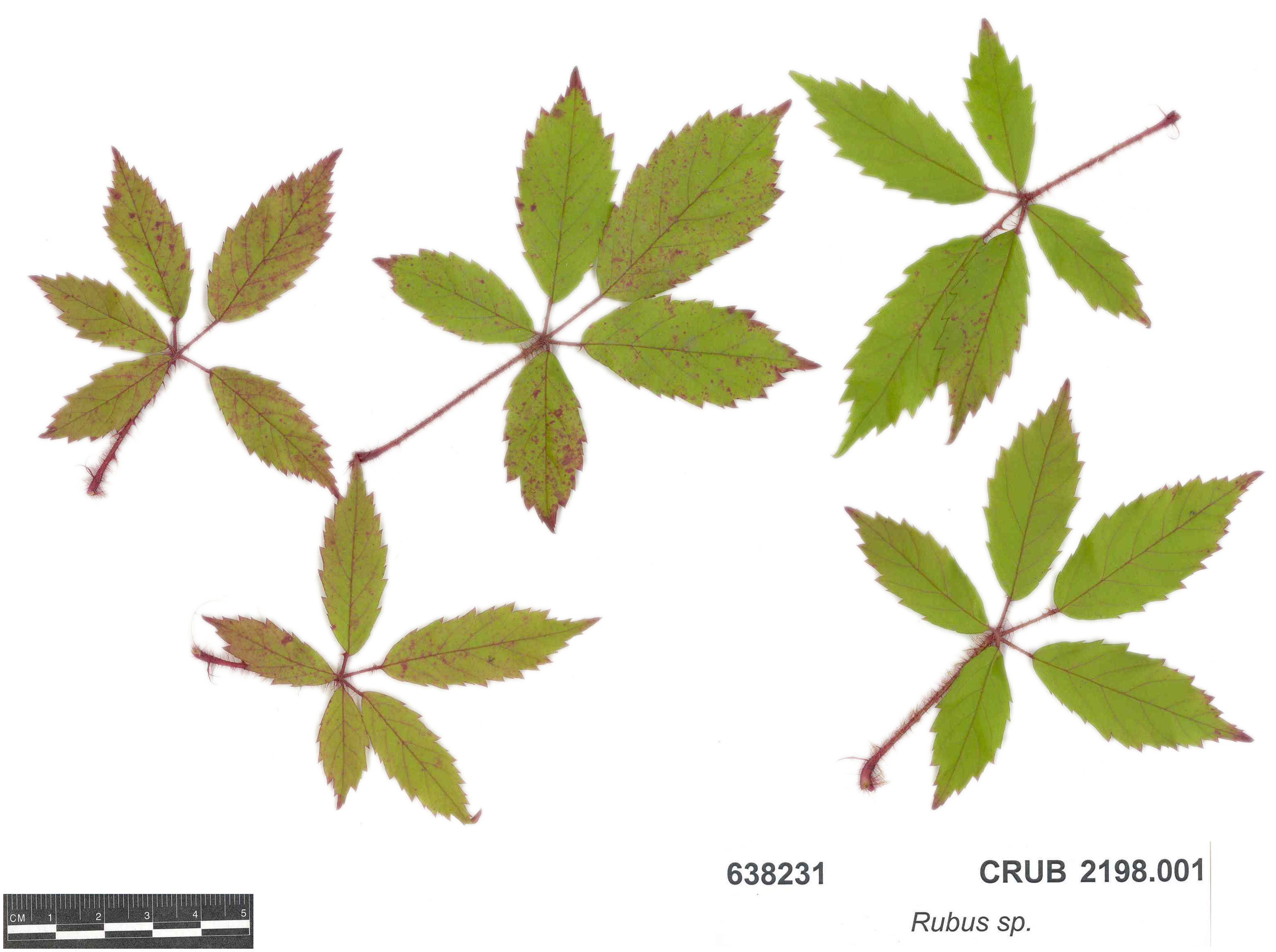 | | 2002 | COLLECTED | 09/2002 | Rapides Parish | 31.55999000, -93.01000000 | 0 | | Wild material | | 1648393 | PI 638231 |
| 7 | PI 638232 | R. trivialis | Rubus trivialis Michx. | Louisiana, United States | COR | 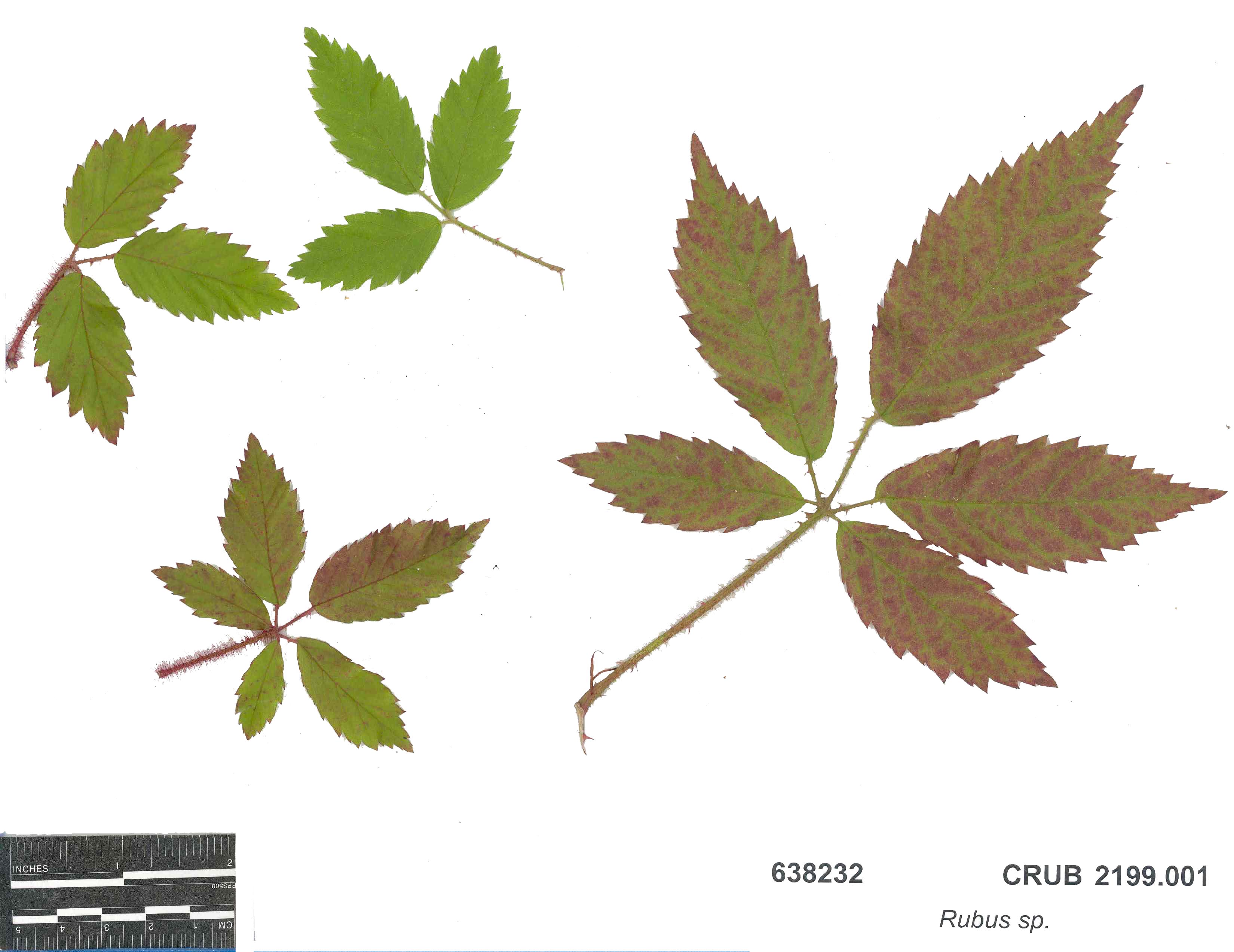 | | 2002 | COLLECTED | 09/2002 | Rapides Parish | 31.55999000, -93.01000000 | 0 | | Wild material | | 1648394 | PI 638232 |
| 8 | PI 638233 | R. trivialis | Rubus trivialis Michx. | Louisiana, United States | COR |  | | 2002 | COLLECTED | 09/2002 | Rapides Parish | 31.55999000, -93.01000000 | 0 | | Wild material | | 1648395 | PI 638233 |
| 9 | PI 554056 | R. trivialis NC 87-14-1 | Rubus trivialis Michx. | North Carolina, United States | COR | | | 1987 | DEVELOPED | | | | | | Breeding material | North Carolina selection number
| 1449028 | PI 554056 |
| 10 | PI 553311 | 'Oklawaha' | Rubus trivialis Michx. | Florida, United States | COR |  | | 1985 | DEVELOPED | 1964 | | | | | Cultivar | Orig. in Gainesville, Fla., by R.H. Sharpe, J.S. Shoemaker, and P.J. Westgate, Florida Agr. Expt. Sta. Introd. in 1964; distributed by Florida Foundation Seed Producers, P.O. Box 14006, Univer-sity Station, Gainesville, FL 32603. F2 (Regal Ness x Rubus trivialis) open-pollinated; cross made in 1953 by Sharpe; sibling of Flordagrand; tested as Fla. 24. Fruit: about 11/ 8 inch x 1/ 2 inch in diam.; somewhat blunt; skin black, somewhat glossy, turning reddish if exposed to sun after picking; juice deep red; aroma delicate and delightful; drupelets slightly smaller than Flordagrand; ripening starts about 2-5 days before Flordagrand, which it resembles; harvest dates vary: 28 Apr.-16 May in late, cool season, 9-24 Apr. in early, warm, dry season. Bush: vigorous; canes trailing; semi-evergreen to evergreen; yield of 8 pints or more per plant in alternate rows of Oklawaha and Flordagrand, both an effective pollinator for each other; largely self-fruitful. Named for a river in Florida. Brooks and Olmo
Indian Tribe
Cultivar Synonym= Tested as Fla 24
NAMED FOR= Oklawaha River in Florida | 1448283 | PI 553311 |
| 11 | PI 553948 | R. trivialis Louisiana | Rubus trivialis Michx. | Louisiana, United States | COR |  | | 1985 | COLLECTED | | Shreveport, Louisiana | 32.20000000, -93.75000000 | | Frierson, Louisiana | Wild material | Green canes, white pubescence, pale yellow fruit. (This accession was part of the PL,SD 'breakout' - 1992) | 1448920 | PI 553948 |
| 12 | PI 553928 | R. trivialis T 22 | Rubus trivialis Michx. | Texas, United States | COR | | | 1983 | COLLECTED | 10/14/1983 | Caney Creek Bridge, Willis | 30.50000000, -95.00000000 | 80 | Caney Creek Bridge, Willis | Wild material | Small, low growing bramble, plants forming a mat | 1448900 | PI 553928 |
| 13 | PI 653289 | R. cuneifolius introg. with R. trivialis | Rubus cuneifolius Pursh | North Carolina, United States | COR |  | | 2007 | COLLECTED | 06/02/2007 | Ideal Farm in Castle Hayne growing in drainage ditch. | 34.35903000, -77.83560000 | 6 | Non-cultivated edge of farm. | Wild material | Kim Hummer, Michael Dossett collection from North Carolina.
| 1730082 | PI 653289 |
| 14 | PI 643971 | 'Mammoth' | Rubus hybr. | Australia | COR |  | | 2000 | DONATED | | | | | | Cultivar | This is another blackberry-dewberry which since it partakes most of the blackberry parent, is usually listed with blackberries, The variety is grown very little in New York and the East because it is too tender to cold, but it is a standard bramble fruit in California, esteemed both for its healthy, vigorous, productive plants and for its enormous, handsome, richly flavored fruits. Well grown, the fruits are said to be larger than those of any other of the cultivated brambles. The plants of Mammoth are remarkable in that the canes grow upright several feet and then begin to trail, sometimes attaining a length of 25 or 30 feet. The canes are stout and covered with small, short spines. The plants are propagated from tips and usually fail to come from root cuttings, the method of propagating blackberries. The leaves are semi-evergreen in California. The blossoms are self-sterile and the loganberry is usually set for cross pollination. TYwo other varieties very similar to Mammoth are offered by nurserymen under the names Tribble and Cory Thornless. Californians say that they are distinct, however. The canes of the Cory Thornless are said to be thornless or nearly so. Mammoth was originated by Judge J. H. Logan, Santa Cruz, California, and is supposed to be a cross between the Texas blackberry and the western dewberry. The name was added to the list of fruits recommended for culture by the American Pomological Society in 1909. The variety has often been confused with Bartel which has also been called Mammoth.Plants very vigorous, semi-trailing, tender to cold, unproductive in the East, but very productive on the Pacific Slope, healthy; propagated from tips; reported that it cannot be increased by root-cuttings; canes very long, cylindrical to slightly angular, green mingled with a tinge of dull red, pubescent, glandular; prickles variable in length, small and short, unusually numerous, purplish red; leaflets 3, large, ovate, dark green, rugose, pubescent with dentate margins; petiole short, thick, very prickly. Flowers self-sterile, very late, in loose leafy clusters; petals white, oblong; peticles prickly, long, thick, eglandular; calyx tomentose, eglandular. Fruit early midseason, resists drought very well, said to ship poorly, very large regular in shape cylindrical-conic glossy black; druplets medium in size, very numerous, with strong coherence; core soft; flesh juicy, tender, rather sour until fully ripe when it becomes pleasantly subacid; quality good to very good if properly ripened. Hedrick. 1926. The small fruits of New York. p. 221.
Originated by Judge J. H. Logan in Santa Cruz, California
NAMED FOR= large fruit | 1608136 | PI 643971 |
| 15 | PI 673989 | TX-11 | Rudbeckia grandiflora (Sweet) C. C. Gmel. ex DC. | Texas, United States | OPGC |  | | 2010 | COLLECTED | 05/26/2010 | Upper West Gulf Coastal Plain. Marion County. Smithland Cuttoff Road approx. 1 mile east of SH 43. | 32.76347200, -94.18152800 | 53 | Roadside ROW/forest edge(tree farm/harvesting area). Land form: Flat. Land Use: Roadside ROW. Geology: Sandstone. Soil Texture: Sandy. Soil Color: Tan. | Wild material | Erect, coarse perennial to 125 cm tall; leaves mostly basal; ray flowers yellow and drooping. | 1897293 | PI 673989 |
| 16 | PI 657224 | V. fuscatum Glassy Mt. HD-2007-021 | Vaccinium fuscatum Aiton | South Carolina, United States | COR |  | | 2007 | COLLECTED | 06/04/2007 | Glassy Mountain at home number 3786 Glassy Mountain Road, Greenville County. Edge of road. | 35.13435000, -82.36098000 | 675 | Sandy loam duff associated with: Acer rubrum, Vitis palmata, Erigeron annuus, Commelina virginiaca, Oxydendron arboreum, Platanus occidentalis, Phytolacca americana, Quercus nigra, Rubus argutus and R. trivialis. 45 degree southeast slope. | Wild material | Kim Hummer, Michael Dossett collected from South Carolina.
Jim Ballington reidentified this accession as V. fuscatum. Personal communication from 2 August 2021:
From the leaf shape, general yellow-green color of the leaves, and the distinctive size (relative to the size of the berries) and shape of the calyx, my conclusion is that this accession is probably not V. simulatum, but rather the blue-fruited Carolina foothills form of V. fuscatum. | 1730115 | PI 657224 |
| 17 | PI 644255 | V. elliottii HL-2006-017 | Vaccinium elliottii Chapm. | Florida, United States | COR |  | | 2006 | COLLECTED | 05/23/2006 | Apalachicola National Forest, junction of Route 65 and Route 379 at Black Creek. Northwest of Sumatra, Liberty county. | 30.02630000, -84.98200000 | 4 | Open wooded area, sandy soil. Associated plants: Vitis, Smilax, slash pines and Rubus trivialis. | Wild material | | 1702623 | PI 644255 |
| 18 | PI 616689 | F. virginiana subsp. virginiana NC 95-4-1 | Fragaria virginiana Mill. subsp. virginiana | South Carolina, United States | COR | | Out of Season | 1995 | COLLECTED | 06/12/1995 | South Carolina, Williamsburg county, Creel Farm, Henry community. South from Hemingway on SC 41 to county road 121 , left on 121 for 4.5 miles to SC 512 in Henry. Just across SC 512 on 121, to Creel farm. | 34.32111000, -79.28556000 | 0 | Woodland, currently w/ a heavy canopy of mostly deciduous trees. V. tenellum, R. trivialis and R. flagellans occasionally in the woods and along the field edge. | Wild material | South Carolina was extremely frustrating, by the middle of the week we had only verified the existence of one location for Fragaria virginiana in the Coastal Plain, so we moved over into the southern piedmont. Three accessions were located in the Edgefield District of Sumter National Forest and four in Greenwood State Park. The one verified Coastal Plain location is in a garden near Lexington, SC. Twelve accessions of Vaccinium spp., four of Gaylussacia frondosa, and one of Rubus argutus were also collected. Southeastern Louisiana and Mississippi were more successful, but not abundant in these areas either. No accessions were found south of Starkville, MS. Specific previous sites were visited near Hattisburg and Laurel, MS, but F. virginiana was no longer present. A total 33 accessions of F. virginiana were collected from east central and northeastern MS, occurring in small outcroppings of prairie; characterized by a very thin layer of 'usually' sticky black soil over decaying limestone with scattered to dense overstory of Juniperus virginiana. Fragaria virginiana was often found growing directly under J. virginiana where little other vegetation occurred. Dr. Sidney McDaniel of Mississippi State University refers to these areas as 'cedar prairie woodlands'. In addition to F. virginiana, 14 accessions of Vaccinium spp. and two accessions Rubus flagellaris were also collected. These trips raise serious questions concerning the status of Fragaria virginiana in the southeastern US. Is it really as rare as it appears to be? In Greenwood State Park in South Carolina, the species was pioneering on bare ground two years after clearcutting. In Mississippi it was not found in such areas, although one herbarium specimen came from the edged of wildlife food plot. People in almost every area told us how abundant wild strawberries were on their property or in their region, but these almost always turned out to be either Duchesnea indica, or Potentilla canadensis. | 1507705 | PI 616689 |
| 19 | PI 616700 | F. virginiana NC 95-16-6 | Fragaria virginiana Mill. subsp. grayana (Vilm. ex J. Gay) Staudt | Mississippi, United States | COR |  | Out of Season | 1995 | COLLECTED | 07/10/1995 | Mississippi, Oktibbeha county. From Starkville, E on Hwy 82/182 2.2 mi to sec rd 16. L on sec rd 16 4.6 mi to Rock Hill Rd. Righton Rock Hill Rd for 1.6 mi. | 33.54611000, -88.71472000 | 0 | On right: almost excl in shade of Juniperus virgiana, shallow soil over exposed chalk - shade appeared critical for survival. On left: more or less open, competing w/ grasses & R. trivialis. | Wild material | South Carolina was extremely frustrating, by the middle of the week we had only verified the existence of one location for Fragaria virginiana in the Coastal Plain, so we moved over into the southern piedmont. Three accessions were located in the Edgefield District of Sumter National Forest and four in Greenwood State Park. The one verified Coastal Plain location is in a garden near Lexington, SC. Twelve accessions of Vaccinium spp., four of Gaylussacia frondosa, and one of Rubus argutus were also collected. Southeastern Louisiana and Mississippi were more successful, but not abundant in these areas either. No accessions were found south of Starkville, MS. Specific previous sites were visited near Hattisburg and Laurel, MS, but F. virginiana was no longer present. A total 33 accessions of F. virginiana were collected from east central and northeastern MS, occurring in small outcroppings of prairie; characterized by a very thin layer of 'usually' sticky black soil over decaying limestone with scattered to dense overstory of Juniperus virginiana. Fragaria virginiana was often found growing directly under J. virginiana where little other vegetation occurred. Dr. Sidney McDaniel of Mississippi State University refers to these areas as 'cedar prairie woodlands'. In addition to F. virginiana, 14 accessions of Vaccinium spp. and two accessions Rubus flagellaris were also collected. These trips raise serious questions concerning the status of Fragaria virginiana in the southeastern US. Is it really as rare as it appears to be? In Greenwood State Park in South Carolina, the species was pioneering on bare ground two years after clearcutting. In Mississippi it was not found in such areas, although one herbarium specimen came from the edged of wildlife food plot. People in almost every area told us how abundant wild strawberries were on their property or in their region, but these almost always turned out to be either Duchesnea indica, or Potentilla canadensis. | 1507717 | PI 616700 |
| 20 | PI 616725 | F. virginiana NC 95-16-1 | Fragaria virginiana Mill. subsp. grayana (Vilm. ex J. Gay) Staudt | Mississippi, United States | COR |  | Out of Season | 1995 | COLLECTED | 07/10/1995 | Mississippi, Oktibbeha county. From Starkville, E on Hwy 82/182 2.2 mi to sec rd 16. L on sec rd 16 4.6 mi to Rock Hill Rd. Righton Rock Hill Rd for 1.6 mi. | 33.54611000, -88.71472000 | 0 | On right: almost excl in shade of Juniperus virgiana, shallow soil over exposed chalk - shade appeared critical for survival. On left: more or less open, competing w/ grasses & R. trivialis. | Wild material | South Carolina was extremely frustrating, by the middle of the week we had only verified the existence of one location for Fragaria virginiana in the Coastal Plain, so we moved over into the southern piedmont. Three accessions were located in the Edgefield District of Sumter National Forest and four in Greenwood State Park. The one verified Coastal Plain location is in a garden near Lexington, SC. Twelve accessions of Vaccinium spp., four of Gaylussacia frondosa, and one of Rubus argutus were also collected. Southeastern Louisiana and Mississippi were more successful, but not abundant in these areas either. No accessions were found south of Starkville, MS. Specific previous sites were visited near Hattisburg and Laurel, MS, but F. virginiana was no longer present. A total 33 accessions of F. virginiana were collected from east central and northeastern MS, occurring in small outcroppings of prairie; characterized by a very thin layer of 'usually' sticky black soil over decaying limestone with scattered to dense overstory of Juniperus virginiana. Fragaria virginiana was often found growing directly under J. virginiana where little other vegetation occurred. Dr. Sidney McDaniel of Mississippi State University refers to these areas as 'cedar prairie woodlands'. In addition to F. virginiana, 14 accessions of Vaccinium spp. and two accessions Rubus flagellaris were also collected. These trips raise serious questions concerning the status of Fragaria virginiana in the southeastern US. Is it really as rare as it appears to be? In Greenwood State Park in South Carolina, the species was pioneering on bare ground two years after clearcutting. In Mississippi it was not found in such areas, although one herbarium specimen came from the edged of wildlife food plot. People in almost every area told us how abundant wild strawberries were on their property or in their region, but these almost always turned out to be either Duchesnea indica, or Potentilla canadensis. | 1507744 | PI 616725 |
| 21 | PI 560090 | MPW-WWR 220 | Cuphea viscosissima Jacq. | Virginia, United States | NC7 | | | 1989 | COLLECTED | 09/15/1989 | Thin shale soil, with Rubus trivialis, Aster pilosus, Fragaria virginiana, Echium vulgare and Daucus carota .3 mi from Co. 660 rr crossing, W of US11 660 int., S of rr on top of embankment, Marion quad. Marion city, in Smyth Cty. | 36.81666667, -81.56666667 | 642 | | Wild material | Population of 12 plants. | 1455062 | PI 560090 |
| 22 | NA 88506 | RJL2022TX-001 | Itea virginica L. | Texas, United States | NA | | | 2022 | COLLECTED | 10/31/2022 | Plants growing at Shangri La Botanical Gardens and Nature Center, Orange, TX along Adams Bayou, accessed via internal service roads. Plant is infrequent at this site. | 30.10322000, -93.76271700 | 1 | Plants are growing in shade to part-shade of a Taxodium distichum-Nyssa aquatica dominated forested swampland associated with Adams Bayou in a wet low-lying area that is frequently inundated.
Soils: The underlying geology of this area is of Quaternary to Late Pleistocene origin and comprised of the Beaumont Formation. This formation is yellowish- to brownish-gray, locally reddish orange with very fine to fine quartz sand, silt, and minor fine gravel, intermixed and interbedded. It also includes stream channel, point-bar, cravasse-splay, and natural levee ridge deposits, and clayey fill in abandoned channels. Channel fill is dark brown to brownish-gray with laminated clay and silt that is organic-rich. Includes marine delta-front sand, lagoonal clay, and near-shore marine sand beneath and landward of bays along the coast. Depth of this unconsolidated outwash ranges from 3-100 meters thick.
Source: USGS Texas Geologic Map Data (https://mrdata.usgs.gov/geology/state/sgmc-unit.php?unit=TXQbs%3B0)
The primary soil types in the collection area are classified as Cowmarsh series. The Cowmarsh series consists of very deep, very poorly drained soils that formed in mucky silty clayey alluvial deposits of Holocene age. These depressional soils are oxbows and relict channels of rivers where flooding and ponding is frequent. Slope ranges from 0 to 1 percent but mainly less than 1 percent. very poorly drained. Runoff is negligible. Frequently flooded for very long periods from February through May and surface remains saturated for very long periods once flood waters have receded.
Source: NRCS Web Soil Survey (https://websoilsurvey.sc.egov.usda.gov/App/WebSoilSurvey.aspx) | Wild material | | 2139813 | NA 88506 |
| 23 | NA 88507 | RJL2022TX-002 | Fraxinus caroliniana Mill. | Texas, United States | NA | | | 2022 | COLLECTED | 10/31/2022 | Plants growing at Shangri La Botanical Gardens and Nature Center, Orange, TX along Adams Bayou, accessed via internal service roads. Plant is relatively common along Adams Bayou but scattered. | 30.09989400, -93.75239700 | 1 | Plants are growing in part-shade to sun of a Taxodium distichum-Nyssa aquatica dominated forested swampland associated with Adams Bayou in a wet low-lying area that is frequently inundated. While found as an occasional understory element, it is more common on the edge of the swampland forest where there are high light conditions.
Soils: The underlying geology of this area is of Quaternary to Late Pleistocene origin and comprised of the Beaumont Formation. This formation is yellowish- to brownish-gray, locally reddish orange with very fine to fine quartz sand, silt, and minor fine gravel, intermixed and interbedded. It also includes stream channel, point-bar, cravasse-splay, and natural levee ridge deposits, and clayey fill in abandoned channels. Channel fill is dark brown to brownish-gray with laminated clay and silt that is organic-rich. Includes marine delta-front sand, lagoonal clay, and near-shore marine sand beneath and landward of bays along the coast. Depth of this unconsolidated outwash ranges from 3-100 meters thick.
Source: USGS Texas Geologic Map Data (https://mrdata.usgs.gov/geology/state/sgmc-unit.php?unit=TXQbs%3B0)
The primary soil types in the collection area are classified as Cowmarsh series. The Cowmarsh series consists of very deep, very poorly drained soils that formed in mucky silty clayey alluvial deposits of Holocene age. These depressional soils are oxbows and relict channels of rivers where flooding and ponding is frequent. Slope ranges from 0 to 1 percent but mainly less than 1 percent. very poorly drained. Runoff is negligible. Frequently flooded for very long periods from February through May and surface remains saturated for very long periods once flood waters have receded.
Source: NRCS Web Soil Survey (https://websoilsurvey.sc.egov.usda.gov/App/WebSoilSurvey.aspx) | Wild material | | 2139814 | NA 88507 |
| 24 | NA 88508 | RJL2022TX-003 | Morella cerifera (L.) Small | Texas, United States | NA | | | 2022 | COLLECTED | 10/31/2022 | Plants growing at Shangri La Botanical Gardens and Nature Center Orange, TX along Adams Bayou, accessed via internal service roads. Plant is relatively common along Adams Bayou but scattered in the understory. | 30.10035500, -93.75288700 | 1 | Plants are growing in part-shade to shade of a Taxodium distichum-Nyssa aquatica dominated forested swampland associated with Adams Bayou in a wet low-lying area that is frequently inundated.
Soils: The underlying geology of this area is of Quaternary to Late Pleistocene origin and comprised of the Beaumont Formation. This formation is yellowish- to brownish-gray, locally reddish orange with very fine to fine quartz sand, silt, and minor fine gravel, intermixed and interbedded. It also includes stream channel, point-bar, cravasse-splay, and natural levee ridge deposits, and clayey fill in abandoned channels. Channel fill is dark brown to brownish-gray with laminated clay and silt that is organic-rich. Includes marine delta-front sand, lagoonal clay, and near-shore marine sand beneath and landward of bays along the coast. Depth of this unconsolidated outwash ranges from 3-100 meters thick.
Source: USGS Texas Geologic Map Data (https://mrdata.usgs.gov/geology/state/sgmc-unit.php?unit=TXQbs%3B0)
The primary soil types in the collection area are classified as Cowmarsh series. The Cowmarsh series consists of very deep, very poorly drained soils that formed in mucky silty clayey alluvial deposits of Holocene age. These depressional soils are oxbows and relict channels of rivers where flooding and ponding is frequent. Slope ranges from 0 to 1 percent but mainly less than 1 percent. very poorly drained. Runoff is negligible. Frequently flooded for very long periods from February through May and surface remains saturated for very long periods once flood waters have receded.
Source: NRCS Web Soil Survey (https://websoilsurvey.sc.egov.usda.gov/App/WebSoilSurvey.aspx) | Wild material | | 2139815 | NA 88508 |
| 25 | OPGC 5812 | 210638 | Lobelia cardinalis L. | Texas, United States | OPGC |  | | 2021 | | | | | | | Wild material | | 1895309 | OPGC 5812 |
| 26 | OPGC 7627 | MSB210557 | Agalinis edwardsiana Pennell | Texas, United States | OPGC |  | | 2011 | | | | | | | Wild material | | 1895192 | OPGC 7627 |
| 27 | WLP 2480 | 210568 | Malvaviscus arboreus Cav. | Texas, United States | NA |  | | 2011 | COLLECTED | 09/30/2003 | | | | | Wild material | | 1895410 | WLP 2480 |