| 0 | W6 62555 | FWS0502-51 | Scirpus cyperinus (L.) Kunth | Pennsylvania, United States | W6 |  | | 2025 | | | | | | | Wild material | Clear cut forest | 2192253 | W6 62555 |
| 1 | W6 60198 | NEWFS-730 | Scirpus cyperinus (L.) Kunth | New Hampshire, United States | W6 | | | 2021 | | | | | | | Wild material | Branching inflorescence with rounded fluffy spikelets on long drooping peduncles. Although the girdle has slightly anthocyanic pigments this is C cyperinus. | 2138824 | W6 60198 |
| 2 | W6 60210 | NEWFS-746 | Scirpus cyperinus (L.) Kunth | New Hampshire, United States | W6 | | | 2021 | | | | | | | Wild material | Inflorescence a nodding spray of termil wooly brown seedheads. | 2138836 | W6 60210 |
| 3 | W6 60226 | NEWFS-785 | Scirpus cyperinus (L.) Kunth | Massachusetts, United States | W6 | | | 2021 | | | | | | | Wild material | Branching inflorescence with rounded, fluffy spikelets on long, drooping peduncles. Although the girdle has slightly anthocyanic pigments this is S. cyperinus. | 2138852 | W6 60226 |
| 4 | W6 60240 | NEWFS-803 | Scirpus cyperinus (L.) Kunth | Massachusetts, United States | W6 | | | 2021 | | | | | | | Wild material | Semi drooping inflorescence seeds loosely held in inflorescence tufts. | 2138866 | W6 60240 |
| 5 | W6 60123 | NEWFS-382 | Scirpus cyperinus (L.) Kunth | Massachusetts, United States | W6 | | | 2021 | | | | | | | Wild material | Wooly. | 2137208 | W6 60123 |
| 6 | W6 59148 | CBG-10429 | Scirpus cyperinus (L.) Kunth | Illinois, United States | W6 | | | 2021 | | | | | | | Wild material | | 2120073 | W6 59148 |
| 7 | W6 58717 | NEWFS-444 | Scirpus cyperinus (L.) Kunth | New Hampshire, United States | W6 | | | 2021 | | | | | | | Wild material | | 2115656 | W6 58717 |
| 8 | W6 58739 | NEWFS-521 | Scirpus cyperinus (L.) Kunth | New Hampshire, United States | W6 | | | 2021 | | | | | | | Wild material | | 2115678 | W6 58739 |
| 9 | W6 58757 | NEWFS-556 | Scirpus cyperinus (L.) Kunth | Massachusetts, United States | W6 | | | 2021 | | | | | | | Wild material | | 2115696 | W6 58757 |
| 10 | W6 58777 | NEWFS-589 | Scirpus cyperinus (L.) Kunth | Massachusetts, United States | W6 | | | 2021 | | | | | | | Wild material | | 2115716 | W6 58777 |
| 11 | W6 58803 | NEWFS-833 | Scirpus cyperinus (L.) Kunth | Massachusetts, United States | W6 | | | 2021 | | | | | | | Wild material | Small white seeds loosely wrapped up in drooping terminal wooly inflorescence. | 2115742 | W6 58803 |
| 12 | W6 58578 | MARSB-339 | Scirpus cyperinus (L.) Kunth | New Jersey, United States | W6 | | | 2021 | | | | | | | Wild material | | 2113508 | W6 58578 |
| 13 | W6 58606 | MARSB-484 | Scirpus cyperinus (L.) Kunth | New Jersey, United States | W6 | | | 2021 | | | | | | | Wild material | forms dense tussocks on short rhizomes. leaf blades dark green, 3-10mm wide. glomerular inflorescence of orange, wooly spikelets. seeds very small, white. | 2113536 | W6 58606 |
| 14 | W6 58613 | MARSB-498 | Scirpus cyperinus (L.) Kunth | New Jersey, United States | W6 | | | 2021 | | | | | | | Wild material | Stem shape in cross-sectionûthe stem is roughly triangular in cross-sectionûthe stem is round or oval in cross-sectionûLeaf blade widthû3–10 mmûLeaf blade cross-sectionûthe leaf blade is flat or rolled in at the edgesûInflorescence positionûthe inflorescence is at the tip of the plantûInflorescence branchingûthe inflorescence is branchedûFruit type (general)ûthe fruit is like a seed, and surrounded by hairsûthe fruit is like a seed, and surrounded by scalesûFruit lengthû0.6–0.9 mmûLeaf position on plantûsome leaf attachment points are above the midpoint of the stemûthe attachment points of all the leaves are at or near the base of the plantûPerianth compositionûthere are bristles attached at the base of the acheneûFruit cross-sectionûthe fruit is lenticular (lens-shaped) in cross-sectionûthe fruit is triangular to terete (circular) in cross-section | 2113543 | W6 58613 |
| 15 | W6 58625 | MARSB-544 | Scirpus cyperinus (L.) Kunth | New Jersey, United States | W6 | | | 2021 | | | | | | | Wild material | | 2113555 | W6 58625 |
| 16 | W6 58641 | MARSB-609 | Scirpus cyperinus (L.) Kunth | New York, United States | W6 | | | 2021 | | | | | | | Wild material | Vaguely triangular stem, branches radiate from one point at the top of the stem, flowers are in three-dimensional, woolly egg-shaped clusters. The end stalks of the flower clusters droop and the inflorescence has long leafy bracts. | 2113571 | W6 58641 |
| 17 | W6 58650 | MARSB-653 | Scirpus cyperinus (L.) Kunth | Delaware, United States | W6 | | | 2021 | | | | | | | Wild material | Perennial sedge with attractive, copper-colored, woolly inflorescences. It grows in dense tussocks and has white flowers. When seeds are ready, inflorescences turn dark and woolly, with small orange seeds. | 2113580 | W6 58650 |
| 18 | W6 57417 | NEWFS-400 | Scirpus cyperinus (L.) Kunth | New Hampshire, United States | W6 |  | | 2019 | | | | | | | Wild material | | 2098214 | W6 57417 |
| 19 | W6 57371 | NEWFS-232 | Scirpus cyperinus (L.) Kunth | Massachusetts, United States | W6 |  | | 2019 | | | | | | | Wild material | | 2098168 | W6 57371 |
| 20 | W6 57367 | NEWFS-219 | Scirpus cyperinus (L.) Kunth | Massachusetts, United States | W6 |  | | 2019 | | | | | | | Wild material | | 2098164 | W6 57367 |
| 21 | W6 57329 | NEWFS-131 | Scirpus cyperinus (L.) Kunth | Massachusetts, United States | W6 |  | | 2019 | | | | | | | Wild material | | 2098126 | W6 57329 |
| 22 | W6 57136 | MARSB-324 | Scirpus cyperinus (L.) Kunth | New Jersey, United States | W6 |  | | 2019 | | | | | | | Wild material | | 2097575 | W6 57136 |
| 23 | W6 57237 | MARSB-669 | Scirpus cyperinus (L.) Kunth | Delaware, United States | W6 |  | | 2019 | | | | | | | Wild material | | 2097676 | W6 57237 |
| 24 | W6 54741 | NCBG-508 | Scirpus cyperinus (L.) Kunth | North Carolina, United States | W6 |  | | 2018 | | | | | | | Wild material | Scirpus cyperinus | 1965967 | W6 54741 |
| 25 | W6 54744 | NCBG-524 | Scirpus cyperinus (L.) Kunth | Virginia, United States | W6 |  | | 2018 | | | | | | | Wild material | Scirpus cyperinus | 1965970 | W6 54744 |
| 26 | W6 54021 | MARSB-217 | Scirpus cyperinus (L.) Kunth | New York, United States | W6 |  | | 2018 | | | | | | | Wild material | Scirpus cyperinus | 1964737 | W6 54021 |
| 27 | W6 54029 | MARSB-239 | Scirpus cyperinus (L.) Kunth | New York, United States | W6 |  | | 2018 | | | | | | | Wild material | Scirpus cyperinus | 1964745 | W6 54029 |
| 28 | W6 54043 | MARSB-325 | Scirpus cyperinus (L.) Kunth | New Jersey, United States | W6 |  | | 2018 | | | | | | | Wild material | Scirpus cyperinus | 1964759 | W6 54043 |
| 29 | W6 54052 | MARSB-378 | Scirpus cyperinus (L.) Kunth | New Jersey, United States | W6 |  | | 2018 | | | | | | | Wild material | Scirpus cyperinus | 1964768 | W6 54052 |
| 30 | W6 52988 | NEWFS-563 | Scirpus cyperinus (L.) Kunth | Connecticut, United States | W6 |  | | 2017 | | | | | | | Wild material | | 1954731 | W6 52988 |
| 31 | W6 49585 | CBG-2571 | Scirpus cyperinus (L.) Kunth | Illinois, United States | W6 |  | | 2015 | | | | | | | Wild material | | 1926056 | W6 49585 |
| 32 | W6 48895 | MARSB-34 | Scirpus cyperinus (L.) Kunth | Maryland, United States | W6 |  | | 2015 | | | | | | | Wild material | | 1922882 | W6 48895 |
| 33 | W6 48896 | MARSB-92 | Scirpus cyperinus (L.) Kunth | West Virginia, United States | W6 |  | | 2015 | | | | | | | Wild material | | 1922883 | W6 48896 |
| 34 | W6 46120 | CBG-1874 | Scirpus cyperinus (L.) Kunth | Missouri, United States | W6 |  | | 2013 | | | | | | | Wild material | | 1908952 | W6 46120 |
| 35 | W6 60197 | NEWFS-729 | Scirpus atrovirens Willd. | New Hampshire, United States | W6 | | | 2021 | | | | | | | Wild material | Tightly clumped termil inflorescences. | 2138823 | W6 60197 |
| 36 | PI 679702 | V. macrocarpon USFS-ONF-2015-1 | Vaccinium macrocarpon Aiton | Michigan, United States | COR | | | 2016 | COLLECTED | 08/31/2015 | Gogebic County, Ottawa National Forest, Watersmeet Ranger District, T44N R41 W, Section 9, next to Cisco Lake Road, north side. | 46.22302000, -89.43894000 | 512 | Small, floating bog, surrounded by moat of open water in an area of mixed hardwoods, lakes and developed lots. Some parts of bog have a dense tangle of cranberry vines and some have only a few. Associated plants Sphagnum spp., Chamaedaphne calyculata, Eriophorum sp., Triadenum fraseri, and Iris versicolor. On one end there are more plants of Typha sp., Carex sp., and Scirpus cyperinus, with no V. macrocarpon present. No V. oxycoccos observed anywhere in bog. | Wild material | | 1933068 | PI 679702 |
| 37 | PI 679664 | V. macrocarpon USFA-ANF-2014-1 | Vaccinium macrocarpon Aiton | Pennsylvania, United States | COR | | | 2014 | COLLECTED | 11/06/2014 | McKean County, Allegheny National Forest, Bradford Ranger District. Along both sides of FR320, approximately 0.2 miles south of junction with FR455. | 41.81790828, -78.73479570 | 629 | Fen. Mixed mosaic of grass/sedge meadow, sphagnum lawn and dry upland mounds. Eriophorum virginicum, Scirpus cyperinus, Glyceria canadensis, Lycopodiella inundata, Vaccinium macrocarpon and numerous Carex and Juncus spp. dominate the saturated portions, while Rubus hispidus and Lycopodium spp. dominate the drier mounds. Population size 1215 m2. | Wild material | Improvement status: wild
Frequency: Occasional to rare
Population distribution: irregular
Altitude: 629
Altimeter make\model: Trimble Geoexplorer 6000
Latitude: 41.817908283 ? N
Longitude: 78.734795701 ? W
GPS make\model: Trimble Geoexplorer 6000
GPS geodetic datum: WGS 1984
GPS uncertainty: 0.6
Slope: 0 ? 5%
Habitat: Fen. Mixed mosaic of grass/sedge meadow, sphagnum lawn and dry upland mounds ? Eriophorum virginicum, Scirpus cyperinus, Glyceria canadensis, Lycopodiella inundata, Vaccinium macrocarpon and numerous Carex and Juncus spp. dominate the saturated portions, while Rubus hispidus and Lycopodium spp. dominate the drier mounds. Population size 1215 m2.
Plant description: Typical for species. Plants present many upright shoots. No flowers. Abundant fruit. Fruit ranges from about 9 to 17 mm in diameter. Fruit shape ranges from pear-shaped to spherical. Fruit color ranges from salmon-pink to nearly black. Fruit consistency ranges from firm and waxy to soft and non-waxy. Vigor and productiveness of plants varies throughout population, though, in general, those in the southern half of the site are denser and bearing substantially more fruit. The densest fruit set tends to be right along road margins.
Type of propagule collected: Seed
Notes: This site is part of a brownwater upland wetland complex heavily impacted by historic Oil, Gas, and Mineral Activity and bisected by a maintained forest road. It drains into an unnamed tributary to Turnup Run. One small disjunct population (4.5 sq meters) is located approximately 1.15 miles NE of this site along the edge of FR305. The nearest sizeable population is located approximately 8.8 miles E of this site.
Collectors: Susan Dube
Comment: CRANBERRY IGRR PROJECT | 1922212 | PI 679664 |
| 38 | PI 613182 | V. macrocarpon Site D Ogle 1 | Vaccinium macrocarpon Aiton | Tennessee, United States | COR | | | 1991 | COLLECTED | 10/19/1991 | Side of Holston mountains above Shady Valley, Johnson county , Tennessee. | 36.51667000, -81.96667000 | 1120 | Habitat saturated stream bank at lower edge of secondary seep. Edged by dry deciduous woods. Carex sp., Scirpus cyperinus, Pinus strobus, Lyonia ligustrina, Rosa sp., Dulichium arundinaceum, et al. | Wild material | D. W. Ogle collection
| 1009852 | PI 613182 |
| 39 | PI 638753 | V. macrocarpon Site D. Ogle 2 | Vaccinium macrocarpon Aiton | Tennessee, United States | COR | | | 1991 | COLLECTED | 10/19/1991 | Side of Holston mountains above Shady Valley, Johnson county , Tennessee. | 36.51667000, -81.96667000 | 1120 | Habitat saturated stream bank at lower edge of secondary seep. Edged by dry deciduous woods. Carex sp., Scirpus cyperinus, Pinus strobus, Lyonia ligustrina, Rosa sp., Dulichium arundinaceum, et al. | Wild material | D. W. Ogle collection
| 1009838 | PI 638753 |
| 40 | W6 62553 | FWS0502-187 | Hypericum punctatum Lam. | Pennsylvania, United States | W6 | 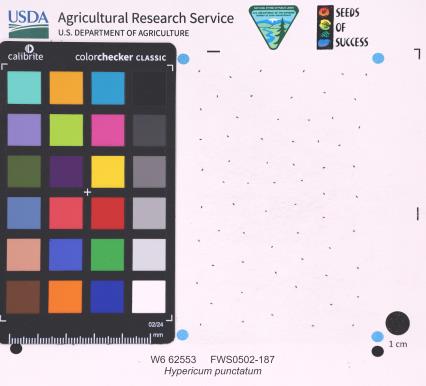 | | 2025 | | | | | | | Wild material | Woodcock management site | 2192251 | W6 62553 |
| 41 | W6 62560 | FWS0502-97 | Verbena hastata L. | Pennsylvania, United States | W6 |  | | 2025 | | | | | | | Wild material | Mixed in a dense stand of Fireweed | 2192258 | W6 62560 |
| 42 | WLP 2677 | RJL2022NJ-008 | Lyonia ligustrina (L.) DC. | New Jersey, United States | NA | | | 2022 | COLLECTED | 10/24/2022 | Plants growing along Burlington County Road 563, Green Bank Chatsworth Road, on the west side of the road, 16.22 kilometers south of the intersection with New Jersey Hwy 72. Plants are common at this location. | 39.73274000, -74.53449000 | 15 | Plants growing in a depression wetland habitat in full sun. This location seems somewhat historically disturbed by development of cranberry bogs surrounding the wet site.
Soils: The underlying geology of this area is the Cohansey Formation of middle Miocene origin and comprised of sand, white to yellow with local gravel and clay. It is sometimes locally stained red or orange brown by iron oxides and (or) cemented into large blocks of ironstone. Unweathered clay is typically dark gray, but commonly weathers white where it is interbedded with thin beds of ironstone. Sand is typically medium grained and moderately sorted although it ranges from fine to very coarse grained and from poorly to well sorted. Sand consists of quartz and siliceous rock fragments. Some beds are locally micaceous. Maximum thickness in the map area is about 60 meters; however, thickness is difficult to determine because of the irregular basal contact and extensive post-depositional erosion.
Source: USGS New Jersey Geologic Map Data (https://mrdata.usgs.gov/geology/state/sgmc-unit.php?unit=NJTch%3B1)
The primary soil type in the area of this collection is classified as Atsion sand, 0 to 2 percent slopes, Northern Tidewater Area. The area is close and probably overlapping with Lakehurst sand series soil. Atsion series soil is poor to slowly draining and comprised primarily of sandy marine sediments. Surface runoff is slow to very slow. This soil is strongly to extremely acid throughout the profile. This soil is generally 50-100 cm deep.
Source: NRCS Web Soil Survey (https://websoilsurvey.sc.egov.usda.gov/App/WebSoilSurvey.aspx) | Wild material | | 2139668 | WLP 2677 |
| 43 | WLP 2668 | RJL2022MD-014 | Aronia arbutifolia (L.) Pers. | Maryland, United States | NA | | | 2022 | COLLECTED | 10/05/2022 | Plant growing at Elkton State Forest along road in wet woodlands near the Elk Neck State Forest Shooting Range labelled as the address of 717 Irishtown Rd, North East, MD 21901. Plant is uncommon at this site. | 39.58716100, -75.91419000 | 55 | Plants are growing in part-shade to part sun of a deciduous forest on hummocks in a very moist to wet low-lying area along a seasonal or year-round flowing seep.
Soils: The underlying geology of this area is of Cretaceous origin and comprised of Potomac Group, including Raritan and Patapsco Formations, and Patuxent Formation. The Potomac Group includes: interbedded quartzose gravels; proto-quartzitic to orthoquartzitic argillaceous sands; and white, dark gray, and multicolored silts and clays. Included withing this zone are Raritan and Patapsco Formations comprised of gray, brown, and red variegated silts and clays; lenticular, cross-bedded, argillaceous, subrounded sands; minor gravels; thickness. The Patuxent Formation is also interbedded in this zone and comprised of white or light gray to orange-brown, moderately sorted, cross-bedded, argillaceous, angular sands and subrounded quartz gravels; silts and clays subordinate that are predominantly pale gray.
Source: USGS Maryland Geologic Map Data https://mrdata.usgs.gov/geology/state/sgmc-unit.php?unit=MDKp%3B5
The primary soil types in the collection area are classified as Russett-Christiana-Hambrook Complex and/or Sassafras and Croom Soils; though, others may intersect and overlay in specific areas. The soils in the collecting area are generally described as a complex series of fluviomarine deposits. The soils range from a thin loam layer at the surface to varying levels of loam to sandy loam and/or extremely gravelly sandy clay loam strata, depending upon geographical location (ie. Hillslope summits, slopes, footslopes, swales, etc.).
Source: NRCS Web Soil Survey (https://websoilsurvey.sc.egov.usda.gov/App/WebSoilSurvey.aspx) | Wild material | | 2139659 | WLP 2668 |
| 44 | NA 89047 | RJL2022PA-015 | Cephalanthus occidentalis L. | Pennsylvania, United States | NA | | | 2022 | COLLECTED | 10/09/2022 | Plants growing in the floodplain of Octoraro Creek near 698 Lees Bridge Road, West Nottingham Township, Pennsylvania on the south side of the road. Plants are locally common and spread out in the floodplain area along the Octoraro Creek. | 39.73540700, -76.09226500 | 60 | Plants of this species are growing in full sun to part shade of a moist to seasonally mucky and wide flood plain area adjacent to Octoraro Creek. The area is dominated by deciduous herbaceous plants, scrambling vines, shrubs and occasional small trees. Much of this wet “meadow” is dominated by aggressive stands of grasses and members of the sedge family.
Soils: The underlying geology of this area is estimated to be of lower Paleozoic origin and comprised of Peters Creek Schist. This is comprised of chlorite-sericite schist containing interbedded quartzite. Interestingly, this area is very close to and may interface with the adjacent formation of Ultramafic Rocks that includes serpentine, steatite, and other products of alteration of peridotites and pyroxenites.
Source: USGS Pennsylvania Geologic Map Data (https://mrdata.usgs.gov/geology/state/sgmc-unit.php?unit=PAPZpc%3B0)
The primary soil types in the collection area are classified as Hatboro Silt Loam which consists of soils formed in alluvium derived from metamorphic and crystalline rock. They are on flood plains. Slopes range from 0 to 3 percent. Hatboro Silt Loam soils are poorly drained and have a high to very high surface runoff index. These soils are subject to periodic stream overflow, which usually occurs during the winter and spring months. The A and B horizons are moderately acidic to neutral, generally to a depth of 1-2 meters; the C horizon below ranges from a depth of 2-3 meters with uniformly acidic soils.
Source: NRCS Web Soil Survey (https://websoilsurvey.sc.egov.usda.gov/App/WebSoilSurvey.aspx) | Wild material | | 2139612 | NA 89047 |
| 45 | NA 89046 | RJL2022PA-014 | Alnus serrulata (Aiton) Willd. | Pennsylvania, United States | NA | | | 2022 | COLLECTED | 10/09/2022 | Plants growing in the floodplain of Octoraro Creek near 698 Lees Bridge Road, West Nottingham Township, Pennsylvania on the south side of the road. Plants are locally common and spread out in the floodplain area along the Octoraro Creek. | 39.73579900, -76.09238300 | 60 | Plants of this species are growing in full sun of a moist to seasonally mucky and wide flood plain area adjacent to Octoraro Creek. The area is dominated by deciduous herbaceous plants, scrambling vines, shrubs and occasional small trees. Much of this wet “meadow” is dominated by aggressive stands of grasses and members of the sedge family.
Soils: The underlying geology of this area is estimated to be of lower Paleozoic origin and comprised of Peters Creek Schist. This is comprised of chlorite-sericite schist containing interbedded quartzite. Interestingly, this area is very close to and may interface with the adjacent formation of Ultramafic Rocks that includes serpentine, steatite, and other products of alteration of peridotites and pyroxenites.
Source: USGS Pennsylvania Geologic Map Data (https://mrdata.usgs.gov/geology/state/sgmc-unit.php?unit=PAPZpc%3B0)
The primary soil types in the collection area are classified as Hatboro Silt Loam which consists of soils formed in alluvium derived from metamorphic and crystalline rock. They are on flood plains. Slopes range from 0 to 3 percent. Hatboro Silt Loam soils are poorly drained and have a high to very high surface runoff index. These soils are subject to periodic stream overflow, which usually occurs during the winter and spring months. The A and B horizons are moderately acidic to neutral, generally to a depth of 1-2 meters; the C horizon below ranges from a depth of 2-3 meters with uniformly acidic soils.
Source: NRCS Web Soil Survey (https://websoilsurvey.sc.egov.usda.gov/App/WebSoilSurvey.aspx) | Wild material | | 2139611 | NA 89046 |
| 46 | NA 89043 | RJL2022MD-017 | Cephalanthus occidentalis L. | Maryland, United States | NA | | | 2022 | COLLECTED | 10/05/2022 | Plants growing at Elkton State Forest along road and in wet woodlands near the Elk Neck State Forest Shooting Range labelled as the address of 717 Irishtown Rd, North East, MD 21901. Plants are locally common but restricted to the low-lying wet woodlands. | 39.58727700, -75.91403900 | 55 | Plants are growing in part-shade to part-sun of deciduous forests on hummocks in very moist to wet low-lying areas along seasonal or year-round flowing seeps.
Soils: The underlying geology of this area is of Cretaceous origin and comprised of Potomac Group, including Raritan and Patapsco Formations, and Patuxent Formation. The Potomac Group includes: interbedded quartzose gravels; proto-quartzitic to orthoquartzitic argillaceous sands; and white, dark gray, and multicolored silts and clays. Included withing this zone are Raritan and Patapsco Formations comprised of gray, brown, and red variegated silts and clays; lenticular, cross-bedded, argillaceous, subrounded sands; minor gravels; thickness. The Patuxent Formation is also interbedded in this zone and comprised of white or light gray to orange-brown, moderately sorted, cross-bedded, argillaceous, angular sands and subrounded quartz gravels; silts and clays subordinate that are predominantly pale gray.
Source: USGS Maryland Geologic Map Data https://mrdata.usgs.gov/geology/state/sgmc-unit.php?unit=MDKp%3B5
The primary soil types in the collection area are classified as Russett-Christiana-Hambrook Complex and/or Sassafras and Croom Soils; though, others may intersect and overlay in specific areas. The soils in the collecting area are generally described as a complex series of fluviomarine deposits. The soils range from a thin loam layer at the surface to varying levels of loam to sandy loam and/or extremely gravelly sandy clay loam strata, depending upon geographical location (ie. Hillslope summits, slopes, footslopes, swales, etc.).
Source: NRCS Web Soil Survey (https://websoilsurvey.sc.egov.usda.gov/App/WebSoilSurvey.aspx) | Wild material | | 2139608 | NA 89043 |
| 47 | NA 89042 | RJL2022MD-016 | Aronia ×prunifolia (Marshall) Rehder | Maryland, United States | NA | | | 2022 | COLLECTED | 10/05/2022 | Plants growing at Elkton State Forest along road and in wet woodlands near the Elk Neck State Forest Shooting Range labelled as the address of 717 Irishtown Rd, North East, MD 21901. Plants are infrequent and were found in this one area of low-lying wet woodlands. Perhaps others would have been found upon investigation of other similar habitats. | 39.58730200, -75.91415800 | 55 | Plants are growing in part-sun to part-shade of deciduous forests on moist slopes and on hummocks in very moist to wet low-lying areas along seasonal or year-round flowing seeps.
Soils: The underlying geology of this area is of Cretaceous origin and comprised of Potomac Group, including Raritan and Patapsco Formations, and Patuxent Formation. The Potomac Group includes: interbedded quartzose gravels; proto-quartzitic to orthoquartzitic argillaceous sands; and white, dark gray, and multicolored silts and clays. Included withing this zone are Raritan and Patapsco Formations comprised of gray, brown, and red variegated silts and clays; lenticular, cross-bedded, argillaceous, subrounded sands; minor gravels; thickness. The Patuxent Formation is also interbedded in this zone and comprised of white or light gray to orange-brown, moderately sorted, cross-bedded, argillaceous, angular sands and subrounded quartz gravels; silts and clays subordinate that are predominantly pale gray.
Source: USGS Maryland Geologic Map Data https://mrdata.usgs.gov/geology/state/sgmc-unit.php?unit=MDKp%3B5
The primary soil types in the collection area are classified as Russett-Christiana-Hambrook Complex and/or Sassafras and Croom Soils; though, others may intersect and overlay in specific areas. The soils in the collecting area are generally described as a complex series of fluviomarine deposits. The soils range from a thin loam layer at the surface to varying levels of loam to sandy loam and/or extremely gravelly sandy clay loam strata, depending upon geographical location (ie. Hillslope summits, slopes, footslopes, swales, etc.).
Source: NRCS Web Soil Survey (https://websoilsurvey.sc.egov.usda.gov/App/WebSoilSurvey.aspx) | Wild material | | 2139607 | NA 89042 |
| 48 | NA 89041 | RJL2022MD-015 | Lyonia ligustrina (L.) DC. | Maryland, United States | NA | | | 2022 | COLLECTED | 10/05/2022 | Plants growing at Elkton State Forest along road and in wet woodlands near the Elk Neck State Forest Shooting Range labelled as the address of 717 Irishtown Rd, North East, MD 21901. Plants are common but scattered on the edges and in the understory of low-lying wet woodlands. | 39.58716100, -75.91419000 | 55 | Plants are growing in part-shade to shade of deciduous forests on moist slopes and on hummocks in very moist to wet low-lying areas along seasonal or year-round flowing seeps.
Soils: The underlying geology of this area is of Cretaceous origin and comprised of Potomac Group, including Raritan and Patapsco Formations, and Patuxent Formation. The Potomac Group includes: interbedded quartzose gravels; proto-quartzitic to orthoquartzitic argillaceous sands; and white, dark gray, and multicolored silts and clays. Included withing this zone are Raritan and Patapsco Formations comprised of gray, brown, and red variegated silts and clays; lenticular, cross-bedded, argillaceous, subrounded sands; minor gravels; thickness. The Patuxent Formation is also interbedded in this zone and comprised of white or light gray to orange-brown, moderately sorted, cross-bedded, argillaceous, angular sands and subrounded quartz gravels; silts and clays subordinate that are predominantly pale gray.
Source: USGS Maryland Geologic Map Data https://mrdata.usgs.gov/geology/state/sgmc-unit.php?unit=MDKp%3B5
The primary soil types in the collection area are classified as Russett-Christiana-Hambrook Complex and/or Sassafras and Croom Soils; though, others may intersect and overlay in specific areas. The soils in the collecting area are generally described as a complex series of fluviomarine deposits. The soils range from a thin loam layer at the surface to varying levels of loam to sandy loam and/or extremely gravelly sandy clay loam strata, depending upon geographical location (ie. Hillslope summits, slopes, footslopes, swales, etc.).
Source: NRCS Web Soil Survey (https://websoilsurvey.sc.egov.usda.gov/App/WebSoilSurvey.aspx) | Wild material | | 2139606 | NA 89041 |
| 49 | NA 89040 | RJL2022MD-013 | Eubotrys racemosus (L.) Nutt. | Maryland, United States | NA | | | 2022 | COLLECTED | 10/05/2022 | Plants growing at Elkton State Forest along road and in wet woodlands over a distance of about 0.55 kilometers near the Elk Neck State Forest Shooting Range labelled as the address of 717 Irishtown Rd, North East, MD 21901. Plants are common but scattered on the edges and in the understory of low-lying wet woodlands. | 39.58227200, -75.91328800 | 57 | Plants are growing in part-shade to shade of deciduous forests on moist slopes and on hummocks in very moist to wet low-lying areas along seasonal or year-round flowing seeps.
Soils: The underlying geology of this area is of Cretaceous origin and comprised of Potomac Group, including Raritan and Patapsco Formations, and Patuxent Formation. The Potomac Group includes: interbedded quartzose gravels; proto-quartzitic to orthoquartzitic argillaceous sands; and white, dark gray, and multicolored silts and clays. Included withing this zone are Raritan and Patapsco Formations comprised of gray, brown, and red variegated silts and clays; lenticular, cross-bedded, argillaceous, subrounded sands; minor gravels; thickness. The Patuxent Formation is also interbedded in this zone and comprised of white or light gray to orange-brown, moderately sorted, cross-bedded, argillaceous, angular sands and subrounded quartz gravels; silts and clays subordinate that are predominantly pale gray.
Source: USGS Maryland Geologic Map Data https://mrdata.usgs.gov/geology/state/sgmc-unit.php?unit=MDKp%3B5
The primary soil types in the collection area are classified as Russett-Christiana-Hambrook Complex and/or Sassafras and Croom Soils; though, others may intersect and overlay in specific areas. The soils in the collecting area are generally described as a complex series of fluviomarine deposits. The soils range from a thin loam layer at the surface to varying levels of loam to sandy loam and/or extremely gravelly sandy clay loam strata, depending upon geographical location (ie. Hillslope summits, slopes, footslopes, swales, etc.).
Source: NRCS Web Soil Survey (https://websoilsurvey.sc.egov.usda.gov/App/WebSoilSurvey.aspx) | Wild material | | 2139605 | NA 89040 |
| 50 | NA 88324 | NEWFS-836 | Hypericum canadense L. | Massachusetts, United States | NA | | | 2021 | | | | | | | Wild material | Capsules are pointed at apex sepals broadest below the middle leaf blades have 1 or 3 nerves the leaves rrowly taper at the base. | 2138881 | NA 88324 |
| 51 | NA 88394 | NEWFS-858 | Kalmia angustifolia L. | New Hampshire, United States | NA | | | 2021 | | | | | | | Wild material | Fruits arch downward in a whorl like an umbrella under the termil leaves. | 2138893 | NA 88394 |
| 52 | OPGC 8536 | NEWFS-786 | Verbena hastata L. | Massachusetts, United States | OPGC | | | 2021 | | | | | | | Wild material | Leaves are simple, sometimes lobed and sometimes unlobed. Flowers purple with petals that are fused into a floral tube. Iinflorescence ranges from open, showy flowers at the base of the cone shaped inflorescence to smaller florets at the tip of the inflorescence. | 2138853 | OPGC 8536 |
| 53 | OPGC 8553 | NEWFS-873 | Verbena hastata L. | New Hampshire, United States | OPGC | | | 2021 | | | | | | | Wild material | Trident like inflorescence when ready. | 2138906 | OPGC 8553 |
| 54 | W6 60211 | NEWFS-747 | Sparganium americanum Nutt. | New Hampshire, United States | W6 | | | 2021 | | | | | | | Wild material | Spherical multiple fruit brittle and breaks apart when seeds are ripe each individual “kernel" akin to the size of a corn kernel. | 2138837 | W6 60211 |
| 55 | W6 60212 | NEWFS-748 | Spiraea tomentosa L. | New Hampshire, United States | W6 | | | 2021 | | | | | | | Wild material | Inflorescence in the shape of a conical tree with five pointed stars whorling around it in an upward spiral. Underside of leaves covered in pubescence. | 2138838 | W6 60212 |
| 56 | W6 60229 | NEWFS-789 | Bolboschoenus maritimus (L.) Palla | Massachusetts, United States | W6 | | | 2021 | | | | | | | Wild material | Long bract subtends axillary inflorescence. | 2138855 | W6 60229 |
| 57 | W6 60239 | NEWFS-802 | Spartina pectinata Bosc ex Link | Massachusetts, United States | W6 | | | 2021 | | | | | | | Wild material | | 2138865 | W6 60239 |
| 58 | W6 60254 | NEWFS-834 | Dulichium arundinaceum (L.) Britton | Massachusetts, United States | W6 | | | 2021 | | | | | | | Wild material | Received as: Dulichium arundiceum. Yellow brown green fruits whorl around stem near top of plant. | 2138880 | W6 60254 |
| 59 | W6 60268 | NEWFS-859 | Spiraea tomentosa L. | New Hampshire, United States | W6 | | | 2021 | | | | | | | Wild material | Solid conical inflorescence whorls upward like a screw | 2138894 | W6 60268 |
| 60 | W6 60269 | NEWFS-860 | Spiraea alba Du Roi | New Hampshire, United States | W6 | | | 2021 | | | | | | | Wild material | Seeds range from greenish to brown until fall out of hypanthium Hypanthiums arranged with one in the center and eight around it like a florally arranged carton of eggs | 2138895 | W6 60269 |
| 61 | W6 60281 | NEWFS-874 | Eupatorium perfoliatum L. | New Hampshire, United States | W6 | | | 2021 | | | | | | | Wild material | Perfoliate serrate leaf with a white capitulum composed of white disk flowers. | 2138907 | W6 60281 |
| 62 | OPGC 8491 | NCBG-235 | Typha latifolia L. | North Carolina, United States | OPGC | | | 2021 | | | | | | | Wild material | | 2132858 | OPGC 8491 |
| 63 | OPGC 8493 | NCBG-239 | Typha latifolia L. | North Carolina, United States | OPGC | | | 2021 | | | | | | | Wild material | | 2132860 | OPGC 8493 |
| 64 | OPGC 8506 | NCBG-526 | Xyris difformis Chapm. | Maryland, United States | OPGC | | | 2021 | | | | | | | Wild material | | 2132902 | OPGC 8506 |
| 65 | OPGC 8507 | NCBG-534 | Typha angustifolia L. | Virginia, United States | OPGC | | | 2021 | | | | | | | Wild material | | 2132908 | OPGC 8507 |
| 66 | W6 60022 | NCBG-528 | Rhynchospora capitellata (Michx.) Vahl | Maryland, United States | W6 | | | 2021 | | | | | | | Wild material | | 2132904 | W6 60022 |
| 67 | W6 60036 | NCBG-555 | Fimbristylis annua (All.) Roem. & Schult. | North Carolina, United States | W6 | | | 2021 | | | | | | | Wild material | | 2132918 | W6 60036 |
| 68 | W6 60075 | NCBG-527 | Fimbristylis autumnalis (L.) Roem. & Schult. | Maryland, United States | W6 | | | 2021 | | | | | | | Wild material | | 2132903 | W6 60075 |
| 69 | W6 60097 | MARSB-610 | Triadenum virginicum (L.) Raf. | New York, United States | W6 | | | 2021 | | | | | | | Wild material | Simple opposite leaves flowers with 5 light pink petals and 9 stamens | 2137182 | W6 60097 |
| 70 | W6 60151 | NEWFS-650 | Glyceria canadensis (Michx.) Trin. | New Hampshire, United States | W6 | | | 2021 | | | | | | | Wild material | Long drooping inflorescences with fat green dangling spikelets. | 2137236 | W6 60151 |
| 71 | W6 59935 | CBG-10658 | Carex bebbii (L. H. Bailey) Olney ex Fernald | Illinois, United States | W6 |  | | 2021 | | | | | | | Wild material | | 2132514 | W6 59935 |
| 72 | NA 88330 | CBG-10583 | Hypericum mutilum L. | Illinois, United States | NA | | | 2021 | | | | | | | Wild material | Plant numbers sampled estimated. | 2120174 | NA 88330 |
| 73 | OPGC 8297 | CBG-10428 | Lobelia siphilitica L. | Illinois, United States | OPGC | | | 2021 | | | | | | | Wild material | | 2120072 | OPGC 8297 |
| 74 | OPGC 8317 | CBG-10487 | Ludwigia alternifolia L. | Illinois, United States | OPGC | | | 2021 | | | | | | | Wild material | | 2120112 | OPGC 8317 |
| 75 | OPGC 8352 | CBG-10600 | Scutellaria lateriflora L. | Illinois, United States | OPGC | | | 2021 | | | | | | | Wild material | Received as Scutellaria lateriflora var. lateriflora. | 2120185 | OPGC 8352 |
| 76 | W6 59135 | CBG-10230 | Eupatorium perfoliatum L. | Illinois, United States | W6 | | | 2021 | | | | | | | Wild material | | 2120061 | W6 59135 |
| 77 | W6 59151 | CBG-10432 | Eupatorium perfoliatum L. | Illinois, United States | W6 | | | 2021 | | | | | | | Wild material | | 2120076 | W6 59151 |
| 78 | W6 59191 | CBG-10485 | Lycopus uniflorus Michx. | Illinois, United States | W6 | | | 2021 | | | | | | | Wild material | | 2120110 | W6 59191 |
| 79 | W6 59192 | CBG-10486 | Coleataenia rigidula (Bosc ex Nees) LeBlond | Illinois, United States | W6 | | | 2021 | | | | | | | Wild material | | 2120111 | W6 59192 |
| 80 | W6 59006 | NCBG-458 | Juncus effusus L. | Virginia, United States | W6 | | | 2021 | | | | | | | Wild material | | 2116324 | W6 59006 |
| 81 | W6 59037 | NCBG-607 | Juncus canadensis J. Gay ex Laharpe | North Carolina, United States | W6 | | | 2021 | | | | | | | Wild material | | 2116353 | W6 59037 |
| 82 | NA 88284 | NEWFS-557 | Cephalanthus occidentalis L. | Massachusetts, United States | NA | | | 2021 | | | | | | | Wild material | | 2115697 | NA 88284 |
| 83 | NA 88294 | NEWFS-838 | Chamaedaphne calyculata (L.) Moench | Massachusetts, United States | NA | | | 2021 | | | | | | | Wild material | Leaves waxy, upright, with finely toothed margins that roll under slightly; forms clonal thickets. | 2115745 | NA 88294 |
| 84 | NA 88329 | NEWFS-596 | Hypericum mutilum L. | Massachusetts, United States | NA | | | 2021 | | | | | | | Wild material | | 2115721 | NA 88329 |
| 85 | OPGC 8180 | NEWFS-473 | Solidago rugosa Mill. | Massachusetts, United States | OPGC | | | 2021 | | | | | | | Wild material | | 2115663 | OPGC 8180 |
| 86 | OPGC 8182 | NEWFS-475 | Solidago canadensis L. | Massachusetts, United States | OPGC | | | 2021 | | | | | | | Wild material | Three-veined leaves with frequent, flared teeth. | 2115665 | OPGC 8182 |
| 87 | OPGC 8204 | NEWFS-564 | Mimulus ringens L. | Connecticut, United States | OPGC | | | 2021 | | | | | | | Wild material | | 2115699 | OPGC 8204 |
| 88 | OPGC 8205 | NEWFS-568 | Solidago rugosa Mill. | Connecticut, United States | OPGC | | | 2021 | | | | | | | Wild material | | 2115702 | OPGC 8205 |
| 89 | OPGC 8209 | NEWFS-579 | Solidago rugosa Mill. | New Hampshire, United States | OPGC | | | 2021 | | | | | | | Wild material | | 2115709 | OPGC 8209 |
| 90 | OPGC 8210 | NEWFS-581 | Euthamia graminifolia (L.) Nutt. | New Hampshire, United States | OPGC | | | 2021 | | | | | | | Wild material | | 2115711 | OPGC 8210 |
| 91 | OPGC 8211 | NEWFS-583 | Mimulus ringens L. | New Hampshire, United States | OPGC | | | 2021 | | | | | | | Wild material | | 2115712 | OPGC 8211 |
| 92 | OPGC 8226 | NEWFS-839 | Solidago rugosa Mill. | Massachusetts, United States | OPGC | | | 2021 | | | | | | | Wild material | Spreading and slightly nodding inflorescence; leaves are pubescent on both the adaxial and abaxial leaf surfaces; leaves have a prominent mid vein and are sharply serrated; leaves feel rough to the touch and look particularly wrinkly. | 2115746 | OPGC 8226 |
| 93 | W6 58727 | NEWFS-476 | Spiraea tomentosa L. | Massachusetts, United States | W6 | | | 2021 | | | | | | | Wild material | Mature lead blades with white or red-brown tomentum abaxially, branches tomentose, especially about the nodes, flowers without nectar disk; sepals reflexed fruit, follicles pubescent. | 2115666 | W6 58727 |
| 94 | W6 58771 | NEWFS-580 | Juncus canadensis J. Gay ex Laharpe | New Hampshire, United States | W6 | | | 2021 | | | | | | | Wild material | | 2115710 | W6 58771 |
| 95 | W6 58776 | NEWFS-588 | Juncus canadensis J. Gay ex Laharpe | Massachusetts, United States | W6 | | | 2021 | | | | | | | Wild material | | 2115715 | W6 58776 |
| 96 | W6 58778 | NEWFS-591 | Spiraea tomentosa L. | Massachusetts, United States | W6 | | | 2021 | | | | | | | Wild material | | 2115717 | W6 58778 |
| 97 | W6 58779 | NEWFS-592 | Spiraea alba Du Roi | Massachusetts, United States | W6 | | | 2021 | | | | | | | Wild material | | 2115718 | W6 58779 |
| 98 | W6 58780 | NEWFS-593 | Triadenum virginicum (L.) Raf. | Massachusetts, United States | W6 | | | 2021 | | | | | | | Wild material | | 2115719 | W6 58780 |
| 99 | W6 58792 | NEWFS-790 | Schoenoplectus americanus (Pers.) Volkart ex Schinz & R. Keller | Massachusetts, United States | W6 | | | 2021 | | | | | | | Wild material | There is an awn present that subtends the scales/ bracts of the cone; also differs from S. pungens by a nook or divot at the tip of the bract where the awn resides. | 2115731 | W6 58792 |
| 100 | W6 58800 | NEWFS-830 | Juncus canadensis J. Gay ex Laharpe | Massachusetts, United States | W6 | | | 2021 | | | | | | | Wild material | Densely clustered spikelets on forking stem - superficially resembles Rhynchospora sp., miniscule seeds. | 2115739 | W6 58800 |
| 101 | W6 58801 | NEWFS-831 | Triadenum virginicum (L.) Raf. | Massachusetts, United States | W6 | | | 2021 | | | | | | | Wild material | Opposite leaves with pink bulbous fruits. | 2115740 | W6 58801 |
| 102 | W6 58804 | NEWFS-835 | Spiraea tomentosa L. | Massachusetts, United States | W6 | | | 2021 | | | | | | | Wild material | Seeds arranged in circles of six at varying levels, spiraling along inflorescence. | 2115743 | W6 58804 |
| 103 | W6 58805 | NEWFS-837 | Spiraea alba Du Roi | Massachusetts, United States | W6 | | | 2021 | | | | | | | Wild material | Upright stems; leaves alternate, narrow, toothed; five-locular dehiscent fruit. | 2115744 | W6 58805 |
| 104 | NA 88280 | MARSB-374 | Cephalanthus occidentalis L. | New Jersey, United States | NA | | | 2021 | | | | | | | Wild material | | 2113513 | NA 88280 |
| 105 | NA 88309 | MARSB-540 | Eubotrys racemosus (L.) Nutt. | New Jersey, United States | NA | | | 2021 | | | | | | | Wild material | Growth formûthe plant is a shrub (i.e., a woody plant with several stems growing from the base)ûLeaf typeûthe leaf blade is simple (i.e., lobed or unlobed but not separated into leaflets)ûLeaves per nodeûthere is one leaf per node along the stemûLeaf blade edgesûthe edge of the leaf blade has teethûLeaf durationûthe leaves drop off in winter (or they wither but persist on the plant)ûarmature on plantûthe plant does not have spines, prickles, or thornsûLeaf blade lengthû20–80 mmûLeaf blade widthû10–40 mmûLeaf stalkûthe leaves have leaf stalksûFruit type (general)ûthe fruit is dry and splits open when ripeûBark textureûthe bark of an adult plant is thin and smoothûTwig winter colorûgreenûredûBud scale numberûthere are three or more scales on the winter bud, and they overlap like shingles, with one edge covered and the other edge exposed | 2113553 | NA 88309 |
| 106 | OPGC 8148 | MARSB-496 | Typha latifolia L. | New Jersey, United States | OPGC | | | 2021 | | | | | | | Wild material | Stem shape in cross-sectionûthe stem is round or oval in cross-sectionûLeaf blade widthû5–29 mmûLeaf blade cross-sectionûthe leaf blade is flat or rolled in at the edgesûInflorescence positionûthe inflorescence is at the tip of the plantûInflorescence branchingûthe inflorescence is on one or more stems with no branchesûFruit type (general)ûthe fruit is like a seed, and surrounded by hairsûFruit lengthû10–15 mmûLeaf position on plantûsome leaf attachment points are above the midpoint of the stemûPerianth compositionûthere are long, thin hairs attached at the base of the acheneûthere are three bristles and three scales on narrow stalks, attached at the base of the acheneûFruit cross-sectionûthe fruit is triangular to terete (circular) in cross-section | 2113541 | OPGC 8148 |
| 107 | OPGC 8152 | MARSB-608 | Typha latifolia L. | New York, United States | OPGC | | | 2021 | | | | | | | Wild material | Round stem, wide cylindrical infloresences at the tip of the stem | 2113570 | OPGC 8152 |
| 108 | W6 57559 | NCBG-606 | Decodon verticillatus (L.) Elliott | North Carolina, United States | W6 |  | | 2019 | | | | | | | Wild material | | 2098483 | W6 57559 |
| 109 | W6 57570 | NCBG-631 | Alnus serrulata (Aiton) Willd. | Maryland, United States | W6 |  | | 2019 | | | | | | | Wild material | | 2098494 | W6 57570 |
| 110 | OPGC 7963 | NEWFS-791 | Solidago sempervirens L. | Massachusetts, United States | OPGC | 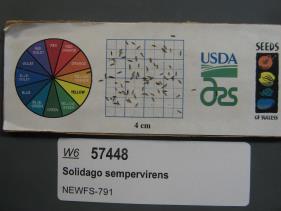 | | 2019 | | | | | | | Wild material | | 2098245 | OPGC 7963 |
| 111 | NA 88134 | NEWFS-595 | Clethra alnifolia L. | Massachusetts, United States | NA |  | | 2019 | | | | | | | Wild material | | 2098235 | NA 88134 |
| 112 | NA 88133 | NEWFS-587 | Cephalanthus occidentalis L. | Massachusetts, United States | NA |  | | 2019 | | | | | | | Wild material | | 2098234 | NA 88133 |
| 113 | W6 57436 | NEWFS-584 | Spiraea tomentosa L. | New Hampshire, United States | W6 |  | | 2019 | | | | | | | Wild material | | 2098233 | W6 57436 |
| 114 | OPGC 7957 | NEWFS-502 | Typha latifolia L. | Massachusetts, United States | OPGC |  | | 2019 | | | | | | | Wild material | | 2098227 | OPGC 7957 |
| 115 | W6 57421 | NEWFS-415 | Triadenum fraseri (Spach) Gleason | Massachusetts, United States | W6 |  | | 2019 | | | | | | | Wild material | | 2098218 | W6 57421 |
| 116 | W6 57408 | NEWFS-348 | Glyceria canadensis (Michx.) Trin. | New Hampshire, United States | W6 |  | | 2019 | | | | | | | Wild material | | 2098205 | W6 57408 |
| 117 | W6 57398 | NEWFS-313 | Sparganium americanum Nutt. | New Hampshire, United States | W6 |  | | 2019 | | | | | | | Wild material | | 2098195 | W6 57398 |
| 118 | W6 57396 | NEWFS-311 | Juncus canadensis J. Gay ex Laharpe | New Hampshire, United States | W6 | 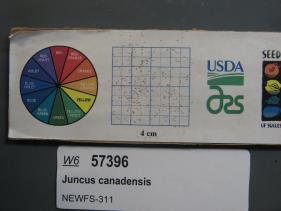 | | 2019 | | | | | | | Wild material | | 2098193 | W6 57396 |
| 119 | W6 57397 | NEWFS-312 | Glyceria grandis S. Watson | New Hampshire, United States | W6 |  | | 2019 | | | | | | | Wild material | | 2098194 | W6 57397 |
| 120 | W6 57392 | NEWFS-303 | Carex lupulina Muhl. ex Willd. | Massachusetts, United States | W6 |  | | 2019 | | | | | | | Wild material | | 2098189 | W6 57392 |
| 121 | W6 57368 | NEWFS-220 | Dulichium arundinaceum (L.) Britton | Massachusetts, United States | W6 |  | | 2019 | | | | | | | Wild material | | 2098165 | W6 57368 |
| 122 | NA 88130 | NEWFS-194 | Cephalanthus occidentalis L. | Massachusetts, United States | NA |  | | 2019 | | | | | | | Wild material | | 2098155 | NA 88130 |
| 123 | NA 88095 | MARSB-256 | Ilex verticillata (L.) A. Gray | New York, United States | NA |  | | 2019 | COLLECTED | 10/07/2015 | In Sag Harbor, NY, park in Mashashimuet Park. Walk along the Long Pond Greenbelt Trail. The population is along the edges of Long Pond and Crooked Pond, the first and third ponds on the left, respectively. | 40.96283000, -72.29366000 | 5 | Central shrub & herb depression pond. | Wild material | | 2097543 | NA 88095 |
| 124 | NA 88096 | MARSB-258 | Ilex glabra (L.) A. Gray | New York, United States | NA |  | | 2019 | COLLECTED | 10/08/2015 | In Sag Harbor, park in Mashashimuet Park. Enter the Long Pond Greenbelt and walk along it until you reach Crooked Pond, the third pond on the left. The population is along pond edges. | 40.96283000, -72.29366000 | 5 | Central shrub & herb depression pond. | Wild material | | 2097545 | NA 88096 |
| 125 | NA 88435 | MARSB-255 | Rosa palustris Marshall | New York, United States | NA |  | | 2019 | | | | | | | Wild material | | 2097542 | NA 88435 |
| 126 | OPGC 7884 | MARSB-259 | Rhexia virginica L. | New York, United States | OPGC |  | | 2019 | | | | | | | Wild material | | 2097546 | OPGC 7884 |
| 127 | W6 57163 | MARSB-377 | Eupatorium perfoliatum L. | New Jersey, United States | W6 | | | 2019 | | | | | | | Wild material | | 2097602 | W6 57163 |
| 128 | W6 57274 | MARSB-811 | Schoenoplectus pungens (Vahl) Palla | New York, United States | W6 |  | | 2019 | | | | | | | Wild material | | 2097713 | W6 57274 |
| 129 | NA 88062 | NEWFS-233 | Clethra alnifolia L. | Massachusetts, United States | NA |  | | 2019 | | | | | | | Wild material | | 1976185 | NA 88062 |
| 130 | NA 88428 | NEWFS-140 | Rosa palustris Marshall | Massachusetts, United States | NA | 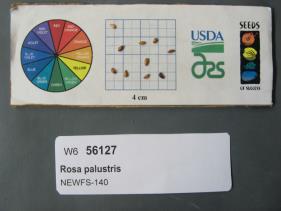 | | 2019 | | | | | | | Wild material | | 1976162 | NA 88428 |
| 131 | NA 88433 | NEWFS-237 | Rosa palustris Marshall | Connecticut, United States | NA |  | | 2019 | | | | | | | Wild material | | 1976186 | NA 88433 |
| 132 | OPGC 7403 | NEWFS-498 | Rhexia virginica L. | Massachusetts, United States | OPGC |  | | 2019 | | | | | | | Wild material | | 1976280 | OPGC 7403 |
| 133 | W6 56173 | NEWFS-293 | Carex comosa Boott | Massachusetts, United States | W6 |  | | 2019 | | | | | | | Wild material | | 1976208 | W6 56173 |
| 134 | W6 56178 | NEWFS-302 | Carex comosa Boott | Connecticut, United States | W6 |  | | 2019 | | | | | | | Wild material | | 1976213 | W6 56178 |
| 135 | W6 56194 | NEWFS-347 | Carex comosa Boott | New Hampshire, United States | W6 |  | | 2019 | | | | | | | Wild material | | 1976229 | W6 56194 |
| 136 | W6 54730 | NCBG-476 | Schoenoplectus pungens (Vahl) Palla | North Carolina, United States | W6 |  | | 2018 | | | | | | | Wild material | Schoenoplectus pungens | 1965956 | W6 54730 |
| 137 | NA 88006 | MARSB-740 | Clethra alnifolia L. | New York, United States | NA |  | | 2018 | | | | | | | Wild material | | 1964840 | NA 88006 |
| 138 | OPGC 6533 | MARSB-305 | Hibiscus moscheutos L. | New Jersey, United States | OPGC |  | | 2018 | | | | | | | Wild material | Hibiscus moscheutos | 1964755 | OPGC 6533 |
| 139 | W6 54008 | MARSB-151 | Carex lurida Wahlenb. | Delaware, United States | W6 |  | | 2018 | | | | | | | Wild material | Carex lurida | 1964724 | W6 54008 |
| 140 | W6 54028 | MARSB-234 | Carex comosa Boott | New York, United States | W6 |  | | 2018 | | | | | | | Wild material | Carex comosa | 1964744 | W6 54028 |
| 141 | NA 87960 | NEWFS-239 | Clethra alnifolia L. | Connecticut, United States | NA |  | | 2017 | | | | | | | Wild material | | 1954705 | NA 87960 |
| 142 | W6 52960 | NEWFS-236 | Triadenum virginicum (L.) Raf. | Connecticut, United States | W6 |  | | 2017 | | | | | | | Wild material | | 1954703 | W6 52960 |
| 143 | W6 52961 | NEWFS-238 | Sparganium americanum Nutt. | Connecticut, United States | W6 |  | | 2017 | | | | | | | Wild material | | 1954704 | W6 52961 |
| 144 | W6 52969 | NEWFS-368 | Carex crinita Lam. | Connecticut, United States | W6 |  | | 2017 | | | | | | | Wild material | | 1954712 | W6 52969 |
| 145 | OPGC 6156 | CBG-2639 | Doellingeria umbellata (Mill.) Nees | Illinois, United States | OPGC |  | | 2015 | | | | | | | Wild material | | 1926091 | OPGC 6156 |
| 146 | W6 48821 | MARSB-65 | Calamagrostis canadensis (Michx.) P. Beauv. | West Virginia, United States | W6 |  | | 2015 | | | | | | | Wild material | | 1922837 | W6 48821 |
| 147 | W6 48864 | MARSB-62 | Juncus effusus L. | West Virginia, United States | W6 | 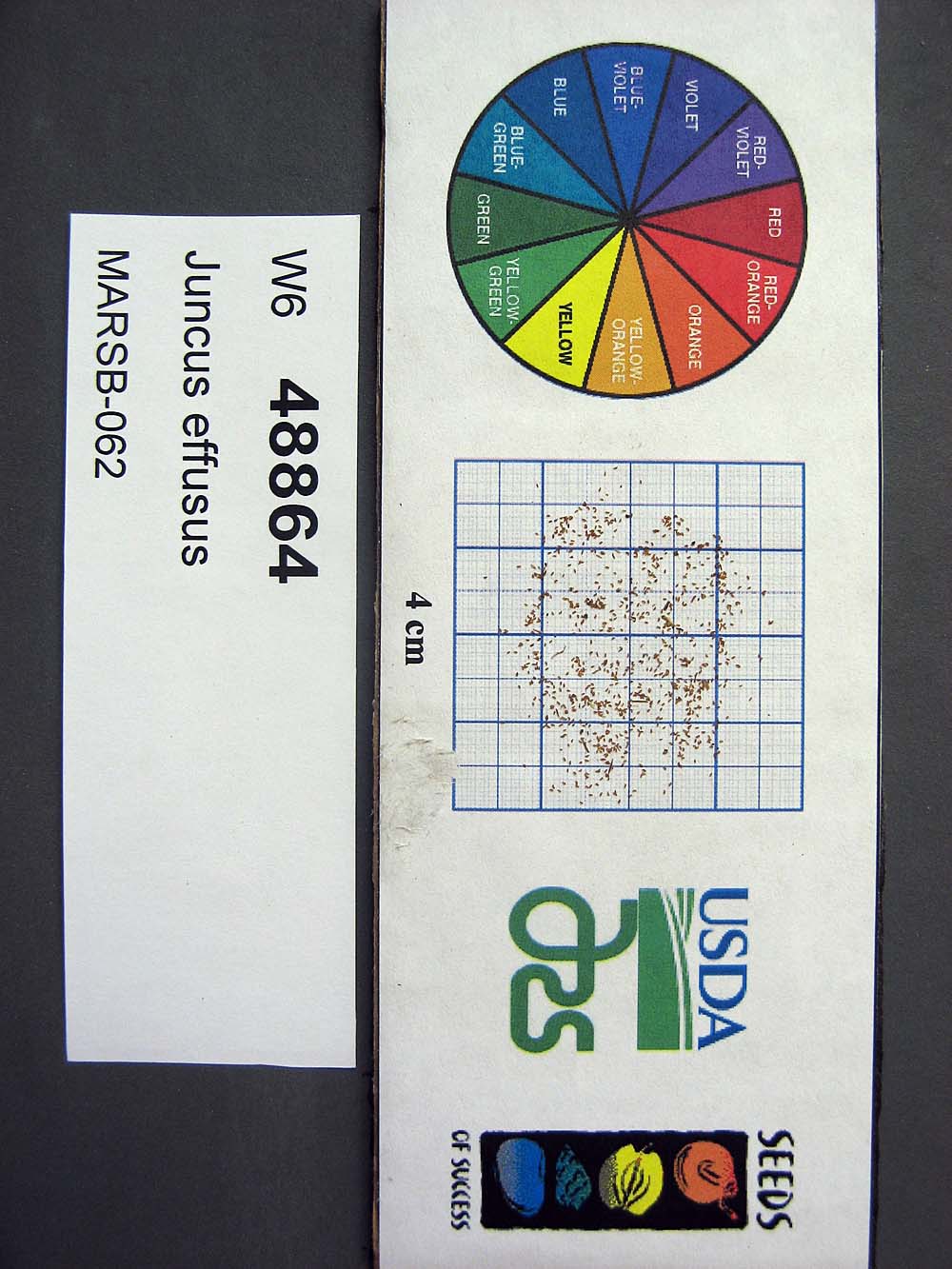 | | 2015 | | | | | | | Wild material | | 1922865 | W6 48864 |
| 148 | W6 48866 | MARSB-76 | Juncus effusus L. | Pennsylvania, United States | W6 | 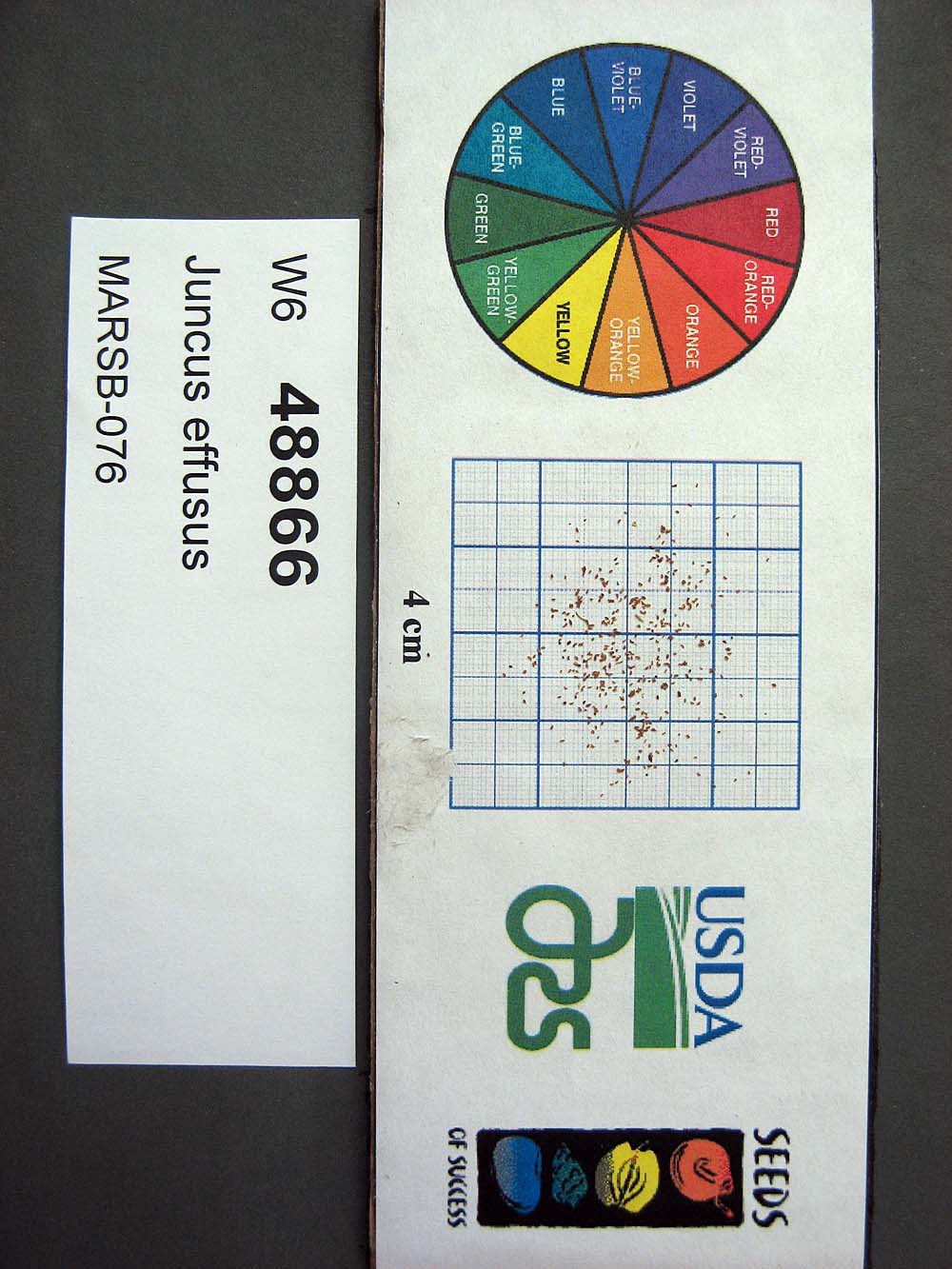 | | 2015 | | | | | | | Wild material | | 1922867 | W6 48866 |
| 149 | W6 48901 | MARSB-93 | Triadenum virginicum (L.) Raf. | West Virginia, United States | W6 |  | | 2015 | | | | | | | Wild material | | 1922888 | W6 48901 |
| 150 | OPGC 6119 | MARSB-088 | Lobelia cardinalis L. | New York, United States | OPGC | 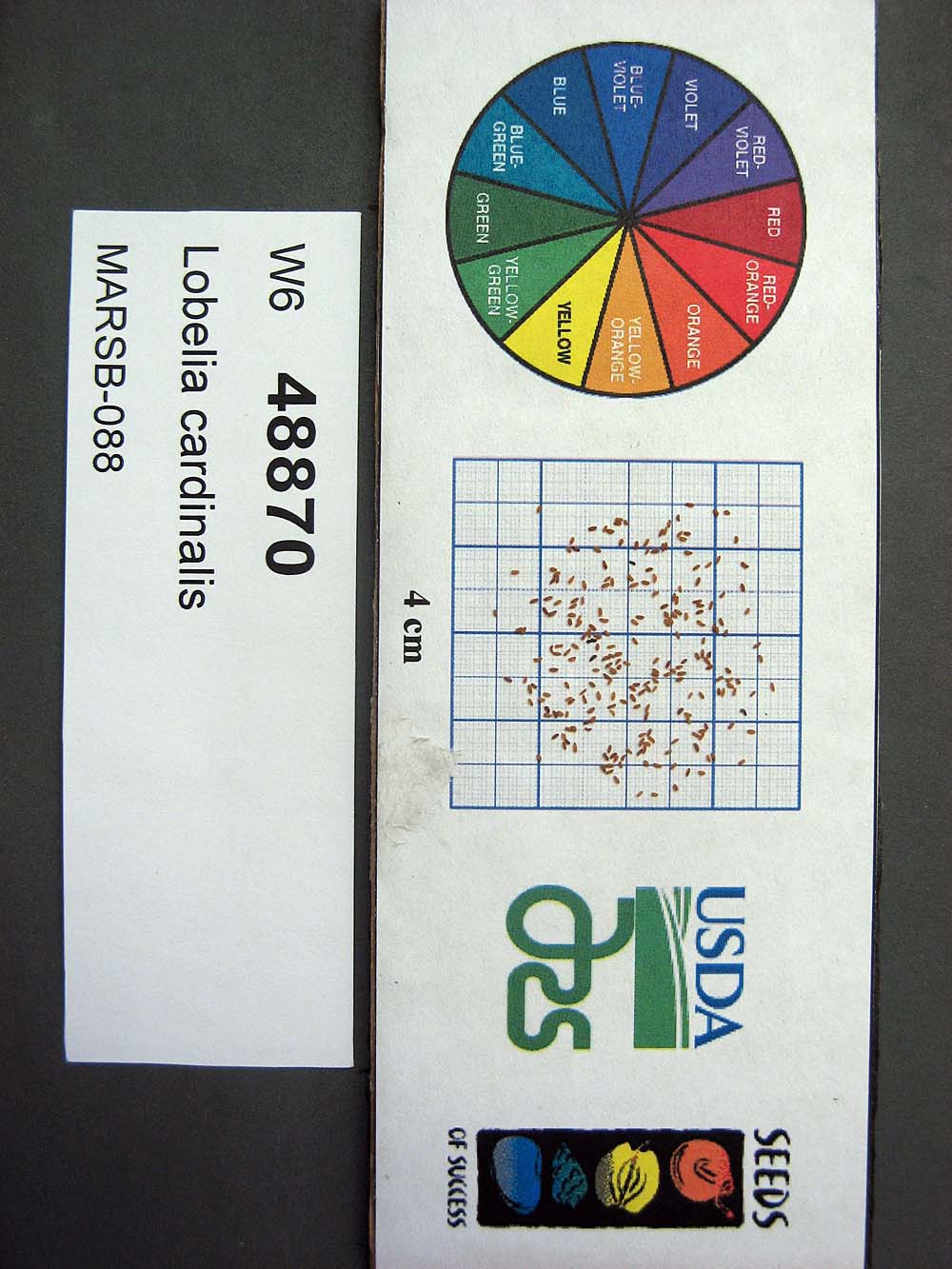 | | 2015 | | | | | | | Wild material | | 1922920 | OPGC 6119 |
| 151 | OPGC 6121 | MARSB-089 | Mimulus ringens L. | New York, United States | OPGC |  | | 2015 | | | | | | | Wild material | | 1922922 | OPGC 6121 |
| 152 | W6 48867 | MARSB-59 | Juncus tenuis Willd. | New York, United States | W6 |  | | 2015 | | | | | | | Wild material | | 1922918 | W6 48867 |