| 0 | PI 588678 | JEG 2 SPR CR | Vitis cinerea (Engelm.) Millardet | Missouri, United States | GEN | 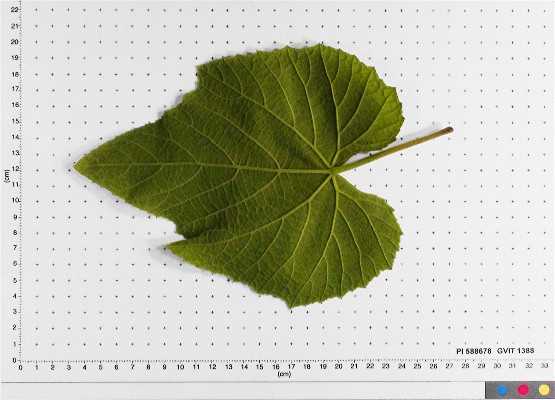 | | 1990 | DEVELOPED | 01/01/1990 | | | | | Wild material | Female flower. | 1013451 | PI 588678 |
| 1 | PI 588685 | JEG 3 IGLOO | Vitis cinerea (Engelm.) Millardet | Missouri, United States | GEN |  | | 1990 | DEVELOPED | | | | | | Wild material | Best female of this species. | 1013515 | PI 588685 |
| 2 | PI 588688 .a | 4877 | Vitis cinerea (Engelm.) Millardet | Louisiana, United States | GEN | | | 1990 | DONATED | 04/17/1990 | | | | | Wild material | | 1692211 | PI 588688 .a |
| 3 | PI 588625 | B 65-20 | Vitis cinerea (Engelm.) Millardet var. helleri (L. H. Bailey) M. O. Moore | United States | GEN | 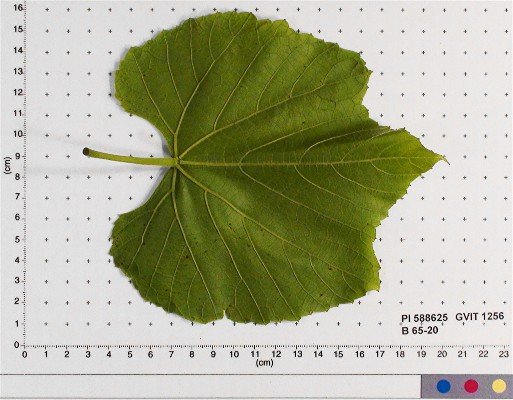 | | 1989 | DEVELOPED | 01/01/1989 | | | | | Cultivated material | | 1012502 | PI 588625 |
| 4 | PI 588575 | C-65-21 | Vitis cinerea (Engelm.) Millardet | United States | GEN | 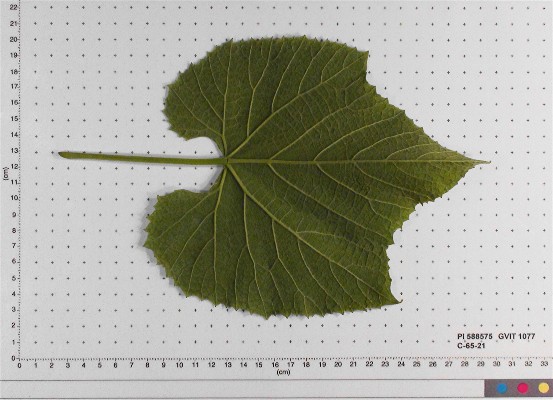 | | 1988 | DONATED | 03/12/1990 | | | | | Cultivated material | | 1011173 | PI 588575 |
| 5 | PI 588466 | 'Mazade' | Vitis cinerea (Engelm.) Millardet var. helleri (L. H. Bailey) M. O. Moore | France | GEN | 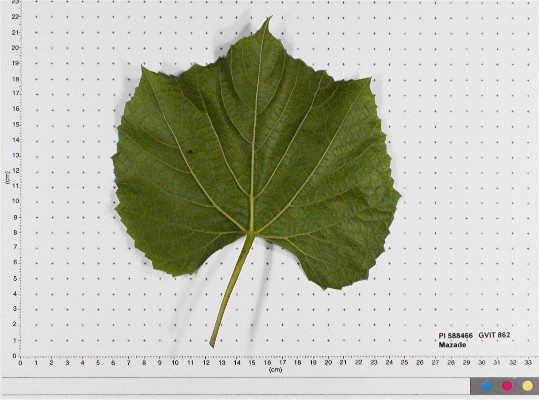 | | 1988 | DONATED | 01/12/1988 | | | | | Cultivar | Male rootstock. Selected in France as rootstock for limestone soils. Apparently resistant to Pierces Disease. Grown in Florida for 15 years with no symptoms. | 1009457 | PI 588466 |
| 6 | PI 588460 | Kansas 4B | Vitis cinerea (Engelm.) Millardet | Kansas, United States | |  | Historic | 1987 | DONATED | 08/18/1987 | | | | | Wild material | From same location as GVIT 824. | 1009197 | PI 588460 |
| 7 | PI 588460 .b | Kansas 4B | Vitis cinerea (Engelm.) Millardet | Kansas, United States | GEN | | | 1987 | DONATED | 08/18/1987 | | | | | Wild material | From same location as GVIT 824. | 1692118 | PI 588460 .b |
| 8 | PI 588460 .c | Kansas 4B | Vitis cinerea (Engelm.) Millardet | Kansas, United States | GEN | | | 1987 | DONATED | 08/18/1987 | | | | | Wild material | From same location as GVIT 824. | 1692119 | PI 588460 .c |
| 9 | PI 588460 .d | Kansas 4B | Vitis cinerea (Engelm.) Millardet | Kansas, United States | GEN | | | 1987 | DONATED | 08/18/1987 | | | | | Wild material | From same location as GVIT 824. | 1692120 | PI 588460 .d |
| 10 | PI 588444 .a | TX 3353 | Vitis cinerea (Engelm.) Millardet var. helleri (L. H. Bailey) M. O. Moore | Texas, United States | GEN | | | 1987 | DONATED | 05/01/1987 | | | | | Wild material | 2 seedlings on W2 after germination. | 1691646 | PI 588444 .a |
| 11 | PI 588444 .b | TX 3353 | Vitis cinerea (Engelm.) Millardet var. helleri (L. H. Bailey) M. O. Moore | Texas, United States | GEN | | | 1987 | DONATED | 05/01/1987 | | | | | Wild material | 2 seedlings on W2 after germination. | 1691647 | PI 588444 .b |
| 12 | PI 588445 .a | TX 3375 | Vitis cinerea (Engelm.) Millardet var. helleri (L. H. Bailey) M. O. Moore | Texas, United States | GEN | | | 1987 | DONATED | 05/01/1987 | | | | | Wild material | 4 seedlings in W2 after germination. | 1691698 | PI 588445 .a |
| 13 | PI 588446 .a | TX 4604 | Vitis cinerea (Engelm.) Millardet | Texas, United States | GEN | | | 1987 | DONATED | 05/01/1987 | | | | | Wild material | 2 seedlings planted in W2 in 1990. | 1691702 | PI 588446 .a |
| 14 | PI 588447 .a | AK 4552 | Vitis cinerea (Engelm.) Millardet | Arkansas, United States | GEN | | | 1987 | DONATED | 05/01/1987 | | | | | Wild material | 4 seedlings in W2 in 1989. | 1691704 | PI 588447 .a |
| 15 | PI 588447 .d | AK 4552 | Vitis cinerea (Engelm.) Millardet | Arkansas, United States | GEN |  | | 1987 | DONATED | 05/01/1987 | | | | | Wild material | 4 seedlings in W2 in 1989. | 1691705 | PI 588447 .d |
| 16 | PI 588398 | Barrett 1 | Vitis cinerea (Engelm.) Millardet | Illinois, United States | GEN | 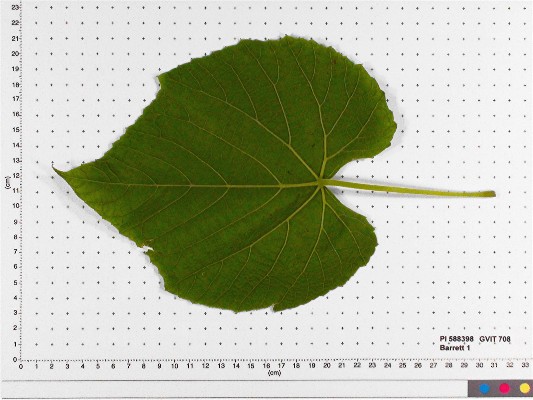 | | 1987 | DEVELOPED | 01/01/1949 | | | | | Wild material | Female. Vigorous. | 1008240 | PI 588398 |
| 17 | PI 588372 | Ill 194-1 | Vitis cinerea (Engelm.) Millardet | Illinois, United States | GEN | | | 1987 | DONATED | 02/26/1987 | | | | | Cultivated material | Male. Selection made to concentrate superior traits within the same species. | 1007925 | PI 588372 |
| 18 | PI 588352 | C-66-6 | Vitis cinerea (Engelm.) Millardet | Missouri, United States | GEN | 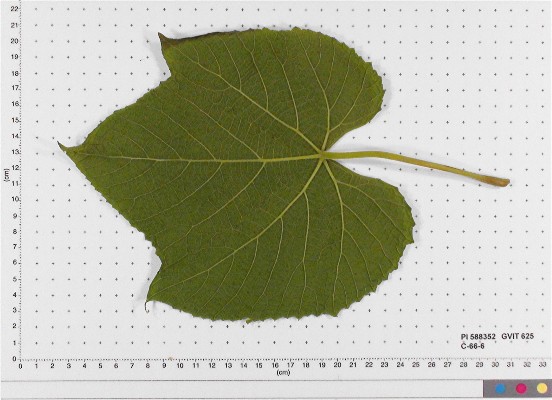 | | 1987 | COLLECTED | | | | | | Wild material | Male. Vigorous vine; very late bloom; downy mildew resistant. | 1007629 | PI 588352 |
| 19 | PI 588328 | Ill 66 | Vitis cinerea (Engelm.) Millardet | Illinois, United States | GEN | 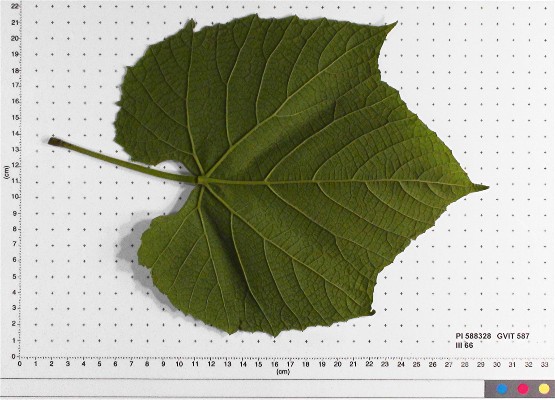 | | 1987 | COLLECTED | 01/01/1959 | Worth's farm, southeast of New Holland, Illinois. Logan County. | | | | Wild material | Female. Very large, compound, branched cluster, vigorous. Small blue berry. Downy mildew resistant. | 1007359 | PI 588328 |
| 20 | PI 588329 | Ill 24 | Vitis cinerea (Engelm.) Millardet | Illinois, United States | GEN | 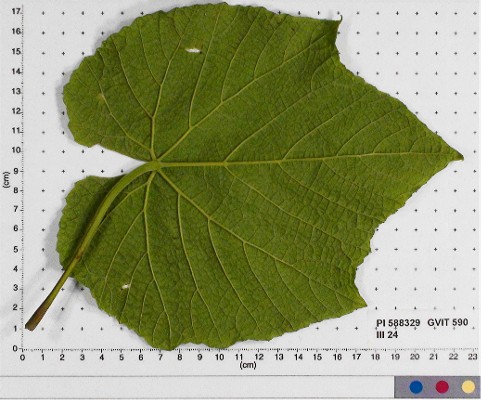 | | 1987 | COLLECTED | 01/01/1942 | Sharp's Farm, Southwest of New Holland Illinois. Mason County. | | | | Cultivated material | Male. Very large inflorescence, compound, long, tapering, used in breeding. Medium to high vigor. | 1007381 | PI 588329 |
| 21 | PI 588356 | GV 25-21-91 | Vitis cinerea (Engelm.) Millardet | United States | GEN | 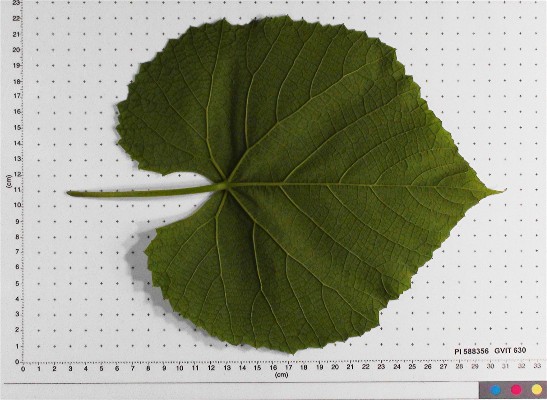 | | 1987 | DONATED | 02/01/1987 | | | | | Wild material | Male? | 1007667 | PI 588356 |
| 22 | PI 597232 | Ill 23 | Vitis cinerea (Engelm.) Millardet | Illinois, United States | GEN | 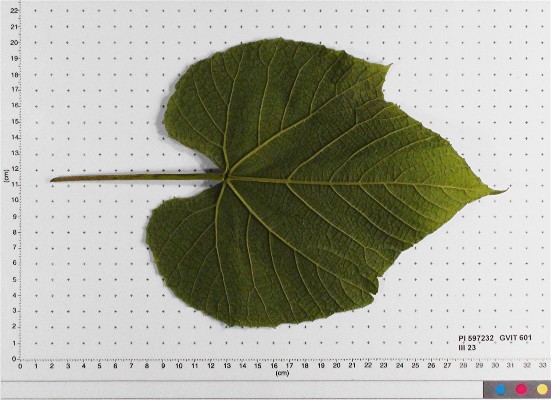 | | 1987 | COLLECTED | 01/01/1942 | Sharp's Farm, Southwest of New Holland Illinois. Mason County.. | | | | Wild material | Female. Very large cluster, branched, compound, vigorous, used in breeding. | 1007460 | PI 597232 |
| 23 | PI 588220 | B 55 | Vitis cinerea (Engelm.) Millardet | Illinois, United States | GEN |  | | 1986 | COLLECTED | 01/01/1956 | Lemme farm, northeast of Middletown, Illinois, Logan County. | | | | Wild material | Female. Maybe valuable parent for breeding rootstocks for chloride exclusion. Very large, compound, loose, tapering cluster (11 inches long). One of the best selections found. Used in breeding. | 1004925 | PI 588220 |
| 24 | PI 588222 | C-66-7 | Vitis cinerea (Engelm.) Millardet | Missouri, United States | GEN | 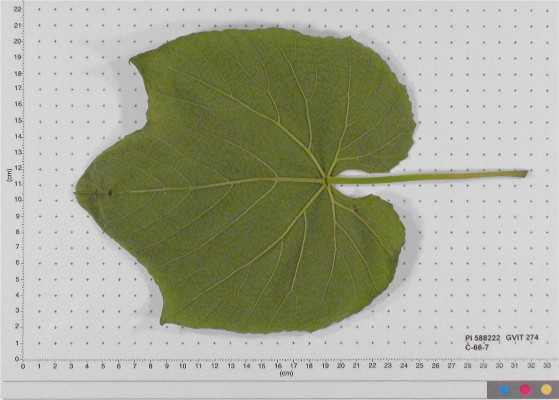 | | 1986 | COLLECTED | 01/01/1949 | | | | | Wild material | Female. Small black berry. Medium size, compact cluster. | 1004940 | PI 588222 |
| 25 | PI 588208 | Ill 65 | Vitis cinerea (Engelm.) Millardet | Illinois, United States | GEN | 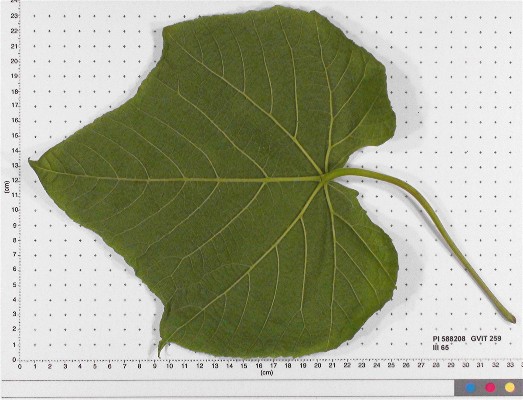 | | 1986 | COLLECTED | 01/01/1959 | Bracey's Farm, southeast of New Holland, Illinois. Logan County, Sheridan Township, Section 29. | | | | Wild material | Female. Large, branched, compound cluster. Small blue berry. Very vigorous vine. Late blooming. | 1004830 | PI 588208 |
| 26 | PI 588210 | B 65-7 | Vitis cinerea (Engelm.) Millardet var. helleri (L. H. Bailey) M. O. Moore | Texas, United States | GEN |  | | 1986 | DONATED | 02/05/1986 | | | | | Wild material | Female. Small, tight cluster. Very late bloom. Downy mildew resistant. Medium to high vigor. | 1004847 | PI 588210 |
| 27 | PI 588217 | B 27 | Vitis cinerea (Engelm.) Millardet | Illinois, United States | GEN |  | | 1985 | COLLECTED | 01/01/1947 | Velde's farm, north side of Sugar Creek, southwest of New Holland, Illinois, Mason County. | | | | Wild material | One of the best selections ever found. Used extensively in breeding. Female. Very large, loose cluster, very long and tapering, very productive, sweet, good quality after frost. No diseases present. | 1004909 | PI 588217 |
| 28 | PI 588218 | B 47 | Vitis cinerea (Engelm.) Millardet | Illinois, United States | GEN |  | | 1985 | COLLECTED | 01/01/1949 | Gallagher's farm, east of New Holland, Illinois, Logan County, Sheridan Township, Section 23. | | | | Wild material | Female. Very large, branched, compound cluster (12 in. long) No disease, very vigorous. Best selection ever found of this species. Used extensively in breeding. Duplicate of GVIT 200 and 1221. | 1004911 | PI 588218 |
| 29 | PI 588219 | B 49 | Vitis cinerea (Engelm.) Millardet | Illinois, United States | GEN |  | | 1985 | COLLECTED | 01/01/1950 | Gallagher's farm, east of New hollnad, Illinois, Logan County, Sheridan Township, Section 23. | | | | Wild material | Male. Very large, compound, double shouldered, inflorescence (11 inches long - 8 inches wide). Very productive 3-4 in- florescence per shoot. One of the best selections ever found. Used extensively in breeding. | 1004923 | PI 588219 |
| 30 | PI 588221 | B 58 | Vitis cinerea (Engelm.) Millardet | Illinois, United States | GEN | 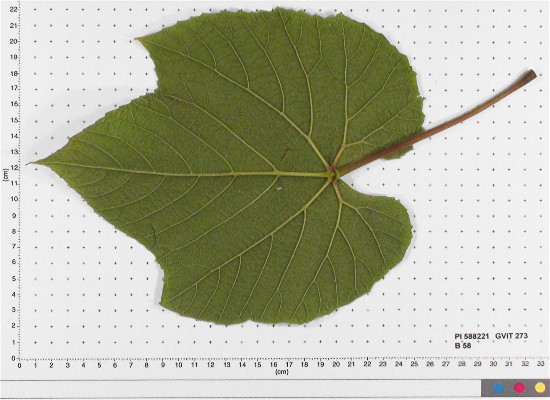 | | 1985 | COLLECTED | 01/01/1957 | Bracey's farm, southeast of New Holland, Illinois, Logan County, Sheridan Township, Section 29. | | | | Wild material | Female. Medium large, shouldered cluster. Very prolific, healthy. | 1004937 | PI 588221 |
| 31 | PI 588134 | Ill 45 | Vitis cinerea (Engelm.) Millardet | Illinois, United States | GEN | 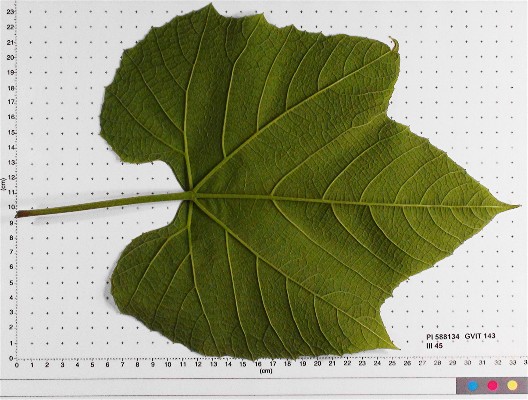 | | 1985 | COLLECTED | 01/01/1952 | Northeast of Middletown, Illinois, Logan County on "Dude" ranch of Charley Binus | | | | Wild material | Male. Large shouldered inflorescence (9 1/2 inches long). Vigorous, used in breeding. Late blooming. | 1003482 | PI 588134 |
| 32 | PI 588143 | Ill 41 | Vitis cinerea (Engelm.) Millardet | Illinois, United States | GEN | 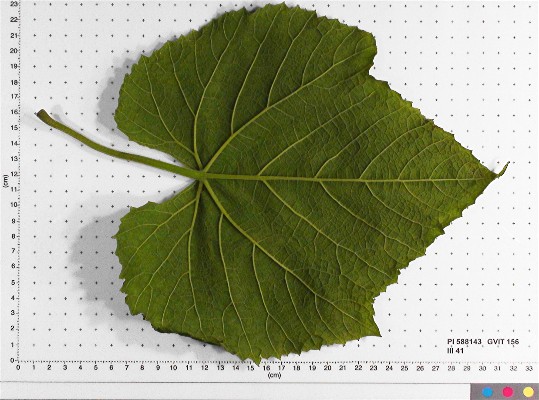 | | 1985 | COLLECTED | 01/01/1953 | Bracey's Farm, southeast of New Holland, Illinois, Logan County, Sheridan Township, Section 29 | | | | Wild material | Female. Very large compound clusters. Small blue berries. Vigorous vine. | 1003678 | PI 588143 |
| 33 | PI 588154 | B 9 | Vitis cinerea (Engelm.) Millardet | Illinois, United States | GEN | 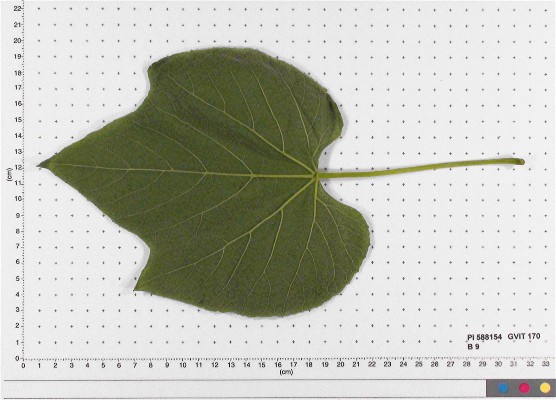 | | 1985 | COLLECTED | 01/01/1949 | Southeast of New Holland, Bracey's Farm, Illinois, Logan County, Sheridan Township, Section 29 | | | | Cultivated material | Male. Very large inflorescence, compound, very vigorous. Best male vine of this species found. Used extensively in breeding. Very late bloom. Excellent disease resistance. | 1003891 | PI 588154 |
| 34 | PI 588186 | Ill 58 | Vitis cinerea (Engelm.) Millardet | Illinois, United States | GEN | 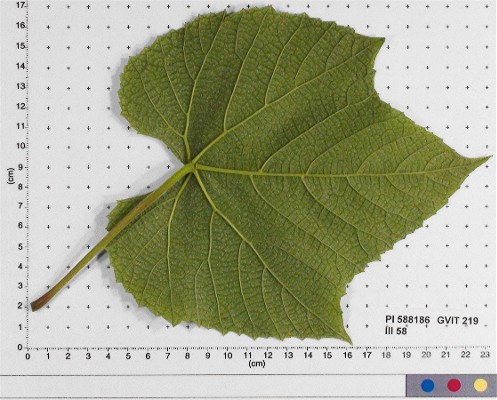 | | 1985 | COLLECTED | 01/01/1949 | Bracey's Farm, southeast of New Holland, Illonois. Logan County, Sheridan Township, Section 29. | | | | Wild material | Female. Small, blue berry. Medium large shouldered cluster. Very vigorous vine. Late blooming. Healthy | 1004470 | PI 588186 |
| 35 | PI 588197 | Ill 49 | Vitis cinerea (Engelm.) Millardet | Illinois, United States | GEN | 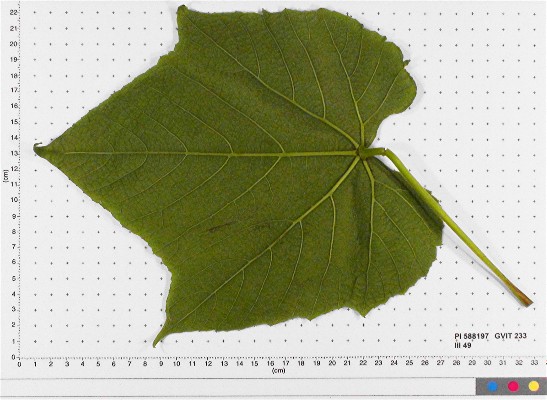 | | 1985 | COLLECTED | 01/01/1950 | Sleepy Hollow area, southwest of Mason City, Illinois. Mason County, Salt Creek Township. | | | | Wild material | Male. Very vigorous. Late blooming. Very large, compact, compound, double shouldered, inflorescense - 11" long - 3 or 4 inflorescences per shoot. Likely a duplicate of GVIT 271. | 1004622 | PI 588197 |
| 36 | PI 588198 | Ill 46 | Vitis cinerea (Engelm.) Millardet | Illinois, United States | GEN |  | | 1985 | COLLECTED | 01/01/1953 | Sharp's Farm, southwest of New Holland, Illinois. Mason County. | | | | Wild material | Male. Large to very large, inflorescence (10 1/2 in. long), slender, tapering. Vigorous vine. | 1004630 | PI 588198 |
| 37 | PI 588199 | C-66-14 | Vitis cinerea (Engelm.) Millardet | Illinois, United States | GEN |  | | 1985 | COLLECTED | 01/01/1956 | | | | | Wild material | Male. Vigorous vine. Very late bloom. Downy mildew resistant. | 1004645 | PI 588199 |
| 38 | PI 588200 | Ill 55 | Vitis cinerea (Engelm.) Millardet | Illinois, United States | GEN |  | | 1985 | COLLECTED | 01/01/1956 | Lemme farm, northeast of Middletown Illinois, Logan County. | | | | Wild material | Female. Small, blue berries. Large, compound tapering cluster, 11 inches long. Vigorous vine. Downy mildew resistant. Late blooming. | 1004653 | PI 588200 |
| 39 | PI 588205 | GV 21-46-75 | Vitis cinerea (Engelm.) Millardet var. helleri (L. H. Bailey) M. O. Moore | United States | GEN |  | | 1985 | DONATED | 03/01/1985 | | | | | Wild material | Small, blue berries. Small, loose clusters. | 1004747 | PI 588205 |
| 40 | PI 293117 | b 44-11 M50 | Vitis cinerea (Engelm.) Millardet var. helleri (L. H. Bailey) M. O. Moore | Mexico | DAV | | | 1983 | COLLECTED | 08/1961 | Dry pine-oak forest, Sierra Anahuah, Mesa de Chipinque, Monterrey, Nuevo Leon. | | 1250 | | | Type = species. DVIT 1890 flower type = female. DVIT 1891 flower type = male. | 1564031 | PI 293117 |
| 41 | PI 293118 | b 44-21 M51 | Vitis cinerea (Engelm.) Millardet var. helleri (L. H. Bailey) M. O. Moore | Mexico | DAV | | | 1983 | COLLECTED | 08/1961 | Dry pine-oak forest, Sierra Anahuac, Mesa de Chipinque, Monterrey, Nuevo Leon. | | 1189 | | | Type = species. DVIT 1892 flower type = female. DVIT 1893 flower type = male. | 1564032 | PI 293118 |
| 42 | PI 293121 | b 44-44 M54 | Vitis cinerea (Engelm.) Millardet var. helleri (L. H. Bailey) M. O. Moore | Mexico | DAV | | | 1983 | COLLECTED | 08/1961 | Lower edge of pine forest, Sierra ANahuac, Mesa de Chipinque, Monterrey, Nuevo Leon | | 762 | | | Type = species. Flower type = female. | 1564033 | PI 293121 |
| 43 | PI 293122 | b 44-52 M55 | Vitis cinerea (Engelm.) Millardet var. helleri (L. H. Bailey) M. O. Moore | Mexico | DAV | | | 1983 | COLLECTED | 08/1961 | Valley at base of grade, Sierra Anuhuac, Mesa de Chipinique, Monterrey, Nuevo Leon. Fruit ripe. | | 549 | | | Type = species. DVIT 1895 flower type = female. DVIT 1896 flower type = male. | 1564034 | PI 293122 |
| 44 | PI 293126 | b 40-13 M4 | Vitis cinerea (Engelm.) Millardet | Mexico | DAV | | | 1983 | COLLECTED | 08/1961 | Riverside, 3 miles up Rio Santa Maria from Buenaventura, Chihuahua | | | | | Per PI book: "Slender, pistillate vine; shoots downy, white; berries blue black, ripe sweet, attacked by spittlebug." Type = species. DVIT 1863 flower type = female. DVIT 1864 flower type = male. | 1564017 | PI 293126 |
| 45 | PI 293127 | b 40-29 M5 | Vitis cinerea (Engelm.) Millardet | Mexico | DAV | | | 1983 | COLLECTED | 08/1961 | Riverside, 3 miles up Rio Santa Maria from Buenaventura, Chihuahua | | | | | Per PI book: "Slender, pistillate vine; shoots downy, white; berries blue black, ripe, sweet, attacked by spittlebug." Type = species. DVIT 1865 flower type = male. DVIT 1866 flower type = female. | 1564018 | PI 293127 |
| 46 | PI 293128 | b 40-50 M6 | Vitis cinerea (Engelm.) Millardet | Mexico | DAV | | | 1983 | COLLECTED | 08/1961 | Riverside, 3 miles up Rio Santa Maria from Buenaventura, Chihuahua | | | | | Per PI book: "Slender, pistillate vine; shoots downy, white; berries blue black, ripe, sweet, attacked by spittlebug." Type = species. DVIT 1867 flower type = male. DVIT 1868 flower type = female. | 1564019 | PI 293128 |
| 47 | PI 293130 | b 41-47 M31 | Vitis cinerea (Engelm.) Millardet | Mexico | DAV | | | 1983 | COLLECTED | 08/1961 | Dry rocky stream channel, evergreen oak forest at canyon entrance, Galeana Road, west of Linares, Nuevo Leon. | | | | | Type = species. Flower type = male. | 1564023 | PI 293130 |
| 48 | PI 293132 | b 42-11 M33 | Vitis cinerea (Engelm.) Millardet | Mexico | DAV | | | 1983 | COLLECTED | 08/1961 | One mile in canyon, Galena Rd., west of Linares, Nuevo Leion. | | | | | Type = species. Flower type = female. | 1564024 | PI 293132 |
| 49 | PI 293133 | b 42-33 M35 | Vitis cinerea (Engelm.) Millardet | Mexico | DAV | | | 1983 | COLLECTED | 08/1961 | On shrubbery in rocky, drywash in canyon at edge of pine forest, 21 miles west of Linares, Galena Rd., Nuevo Leon. | | | | | Type = species. DVIT 1878 flower type = female. DVIT 1879 flower type = male. | 1564025 | PI 293133 |
| 50 | PI 237623 | D'ANJAC | Vitis cinerea (Engelm.) Millardet var. helleri (L. H. Bailey) M. O. Moore | France | DAV | | | 1981 | DONATED | 03/04/1957 | | | | | | Type = Species. Flower = Male. | 1186295 | PI 237623 |
| 51 | PI 237625 | Berlandieri Resseguier | Vitis cinerea (Engelm.) Millardet var. helleri (L. H. Bailey) M. O. Moore | Texas, United States | DAV | | | 1981 | COLLECTED | 1888 | | | | | | Type = species. Flower = Male. Per Galet (see citation): "Growing tip: felty, white with rose margin, flat, open. Young leaves: downy, bronze. Leaf: cuneiform, 136 to 146-3-24 to 57, medium, barely three-lobed (10 or 11), often with convex edges, underside cobwebby-pubescent; teeth nearly flat, convex; petiolar sinus lyre-shaped; petioles medium, green, cobwebby. Shoot: ribbed, soft, easily broken or detatched from vine, downy, sometimes lightly pubescent. Flower clusters: medium or large, winged with numerous lateral branches; male and female. Cluster: medium-large, conical, many lateral branches; berries round, small, with very little pink, acid, juice. Seeds: medium, yellowish brown to dark mahogany; very swollen dorsal side; small chalaza, posiiton .49, oval; beak short and thick; very shallow sometimes nonexistant indentations. Growth habit: vigorous, climbing...Along with V. cinerea this is the latest ripening of the American species; its vegetative cycle is approximately a month later than riparia. Budbreak is in mid-April, bloom around June 25, maturity in mid-October and leaf fall around November 20. Its resistance to phylloxera is good (16/20); the leaves carry a few galls...its resistance to lime-induced chlorosis is good...good resistance to fungus diseases and Pierce's disease." | 1186296 | PI 237625 |
| 52 | PI 293135 | 'b 45-28 M59' | Vitis cinerea (Engelm.) Millardet | Nuevo León, Mexico | DAV | | | 1963 | COLLECTED | 08/1961 | 2 miles north of Montemorelos | | | Collected on a tree in moist area | | Type = Species. DVIT 1901 flower = Male. DVIT 1902 flower = Female. Per PI Book: "Vine with few fruits; leaves with marginal teeth." | 1564035 | PI 293135 |
| 53 | PI 293136 | 'b 45-45 M60' | Vitis cinerea (Engelm.) Millardet | Nuevo León, Mexico | DAV | | | 1963 | COLLECTED | 08/1961 | Seven miles east of Montemorelos | | | Low, hot area near citrus orchards | | Type = Species. DVIT 1903 flower = Female. DVIT 1904 flower = Male. Per PI Book: "Vine fruitful; shoots downy." | 1564036 | PI 293136 |
| 54 | PI 293140 | 'b 46-21 M65' | Vitis cinerea (Engelm.) Millardet | Coahuila de Zaragoza, Mexico | DAV | | | 1963 | COLLECTED | 08/1961 | 3 miles upstream from highway bridge, Sabinas. | | | On bald cypress. | | Type = Species. DVIT 1907 flower = Female. DVIT 1908 flower = Male. Per PI Book: "Vine fruitful; shoot tips pink tinged with deeply lobed leaves." | 1564038 | PI 293140 |
| 55 | PI 293111 | b 41-23 M23 | Vitis cinerea (Engelm.) Millardet var. helleri (L. H. Bailey) M. O. Moore | Mexico | DAV | | | 1961 | COLLECTED | 08/1961 | Rain forest 5.5 miles west of Naranjo San Luis Potosi. | | | | | Type = species. Flower type = male. | 1564022 | PI 293111 |
| 56 | PI 293134 | b 42-51 M36 | Vitis cinerea (Engelm.) Millardet | Mexico | DAV | | | 1961 | COLLECTED | 08/1961 | On rocks and trees in canyon, near top of pass, 21 miles west of Linares, Galena Road, Nuevo Leon. | | | | | Type = species. DVIT 1881 flower type = female. DVIT 1882 flower type = male. Per PI book: "Vine fruitful; shoots white, tomentose, dark red when exposed; leaves 5.5 by 5 inches; fruit clusters 3 by 1.5 inches; berries already eaten by birds." | 1564026 | PI 293134 |
| 57 | DVIT 3401 | TX2006-62-1 | Vitis cinerea (Engelm.) Millardet | New York, United States | DAV | | | 2007 | DONATED | 07/18/2007 | | | | | Wild material | | 1790820 | DVIT 3401 |
| 58 | DVIT 3402 | TX2006-2-4 | Vitis cinerea (Engelm.) Millardet | New York, United States | DAV | | | 2007 | DONATED | 07/18/2007 | | | | | Wild material | | 1790821 | DVIT 3402 |
| 59 | DVIT 3403 | TX2006-2-5 | Vitis cinerea (Engelm.) Millardet | New York, United States | DAV | | | 2007 | DONATED | 07/18/2007 | | | | | Wild material | | 1790822 | DVIT 3403 |
| 60 | DVIT 3404 | TX2006-39-2 | Vitis cinerea (Engelm.) Millardet | New York, United States | DAV | | | 2007 | DONATED | 07/18/2007 | | | | | Wild material | | 1790823 | DVIT 3404 |
| 61 | DVIT 3406 | TX2006-19-2 | Vitis cinerea (Engelm.) Millardet | New York, United States | DAV | | | 2007 | DONATED | 07/18/2007 | | | | | Wild material | | 1790825 | DVIT 3406 |
| 62 | DVIT 3364 | LA2006-4-3 | Vitis cinerea (Engelm.) Millardet | New York, United States | DAV | | | 2007 | DONATED | 04/18/2007 | | | | | Wild material | | 1725771 | DVIT 3364 |
| 63 | DVIT 3365 | TX2006-2-3 | Vitis cinerea (Engelm.) Millardet | New York, United States | DAV | | | 2007 | DONATED | 04/18/2007 | | | | | Wild material | | 1725743 | DVIT 3365 |
| 64 | DVIT 3367 | TX2006-26-1 | Vitis cinerea (Engelm.) Millardet | New York, United States | DAV | | | 2007 | DONATED | 04/18/2007 | | | | | Wild material | | 1725745 | DVIT 3367 |
| 65 | DVIT 3393 | MS2006-2-6 | Vitis cinerea (Engelm.) Millardet | New York, United States | DAV | | | 2007 | DONATED | 04/18/2007 | | | | | Wild material | | 1725742 | DVIT 3393 |
| 66 | DVIT 3398 | TX2006-16-5 | Vitis cinerea (Engelm.) Millardet var. helleri (L. H. Bailey) M. O. Moore | New York, United States | DAV | | | 2007 | DONATED | 04/18/2007 | | | | | Wild material | | 1725740 | DVIT 3398 |
| 67 | DVIT 3399 | MS2006-2-3 | Vitis cinerea (Engelm.) Millardet | New York, United States | DAV | | | 2007 | DONATED | 04/18/2007 | | | | | Wild material | | 1725741 | DVIT 3399 |
| 68 | DVIT 3136 | 2001-5 | Vitis cinerea (Engelm.) Millardet | California, United States | DAV | | | 2001 | DONATED | 08/01/2001 | | | | | Wild material | Type = Species. | 1688106 | DVIT 3136 |
| 69 | DVIT 3144 | 2001-13 | Vitis cinerea (Engelm.) Millardet | California, United States | DAV | | | 2001 | DONATED | 08/01/2001 | | | | | Wild material | Type = Species. | 1688449 | DVIT 3144 |
| 70 | DVIT 2955 | 5352 | Vitis cinerea (Engelm.) Millardet | Tennessee, United States | DAV | | | 2000 | COLLECTED | 08/21/1992 | Fayette, TN. 123.5 m east of intersection of I40 and 230, N side 40. 12.5 m west of intersection of Haywood Co. line. | | 61 | Mesic, vining to 30 feet into Sweetgum. | Wild material | 5352-4 and 5352-6. | 1616305 | DVIT 2955 |
| 71 | DVIT 2956 | 5378 | Vitis cinerea (Engelm.) Millardet | Louisiana, United States | DAV | | | 2000 | COLLECTED | 08/28/1992 | West Baton Rouge, LA. 1.7 miles northeast of intersection of Hwy 77 and 76, 0.2 mile northeast of intersection with Iberville Parish line, S side 76. | | | Wet. Vining to 25 feet into Live Oak, Rotundifolia. | Wild material | 5378-1, 5378-2, and 5378-3 | 1616310 | DVIT 2956 |
| 72 | DVIT 2437 | 'Barrett 49' | Vitis cinerea (Engelm.) Millardet | Florida, United States | DAV | | | 1993 | DONATED | 01/05/1993 | | | | | Breeding material | Type = Species. Flower type = Male. A very vigorous, healthy V. cinerea selection Barrett made from the wild in central Illinois. Verify floriferous - 4 and 5 very large 11 inch X 8 inch branded compound inflorescences. No diseases in Illinois unsprayed. | 1564069 | DVIT 2437 |
| 73 | DVIT 2371 | Duval | Vitis cinerea (Engelm.) Millardet var. floridana Munson | Florida, United States | DAV | | | 1990 | DONATED | 02/05/1990 | | | | | Cultivated material | Type = Species. Highly resistant to PD, anthracnose, downy mildew, Isariopsis leaf blight, bitter rot, and root-knot nematodes; extremely vigorous, medium productivity. [Berry] fruit color purple. Small berry, medium bunch. | 1020005 | DVIT 2371 |
| 74 | DVIT 2380 | AC 4-16 | Vitis cinerea (Engelm.) Millardet var. floridana Munson | United States | DAV | | | 1990 | COLLECTED | | | | | | Breeding material | Type = Species. Highly resistant to PD, anthracnose, downy mildew, and root-knot nematodes; vigorous vine with no fruit (male) but beautiful health (resembles smalliana). | 1020066 | DVIT 2380 |
| 75 | DVIT 2383 | AC 5-10 | Vitis cinerea (Engelm.) Millardet var. floridana Munson | United States | DAV | | | 1990 | COLLECTED | | | | | | Breeding material | Type = Species. Highly resistant to PD, anthracnose, downy mildew, and root-knot nematodes; vigorous vine with no fruit (male). Simpsoni-type leaves. | 1020094 | DVIT 2383 |
| 76 | DVIT 2385 | 'Micosukee' | Vitis cinerea (Engelm.) Millardet var. floridana Munson | United States | DAV | | | 1990 | COLLECTED | | | | | | Cultivated material | Type = Species. Highly resistant to PD, anthracnose, bitter rot, downy mildew, Isariopsis leaf blight, and root-knot nematodes; vine vigor medium with low productivity; most nearly fits description of Vitis rufotomentosa. Small. [Berry] fruit color purple. Small berries and bunches. | 1020107 | DVIT 2385 |
| 77 | DVIT 2216 | DVIT 2216 | Vitis cinerea (Engelm.) Millardet | Texas, United States | DAV | | | 1987 | COLLECTED | | | | | | Wild material | Type = Species. | 1018947 | DVIT 2216 |
| 78 | DVIT 2217 | DVIT 2217 | Vitis cinerea (Engelm.) Millardet | Oklahoma, United States | DAV | | | 1987 | COLLECTED | | | | | | Wild material | Type = Species. | 1018948 | DVIT 2217 |
| 79 | DVIT 2218 | DVIT 2218 | Vitis cinerea (Engelm.) Millardet | Arkansas, United States | DAV | | | 1987 | COLLECTED | | | | | | Wild material | Type = Species. | 1018961 | DVIT 2218 |
| 80 | DVIT 2224 | DVIT 2224 | Vitis cinerea (Engelm.) Millardet var. helleri (L. H. Bailey) M. O. Moore | Texas, United States | DAV | | | 1987 | COLLECTED | | | | | | Wild material | Type = American hybrid. Per Galet (see citation): [about V. cinerea Engelmann] "Growing tip: felty white with rose margin, ashlike appearance, flat; stipules brownish-green. Young leaves: downy, gray with rose margin on upper surface, felty white below. Leaf: cordiform, medium in Montpellier, but large in some places in the United States (28 by 23 cm), 357-5-35 to 58, usually entire, rarely five-lobed (V. cinerea canesceans), soft, very bullate, dull, ash-gray, cobwebby-pubescent on both sides; small, nearly flat teeth; petiolar sinus lyre-shaped open or closed depending on the type; petioles downy-pubescent. Shoot: ash-gray, downy-pubescent, ribbed, thin. Flower cluster: very small, male or female. Cluster: conical, loose, medium-large, winged; berries round, black, small, thick skin, very little juice, acid flavor. Seeds: medium, 5 mm, chestnut colored, shiny with clear yellow beak and indentations; chalaza circular, .49, in small depression encircled with a few rediating lines, very short beak, protuberant raphe. Growth habit: very vigorous, climbing. [ ... ] V. cinerea has several common names: Parra silvestre (in Mexico), Ashy-leaved grape, Sweet winter, Downy, Ashy, Gray black, and Wichita grape. In the past confused with aestivalis, cinerea was officially named a distinct species in 1883 by George Engelmann. [ ... ] Cinerea has a good resistance to phylloxera and the leaves do not carry the galls. However, it is chlorotic in limy soils and is extremely difficult to root, which rules out its usefulness as a rootstock. The maturity of the wood is often deficient at the time of the first frost owing to its late ripening. The resistance to fungus diseases is excellent, downy mildew, and black rot in particular. At present, the only cultivated descendants of cinerea are Black Spanish and Herbemont (aestivalis-cinerea-vinifera)." | 1019000 | DVIT 2224 |
| 81 | GVIT 171 | GV 25-9-47 | Vitis cinerea (Engelm.) Millardet | Illinois, United States | GEN | 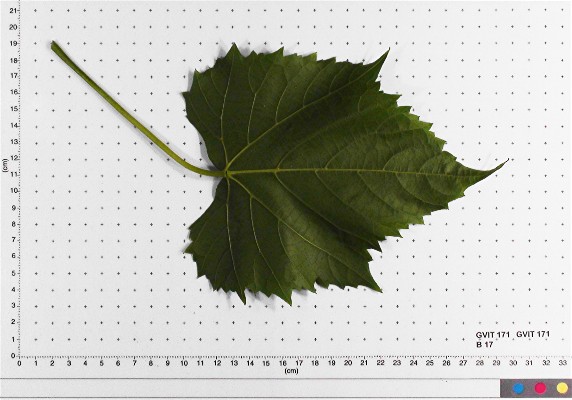 | | 1985 | COLLECTED | 01/01/1950 | Donovan's Farm, Southeast of Mason City, Illinois. | | | | Wild material | Female. Small, black berry. Large, loose cluster. Three to four clusters per shoot. Downy mildew resistant. Trace autumn mildew. | 1003902 | GVIT 171 |
| 82 | GVIT 200 | Ill 47 | Vitis cinerea (Engelm.) Millardet | United States | GEN | | | 1985 | DONATED | 03/01/1985 | | | | | Uncertain improvement status | Very large, branded compound cluster. 12 inches long. No disease, very vigorous. Female. | 1004262 | GVIT 200 |
| 83 | DVIT 1362 | Barrett #1 | Vitis cinerea (Engelm.) Millardet | California, United States | DAV | | | 1983 | DONATED | 01/01/1983 | | | | | Breeding material | Type = American hybrid. Per Galet (see citation): [about V. cinerea Engelmann] "Growing tip: felty white with rose margin, ashlike appearance, flat; stipules brownish-green. Young leaves: downy, gray with rose margin on upper surface, felty white below. Leaf: cordiform, medium in Montpellier, but large in some places in the United States (28 by 23 cm), 357-5-35 to 58, usually entire, rarely five-lobed (V. cinerea canesceans), soft, very bullate, dull, ash-gray, cobwebby-pubescent on both sides; small, nearly flat teeth; petiolar sinus lyre-shaped open or closed depending on the type; petioles downy-pubescent. Shoot: ash-gray, downy-pubescent, ribbed, thin. Flower cluster: very small, male or female. Cluster: conical, loose, medium-large, winged; berries round, black, small, thick skin, very little juice, acid flavor. Seeds: medium, 5 mm, chestnut colored, shiny with clear yellow beak and indentations; chalaza circular, .49, in small depression encircled with a few rediating lines, very short beak, protuberant raphe. Growth habit: very vigorous, climbing. [ ... ] V. cinerea has several common names: Parra silvestre (in Mexico), Ashy-leaved grape, Sweet winter, Downy, Ashy, Gray black, and Wichita grape. In the past confused with aestivalis, cinerea was officially named a distinct species in 1883 by George Engelmann. [ ... ] Cinerea has a good resistance to phylloxera and the leaves do not carry the galls. However, it is chlorotic in limy soils and is extremely difficult to root, which rules out its usefulness as a rootstock. The maturity of the wood is often deficient at the time of the first frost owing to its late ripening. The resistance to fungus diseases is excellent, downy mildew, and black rot in particular. At present, the only cultivated descendants of cinerea are Black Spanish and Herbemont (aestivalis-cinerea-vinifera)." | 1013288 | DVIT 1362 |
| 84 | DVIT 1363 | Barrett #9 | Vitis cinerea (Engelm.) Millardet | California, United States | DAV | | | 1983 | DONATED | 01/01/1983 | | | | | Breeding material | Type = American hybrid. Per Galet (see citation): [about V. cinerea Engelmann] "Growing tip: felty white with rose margin, ashlike appearance, flat; stipules brownish-green. Young leaves: downy, gray with rose margin on upper surface, felty white below. Leaf: cordiform, medium in Montpellier, but large in some places in the United States (28 by 23 cm), 357-5-35 to 58, usually entire, rarely five-lobed (V. cinerea canesceans), soft, very bullate, dull, ash-gray, cobwebby-pubescent on both sides; small, nearly flat teeth; petiolar sinus lyre-shaped open or closed depending on the type; petioles downy-pubescent. Shoot: ash-gray, downy-pubescent, ribbed, thin. Flower cluster: very small, male or female. Cluster: conical, loose, medium-large, winged; berries round, black, small, thick skin, very little juice, acid flavor. Seeds: medium, 5 mm, chestnut colored, shiny with clear yellow beak and indentations; chalaza circular, .49, in small depression encircled with a few rediating lines, very short beak, protuberant raphe. Growth habit: very vigorous, climbing. [ ... ] V. cinerea has several common names: Parra silvestre (in Mexico), Ashy-leaved grape, Sweet winter, Downy, Ashy, Gray black, and Wichita grape. In the past confused with aestivalis, cinerea was officially named a distinct species in 1883 by George Engelmann. [ ... ] Cinerea has a good resistance to phylloxera and the leaves do not carry the galls. However, it is chlorotic in limy soils and is extremely difficult to root, which rules out its usefulness as a rootstock. The maturity of the wood is often deficient at the time of the first frost owing to its late ripening. The resistance to fungus diseases is excellent, downy mildew, and black rot in particular. At present, the only cultivated descendants of cinerea are Black Spanish and Herbemont (aestivalis-cinerea-vinifera)." | 1013300 | DVIT 1363 |
| 85 | DVIT 1364 | Barrett #24 | Vitis cinerea (Engelm.) Millardet | California, United States | DAV | | | 1983 | DONATED | 01/01/1983 | | | | | Breeding material | Type = American hybrid. Per Galet (see citation): [about V. cinerea Engelmann] "Growing tip: felty white with rose margin, ashlike appearance, flat; stipules brownish-green. Young leaves: downy, gray with rose margin on upper surface, felty white below. Leaf: cordiform, medium in Montpellier, but large in some places in the United States (28 by 23 cm), 357-5-35 to 58, usually entire, rarely five-lobed (V. cinerea canesceans), soft, very bullate, dull, ash-gray, cobwebby-pubescent on both sides; small, nearly flat teeth; petiolar sinus lyre-shaped open or closed depending on the type; petioles downy-pubescent. Shoot: ash-gray, downy-pubescent, ribbed, thin. Flower cluster: very small, male or female. Cluster: conical, loose, medium-large, winged; berries round, black, small, thick skin, very little juice, acid flavor. Seeds: medium, 5 mm, chestnut colored, shiny with clear yellow beak and indentations; chalaza circular, .49, in small depression encircled with a few rediating lines, very short beak, protuberant raphe. Growth habit: very vigorous, climbing. [ ... ] V. cinerea has several common names: Parra silvestre (in Mexico), Ashy-leaved grape, Sweet winter, Downy, Ashy, Gray black, and Wichita grape. In the past confused with aestivalis, cinerea was officially named a distinct species in 1883 by George Engelmann. [ ... ] Cinerea has a good resistance to phylloxera and the leaves do not carry the galls. However, it is chlorotic in limy soils and is extremely difficult to root, which rules out its usefulness as a rootstock. The maturity of the wood is often deficient at the time of the first frost owing to its late ripening. The resistance to fungus diseases is excellent, downy mildew, and black rot in particular. At present, the only cultivated descendants of cinerea are Black Spanish and Herbemont (aestivalis-cinerea-vinifera)." | 1013303 | DVIT 1364 |
| 86 | DVIT 1365 | Barrett #27 | Vitis cinerea (Engelm.) Millardet | California, United States | DAV | | | 1983 | DONATED | 01/01/1983 | | | | | Breeding material | Type = American hybrid. Per Galet (see citation): [about V. cinerea Engelmann] "Growing tip: felty white with rose margin, ashlike appearance, flat; stipules brownish-green. Young leaves: downy, gray with rose margin on upper surface, felty white below. Leaf: cordiform, medium in Montpellier, but large in some places in the United States (28 by 23 cm), 357-5-35 to 58, usually entire, rarely five-lobed (V. cinerea canesceans), soft, very bullate, dull, ash-gray, cobwebby-pubescent on both sides; small, nearly flat teeth; petiolar sinus lyre-shaped open or closed depending on the type; petioles downy-pubescent. Shoot: ash-gray, downy-pubescent, ribbed, thin. Flower cluster: very small, male or female. Cluster: conical, loose, medium-large, winged; berries round, black, small, thick skin, very little juice, acid flavor. Seeds: medium, 5 mm, chestnut colored, shiny with clear yellow beak and indentations; chalaza circular, .49, in small depression encircled with a few rediating lines, very short beak, protuberant raphe. Growth habit: very vigorous, climbing. [ ... ] V. cinerea has several common names: Parra silvestre (in Mexico), Ashy-leaved grape, Sweet winter, Downy, Ashy, Gray black, and Wichita grape. In the past confused with aestivalis, cinerea was officially named a distinct species in 1883 by George Engelmann. [ ... ] Cinerea has a good resistance to phylloxera and the leaves do not carry the galls. However, it is chlorotic in limy soils and is extremely difficult to root, which rules out its usefulness as a rootstock. The maturity of the wood is often deficient at the time of the first frost owing to its late ripening. The resistance to fungus diseases is excellent, downy mildew, and black rot in particular. At present, the only cultivated descendants of cinerea are Black Spanish and Herbemont (aestivalis-cinerea-vinifera)." | 1013313 | DVIT 1365 |
| 87 | DVIT 1366 | Barrett #47 | Vitis cinerea (Engelm.) Millardet | California, United States | DAV | | | 1983 | DONATED | 01/01/1983 | | | | | Breeding material | Type = American hybrid. Per Galet (see citation): [about V. cinerea Engelmann] "Growing tip: felty white with rose margin, ashlike appearance, flat; stipules brownish-green. Young leaves: downy, gray with rose margin on upper surface, felty white below. Leaf: cordiform, medium in Montpellier, but large in some places in the United States (28 by 23 cm), 357-5-35 to 58, usually entire, rarely five-lobed (V. cinerea canesceans), soft, very bullate, dull, ash-gray, cobwebby-pubescent on both sides; small, nearly flat teeth; petiolar sinus lyre-shaped open or closed depending on the type; petioles downy-pubescent. Shoot: ash-gray, downy-pubescent, ribbed, thin. Flower cluster: very small, male or female. Cluster: conical, loose, medium-large, winged; berries round, black, small, thick skin, very little juice, acid flavor. Seeds: medium, 5 mm, chestnut colored, shiny with clear yellow beak and indentations; chalaza circular, .49, in small depression encircled with a few rediating lines, very short beak, protuberant raphe. Growth habit: very vigorous, climbing. [ ... ] V. cinerea has several common names: Parra silvestre (in Mexico), Ashy-leaved grape, Sweet winter, Downy, Ashy, Gray black, and Wichita grape. In the past confused with aestivalis, cinerea was officially named a distinct species in 1883 by George Engelmann. [ ... ] Cinerea has a good resistance to phylloxera and the leaves do not carry the galls. However, it is chlorotic in limy soils and is extremely difficult to root, which rules out its usefulness as a rootstock. The maturity of the wood is often deficient at the time of the first frost owing to its late ripening. The resistance to fungus diseases is excellent, downy mildew, and black rot in particular. At present, the only cultivated descendants of cinerea are Black Spanish and Herbemont (aestivalis-cinerea-vinifera)." | 1013316 | DVIT 1366 |
| 88 | DVIT 1405 | Barrett #23 | Vitis cinerea (Engelm.) Millardet | Illinois, United States | DAV | | | 1983 | DONATED | 02/24/1965 | | | | | Breeding material | Type = American Hybrid. Flower = Female. Per Galet (see citation): [about V. cinerea Engelmann] "Growing tip: felty white with rose margin, ashlike appearance, flat; stipules brownish-green. Young leaves: downy, gray with rose margin on upper surface, felty white below. Leaf: cordiform, medium in Montpellier, but large in some places in the United States (28 by 23 cm), 357-5-35 to 58, usually entire, rarely five-lobed (V. cinerea canesceans), soft, very bullate, dull, ash-gray, cobwebby-pubescent on both sides; small, nearly flat teeth; petiolar sinus lyre-shaped open or closed depending on the type; petioles downy-pubescent. Shoot: ash-gray, downy-pubescent, ribbed, thin. Flower cluster: very small, male or female. Cluster: conical, loose, medium-large, winged; berries round, black, small, thick skin, very little juice, acid flavor. Seeds: medium, 5 mm, chestnut colored, shiny with clear yellow beak and indentations; chalaza circular, .49, in small depression encircled with a few rediating lines, very short beak, protuberant raphe. Growth habit: very vigorous, climbing. [ ... ] V. cinerea has several common names: Parra silvestre (in Mexico), Ashy-leaved grape, Sweet winter, Downy, Ashy, Gray black, and Wichita grape. In the past confused with aestivalis, cinerea was officially named a distinct species in 1883 by George Engelmann. [ ... ] Cinerea has a good resistance to phylloxera and the leaves do not carry the galls. However, it is chlorotic in limy soils and is extremely difficult to root, which rules out its usefulness as a rootstock. The maturity of the wood is often deficient at the time of the first frost owing to its late ripening. The resistance to fungus diseases is excellent, downy mildew, and black rot in particular. At present, the only cultivated descendants of cinerea are Black Spanish and Herbemont (aestivalis-cinerea-vinifera)." | 1013563 | DVIT 1405 |
| 89 | DVIT 1450 | Olmo (021-34) | Vitis cinerea (Engelm.) Millardet | Kansas, United States | DAV | | | 1983 | COLLECTED | | | | | | Wild material | | 1013856 | DVIT 1450 |
| 90 | DVIT 1586 | (CF67-1) | Vitis cinerea (Engelm.) Millardet | California, United States | DAV | | | 1983 | DONATED | 01/01/1983 | | | | | Wild material | Type = species | 1014872 | DVIT 1586 |
| 91 | DVIT 1587 | (CF67-2) | Vitis cinerea (Engelm.) Millardet | California, United States | DAV | | | 1983 | DONATED | 01/01/1983 | | | | | Wild material | Type = species | 1014881 | DVIT 1587 |
| 92 | DVIT 1589 | 194-1 | Vitis cinerea (Engelm.) Millardet | California, United States | DAV | | | 1983 | DONATED | 01/01/1983 | | | | | Wild material | Type = species. Flower type = male | 1014898 | DVIT 1589 |
| 93 | DVIT 1590 | 7651 | Vitis cinerea (Engelm.) Millardet var. helleri (L. H. Bailey) M. O. Moore | California, United States | DAV | | | 1983 | DONATED | 01/01/1983 | | | | | Cultivated material | Type = species. Flower type = male. | 1014899 | DVIT 1590 |
| 94 | DVIT 1592 | Mazade | Vitis cinerea (Engelm.) Millardet var. helleri (L. H. Bailey) M. O. Moore | California, United States | DAV | | | 1983 | DONATED | 01/01/1983 | | | | | Cultivated material | Type = species. Flower type = male | 1014917 | DVIT 1592 |
| 95 | DVIT 1593 | Ressequier #1 | Vitis cinerea (Engelm.) Millardet var. helleri (L. H. Bailey) M. O. Moore | California, United States | DAV | | | 1983 | DONATED | 01/01/1983 | | | | | Cultivated material | Type = species. Flower type = female. | 1014931 | DVIT 1593 |
| 96 | DVIT 1601 | ILL.133-1 | Vitis cinerea (Engelm.) Millardet var. helleri (L. H. Bailey) M. O. Moore | California, United States | DAV | | | 1983 | DONATED | 01/01/1983 | | | | | Cultivated material | Type = species | 1014988 | DVIT 1601 |
| 97 | DVIT 1603 | Ressequier #2 | Vitis cinerea (Engelm.) Millardet var. helleri (L. H. Bailey) M. O. Moore | California, United States | DAV | | | 1983 | DONATED | 01/01/1983 | | | | | Cultivated material | Type = species. Flower type = female. | 1014999 | DVIT 1603 |
| 98 | DVIT 1611 | Barrett 45 | Vitis cinerea (Engelm.) Millardet | California, United States | DAV | | | 1983 | DONATED | 01/01/1983 | | | | | Breeding material | Type = species. Flower type = male. | 1015048 | DVIT 1611 |
| 99 | DVIT 1612 | Barrett 54 | Vitis cinerea (Engelm.) Millardet | California, United States | DAV | | | 1983 | DONATED | 01/01/1983 | | | | | Breeding material | Type = species. Flower type = male. | 1015049 | DVIT 1612 |
| 100 | DVIT 1613 | Barrett 58 | Vitis cinerea (Engelm.) Millardet | California, United States | DAV | | | 1983 | DONATED | 01/01/1983 | | | | | Breeding material | Type = species. Flower type = female. | 1015059 | DVIT 1613 |
| 101 | DVIT 1614 | Barrett 66 | Vitis cinerea (Engelm.) Millardet | California, United States | DAV | | | 1983 | DONATED | 01/01/1983 | | | | | Breeding material | Type = species. Flower type = female. | 1015060 | DVIT 1614 |
| 102 | DVIT 1639 | B65-7 | Vitis cinerea (Engelm.) Millardet var. helleri (L. H. Bailey) M. O. Moore | Illinois, United States | DAV | | | 1983 | DONATED | 02/14/1968 | | | | | Wild material | Type = species. Flower type = female. | 1015210 | DVIT 1639 |
| 103 | DVIT 1644 | (C65-21) | Vitis cinerea (Engelm.) Millardet | California, United States | DAV | | | 1983 | DONATED | 01/01/1983 | | | | | Wild material | Type = species. Flower type = female. | 1015248 | DVIT 1644 |
| 104 | DVIT 1648 | Arnold | Vitis cinerea (Engelm.) Millardet | California, United States | DAV | | | 1983 | DONATED | 01/01/1983 | | | | | Cultivated material | Type = species. Flower type = female. | 1015275 | DVIT 1648 |
| 105 | DVIT 1670 | Barrett 23 4X | Vitis cinerea (Engelm.) Millardet | Illinois, United States | DAV | | | 1983 | DONATED | 02/14/1968 | | | | | Breeding material | Type = Tetraploid | 1015404 | DVIT 1670 |
| 106 | DVIT 1677 | Barrett 65-20 | Vitis cinerea (Engelm.) Millardet var. helleri (L. H. Bailey) M. O. Moore | Illinois, United States | DAV | | | 1983 | DONATED | 02/14/1968 | | | | | Breeding material | Type = Species. Per Galet (see citation): "DESCRIPTION: Growing tip: felty, white with rose margin, flat, open. Young leaves: downy, bronze. Leaf: cuneiform, 136 to 146-3-24 to 57, medium, barely three-lobed (10 or 11), often with convex edges, underside cobwebby-pubescent; teeth nearly flat, convex; petiolar sinus lyre-shaped; petioles medium, green, cobwebby. Shoot: ribbed, soft, easily broken or detached from vine, downy, sometimes lightly pubescent. Flower clusters: medium or large, winged with numerous lateral branches; male or female. Cluster: medium-large, conical, many lateral branches; berries round, small, with very little pink, acid, juice. Seeds: medium, yellowish brown to dark mahogany; very swollen dorsal side; small chalaza, position .49, oval; beak short and thick; very shallow sometimes nonexistant indentations. Growth habit: vigorous climbing. APTITUDES: Along with V. Cinerea this is the latest ripening of the American species; its vegetative cycle is approximately a month later than riparia. Budbreak is in mid-April, bloom around June 25, maturity is mid-October and leaf fall around November 20. Its resistance to phylloxera is good (16/20); the leaves carry a few galls. Since its resistance to lime-induced chlorosis is very good, V. Berlandieri should have played a great role in replanting the European vineyards. Unfortunately, it is so difficult to root that hybridization is the only way to obtain commercially viable rootstocks incorporating its lime tolerance. It has a good resistance to fungus diseases and Pierce's disease." | 1015437 | DVIT 1677 |
| 107 | DVIT 1685 | La Font 9C | Vitis cinerea (Engelm.) Millardet var. helleri (L. H. Bailey) M. O. Moore | Illinois, United States | DAV | | | 1983 | DONATED | 02/06/1969 | | | | | Cultivated material | Type = species. Flower = Male. Per Galet (see citation): "Growing tip: felty, white with rose margin, flat, open. Young leaves: downy, bronze. Leaf: cuneiform, 136 to 146-3-24 to 57, medium, barely three-lobed (10 or 11), often with convex edges, underside cobwebby-pubescent; teeth nearly flat, convex; petiolar sinus lyre-shaped; petioles medium, green, cobwebby. Shoot: ribbed, soft, easily broken or detatched from vine, downy, sometimes lightly pubescent. Flower clusters: medium or large, winged with numerous lateral branches; male and female. Cluster: medium-large, conical, many lateral branches; berries round, small, with very little pink, acid, juice. Seeds: medium, yellowish brown to dark mahogany; very swollen dorsal side; small chalaza, posiiton .49, oval; beak short and thick; very shallow sometimes nonexistant indentations. Growth habit: vigorous, climbing...Along with V. cinerea this is the latest ripening of the American species; its vegetative cycle is approximately a month later than riparia. Budbreak is in mid-April, bloom around June 25, maturity in mid-October and leaf fall around November 20. Its resistance to phylloxera is good (16/20); the leaves carry a few galls...its resistance to lime-induced chlorosis is good...good resistance to fungus diseases and Pierce's disease."Type = species. Flower = Male. Per Galet (see citation): "Growing tip: felty, white with rose margin, flat, open. Young leaves: downy, bronze. Leaf: cuneiform, 136 to 146-3-24 to 57, medium, barely three-lobed (10 or 11), often with convex edges, underside cobwebby-pubescent; teeth nearly flat, convex; petiolar sinus lyre-shaped; petioles medium, green, cobwebby. Shoot: ribbed, soft, easily broken or detatched from vine, downy, sometimes lightly pubescent. Flower clusters: medium or large, winged with numerous lateral branches; male and female. Cluster: medium-large, conical, many lateral branches; berries round, small, with very little pink, acid, juice. Seeds: medium, yellowish brown to dark mahogany; very swollen dorsal side; small chalaza, posiiton .49, oval; beak short and thick; very shallow sometimes nonexistant indentations. Growth habit: vigorous, climbing...Along with V. cinerea this is the latest ripening of the American species; its vegetative cycle is approximately a month later than riparia. Budbreak is in mid-April, bloom around June 25, maturity in mid-October and leaf fall around November 20. Its resistance to phylloxera is good (16/20); the leaves carry a few galls...its resistance to lime-induced chlorosis is good...good resistance to fungus diseases and Pierce's disease." | 1015485 | DVIT 1685 |
| 108 | DVIT 1273 | DVIT 1273 | Vitis cinerea (Engelm.) Millardet var. helleri (L. H. Bailey) M. O. Moore | California, United States | DAV | | | 1981 | DONATED | 01/01/1981 | | | | | Uncertain improvement status | Type = Species. Flower = Female. | 1012604 | DVIT 1273 |
| 109 | DVIT 1283 | DVIT 1283 | Vitis cinerea (Engelm.) Millardet | California, United States | DAV | | | 1981 | DONATED | 01/01/1981 | | | | | Wild material | Type = species. Flower = male. | 1012669 | DVIT 1283 |
| 110 | DVIT 1284 | DVIT 1284 | Vitis cinerea (Engelm.) Millardet | California, United States | DAV | | | 1981 | DONATED | 01/01/1981 | | | | | Wild material | Type = species. Flower = male. | 1012675 | DVIT 1284 |
| 111 | DVIT 1285 | DVIT 1285 | Vitis cinerea (Engelm.) Millardet | California, United States | DAV | | | 1981 | DONATED | 01/01/1981 | | | | | Wild material | Type = species. Flower = female. | 1012683 | DVIT 1285 |
| 112 | DVIT 1416 | DVIT 1416 | Vitis cinerea (Engelm.) Millardet var. floridana Munson | California, United States | DAV | | | 1981 | DONATED | 01/01/1981 | | | | | Wild material | Type = species. | 1013633 | DVIT 1416 |
| 113 | PI 597304 | BR 6B | Vitis hybr. | United States | GEN | 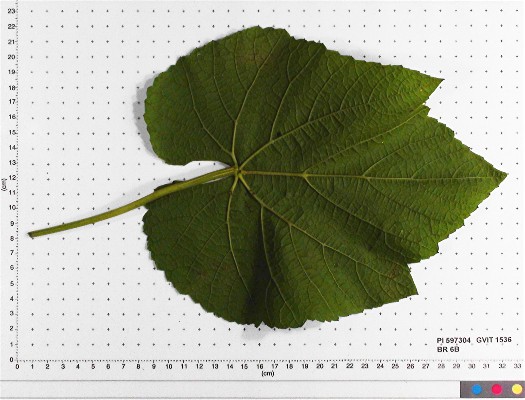 | | 1994 | DONATED | 01/11/1994 | | | | | Cultivated material | | 1481896 | PI 597304 |
| 114 | PI 588595 | BR 7 | Vitis hybr. | Maryland, United States | GEN |  | | 1989 | DEVELOPED | | | | | | Cultivated material | Hermaphrodite. Small, black seed berries, flavor slightly wild; clusters moderate; good vine vigor; ripens late September; black rot resistant with trace of powdery mildew and anthracnose one year. | 1012081 | PI 588595 |
| 115 | PI 588600 | BR 20 | Vitis hybr. | Maryland, United States | GEN |  | | 1989 | DEVELOPED | | | | | | Cultivated material | Hermaphrodite. Crop large, vigor very good, foliage very good, trace of black rot and of powdery mildew; clusters moderate, open; berries black, moderately small; ripens late August; flavor neutral; black rot resistant. | 1012113 | PI 588600 |
| 116 | PI 588601 | BR 5 | Vitis hybr. | Maryland, United States | GEN |  | | 1989 | DEVELOPED | | | | | | Cultivated material | Hermaphrodite. Crop moderate, vigor good, foliage good, trace of powdery mildew; clusters moderately large of cinerea appearance; berries black, small; ripens late September; flavor slightly wild; black rot resistant. | 1012122 | PI 588601 |
| 117 | PI 588604 | BR 8 | Vitis hybr. | Maryland, United States | GEN | 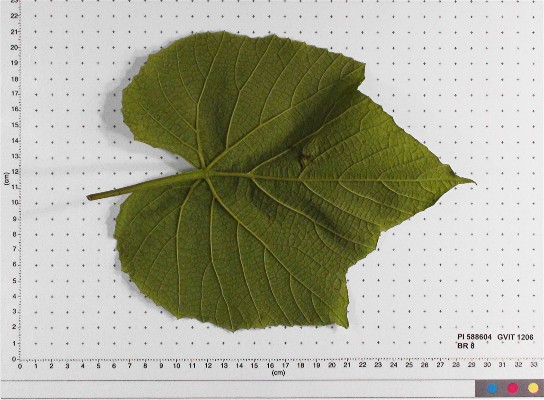 | | 1989 | DEVELOPED | | | | | | Cultivated material | Hermaphrodite. Crop moderate, vigor very good, foliage good, clusters small to medium, open; berries black, medium to small; ripens late September; flavor slightly wild, not labrusca. Black rot resistant - trace of powdery mildew and black rot one year. Aroma noted. | 1012142 | PI 588604 |
| 118 | PI 588605 | BR 23 | Vitis hybr. | Maryland, United States | GEN | 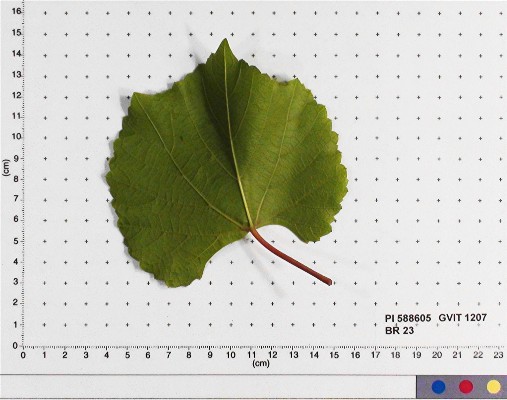 | | 1989 | DEVELOPED | | | | | | Cultivated material | Female. Black rot resistant; crop medium small, vigor very good, foliage very good, no diseases noted; cluster small; berries black, small; ripens late September; flavor wild. | 1012149 | PI 588605 |
| 119 | PI 588606 | BR 21 | Vitis hybr. | Maryland, United States | GEN | 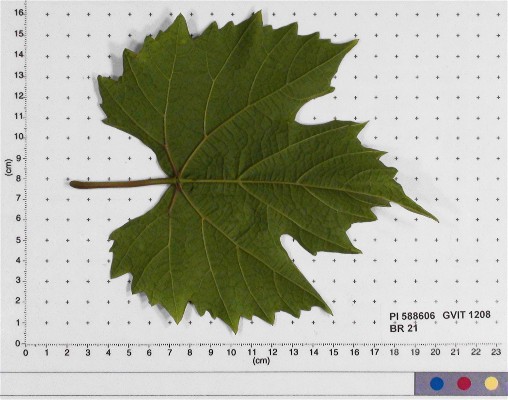 | | 1989 | DEVELOPED | | | | | | Cultivated material | Hermaphrodite. Black rot resistant; crop moderate, vigor very good, foliage good, slight powdery mildew; cluster small; berries black, small, ripens mid to late August; flavor interesting to wild. | 1012154 | PI 588606 |
| 120 | PI 588607 | BR 3 | Vitis hybr. | Maryland, United States | GEN | 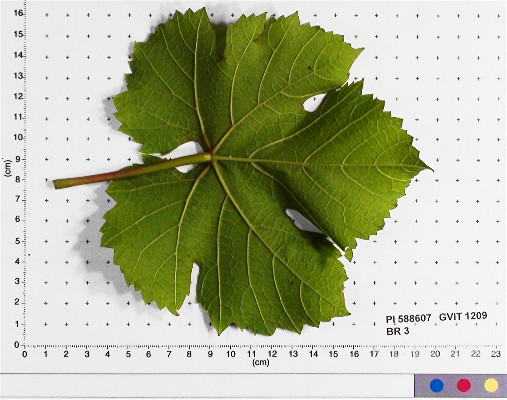 | | 1989 | DEVELOPED | | | | | | Cultivated material | Female. Black rot resistant; crop small, good vigor, excellent foliage, trace of powdery mildew; clusters small to moderate; berries black, medium; ripens late September; flavor neutral. | 1012165 | PI 588607 |
| 121 | PI 588494 | NY 66.791.1 | Vitis hybr. | New York, United States | GEN | 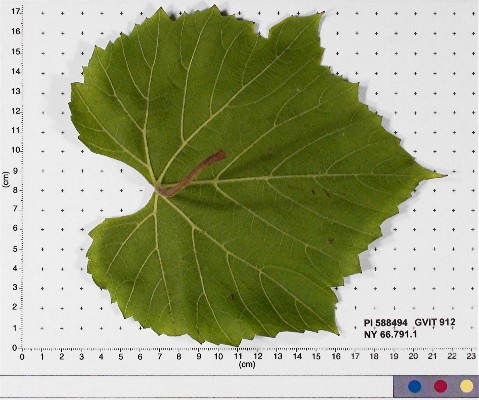 | | 1988 | DONATED | 01/26/1988 | | | | | Cultivated material | Small, blue berries lacking in soluble solids; large loose cluster; vigorous vine; winter hardy. | 1009958 | PI 588494 |
| 122 | PI 588495 | NY 66.783.1 | Vitis hybr. | New York, United States | GEN | 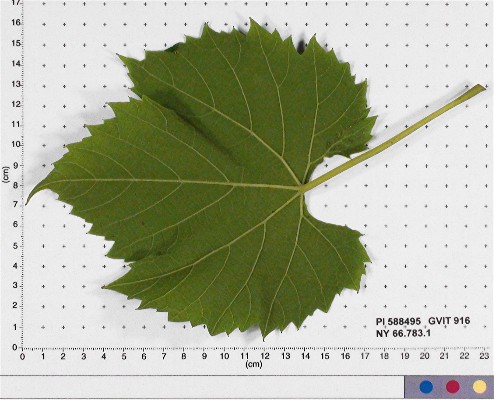 | | 1988 | DONATED | 01/26/1988 | | | | | Cultivated material | Small to medium, blue berry; medium well-filled cluster; vigorous vine; winter hardy. | 1009998 | PI 588495 |
| 123 | PI 588498 | NY 66.778.1 | Vitis hybr. | New York, United States | GEN | 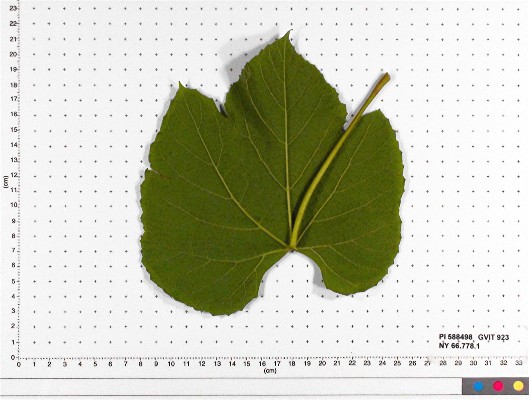 | | 1988 | DONATED | 01/26/1988 | | | | | Cultivated material | Small blue berries; medium to loose clusters; very vigorous vine; winter hardy. | 1010052 | PI 588498 |
| 124 | PI 588499 | NY 66.774.1 | Vitis hybr. | New York, United States | GEN | 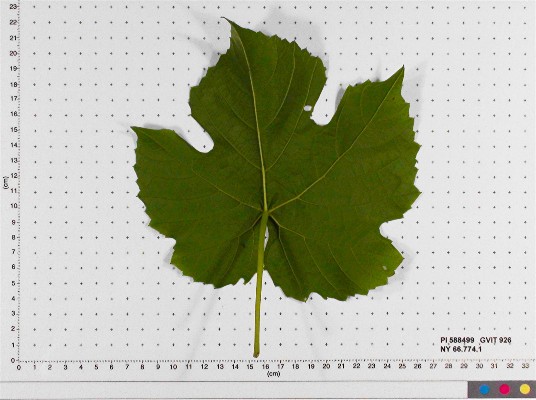 | | 1988 | DONATED | 01/26/1988 | | | | | Cultivated material | Small blue berries; loose cluster. | 1010086 | PI 588499 |
| 125 | PI 588502 | NY 65.587.1 | Vitis hybr. | New York, United States | GEN | 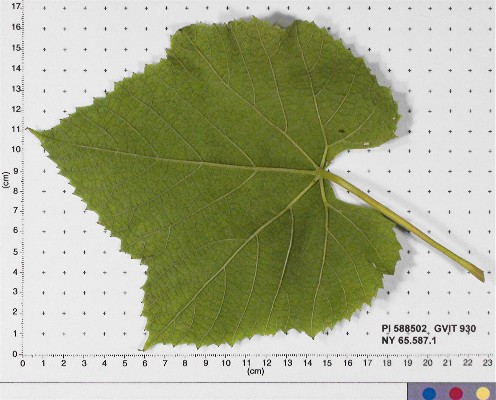 | | 1988 | DONATED | 01/26/1988 | | | | | Cultivated material | Small blue seeded berry; large loose cluster; vigorous vine; winter hardy. | 1010126 | PI 588502 |
| 126 | PI 588503 | NY 65.574.1 | Vitis hybr. | New York, United States | GEN | 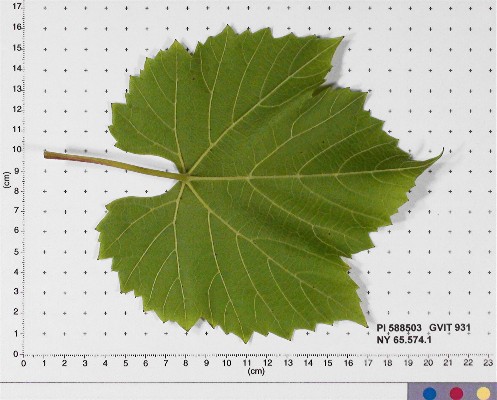 | | 1988 | DONATED | 01/26/1988 | | | | | Cultivated material | Small blue seeded berry; medium sized loose cluster; vigorous vine. | 1010131 | PI 588503 |
| 127 | PI 588504 | NY 65.546.3 | Vitis hybr. | New York, United States | GEN | 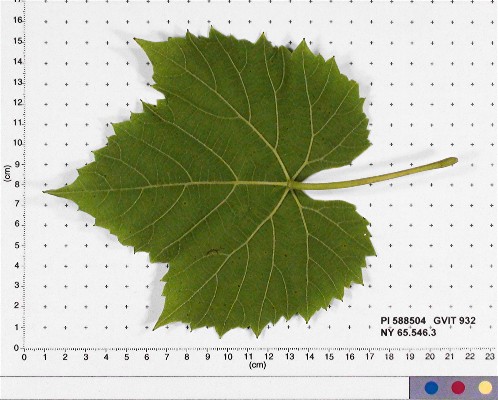 | | 1988 | DONATED | 01/26/1988 | | | | | Cultivated material | Small to medium fruity berry, pink; medium size loose cluster; average vine vigor; winter hardy. | 1010146 | PI 588504 |
| 128 | PI 588505 | NY 65.562.2 | Vitis hybr. | New York, United States | GEN | 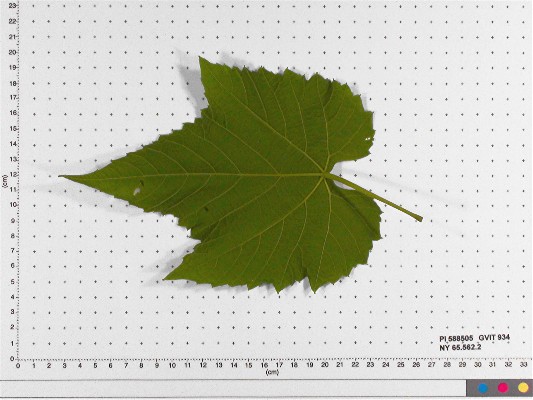 | | 1988 | DONATED | 01/26/1988 | | | | | Cultivated material | Small, blue, neutral flavored berry; large loose cluster; vigorous vine; good clean foliage; winter hardy. | 1010167 | PI 588505 |
| 129 | PI 588506 | NY 65.584.1 | Vitis hybr. | New York, United States | GEN | 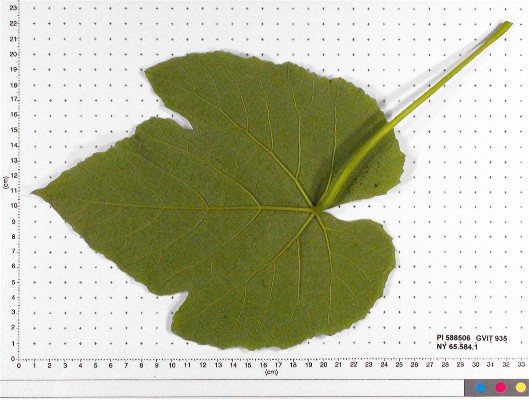 | | 1988 | DONATED | 01/26/1988 | | | | | Cultivated material | | 1010168 | PI 588506 |
| 130 | PI 588507 | Ill 39-1 | Vitis hybr. | Illinois, United States | GEN | 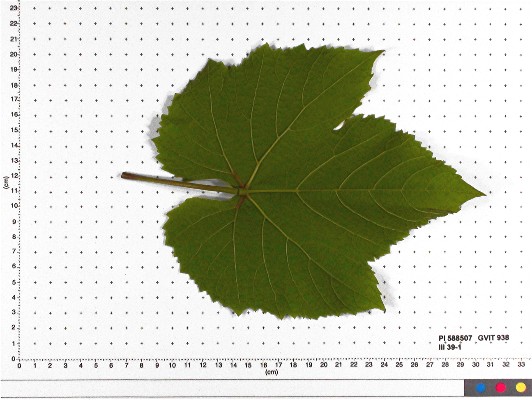 | | 1988 | DONATED | 01/26/1988 | | | | | Cultivated material | Small, blue, nearly seedless berry; medium, very loose cluster; very vigorous vine; winter hardy. | 1010207 | PI 588507 |
| 131 | PI 588509 | NY 65.565.1 | Vitis hybr. | New York, United States | GEN | 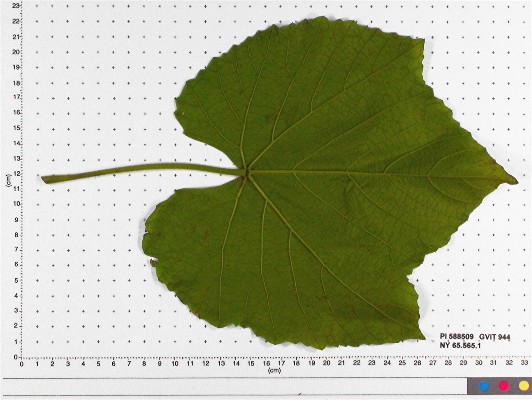 | | 1988 | DONATED | 01/26/1988 | | | | | Cultivated material | Small, blue seeded berries; medium size loose clusters; vigorous vine; good disease resistance; moderate winter hardiness. | 1010263 | PI 588509 |
| 132 | PI 588513 | NY 65.562.3 | Vitis hybr. | New York, United States | GEN | 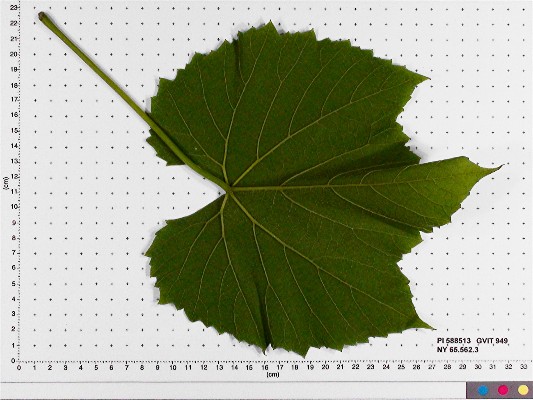 | | 1988 | DONATED | 01/26/1988 | | | | | Cultivated material | Small, blue berries; medium size, medium compact cluster; very vigorous vine. | 1010295 | PI 588513 |
| 133 | PI 588517 | Ill 487-1 | Vitis hybr. | Illinois, United States | GEN | 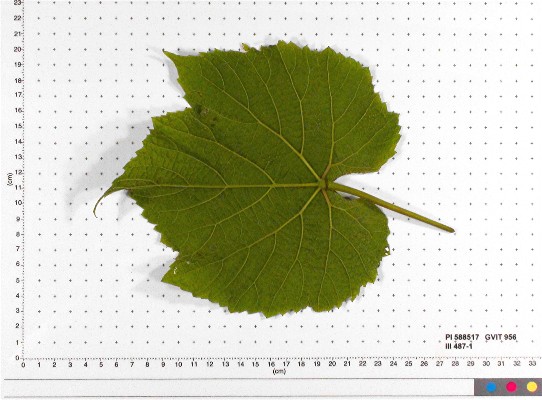 | | 1988 | DONATED | 01/26/1988 | | | | | Cultivated material | Hermaphrodite; small, blue berries; medium, very loose cluster very clean foliage; very vigorous vine; winter hardy. | 1010360 | PI 588517 |
| 134 | PI 588519 | NY 65.575.1 | Vitis hybr. | New York, United States | GEN | 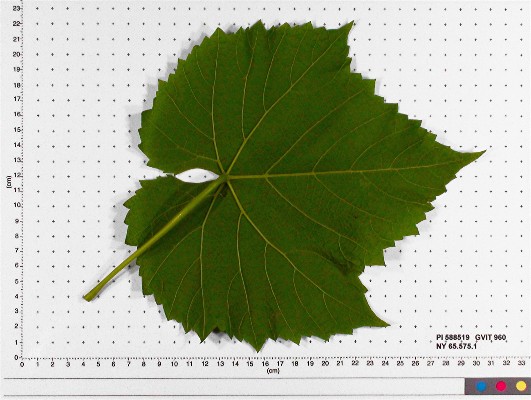 | | 1988 | DONATED | 01/26/1988 | | | | | Cultivated material | Small, blue berries; medium loose cluster; clean foliage; very vigorous vine; winter hardy. | 1010383 | PI 588519 |
| 135 | PI 588523 | NY 66.793.1 | Vitis hybr. | New York, United States | GEN |  | | 1988 | DONATED | 01/26/1988 | | | | | Cultivated material | Small to medium, round, blue berries; medium to large loose cluster; medium to high vine vigor; disease resistant. | 1010404 | PI 588523 |
| 136 | PI 588525 | Ill 760-2 | Vitis hybr. | Illinois, United States | GEN | 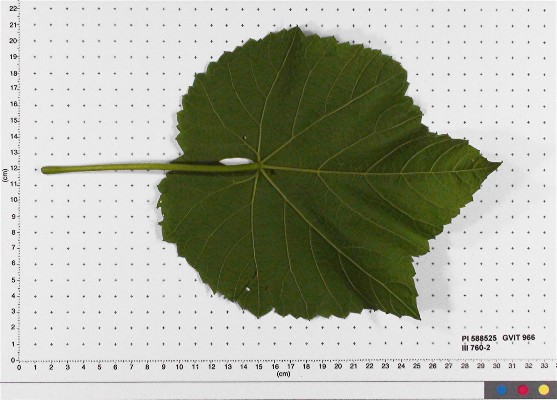 | | 1988 | DONATED | 01/26/1988 | | | | | Cultivated material | Female. Small, blue, round neutral flavored berry; medium, very loose cluster; very vigorous vine; winter hardy. | 1010413 | PI 588525 |
| 137 | PI 588534 | NY 65.573.1 | Vitis hybr. | New York, United States | GEN | 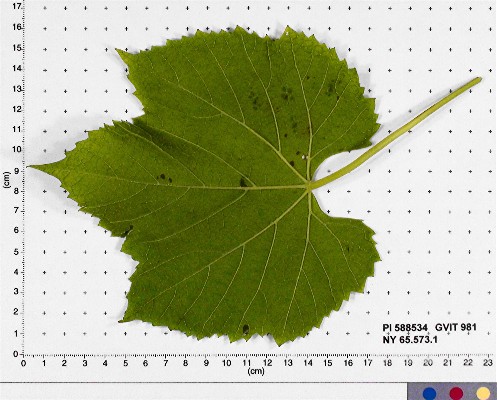 | | 1988 | DONATED | 01/26/1988 | | | | | Cultivated material | Small to medium blue, mushy, herbaceous berries. Very large, loose cluster. Vigorous vine. Cold hardy. | 1010520 | PI 588534 |
| 138 | PI 588536 | NY 66.795.1 | Vitis hybr. | New York, United States | GEN | 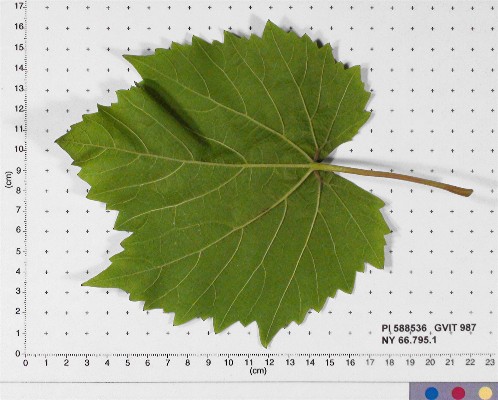 | | 1988 | DONATED | 01/26/1988 | | | | | Cultivated material | Blue, seeded berries, medium oval; large, compact cluster; very disease resistant; medium vigor; early ripening. | 1010554 | PI 588536 |
| 139 | PI 588545 | NY 65.562.1 | Vitis hybr. | New York, United States | GEN | 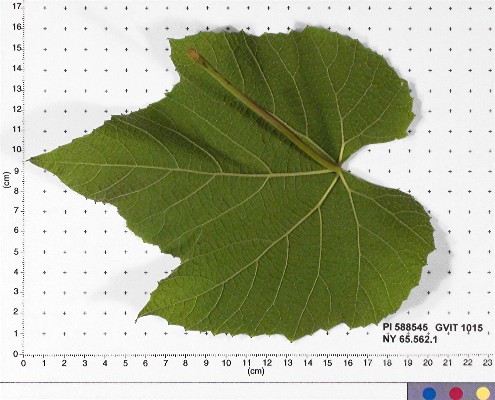 | | 1988 | DONATED | 01/26/1988 | | | | | Cultivated material | Small blue berries, loose cluster. | 1010733 | PI 588545 |
| 140 | PI 588546 | Ill 683-1 | Vitis hybr. | Illinois, United States | GEN | 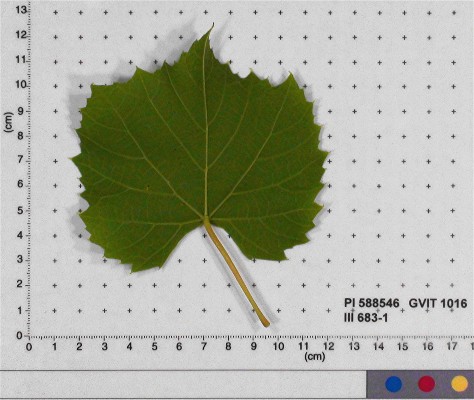 | | 1988 | DONATED | 01/26/1988 | | | | | Cultivated material | Small, blue, seeded, herbaceous flavor berries. Small, loose cluster. Vigorous vine. Winter hardy. | 1010740 | PI 588546 |
| 141 | PI 588473 | Ill 760-3 | Vitis hybr. | Illinois, United States | GEN | 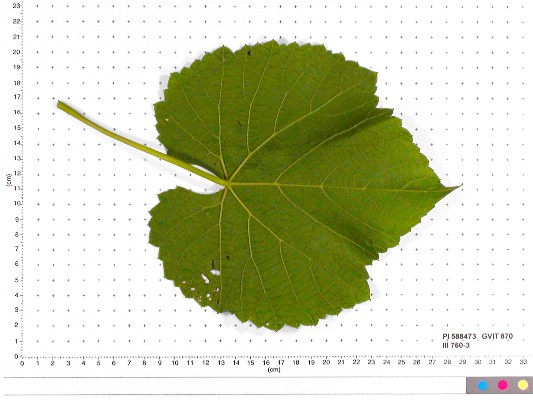 | | 1988 | DEVELOPED | | | | | | Cultivated material | Male. Very vigorous vine; blooms late; winter hardy. | 1009539 | PI 588473 |
| 142 | PI 588475 | NY 66.773.1 | Vitis hybr. | New York, United States | GEN | 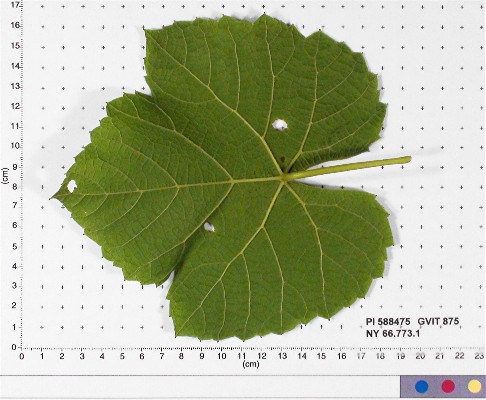 | | 1988 | DONATED | 01/25/1988 | | | | | Cultivated material | Medium black berries. | 1009576 | PI 588475 |
| 143 | PI 588477 | NY 65.556.1 | Vitis hybr. | New York, United States | GEN | 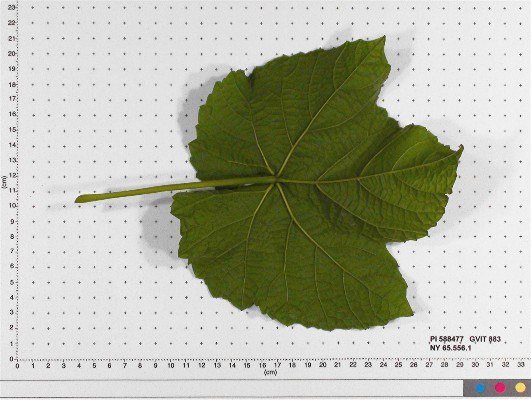 | | 1988 | DONATED | 01/25/1988 | | | | | Cultivated material | Small black berries; loose cluster. | 1009653 | PI 588477 |
| 144 | PI 588478 | NY 65.585.1 | Vitis hybr. | New York, United States | GEN | 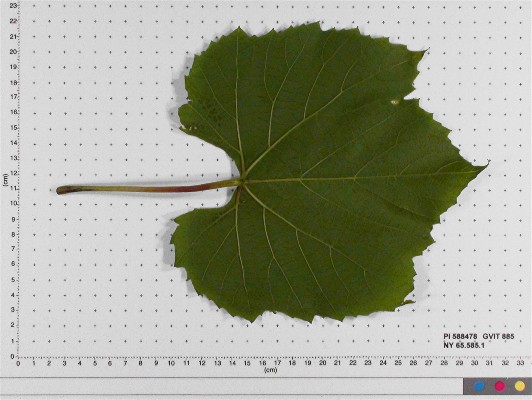 | | 1988 | DONATED | 01/25/1988 | | | | | Cultivated material | Small to medium, amber berry. Medium to large loose to well-filled cluster; vigorous vine; winter hardy. | 1009670 | PI 588478 |
| 145 | PI 588480 | Ill 794-5 | Vitis hybr. | Illinois, United States | GEN | 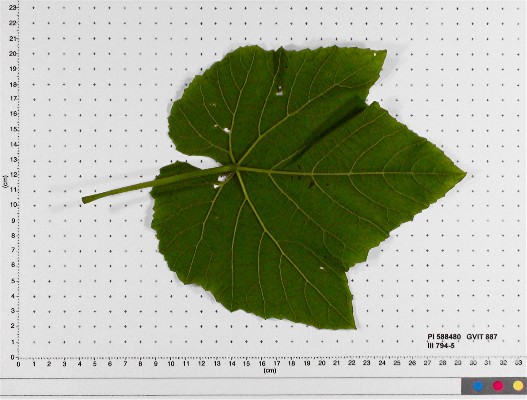 | | 1988 | DEVELOPED | | | | | | Cultivated material | Hermaphrodite; Small to medium, red, herbaceous flavored berry; large well-filled cluster; vigorous vine; winter hardy. | 1009691 | PI 588480 |
| 146 | PI 588481 | Ill 300-3 | Vitis hybr. | Illinois, United States | GEN |  | | 1988 | DEVELOPED | | | | | | Cultivated material | Male. Very vigorous vine. | 1009712 | PI 588481 |
| 147 | PI 588486 | Ill 788-1 | Vitis hybr. | Illinois, United States | GEN | 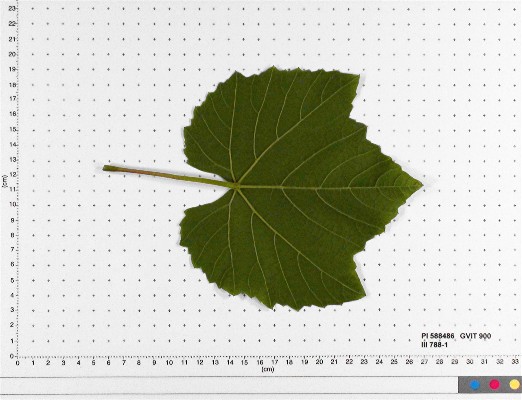 | | 1988 | DEVELOPED | | | | | | Cultivated material | Male. | 1009830 | PI 588486 |
| 148 | PI 588487 | Ill 794-3 | Vitis hybr. | Illinois, United States | GEN |  | | 1988 | DEVELOPED | | | | | | Cultivated material | Hermaphrodite; Small, blue, round berry. Medium size loose cluster; vigorous vine. | 1009839 | PI 588487 |
| 149 | PI 588488 | NY 65.592.1 | Vitis hybr. | New York, United States | GEN | 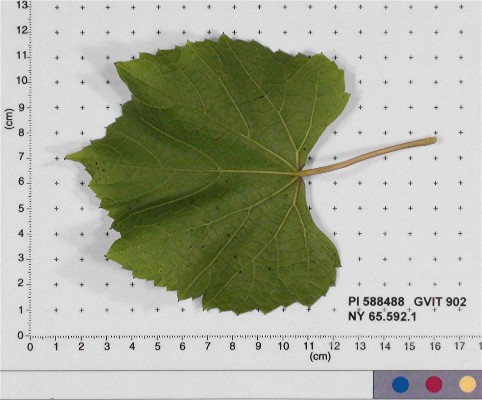 | | 1988 | DONATED | 01/25/1988 | | | | | Cultivated material | Small black berries. | 1009850 | PI 588488 |
| 150 | PI 588492 | Ill 928-1 | Vitis hybr. | Illinois, United States | GEN | 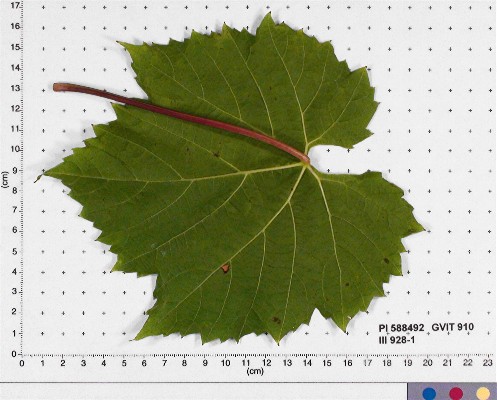 | | 1988 | DEVELOPED | | | | | | Cultivated material | Male. Very vigorous vine; rupestris-like; winter hardy. | 1009933 | PI 588492 |
| 151 | PI 588336 | Millardet 219A | Vitis hybr. | France | GEN |  | | 1987 | DONATED | 02/01/1987 | | | | | Rootstock | Female. Small blue berries. Small loose cluster. Vigorous vine. | 1007441 | PI 588336 |
| 152 | PI 588342 | Ill 547-2 | Vitis hybr. | Illinois, United States | GEN |  | | 1987 | DEVELOPED | | | | | | Cultivated material | Female. Small, blue, acidic berries; small, loose cluster late bloom, very vigorous vine; Downy mildew resistant. | 1007496 | PI 588342 |
| 153 | PI 588358 | Ill 191-1 | Vitis hybr. | Illinois, United States | GEN |  | | 1987 | DEVELOPED | | | | | | Cultivated material | Female. Small blue berries. Small very loose cluster, vigorous vine. | 1007726 | PI 588358 |
| 154 | PI 588363 | Ill 892-1 | Vitis hybr. | Illinois, United States | GEN | 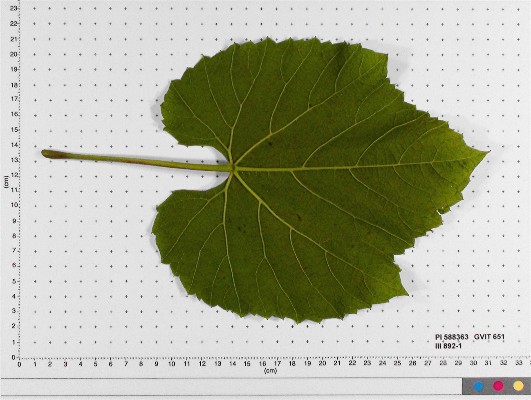 | | 1987 | DEVELOPED | | | | | | Cultivated material | Hermaphrodite, small black berries. | 1007793 | PI 588363 |
| 155 | PI 588364 | Ill 762-1 | Vitis hybr. | Illinois, United States | GEN |  | | 1987 | DEVELOPED | 02/01/1987 | | | | | Cultivated material | Male flowers. | 1007807 | PI 588364 |
| 156 | PI 588314 | Seibel 880 | Vitis hybr. | France | GEN | 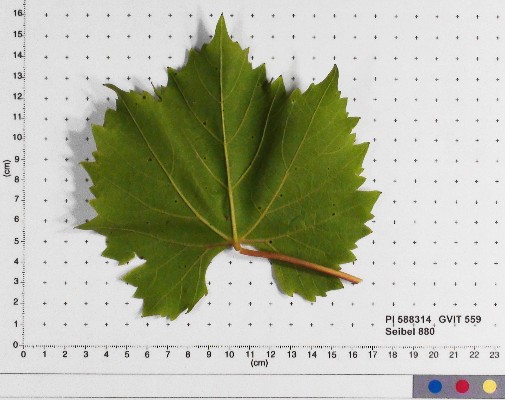 | | 1987 | DONATED | 01/01/1987 | | | | | Cultivated material | Berries white. Cluster small, well-filled. Very small vine size. Moderately winter hardy. Wine. | 1007148 | PI 588314 |
| 157 | PI 588327 | Ill 547-1 | Vitis hybr. | Illinois, United States | GEN |  | | 1987 | DEVELOPED | | | | | | Cultivated material | Male. Very vigorous vine; excellent downy mildew resistance. | 1007340 | PI 588327 |
| 158 | PI 597217 | Seibel 7349 | Vitis hybr. | France | GEN |  | | 1987 | DONATED | 01/01/1987 | | | | | Cultivated material | Blue berries, medium. Large compact clusters. Vigorous vine. Susceptible to downy and powdery mildew. Winter hardy. | 1007077 | PI 597217 |
| 159 | PI 597219 | Joannes Seyve 9-149 | Vitis hybr. | France | GEN |  | | 1987 | DEVELOPED | 05/10/1949 | | | | | Cultivated material | Black berries, small to medium. Medium size, compact clusters. Fruit cracking. Vigorous vine. Somewhat winter tender. | 1007094 | PI 597219 |
| 160 | PI 588286 | 'Remaily Seedless' | Vitis hybr. | New York, United States | GEN | 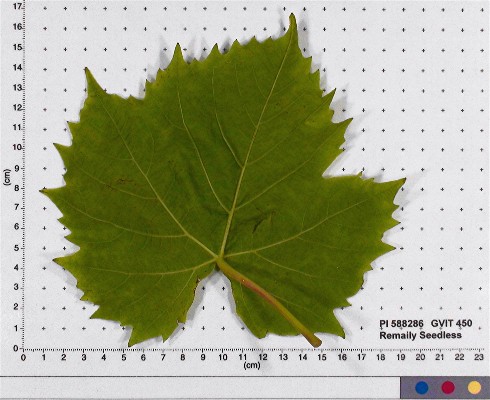 | | 1986 | DEVELOPED | 01/01/1980 | | | | | Cultivar | Cluster: large, tapered, and attractive. Berry: medium, oval; skin light green, adherent, slightly tough, resistant to cracking; flavor neutral; ripens with Concord or about Oct. 10; good holding quality. Vine: large, rampantly expansive; very vigorous; hardy to -27 C; very productive, must be cluster-thinned; resistant to Botrytis cinerea; tolerant to Plasmopara and Oidium. Proper growth control must be exercised to retain berry size. | 1006421 | PI 588286 |
| 161 | PI 597189 | Seibel 8740 | Vitis hybr. | France | GEN |  | | 1986 | DONATED | 12/01/1986 | | | | | Cultivated material | White berries, medium to small. Medium to loose clusters. Very early maturity. Average vine size. Moderately winter hardy. | 1006632 | PI 597189 |
| 162 | PI 597193 | Seibel 4646 | Vitis hybr. | France | GEN |  | | 1986 | DONATED | 12/01/1986 | | | | | Cultivated material | Blue berries, medium, round. Small to medium loose clusters. Small vine; tenturier. Moderately winter hardy. | 1006716 | PI 597193 |
| 163 | PI 163512 | Seibel 11342 | Vitis hybr. | France | GEN |  | | 1986 | DEVELOPED | 04/12/1948 | | | | | Cultivated material | Pink berries. Medium, loose clusters. Small vine size. Occasional downy mildew. Winter hardy. | 1140523 | PI 163512 |
| 164 | PI 177208 | Landot 244 | Vitis hybr. | France | GEN |  | | 1986 | DEVELOPED | 03/23/1949 | | | | | Cultivated material | Virus free. Berries blue-black, oval, small .7cm, very pulpy; cluster medium, 10-15 cm, cylindrical; vigorous vine, very productive. Maturity is early midseason; susceptible to diseases. | 1481925 | PI 177208 |
| 165 | PI 588209 | Ill 559-5 | Vitis hybr. | Illinois, United States | GEN |  | | 1986 | DONATED | 02/05/1986 | | | | | Cultivated material | Female. Small, blue berries. Large loose cluster. Very vigorous vine. Downy mildew resistant. | 1004839 | PI 588209 |
| 166 | PI 175494 | 'Cascade (Seibel 13-053)' | Vitis hybr. | France | GEN |  | | 1985 | DONATED | 03/04/1949 | | | | | Cultivar | Berries black. Cluster small. High resistance to powdery mildew. Winter hardy. | 1152045 | PI 175494 |
| 167 | PI 257012 | Millardet 420A | Vitis hybr. | France | GEN |  | | 1985 | DEVELOPED | 01/01/1979 | | | | | Rootstock | Male rootstock, weak, sterile flower. Good phylloxera resistance, excellent high lime resistance. Prefers fresh fertile soils. Not drought tolerant. Hastens maturity for high quality wines or early table grapes. Roots poorly, average grafting. | 1196448 | PI 257012 |
| 168 | PI 588071 | 'Chelois (Seibel 10878)' | Vitis hybr. | Unknown | GEN |  | | 1985 | DONATED | 03/01/1985 | | | | | Cultivar | Berries small, round, blue, slightly pulpy, acid. Cluster medium; long and narrow, compact. Moderately productive. Late budbreak; poor yield on secondaries. Good disease resistance. Poor response to drought. | 1001422 | PI 588071 |
| 169 | PI 588094 | Joannes Seyve 23416 | Vitis hybr. | France | GEN |  | | 1985 | DEVELOPED | 05/10/1949 | | | | | Cultivated material | Small pinkish white, oval berries. Large 20cm cluster, narrow, slightly winged and loose. Budbreak is late with early mid season maturity. Good resistance to downy mildew Vine vigorous. Moderately winter hardy. | 1002341 | PI 588094 |
| 170 | PI 588137 | Ill 885-2 | Vitis hybr. | Illinois, United States | GEN |  | | 1985 | DEVELOPED | | | | | | Cultivated material | Female. Small blue berries. Medium, very loose clusters. Late bloom. Very vigorous vine. | 1003566 | PI 588137 |
| 171 | PI 588175 | Ill 547-3 | Vitis hybr. | Illinois, United States | GEN |  | | 1985 | DEVELOPED | | | | | | Cultivated material | Male. Very vigorous vine. Clean foliage. | 1004285 | PI 588175 |
| 172 | PI 588191 | Ill 547-3 | Vitis hybr. | Illinois, United States | GEN |  | | 1985 | DEVELOPED | | | | | | Cultivated material | Male. Very vigorous vine, very clean foliage. | 1004555 | PI 588191 |
| 173 | PI 588192 | Ill 559-2 | Vitis hybr. | Illinois, United States | GEN |  | | 1985 | DEVELOPED | | | | | | Cultivated material | Female. Small, blue berries, medium size cluster, very vigorous vine. Downy mildew resistant. | 1004565 | PI 588192 |
| 174 | PI 588206 | Ill 559-1 | Vitis hybr. | Illinois, United States | GEN | 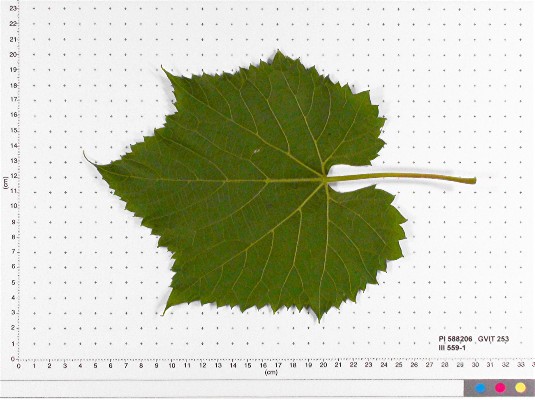 | | 1985 | DEVELOPED | | | | | | Cultivated material | Male. Vigorous vine. Downy mildew resistance. Early leaf senescence. | 1004770 | PI 588206 |
| 175 | PI 597106 | Ill 882-7 | Vitis hybr. | Illinois, United States | GEN | 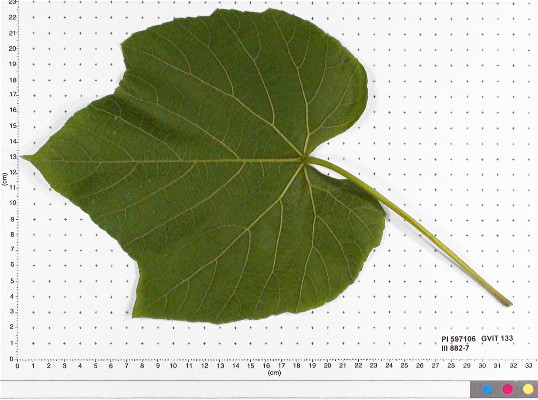 | | 1985 | DEVELOPED | | | | | | Cultivated material | Male. Vigorous vine. Very late bloom. | 1003307 | PI 597106 |
| 176 | PI 422382 | 'Negrette' | Vitis vinifera L. | France | DAV | | | 1978 | DONATED | 01/24/1978 | | | | | | Type = Wine grape. Grown throughout the Charente in the West-Centre of France, also in the Landes, the Lot and the Pyrenees. Negrette is a vigorous vine yielding medium production. The vine is, however, very susceptible to Oidium and Botrytis Cinerea; which pressures have drastically curtailed its use. The flower are prefect-hermaphrodite. The clusters are small, compact and winged, with small black berries that are slightly ovoid and very juicy. The Negrette produces an excellent red wine with a sturdy constitution that is highly appreciated; developing a very attractive color. | 1679593 | PI 422382 |
| 177 | PI 313918 | 'Kishmish Hishrau' | Vitis vinifera L. subsp. vinifera | Leningradskaja oblast', Russian Federation | DAV | 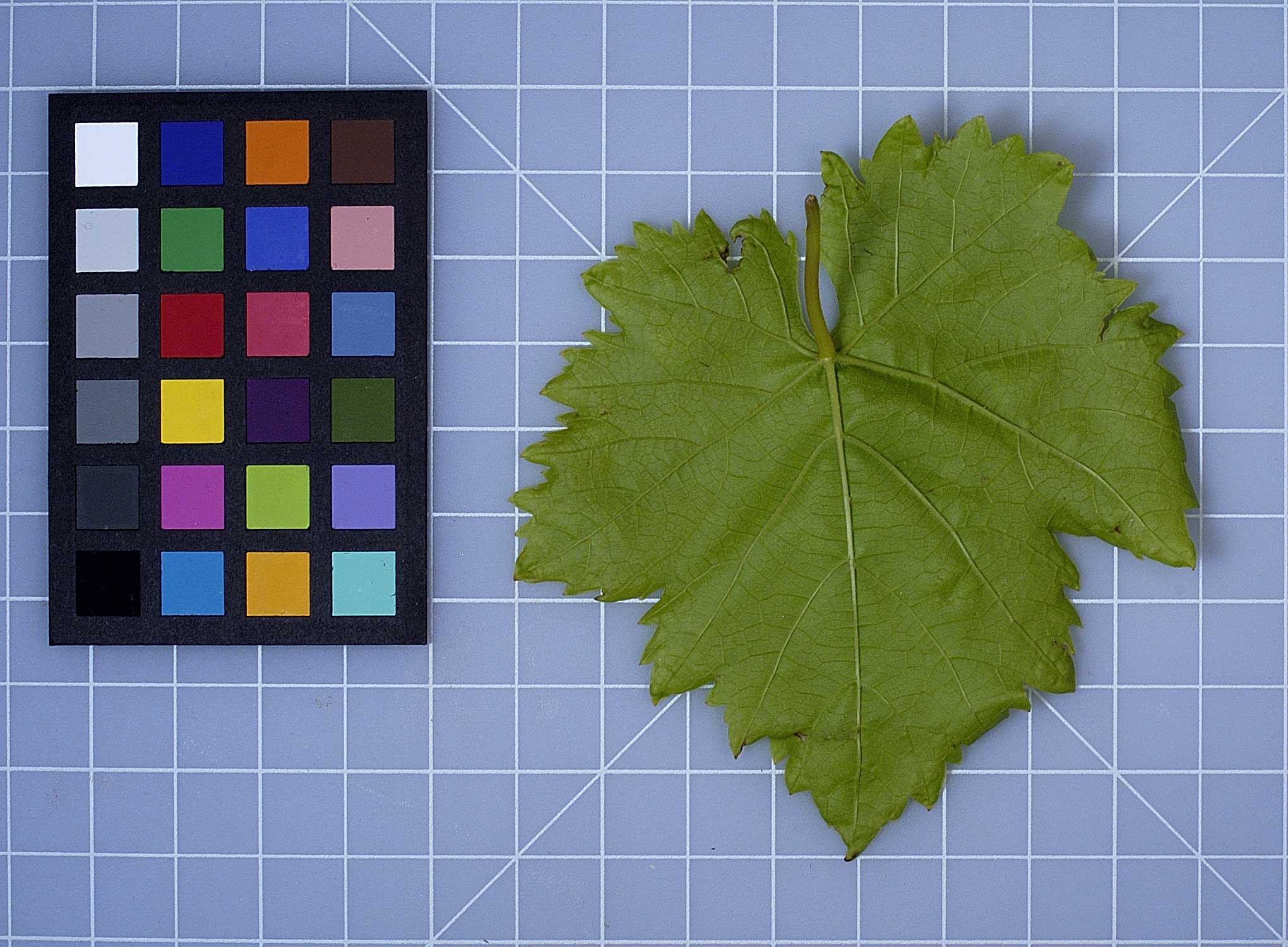 | | 1976 | DONATED | 04/20/1966 | | | | | | Type: Hybrid. Per Gulamiryan (see Citation): "The seedless grape Kishmish [Khishrau Sultana], selected in the Uzbek SSR from Nimrang x Kishmish Chernyi [Black Sultana], forms compact moderately large bunches 16 cm long, weighing 225 g. The large whitish-amber berries weigh 2.8 g and have a thin, firm skin. The variety yields 140-160 c/ha of berries having a sugar content of 27% and an acid content in the juice of 5.5-6.8 g/l. It has good transportability and is fairly resistant to Plasmora viticola, Uncinula necator and Botrytis cinerea." | 1564014 | PI 313918 |
| 178 | PI 279058 | Millardet 420 | Vitis hybr. | Italy | GEN |  | | 1962 | DEVELOPED | 01/01/1979 | | | | | Rootstock | Male, vigorous vine. Downy mildew resistant. | 1208207 | PI 279058 |
| 179 | PI 215416 | Burdin 4650 | Vitis hybr. | France | GEN |  | | 1954 | DONATED | 04/12/1954 | | | | | Cultivated material | Blue berries, medium size. Medium to large compact clusters. Very small vine size. Overcrops. Susceptible to powdery mildew. Winter tender. | 1176368 | PI 215416 |
| 180 | PI 193305 | Frankenthal | Vitis vinifera L. subsp. vinifera | Belgium | DAV |  | | 1951 | DONATED | 01/04/1951 | | | | | | Type = table grape. Per 'The Handbook of Horticulture and Viticulture of Western Australia' (pg. 252): Roundish ovate black grape which in some localities is very popular. In Western Australia its cultivation superseded by better classes of early or late grapes. Ripening in mid-season it is not very profitable, somewhat subject to oidum; wine is sometimes made from it of indifferent character and rather deficient in colour. Generally spur pruned." Origin: very old variety of disputed origin. Introduced into England about 1720, later into France, and then into Belgium during the 19th century. Time of ripening: an early variety, in an unheated glasshouse it ripens from Aug. 15th. Bunch: medium, compact, normally and regularly branched, well shouldered, peduncle of medium thickness. Berries: medium large, roundish or slightly oval, tender, pedicels rather slender and long, the berries shell from the pedicels easily when fully ripe, skin thin, dark purplish red or purplish black, with a bloom. Quality: very good, juicy, sweet, with a very agreeable flavour, no distinctive aroma. Commercial value: good to very good, depending on the time of marketing, a well known and popular variety, a little soft for transport and requires careful handling. Resistance to disease and pests: rahter susceptible to powdery mildew, shanking, suberization of hte berries, and to red spider attack, in damp weather it is liable to attack by botrytis cinerea. Vigour: good medium vigour, laterals moderately strong, leaves rather large, slightly pubescent on the lower surface, grows well and develops normally on its own roots. Fruiting: crops well and regularly, fruit sets normally." | 1164494 | PI 193305 |
| 181 | PI 163522 | Seibel 8745 | Vitis hybr. | France | GEN |  | | 1948 | DEVELOPED | | | | | | Cultivated material | Berries small, black, slightly oval, colored juice, soft pulp. Cluster small, compact, conical. Average budbreak, early midseason maturity. Medium vine vigor, moderate production. Moderate resistance to powdery mildew. Susceptible to bunch rot and downy mildew. Winter hardy. | 1140528 | PI 163522 |
| 182 | DVIT 2849 | 'Olmo m6-66' | Vitis hybr. | California, United States | DAV | | | 1999 | COLLECTED | | | | | | Breeding material | Fruit type: Interspecific hybrid grape | 1619816 | DVIT 2849 |
| 183 | DVIT 2859 | 'Olmo n3-155' | Vitis hybr. | California, United States | DAV | | | 1999 | COLLECTED | | | | | | Breeding material | Fruit type: Interspecific hybrid grape | 1619873 | DVIT 2859 |
| 184 | DVIT 2868 | 'Olmo q9 18-32' | Vitis hybr. | California, United States | DAV | | | 1999 | COLLECTED | | | | | | Breeding material | Fruit type: Interspecific hybrid grape | 1619861 | DVIT 2868 |
| 185 | DVIT 2880 | 'Olmo q9-26' | Vitis hybr. | California, United States | DAV | | | 1999 | COLLECTED | | | | | | Breeding material | Fruit type: Interspecific hybrid grape | 1619841 | DVIT 2880 |
| 186 | DVIT 2881 | 'Olmo q9-28' | Vitis hybr. | California, United States | DAV | | | 1999 | COLLECTED | | | | | | Breeding material | Fruit type: Interspecific hybrid grape | 1619842 | DVIT 2881 |
| 187 | DVIT 2889 | 'Olmo q9-94' | Vitis hybr. | California, United States | DAV | | | 1999 | COLLECTED | | | | | | Breeding material | Fruit type: Interspecific hybrid grape | 1619850 | DVIT 2889 |
| 188 | GVIT 1584 | '65.0573.01' | Vitis hybr. | New York, United States | GEN |  | | 1996 | DONATED | 12/19/1996 | | | | | Cultivar | | 1557054 | GVIT 1584 |
| 189 | GVIT 1537 | BR 6A | Vitis hybr. | New York, United States | GEN |  | | 1994 | DONATED | 01/11/1994 | | | | | Cultivated material | | 1481904 | GVIT 1537 |
| 190 | GVIT 1538 | BR 2 | Vitis hybr. | New York, United States | GEN |  | | 1994 | DONATED | 01/11/1994 | | | | | Cultivated material | | 1481897 | GVIT 1538 |
| 191 | DVIT 2200 | Comeaux 4334 | Vitis aestivalis Michx. var. linsecomii (Buckley) L. H. Bailey | Texas, United States | DAV | | | 1987 | COLLECTED | 07/23/1986 | Bastrop Co. 6.0 mi north of intersection of Hwy 95 & 2336. | | | | Wild material | Type = Species. Per Munson (see citation) [DESCRIPTION]: "Plant: Very stocky, vigorous, moderately branching, rapidly tapering, climbing moderately, about same as V. labrusca, 20 to 40 feet or more in rich sandy soils; expanding tips not leafy; aspect generally open; seldom dense canopy-like, with dark lively green foliage. Roots: Large, little fibrous, rather fleshy, but very firm, deeply penetrating. Wood: When young, cylindrical, whitish or brownish tomentose, soon becoming floccose and disappearing in the mature annual wood, which is a dark reddish-brown and often having numerous short, black glandular prickles, especially near the nodes, [...] buds large, globular, conical or obscurely triangular, acute, covered with shining reddish-brown scales, underneath which is an abundance of brownish-red wool, in expanding medium size, open, rosy or crimson; tendrils intermittent, rarely 3 to 5 in succession, ordinarily once forked in var. glauca, twice in the typical forms, long, slightly cottony in glauca, or rarely smooth when young, to densely rusty woolly in the species, at first finely striated, color reddish or green, becoming same color at wood at maturity, strong, persistant; internodes usually short, or of medium length, 2' to 4' or more; pith medium, slightly enlarged at lower end near diaphragm, pale brown. Leaves: Stipules short 1/16' to 1/8 long, broad, pinkish, with thin rusty cotton on outer face; petiole in full grown leaf large and strong, average length 5', cylindrical or slightly flattened, with a very narrow, shallow groove above scarcely noticable, being hidden by pubescence or tomentum along its margins, striations obscure, with thick, velvety pubescence or tomentum, or both, along the striae, color purplish or pale red; blade large in the species to very large in var. glauca, 4' to 8', often more, broad, average width of many leaves 6'; blade always broader than long, generally twice or more the length of petiole; general outline circular; basal sinus generally broadly or narrowly A shaped with double curved sides, sometimes rounded, with limbs 3 to 5, sometimes 7 lobed; [...] Cluster: Fertile,--varying from below medium in a large 3' to 10' or more long, in b, generally cylindrical with a large shoulder and very compact, generally simple and rather open, in a, rarely so in b ; divisions simple; peduncle medium or short; rachis cottony or nearly smooth, bluish-green when young; pedicels 1/6' to 1/4' long, enlarged at summit, warty; sterile,--much larger and more compound. Flowers: Fertile,--tip of buds before opening, crimson, stamens weak, recurved and bending laterally close to base of the large ovary; seldom self-fertile; style short, thick; stigma large to medium, sometimes resembling (in form a), V. candicans, and (in form b), V. cinerea. Staminate,--bud same as fertile, stamens strong, ascending. Berries: 1/2' to 1' in diameter, in 'a' generally much larger than in 'b', often more or less oblate in 'a'; spherical in 'b'; color black or sometimes dark purple, covered with a thin bloom in 'a', more in 'b'; in a commonly drops very easily,--as soon as ripe,--'b' hangs much better and occasionally is quite persistant; skin thin and tough in 'b'; pulp in a usually tough, dry, very acid, and astringent; in 'b' more juicy, tender, sometimes quite melting, vinous. Seeds: 1 to 4, small in 'b' generally, to very large in 'a', 1/5' to 1/4' or more long, by 1/6' to 1/5' broad, obvate pyriform, with sometimes very short or on beak, but genrerally with a large, orange colored, strong, blunt beak, sometimes in form 'b' small and acute, well defined, resembling V. cinerea; color light in a to dark purplish-brown in 'b'. [...] [APTITUDES]Vigor and endurance in the changeable western climates remarkable, resisting drought exceedingly well; Mildew and Rot attack leaves and fruit of some of the vines in regions where these fungi are abundant." | 1018837 | DVIT 2200 |
| 192 | DVIT 2202 | Comeaux 4332 | Vitis aestivalis Michx. var. linsecomii (Buckley) L. H. Bailey | Texas, United States | DAV | | | 1987 | COLLECTED | 07/23/1986 | Bastrop Co. 6.6 mi north of intersection of Hwy 95 and 2336. | | | | Wild material | Type = Species. Per Munson (see citation) [DESCRIPTION]: "Plant: Very stocky, vigorous, moderately branching, rapidly tapering, climbing moderately, about same as V. labrusca, 20 to 40 feet or more in rich sandy soils; expanding tips not leafy; aspect generally open; seldom dense canopy-like, with dark lively green foliage. Roots: Large, little fibrous, rather fleshy, but very firm, deeply penetrating. Wood: When young, cylindrical, whitish or brownish tomentose, soon becoming floccose and disappearing in the mature annual wood, which is a dark reddish-brown and often having numerous short, black glandular prickles, especially near the nodes, [...] buds large, globular, conical or obscurely triangular, acute, covered with shining reddish-brown scales, underneath which is an abundance of brownish-red wool, in expanding medium size, open, rosy or crimson; tendrils intermittent, rarely 3 to 5 in succession, ordinarily once forked in var. glauca, twice in the typical forms, long, slightly cottony in glauca, or rarely smooth when young, to densely rusty woolly in the species, at first finely striated, color reddish or green, becoming same color at wood at maturity, strong, persistant; internodes usually short, or of medium length, 2' to 4' or more; pith medium, slightly enlarged at lower end near diaphragm, pale brown. Leaves: Stipules short 1/16' to 1/8 long, broad, pinkish, with thin rusty cotton on outer face; petiole in full grown leaf large and strong, average length 5', cylindrical or slightly flattened, with a very narrow, shallow groove above scarcely noticable, being hidden by pubescence or tomentum along its margins, striations obscure, with thick, velvety pubescence or tomentum, or both, along the striae, color purplish or pale red; blade large in the species to very large in var. glauca, 4' to 8', often more, broad, average width of many leaves 6'; blade always broader than long, generally twice or more the length of petiole; general outline circular; basal sinus generally broadly or narrowly A shaped with double curved sides, sometimes rounded, with limbs 3 to 5, sometimes 7 lobed; [...] Cluster: Fertile,--varying from below medium in a large 3' to 10' or more long, in b, generally cylindrical with a large shoulder and very compact, generally simple and rather open, in a, rarely so in b ; divisions simple; peduncle medium or short; rachis cottony or nearly smooth, bluish-green when young; pedicels 1/6' to 1/4' long, enlarged at summit, warty; sterile,--much larger and more compound. Flowers: Fertile,--tip of buds before opening, crimson, stamens weak, recurved and bending laterally close to base of the large ovary; seldom self-fertile; style short, thick; stigma large to medium, sometimes resembling (in form a), V. candicans, and (in form b), V. cinerea. Staminate,--bud same as fertile, stamens strong, ascending. Berries: 1/2' to 1' in diameter, in 'a' generally much larger than in 'b', often more or less oblate in 'a'; spherical in 'b'; color black or sometimes dark purple, covered with a thin bloom in 'a', more in 'b'; in a commonly drops very easily,--as soon as ripe,--'b' hangs much better and occasionally is quite persistant; skin thin and tough in 'b'; pulp in a usually tough, dry, very acid, and astringent; in 'b' more juicy, tender, sometimes quite melting, vinous. Seeds: 1 to 4, small in 'b' generally, to very large in 'a', 1/5' to 1/4' or more long, by 1/6' to 1/5' broad, obvate pyriform, with sometimes very short or on beak, but genrerally with a large, orange colored, strong, blunt beak, sometimes in form 'b' small and acute, well defined, resembling V. cinerea; color light in a to dark purplish-brown in 'b'. [...] [APTITUDES]Vigor and endurance in the changeable western climates remarkable, resisting drought exceedingly well; Mildew and Rot attack leaves and fruit of some of the vines in regions where these fungi are abundant." | 1018851 | DVIT 2202 |
| 193 | DVIT 2203 | Comeaux 4387 | Vitis aestivalis Michx. var. linsecomii (Buckley) L. H. Bailey | Florida, United States | DAV | | | 1987 | COLLECTED | 07/28/1986 | Brevard Co. 1.1 mi south of intersection of Turkey Creek; 1.4 mi south of intersection Hwy 516, near Roseland. | | | | Wild material | Type = Species. Per Munson (see citation) [DESCRIPTION]: "Plant: Very stocky, vigorous, moderately branching, rapidly tapering, climbing moderately, about same as V. labrusca, 20 to 40 feet or more in rich sandy soils; expanding tips not leafy; aspect generally open; seldom dense canopy-like, with dark lively green foliage. Roots: Large, little fibrous, rather fleshy, but very firm, deeply penetrating. Wood: When young, cylindrical, whitish or brownish tomentose, soon becoming floccose and disappearing in the mature annual wood, which is a dark reddish-brown and often having numerous short, black glandular prickles, especially near the nodes, [...] buds large, globular, conical or obscurely triangular, acute, covered with shining reddish-brown scales, underneath which is an abundance of brownish-red wool, in expanding medium size, open, rosy or crimson; tendrils intermittent, rarely 3 to 5 in succession, ordinarily once forked in var. glauca, twice in the typical forms, long, slightly cottony in glauca, or rarely smooth when young, to densely rusty woolly in the species, at first finely striated, color reddish or green, becoming same color at wood at maturity, strong, persistant; internodes usually short, or of medium length, 2' to 4' or more; pith medium, slightly enlarged at lower end near diaphragm, pale brown. Leaves: Stipules short 1/16' to 1/8 long, broad, pinkish, with thin rusty cotton on outer face; petiole in full grown leaf large and strong, average length 5', cylindrical or slightly flattened, with a very narrow, shallow groove above scarcely noticable, being hidden by pubescence or tomentum along its margins, striations obscure, with thick, velvety pubescence or tomentum, or both, along the striae, color purplish or pale red; blade large in the species to very large in var. glauca, 4' to 8', often more, broad, average width of many leaves 6'; blade always broader than long, generally twice or more the length of petiole; general outline circular; basal sinus generally broadly or narrowly A shaped with double curved sides, sometimes rounded, with limbs 3 to 5, sometimes 7 lobed; [...] Cluster: Fertile,--varying from below medium in a large 3' to 10' or more long, in b, generally cylindrical with a large shoulder and very compact, generally simple and rather open, in a, rarely so in b ; divisions simple; peduncle medium or short; rachis cottony or nearly smooth, bluish-green when young; pedicels 1/6' to 1/4' long, enlarged at summit, warty; sterile,--much larger and more compound. Flowers: Fertile,--tip of buds before opening, crimson, stamens weak, recurved and bending laterally close to base of the large ovary; seldom self-fertile; style short, thick; stigma large to medium, sometimes resembling (in form a), V. candicans, and (in form b), V. cinerea. Staminate,--bud same as fertile, stamens strong, ascending. Berries: 1/2' to 1' in diameter, in 'a' generally much larger than in 'b', often more or less oblate in 'a'; spherical in 'b'; color black or sometimes dark purple, covered with a thin bloom in 'a', more in 'b'; in a commonly drops very easily,--as soon as ripe,--'b' hangs much better and occasionally is quite persistant; skin thin and tough in 'b'; pulp in a usually tough, dry, very acid, and astringent; in 'b' more juicy, tender, sometimes quite melting, vinous. Seeds: 1 to 4, small in 'b' generally, to very large in 'a', 1/5' to 1/4' or more long, by 1/6' to 1/5' broad, obvate pyriform, with sometimes very short or on beak, but genrerally with a large, orange colored, strong, blunt beak, sometimes in form 'b' small and acute, well defined, resembling V. cinerea; color light in a to dark purplish-brown in 'b'. [...] [APTITUDES]Vigor and endurance in the changeable western climates remarkable, resisting drought exceedingly well; Mildew and Rot attack leaves and fruit of some of the vines in regions where these fungi are abundant." | 1018852 | DVIT 2203 |
| 194 | DVIT 2223 | DVIT 2223 | Vitis sp. | Texas, United States | DAV | | | 1987 | COLLECTED | | | | | | Wild material | Type = American hybrid. Per Galet (see citation): [about V. cinerea Engelmann] "Growing tip: felty white with rose margin, ashlike appearance, flat; stipules brownish-green. Young leaves: downy, gray with rose margin on upper surface, felty white below. Leaf: cordiform, medium in Montpellier, but large in some places in the United States (28 by 23 cm), 357-5-35 to 58, usually entire, rarely five-lobed (V. cinerea canesceans), soft, very bullate, dull, ash-gray, cobwebby-pubescent on both sides; small, nearly flat teeth; petiolar sinus lyre-shaped open or closed depending on the type; petioles downy-pubescent. Shoot: ash-gray, downy-pubescent, ribbed, thin. Flower cluster: very small, male or female. Cluster: conical, loose, medium-large, winged; berries round, black, small, thick skin, very little juice, acid flavor. Seeds: medium, 5 mm, chestnut colored, shiny with clear yellow beak and indentations; chalaza circular, .49, in small depression encircled with a few rediating lines, very short beak, protuberant raphe. Growth habit: very vigorous, climbing. [ ... ] V. cinerea has several common names: Parra silvestre (in Mexico), Ashy-leaved grape, Sweet winter, Downy, Ashy, Gray black, and Wichita grape. In the past confused with aestivalis, cinerea was officially named a distinct species in 1883 by George Engelmann. [ ... ] Cinerea has a good resistance to phylloxera and the leaves do not carry the galls. However, it is chlorotic in limy soils and is extremely difficult to root, which rules out its usefulness as a rootstock. The maturity of the wood is often deficient at the time of the first frost owing to its late ripening. The resistance to fungus diseases is excellent, downy mildew, and black rot in particular. At present, the only cultivated descendants of cinerea are Black Spanish and Herbemont (aestivalis-cinerea-vinifera)." | 1018987 | DVIT 2223 |
| 195 | DVIT 1338 | Semillon | Vitis vinifera L. subsp. vinifera | California, United States | DAV | | | 1983 | DONATED | 01/01/1983 | | | | | Cultivated material | Type = wine grape. Per Galet (see citation): "Growing tip: felty, white with rose margin, downy stem. Young leaves: downy, yellowish, bronze on the bulges. Leaf: orbicular 025-3-46, lateral sinuses 53 with pointed bases, contorted, bullate, crimped at the petiolar junction, thick, cobwebby and faintly pubescent below; petiolar sinus lyre-shaped, generally open; teeth convex, average. Shoot: green with pinkish brown nodes, very thick; tendrils small, thin. Cane clear beige with darker nodes, bloom very abundant at the nodes giving a purplish tint. Cluster: medium, winged, cylindrical , compact; berries medium 12 mm, round, white becoming pinkish at full maturity, slightly muscat flavor. The Bordeaux variety is the base of the great white wines of the Southwest, Sauterne being the best known in the United States. The over-ripe grapes are well suited to the effects of "noble-rot" (Botrytis cinerea) and in favorable (dry) years are picked individually in succcessive harvests to produce the unique dessert wines of the region. However, due to reduced demand for sweet white dessert wines, there is a tendency to use Semillion for the production of dry wines. Since as a dry varietal Semillion has been found to lack freshness and bouquet, it is often blended with 15 to 30 percent Muscadelle. Semillion is a vigorous, productive variety whose budbreak is average and maturity is midseason. It has some resistance to downy and powdery mildew and it resisted well the winter freezes of Montpellier. However, in humid years it is susceptible to ignoble rot. The selection of propagating wood must be very careful due to fanleaf virus infection." | 1013082 | DVIT 1338 |
| 196 | DVIT 1360 | #1 Hybrid | Vitis californica Benth. | California, United States | DAV | | | 1983 | DONATED | 01/01/1983 | | | | | Wild material | Type = American hybrid. Per Munson (see citation): "North California grape. Plant: Climbing moderately, or vigorously, as seen by the writer in Santa Rosa and Napa Valleys at Chico and at Redding in Sacramento Valley, also at Grant's Pass, Rogue River, Oregon; branches tapering; growing tips little enveloped in expanding leaves; often the vines are seen completely enveloping small trees with a dense canopy of leaves. Roots: Fibrous, rather soft, transversely wrinkled. Wood: When young reddish or pale green, angled and somewhat covered with long whitish hairs, becoming floccose and remaining into the winter, or in Eldorado County specimens, covered with short brown pubescence, similar to V. cinerea; when mature, brownish or grayish, finely striated, soft, sectional view circular or often oval, rays distinct, pores open; nodes large and little bent; diaphragm nearly plane, medium thin; bark the second year easily loosening in fibrous plates, on old woody finely striately checked and persistent as in V. cinerea; buds small, sub-pyramidal, ovoid or acute, covered with whitish or brownish wool at the summit, when opening in spring grayish-violet or nearly white, becoming greenish-violet; tendrils mostly once forked, sometimes twice, 3' to 5' to fork, intermittent, wooly when young, persistent, internodes medium in length, 3' to 6' or more, variable in same branch; pith large, light brown, abruptly and broadly terminating above, narrow and gradually terminating below the diaphragm, especially so in Sierra Nevada Mountain specimens. Leaves: Stipules small to medium, cordate, membranaceous, hairy; petiole generally about half as long as blade is wide, narrowly grooved on upper side, disctinctly striated; thinly covered with white cottony hairs and velvety pubescence, color violet or crimson; blade medium to large, varies in size from 2' to 4' in length by 3' to 5' or more in width; [ ... ] Cluster: Fertile, --small 3' to 4' or more long; shouldered heavily, similar to many V. vulpina; compact; peduncle very short; rachis usually simple or little compounded, thinly cottony; clear reddish-violet; pedicels 1/4' or less long, rather thick, enlarging rapidly toward the recepticle, warty. Berries: 1/3' to 1/2' in diameter, round or little oblate, black, with heavy prunose bloom; persistant; skin rather thick, pulp seedy with little juice, very sugary and pleasantly flavored." | 1013269 | DVIT 1360 |
| 197 | DVIT 1361 | '#2' | Vitis californica Benth. | California, United States | DAV | | | 1983 | DONATED | 01/01/1983 | | | | | Wild material | Type = American hybrid. Per Munson (see citation): "North California grape. Plant: Climbing moderately, or vigorously, as seen by the writer in Santa Rosa and Napa Valleys at Chico and at Redding in Sacramento Valley, also at Grant's Pass, Rogue River, Oregon; branches tapering; growing tips little enveloped in expanding leaves; often the vines are seen completely enveloping small trees with a dense canopy of leaves. Roots: Fibrous, rather soft, transversely wrinkled. Wood: When young reddish or pale green, angled and somewhat covered with long whitish hairs, becoming floccose and remaining into the winter, or in Eldorado County specimens, covered with short brown pubescence, similar to V. cinerea; when mature, brownish or grayish, finely striated, soft, sectional view circular or often oval, rays distinct, pores open; nodes large and little bent; diaphragm nearly plane, medium thin; bark the second year easily loosening in fibrous plates, on old woody finely striately checked and persistent as in V. cinerea; buds small, sub-pyramidal, ovoid or acute, covered with whitish or brownish wool at the summit, when opening in spring grayish-violet or nearly white, becoming greenish-violet; tendrils mostly once forked, sometimes twice, 3' to 5' to fork, intermittent, wooly when young, persistent, internodes medium in length, 3' to 6' or more, variable in same branch; pith large, light brown, abruptly and broadly terminating above, narrow and gradually terminating below the diaphragm, especially so in Sierra Nevada Mountain specimens. Leaves: Stipules small to medium, cordate, membranaceous, hairy; petiole generally about half as long as blade is wide, narrowly grooved on upper side, disctinctly striated; thinly covered with white cottony hairs and velvety pubescence, color violet or crimson; blade medium to large, varies in size from 2' to 4' in length by 3' to 5' or more in width; [ ... ] Cluster: Fertile, --small 3' to 4' or more long; shouldered heavily, similar to many V. vulpina; compact; peduncle very short; rachis usually simple or little compounded, thinly cottony; clear reddish-violet; pedicels 1/4' or less long, rather thick, enlarging rapidly toward the recepticle, warty. Berries: 1/3' to 1/2' in diameter, round or little oblate, black, with heavy prunose bloom; persistant; skin rather thick, pulp seedy with little juice, very sugary and pleasantly flavored." | 1013283 | DVIT 1361 |
| 198 | DVIT 1368 | Barrett #16 | Vitis vulpina L. | California, United States | DAV | | | 1983 | DONATED | 01/01/1983 | | | | | Breeding material | Type = American hybrid. Per Galet (see citation): [about V. cinerea Engelmann] "Growing tip: felty white with rose margin, ashlike appearance, flat; stipules brownish-green. Young leaves: downy, gray with rose margin on upper surface, felty white below. Leaf: cordiform, medium in Montpellier, but large in some places in the United States (28 by 23 cm), 357-5-35 to 58, usually entire, rarely five-lobed (V. cinerea canesceans), soft, very bullate, dull, ash-gray, cobwebby-pubescent on both sides; small, nearly flat teeth; petiolar sinus lyre-shaped open or closed depending on the type; petioles downy-pubescent. Shoot: ash-gray, downy-pubescent, ribbed, thin. Flower cluster: very small, male or female. Cluster: conical, loose, medium-large, winged; berries round, black, small, thick skin, very little juice, acid flavor. Seeds: medium, 5 mm, chestnut colored, shiny with clear yellow beak and indentations; chalaza circular, .49, in small depression encircled with a few rediating lines, very short beak, protuberant raphe. Growth habit: very vigorous, climbing. [ ... ] V. cinerea has several common names: Parra silvestre (in Mexico), Ashy-leaved grape, Sweet winter, Downy, Ashy, Gray black, and Wichita grape. In the past confused with aestivalis, cinerea was officially named a distinct species in 1883 by George Engelmann. [ ... ] Cinerea has a good resistance to phylloxera and the leaves do not carry the galls. However, it is chlorotic in limy soils and is extremely difficult to root, which rules out its usefulness as a rootstock. The maturity of the wood is often deficient at the time of the first frost owing to its late ripening. The resistance to fungus diseases is excellent, downy mildew, and black rot in particular. At present, the only cultivated descendants of cinerea are Black Spanish and Herbemont (aestivalis-cinerea-vinifera)." | 1013333 | DVIT 1368 |
| 199 | DVIT 1436 | Wichita | Vitis riparia Michx. | California, United States | DAV | | | 1983 | DONATED | 01/01/1983 | | | | | Cultivated material | Type = species. Flower = Male. Per Galet (see citation): "Growing tip: felty white with rose margin, ashlike appearance, flat; stipules brownish-green. Young leaves: downy, gray with rose margin on upper surface, felty white below. Leaf: cordiform, medium in Montpellier, but large in some places in the United States (28 by 23 cm), 357-5-35 to 58, usually entire, rarely five-lobed (V. cinerea canescens), soft, very bullate, dull, ash-gray, cobwebby-pubescent on both sides; small, nearly flat teeth; petiolar sinus lyre-shaped open or closed depending on the type; petioles downy-pubescent. Shoot: ash-gray, downy-pubescent, ribbed, thin. Flower cluster: very small, male or female. Cluster: conical, loose, medium-large, winged; berries round, black, small, thick skin, very little juice, acid flavor. Seeds: medium, 5 mm, chestnut colored, shiny with clear yellow beak and indentations; chalaza circular, .49, in small depression encircled with a few radiating lines, very short beak, protuberant raphe. Growing habit: very rigorous, climbing . . . Was officically named a distinct species by George Engelmann. At Montpellier, this is one of the latest ripening of the American species; budbreak is in the first half of April, bloom in mid-June, maturity in October, and leaf fall around November 20. Cinerea has a good resistance to phylloxera and the leaves do not carry the galls. However, it is chlorotic in limy soils and is extremely difficult to root, which rules out its usefulness as a rootstock. The maturity of the wood is often dificient at the time of the first frost owing to its late ripening. The resistance to fungus diseases is excellent, downy mildew, and black rot in particular. At present, the only cultivated descendants of cinerea are Black Spanish and Herbemont (aestivalis-cinerea-vinifera). | 1013766 | DVIT 1436 |
| 200 | DVIT 1605 | ILL.882-10 | Vitis hybr. | California, United States | DAV | | | 1983 | DONATED | 01/01/1983 | | | | | Breeding material | Type = interspecific hybrid. Flower type = female. | 1015013 | DVIT 1605 |
| 201 | DVIT 1606 | ILL.882-11 | Vitis hybr. | California, United States | DAV | | | 1983 | DONATED | 01/01/1983 | | | | | Breeding material | Type = interspecific hybrid. Flower type = female. | 1015015 | DVIT 1606 |
| 202 | DVIT 1607 | ILL.892-1 | Vitis hybr. | California, United States | DAV | | | 1983 | DONATED | 01/01/1983 | | | | | Breeding material | Type = interspecific hybrid. Flower type = hermaphrodite. | 1015025 | DVIT 1607 |
| 203 | DVIT 1620 | ILL.484-1 | Vitis hybr. | California, United States | DAV | | | 1983 | DONATED | 01/01/1983 | | | | | Breeding material | Type = interspecific hybrid. Flower type = female. | 1015098 | DVIT 1620 |
| 204 | DVIT 1621 | ILL.547-1 | Vitis hybr. | California, United States | DAV | | | 1983 | DONATED | 01/01/1983 | | | | | Breeding material | Type = interspecific hybrid. | 1015101 | DVIT 1621 |
| 205 | DVIT 1622 | ILL.547-2 | Vitis hybr. | California, United States | DAV | | | 1983 | DONATED | 01/01/1983 | | | | | Breeding material | Type = interspecific hybrid. | 1015112 | DVIT 1622 |
| 206 | DVIT 1623 | ILL.559-1 | Vitis hybr. | California, United States | DAV | | | 1983 | DONATED | 01/01/1983 | | | | | Breeding material | Type = interspecific hybrid. Flower type = male. | 1015115 | DVIT 1623 |
| 207 | DVIT 1624 | ILL.559-2 | Vitis hybr. | California, United States | DAV | | | 1983 | DONATED | 01/01/1983 | | | | | Breeding material | Type = interspecific hybrid. Flower type = female. | 1015125 | DVIT 1624 |
| 208 | DVIT 1625 | ILL.559-4 | Vitis hybr. | California, United States | DAV | | | 1983 | DONATED | 01/01/1983 | | | | | Breeding material | Type = interspecific hybrid. Flower type = female. | 1015129 | DVIT 1625 |
| 209 | DVIT 1626 | ILL.559-5 | Vitis hybr. | California, United States | DAV | | | 1983 | DONATED | 01/01/1983 | | | | | Breeding material | Type = interspecific hybrid. Flower type = female. | 1015139 | DVIT 1626 |
| 210 | DVIT 1627 | ILL.760-2 | Vitis hybr. | California, United States | DAV | | | 1983 | DONATED | 01/01/1983 | | | | | Breeding material | Type = interspecific hybrid. Flower type = female. | 1015142 | DVIT 1627 |
| 211 | DVIT 1628 | ILL.760-3 | Vitis hybr. | California, United States | DAV | | | 1983 | DONATED | 01/01/1983 | | | | | Breeding material | Type = interspecific hybrid. Flower type = male. | 1015150 | DVIT 1628 |
| 212 | DVIT 1629 | ILL.762-1 | Vitis hybr. | California, United States | DAV | | | 1983 | DONATED | 01/01/1983 | | | | | Breeding material | Type = interspecific hybrid. Flower type = male. | 1015153 | DVIT 1629 |
| 213 | DVIT 1630 | ILL.794-3 | Vitis hybr. | California, United States | DAV | | | 1983 | DONATED | 01/01/1983 | | | | | Breeding material | Type = interspecific hybrid. Flower type = hermaphrodite. | 1015159 | DVIT 1630 |
| 214 | DVIT 1634 | ILL.882-3 | Vitis hybr. | California, United States | DAV | | | 1983 | DONATED | 01/01/1983 | | | | | Breeding material | Type = interspecific hybrid. Flower type = male. | 1015182 | DVIT 1634 |
| 215 | DVIT 1635 | ILL.882-6 | Vitis hybr. | California, United States | DAV | | | 1983 | DONATED | 01/01/1983 | | | | | Breeding material | Type = interspecific hybrid. Flower type = female. | 1015186 | DVIT 1635 |
| 216 | DVIT 1636 | ILL.882-7 (FOEX 4X) | Vitis hybr. | California, United States | DAV | | | 1983 | DONATED | 01/01/1983 | | | | | Breeding material | Type = interspecific hybrid. Flower type = male. Type = tetraploid | 1015196 | DVIT 1636 |
| 217 | DVIT 1683 | 881-11C | Vitis hybr. | Illinois, United States | DAV | | | 1983 | DONATED | 02/06/1969 | | | | | Uncertain improvement status | Type = Hybrid | 1015474 | DVIT 1683 |
| 218 | DVIT 1684 | 882-7C | Vitis sp. | Illinois, United States | DAV | | | 1983 | DONATED | 02/06/1969 | | | | | Uncertain improvement status | Type = Species | 1015479 | DVIT 1684 |
| 219 | DVIT 1698 | 'Olmo (V67-17)' | Vitis hybr. | Florida, United States | DAV | | | 1983 | DONATED | 09/07/1954 | | | | | Breeding material | Type = Hybrid | 1015556 | DVIT 1698 |
| 220 | DVIT 1699 | Olmo U67-24 | Vitis hybr. | Florida, United States | | | Historic | 1983 | DONATED | 09/07/1954 | | | | | Breeding material | | 1015557 | DVIT 1699 |
| 221 | DVIT 1970 | ILL. 197-1 | Vitis hybr. | California, United States | DAV | | | 1983 | DONATED | 01/01/1983 | | | | | Breeding material | | 1017305 | DVIT 1970 |
| 222 | DVIT 1975 | ILL. 403-5 | Vitis hybr. | California, United States | DAV | | | 1983 | DONATED | 01/01/1983 | | | | | Breeding material | | 1017351 | DVIT 1975 |
| 223 | DVIT 757 | Herbemont | Vitis hybr. | California, United States | DAV | | | 1983 | DONATED | 01/01/1983 | | | | | Cultivated material | Per Hedrick (see citation): "The variety is injured by cold below zero... It requires, too, a long season for perfect maturity... It requires a well-drained warm soil and one which is abundantly supplied with humus... Herbemont is known and widely grown in Europe as well as in the southern United States. In southwestern France where the demands of the variety seem to be particularly well fulfilled, it is firmly established and is highly regarded as a direct producer... Herbemont is greatly esteemed as a table grape and is said to make a very good light red wine... Vine vigorous to very vigorous. Canes rather long and strong, bright green, with more or less purple, with considerable bluish-white bloom... Leaves large, roundish, sometimes entire, or three to seven-lobed, nearly glabrous above and below... Flowers self-fertile. Fruit ripens very late. Clusters large, long, tapering to cylindrical, prominently shouldered, compact; peduncle long and strong; pedicels somewhat short with few rather large warts; brush pinkish. Berries round, below medium in size, uniform, reddish-black or brown with abundant blue bloom. Skin thin, rather tough, with considerable pigment below. Flesh tender, very juicy; juice colorless or slightly pink; rather sweet, sprightly to slightly acid. Seeds two to four, usually two, small, reddish-brown, slightly glossy; chalaza round, prominent; raphe distinct." Per Galet (see citation): "Another aestivalis-cinerea-vinifera variety is Herbemont, which sometimes used to produce a white wine although its berries are black. It is very similiar in appearance to Black Spanish and can be distinguished by a shorter leaf, which is a lighter green and glabrous with pubescent veins." | 1008612 | DVIT 757 |
| 224 | DVIT 76 | 'Jacquez' | Vitis hybr. | Missouri, United States | DAV | | | 1983 | DONATED | 03/10/1948 | | | | | Cultivated material | Type = American Hybrid. Per Pongvacz (see citation): "Jaquez is regarded as a natural hybrid of aestivalis X cinerea X vinifera. According to Ravaz, Munson was of the opinion that Jaquez and Herbemont came from Madeira. Description: Tips of the growing shoot open, dark violaceous red, wooly; leaf large, truncated, deeply 5-lobed, very dark bluish green, downy below; shoot short but very thick, violaceous red on a green background, with short internodes and very prominently enlarged nodes; flower hermaphrodite; bunch long and loose, with small, round black berries; pulp juicy, deep bluish red. Its shoots, grapes and seeds clearly show the characteristics of V. aestivalis." | 1002214 | DVIT 76 |
| 225 | DVIT 954 | Semillon | Vitis vinifera L. subsp. vinifera | California, United States | DAV | | | 1983 | DONATED | 01/01/1983 | | | | | Cultivated material | Type = wine grape. Per Galet (see citation): "Growing tip: felty, white with rose margin, downy stem. Young leaves: downy, yellowish, bronze on the bulges. Leaf: orbicular 025-3-46, lateral sinuses 53 with pointed bases, contorted, bullate, crimped at the petiolar junction, thick, cobwebby and faintly pubescent below; petiolar sinus lyre-shaped, generally open; teeth convex, average. Shoot: green with pinkish brown nodes, very thick; tendrils small, thin. Cane clear beige with darker nodes, bloom very abundant at the nodes giving a purplish tint. Cluster: medium, winged, cylindrical , compact; berries medium 12 mm, round, white becoming pinkish at full maturity, slightly muscat flavor. The Bordeaux variety is the base of the great white wines of the Southwest, Sauterne being the best known in the United States. The over-ripe grapes are well suited to the effects of "noble-rot" (Botrytis cinerea) and in favorable (dry) years are picked individually in succcessive harvests to produce the unique dessert wines of the region. However, due to reduced demand for sweet white dessert wines, there is a tendency to use Semillion for the production of dry wines. Since as a dry varietal Semillion has been found to lack freshness and bouquet, it is often blended with 15 to 30 percent Muscadelle. Semillion is a vigorous, productive variety whose budbreak is average and maturity is midseason. It has some resistance to downy and powdery mildew and it resisted well the winter freezes of Montpellier. However, in humid years it is susceptible to ignoble rot. The selection of propagating wood must be very careful due to fanleaf virus infection." | 1010342 | DVIT 954 |
| 226 | DVIT 164 | 'Cimarron' | Vitis hybr. | Oklahoma, United States | DAV | | | 1900 | DEVELOPED | NEAR 1958 | | | | | Cultivated material | Type = American Hybrid. Per Brooks and Olmo (see citation): "Fruit: cluster medium to large; roundish; skin blue-black with heavy bloom; flesh tender, juicy, sweet, acidity low; seed size medium; ripens evenly, in midseason, about 1 week before Concord; similiar to Concord in shape and color, but somewhat smaler; for fresh, juice, and jelly purposes. Vine: healthy, vigorous, productive; drought resistant; very hardy; resistant to black rot." | 1003797 | DVIT 164 |
| 227 | Ames 36024 | AS/FN/2023/011/221 | Fraxinus nigra Marshall | Wisconsin, United States | NC7 |  | | 2023 | COLLECTED | 02/26/2023 | Located just north of Leland approximately 0.70 miles along Hemlock Road, T10N R5E SW 1/4 NW 1/4 Sec. 18 | 43.34472800, -89.95099700 | 242 | Floodplain | Wild material | Single mother tree sample with signs of wood pecker damage on trunk. | 2141557 | Ames 36024 |
| 228 | Ames 29645 | JDC/FP/2008/074/144 | Fraxinus pennsylvanica Marshall | Illinois, United States | NC7 |  | | 2008 | COLLECTED | 10/14/2008 | Edward Madigan State Park (formerly known as Railsplitter State Park), SE 1/4 of SE 1/4 of Section 2, T19N, R3W, Lincoln West Quad, Logan County. | 40.12583333, -89.38888889 | 166 | | Wild material | | 1788200 | Ames 29645 |