| 0 | PI 588679 | GVIT 1390 | Vitis vulpina L. | Missouri, United States | GEN | 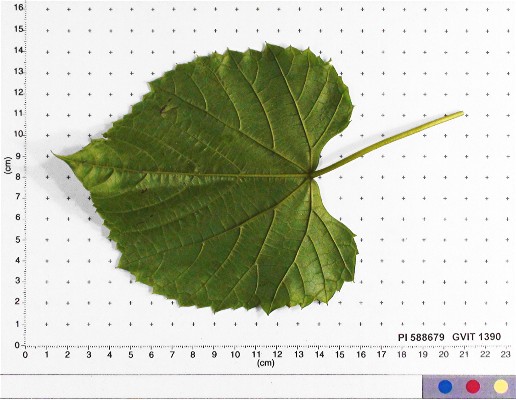 | | 1990 | DEVELOPED | | | | | | Wild material | Female flower - spicy flavor. | 1013470 | PI 588679 |
| 1 | PI 588680 | JEG 3 IGLOO | Vitis vulpina L. | Missouri, United States | GEN | 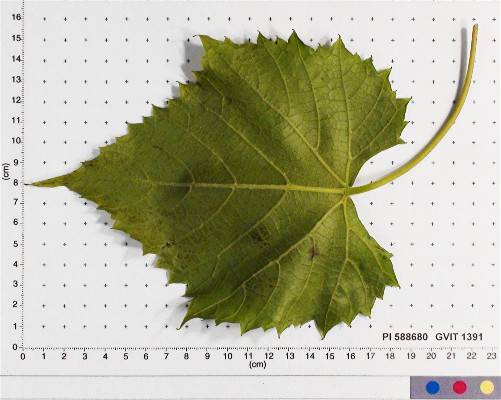 | | 1990 | DEVELOPED | | | | | | Wild material | Best female of this species. | 1013471 | PI 588680 |
| 2 | PI 588589 .p | 694 | Vitis vulpina L. | Illinois, United States | GEN | | | 1988 | COLLECTED | 09/01/1988 | | | | | Wild material | | 1692167 | PI 588589 .p |
| 3 | PI 588591 .h | 725 | Vitis vulpina L. | Nebraska, United States | GEN | | | 1988 | COLLECTED | 09/01/1988 | | | | | Wild material | | 1692201 | PI 588591 .h |
| 4 | PI 588591 .k | 725 | Vitis vulpina L. | Nebraska, United States | GEN | | | 1988 | COLLECTED | 09/01/1988 | | | | | Wild material | | 1692204 | PI 588591 .k |
| 5 | PI 483184 | Rem 29-77 | Vitis vulpina L. | New Jersey, United States | GEN |  | | 1988 | COLLECTED | 01/01/1977 | South Frenchtown, Route 29, Hunterdon county, New Jersey | | | | Wild material | Plants vigorous, healthy. Flowers functionally pistillate. Local name Chicken, Winter grape. Received as Vitis cordifolia. | 1378120 | PI 483184 |
| 6 | PI 483185 | Rem 30-77 | Vitis vulpina L. | New Jersey, United States | GEN |  | | 1988 | COLLECTED | 01/01/1977 | Route 29, south of Frenchtown, Hunterdon county, New Jersey | | | | Wild material | Plants vigorous, healthy. Flowers functionally staminate. Local name Chicken, Winter grape. Received as Vitis cordifolia. | 1378121 | PI 483185 |
| 7 | PI 483188 | Rem 38-77 | Vitis vulpina L. | Pennsylvania, United States | GEN | 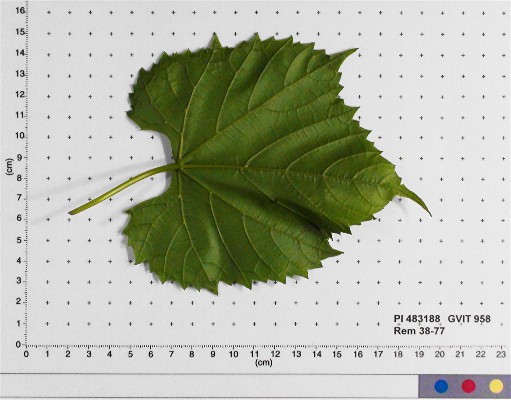 | | 1988 | COLLECTED | 01/01/1977 | Wrightsville, Route 624, York county, Pennsylvania | | | | Wild material | Plants strong, vigorous, healthy. Local name Chicken, Winter grape. Received as Vitis cordifolia. | 1378124 | PI 483188 |
| 8 | PI 483189 | Rem 40-77 | Vitis vulpina L. | Pennsylvania, United States | GEN | 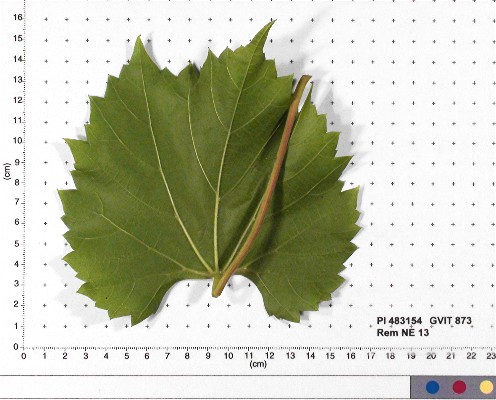 | | 1988 | COLLECTED | 01/01/1977 | Wrightsville, Route 624, York county, Pennsylvania | | | | Wild material | Plants vigorous, healthy. Local name Chicken, Winter grape. Received as Vitis cordifolia. | 1378125 | PI 483189 |
| 9 | PI 483180 | Rem 15-77 | Vitis vulpina L. | Pennsylvania, United States | GEN | 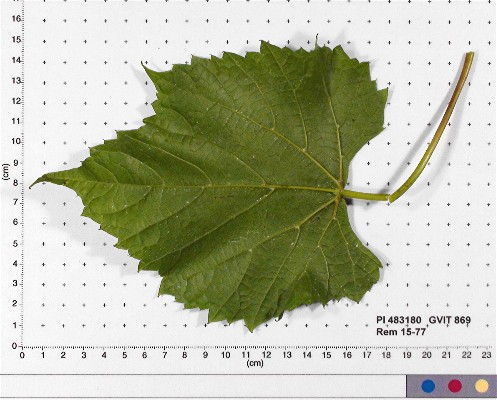 | | 1988 | COLLECTED | 01/01/1976 | Green hill road, Solebury township, Bucks county, Pennsylvania | | | | Wild material | Plants vigorous, high climbing. Flowers functionally pistillate. Local name Chicken, Winter grape. Received as Vitis cordifolia. | 1378116 | PI 483180 |
| 10 | PI 483186 | Rem 34-77 | Vitis vulpina L. | Pennsylvania, United States | GEN | 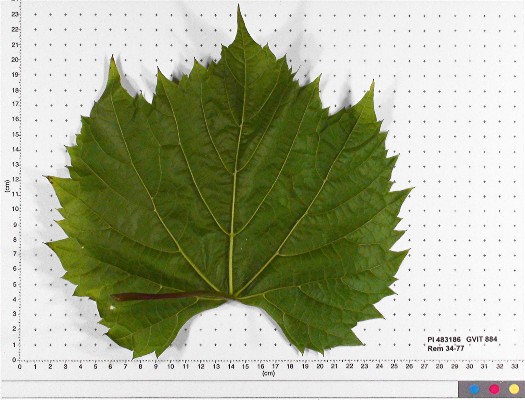 | | 1988 | COLLECTED | 01/01/1977 | Uhlerstown, Route 32, Bucks county, Pennsylvania | | | | Wild material | Plants vigorous, healthy. Flowers functionally staminate. Local name Chicken, Winter Grape. Received as Vitis cordifolia. | 1378122 | PI 483186 |
| 11 | PI 588133 | GBC 5 | Vitis vulpina L. | Pennsylvania, United States | GEN | 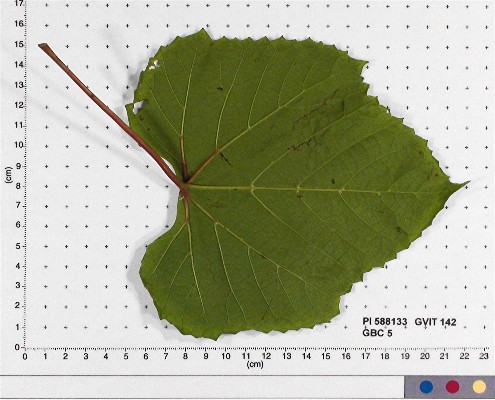 | | 1985 | COLLECTED | | Bucks County, Pennsylvania, Remaily Farm | | | | Wild material | Female. Small, blue, acid, herbacious berries. Excellent downy mildew resistance. | 1003470 | PI 588133 |
| 12 | PI 588142 | GBC 28 | Vitis vulpina L. | New Jersey, United States | GEN |  | | 1985 | COLLECTED | | Princeton, New Jersey | | | | Wild material | Male. Good downy mildew resistance. | 1003656 | PI 588142 |
| 13 | PI 597115 | B 18 | Vitis vulpina L. | Illinois, United States | GEN | 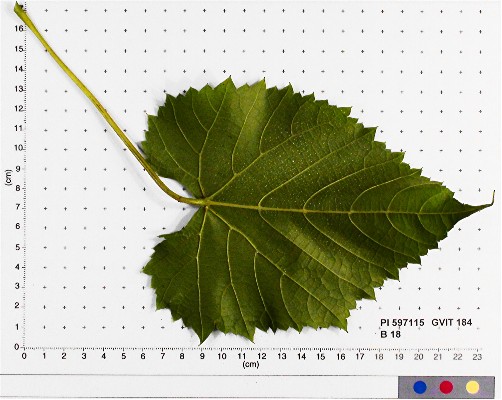 | | 1985 | COLLECTED | 01/01/1952 | Across the road from Busey's Pasture, North of Urbana, Illinois. Champaign City. | | | | Wild material | Female. Medium-large, loose cluster. Healthy. Small black berries. Late bloom. Medium to high vigor. | 1004109 | PI 597115 |
| 14 | PI 483190 | 54-87 | Vitis vulpina L. | Pennsylvania, United States | GEN |  | | 1983 | COLLECTED | 01/01/1976 | Burndt Hill House Road, Buckingham Township, Bucks county, Pennsylvania | | | | Wild material | Plants very vigorous, strong. Leaves dark, leathery, shiny. Flowers functionally staminate. Local name Chicken, Winter grape. | 1378126 | PI 483190 |
| 15 | DVIT 3506 | TX2006-5-1 | Vitis vulpina L. | New York, United States | DAV | | | 2007 | DONATED | 07/18/2007 | | | | | Wild material | | 1790925 | DVIT 3506 |
| 16 | DVIT 3081 | Gallo 87 | Vitis vulpina L. | Florida, United States | DAV | | | 2002 | COLLECTED | | | | | | Breeding material | | 1641335 | DVIT 3081 |
| 17 | DVIT 2951 | 5085 | Vitis vulpina L. | Louisiana, United States | DAV | | | 2000 | COLLECTED | | | | | | Wild material | | 1616649 | DVIT 2951 |
| 18 | DVIT 2253 | DVIT 2253 | Vitis vulpina L. | Oklahoma, United States | DAV | | | 1987 | COLLECTED | | | | | | Wild material | Type = Species. Per Hedrick (see citation): "Vine vigorous, climbing. Shoots rather slender; internodes long, slightly angular, usually glabrous, sometimes slightly pubescent; diaphragms thick; tendrils intermittent, long, usually bifid. Leaves with short, broad stipules; leaf-blade medium to large, cordate, entire or sometimes indistinctly three-lobed; petiolar sinus deep, usually narrow, acute; margin with rather course angular teeth; point of leaf acuminate; upper surface rather light green, glossy, glabrous; glabrous or sparingly pubescent below. Clusters medium to large, loose, with long peduncle. Berries numerous and small, black, shining, little or no bloom. Seeds medium in size, rather broad, beak rather short; chalaza oval or roundish, elevated, very distinct; raphe a distinct, cord-like ridge. Fruit usually sour and astringent and frequently consisting of little besides skins and seeds. Leafing, flowering and ripening fruit very late. Owing to the fact that Cordifolia and Riparia have been badly confused in the past, the limits of the habitat of this species are difficult to determine. Pursh gives the northern limit as Canada, and Buckley speaks of its being found at Lake Winnipeg, but all other, and some probably better informed, authorities give the northern limit as New York or the Great Lakes. The eastern limit is the Atlantic Ocean and the southern limit the Gulf of Mexico. It extends westward, according to Engelmann, to the western limits of the wooded portion of the Mississippi Valley in the North, and, according to Munson, to the Brazos River, Texas, in the South. It is found along creeks and river banks sometimes mixed with Riparia, having about the same soil adaptations as that species. It is a very common species in the Middle States and is frequently found growing on limestone soils but, according to Viala, is not indigenous to such soils. [...] Cordifolia makes a good stock for grafting, being vigorous and forming a good union with most of our cultivatesd grapes. It is seldom used for this purpose, however, on account of the difficulty of propagating it by means of cuttings. For the same reason vines of it are seldom found in cultivation. It is probably of no importance horticulturally." | 1019194 | DVIT 2253 |
| 19 | DVIT 1359 | Barrett #30 | Vitis vulpina L. | California, United States | DAV | | | 1983 | DONATED | 01/01/1983 | | | | | Breeding material | | 1013259 | DVIT 1359 |
| 20 | DVIT 1368 | Barrett #16 | Vitis vulpina L. | California, United States | DAV | | | 1983 | DONATED | 01/01/1983 | | | | | Breeding material | Type = American hybrid. Per Galet (see citation): [about V. cinerea Engelmann] "Growing tip: felty white with rose margin, ashlike appearance, flat; stipules brownish-green. Young leaves: downy, gray with rose margin on upper surface, felty white below. Leaf: cordiform, medium in Montpellier, but large in some places in the United States (28 by 23 cm), 357-5-35 to 58, usually entire, rarely five-lobed (V. cinerea canesceans), soft, very bullate, dull, ash-gray, cobwebby-pubescent on both sides; small, nearly flat teeth; petiolar sinus lyre-shaped open or closed depending on the type; petioles downy-pubescent. Shoot: ash-gray, downy-pubescent, ribbed, thin. Flower cluster: very small, male or female. Cluster: conical, loose, medium-large, winged; berries round, black, small, thick skin, very little juice, acid flavor. Seeds: medium, 5 mm, chestnut colored, shiny with clear yellow beak and indentations; chalaza circular, .49, in small depression encircled with a few rediating lines, very short beak, protuberant raphe. Growth habit: very vigorous, climbing. [ ... ] V. cinerea has several common names: Parra silvestre (in Mexico), Ashy-leaved grape, Sweet winter, Downy, Ashy, Gray black, and Wichita grape. In the past confused with aestivalis, cinerea was officially named a distinct species in 1883 by George Engelmann. [ ... ] Cinerea has a good resistance to phylloxera and the leaves do not carry the galls. However, it is chlorotic in limy soils and is extremely difficult to root, which rules out its usefulness as a rootstock. The maturity of the wood is often deficient at the time of the first frost owing to its late ripening. The resistance to fungus diseases is excellent, downy mildew, and black rot in particular. At present, the only cultivated descendants of cinerea are Black Spanish and Herbemont (aestivalis-cinerea-vinifera)." | 1013333 | DVIT 1368 |
| 21 | DVIT 1381 | '(R68-75)' | Vitis vulpina L. | California, United States | DAV | | | 1983 | DONATED | 01/01/1983 | | | | | Wild material | Type = American Hybrid. Per Munson (see citation): [About V. vulpina] "Plant: Vines acquire great size, climbing to the tops of the tallest trees, covering them with an open canopy of dark green glossy leaves, with pendant branches gracefully extending there-from, from which the naked, rapidly growing tips of the young branches project. Roots. In one year seedlings, enlarging downward for a foot or more from the collar, forking, non-axial, firm, fully resistant, and penetrates quite successfully very limy as well as many sandy soils. Wood: Young wood cylindrical or oval, angled slightly when quite young, of a pale yellowish-green . . . the nodes in immature wood and at the bases of the young branches, covered with short fawn-colored pubescence, especially in the bronzy form; upon mature wood, outer bark but slightly adhering, separating in broad, nearly regular checked plates which can be easily separated when the wood is but one year old, of a drab or hazel color, with darker and lighter markings, making it in nearly every instance appear mottled, deeply striated; surface smooth, except in some plants a rasp-like feeling when the finger is passed over it; without any or rarely a trace of prunose bloom near the nodes; annual wood rather soft and tough; sectional view open, rays wide apart, pores large; nodes little enlarged, slightly bent, often pubescent; diaphragm thick, 1/8' to 1/5' or more, biconcave; buds medium, sub-conical, sub-acute, terminated with rusty wool, at their opening in the spring of a grayish-purple, or violet, or rusty pink or bronze in the more pubescent form, gradually becoming green with rapid expansion of leaves, tip closed, tendrils usually once forked, rarely twice, intermittent, finely striated, smooth; internodes long to very long, 3' to 7' or more; pith large at lower end, rather dark brown, often insensibly meeting the diaphragm above. Extending tip of growing shoot naked,--not enveloped as in V. vulpina. Leaves: Stipules very small to medium; 1/10' to 1/5' long, lance shaped, fine ciliate edge, soon shedding; petiole long . . . Leaves on ground shoots from old wood generally 3 to 5 lobed with rounded sinuses; on seedlings always entire first and second year. [ ... ] Cluster: Fertile,--medium to large, open, loose, sometimes broadly shouldered, but generally simple; peduncle strong [ ... ] Flowers: Fertile,--stamens very short, reflexed, curved laterally, having little weak pollen; disc prominently 5 lobed, orange-yellow; ovary small, subconical; style short, slender, pointed; stigma very small; staminate,--stamens usually 5, often 4, 1/16' to 1/10' long, ascending; anthers small, pollen abundant. Berries: Small, 3/16' to 6/16' in diameter, globular or slightly oblate, sometimes shining, or mostly dull black, rarely has a little bloom, persistant ripening very late, two months or more later than V. vulpina, September in Texas; skin thick or rigid, coloring matter abundant, violet; little pulp, skin possessed of a biting pungency, till well frosted, then becoming vinous and sugary; refreshing but with characteristic flavor, by which alone it can at once be separated from V. vulpina, with which it was so long confused, as well as from any other species." | 1013408 | DVIT 1381 |
| 22 | DVIT 1382 | '(R68-77)' | Vitis vulpina L. | California, United States | DAV | | | 1983 | DONATED | 01/01/1983 | | | | | Wild material | Type = American Hybrid. Per Munson (see citation): [About V. vulpina] "Plant: Vines acquire great size, climbing to the tops of the tallest trees, covering them with an open canopy of dark green glossy leaves, with pendant branches gracefully extending there-from, from which the naked, rapidly growing tips of the young branches project. Roots. In one year seedlings, enlarging downward for a foot or more from the collar, forking, non-axial, firm, fully resistant, and penetrates quite successfully very limy as well as many sandy soils. Wood: Young wood cylindrical or oval, angled slightly when quite young, of a pale yellowish-green . . . the nodes in immature wood and at the bases of the young branches, covered with short fawn-colored pubescence, especially in the bronzy form; upon mature wood, outer bark but slightly adhering, separating in broad, nearly regular checked plates which can be easily separated when the wood is but one year old, of a drab or hazel color, with darker and lighter markings, making it in nearly every instance appear mottled, deeply striated; surface smooth, except in some plants a rasp-like feeling when the finger is passed over it; without any or rarely a trace of prunose bloom near the nodes; annual wood rather soft and tough; sectional view open, rays wide apart, pores large; nodes little enlarged, slightly bent, often pubescent; diaphragm thick, 1/8' to 1/5' or more, biconcave; buds medium, sub-conical, sub-acute, terminated with rusty wool, at their opening in the spring of a grayish-purple, or violet, or rusty pink or bronze in the more pubescent form, gradually becoming green with rapid expansion of leaves, tip closed, tendrils usually once forked, rarely twice, intermittent, finely striated, smooth; internodes long to very long, 3' to 7' or more; pith large at lower end, rather dark brown, often insensibly meeting the diaphragm above. Extending tip of growing shoot naked,--not enveloped as in V. vulpina. Leaves: Stipules very small to medium; 1/10' to 1/5' long, lance shaped, fine ciliate edge, soon shedding; petiole long . . . Leaves on ground shoots from old wood generally 3 to 5 lobed with rounded sinuses; on seedlings always entire first and second year. [ ... ] Cluster: Fertile,--medium to large, open, loose, sometimes broadly shouldered, but generally simple; peduncle strong [ ... ] Flowers: Fertile,--stamens very short, reflexed, curved laterally, having little weak pollen; disc prominently 5 lobed, orange-yellow; ovary small, subconical; style short, slender, pointed; stigma very small; staminate,--stamens usually 5, often 4, 1/16' to 1/10' long, ascending; anthers small, pollen abundant. Berries: Small, 3/16' to 6/16' in diameter, globular or slightly oblate, sometimes shining, or mostly dull black, rarely has a little bloom, persistant ripening very late, two months or more later than V. vulpina, September in Texas; skin thick or rigid, coloring matter abundant, violet; little pulp, skin possessed of a biting pungency, till well frosted, then becoming vinous and sugary; refreshing but with characteristic flavor, by which alone it can at once be separated from V. vulpina, with which it was so long confused, as well as from any other species." | 1013415 | DVIT 1382 |
| 23 | DVIT 1451 | Olmo (021-35) | Vitis vulpina L. | California, United States | DAV | | | 1983 | DONATED | 01/01/1983 | | | | | Wild material | Type = species | 1013865 | DVIT 1451 |
| 24 | DVIT 1637 | Barrett #18 | Vitis vulpina L. | California, United States | DAV | | | 1983 | DONATED | 01/01/1983 | | | | | Breeding material | Type = interspecific hybrid. Flower type = female. | 1015200 | DVIT 1637 |
| 25 | DVIT 1638 | Barrett #24 | Vitis vulpina L. | California, United States | DAV | | | 1983 | DONATED | 01/01/1983 | | | | | Breeding material | Type = species. | 1015205 | DVIT 1638 |
| 26 | DVIT 1846 | DVIT 1846 | Vitis vulpina L. | California, United States | DAV | | | 1983 | DONATED | 01/01/1983 | | | | | Wild material | Type = species | 1016467 | DVIT 1846 |
| 27 | DVIT 1278 | DVIT 1278 | Vitis vulpina L. | California, United States | DAV | | | 1981 | DONATED | 01/01/1981 | | | | | Uncertain improvement status | Type = species. | 1012639 | DVIT 1278 |
| 28 | DVIT 1280 | DVIT 1280 | Vitis vulpina L. | California, United States | DAV | | | 1981 | DONATED | 01/01/1981 | | | | | Uncertain improvement status | Type = species. | 1012652 | DVIT 1280 |
| 29 | DVIT 1288 | DVIT 1288 | Vitis vulpina L. | California, United States | DAV | | | 1981 | DONATED | 01/01/1981 | | | | | Wild material | Type = species. Flower = male. | 1012706 | DVIT 1288 |
| 30 | DVIT 1289 | DVIT 1289 | Vitis vulpina L. | California, United States | DAV | | | 1981 | DONATED | 01/01/1981 | | | | | Wild material | Type = species. Flower = male. | 1012707 | DVIT 1289 |
| 31 | DVIT 1290 | DVIT 1290 | Vitis vulpina L. | California, United States | DAV | | | 1981 | DONATED | 01/01/1981 | | | | | Wild material | Type = species. | 1012718 | DVIT 1290 |
| 32 | DVIT 1292 | DVIT 1292 | Vitis vulpina L. | California, United States | DAV | | | 1981 | DONATED | 01/01/1981 | | | | | Wild material | Type = species. Flower = female. | 1012730 | DVIT 1292 |
| 33 | DVIT 1294 | DVIT 1294 | Vitis vulpina L. | California, United States | DAV | | | 1981 | DONATED | 01/01/1981 | | | | | Wild material | Type = species. Flower = male. | 1012741 | DVIT 1294 |
| 34 | DVIT 1301 | DVIT 1301 | Vitis vulpina L. | California, United States | DAV | | | 1981 | DONATED | 01/01/1981 | | | | | Wild material | Type = species. Flower = male. | 1012791 | DVIT 1301 |
| 35 | DVIT 1291 | DVIT 1291 | Vitis vulpina L. | California, United States | DAV | | | 1900 | DONATED | 01/01/1981 | | | | | Wild material | Type = species. Flower = male. | 1012719 | DVIT 1291 |
| 36 | DVIT 1434 | Vulpina | Vitis riparia Michx. | California, United States | DAV | | | 1983 | DONATED | 01/01/1983 | | | | | Cultivated material | Type = species. Flower = Male. | 1013753 | DVIT 1434 |
| 37 | PI 588681 | GVIT 1392 | Vitis hybr. | Missouri, United States | GEN | 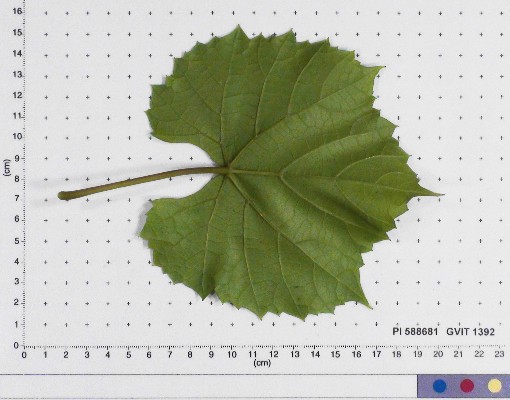 | | 1990 | DEVELOPED | | | | | | Uncertain improvement status | Female flower. | 1013481 | PI 588681 |
| 38 | PI 588682 | GVIT 1393 | Vitis hybr. | Missouri, United States | GEN | 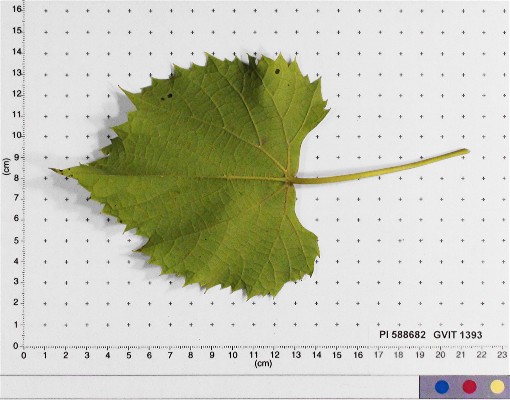 | | 1990 | DEVELOPED | | | | | | Uncertain improvement status | Female flower. | 1013487 | PI 588682 |
| 39 | PI 597248 | 'Monitor' | Vitis hybr. | Unknown | GEN | 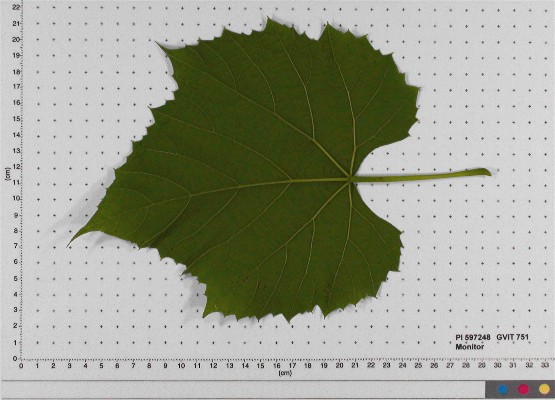 | | 1987 | DONATED | 03/30/1987 | | | | | Cultivar | May be variety Suelter. Medium, blue berry; riparia-like. | 1008566 | PI 597248 |
| 40 | PI 588341 | Millardet 125-1 | Vitis hybr. | France | GEN |  | | 1987 | DEVELOPED | 01/01/1982 | | | | | Rootstock | Male. Very early budbreak, roots and grafts well, produces vigorous vines, resistant to phylloxera and drought. Susceptible to high lime. | 1007493 | PI 588341 |
| 41 | PI 588394 | GVIT 703 | Vitis hybr. | California, United States | GEN |  | | 1981 | DEVELOPED | | | | | | Cultivated material | | 1008202 | PI 588394 |
| 42 | DVIT 2968 | BC5569 | Vitis hybr. | Louisiana, United States | DAV | | | 2000 | COLLECTED | | Caddo Parish, LA | | | | Breeding material | Natural hybrid | 1616253 | DVIT 2968 |
| 43 | DVIT 1149 | DVIT 1149 | Vitis treleasei Munson ex L. H. Bailey | California, United States | DAV | | | 1983 | DONATED | 01/01/1983 | | | | | Wild material | Type = American hybrid. Per Hedrick (see citation): [About V. treleasei] "1. Bailey, Gray's Syn. Fl., I:243. 1897 2. Munson, Tex. Sta. Bul., 56:230, 239. 1900. Smooth Canyon Grape.Plant shrubby and much branched, climbing little, the small and mostly short (generally shorter than the leaves) tendrils deciduous the first year unless finding support, internodes short, the diaphragms twice thicker (about 1/16 inch) than in the V. riparia and shallow-biconcave; stipules less than one quarter as large as in V. riparia; leaves thin, glabrous and shining on both surfaces, the basal sinus very broad and open making no distinct angle with the petiole, the margin unequally notch-toothed (not jagged as in V. riparia) and indistinctly three-lobed, the apex much shorter than in V. riparia; cluster small (2 to 3 inches long): the berries 1/3 inch or less thick, black with a thin bloom, ripening three weeks later than V. riparia when grown in the same and possibly a dry country form of V. riparia. In habit it suggests V. arizonica var. glabra, from which it is distinguished, among other things, by its decidedly earlier flowering and larger leaves with coarser teeth and less pointed apex. According to Munson Vitis treleasei inhabits 'ravines and gulches of western New Mexico, Arizona and southern Utah.' This species was named by Munson but the only description we have been able to find is that of Bailey given above in which we have changed his 'vulpina' to 'riparia.' The species is of no importance horticulturally." | 1011740 | DVIT 1149 |
| 44 | DVIT 1360 | #1 Hybrid | Vitis californica Benth. | California, United States | DAV | | | 1983 | DONATED | 01/01/1983 | | | | | Wild material | Type = American hybrid. Per Munson (see citation): "North California grape. Plant: Climbing moderately, or vigorously, as seen by the writer in Santa Rosa and Napa Valleys at Chico and at Redding in Sacramento Valley, also at Grant's Pass, Rogue River, Oregon; branches tapering; growing tips little enveloped in expanding leaves; often the vines are seen completely enveloping small trees with a dense canopy of leaves. Roots: Fibrous, rather soft, transversely wrinkled. Wood: When young reddish or pale green, angled and somewhat covered with long whitish hairs, becoming floccose and remaining into the winter, or in Eldorado County specimens, covered with short brown pubescence, similar to V. cinerea; when mature, brownish or grayish, finely striated, soft, sectional view circular or often oval, rays distinct, pores open; nodes large and little bent; diaphragm nearly plane, medium thin; bark the second year easily loosening in fibrous plates, on old woody finely striately checked and persistent as in V. cinerea; buds small, sub-pyramidal, ovoid or acute, covered with whitish or brownish wool at the summit, when opening in spring grayish-violet or nearly white, becoming greenish-violet; tendrils mostly once forked, sometimes twice, 3' to 5' to fork, intermittent, wooly when young, persistent, internodes medium in length, 3' to 6' or more, variable in same branch; pith large, light brown, abruptly and broadly terminating above, narrow and gradually terminating below the diaphragm, especially so in Sierra Nevada Mountain specimens. Leaves: Stipules small to medium, cordate, membranaceous, hairy; petiole generally about half as long as blade is wide, narrowly grooved on upper side, disctinctly striated; thinly covered with white cottony hairs and velvety pubescence, color violet or crimson; blade medium to large, varies in size from 2' to 4' in length by 3' to 5' or more in width; [ ... ] Cluster: Fertile, --small 3' to 4' or more long; shouldered heavily, similar to many V. vulpina; compact; peduncle very short; rachis usually simple or little compounded, thinly cottony; clear reddish-violet; pedicels 1/4' or less long, rather thick, enlarging rapidly toward the recepticle, warty. Berries: 1/3' to 1/2' in diameter, round or little oblate, black, with heavy prunose bloom; persistant; skin rather thick, pulp seedy with little juice, very sugary and pleasantly flavored." | 1013269 | DVIT 1360 |
| 45 | DVIT 1361 | '#2' | Vitis californica Benth. | California, United States | DAV | | | 1983 | DONATED | 01/01/1983 | | | | | Wild material | Type = American hybrid. Per Munson (see citation): "North California grape. Plant: Climbing moderately, or vigorously, as seen by the writer in Santa Rosa and Napa Valleys at Chico and at Redding in Sacramento Valley, also at Grant's Pass, Rogue River, Oregon; branches tapering; growing tips little enveloped in expanding leaves; often the vines are seen completely enveloping small trees with a dense canopy of leaves. Roots: Fibrous, rather soft, transversely wrinkled. Wood: When young reddish or pale green, angled and somewhat covered with long whitish hairs, becoming floccose and remaining into the winter, or in Eldorado County specimens, covered with short brown pubescence, similar to V. cinerea; when mature, brownish or grayish, finely striated, soft, sectional view circular or often oval, rays distinct, pores open; nodes large and little bent; diaphragm nearly plane, medium thin; bark the second year easily loosening in fibrous plates, on old woody finely striately checked and persistent as in V. cinerea; buds small, sub-pyramidal, ovoid or acute, covered with whitish or brownish wool at the summit, when opening in spring grayish-violet or nearly white, becoming greenish-violet; tendrils mostly once forked, sometimes twice, 3' to 5' to fork, intermittent, wooly when young, persistent, internodes medium in length, 3' to 6' or more, variable in same branch; pith large, light brown, abruptly and broadly terminating above, narrow and gradually terminating below the diaphragm, especially so in Sierra Nevada Mountain specimens. Leaves: Stipules small to medium, cordate, membranaceous, hairy; petiole generally about half as long as blade is wide, narrowly grooved on upper side, disctinctly striated; thinly covered with white cottony hairs and velvety pubescence, color violet or crimson; blade medium to large, varies in size from 2' to 4' in length by 3' to 5' or more in width; [ ... ] Cluster: Fertile, --small 3' to 4' or more long; shouldered heavily, similar to many V. vulpina; compact; peduncle very short; rachis usually simple or little compounded, thinly cottony; clear reddish-violet; pedicels 1/4' or less long, rather thick, enlarging rapidly toward the recepticle, warty. Berries: 1/3' to 1/2' in diameter, round or little oblate, black, with heavy prunose bloom; persistant; skin rather thick, pulp seedy with little juice, very sugary and pleasantly flavored." | 1013283 | DVIT 1361 |
| 46 | DVIT 1377 | R67-45 | Vitis treleasei Munson ex L. H. Bailey | California, United States | DAV | | | 1983 | DONATED | 01/01/1983 | | | | | Wild material | Type = American Hybrid. Per Hedrick (see citation): [About V. treleasei] "1. Bailey, Gray's Syn. Fl., I:243. 1897 2. Munson, Tex. Sta. Bul., 56:230, 239. 1900. Smooth Canyon Grape.Plant shrubby and much branched, climbing little, the small and mostly short (generally shorter than the leaves) tendrils deciduous the first year unless finding support, internodes short, the diaphragms twice thicker (about 1/16 inch) than in the V. riparia and shallow-biconcave; stipules less than one quarter as large as in V. riparia; leaves thin, glabrous and shining on both surfaces, the basal sinus very broad and open making no distinct angle with the petiole, the margin unequally notch-toothed (not jagged as in V. riparia) and indistinctly three-lobed, the apex much shorter than in V. riparia; cluster small (2 to 3 inches long): the berries 1/3 inch or less thick, black with a thin bloom, ripening three weeks later than V. riparia when grown in the same and possibly a dry country form of V. riparia. In habit it suggests V. arizonica var. glabra, from which it is distinguished, among other things, by its decidedly earlier flowering and larger leaves with coarser teeth and less pointed apex. According to Munson Vitis treleasei inhabits 'ravines and gulches of western New Mexico, Arizona and southern Utah.' This species was named by Munson but the only description we have been able to find is that of Bailey given above in which we have changed his 'vulpina' to 'riparia.' The species is of no importance horticulturally." | 1013383 | DVIT 1377 |
| 47 | DVIT 1378 | R67-50 | Vitis treleasei Munson ex L. H. Bailey | California, United States | DAV | | | 1983 | DONATED | 01/01/1983 | | | | | Wild material | Type = American Hybrid. Per Hedrick (see citation): [About V. treleasei] "1. Bailey, Gray's Syn. Fl., I:243. 1897 2. Munson, Tex. Sta. Bul., 56:230, 239. 1900. Smooth Canyon Grape.Plant shrubby and much branched, climbing little, the small and mostly short (generally shorter than the leaves) tendrils deciduous the first year unless finding support, internodes short, the diaphragms twice thicker (about 1/16 inch) than in the V. riparia and shallow-biconcave; stipules less than one quarter as large as in V. riparia; leaves thin, glabrous and shining on both surfaces, the basal sinus very broad and open making no distinct angle with the petiole, the margin unequally notch-toothed (not jagged as in V. riparia) and indistinctly three-lobed, the apex much shorter than in V. riparia; cluster small (2 to 3 inches long): the berries 1/3 inch or less thick, black with a thin bloom, ripening three weeks later than V. riparia when grown in the same and possibly a dry country form of V. riparia. In habit it suggests V. arizonica var. glabra, from which it is distinguished, among other things, by its decidedly earlier flowering and larger leaves with coarser teeth and less pointed apex. According to Munson Vitis treleasei inhabits 'ravines and gulches of western New Mexico, Arizona and southern Utah.' This species was named by Munson but the only description we have been able to find is that of Bailey given above in which we have changed his 'vulpina' to 'riparia.' The species is of no importance horticulturally." | 1013389 | DVIT 1378 |
| 48 | DVIT 1410 | DVIT 1410 | Vitis treleasei Munson ex L. H. Bailey | California, United States | DAV | | | 1983 | DONATED | 01/01/1981 | | | | | Wild material | Type = species. Flower = female. Per Hedrick (see citation): [About V. treleasei] "1. Bailey, Gray's Syn. Fl., I:243. 1897 2. Munson, Tex. Sta. Bul., 56:230, 239. 1900. Smooth Canyon Grape.Plant shrubby and much branched, climbing little, the small and mostly short (generally shorter than the leaves) tendrils deciduous the first year unless finding support, internodes short, the diaphragms twice thicker (about 1/16 inch) than in the V. riparia and shallow-biconcave; stipules less than one quarter as large as in V. riparia; leaves thin, glabrous and shining on both surfaces, the basal sinus very broad and open making no distinct angle with the petiole, the margin unequally notch-toothed (not jagged as in V. riparia) and indistinctly three-lobed, the apex much shorter than in V. riparia; cluster small (2 to 3 inches long): the berries 1/3 inch or less thick, black with a thin bloom, ripening three weeks later than V. riparia when grown in the same and possibly a dry country form of V. riparia. In habit it suggests V. arizonica var. glabra, from which it is distinguished, among other things, by its decidedly earlier flowering and larger leaves with coarser teeth and less pointed apex. According to Munson Vitis treleasei inhabits 'ravines and gulches of western New Mexico, Arizona and southern Utah.' This species was named by Munson but the only description we have been able to find is that of Bailey given above in which we have changed his 'vulpina' to 'riparia.' The species is of no importance horticulturally." | 1013593 | DVIT 1410 |
| 49 | DVIT 1482 | 'Olmo Y92 (Y15-90)' | Vitis hybr. | California, United States | DAV | | | 1983 | DONATED | 01/01/1983 | | | | | Breeding material | Type = interspecific hybrid. Flower type = female. | 1014107 | DVIT 1482 |
| 50 | DVIT 149 | Taylor | Vitis hybr. | Kentucky, United States | DAV | | | 1983 | COLLECTED | | | | | | Cultivated material | Type = American Hybrid. Per Hedrick (see citation): "The original vine of Taylor was a wild seedling found in the early [1800's] on the Cumberland Mountains near the Kentucky-Tennessee line by a Mr. Cobb who planted the vine on his farm in Shelby County, Kentucky. Vine vigorous to rank, healthy, hardy, variable in productiveness. Leaves small, attractive in color, smooth. Flowers bloom early; stamens reflexed. Fruit ripens about two weeks before Isabella. Clusters small to medium, shouldered, loose to moderately compact. Berries small to medium, roundish, pale greenish-white, sometimes tinged with amber. Skin very thin. Pulp sweet, spicy, fair to good in quality." Per Munson (see citation): "Vine vigorous, healthy, with light colored wood, and lively green, large toothed Vulpina-like leaves; cluster very small, usualy straggling, as the flower is imperfect; berries small, round, yellowish-white, translucent, of pure good quality, seeds small. The variety is valueless for direct production, but has been used extensively in France as a resistant graft stock, and in this country has been of great value as a hardy, healthy, high quality base from which to breed and has yielded many hybrids with Labrusca and other species." Information taken from http:\\www.wine-lovers-page.com\wineguest\wgg.html: "Historically important American variety . . . One of the most compatible vines used by the hybridizers during the 19th century phylloxera crisis in Europe. Still grown on that continent where it is mainly used to produce a sweet dessert wine. Is best known as one of the pedigree parents of the Missouri Riesling, Elvira, and Noah oldline varieties." | 1003569 | DVIT 149 |
| 51 | DVIT 1557 | 'Olmo R158 (R67-19)' | Vitis hybr. | California, United States | DAV | | | 1983 | DONATED | 01/01/1893 | | | | | Breeding material | Type = interspecific hybrid. Flower type = female. | 1014662 | DVIT 1557 |
| 52 | DVIT 1558 | 'Olmo R158 (R67-21)' | Vitis hybr. | California, United States | DAV | | | 1983 | DONATED | 01/01/1983 | | | | | Breeding material | Type = interspecific hybrid. Flower type = male. | 1014664 | DVIT 1558 |
| 53 | DVIT 1571 | 'Olmo Q144 (Q42-63)' | Vitis hybr. | California, United States | DAV | | | 1983 | DONATED | 01/01/1983 | | | | | Breeding material | Type = interspecific hybrid. Flower type = female. | 1014763 | DVIT 1571 |
| 54 | DVIT 1180 | OLMO (Q47-43) | Vitis hybr. | California, United States | DAV | | | 1981 | DONATED | 01/01/1981 | | | | | Uncertain improvement status | Type = interspecific hybrid. | 1011967 | DVIT 1180 |
| 55 | DVIT 1204 | 'OLMO Y77 (Y15-3)' | Vitis hybr. | California, United States | DAV | | | 1981 | DEVELOPED | | | | | | Breeding material | Type = interspecific hybrid. Flower = female. | 1012132 | DVIT 1204 |
| 56 | DVIT 1234 | 'OLMO Q114 (Q39-23)' | Vitis hybr. | California, United States | DAV | | | 1981 | DEVELOPED | | | | | | Breeding material | Type = interspecific hybrid. Flower = female. | 1012349 | DVIT 1234 |
| 57 | DVIT 1257 | 'OLMO R123 (R65-60)' | Vitis hybr. | California, United States | DAV | | | 1981 | DEVELOPED | | | | | | Breeding material | Type = interspecific hybrid. Flower = female. | 1012508 | DVIT 1257 |
| 58 | DVIT 1259 | 'OLMO Q123 (Q40-17)' | Vitis hybr. | California, United States | DAV | | | 1981 | DEVELOPED | | | | | | Breeding material | Type = interspecific hybrid. Flower = female. | 1012523 | DVIT 1259 |
| 59 | DVIT 1260 | 'OLMO Q123 (Q40-18)' | Vitis hybr. | California, United States | DAV | | | 1981 | DEVELOPED | | | | | | Breeding material | Type = interspecific hybrid. Flower = male. | 1012530 | DVIT 1260 |
| 60 | DVIT 1181 | 'OLMO Q103 (Q47-39)' | Vitis hybr. | | DAV | | | 1900 | | | | | | | Breeding material | | 1011968 | DVIT 1181 |
| 61 | DVIT 1235 | 'OLMO Q114 (Q39-29)' | Vitis hybr. | California, United States | DAV | | | 1900 | DEVELOPED | | | | | | Breeding material | Type = interspecific hybrid. Flower = male. | 1012354 | DVIT 1235 |
| 62 | WLP 2670 | RJL2022PA-016 | Acer negundo L. | Pennsylvania, United States | NA | | | 2022 | COLLECTED | 10/21/2022 | Plants growing in woodlands above a small unnamed creek that dumps into the Middle Branch White Clay Creek in Goddard Park, West Grove Pennsylvania, off of Wickerton Road, Chester County. Plants are found regularly but scattered in the understory of the woodlands. | 39.80426000, -75.82609300 | 105 | Plants growing in a mesic, well-drained habitat of deciduous woodlands along streams and above the riparian zone that drains toward a small unnamed creek that feeds into the Middle Branch White Clay Creek. Plants generally grow in part shade to full sun, but perform best and fruit more heavily in full sun where there is abundant access to moisture. The remnant woodlands exist mostly along the steep slopes, wetlands and seeps of seasonal and year-round creeks flowing into the Middle Branch White Clay Creek. The woodlands are bordered by numerous housing developments and land converted to meadows; hence there is significant first order edge that is heavily impacted by invasive plant intrusion. Despite this fact, Acer negundo is highly competitive and competes well.
Soils: The underlying geology of this area is the Glenarm Wissahickon Formation of lower Paleozoic origin and lithologically similar to oligoclase-mica schist of the Wissahickon Formation (PZw), but also includes lenticular amphibolite bodies having ocean-floor basalt chemistry.
Source: USGS Pennsylvania Geologic Map Data (https://mrdata.usgs.gov/geology/state/sgmc-unit.php?unit=PAPZgw%3B0)
The primary soil type in the area of this collection is classified as Glenelg silt loam, 3 to 8 percent slopes. This series consists of very deep, well drained soils formed in residuum weathered from micaceous schist on uplands of the Blue Ridge and the Northern Piedmont. Saturated hydraulic conductivity is moderately high in the subsoil and moderately high to high in the substratum. This upper horizon of this soil is undifferentiated, mostly poorly drained sandy bottomland soils intermingled with decomposing organic litter and eroded silts and clays due to erosion.
Source: NRCS Web Soil Survey (https://websoilsurvey.sc.egov.usda.gov/App/WebSoilSurvey.aspx) | Wild material | | 2139661 | WLP 2670 |
| 63 | NA 86885 | RJL2021PA-004 | Ilex verticillata (L.) A. Gray | Pennsylvania, United States | NA | | | 2021 | COLLECTED | 11/16/2021 | Plants growing in woodlands along a small unnamed creek corridor dumping into the Middle Branch White Clay Creek in Goddard Park, West Grove Pennsylvania, off of Wickerton Road, Chester County. | 39.81063861, -75.82750806 | 124 | Plants are growing in a range of habitats from mesic woodlands to saturated streamside settings of deciduous woodlands that drain toward the Middle Branch White Clay Creek. Plants grow in high understory shade with dappled to indirect sunlight. The only female (fruiting) plants were found in areas along the creek where soils are moist to saturated. Numerous male specimens were found in the areas described above. Soils: Soils found in the areas where this collection was made are comprised primarily of Baile silt loam (Ba), Hatboro silt loam (Ha), and Glenelg silt loam, 8 to 15 percent slopes (GgC). Baile silt loam consists of very deep, poorly drained, moderately low to moderately high saturated hydraulic conductivity, soils on upland depressions and footslopes that were formed in local alluvium over residuum from acid crystalline rocks, chiefly mica schist and granitized schist and gneiss; slope ranges from 0 to 8 percent. Hatboro silt loam consists of very deep and poorly drained soils formed in deposited alluvium derived from metamorphic and crystalline rock. They are on flood plains. Slopes range from 0 to 3 percent. Glenelg silt loam, 8 to 15 percent slopes consists of very deep, well drained soils formed in residuum weathered from micaceous schist on uplands of the Blue Ridge and the Northern Piedmont. This soil is undifferentiated, mostly poorly drained sandy bottomland soils intermingled with decomposing organic litter and eroded silts and clays due to erosion. Slope: 0 to 15% Aspect: Variable. | Wild material | | 2123125 | NA 86885 |
| 64 | WLP 1731 | RJL2021PA-001 | Viburnum acerifolium L. | Pennsylvania, United States | NA | | | 2021 | COLLECTED | 11/05/2021 | Plants growing in woodlands above a small unnamed creek that dumps into the Middle Branch White Clay Creek in Goddard Park, West Grove Pennsylvania, off of Wickerton Road, Chester County. | 39.80462083, -75.82888750 | 103 | Plants growing in a mesic, well-drained habitat of deciduous woodlands, for the most part, above the riparian zone that drains toward a small unnamed creek that feeds into the Middle Branch White Clay Creek. Plants are growing in high understory shade with very little direct sun during most of the day. The remnant woodlands exist mostly along the steep slopes, wetlands and seeps of seasonal and year-round creeks flowing into the Middle Branch White Clay Creek. The woodlands are bordered by numerous housing developments and land converted to meadows; hence there is significant first order edge that is heavily impacted by invasive plant intrusion. Soils: Soils are classified as Glenelg silt loam, 8 to 15% slopes (GgC); this series consists of very deep, well drained soils formed in residuum weathered from micaceous schist on uplands of the Blue Ridge and the Northern Piedmont. Saturated hydraulic conductivity is moderately high in the subsoil and moderately high to high in the substratum. This upper horizon of this soil is undifferentiated, mostly poorly drained sandy bottomland soils intermingled with decomposing organic litter and eroded silts and clays due to erosion. Slope: 8 to 15% Aspect: West. | Wild material | | 2123080 | WLP 1731 |
| 65 | WLP 1732 | RJL2021PA-002 | Viburnum prunifolium L. | Pennsylvania, United States | NA | | | 2021 | COLLECTED | 11/05/2021 | Plants growing in woodlands along a small unnamed creek corridor dumping into the Middle Branch White Clay Creek in Goddard Park, West Grove Pennsylvania, off of Wickerton Road, Chester County. | 39.80462083, -75.82888750 | 102 | Plants are growing in a range of habitats from drier upland woods to moist creekside settings of deciduous woodlands that drain toward the Middle Branch White Clay Creek. Plants grow in part shade to high understory shade with dappled to indirect direct sunlight. Plants achieve their largest size and fruiting potential in part sun of the riparian zone of the creek where woodland canopy is thinner. Soils: Soils found in the areas where this collection was made are comprised primarily of flood plain Hatboro silt loam (Ha) and well-drained, upland Glenelg silt loam, 8 to 15 percent slopes (GgC). Hatboro silt loam consists of very deep and poorly drained soils formed in deposited alluvium derived from metamorphic and crystalline rock. They are on flood plains. Slopes range from 0 to 3 percent. Glenelg silt loam, 8 to 15 percent slopes consists of very deep, well drained soils formed in residuum weathered from micaceous schist on uplands of the Blue Ridge and the Northern Piedmont. This soil is undifferentiated, mostly poorly drained sandy bottomland soils intermingled with decomposing organic litter and eroded silts and clays due to erosion. Slope: 0 to 15% Aspect: Variable. | Wild material | | 2123098 | WLP 1732 |
| 66 | WLP 1733 | RJL2021PA-003 | Viburnum dentatum L. | Pennsylvania, United States | NA | | | 2021 | COLLECTED | 11/05/2021 | Plants growing in woodlands along a small unnamed creek corridor dumping into the Middle Branch White Clay Creek in Goddard Park, West Grove Pennsylvania, off of Wickerton Road, Chester County. | 39.80522167, -75.82928139 | 107 | Plants are growing in a range of habitats from mesic woodland to moist creekside settings of deciduous woodlands that drain toward the Middle Branch White Clay Creek. Plants grow in high understory shade with dappled to indirect sunlight. Soils: Soils found in the areas where this collection was made are comprised primarily of flood plain Hatboro silt loam (Ha) and well-drained, upland Glenelg silt loam, 8 to 15 percent slopes (GgC). Hatboro silt loam consists of very deep and poorly drained soils formed in deposited alluvium derived from metamorphic and crystalline rock. They are on flood plains. Slopes range from 0 to 3 percent. Glenelg silt loam, 8 to 15 percent slopes consists of very deep, well drained soils formed in residuum weathered from micaceous schist on uplands of the Blue Ridge and the Northern Piedmont. This soil is undifferentiated, mostly poorly drained sandy bottomland soils intermingled with decomposing organic litter and eroded silts and clays due to erosion. Slope: 0 to 15% Aspect: Variable. | Wild material | | 2123124 | WLP 1733 |